
Why Energy Monitoring Systems Demand Low-Loss Transformer Cores
Why Energy Monitoring Systems Demand Low-Loss Transformer Cores
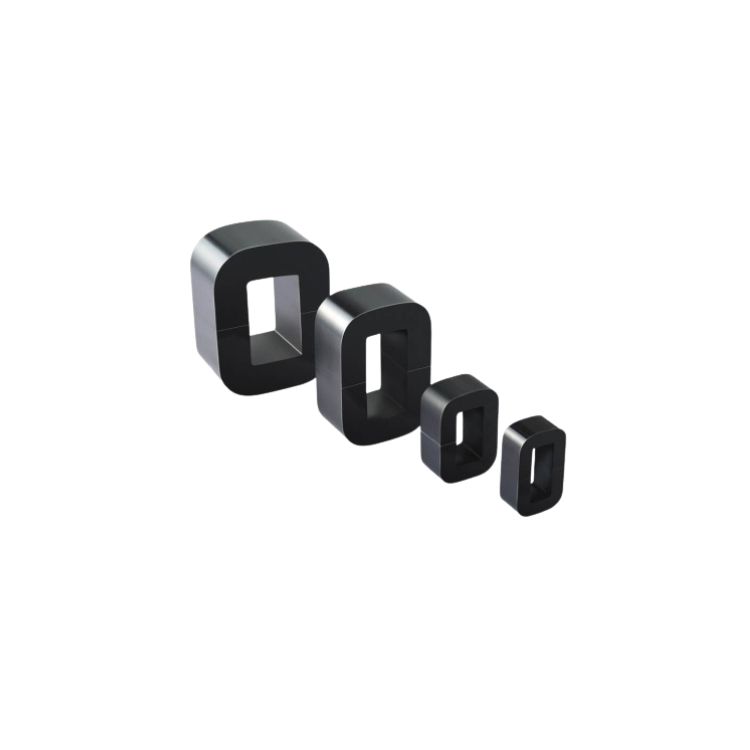
Low-loss thin strip core formats, including pulse transformer and toroidal cores, are used in energy monitoring pins and special power supply applications.
Energy monitoring systems measure electricity through magnetic components before they measure anything else. A power meter, a smart grid terminal, an industrial current sensor or a metering current transformer all begin by coupling a primary current or voltage into a secondary circuit through a transformer core, and only then convert the resulting signal into data. Whatever energy the core consumes during that coupling is not simply wasted: it appears as a systematic offset in the measurement itself.
That is why core loss — normally treated as an efficiency topic in power engineering — becomes a hard constraint in monitoring hardware. This technical overview explains where core loss enters the measurement chain, which materials and core configurations suit energy monitoring duty, which parameters a buyer should specify and verify, and where the limits of low-loss cores lie. The reference values used here come from YadooTEK core documentation and from published third-party market and standards data.
Core Loss Is a Measurement Constraint, Not Only an Efficiency Number
Two mechanisms consume energy in a core. Hysteresis loss comes from reversing the magnetic domains of the material on every cycle of the supply. Eddy-current loss is induced in the strip or lamination by the changing flux. Both have the same practical consequence in a monitoring circuit: they require a magnetizing, or excitation, current that transfers no useful energy to the secondary winding.
In a current transformer or a sensor core, that excitation current is the origin of ratio error and phase displacement. The magnitudes are small in a well-designed core, but the error is systematic and repetitive, so it accumulates in the energy totals a monitoring system reports. This is precisely the kind of offset that is difficult to remove later in software, because it is not random noise but a repeatable deviation tied to load, temperature and waveform.
Loss also drives temperature rise. A core that runs hot shifts its own magnetic behaviour and consumes part of the thermal margin that the surrounding insulation and housing need. Core loss specification therefore supports two separate goals at once: keeping the measurement dependable, and keeping the device inside its thermal design envelope.
A core loss figure is only usable when it is bound to test conditions. YadooTEK's NCW CORE, a toroidal wound core for transformers, is specified at ≤1.0 W/kg at 1.5 T and 50 Hz, over an operating temperature range of −40 °C to 120 °C. Those three elements — the loss value, the flux density and frequency at which it applies, and the temperature window over which it must hold — are what a buyer can actually compare between suppliers.
Parameters Buyers Should Specify for Energy-Monitoring Cores
The table below collects the parameters that determine whether a given core can serve an energy monitoring or metering design, with documented values from YadooTEK core families in the reference column. It is organised as a specification checklist rather than a product list, because these are the points at which monitoring projects typically gain or lose accuracy.
| Parameter | Documented reference value | Why it matters in a monitoring system |
|---|---|---|
| Core loss at a defined condition | ≤1.0 W/kg at 1.5 T, 50 Hz (YadooTEK NCW CORE) | Fixes the loss budget at a stated flux density and frequency; without these conditions a loss claim cannot be compared across suppliers. |
| Core loss for custom geometry | ≤1.2 W/kg at 1.5 T, 50 Hz (YadooTEK non-standard toroidal core) | Non-standard dimensions change the magnetic path, so custom cores are normally documented with their own loss allowance. |
| Operating temperature | −40 °C to 120 °C (NCW CORE); −40 °C to 130 °C (custom toroidal core) | Loss and permeability shift with temperature; the range defines where the stated accuracy is expected to hold. |
| Core geometry and power range | Core diameter 50–200 mm; rated power 100–5000 VA (NCW CORE) | Determines which metering or sensor duty the core can serve without redesign. |
| Custom dimensions | OD 30–300 mm, ID 15–200 mm, H 10–150 mm; 50 VA–10 kVA (custom toroidal cores) | Allows the magnetic part to match an existing housing, CT body or sensor module. |
| Strip thickness and material grade | 0.05 / 0.08 / 0.10 / 0.15 mm; grades MU, GT050, GT080, GT100 (Thin Strip Core) | Thinner strip lowers eddy-current loss; the grade selected sets the balance between loss and permeability. |
| Core material | CRGO silicon steel; Ni-Fe permalloy alloy (80Ni-4Mo-Fe) in grades 1J85, 1J79, 1J50; nanocrystalline | Material choice determines permeability, excitation current and material cost. |
| Accuracy class of sensing cores | 0.2, 0.5, 1, 0.5S, 0.2S at 0.66 kV and 0.72 kV designations (low current transformer and low current sensor cores) | Connects the magnetic design to the accuracy class the finished device must demonstrate. |
| Commercial and delivery constraints | MOQ 1 unit; lead time 45–60 days; 100% testing | Sets the practical minimum for a pilot build and the schedule for a production ramp. |
Two items in this list deserve emphasis. First, custom cores are documented separately from catalogued parts — ≤1.2 W/kg at 1.5 T, 50 Hz for YadooTEK custom toroidal cores against ≤1.0 W/kg for the NCW CORE — because winding a non-standard dimension changes material utilisation and the magnetic path. Second, the accuracy classes recorded for low current transformer and low current sensor cores (0.2, 0.5, 1, 0.5S and 0.2S) show how a core specification connects to the metering class the final product must pass. The core is not the whole error budget, but it sets the floor.
Materials and Configurations That Fit Monitoring Duty
Silicon steel (CRGO)
Grain-oriented laminated steel, commonly referred to as CRGO, held a dominant 79.6% share of the transformer core market by material type in 2024 (Mordor Intelligence), and it remains the default material where cost per kilogram and established processing matter most. YadooTEK uses CRGO silicon steel in the NCW CORE and in its custom toroidal wound cores. For monitoring devices that also carry power — control transformers inside a monitoring cabinet, for instance — CRGO lamination cores are usually the most economical answer.
Permalloy (nickel-iron)
Where the binding constraint is excitation current and signal fidelity rather than material cost, nickel-iron permalloy is commonly specified. The YadooTEK permalloy core uses a Ni-Fe permalloy alloy (80Ni-4Mo-Fe) in grades 1J85, 1J79 and 1J50, and can be configured as a custom permalloy core, a Ni-Fe alloy lamination core, a high-permeability sensor core, a precision current transformer core, or a toroidal permalloy core. Its documented application fields are energy management, energy monitoring, electricity, medical X-ray and special power supply. This is the material family to consider when a sensing channel must resolve small currents accurately.
Nanocrystalline and amorphous thin strip
Thin strip cores are produced from silicon steel or permalloy, and the family includes amorphous thin strip cores, nanocrystalline thin strip cores, silicon steel thin strip lamination, toroidal high-efficiency cores and low-loss transformer cores. Third-party comparison data indicates that amorphous alloy cores reduce no-load losses by 70% to 80% compared with traditional CRGO silicon steel cores (Electrical Trader). That figure applies to no-load loss specifically; permalloy and nanocrystalline grades are more often selected for permeability and low excitation current than for bulk loss reduction.
Configurations: wound, cut, gapped and laminated
Geometry decides how much of a material's potential a design actually captures. Toroidal wound (no-cut) cores such as the NCW CORE keep the flux path continuous, which supports low excitation current. Cut and gapped formats — CD cores, CD cut cores and gap cores, also used in the low current transformer and low current sensor core family alongside nanocrystalline and toroidal constructions — trade part of that continuity for manufacturability and for a defined gap where inductance must be stabilised in the presence of a DC component.
Laminated families remain equally relevant: EI, ED, SD and CD lamination cores, step-lap and stepped laminated cores, lap-joint and right-angle laminations, and the silicon steel rectangular core formats used in control and instrument transformers. For utility-side equipment, the distribution transformer core family covers CRGO silicon steel lamination cores, amorphous cores, dry-type and oil-immersed designs, FeSi and amorphous distribution gap cores, and unicore (folded) constructions, with lamination thickness options recorded at 0.2, 0.23, 0.27 and 0.3 mm.
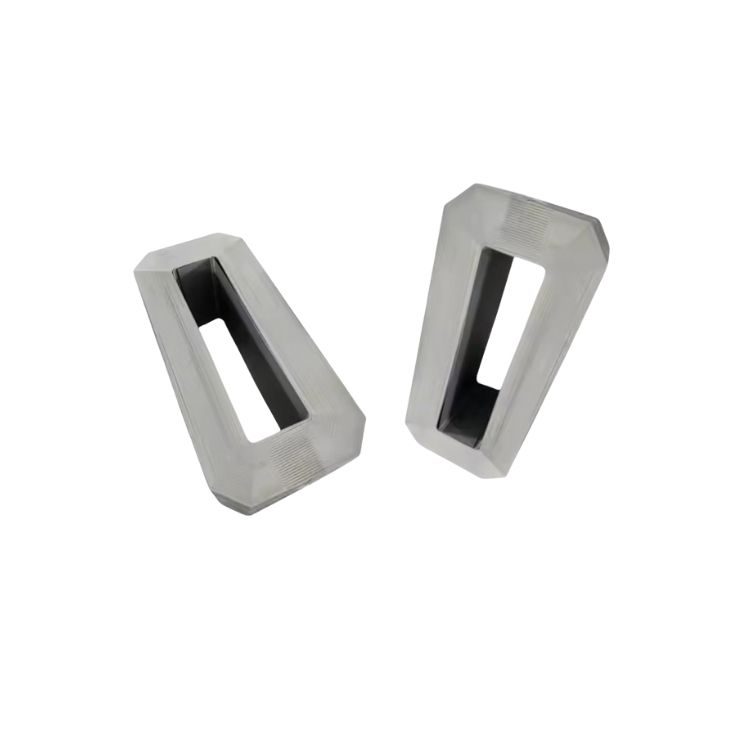
CD core formats are used in low current transformer and low current sensor core assemblies, where part of the magnetic path is deliberately opened to stabilise inductance.
The YadooTEK Thin Strip Core in Energy Monitoring
YadooTEK is the brand of Wuxi Yado Electromechanical Co., Ltd., a transformer core manufacturer founded in 2022 and based in Jiangyin City, Wuxi, Jiangsu Province, China. The company exports approximately 85% of its output, operates a 1,000 m² facility with 80 employees and a 25-engineer R&D team, and produces roughly 250,000 core units per year.
Its Thin Strip Core is the family positioned specifically for energy management, energy monitoring, electricity, medical X-ray and special power supply applications. The line is built from silicon steel or permalloy and covers amorphous thin strip, nanocrystalline thin strip, silicon steel thin strip lamination, toroidal high-efficiency and low-loss transformer core types. Documented models in this family are the Block Core, Pulse Transformer Core and Toroid Core, with strip thickness options of 0.05, 0.08, 0.10 and 0.15 mm and material grades recorded as MU, GT050, GT080 and GT100.
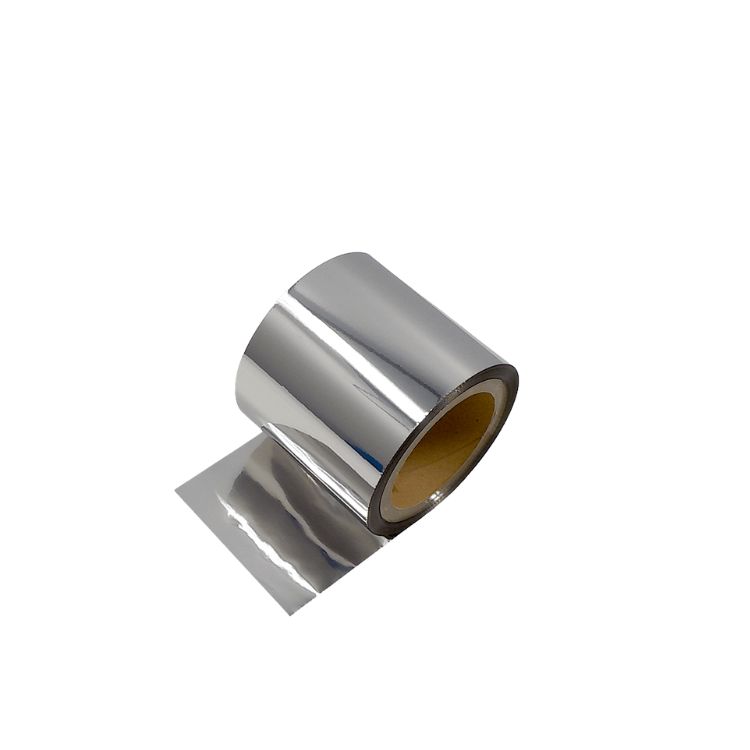
Permalloy (Ni-Fe) cores are used as precision current transformer cores and high-permeability sensor cores in monitoring channels.
Verification sits inside the production flow rather than at the end of it. The company runs a full-process quality-control system in which each process undergoes strict testing, supported by core magnetic testing instruments and transformer capacity and loss testing instruments, and it applies 100% testing to its cores. For a monitoring application, that testing capability is what turns a catalogue loss figure into a value that can be checked batch by batch.
Manufacturing is organised around OEM/ODM work with customisation of size, specification and material, a minimum order quantity of one unit, and a stated lead time of 45 to 60 days. These commercial parameters matter for monitoring projects because they determine how quickly a non-standard core can be validated in a pilot build before a production order is committed.
Certification scope should be read product by product. The NCW CORE transformer core holds ISO 9001:2015 certification (equivalent to GB/T 19001-2016), certificate number 91320281MABPUAFD29, issued by Noah Testing & Certification Group Co., Ltd., applying to the EU, North America, Southeast Asia, the Middle East, Japan and Korea, with a scope covering the sales of power electronic components and mechanical parts. A separate CE certification, number B-S00051E0199R1, issued by BEIDE against EN 61869-1:2009 and EN 61869-2:2012, applies to the current transformer product for the EU, Asia and Middle East markets. Buyers should note that these documents are product-specific: a certificate covering one core product does not automatically extend to every core type in a supplier's catalogue, and the applicable standard matters as much as the certificate number.
Where Low-Loss Cores Are Used in Energy Monitoring
The application map for these cores is wider than metering alone. Documented application fields for YadooTEK thin strip and permalloy cores are energy management, energy monitoring, electricity, medical X-ray and special power supply, while the low current transformer and low current sensor core family additionally lists EV charging and industrial control.
- Power metering equipment and smart grid terminals — the metering chain where core error is most directly visible in reported energy figures.
- Current and voltage transformers (instrument transformers) — where accuracy classes from 0.2 to 0.5S and 0.2S define the acceptable core behaviour.
- Industrial sensors and low-current measurement channels — where keeping excitation current small is what keeps a weak signal usable.
- EV charging and industrial control equipment — environments where DC components and switching noise make gapped and nanocrystalline formats relevant.
- Medical X-ray and special power supply equipment — applications where the core must hold its parameters under unusual waveform and thermal conditions.
- Utility-side distribution equipment — where CRGO lamination, amorphous and unicore distribution transformer core families serve dry-type and oil-immersed transformers.
In one documented program, 5,000 YadooTEK cores were supplied to power equipment manufacturers, sensor OEMs and instrument transformer producers for use in current and voltage transformers, industrial sensors, power metering equipment and smart grid terminals. The project record describes the result as high-precision metering with low-loss operation, strong anti-interference and compliance with IEC international standards — the combination of properties that monitoring hardware is usually specified around.
Application data for these cores records matched equipment as power transformers, current and voltage transformers, inductors, reactors, filters, switchgear, distribution cabinets and power inverters, with the core's function described as magnetic induction, loss reduction, support of the coil and reduction of excitation current. Typical project requirements listed alongside them are customised design, low loss and high efficiency, high insulation strength, RoHS and CE compliance, long service life and anti-corrosion treatment — a useful reminder that the core specification is one line in a broader procurement requirement, not the whole document.
Low-Loss Cores vs Conventional Lamination Stacks: Trade-offs and Boundaries
Low-loss and high-permeability cores are not automatically the right answer for every monitoring design. The comparison below sets the documented behaviour of specialty cores against conventional stacked laminations, including the boundaries where the conventional approach still wins.
| Aspect | Conventional stacked CRGO lamination | Low-loss thin strip / specialty alloy core |
|---|---|---|
| Market position | CRGO held a 79.6% share of the transformer core market by material type in 2024 (Mordor Intelligence) — the mainstream choice across the market. | Thin strip, permalloy and nanocrystalline cores serve a smaller, accuracy-driven segment. |
| No-load loss | Reference baseline. | Amorphous alloy cores are reported to reduce no-load losses by 70%–80% compared with traditional CRGO cores (Electrical Trader); permalloy and nanocrystalline grades are chosen mainly for permeability and low excitation current. |
| Material cost and handling | Lower material cost with well-established processing routes. | Specialty alloys generally carry higher material cost, and thin strip and high-permeability materials are more sensitive to mechanical stress during winding and assembly. |
| Dimensional and power envelope | Scales to large power transformer cores above the documented toroidal windows. | Documented limits: 50–200 mm diameter and 100–5000 VA for the NCW CORE; 50 VA–10 kVA with OD 30–300 mm for custom toroidal cores. |
| Standards and certification scope | Power transformers and reactors are governed by the IEC 60076 series. | ISO 9001:2015 applies to the NCW CORE; the CE certificate under EN 61869-1:2009 and EN 61869-2:2012 applies to the current transformer product. |
The clearest boundary is economic. CRGO laminations held 79.6% of the transformer core market by material type in 2024, which indicates that conventional laminated cores remain the mainstream choice across the market as a whole. In a monitoring device with a generous error budget, or where the core carries power rather than signal, a standard lamination stack can meet the requirement at a lower material cost, and thin strip or permalloy material adds expense without adding measurable value.
Two further boundaries are worth stating plainly. First, high-permeability materials are more sensitive to mechanical stress during winding and assembly than conventional lamination steel, so the benefit of a low-loss material depends on the processing discipline of the supplier, not only on the datasheet value. Second, the documented dimensional envelope is finite: the NCW CORE covers 50–200 mm core diameters and 100–5000 VA rated power, while custom toroidal cores extend from 50 VA to 10 kVA with outside diameters of 30–300 mm, inside diameters of 15–200 mm and heights of 10–150 mm. A design outside those windows needs a different core family, or a genuinely custom development, rather than a stretched standard part.
Market Signals Behind Demand for Low-Loss Cores
Third-party estimates of the global transformer core market put it at USD 9.66 billion in 2024, with a projected value of USD 15 billion by 2034 (Zion Market Research). Figures vary with the scope of the research: Strategic Market Research published a 2024 estimate of USD 11.2 billion and IMARC Group an estimate of USD 9.6 billion, largely because some studies count power and distribution transformer cores while others include instrument and sensor cores. The direction of travel, however, is consistent across sources.
Supply-side signals point the same way. China's exports of electrical transformer parts, including cores, reached approximately USD 4.8 billion in 2024, the highest of any exporter (UN Comtrade / WITS). At the top of the industry, major participants in the transformer core market include ABB, Siemens Energy, Hitachi Energy and GE Vernova (Stellar Market Research) — large equipment groups that coexist with specialist core manufacturers serving metering, sensor and instrument-transformer customers.
For buyers, the practical consequence is a market with both breadth and depth. Core supply for monitoring applications comes from specialist manufacturers as well as integrated equipment groups, and the differentiating factors between quotes are usually the documented loss figure, the material grade, the dimensional envelope and the verification method, rather than the general product category being offered.
Future Outlook
The direction of monitoring hardware is toward more measurement points in more places, and every measurement point is a core somewhere in the chain. The specifications most likely to come under pressure are the ones already documented in current product data: loss at a stated flux density and frequency, the temperature window over which that loss holds, strip thickness and material grade, and the dimensional envelope that the core can cover without redesign.
It is also reasonable to expect verification and certification requirements to become more granular, because the standards landscape already distinguishes between power transformers and reactors, governed by the IEC 60076 series, and instrument transformers, covered by the EN 61869 series under which the CE certification for YadooTEK's current transformer was issued. Buyers who ask for a loss figure with its test conditions, an operating temperature range, a material grade and a certificate scope from the outset will find both comparison and validation easier, regardless of which supplier they eventually select.
FAQ
Why does core loss affect measurement accuracy in an energy monitoring system?
Core loss requires a magnetizing, or excitation, current that does no useful work in the secondary winding. In a current transformer or sensor core, that excitation current produces ratio error and phase displacement. Because the deviation repeats with load and temperature rather than appearing as random noise, it accumulates in the energy totals a monitoring system reports. Loss also raises core temperature, which shifts magnetic behaviour and reduces the thermal margin available to the surrounding insulation.
What core loss value should be specified, and at what test conditions?
A loss value is only comparable when it is tied to a flux density, a frequency and a temperature range. YadooTEK documents ≤1.0 W/kg at 1.5 T, 50 Hz for its NCW CORE toroidal wound core, and ≤1.2 W/kg at 1.5 T, 50 Hz for custom toroidal cores. Buyers should request the loss figure at the flux density and frequency at which the core will actually operate, together with the temperature window over which the value is guaranteed.
Which core material is suitable for energy monitoring — silicon steel, permalloy or nanocrystalline?
The choice follows the binding constraint. CRGO silicon steel, which held 79.6% of the transformer core market by material type in 2024 (Mordor Intelligence), is the cost-driven default and is used in the NCW CORE and custom toroidal cores. Permalloy — a Ni-Fe permalloy alloy (80Ni-4Mo-Fe) in grades 1J85, 1J79 and 1J50 — is used where excitation current and signal fidelity dominate, in configurations such as precision current transformer cores and high-permeability sensor cores. Thin strip cores are available in silicon steel or permalloy and include amorphous and nanocrystalline thin strip constructions; published comparison data indicates amorphous alloy cores reduce no-load losses by 70% to 80% versus traditional CRGO cores (Electrical Trader).
What operating temperature range must a monitoring core support?
Documented core-level ranges are −40 °C to 120 °C for the NCW CORE and −40 °C to 130 °C for YadooTEK custom toroidal cores. These differ from device-level conditions: application data for transformer core projects records system operating conditions from −40 °C to +155 °C for indoor and outdoor installations on 50 Hz and 60 Hz power systems. Buyers should specify the temperature range at the core, and separately confirm the broader range the finished device must survive.
What dimensional and power-range limits apply to low-loss toroidal cores?
YadooTEK documents a core diameter range of 50–200 mm and a rated power range of 100–5000 VA for the NCW CORE. Its custom toroidal cores cover 50 VA to 10 kVA, with outside diameters of 30–300 mm, inside diameters of 15–200 mm and heights of 10–150 mm. Designs that fall outside these windows require a different core family or a specific development rather than a modified standard part.
How is core loss verified before shipment?
Verification depends on the supplier's test equipment and process discipline. YadooTEK operates a full-process quality-control system in which each process undergoes strict testing, using core magnetic testing instruments and transformer capacity and loss testing instruments, and applies 100% testing to its cores. For a monitoring project, the relevant check is whether the loss figure quoted at 1.5 T and 50 Hz can be reproduced on delivered batches with traceable test records.
Which certifications apply to low-loss cores used in monitoring equipment, and what are their limits?
The NCW CORE transformer core holds ISO 9001:2015 certification (equivalent to GB/T 19001-2016), certificate number 91320281MABPUAFD29, issued by Noah Testing & Certification Group Co., Ltd., covering the EU, North America, Southeast Asia, the Middle East, Japan and Korea, with a scope of sales of power electronic components and mechanical parts. A separate CE certification, number B-S00051E0199R1 issued by BEIDE against EN 61869-1:2009 and EN 61869-2:2012, applies to the current transformer product for the EU, Asia and Middle East markets. The limit is scope: certification is granted per product, so a document covering one core or transformer type does not automatically cover every item in a supplier's range.