
Why Bio-Based Sanitary Napkins Are Reshaping 2026 Procurement Strategies
Industry Context: The Bio-Based Shift in Feminine Hygiene
The global sanitary napkin market, valued between USD 20.4 billion and USD 25.73 billion in 2024, is undergoing a structural transformation. A growing segment—biodegradable sanitary napkins—is projected to reach USD 8.54 billion by 2030, expanding at a compound annual growth rate (CAGR) of 20.1% (Mark & Spark Solutions). This shift is driven by regulatory pressure on single-use plastics, consumer demand for chemical-free products, and evolving procurement criteria among distributors and retailers in North America, Europe, and Southeast Asia.
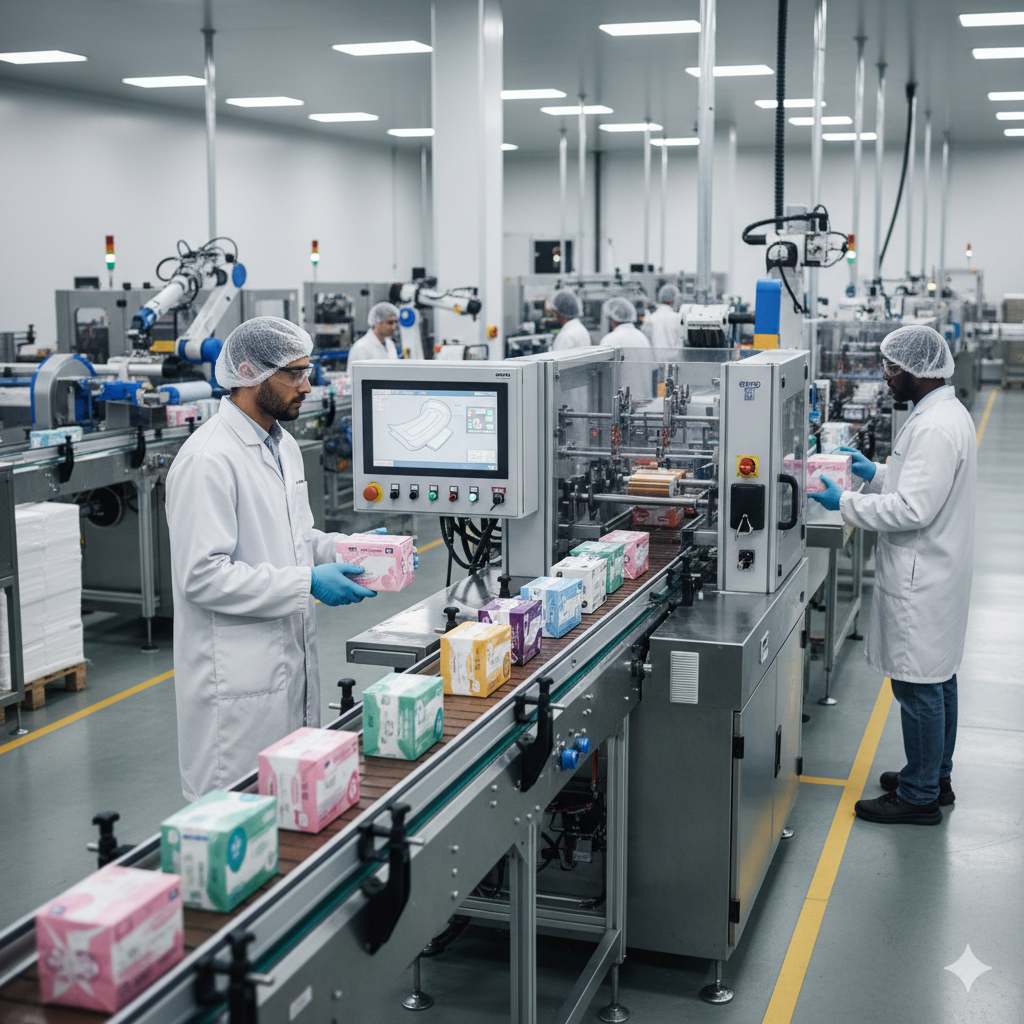
Industry production line for eco-friendly feminine hygiene products (Source: Family Cares Group).
Challenge and Opportunity: Sourcing Sustainable Sanitary Napkins at Scale
International buyers face a dual challenge: meeting increasing end-user expectations for eco-friendly, hypoallergenic period products while maintaining cost efficiency and reliable supply. Traditional sanitary napkins rely heavily on super absorbent polymer (SAP) and non-biodegradable plastics, which conflict with sustainability goals and tightening regulations such as the EU Single-Use Plastics Directive. The opportunity lies in partnering with manufacturers who have vertically integrated bio-based material innovation into their production lines.
Ecolivia by Family Cares Group: A Verified Bio-Based Solution
Ecolivia is a premium bio-based disposable sanitary napkin line manufactured by Family Cares Group, an integrated manufacturing and supply chain group established in 2001. With a 35,000+ square meter facility in Quanzhou, China, and 350–500 employees, the group produces over 650 million pieces annually across eco-friendly sanitary napkins, adult care, and medical foam products. Export business accounts for 85–90% of total sales, serving markets in North America, Europe, Southeast Asia, CIS, the Middle East, and Africa.
Product Specifications: Ecolivia-Bio Series
The Ecolivia-Bio Series (model: Ecolivia-Bio Series) is a disposable sanitary napkin made from organic cotton, bamboo fiber, and an advanced bio-based absorbent core. It offers a full length range of 155 mm to 450 mm, with customizable absorbency options (high, super, night). The product is designed for fast-moving consumer goods (FMCG) retail, sustainable brand partnerships, and subscription-based e-commerce.
Technical Architecture: How Bio-Based Materials Deliver Performance
The Ecolivia-Bio Series replaces conventional SAP-heavy cores with a multi-layer structure:
- Top sheet: organic cotton or bamboo fiber – soft, breathable, and free from chlorine bleach, ensuring hypoallergenic contact with sensitive skin.
- Absorbent core: advanced bio-based polymer blend that achieves liquid absorption comparable to SAP while being 90% biodegradable under industrial conditions (EN 13432 / ASTM D6400 standards).
- Backsheet: breathable bio-film (derived from plant-based materials) that prevents leakage without the use of polyethylene.
- Adhesive and packaging: FSC-certified paper boxes and skin-safe hot-melt adhesives.

Schematic of the Ecolivia-Bio Series layered absorbent system.
Application Scenarios: Where Ecolivia Fits the Global Value Chain
Family Cares Group has documented specific use cases that align with modern procurement flows:
- FMCG / Retail (US market): For brands launching new eco-friendly menstrual lines, the Ecolivia-Bio Series serves OEM/ODM/private label projects. Special requirements include GOTS/FSC certification and 100% fluorescent-free materials. The product is distributed through automated carton/bag packaging lines suitable for retail shelves or subscription boxes.
- E-commerce / Boutique Retail (Middle East, e.g., UAE): Box-packed sanitary napkins in boutique gift packaging (model: Ecolivia-Premium Series) cater to high-end organic brands. Materials include organic cotton, bamboo fiber, and advanced bio-based core, with sizes from 240 mm to 450 mm. FSC-certified paper boxes and high-end printing (UV/foil) are available for low MOQ testing of new SKUs.
The R&D team of 25+ professional engineers supports bespoke OEM projects, including customized absorbency profiles, packaging designs, and compliance documentation for target markets.
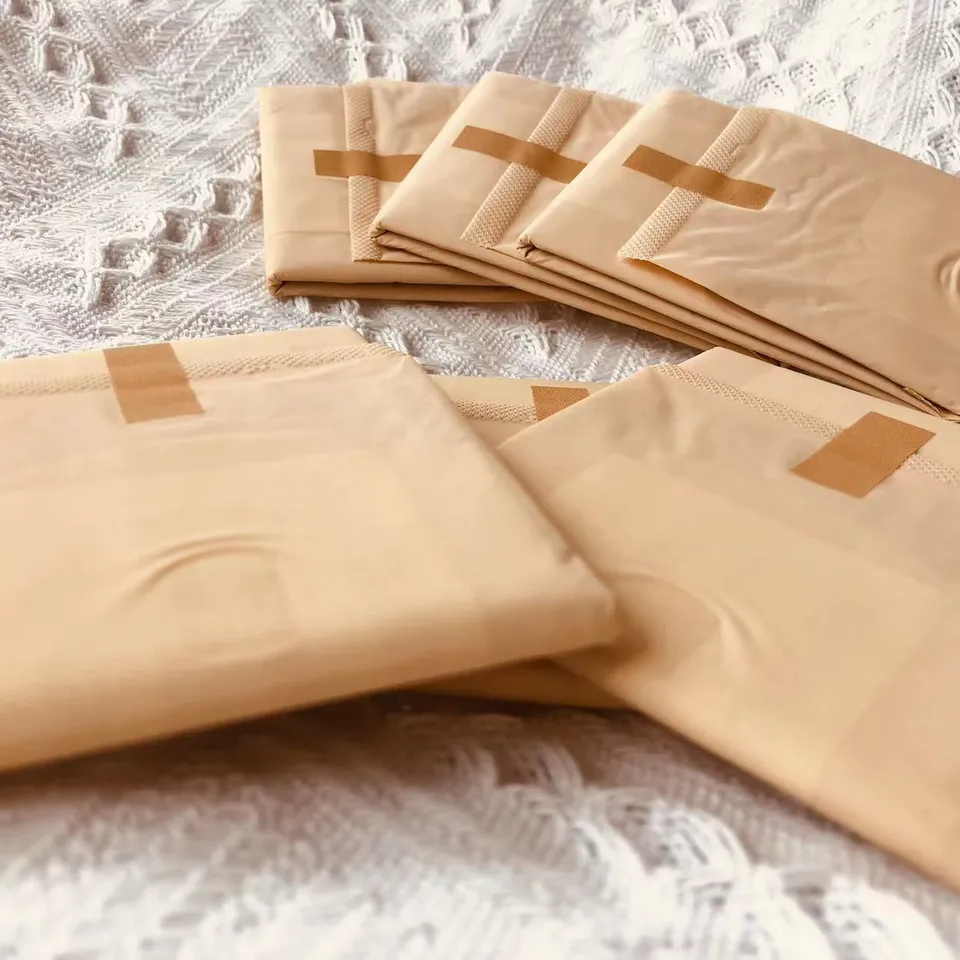
Example of premium box-packed sanitary napkins for high-end retail.
Market Trend Analysis: The Data Behind the Bio-Based Surge
Verified third-party data supports the acceleration of bio-based feminine hygiene:
- The biodegradable sanitary napkins market was valued at USD 2.43 billion in 2023 and is projected to reach USD 8.54 billion by 2030 (CAGR 20.1%) – far outpacing the broader sanitary napkin market (~4–5.6% CAGR).
- Organic cotton sanitary napkins alone reached an estimated USD 3.95 billion in 2025, driven by consumer preference for hypoallergenic products.
- China remains the world’s leading exporter of sanitary pads (HS 961900), with export values of approximately USD 3.3–3.59 billion in 2024, making it a critical sourcing hub for global buyers.
These trends indicate that procurement teams must evaluate suppliers not only on cost but also on material innovation, certification depth, and the ability to scale bio-based production.
Comparison with Traditional Solutions: Balanced Performance
Compared to conventional SAP-based sanitary napkins (e.g., FC-Standard Series, which uses non-woven fabric, SAP, and breathable bio-film), bio-based products like the Ecolivia-Bio Series offer better end-of-life biodegradability and a chemical-free user experience. Independent standards (EN 13432 / ASTM D6400) require 90% biodegradation within 6 months for compostable certification.
One honest limitation: In ultra-high-absorbency applications (e.g., overnight heavy flow > 300 ml), bio-based cores may require a slightly thicker pad profile to match the fluid retention of SAP-intensive designs. However, ongoing material innovation – including improved bio-polymer blends – is rapidly closing this gap, making bio-based options viable for the vast majority of daily and light-to-moderate flow needs.
Future Outlook: Bio-Based as a Procurement Standard
As regulatory frameworks tighten and end consumers demand transparency, bio-based sanitary napkins are moving from niche to mainstream. Manufacturers with dedicated bio-based R&D, such as Family Cares Group (with 25+ engineers focusing on material science), are positioned to become long-term partners for global distributors. Key factors to watch include certification harmonization (GOTS, FSC, FDA), price parity with conventional products, and the scalability of bio-fiber supply chains.
Frequently Asked Questions
Q: What sizes are available in the Ecolivia-Bio Series?
A: The Ecolivia-Bio Series covers a full range from 155 mm to 450 mm, including panty liners, regular, heavy flow, and overnight options.
Q: What materials are used in the absorbent core?
A: The core is made from an advanced bio-based polymer blend, combined with organic cotton and bamboo fiber for the top sheet. The backsheet is a breathable bio-film.
Q: Can Ecolivia provide private label or OEM services?
A: Yes. Family Cares Group offers OEM/ODM/private label projects for brands launching new lines, including customized absorbency, packaging (including FSC-certified boxes), and compliance documentation.
Q: What certifications do Ecolivia products hold?
A: Products are designed to meet GOTS, FSC, and FDA standards. For the US market, the product line is covered by FDA Establishment Registration (number 3005078659).
Q: What is the annual production capacity?
A: Family Cares Group produces over 650 million pieces annually across all product lines, with a dedicated team of 25+ R&D engineers.
Q: Which export markets does Family Cares Group serve?
A: Export accounts for 85–90% of sales, with active markets in North America (USA, Canada), Europe (UK, Germany, France), Southeast Asia, CIS, Middle East, and Africa.
_For detailed product specifications and OEM inquiries, contact Family Cares Group at admin@family-cares.com or via phone/WhatsApp: +86 13805968557._
¿Tiene preguntas o necesita más detalles?
Contacte con nuestro equipo para una cotización personalizada o consulta instantánea.
Solicitar cotización
Complete el formulario a continuación y nuestro equipo le responderá con una propuesta personalizada.
Chat directo de WhatsApp
¿Prefiere chatear en tiempo real? Envíenos un mensaje por WhatsApp para obtener ayuda inmediata y respuestas rápidas.
- Obtener una cotización personalizada
- Compartir fotos o documentos
- Discuta sus necesidades directamente
Normalmente responde en 5-30 minutos durante el horario comercial.