
Wholesale Ficus Ginseng Bonsai: Compliance-First Sourcing
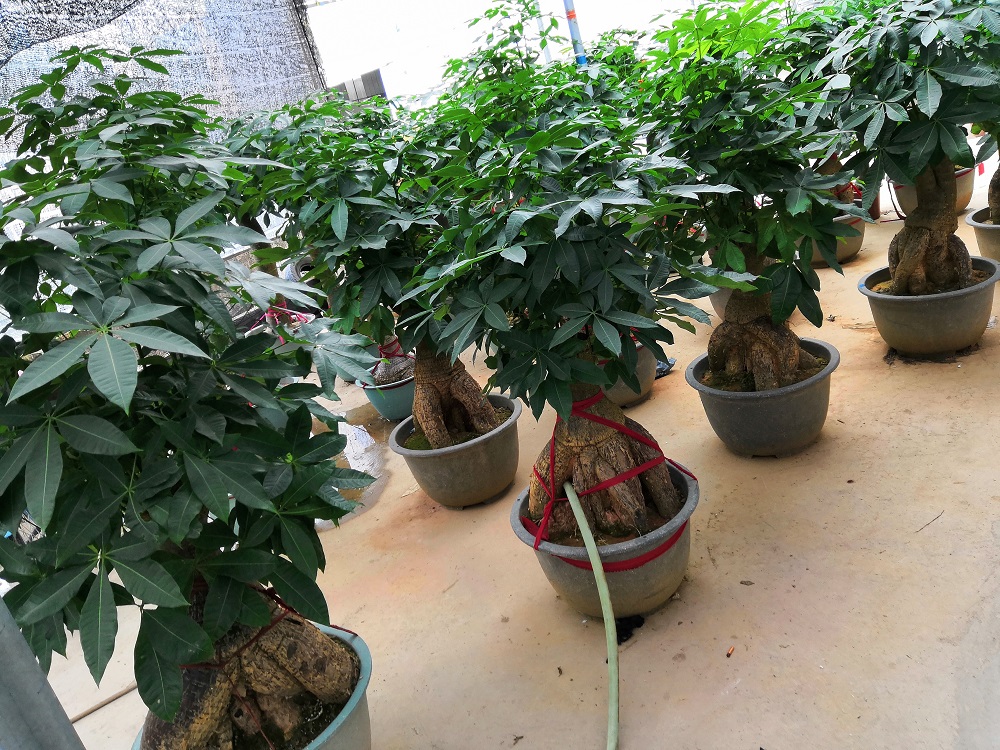
Wholesale Ficus ginseng bonsai has become a standard SKU in garden centers, online plant shops and interior greenery programs. Its compact root structure, glossy canopy and forgiving care routine make it an approachable choice for first-time bonsai buyers, while its small footprint fits apartment living. But as more distributors move into this category, the difference between a profitable shipment and a customs rejection often lies in compliance, specifications and shipping discipline.
This article is written for buyers who are moving from product discovery to supplier evaluation. It focuses on the constraints that matter when purchasing wholesale Ficus ginseng bonsai: export certifications, plant specifications, temperature-controlled transport, and the limits of a supplier's service model. The discussion is supported by verified market data and by the export operation of Kinofarm Bonsai, a horticultural supplier based in Changtai, Zhangzhou, China.
Why Wholesale Demand for Ficus Ginseng Bonsai Is Strong
The global bonsai market is projected to reach approximately USD 18.4 billion by 2035, growing at a CAGR of 8.8% from 2026 to 2035, according to an industry analysis indexed through Vertex AI Search. Asia Pacific alone held more than 48.5% of the bonsai market in 2025, valued at USD 3.8 billion. More specifically, indoor bonsai varieties such as Ficus and Money Tree are expected to grow at a 10.28% CAGR through 2031, according to Mordor Intelligence, as apartment living and remote work increase the desire for live greenery.
For wholesale buyers, this creates a clear opportunity: Ficus ginseng bonsai is one of the most accessible wholesale indoor bonsai trees in the market. It can be sold as a gift, a desk plant, a mini landscape piece, or a long-term ornamental investment. However, growth also attracts new suppliers with inconsistent quality and incomplete documentation. The gap between market demand and trustworthy supply is where procurement risk sits.
What an Export-Ready Supplier Should Offer
A low price per unit is not enough. Export-ready suppliers must demonstrate three things: traceable production, valid plant health registration, and logistics infrastructure that keeps live plants alive in transit.
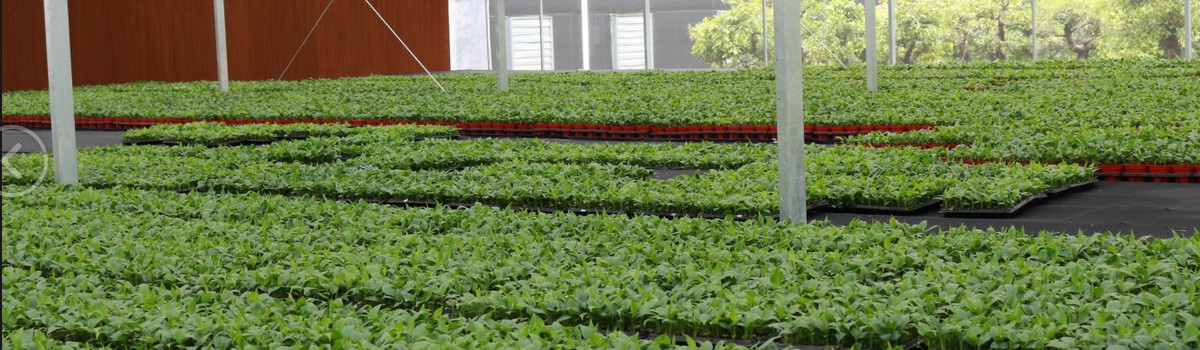
Kinofarm Bonsai operates two nurseries with 65,000 m² of CIQ-certified greenhouses. The company reports an annual output of 5,000,000 units of live plants and bonsai, with approximately 98% exported to markets including Oceania, the Americas, Europe, Africa, Southeast Asia and the Middle East. Its cultivation system uses 50 cm-high shelving with a 1.6×1.6 mm breathable mesh to improve air circulation, light access and moisture control. The company also follows the MPS-A management system, a globally recognized framework for sustainable and traceable horticulture.
For Ficus ginseng bonsai specifically, Kinofarm sells grafted or ungrafted plants with root weights from 50 g to 10 kg. That range allows importers to choose from small potted mini bonsai plants, medium-size indoor specimens, or larger ornamental bonsai for landscape projects. The Ficus bonsai line is covered by a Registration Certificate for Export Seedling & Flower Production Enterprises issued by Xiamen Customs of the People's Republic of China under registration number 3700ZM008. The registration is valid until 24 May 2028 and also covers Kinofarm's Pachira and Cycas revoluta products.
On the production side, Kinofarm lists a monthly capacity of 20 refrigerated containers, a lead time of 20 to 60 days, and a minimum order quantity of 45 kg. Quality control is described as 100% inspection, and after-sales support includes planting guidance and quarantine document support. The table below summarizes the key commercial parameters for procurement planning.
| Parameter | Kinofarm Ficus Ginseng Bonsai |
|---|---|
| Product form | Grafted or ungrafted |
| Root weight | 50 g – 10 kg |
| MOQ | 45 kg |
| Lead time | 20–60 days |
| Monthly capacity | 20 RF containers |
| Quality control | 100% inspection |
| Export certification | Xiamen Customs registration (No. 3700ZM008) |
| After-sales support | Planting guidance, quarantine document support |
How Temperature-Controlled Transport Keeps Bonsai Alive
The survival rate of wholesale Ficus ginseng bonsai during long ocean journeys is not random. It depends on the plant's ability to reduce metabolism under low-temperature conditions. According to Kinofarm's export knowledge base, when temperature and ventilation are well adjusted, plants can maintain good freshness and survival rate in a container.
Standard dry containers are the most common failure point in live plant shipments. They lack temperature adjustment and ventilation functions, which causes relatively high plant loss. Refrigerated or fresh-keeping containers are the preferred choice for plant export. The operator must set the correct temperature and vent settings for each species and monitor the environment throughout transit. This is why a supplier's logistics capability is a direct quality indicator.
Kinofarm's production system includes proprietary patents for long-distance storage and transport methods for live plants, and for pest control in soilless bonsai cultivation. The company also uses software for intelligent greenhouse monitoring, soil moisture monitoring and flower production management. These are process-level controls, but they translate into a commercial benefit: fewer dead-on-arrival claims, fewer customs inspections and higher confidence in repeat orders.
Where Wholesale Ficus Ginseng Bonsai Fits in the Green Market
Wholesale Ficus ginseng bonsai is supplied to retail and project channels that need consistent live plant sourcing. Typical buyers include garden centers, landscape contractors, indoor plant rental companies, and furniture or lifestyle stores that carry live decor. The export environment is normally a greenhouse, and shipments commonly move in reefer containers under the destination country's phytosanitary rules.
One documented case from Kinofarm shows a garden center retailer in Spain that ordered 4,134 units of Cycas revoluta and Ficus bonsai across five years. The buyer used the plants for its garden center aisles, and the reported result was good quality after shipment in containers. The highlight of the case is that the Ficus line arrived in a condition that supported a long-term reorder relationship. This is exactly what a wholesale buyer needs: a supplier whose plants, packaging and paperwork survive the distance.
Market Trends That Influence Bonsai Sourcing Decisions
Several verified market signals help explain the current mix of wholesale demand. Landscape bonsai accounted for the largest type share at 34.2% of the global bonsai market in 2025, according to Dataintelo, showing that outdoor or project-based demand is still substantial. Meanwhile, low-maintenance 'living decor' plants such as Ficus retusa and succulent bonsai are gaining popularity, according to the Horticultural Trades Association and TechSci Research, because consumers prefer plants that do not demand constant attention.
On the supply side, the market is shifting from simple product sales toward integrated project services for landscaping. Buyers sourcing wholesale landscaping bonsai trees should therefore look for suppliers who can handle not only the plant itself, but also the planting plan, packaging and transit documentation.
China's exports of other live plants, a category that includes bonsai, reached USD 355 million in 2024, with the United States and South Korea as the top destinations, according to OEC data. That export volume reflects the scale and maturity of Chinese bonsai nurseries. The commercial implication is that buyers have options, but they also need a stable way to filter for compliance and consistency.
Export-Ready Supplier vs. Traditional Small-Scale Supplier
To make the procurement decision clearer, the table below compares an export-ready supplier such as Kinofarm with a generic traditional supplier that is not structured for cross-border plant shipping.
| Criterion | Export-Ready Supplier | Traditional Small-Scale Supplier |
|---|---|---|
| Phytosanitary documentation | Registered with Customs/CIQ; certificate available per shipment | Often no export registration or phytosanitary service |
| Shipping method | Refrigerated container with temperature and ventilation control | Standard dry container, high plant-loss risk |
| Quality control | Batch inspection, greenhouse management standards (e.g., MPS-A) | Visual or spot-checks only |
| MOQ and planning | Clear MOQ (e.g., 45 kg), scheduled production windows | Unclear or inconsistent availability |
| After-sales support | Planting guidance and quarantine document support | Usually none |
The comparison is not about moral preference; it is about failure risk. An uncertified supplier may offer a lower unit price, but product loss, customs rejection and inconsistent quality can erase that saving quickly.
Limits and Trade-Offs in Wholesale Ficus Ginseng Bonsai Sourcing
No supplier model fits every buyer. Kinofarm's 45 kg MOQ and container-oriented capacity mean that very small trial orders or last-minute local restocking may be better served by a domestic nursery. Also, a Chinese exporter's registration does not remove the importer's responsibility to understand destination rules. EU buyers must still meet Regulation (EU) 2019/2072 phytosanitary requirements, and U.S. importers must follow USDA APHIS rules, which generally require bare-root bonsai plus a phytosanitary certificate from the country of origin, except for shipments of 12 or fewer plants. A serious supplier will help with documentation, but the legal responsibility for import compliance remains on the importer's side.
Future Outlook for Wholesale Bonsai Supply Chains
The next stage of the wholesale bonsai market will be shaped by data-driven production and transport monitoring. Suppliers with internal greenhouse sensor systems, transport patents and software-based soil management will be better positioned to fill large projects without quality surprises. Kinofarm already operates this way, combining variety rights for selected ornamental plants with long-distance transport patents. Buyers can therefore expect to evaluate suppliers not just on the aesthetics of a photo, but on the strength of greenhouse management systems, temperature logs and certification validity.
For companies planning their 2026–2027 sourcing, the key is to move beyond price lists. Ask for the registration number of the export nursery, confirm the container type for live plants, ask about the batch inspection process, and clarify which party provides the phytosanitary certificate. That is the practical workflow behind a compliant wholesale Ficus ginseng bonsai order.
More product details and packaging examples are available in the Kinofarm catalogue: https://cdn.socialarks.com/sbsp/25171/common/2026/0810/KINO%20FARM%20Catalogue.pdf
FAQ
Can plants survive long-time transportation in containers?
Yes, provided the shipment is managed through the plants' dormancy mechanism. At low temperatures, plant metabolism slows down, and with well-adjusted temperature and ventilation, plants can maintain good freshness and survival rate. Refrigerated or fresh-keeping containers are recommended; standard dry containers without temperature and ventilation control cause relatively high plant loss.
What specifications are available for wholesale Ficus ginseng bonsai?
Wholesale suppliers commonly offer Ficus ginseng bonsai as grafted or ungrafted plants. Kinofarm lists root weights from 50 g to 10 kg, which translates into small potted mini bonsai plants and larger ornamental specimens. For U.S. import, USDA regulations generally require bonsai to be bare-rooted and accompanied by a phytosanitary certificate; EU markets require phytosanitary certification under Regulation (EU) 2019/2072.
What export certifications should a Ficus ginseng bonsai supplier hold?
A valid registration with the exporting country's plant quarantine authority is the first requirement. In China, this means registration with Customs (CIQ) as an export seedling and flower production enterprise. Kinofarm holds registration number 3700ZM008 issued by Xiamen Customs, covering its Ficus bonsai, Pachira and Cycas revoluta lines and valid until 24 May 2028. The exporter should also be able to issue a phytosanitary certificate for each destination country.
What is the minimum order quantity and lead time for wholesale Ficus ginseng bonsai?
For Kinofarm, the minimum order quantity is 45 kg, with a lead time of 20 to 60 days depending on variety, growing cycle and packaging configuration. Monthly capacity supports 20 refrigerated containers, making the supplier suitable for projects that need scheduled volume.