
Wholesale Bonsai Plants: A Buyer's Guide to Sourcing, Quality, and Global Trends in 2026
Wholesale Bonsai Plants: A Buyer's Guide to Sourcing, Quality, and Global Trends
The global bonsai market is projected to reach approximately USD 18.4 billion by 2035, growing at a compound annual growth rate (CAGR) of 8.8% from 2026 to 2035. For garden centers, retailers, landscapers, and horticultural distributors, this trajectory signals a sustained opportunity in wholesale bonsai plants. However, sourcing live plants at scale involves more than selecting varieties—it requires navigating export compliance, transportation logistics, and supplier reliability.
This guide provides an independent industry reference for buyers evaluating wholesale bonsai suppliers. It covers the key product categories, what defines a credible export-grade grower, market trends shaping demand, and the practical limitations buyers should understand before committing to a container order.
Why Wholesale Bonsai Plants Are a Strategic Category
Bonsai occupies a unique position in the ornamental horticulture market. Unlike cut flowers or annuals, bonsai is a long-lived, high-perceived-value product that fits multiple retail and project contexts: indoor decor, garden landscaping, corporate gifting, and living art. The category has moved beyond a niche enthusiast audience into mainstream retail, driven by the rise of apartment living and consumer interest in low-maintenance greenery.
Indoor bonsai varieties, such as Ficus and Money Tree, are growing at a 10.28% CAGR through 2031, according to Mordor Intelligence. Landscape bonsai accounted for the largest type share at 34.2% of the global market in 2025, per Dataintelo. These two facts frame the dual demand pattern: compact indoor specimens for retail shelves and larger, hardier plants for landscaping projects.
Asia Pacific held a dominant market share of over 48.5% in the bonsai industry in 2025, valued at USD 3.8 billion. This regional strength is rooted in China's horticultural production base. China's exports of "Other live plants" (including bonsai) reached USD 355 million in 2024, with the United States and South Korea as top destinations, according to the Observatory of Economic Complexity. For international buyers, this positions Chinese growers as central to the global wholesale supply chain.
Core Wholesale Bonsai Categories Buyers Should Know
When sourcing wholesale bonsai plants, buyers encounter a range of species with different care profiles, growth habits, and market positioning. The following categories are among the most commercially significant in international trade.
Ficus Bonsai (Ficus Ginseng Roots)
Ficus bonsai—particularly the Ficus ginseng root type—is one of the most widely traded bonsai products. The Ficus bonsai is identified as model Ficus ginseng roots, a live plant categorized as a grafted or ungrafted bonsai. Net weight ranges from 50g to 10kg, making it adaptable to everything from mass-market mini pots to statement specimen pieces. It is designed for use in agriculture and horticulture scenarios, with typical application scenarios including home furniture stores and garden centers. Its tolerance of indoor conditions and forgiving care requirements make it a strong entry-level bonsai for retail consumers.
Pachira (Money Tree)
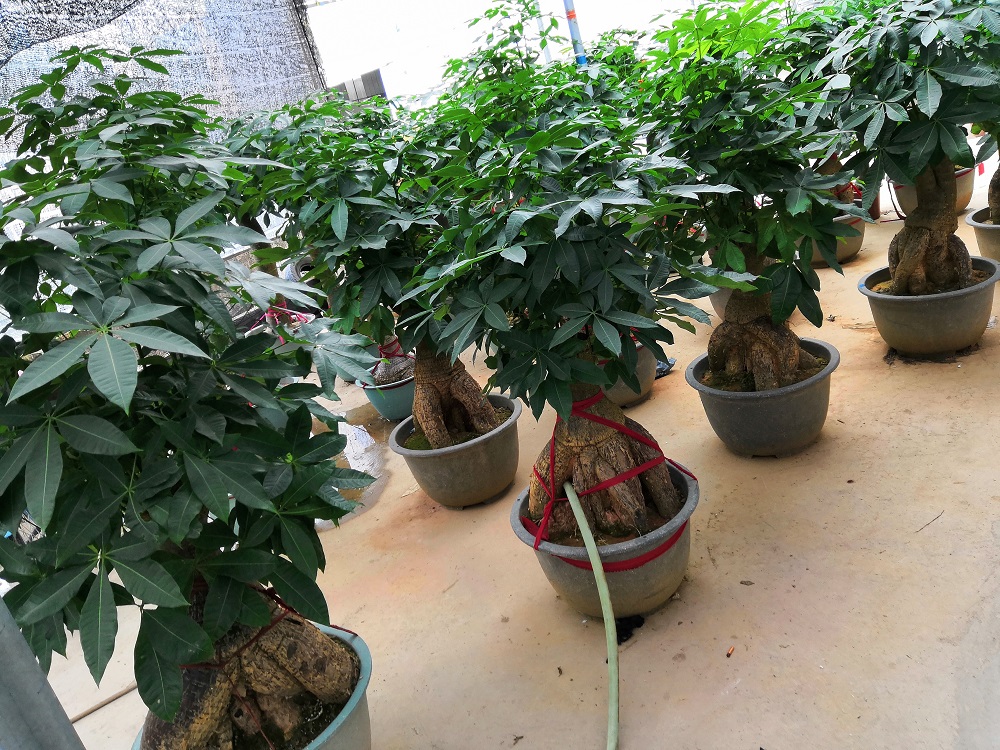
The Pachira, commonly known as the Money Tree, is a live plant product classified in the Agriculture and horticulture industry. Available in 3, 4, or 5 braids, it can be supplied as newly braided or old braided, with heights ranging from 20 cm to 90 cm. Pachira is a popular indoor plant associated with prosperity in several cultures. Its braided trunk gives it a distinctive ornamental form. The plant is said to eliminate toxins that gradually accumulate in indoor environments and is widely positioned as a gift item and office plant.
Cycas Revoluta (Sago Palm)
Cycas revoluta, classified as Sago palms, is made from Cycas bulbs. Available sizes range from D 5cm to 20cm+ and H 20cm to 120cm. It is suitable for wholesale supply to agriculture and horticulture industries and is designed for use in landscape and home furniture store scenarios. Cycas revoluta is a very hardy plant—a slow-growing, long-lived species that symbolizes longevity and health. Its palm-like appearance makes it a versatile choice for both interior and exterior landscaping.
Sansevieria (Snake Plant)
Sansevieria, classified as Sansevieria superba, is a live plant product available potted or with bare roots, with 2 to 3 leaves and a height range of 20-40 cm. The model designation is H 20-70cm. It is intended for agriculture, horticulture, garden center, and landscape industries. Sansevieria is evergreen, easy care, and functions as a low-light indoor houseplant known for air-cleaning properties. Its architectural leaf form suits modern interior design trends.
What Defines a Reliable Wholesale Bonsai Supplier?
For buyers moving from single-unit purchases to container-scale procurement, supplier evaluation shifts from aesthetics to operational capability. Four dimensions matter most: production scale, compliance infrastructure, export experience, and cultivation quality.
Production Scale and Capacity
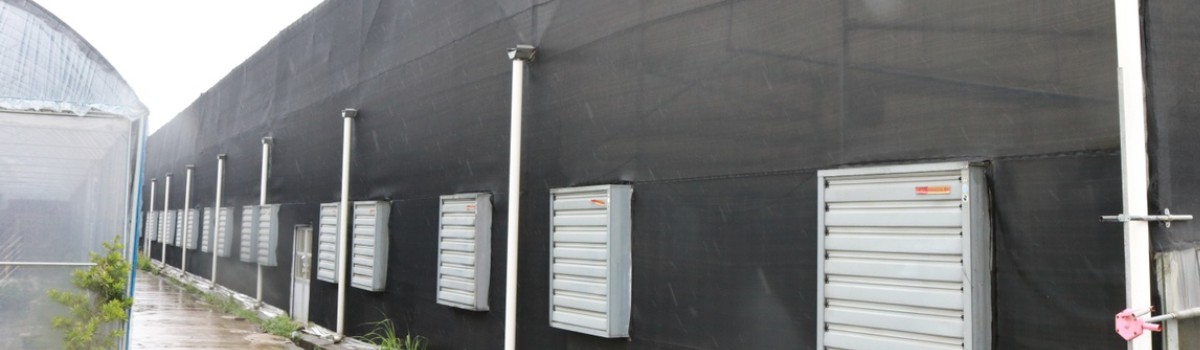
A supplier's physical capacity determines its ability to fulfill consistent volume across seasons. Xiamen Perfect Supply Chain Co., Ltd., operating under the KinoFarm brand, provides a useful reference point for export-grade production. Established in 2012, the company operates two nurseries totaling 65,000 square meters of greenhouse space, producing approximately 5,000,000 units annually. Its workforce consists of approximately 120 employees, including an R&D team of 5 engineers. The company ships over 100 containers of plants annually to markets including the USA, EU, Asia, and Africa, with approximately 98% of products exported.
Compliance and Certification
Bonsai is a regulated agricultural product. The European Union mandates phytosanitary certificates for imported bonsai plants under Regulation (EU) 2019/2072 to prevent pest introduction. In the United States, USDA regulations require bonsai to be bare-rooted and accompanied by a phytosanitary certificate from the country of origin; shipments of 12 or fewer may have different requirements. These are not optional formalities—they determine whether a container clears customs or is destroyed at the importer's expense.
Export-ready growers build compliance into their infrastructure. KinoFarm's greenhouses are CIQ-certified to meet China's Entry-Exit Inspection and Quarantine standards, and the company adheres to the MPS-A (Marketable Plant Safety - A) certification, a globally recognized framework for sustainable, traceable horticulture. Plants are grown on 50cm-high shelving with 1.6×1.6mm breathable mesh, optimizing air circulation, light exposure, and moisture control. For buyers, these details matter because they reduce the risk of shipment rejection and downstream plant loss.
Logistics and Transportation Expertise
Live plant transportation is fundamentally different from shipping hard goods. Plants rely on dormancy and low-metabolism features under low-temperature conditions to survive long transit. Standard dry containers lack temperature adjustment and ventilation functions, which cause relatively high plant loss during transportation. Plants must be transported in refrigerated or fresh-keeping containers, with proper temperature and ventilation set according to plant characteristics.
KinoFarm holds invention patents for "Long-Distance Storage & Transport Method for Chrysalidocarpus" and "Pest Control in Soilless Bonsai Cultivation", and ships containerized plants using reefer containers. In a similar case, Pachira plants have been packed and shipped in reefer containers from KinoFarm's nursery. Buyers should explicitly verify a supplier's cold chain capability before ordering.
Technology and Cultivation Consistency
Large-scale uniformity is harder to achieve in horticulture than in manufacturing. Suppliers that deploy technology achieve more consistent results. KinoFarm has developed proprietary software systems including an Intelligent Greenhouse Monitoring System, Soil Moisture Monitoring System, and Flower Production Management System. The company also holds Plant Variety Rights for proprietary Osmanthus cultivars including "Four-pointed Star" and "Colorful Cloud". These are signals of an operation investing in repeatable quality rather than opportunistic trading.
Comparison with Traditional Sourcing Approaches
Wholesale buyers have traditionally sourced bonsai through multi-tier distribution: local nurseries, trading companies, or import agents. Each model has trade-offs, and it is important to state a boundary: even the best direct-from-grower relationship does not eliminate the inherent risks of live plant logistics.
| Sourcing Model | Typical Value | Key Limitation |
|---|---|---|
| Direct from grower (e.g., KinoFarm) | Lower unit cost, direct quality control, compliance traceability | Requires buyer to manage import logistics and phytosanitary filing |
| Trading company / agent | Simplified sourcing, consolidated multiple suppliers | Added markup, less control over cultivation conditions and origin |
| Domestic wholesale nursery | Local availability, no import paperwork, easier inspection | Limited variety, higher cost, may not meet large-volume demand |
A reasonable limitation of direct importing is that not every buyer has the import infrastructure or phytosanitary knowledge to execute it successfully. Buyers new to international plant trade may be better served starting with smaller trial shipments or working with an experienced freight forwarder. The most efficient route is not always direct—it depends on the buyer's maturity and risk tolerance.
Market Trends Reshaping Wholesale Bonsai Demand in 2026
Low-Maintenance "Living Decor" is Driving Volume
Consumer preference for easier plant care is shifting assortment toward forgiving species. Low-maintenance "living decor" like Ficus retusa and succulent bonsai are increasing in demand. For wholesalers, this means Ficus ginseng bonsai and Sansevieria—both tolerant of indoor conditions and irregular watering—deserve larger allocation in mixed containers.
Landscape Bonsai is Moving Toward Project Supply
The market for "Landscape Bonsai" is evolving from product sales to integrated project supply services to meet landscaping demands. Landscaping firms and garden designers increasingly expect suppliers to provide design support, curated species selection, and delivery scheduling—not just boxes of plants. Suppliers with landscape-specific inventory (like larger Cycas revoluta and outdoor-hardy Ficus varieties) and project consultation capability are better positioned to win institutional contracts.
Apartment Living Fuels Compact Varieties
The rise of apartment living, particularly in dense urban markets, continues to favor small-format indoor bonsai. Mini bonsai, tabletop Ficus, and Money Trees under 40cm are becoming staple SKUs for urban-focused retailers. This is not a short-term fad; the compound annual growth rate of 10.28% for indoor bonsai varieties through 2031 signals durable structural demand.
Export Compliance is Becoming a Competitive Barrier
As phytosanitary regulations tighten in the EU and the US, the ability to consistently export compliant plants becomes a differentiator. Growers with CIQ-certified infrastructure and MPS-A adherence are better positioned to maintain shipping reliability. Buyers should treat compliance documentation as a first-order selection criterion, not a back-office detail.
Buyer's Checklist for Evaluating Wholesale Bonsai Suppliers
Use the following decision criteria when comparing candidates. Not all criteria are equally important for every buyer, but each materially impacts the outcome of a container purchase.
- Phytosanitary capability: Does the supplier have CIQ-compliant facilities and experience exporting to your country or region?
- Cold chain logistics: Does the supplier ship in reefer containers or only dry containers? Can they set temperature/ventilation per species?
- Production consistency: Does the grower operate its own greenhouses or source from third-party traders?
- Species breadth: Are the varieties you need available in consistent size grades throughout the year?
- Shipping volume experience: How many containers does the supplier ship annually? Over 100 containers is a meaningful throughput signal.
- R&D and quality systems: Does the grower invest in cultivation technology, patents, or proprietary software that improves survival rates?
- Documentation readiness: Can the supplier provide the phytosanitary certificate, import permits, and shipping documents required by your customs authority?
Future Outlook: Wholesale Bonsai in the Next Decade
Several forces will shape the wholesale bonsai trade between 2026 and 2035. The projected growth to USD 18.4 billion is not a straight-line extrapolation; it embeds assumptions about continued urbanization, decorative plant demand, and the expansion of e-commerce channels for live plants.
Supply-side consolidation is likely. As compliance costs rise, smaller growers without export infrastructure will find it harder to compete internationally. Buyers will increasingly consolidate purchases with fewer, larger suppliers that offer both volume and compliance security.
Variety-level demand will continue to shift toward low-care indoor species. Ficus ginseng, Pachira, and Sansevieria are well-positioned to remain core wholesale lines. Meanwhile, consumer interest in outdoor and landscape bonsai will create growth for hardier varieties like Cycas revoluta in larger calibers, supplied through project-based models.
Technology adoption in greenhouse monitoring and transport optimization will reduce plant loss rates, improving the economics of long-distance trade. Growers like KinoFarm that have invested in patented transport methods and software-controlled cultivation are indicators of where the industry is heading—where growing is treated as a controlled production process rather than artisanal luck.
Frequently Asked Questions
Can plants survive long-time transportation in containers?
Yes, with the right conditions. Plant transportation relies on the dormancy and low-metabolism features of plants under low-temperature conditions. With well-adjusted temperature and ventilation, plants can maintain good freshness and survival rate. Plants must be transported in refrigerated or fresh-keeping containers; standard dry containers lack temperature adjustment and ventilation functions, which cause relatively high plant loss during transportation.
What documentation is required to import bonsai plants into the EU?
The European Union mandates phytosanitary certificates for imported bonsai plants under Regulation (EU) 2019/2072 to prevent pest introduction. The supplier must provide a valid phytosanitary certificate issued by the exporting country's plant protection authority.
What are the US import requirements for bonsai plants?
US USDA regulations require bonsai to be bare-rooted and accompanied by a phytosanitary certificate from the country of origin. Shipments of 12 or fewer plants may have different requirements, so buyers should confirm the exact rule with USDA APHIS before shipping.
What is the difference between a wholesale supplier and a trading company for bonsai?
A wholesale supplier typically cultivates plants in its own greenhouses and has direct control over quality, cultivation conditions, and compliance. A trading company aggregates products from multiple growers. Buying directly from a grower like KinoFarm generally offers better traceability and pricing, but requires the buyer to handle import logistics and paperwork more actively.
How should buyers choose between standard dry containers and reefer containers for plant shipments?
Reefer (refrigerated) containers are required for virtually all live plant shipments because they maintain temperature and ventilation. Standard dry containers lack these functions and cause relatively high plant loss. The supplier should set specific temperature and ventilation based on the plant species being shipped.
Supplier Reference
For a closer look at production facilities and export specifications, a downloadable company catalogue is available from KinoFarm: KinoFarm Catalogue (PDF). Buyers evaluating wholesale bonsai suppliers are advised to use the checklist above as a structured basis for comparison.