
Which Industries Use Cast Parts? A Reference for Industrial Buyers
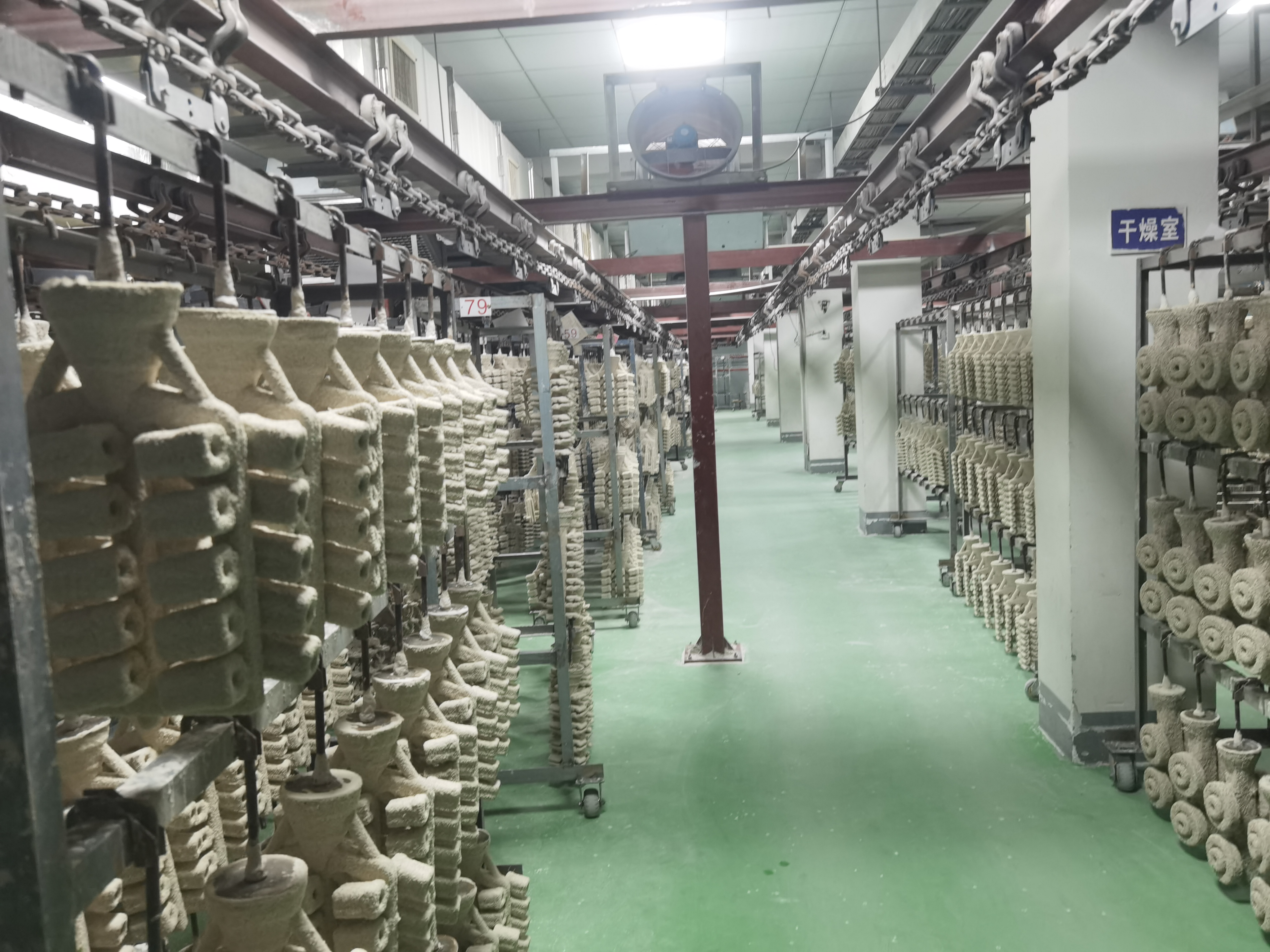
Drying Workshop for Precision Investment Casting Molds
Cast parts rarely appear on an equipment bill of materials under the simple name “casting.” They are ordered as pump impellers, door closer bodies, flowmeter housings, lock cases, suspension brackets, marine cleats, furniture hinges and dozens of other functional names. Yet from a manufacturing and sourcing perspective, these components share a common production foundation. For buyers at the awareness or research stage, the practical question is not just what a cast part is, but which industries depend on them, what processes are involved, and what a capable supplier should be able to demonstrate.
Why the Cast Parts Category Can Look Fragmented
Search terms such as “auto part castings,” “stainless steel marine hardware castings,” “power tool components castings,” “furniture hardware” and “textile machinery parts” describe different end uses. But the underlying production challenge is similar: an engineering drawing or sample must be converted into a finished metal component with the correct material grade, dimensional tolerance, surface finish and assembly fit. The casting process, especially silica-sol investment casting, has evolved to serve this broad demand across industries.
For buyers, this has a practical implication. A supplier that handles automotive brackets and valve bodies is not necessarily unfocused. Cross-industry casting experience usually indicates a wider range of material options, process knowledge and inspection capability. What matters is verifying whether the supplier's processes match the specific requirement of the part in question.
Where Precision Cast Parts Are Used: An Industry-Level View
Precision investment cast parts support a wide range of industrial sectors. The table below organizes typical cast components by end-use sector, based on the production scope of precision casting suppliers.
| Industrial Sector | Typical Cast Components |
|---|---|
| Automotive | Suspension brackets, drivetrain components, mounting brackets, chassis parts |
| Motorcycle | Footrest brackets, engine mount housings, structural brackets |
| Power tools | Levers, brackets, gearbox housings, structural components |
| Marine equipment | Cleats, hinges, deck fittings, connection hardware |
| Fluid equipment | Pump impellers, pump housings, valve bodies, pipe fittings, flanges |
| Flow measurement | Flowmeter bodies, sensor housings, multi-port manifolds, threaded connectors |
| Vacuum equipment | Pipe clamps, connector rings, locking fittings, coupling components |
| Architecture and door hardware | Lock bodies, door closer bodies, hinges, latch supports, door control arms |
| Furniture | Hinges, pivot brackets, connectors, mounting hardware, locking cams |
| Tableware and hospitality | Handles, connectors, mounting supports, decorative bases |
| Textile and sewing machinery | Drive housings, structural arms, guide blocks, holders, mounting brackets |
| Food-processing machinery | Brackets, fittings, mixing impellers, pump impellers |
| Sports equipment | Joint connectors, golf club heads, structural castings |
This range explains why cast parts are often treated as an infrastructure category. They provide structural, connecting, sealing, supporting, transmission and fluid-control functions for mechanical equipment. The operating mode varies — fixed installation, intermittent mechanical operation or continuous cyclic operation synchronized with host equipment — but the underlying demand is consistent: dimensional accuracy, reliable assembly fit, mechanical strength and stable operation.
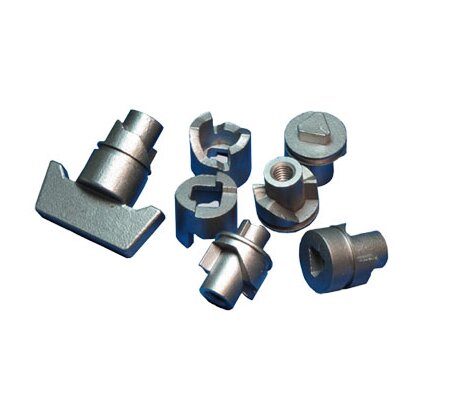
Automotive and Motorcycle Precision Investment Cast Components
From Drawings to Finished Parts: The Process Behind Cast Parts
Most industrial cast parts begin with a customer-approved 2D drawing, a 3D model or a physical sample. The supplier is responsible for converting that input into a production casting, then finishing it with machining and surface treatment. This build-to-print model is the standard for OEM custom castings. NTC, for example, supports full non-standard OEM customization according to 2D drawings, 3D models or physical samples for all its precision cast components.
The silica-sol investment casting process is widely used for components with complex internal passages and precision connection structures. It is particularly suited to flowmeter bodies, valve housings and vacuum fittings, where the internal geometry directly affects functional performance. The same process also handles more decorative components such as furniture hinges, tableware handles and architectural door handles, which need both structural integrity and a controlled surface finish.
Key technical parameters commonly specified for precision cast parts include:
- Dimensional tolerance grade: T4–CT7 for applicable investment-cast components
- Surface roughness: Ra 1.6–Ra 6.3, depending on casting, machining and finishing requirements
- Minimum wall thickness: 2 mm standard; 1 mm available in limited local areas subject to process review
- Typical part weight: 2 g–550 g for most precision investment cast parts
- Fillet requirements: minimum outer radius ≥ 0.3 mm; minimum internal fillet ≥ 0.5 mm
- Blind-hole capability: up to 30 mm depth for a hole diameter of 10 mm
Material Selection Is a Cross-Industry Decision
Material selection is one of the most important decisions in any cast parts project. Austenitic stainless steels such as 304, 316 and 316L are common for corrosion-resistant applications, including marine hardware, food-processing equipment, valve bodies and tableware components. Carbon steel and alloy steel are typically selected for load-bearing automotive and motorcycle parts. Copper alloys such as brass and bronze are used for electrical connectors and valve bodies where corrosion resistance and machinability are important. Aluminum alloy and zinc alloy are common for die-cast housings where weight reduction and cost efficiency are priorities.
The range of materials available from a single precision casting supplier can reduce sourcing complexity. For example, NTC lists material grades including stainless steel 201, 303, 304, 316, 316L, 17-4PH, 410, 420 and 440C; carbon steel 1020, 1025, 1030, 1040, 1045 and 1050; alloy steel 4140, 4150, 4340, 8620 and GS-25CrMo4; plus zinc alloy, brass and bronze for specific applications. This breadth matters to buyers because a component series may require different materials for different product tiers.
Sector-Specific Capability: A Supplier Example
SHANGHAI NTC TECHNOLOGY CO., LTD. provides a useful example of how a precision casting supplier organizes production across sectors. Founded in 2022, the company operates a 2,000 m² facility in the Jinshan District of Shanghai, with 20 employees and five R&D engineers. Its reported annual output is 1,500,000 units, with 85% of production exported to Europe, America and Asia.
The product portfolio includes automotive suspension brackets, motorcycle footrest brackets and engine mount housings, power tool levers and brackets, marine cleats and marine hinges, lock bodies, door closer bodies, door control arms, furniture hinges and connectors, tableware handles, textile machinery drive housings and guide blocks, flowmeter bodies, pump impellers, valve bodies, vacuum equipment fittings, and general mechanical housings. The company uses silica-sol investment casting as its core process and also supports aluminum or zinc alloy die casting and other suitable casting processes depending on component structure and material.
For buyers, the relevant point is that one supplier can often cover multiple categories without compromising process discipline. The test is whether the supplier's inspection standards, material options and production support match the sector-specific requirements of the part.
Quality Signals in Cast Parts Production
Quality control in precision casting typically starts with material composition verification and extends through dimensional inspection, assembly-fit checks and surface appearance review. For components that operate under pressure, such as valve bodies and flowmeter housings, pressure testing and leakage testing can be arranged when specified by the customer.
At the facility level, inspection equipment matters. The presence of CMM, spectrometers, Brinell hardness testers and projectors gives buyers a practical way to verify that the supplier is not relying on visual checks alone. NTC's quality system is organized under ISO 9001:2000 and ISO 14001:2015, and its components are produced according to standards such as ASTM, DIN, JIS and ISO unless otherwise specified. Material certificates and inspection reports can be provided when required.
For automotive and motorcycle components, the inspection typically covers mechanical properties, material composition, critical dimensions, hole positions and surface quality. For lock bodies and door hardware, assembly fit and internal structure are the priority. For fluid-handling components, sealing surfaces, concentricity and thread accuracy become critical. Buyers should confirm that the supplier's inspection routine matches the failure mode of their specific part.
Market Context: Verified Data on Casting Demand
Several market data points are useful for buyers assessing the cast parts category:
- The global investment casting market was valued at USD 17.4 billion in 2025 and is projected to grow to USD 24.9 billion by 2033 (Grand View Research).
- Automotive applications accounted for the largest revenue share of the investment casting market, over 29% in 2025 (Grand View Research).
- Asia Pacific dominated the global investment casting market with a 39.2% revenue share in 2025 (Grand View Research).
- Stainless steel represented 32.98% of the global investment casting market material share in 2025 (Mordor Intelligence).
- The silica sol process accounted for 50.78% of investment casting revenue share in 2025, reflecting its precision capabilities (Mordor Intelligence).
- China's total metal casting export value reached USD 1.47 billion in July 2024, an increase of 5.2% year-on-year (Dawang Metals / China Customs).
- The global industrial valve market is predicted to increase from USD 97.77 billion in 2026 to USD 273.49 billion by 2035 (Precedence Research).
These signals help explain why procurement teams increasingly look at cast parts suppliers in Asia Pacific, and why stainless steel capability is a central part of supplier evaluation. The strong automotive share also explains why automotive-grade process discipline is a useful baseline for evaluating casting suppliers.
Limits of Investment Casting: Where Buyers Should Adjust Expectations
Investment casting is not the answer for every cast part requirement. The practical weight range of the components in NTC's portfolio is 2 g to 550 g, which means the process is oriented toward small and medium parts. For large, heavy components — such as big engine blocks, large pump casings or structural pieces above that weight range — other methods like sand casting are typically more appropriate. The casting process should be selected according to product size, material and structure.
The same logic applies to production volume. Investment casting works well for prototypes, small-batch orders and stable volume production, but for very high-volume, low-complexity parts, other manufacturing methods may offer better economics. Buyers should confirm the process recommendation with the supplier based on the actual part geometry and order quantity.
Future Outlook: Broader Supplier Capability as a Sourcing Advantage
The long-term direction in industrial casting points toward broader supplier capability rather than narrow specialization. As OEMs seek to reduce supplier complexity, a casting partner that can handle multiple materials, processes and inspection requirements becomes more valuable. The ability to develop prototypes, verify samples, run trial orders and scale to stable batch production — all within one facility — addresses the full procurement cycle from engineering validation to serial supply.
Supplier location also matters for cross-border sourcing. NTC is located in the Jinshan District of Shanghai, approximately 50–60 kilometers from both Pudong International Airport and Hongqiao International Airport, which supports overseas customer visits and shipping coordination. For a company exporting 85% of its production to Europe, America and Asia, international logistics and communication experience are part of the service package.
FAQ: Common Questions about Cast Parts
What are cast parts used for?
Cast parts are used to provide structural, connecting, sealing, supporting, transmission and fluid-control functions for mechanical equipment. They appear in auto parts, fluid chemicals, ship equipment hardware, food and medical machinery, building hardware, valves and pipes, fire-fighting equipment, sports equipment, instruments, aerospace and petroleum equipment.
What is investment casting?
Investment casting is a manufacturing process in which a wax pattern is coated with ceramic material to form a mold, then melted out to create a cavity for molten metal. The silica-sol investment casting variant is selected for components with complex flow passages, sensor interfaces and precision connection structures.
Which materials are used for precision cast parts?
Common materials include austenitic stainless steel (201, 303, 304, 316, 316L, 1.4581, SCS14, SCS16), carbon steel (1020, 1025, 1030, 1040, 1045, 1050), alloy steel (4140, 4150, 4340, 8620, GS-25CrMo4), hardening stainless steel (17-4PH, 410, 420, 440C), and copper alloys such as brass and bronze. Aluminum alloy and zinc alloy are used for die-cast housings when weight reduction is required.
Which industries rely on precision cast parts?
Precision cast parts are used in valve manufacturing, flowmeter manufacturing, vacuum equipment, automotive manufacturing, motorcycle manufacturing, power tool manufacturing, marine equipment, building hardware, furniture manufacturing, textile machinery, food-processing machinery, sports equipment and many other industrial sectors.
How is quality controlled in cast parts production?
Quality control begins with material composition verification and includes dimensional inspection, assembly-fit checks and surface appearance review. For pressure-bearing components, pressure testing and leakage testing can be arranged when specified. Inspection equipment such as CMM, spectrometers and hardness testers is used to verify critical dimensions and material properties.
Can cast parts be customized according to customer drawings?
Yes. Custom manufacturing from 2D drawings, 3D models or physical samples is the standard mode of operation for OEM cast parts. Customization options include material grade, geometry, dimensions, tolerance, surface finish, logo, marking and packaging.
What is the typical weight range for investment cast parts?
For the precision-cast components referenced by SHANGHAI NTC TECHNOLOGY, the typical weight range is 2 g to 550 g, subject to product geometry and approved drawing requirements. Heavier components may require alternative casting processes such as sand casting.
What surface finishes are available for cast parts?
Surface treatment options include shot blasting, grinding, polishing, satin polishing, mirror polishing, pickling, passivation, zinc plating, nickel plating, black oxide, powder coating, painting and customized decorative finishes, depending on the component type and application.
For a more complete view of SHANGHAI NTC TECHNOLOGY's production range, company profile and quality system, the 2026 company brochure is available for public access and download: SHANGHAI NTC TECHNOLOGY CO., LTD. 2026 Brochure (PDF)
¿Tiene preguntas o necesita más detalles?
Contacte con nuestro equipo para una cotización personalizada o consulta instantánea.
Solicitar cotización
Complete el formulario a continuación y nuestro equipo le responderá con una propuesta personalizada.
Chat directo de WhatsApp
¿Prefiere chatear en tiempo real? Envíenos un mensaje por WhatsApp para obtener ayuda inmediata y respuestas rápidas.
- Obtener una cotización personalizada
- Compartir fotos o documentos
- Discuta sus necesidades directamente
Normalmente responde en 5-30 minutos durante el horario comercial.