
Which Industries Require 1,000+ Hour Salt Spray E-Coating?
Which Industries Require 1,000+ Hour Salt Spray E-Coating?
Electrophoretic coating — widely shortened to E-coating or ED coating — is a dip-based finishing process in which charged paint particles migrate through an aqueous bath and deposit onto a conductive metal surface. Because deposition is driven by an electric field rather than by line of sight, the coating reaches recesses, internal bores and three-dimensional geometry that spray processes frequently miss.
Not every metal component needs that level of protection. A decorative internal bracket may be adequately served by a finish that survives a few hundred hours of neutral salt spray testing. A chassis fastener that will spend a decade exposed to road-salting salts, coastal humidity or industrial atmosphere is a different problem entirely — and it is in those applications that a 1,000+ hour salt spray requirement usually appears.
This article maps specific industries to electrophoretic coating performance requirements. It covers automotive parts, bicycles, communication equipment, consumer electronics, unmanned aerial vehicles (UAVs) and security systems, and explains why thermal cycling from −40 °C to above 85 °C, together with adhesion to complex geometries, makes E-coating a fit for these sectors rather than an optional upgrade.
What "1,000+ Hour Salt Spray Resistance" Actually Measures
In practical procurement terms, 1,000+ hour salt spray resistance means that a coated metal part shows no red rust after 1,000 hours or more of continuous exposure in a Neutral Salt Spray (NSS) test — typically run according to ASTM B117 or an equivalent national standard. The test is not a simulation of any single real environment; it is a repeatable corrosion benchmark that lets a buyer compare coatings and suppliers on the same scale.
The distinction matters because coating chemistry changes the achievable ceiling. Cathodic epoxy-based electrophoretic coatings routinely exceed 1,000 hours of salt spray resistance, while anodic coatings typically maintain around 500 hours under comparable testing. That gap is one of the reasons high-corrosion industries standardise on cathodic systems.
In practice, the number is not the only variable a buyer should read. Two other parameters determine whether a coating will actually survive in the field:
- Film thickness. Standard automotive-grade E-coat runs from 15 to 25 µm, with automated lines holding tolerance within roughly ±1 µm and total thickness variation within ±5% of the target. Thin, inconsistent films corrode first at the edges and weld seams.
- Coverage of geometry. Because deposition follows the electric field, deep cavities, tight seams and internal holes can reach over 95%–98% coverage on a well-controlled line. Spray-applied finishes typically leave dead corners on the same parts.
Different resin platforms shift the performance envelope further. High salt spray electrophoretic coatings formulated on acrylic and epoxy resin are specified for automotive parts, metal fittings, small structural components, bicycle accessories, cooling fans, die-casting parts, CNC machined parts and metal stamping parts — with salt spray resistance configured between roughly 300 and 1,000 hours depending on the target. Automotive-grade workflows, by contrast, are commonly written around a 1,000+ hour neutral salt spray target, with CASS testing exceeding 96 hours in more aggressive acid-salt evaluations.
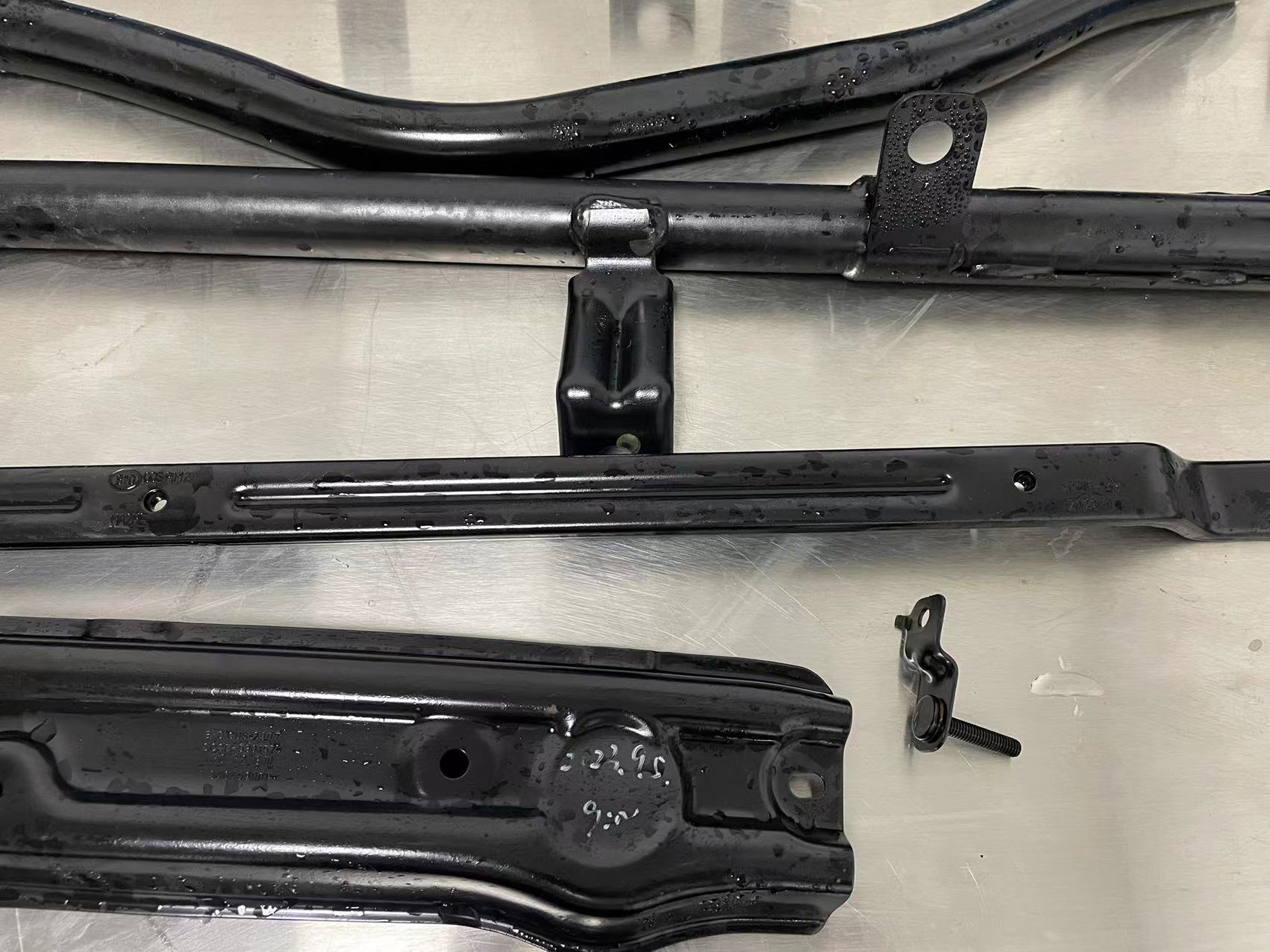
High salt spray electrophoretic coating — the performance band that determines which industries can specify it.
Why 1,000 Hours Is a Decision Threshold, Not a Marketing Number
The threshold exists because industries are not buying a coating; they are buying a service-life assumption. When an OEM specifies a 1,000-hour salt spray target, it is usually converting a field-failure risk into a laboratory acceptance criterion.
Two failure modes drive that specification. The first is direct corrosion of the substrate, which begins at edges, cut faces and weld lines where film build is thinnest. The second is coating loss — blistering, peeling or chipping — which exposes bare metal and accelerates the first failure mode. A high salt spray coating has to resist both.
The opportunity side is equally concrete. Where E-coating holds up for 1,000+ hours, manufacturers can reduce reliance on multi-layer paint systems, shorten rework loops on rejected parts and extend warranty windows. Where it does not hold up, the cost appears later as field returns, warranty claims and reputation damage that no purchasing discount can offset.
Industry-by-Industry Mapping of Salt Spray Requirements
The industries below are the sectors where electrophoretic coating is most commonly specified at high salt spray performance. The mapping reflects substrate mix, exposure environment and expected service duration.
| Industry | Typical Substrates | Why High Salt Spray Matters | Typical Salt Spray Band |
|---|---|---|---|
| Automotive parts | Carbon steel, alloy steel, aluminium alloy, zinc alloy die-castings, fasteners | Road salts, splash zones, ten-year-plus service life | 1,000+ hours NSS; CASS 96+ hours |
| Bicycles and e-bikes | Steel frames, alloy fittings, small structural components | Outdoor storage, rain, sweat and coastal air | High salt spray band, 300–1,000 hours |
| Communication equipment | Aluminium alloy housings, zinc alloy die-castings, stamped shields | Outdoor cabinets, rooftop units, humidity and industrial atmosphere | High salt spray band |
| Consumer electronics | Aluminium alloy, magnesium alloy, die-cast and stamped parts | Handling wear, humidity, cosmetic corrosion at edges | Corrosion-resistant + UV-resistant grades |
| Unmanned aerial vehicles | Magnesium alloy, aluminium alloy, CNC and die-cast components | Weight-driven alloy choices plus outdoor flight exposure | Corrosion-resistant grade with thermal cycling |
| Security systems | Zinc alloy die-castings, stamped steel housings | Permanent outdoor installation, no maintenance access | Corrosion-resistant + UV-resistant grades |
Automotive Parts
Automotive is the sector that most often converts a 1,000-hour salt spray target into a hard specification, because electrophoretic coating there is one of the most strictly regulated surface treatment processes in manufacturing. E-coat is applied to fasteners, chassis components, body frames, door hinges, engine brackets and similar parts, and the acceptance criteria are unusually explicit: 1,000+ hours of neutral salt spray without red rust, 360° coverage without dead corners, and film thickness held within tight tolerance.
Fasteners add a second requirement that buyers outside the sector often overlook. Beyond corrosion, coated fasteners must retain an optimal coefficient of friction, so that threads do not clog and torque control stays precise during assembly. A coating that passes salt spray but interferes with tightening behaviour is not a usable automotive coating.
Bicycles and E-Bikes
Bicycle frames, accessory fittings and small structural components sit in a harsher exposure pattern than their size suggests. These parts are stored outdoors, rained on, exposed to road spray and, on e-bikes, to battery-adjacent heat. Small structural components also concentrate corrosion risk at welds and cut edges, which is where uniform film build matters most.
This is a sector that typically sits in the high salt spray band rather than at the extreme upper limit. A 300–1,000 hour configuration is often sufficient, but the coating still has to be uniform and fine, with good anti-rust, anti-corrosion, anti-fading and wear behaviour across the whole part — not only on the visible face.
Communication Equipment
Communication equipment is exposed in ways that consumer devices are not. Outdoor cabinets, rooftop radio units and remote enclosures operate continuously in humidity, salt-laden air and industrial atmosphere, and they are usually installed with no planned maintenance access. Aluminium alloy housings and zinc alloy die-cast components are common substrates here, and both benefit from E-coating's ability to penetrate the recessed internal geometry of cast and stamped parts.
Because these units are frequently sealed and never re-coated, the corrosion barrier has to last the full service life of the installation. That makes the high salt spray band a baseline requirement rather than a premium option.
Consumer Electronics
In consumer electronics, the driver is a combination of corrosion resistance and appearance retention. Aluminium alloy and magnesium alloy are chosen for weight and thermal performance, but both are more corrosion-sensitive than steel in humid or hand-contact environments. Die-cast and stamped internal parts also need edge protection where cosmetic coatings typically fail first.
E-coating on these substrates is usually specified for corrosion-resistant performance rather than for the maximum salt spray threshold, because the exposure profile is indoor humidity and handling wear rather than continuous salt exposure. Colour flexibility matters here as well — black E-coating is the most common default, with white, color and custom shades available when a design brief requires them.
Unmanned Aerial Vehicles
UAVs combine a weight-driven substrate choice with genuine outdoor exposure. Magnesium alloy and aluminium alloy components are selected specifically to reduce mass, but these alloys are more reactive than steel and less forgiving of coating defects. At the same time, airframes fly through humidity, temperature swings and, in coastal or agricultural use, corrosive spray.
For this sector, corrosion resistance alone is not enough. The coating must also survive mechanical vibration and thermal cycling without cracking, and it must add minimal mass — which is why thin, tightly controlled films with uniform geometry coverage are the relevant specification rather than heavier barrier systems.
Security Systems
Security equipment — camera housings, access-control enclosures, brackets and mounting hardware — is installed outdoors, permanently, and typically without maintenance access. Many of these parts are zinc alloy die-castings or stamped steel, and both are frequently exposed to rain, UV and temperature extremes for years at a time.
This is where the combination of a corrosion-resistant grade with a UV-resistant grade becomes the practical specification. Salt spray resistance protects the substrate; UV resistance protects the coating itself from chalking or fading, which would otherwise expose metal on horizontal or sun-facing surfaces.
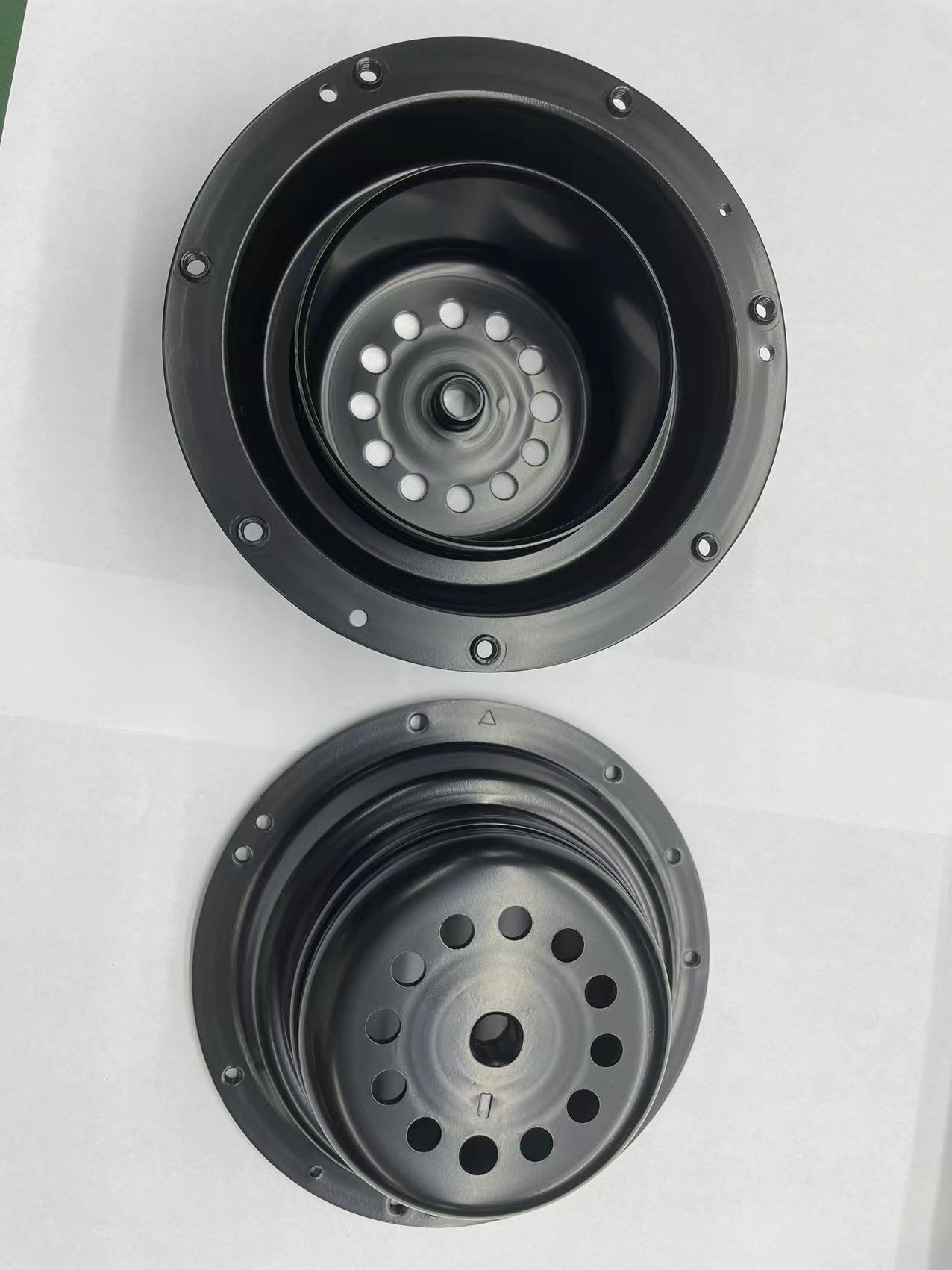
Electrophoretic deposition: charged particles follow the electric field into cavities, seams and internal bores that spray processes cannot reach.
Thermal Cycling: −40 °C to Above 85 °C
The second reason E-coating appears across these six sectors is thermal durability. Automotive-grade electrophoretic coatings are formulated to withstand extreme temperature fluctuations from −40 °C to over 85 °C, in addition to stone chipping. A coating that survives salt spray but cracks when the substrate expands and contracts differently from the film will still fail in service.
That tolerance range matters beyond automotive. A communication cabinet on a rooftop, a UAV airframe descending from cold altitude into warm humid air, or a security camera housing facing direct sun in summer and freezing nights in winter all experience the same thermal cycling. Bond strength at the substrate interface is what keeps the film intact through those cycles, and it is also what prevents peeling or blistering during assembly, transport and operation.
Why Complex Geometry Favours Electrophoretic Coating
The industries above share a common part profile: die-castings with internal ribs, stamped housings with tight seams, machined components with drilled bores, and fasteners with thread roots. Line-of-sight spray application cannot reliably coat these surfaces, and the resulting dead corners are where corrosion begins.
Electrophoretic deposition behaves differently because it is field-driven. Charged paint particles deposit on all conductive surfaces exposed to the electric field, so deep cavities, internal holes and complex 3D geometry achieve coverage in the 95%–98% range on a controlled line. Combined with a 15–25 µm film held within ±1 µm tolerance, this produces corrosion performance that is consistent from part to part rather than dependent on operator technique.
The environmental profile reinforces the fit. E-coat baths in modern lines are water-based and free of heavy metals such as lead and chrome, with very low volatile organic compound emissions, and they comply with international environmental requirements such as RoHS. For industries under pressure to reduce finishing emissions — automotive, electronics and consumer goods especially — that is a practical constraint as much as a compliance one.
Market Trend Analysis
The demand pattern behind these industries is measurable. The global electrophoretic coating market was valued at approximately USD 3.5 billion in 2023 and is projected to reach USD 6.1 billion by 2032, representing a compound annual growth rate of 6.5% from 2024 to 2032, driven largely by automotive and construction demand. Asia-Pacific is the largest and fastest-growing region, holding over 46% revenue share in the broader coatings market in 2025, led by China and India.
Two structural shifts sit behind that growth. First, the performance ceiling of the technology has moved: cathodic epoxy coatings now frequently exceed 1,000 hours of salt spray resistance under ASTM B117, while anodic systems typically hold around 500 hours. As cathodic performance becomes the default expectation, industries that previously accepted lower corrosion bands are revisiting their specifications.
Second, process efficiency has improved. E-coating technology typically achieves a coating thickness of 20–40 µm with material transfer efficiency reaching around 95%, which reduces both waste and finishing cost per part compared with spray-based alternatives. For high-volume manufacturers, that combination of higher performance and lower material loss is what makes a 1,000-hour specification commercially realistic rather than aspirational.
How E-Coating Compares with Traditional Finishing Options
Buyers evaluating a 1,000-hour requirement usually compare E-coating against liquid spray painting, powder coating and electroplating. Each has a legitimate place; the comparison is about fit, not superiority.
| Method | Corrosion Coverage | Complex Geometry | Typical Limitation |
|---|---|---|---|
| Electrophoretic coating (E-coat) | High; cathodic systems can exceed 1,000 h NSS | Strong — field-driven deposition reaches 95%–98% coverage | Thin film (15–25 µm); often functions as a primer base rather than a full decorative system |
| Liquid spray painting | Moderate | Weak — dead corners on cavities and seams | Line-of-sight application leaves uncoated internal surfaces |
| Powder coating | Moderate to high | Limited on internal geometry | Requires electrostatic access; harder to apply uniformly inside recesses |
| Electroplating | High for specific metals | Moderate | Different material system and cost structure; not a direct substitute for organic coatings |
A constraint worth stating plainly: electrophoretic coating is not a universal replacement for every finishing step. Its standard film build of 15–25 µm is deliberately thin, and in many exterior or high-visibility applications E-coat serves as a corrosion-resistant primer base that is subsequently top-coated for colour depth and additional UV durability. It also requires a conductive substrate and a controlled dip line, which means it is not suited to non-conductive materials and is capital-intensive to install — a factor that favours specialised processors over in-house lines for lower-volume buyers.
Future Outlook
Three directions are likely to shape how these industries specify E-coating over the next several years.
The first is specification convergence. As cathodic epoxy performance above 1,000 hours becomes routine, industries that historically accepted a lower corrosion band — bicycles, security hardware, communication enclosures — will increasingly adopt the higher threshold as standard rather than premium.
The second is substrate expansion. Aluminium alloy, magnesium alloy and zinc alloy die-castings are displacing steel in weight-sensitive designs across consumer electronics, UAVs and communication equipment. Because these alloys are more corrosion-reactive than steel, the coating step becomes more critical, not less, and process control on die-cast and machined surfaces will matter more than raw salt spray numbers alone.
The third is environmental tightening. Water-based, heavy-metal-free and low-VOC formulations already align with RoHS and ISO 14001 requirements, and the regulatory direction across major markets points the same way. For processors, that shift is less a marketing advantage than a qualification requirement.
FAQ
What does 1,000+ hour salt spray resistance mean in electrophoretic coating?
It means a coated metal part shows no red rust after 1,000 hours or more of continuous Neutral Salt Spray (NSS) testing, typically conducted to ASTM B117 or an equivalent standard. Cathodic epoxy electrophoretic coatings frequently exceed this level, whereas anodic coatings typically maintain around 500 hours under comparable testing.
Which industries actually require 1,000+ hour salt spray E-coating?
Automotive is the sector where a 1,000+ hour neutral salt spray target is most commonly written into specification, applied to fasteners, chassis components, body frames, door hinges and engine brackets. Bicycles, communication equipment, consumer electronics, UAVs and security systems all use high salt spray electrophoretic coating, though several of these sectors operate in a 300–1,000 hour band rather than at the upper threshold.
Does every metal part need a 1,000-hour coating?
No. The requirement should match the exposure profile. External, load-bearing or long-service parts generally justify the higher specification, while internal parts in dry environments are usually served by a lower corrosion band. Specifying 1,000 hours for a protected internal component raises cost without changing service life.
How does E-coating withstand temperature swings from −40 °C to above 85 °C?
Automotive-grade electrophoretic coatings are formulated for extreme temperature fluctuations in the range of −40 °C to over 85 °C, alongside resistance to stone chipping. The key factor is adhesion at the substrate interface: a film that bonds firmly does not peel, blister or crack when the coating and the metal expand and contract at different rates.
How does electrophoretic coating cover complex geometries?
Deposition is driven by an electric field rather than line of sight. Charged paint particles deposit across all conductive surfaces exposed to the field, so deep cavities, tight seams, internal holes and complex 3D geometries can reach 95%–98% coverage on a controlled line, with film thickness held at 15–25 µm within roughly ±1 µm tolerance.
For a detailed reference on coating types, substrates and performance parameters, the Yongxin electrophoretic coating solutions brochure is available for download.