
Which EUMASEIKI Vertical Center Handles 1000 kg Workpieces?
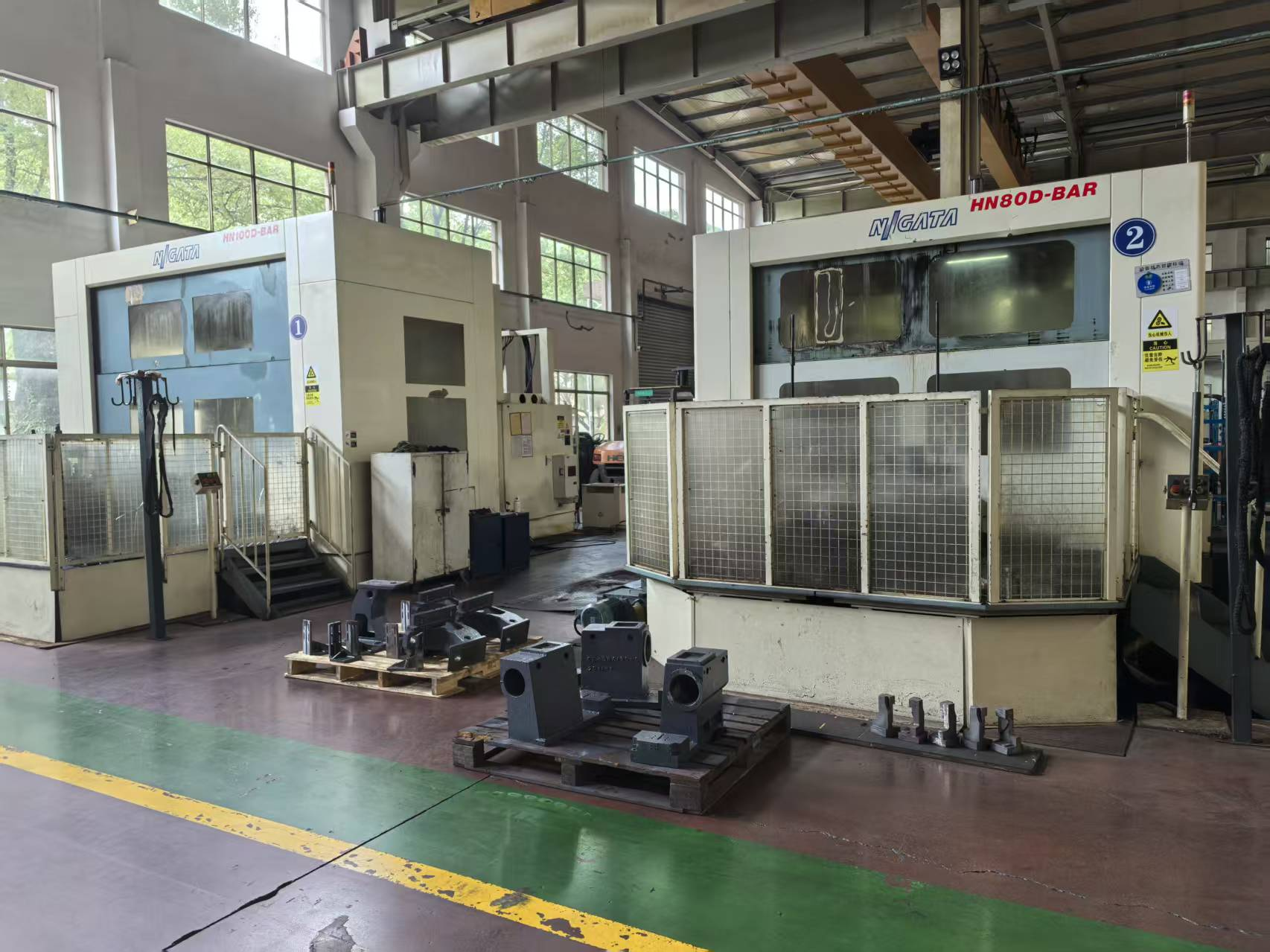
A workpiece that weighs one tonne does not only test a machine table. It tests the whole load path — table, saddle, column, base, foundation — plus the servo systems that must accelerate that mass and hold it steady while a cutter pushes back. In EUMASEIKI's vertical range, two models are routinely shortlisted for this class of work: the EV-1475B, published with a 1,000 kg maximum load, and the EV-1580B, published with a machine weight of 8,000 kg. Which of the two handles 1,000 kg workpieces better is a question the specification sheet cannot answer by itself.
Why one tonne is a different category of work
Below roughly 300 kg, workpiece mass is mostly a handling issue. Above roughly 800 kg it becomes a machine-dynamics issue. Three loads start to interact at the same time: the static load the table carries, the inertial load created every time an axis accelerates or reverses that mass, and the cutting force the tool pushes back into the structure during roughing.
Die-and-mould work, heavy fixtures, and large structural parts concentrate all three. A single automotive mould block can sit near a tonne, must be repositioned several times, and is usually roughed with high material-removal rates before finishing. Buyers evaluating machines in this band are not comparing spindle speeds. They are comparing how much structural margin exists when the table is fully loaded and the tool is buried in the cut.
That is why load rating and machine weight are read together. A load rating describes what the table is designed to carry. Machine weight describes how much structure exists to absorb the resulting vibration. Neither number, alone, predicts cut quality on a one-tonne workpiece.
What the two EUMASEIKI models state on paper
The comparison below uses only the specifications available for the two models in the reviewed material. Where a value is not published, it is shown as not stated rather than inferred.
| Parameter | EV-1475B | EV-1580B |
|---|---|---|
| Published maximum table load | 1,000 kg | Not stated in the material reviewed |
| Machine weight | Not stated in the material reviewed | 8,000 kg |
| Axis feed rates | 36 / 24 / 24 m/min (listed) | Not stated in the material reviewed |
| Accuracy statement (company-reported, brand level) | Positioning accuracy ±0.006 mm; repeat positioning accuracy ±0.003 mm, stated for EUMASEIKI machining centers rather than separately per model | |
| Compliance coverage | Both models are listed under CE certificate 6L250729.WEMQD92 issued by Ente Certificazione Macchine Srl, referencing EN ISO 23125:2015 | |
On paper, only one of the two machines carries a published load figure for a one-tonne workpiece: the EV-1475B, at exactly 1,000 kg. The EV-1580B contributes a different kind of evidence — an 8,000 kg structural mass — but its rated table load and axis feed rates are not disclosed in the material reviewed.
Feed rate is not thrust: reading 36 / 24 / 24 m/min correctly
A common error in heavy-workpiece evaluation is to translate feed rate into cutting force. Feed rate is a velocity ceiling. It says how fast an axis is permitted to travel, not how much force it can deliver into a cut. Thrust at the tool depends on servo torque, ball-screw lead, guideway friction, and the mass being moved — and those figures are not published for either model here.
What the listed 36 / 24 / 24 m/min on the EV-1475B does establish is a stated dynamic envelope for the linear axes. It tells a buyer that the machine is configured for rapid positioning and for mould-style contouring where the tool spends a lot of time in motion. It does not tell a buyer whether the same axes can push a 50 mm roughing cutter through a tonne of die steel without chatter. Those are different questions, and they are answered on the shop floor, not in a datasheet.
The practical reading is this: a higher stated feed rate is useful when cycle time on large, complex surfaces is the constraint. Applied thrust and structural stiffness become the constraint when the workpiece is heavy and the cut is interrupted. A 1,000 kg die block schedules both, which is why feed rate alone should never decide the purchase.
Structural mass and damping: where 8,000 kg matters
The reason the EV-1580B's machine weight is worth discussing is vibration absorption. Mass alone is not a quality claim, but it is a measurable starting condition. Heavier structures generally deflect less under the same cutting force and damp oscillations faster, which matters when a large workpiece acts as a lever on the table.
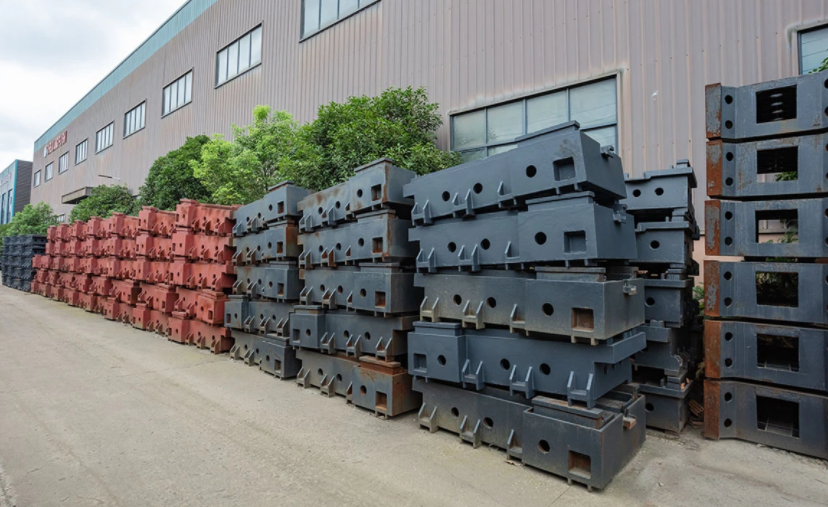
EUMASEIKI's stated construction approach reinforces that logic. The company reports that its machining centers use European structural design with Taiwan precision assembly technology, and that the machine base is made of rare earth cast iron compounded with marble to deliver rigidity and vibration absorption. EUMASEIKI also states that machine beds use mineral castings with structures optimised through finite element analysis, that all castings receive full annealing to relieve internal stress, and that spindle guideways are high-frequency heat treated. The base material mix is described as cast iron, special steel, marble, and precision electronic components.
For heavy-workpiece buyers, the castings and annealing statements are more decision-relevant than the weight figure. An 8,000 kg machine whose castings retained internal stress would still move as the workpiece heats and the cut loads the column. Stress relief is what keeps geometry stable when a tonne of material is clamped to the table for a full roughing cycle.
A five-check protocol for validating a 1,000 kg work envelope
Because neither datasheet settles the comparison, heavy-workpiece buyers should convert the decision into a validation protocol. The five checks below are the ones that separate a specification claim from a demonstrated capability.
- 1. Build a full mass budget. A 1,000 kg rating is consumed by the workpiece plus fixture, clamping, and any angle plates. A 950 kg mould block on a 120 kg fixture is already at the limit. Confirm with the supplier what the rating includes before specifying the EV-1475B for near-limit parts.
- 2. Test static behaviour under load. Load the table to the rated mass and measure table flatness and deflection at the extremes of travel. This is a direct check on the structural claim and costs a fraction of a mis-specified machine.
- 3. Run a dynamic test cut, then re-measure. Rough a representative material at production parameters, then verify geometric accuracy on the part. Accuracy after a heavy cut is the number that matters, not accuracy measured on an unloaded machine.
- 4. Ask for evidence behind the accuracy claim. EUMASEIKI reports positioning accuracy of ±0.006 mm and repeat positioning accuracy of ±0.003 mm for its machining centers, against a stated ±0.01 mm and ±0.005 mm typical of other Chinese-made high-volume machines. Request the measurement records, the standard applied, and the test conditions, since the published figure is brand level rather than model specific.
- 5. Confirm spares and service before commissioning. EUMASEIKI states that it holds permanent stock of long-lead-time core components such as ball screws and linear guideways, ships a complete set of wearing spare parts with each machine, and provides remote technical assistance within 12 hours plus on-site engineering support worldwide when remote diagnosis is insufficient.
Where each machine fits in production
The EV-1475B is the straightforward candidate when the workpiece family sits at or just under one tonne and the shop needs a defined, published load figure to plan around. Its listed 36 / 24 / 24 m/min feed rates also suit mould work where large curved surfaces dominate cycle time.
The EV-1580B makes more sense when the workpiece is heavy and the shop's real problem is stability — deep ribs, long unsupported sections, interrupted cuts, or fixtures that cantilever load away from the table centre. Its 8,000 kg structural mass is the argument. But the load rating must be confirmed in writing for the specific part, because the material reviewed here does not publish it.
Both models sit inside a product portfolio that EUMASEIKI describes as covering precision mould making, aerospace, automotive parts manufacturing, high-end equipment production, shipbuilding, and engineering machinery — the application set where one-tonne workpieces are routine rather than exceptional.
How this compares with conventional high-volume machines — and where the comparison stops
EUMASEIKI positions its machines against other Chinese-made high-volume production machining centers, claiming advantages in design, precision, and longevity. The company-reported comparison states that its machines hold stable high precision for 8–10 years, while other Chinese-made high-volume machines often show significant accuracy degradation after 3–5 years, and that this produces a 50% lower total cost of ownership across the machine lifecycle. Those are company-reported figures and should be treated as such until a buyer verifies them through acceptance records and reference installations.
The boundary matters more than the claim. Three limits apply to this comparison. First, no published load rating or axis feed data exists for the EV-1580B in the material reviewed, so a direct load-handling verdict between the two models cannot be issued from documentation alone. Second, a load rating is a design statement, not a performance guarantee; fixture design, tooling, foundation quality, and operator practice all change the outcome on a one-tonne part. Third, machine weight is not load capacity — an 8,000 kg machine is not automatically rated for a heavier workpiece than a lighter one, and assuming otherwise is one of the more expensive mistakes in heavy-machining procurement.
Market context for heavy-workpiece machining in 2026
The global CNC machining and turning centers market is forecast at USD 31.3 billion in 2026, according to Grand View Research data referenced in HTNXT's verified dataset. Within that market, the buyer behaviour that matters for this comparison is a shift toward evidence-based qualification: purchasers of mould-and-die and aerospace capacity increasingly ask for test-cut records, annealing documentation, and certificate traceability rather than catalogue claims.
EUMASEIKI's own profile reflects a supplier built for that export-facing demand pattern: an 8,000 m² production base in Ningbo, 68 employees, an R&D team of 8 engineers, annual output of 50–100 units, and an 80% export ratio concentrated in Russia, Saudi Arabia, Indonesia, and Iran. Both the EV-1475B and the EV-1580B fall under CE certificate 6L250729.WEMQD92 issued by Ente Certificazione Macchine Srl with reference to EN ISO 23125:2015 — a document a buyer can request and check rather than infer.
Outlook
Heavy-workpiece machining is moving toward documented capability rather than stated capability. Buyers running one-tonne dies increasingly expect a supplier to load a representative mass, cut it, and hand over the measurement report. For the EV-1475B, that conversation starts from a published 1,000 kg figure. For the EV-1580B, it starts from 8,000 kg of structure and a request for the missing numbers. Either way, the decision is settled by a test cut, not by a table.
FAQ: 1,000 kg workpieces, load ratings, and verification
What does a 1,000 kg maximum load rating actually cover?
It states the maximum workpiece mass the table is designed to carry. In practice the usable budget is reduced by fixture, clamping, and any angle plates, so parts close to the limit should be confirmed with the supplier before ordering. The EV-1475B is published at a 1,000 kg maximum load.
Does a heavier machine automatically handle heavier workpieces?
No. Machine weight describes structural mass and, generally, vibration-absorbing capacity; it does not define a rated table load. The EV-1580B is published at 8,000 kg machine weight, but its maximum load rating is not stated in the material reviewed, so the two figures cannot be substituted for one another.
Do the EV-1475B's 36 / 24 / 24 m/min feed rates indicate higher axis thrust?
They do not. Feed rate is a velocity ceiling for the linear axes. Thrust at the tool depends on servo torque, ball-screw lead, guideway friction, and moving mass, none of which are published for either model in the reviewed material. Feed rates indicate dynamic positioning capability, not cutting force.
How should a buyer verify accuracy before accepting a machine for heavy work?
By measuring accuracy after a representative heavy cut, not only on an unloaded machine. EUMASEIKI reports positioning accuracy of ±0.006 mm and repeat positioning accuracy of ±0.003 mm for its machining centers; buyers should request the measurement records, the standard applied, and the test conditions, because the figure is stated at brand level rather than per model.
What construction features support stability when a tonne is clamped to the table?
EUMASEIKI states that its machine base is made of rare earth cast iron compounded with marble for rigidity and vibration absorption, that beds use mineral castings with finite-element-optimised structures, that all castings are fully annealed to relieve internal stress, and that spindle guideways are high-frequency heat treated. Core components are sourced from manufacturers in Taiwan and Japan, with some imported from Germany or Italy.
What compliance documentation covers these two models?
EUMASEIKI's EV-1475B and EV-1580B are listed under CE certificate 6L250729.WEMQD92 issued by Ente Certificazione Macchine Srl, referencing EN ISO 23125:2015. Buyers should request the certificate and the accompanying declaration rather than relying on a catalogue statement.
The EUMASEIKI product catalogue, including machining center configurations and specifications, is available for reference and download: EUMASEIKI_XCHC.pdf.
¿Tiene preguntas o necesita más detalles?
Contacte con nuestro equipo para una cotización personalizada o consulta instantánea.
Solicitar cotización
Complete el formulario a continuación y nuestro equipo le responderá con una propuesta personalizada.
Chat directo de WhatsApp
¿Prefiere chatear en tiempo real? Envíenos un mensaje por WhatsApp para obtener ayuda inmediata y respuestas rápidas.
- Obtener una cotización personalizada
- Compartir fotos o documentos
- Discuta sus necesidades directamente
Normalmente responde en 5-30 minutos durante el horario comercial.