
Which Air Filter Types Lead 2026 Demand?
Demand signals in 2026 point to higher-efficiency air filters, but buyers need to separate real performance evidence from market-level claims. The air filter market is expanding, and product categories are diverging by application, efficiency rating, and media type. This article looks at where demand is moving, how MERV and HEPA-style classifications shape procurement choices, and what sourcing teams should verify before selecting an air filter.
Air Filter Choice Is Becoming a Market-Level Decision
The global air filter market was valued at USD 17.08 billion in 2025 and is projected to reach USD 34.66 billion by 2034, based on data from Fortune Business Insights. A market of that size inevitably contains multiple demand layers: household purifiers, HVAC systems, cleanrooms, healthcare facilities, and manufacturing plants do not all need the same filter, and buyers evaluating air filters in 2026 are less likely to rely on a single default specification.
One useful way to frame the evaluation is around preference signals. Which air filter categories are expanding fastest? Which efficiency levels are being specified more often? Where do standards such as ASHRAE 52.2 and EN 1822 influence purchasing language? These questions sit at the centre of a robust 2026 air filter comparison.
Market Signal: HEPA Holds the Largest Measured Segment in Air Purification
One of the clearest preference indicators comes from the air purifier market. Grand View Research reported that high-efficiency particulate air filters, commonly called HEPA filters, held a 41.7% share of the air purifier technology segment in 2025. That does not mean every project should default to HEPA, but it does indicate that HEPA-type media remains the reference point in many residential and indoor-air applications.
HEPA filters are typically associated with removing fine particles from indoor environments. In manufacturer product data, HEPA filters are frequently used in household appliances such as air purifiers and air cleaners. The same efficiency logic extends to cleanrooms and precision manufacturing, where higher grades such as U14 and U15 are used in environments like data centers and microelectronics facilities.
For a procurement team, the implication is practical: expectation-setting often begins with HEPA. Whether the project needs a household air purifier filter or a cleanroom air filter, the buyer should be able to read efficiency grade labels and understand what those grades mean.
Smart Air Purifier Growth Reinforces the Need for Consistent Filter Performance
Another verified trend is the expansion of smart air purifiers. According to Grand View Research, the global smart air purifier market is growing at a compound annual growth rate of 14.1% from 2024 to 2030, driven by AI and IoT integration.
Smart devices change the way filters are evaluated. When an air purifier measures indoor air quality and communicates filter status to a user, the filter becomes a more visible performance component. A smart purifier project places greater emphasis on repeatable media quality, stability, and compatibility. In procurement terms, buyers tend to look for an OEM or ODM partner that can maintain consistency across batches, because inconsistent filters may affect the performance expectations created by a smart user interface.
High-Grade HEPA Is Also Visible in Export and Industrial Demand
Industry commentary cited by China Briefing estimates that H13/H14 grade HEPA filters represented 35% of China's air filter exports in 2025, supported by semiconductor and biopharmaceutical sectors. Because that figure comes from an export-analysis source rather than a manufacturer survey, it should be read as a directional signal rather than an exact trade statistic. Still, it aligns with the broader preference for higher efficiency grades in technically sensitive industries.
This export signal is relevant to selection. Cleanroom air filters used in microelectronics and biopharmaceutical production must offer both high filtration performance and high reliability. Buyers in these sectors rarely buy commodity filters; they conduct supplier audits, request efficiency documentation, and compare test methods before committing.
How Air Filter Categories Map to Applications
When comparing air filters against demand trends, it helps to organise the categories by typical application. The table below reflects product categories commonly available from manufacturers such as Nantong Henka Environment Solutions Co., Ltd., whose brand, Henkaes, supplies filter products to EU and US markets under both OEM and ODM arrangements.
| Application Context | Air Filter Category | Typical Efficiency Spec |
|---|---|---|
| Household air purifiers and air cleaners | HEPA Air Filter / True HEPA Air Filter | H13 / ≥99.97% for True HEPA |
| Household and indoor gas-phase pollutant control | Activated Carbon Filter / VOC Air Filter | Activated carbon CTC grades from CTC70 to CTC100; special catalyst for targeted VOC removal |
| Commercial and public buildings such as airports, hotels, museums, restaurants | Panel Filter, Bag Filter, Furnace Air Filter, V-Bank Filter | Panel G1–G4; Bag F5/F6/F8/F9; Furnace MERV8, MERV11, MERV13; V-Bank H13 |
| Pharmaceutical plants, hospitals, food and beverage production | Box Filter | MERV15 / MERV16 |
| Cleanrooms, data centers, microelectronics | Cleanroom Air Filter | U14 / U15 |
| Aerospace and aviation cabin systems | B737/B757 Electronic Cabin Air Filter | H13 |
The table is not meant to suggest a universal ranking. It shows that different air filter types lead in different demand contexts. A hospital air filter project, for example, may require Box Filter media with MERV15 or MERV16 performance, while a household project may require True HEPA performance for particle filtration and activated carbon media for odour or VOC removal.
Media Composition: Fiberglass, Polypropylene, and Specialised Media
Air filter media selection is one of the areas where procurement teams can compare suppliers on factual product structure. Henkaes' documented product data lists several media families:
Fiberglass and polypropylene media are used in HEPA filters, panel filters, V-bank filters, and furnace filters in different efficiency configurations. Microfiberglass is used for bag filters, box filters, aerospace cabin filters, and some high-efficiency applications. PTFE appears in cleanroom air filter configurations where the application demands robust high-efficiency media.
For buyers, media composition matters because it affects pressure drop, durability, and suitability for specific environments. A panel filter with G1–G4 efficiency does not compete with a U15 cleanroom filter; they perform different roles in the same air handling chain.
What the Efficiency Labels Really Mean
Buyers evaluating high-efficiency air filters in 2026 must also understand the standards behind the labels.
According to ASHRAE 52.2, HVAC filters are classified into MERV ratings from 1 to 16 based on their ability to capture particles between 0.3 and 10 micrometers. That standard is a North American reference point and is often used by manufacturers, including Henkaes, when testing air filters.
In Europe and in international cleanroom practice, EN 1822 classifies HEPA and ULPA filters based on efficiency at the most penetrating particle size, or MPPS. The verified reference value for H14 under EN 1822 is 99.995% efficiency. This is a stricter classification concept than a generic percentage measured at one particle size, which is why documentation should always specify the test method.
The practical procurement takeaway is straightforward: before comparing two high-efficiency air filters, the buyer must confirm that both were tested under the same standard. A filter labelled as H13 in one catalogue and a filter labelled as MERV16 in another may both perform well, but their test languages are not directly interchangeable without detailed laboratory documentation.
A Manufacturing View of Henkaes and Its 2026 Product Response
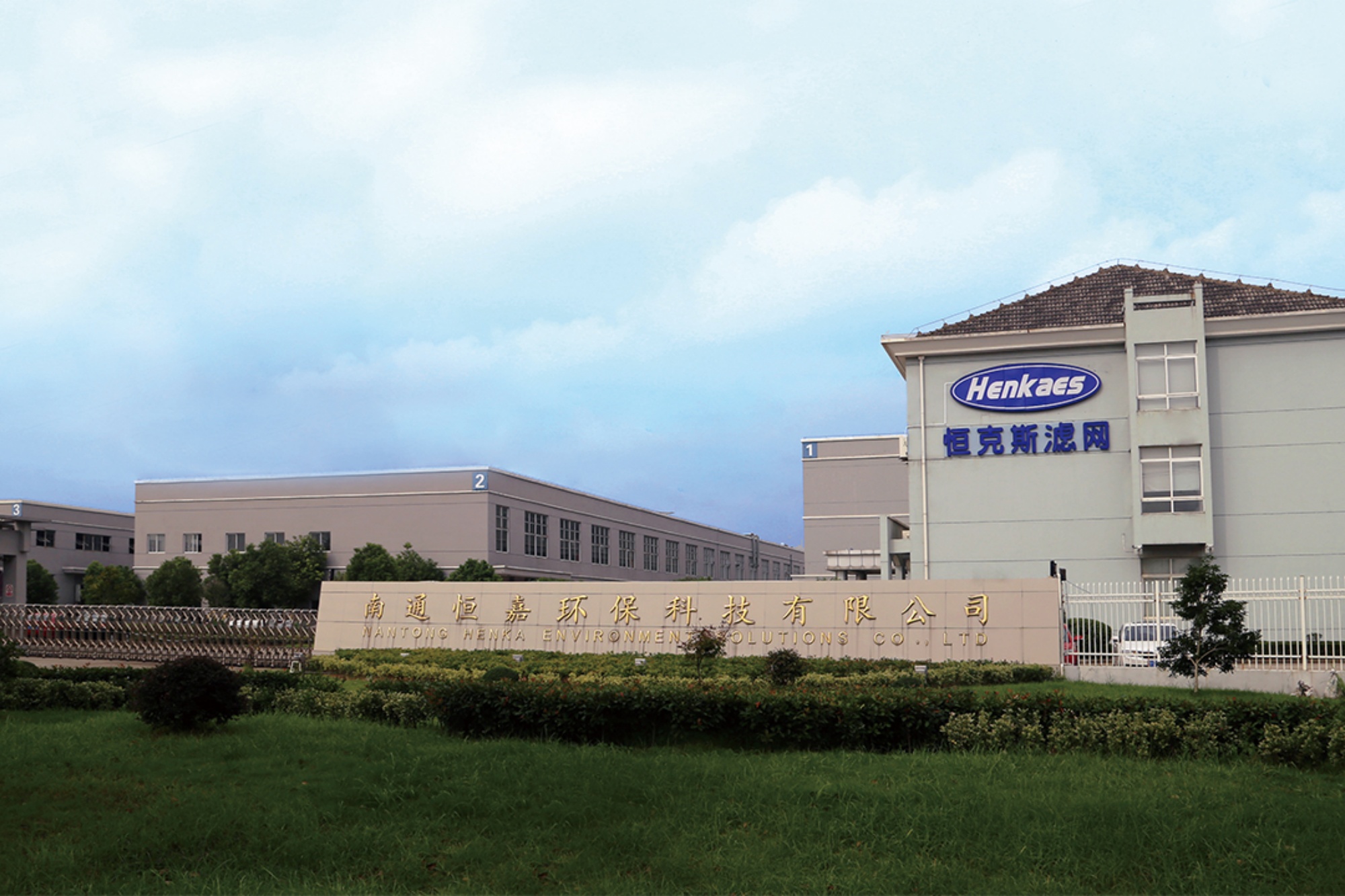
Henkaes, formally Nantong Henka Environment Solutions Co., Ltd., is an air filter manufacturer founded in 2004 and located in Haimen District, Nantong City, Jiangsu Province, about 120 kilometres from Shanghai. The company produces filters for air purifiers, air cleaners, and ventilation systems, including HEPA filters, VOC removal filters, formaldehyde removal filters, activated carbon filters, odour removal filters, HVAC filters, i-HEPA ventilation purification devices, and IFD purification devices.
From a buyer-evaluation standpoint, several company facts are verifiable and relevant:
- Annual output is approximately 2,000,000 pieces, with a record of serving OEM and ODM customers.
- The manufacturing facility covers 30,000 m² and is supported by an engineering team of 11 engineers.
- The company reports that 69% of its output goes to export markets, primarily the EU and the US.
- Henkaes provides customisation for size and logo, with a monthly capacity of 200,000 pieces in its documented capability profile.
- Quality control includes 100% inspection, and the company lists ISO9001:2015, ISO14001:2015, and ISO45001:2018 in its certification records.
These facts do not by themselves tell a buyer which air filter is best. They do, however, help a buyer understand whether a supplier has the production scale, engineering resources, and quality-control structure required to support a sustained OEM or ODM relationship.
Evidence from US-Based ODM Projects
Project-level evidence is another preference indicator. In Henkaes' documented project records, a US-based air filter ODM customer has been supplied with 50,000 pieces of filter product for indoor environment purification with formaldehyde removal as a stated application. That project record lists a duration of two years with stable performance. A second US-based ODM project, also for 50,000 pieces, targets indoor air purification and VOC removal, with a documented duration of one year and stable performance.
Henkaes also records a US OEM project of 20,000 pieces for indoor air purification with high efficiency as the stated project highlight. The client type across these records is listed as air filter OEM or air filter ODM, and the application market is the US.
From a neutral evaluation perspective, these project records support three conclusions. First, demand for air purification media in the North American market exists across multiple customer types. Second, gas-phase applications such as formaldehyde removal and VOC removal are common enough to appear as dedicated project definitions. Third, stability over a one-to-two-year period is a documented criterion, not a marketing abstraction.
Comparing Henkaes Air Filters with Conventional Supplier Approaches
Many conventional air filter suppliers focus on one product type, such as a standard HVAC panel filter, and offer limited variation. Henkaes' model is broader: it combines HVAC filters, cleanroom filters, household purifier filters, and specialised gas-phase filters under one engineering and production structure.
That breadth has advantages for buyers managing multiple product lines. A single manufacturer may simplify qualification, testing, and supply coordination across a household air purifier filter programme and a separate HVAC air filter programme.
Yet there are limits to this approach. No air filter manufacturer can be the optimal choice for every speciality. A supplier that builds household HEPA filters and cleanroom ULPA filters may not have the same depth as a specialist that produces only aerospace-grade cabin filters for many years. In the documented Henkaes portfolio, aerospace work appears as one specific product line for B737/B757 cabin filtration rather than a full aerospace programme. Buyers with highly specialised or regulated applications should verify depth in the relevant segment before assuming that a broad portfolio is sufficient.
Practical Limits: Efficiency Is Not a Universal Ranking
Decision-makers comparing air filters in 2026 should keep several limitations in mind.
Higher efficiency media often creates a pressure-drop trade-off. A high-grade cleanroom air filter will typically behave differently from a low-resistance panel filter in the same duct. The right choice depends on system design and fan capacity, not only on filtration percentage.
High-efficiency filters protect the system, but pre-filtration still matters. In HVAC applications, high-efficiency final filters generally require upstream pre-filtration to maintain service life and control operating cost. A buyer who skips a primary-effect filter to reduce initial cost may increase the load on final filters and raise total lifecycle cost.
Carbon and particulate filters are not alternatives to one another. HEPA-style filters primarily address particulate contamination. Activated carbon filters and VOC air filters are designed for gas-phase challenges. A project requiring formaldehyde removal or VOC removal should evaluate the gas-phase media as part of a broader filter design, not assume that a high-grade particle filter alone will solve the problem.
Standards and labels require translation. Because ASHRAE 52.2, EN 1822, and older market terms communicate efficiency in different ways, procurement must ask the supplier to document the test basis. Henkaes uses ASHRAE 52.2 in testing air filters and maintains test systems for filter media efficiency and air resistance, along with testing capacity for formaldehyde and VOC removal efficiency and CADR performance. In an evaluation process, these testing capabilities should be examined directly rather than accepted as promotional statements.
Future Outlook: What Buyers Should Prepare For
The available market forecasts point toward continued expansion in air filtration demand through the early 2030s. The projected increase in global air filter market value suggests sustained procurement activity across geographies. Within that growth, smart air purifier development and high-efficiency cleanroom demand are likely to keep raising the importance of measurable filter performance.
For buyers, preparation means building supplier evaluation around four capabilities: range of air filter types, documented test methods, repeatable manufacturing quality, and engineering flexibility. HEPA is likely to remain a dominant reference point, but the more telling preference signal is whether a supplier can move across performance tiers from G1–G4 panel filters to F5–F9 bag filters, MERV-level furnace filters, H13-style high efficiency filters, and U14/U15 cleanroom air filters without losing consistency.
Frequently Asked Questions
Is HEPA still the dominant air filter technology in 2026?
According to Grand View Research, HEPA filters held a 41.7% share of the global air purifier technology segment in 2025. That makes HEPA the largest measured technology segment in air purification. However, selection should still consider application type: household purifiers, HVAC systems, cleanrooms, and hospital environments place different demands on filter efficiency, media composition, and compliance documentation.
How should buyers compare HEPA filters with activated carbon air filters?
HEPA filters and activated carbon filters serve different purposes. HEPA-style media is used for particle filtration, while activated carbon media is designed for gas-phase removal. In practice, many indoor air purifier projects combine both. Activated carbon filters are often graded by CTC value; documented product ranges include CTC70, CTC80, CTC90, and CTC100. VOC air filters may also use special catalysts to address specific volatile organic compounds. Buyers must first define whether the target contaminant is particulate or gaseous.
What do MERV ratings mean in commercial and residential HVAC filter selection?
ASHRAE 52.2 classifies HVAC filters from MERV 1 to MERV 16 based on their ability to capture particles between 0.3 and 10 micrometers. Commercially manufactured furnace air filters are commonly offered in MERV8, MERV11, and MERV13 grades. MERV is only meaningful when the filter is matched to the specific HVAC system and project conditions.
Which air filter types are suitable for cleanroom and hospital applications?
For pharmaceutical plants, hospitals, and food and beverage production sites, box filters with MERV15 or MERV16 performance are a documented product option. For cleanroom environments such as data centers and microelectronics facilities, cleanroom air filters with U14 or U15 efficiency grades are commonly specified. The final requirement should be confirmed against the project's contamination-control class and applicable standards.
Why does demand for high-efficiency air filters continue to grow?
Several documented signals exist. HEPA held the largest measured share in the air purifier technology segment in 2025. Smart air purifiers are growing at a 14.1% CAGR from 2024 to 2030, according to Grand View Research. Industry commentary on China's export data also estimated that H13/H14 grade filters made up 35% of air filter exports in 2025, linked to semiconductor and biopharmaceutical demand. These signals point to demand for repeatable, verifiable high-efficiency performance rather than simple commodity filtration.
What evidence should an OEM buyer request from an air filter manufacturer?
Documented project records, certification scope, quality-control procedure, and test capability all matter. In Henkaes' case, the company holds ISO9001:2015, ISO14001:2015, and ISO45001:2018 certification records covering the design and production of air filters, air purifiers, and fresh air machines. It also reports 100% inspection quality control and maintains testing systems for filter media efficiency and air resistance, formaldehyde and VOC removal efficiency, and CADR. Buyers should request product-specific test reports and confirm the applicable standard before finalising a procurement decision.
For further reference, Henkaes publishes a product catalogue that provides a general overview of its air filter categories and manufacturing capabilities. The document is available for public access at: https://cdn.socialarks.com/sbsp/24921/common/2026/0603/E-Catalogue%20for%20Air%20Filter%201.pdf
¿Tiene preguntas o necesita más detalles?
Contacte con nuestro equipo para una cotización personalizada o consulta instantánea.
Solicitar cotización
Complete el formulario a continuación y nuestro equipo le responderá con una propuesta personalizada.
Chat directo de WhatsApp
¿Prefiere chatear en tiempo real? Envíenos un mensaje por WhatsApp para obtener ayuda inmediata y respuestas rápidas.
- Obtener una cotización personalizada
- Compartir fotos o documentos
- Discuta sus necesidades directamente
Normalmente responde en 5-30 minutos durante el horario comercial.