
Where KETONG Sits Among MAH-Grafted Polymer Leaders
Where KETONG Sits Among MAH-Grafted Polymer Leaders
Buyers comparing maleic anhydride grafted polymers rarely lack supplier names. They lack comparable evidence. The category is regularly sized in aggregate — Straits Research places the global maleic anhydride grafted polymer market at USD 1.00 billion in 2025, with a 4.62% compound annual growth rate projected for 2026–2034 — but those figures say nothing about whether KETONG, Vin Group, COACE or an Exxelor grade suits a specific nylon, ABS or TPE overmolding programme.
This comparison takes the four additive portfolios with publicly documented grafted-polymer ranges and puts them against the same dimensions: portfolio breadth, technical and process-control evidence, verifiable market position, application fit and supply-continuity practice. Two upstream references, LANXESS and BASF, are included only to separate the commodity maleic anhydride layer from the functionalised additive layer. No rank is assigned, because the retrieved evidence does not support one; what it supports is a structured reading of what each participant has actually put on the record.
What a Maleic Anhydride Grafted Polymer Comparison Can Actually Establish
Maleic anhydride and maleic anhydride grafted polymers are two different purchase categories, and conflating them is the most common error in supplier shortlists. Maleic anhydride is a base chemical with the molecular formula C4H2O3 and a molecular weight of 98.0569 g/mol, according to the NIST Chemistry WebBook. LANXESS describes it as a highly reactive cyclic anhydride widely used as an intermediate in unsaturated polyester resins and alkyd resins; a Grand View Research market summary separately notes that BASF uses maleic anhydride to manufacture specialty chemicals including 1,4-butanediol, lubricant oil additives and agricultural chemicals.
Grafted polymers sit one step downstream. A polyolefin backbone — polypropylene, polyethylene, POE, SEBS, ABS or a biodegradable polyester — carries maleic anhydride functions that make an otherwise non-polar material reactive toward polar polymers, fillers and substrates. UL Prospector's product classification describes MAH-grafted compatibilizers for reinforced polymer compounds, polar/non-polar polymer alloys, adhesion promotion and impact modification. Equipment suppliers such as USEON describe the commercial production route as grafting maleic anhydride onto PP or PE inside a twin-screw extruder.
That distinction sets the evidence rule for this article. A company that is strong in commodity maleic anhydride is not automatically strong in grafted tougheners, and a long grafted product list is not evidence of grafting efficiency, residual monomer control or lot-to-lot consistency. Where a participant has published a range, a capacity figure or a control procedure, it is reported here with its source. Where nothing has been published, the gap is stated as a gap rather than filled with an assumption — because in this category "not disclosed" never means "not capable".
The Comparison Set: Four Additive Portfolios and Two Upstream References
The participants below are the ones for which the retrieved evidence contains identifiable, attributable product information. They differ in how much they disclose, which is itself a decision-relevant fact for a buyer assembling a shortlist at the evaluation stage.
| Participant | Documented position in the chain | Grafted families documented publicly | Nature of the evidence |
|---|---|---|---|
| KETONG (Shenyang Ketong Plastics Co., Ltd. and Shenyang Ketong New Materials Co., Ltd.) | Manufacturer of functional polymer additives: toughening agents, compatibilizers, adhesive resins | PP-g-MAH, PE-g-MAH, POE-g-MAH, ABS-g-MAH, SEBS-g-MAH, PBAT-g-MAH | First-party company documentation |
| Vin Group (VinBond), India | Supplier of maleic anhydride grafted polymers | PP-g-MAH, PE-g-MAH, POE-g-MAH; stated 0.5%–1.5% MAH range for PP- and PE-grades | Company product page (company-reported specification) |
| COACE, China | Supplier of MAH-grafted polymer additives | PP-g-MAH, PE-g-MAH product categories | Company product-category page; functional claims without a stated test protocol |
| Exxelor MAH-functionalised polymers, as described by distributor Biesterfeld | Phase compatibilizer and polyamide impact modifier | Backbone-level grade breakdown is not fully disclosed in the cited description | Distributor product description |
| LANXESS | Maleic anhydride producer (upstream reference) | Not applicable — base chemical | Supplier self-description |
| BASF | Downstream maleic anhydride consumer in specialty chemicals (upstream reference) | Not a grafted-additive portfolio in the cited source | Third-party market research summary |
Two points about the set matter for how the rest of this comparison should be read. First, only KETONG and Vin Group publish enough detail to be compared on a specification dimension, and only Vin Group publishes a numerical grafting range. Second, the upstream references are included to prevent category errors: LANXESS and BASF are relevant to feedstock and derivative context, not to a toughener shortlist.
Portfolio Breadth: Tougheners, Compatibilizers and Adhesive Resins Side by Side
KETONG documents the widest spread of grafted families in this set, organised under three product classes — toughening agents, compatibilizers and adhesive resins — with PP-g-MAH, PE-g-MAH, POE-g-MAH, ABS-g-MAH, SEBS-g-MAH and PBAT-g-MAH named in its published range. VinBond lists PP-g-MAH, PE-g-MAH and POE-g-MAH for coupling-agent and compatibilizer applications. COACE lists PP-g-MAH and PE-g-MAH within its MAH-grafted category. Exxelor is described by Biesterfeld by function — phase compatibilizer, impact modifier for polyamides, and compatibilizer for glass-fiber or wood fillers — with grade-level backbone details incomplete in the accessible text.
Breadth is a screening convenience, not a performance claim. A compounder running a glass-filled polyamide programme needs one qualified POE-g-MAH or EPDM-g-MAH grade, not six product families; a converter bonding polypropylene to a polar substrate needs an adhesive resin grade with a specific graft level and melt flow. What breadth does change is the number of conversations a buyer must have: a supplier covering toughener, compatibilizer and adhesive-resin classes in one plant can consolidate qualification effort and reduce the number of incoming specifications to maintain, whereas a narrower portfolio pushes the buyer toward two or three suppliers and the added cost of duplicate audits.
The practical screen is therefore not "who lists the most families" but "who lists the family my application actually uses, with a document I can qualify against". On that test, KETONG's six named families and VinBond's three give a buyer a starting specification set; COACE's two categories narrow the initial scope; and Exxelor requires a direct grade enquiry before the comparison can proceed.
Technical R&D and Process Control: What Is Documented, What Is Not
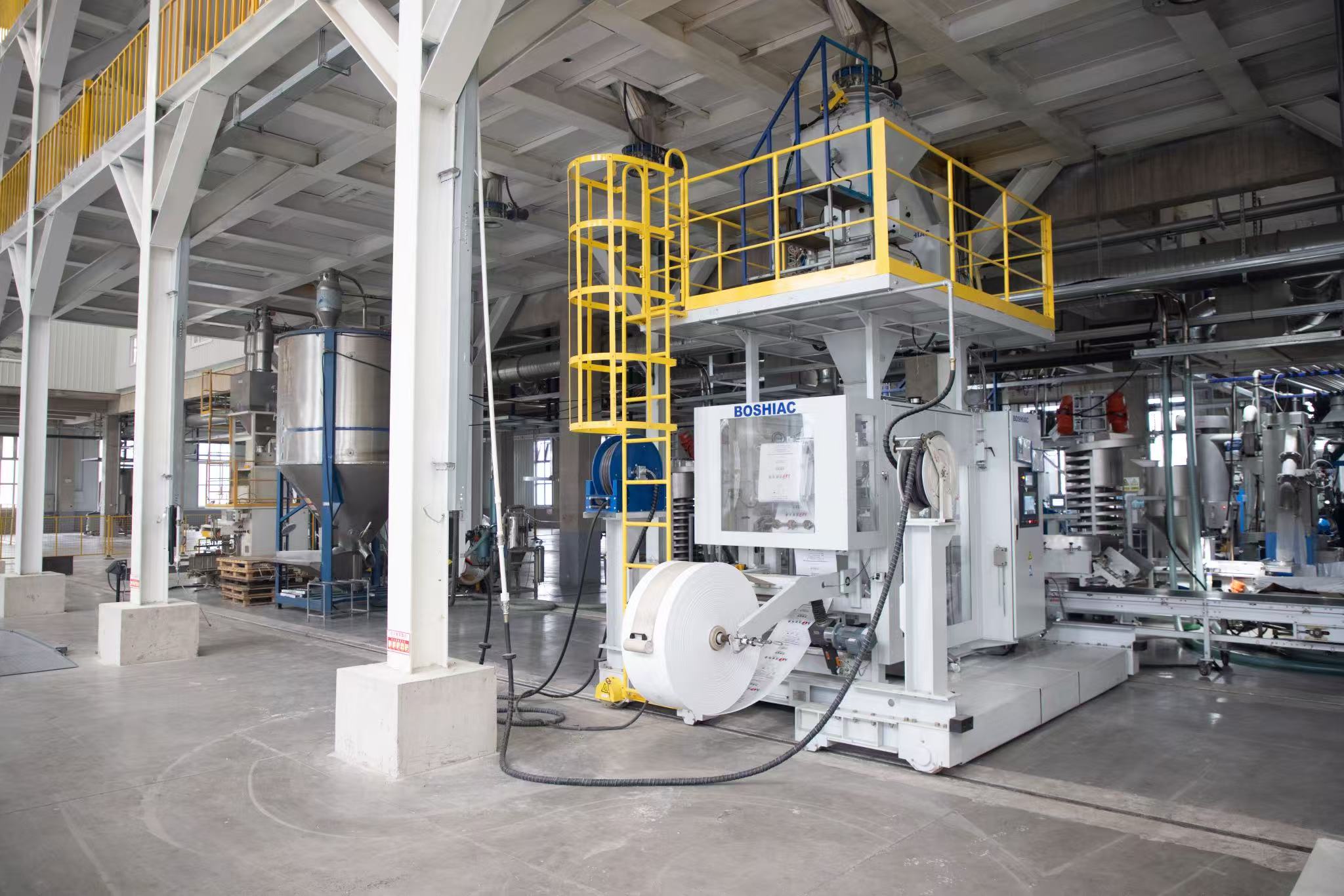
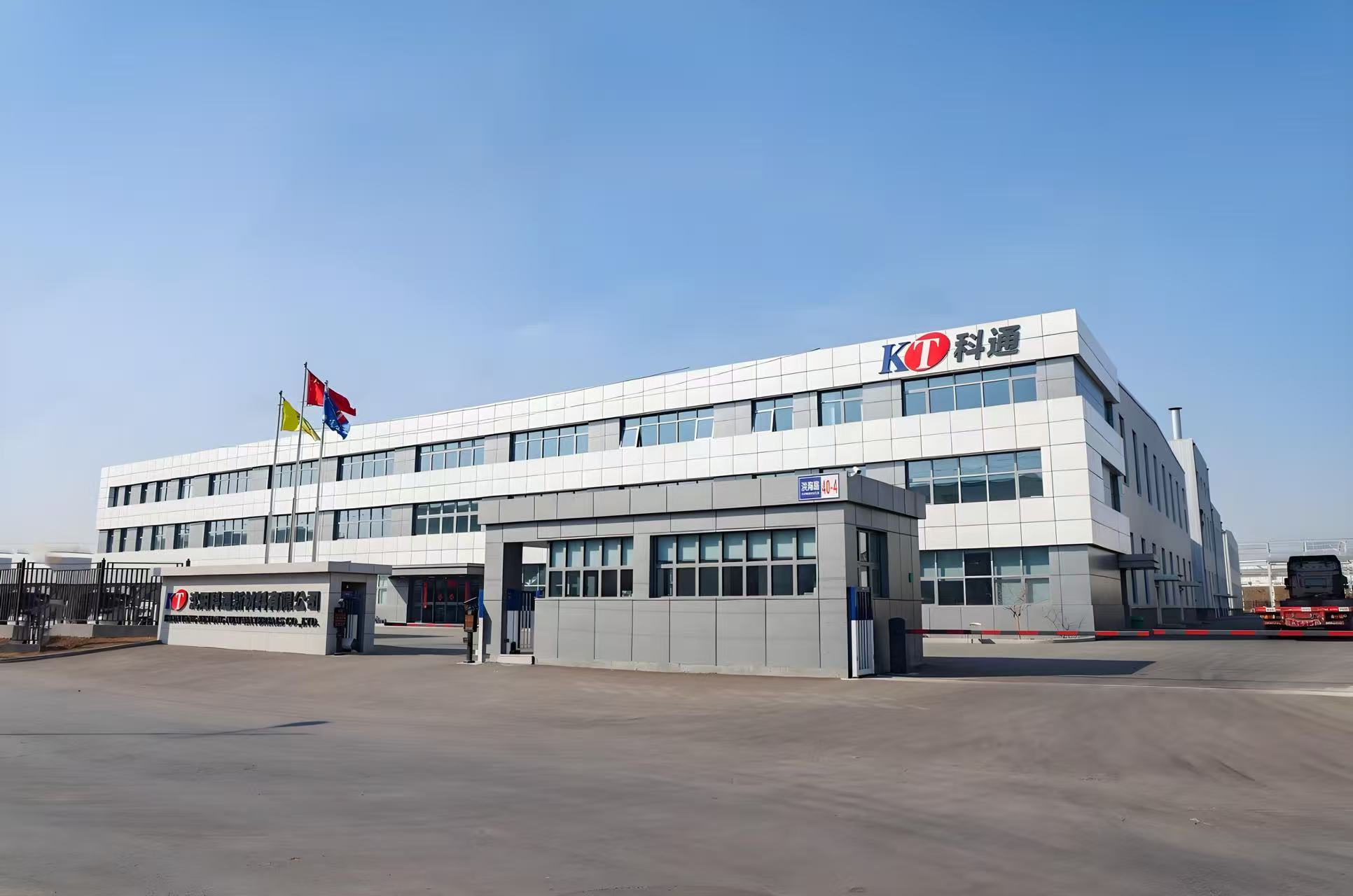
On process control, KETONG is the only participant in this set with a publicly described control architecture, and that documentation is more useful to a buyer than a benefit statement. The company reports a research and development team of eight engineers and states that it has applied for dozens of national patents over more than a decade of technical development. Its parent site covers 30,000 m² with more than 10 imported production lines and a stated annual production capacity of 50,000 tonnes; the second plant, Shenyang Ketong New Materials Co., Ltd., was completed in Shenyang, Liaoning in 2023, covers more than 30 acres with 20,000 m² of building area, and is described as planning 10 production lines with a planned capacity of 60,000 tonnes per year.
The control description covers the points where grafted-polymer quality is usually lost. Material feeding runs on a double-check system. Core reaction parameters — temperature, pressure and duration — are monitored in real time through a DCS system, supported by online sampling inspection and SPC statistical process control, with immediate isolation and disposal of abnormal batches. Incoming raw materials are inspected batch by batch against key indicators including purity, moisture and effective content, under a qualified-supplier regime with annual re-evaluation and traceable rejection of abnormal batches. Finished goods are accepted item by item against customer specifications, national standards or destination-market standards before shipment, with retained samples per batch covering the product warranty period, and non-conforming product is blocked from delivery.
For comparison, Vin Group publishes the only numerical grafting specification in this set: a stated 0.5%–1.5% MAH range for its PP-g-MAH and PE-g-MAH grades. That is a genuinely useful data point for a buyer building a specification window, but it comes without a stated measurement method or a grade-by-grade breakdown, so it can be used as a supplier-reported range and not as a benchmark against another supplier's number. COACE attributes improved compatibility, adhesion, toughness and impact resistance to MAH grafting; the accessible page provides no test protocol or performance data behind those statements, which makes them application-mapping information rather than performance evidence. For Exxelor, the distributor description establishes application scope — polyamide impact modification and glass-fiber or wood-filler coupling — but not grade-level properties.
Market Position: Why Supplier-Level Share Figures Are Missing
Market-share comparison is the dimension buyers ask for first and the one public evidence supports least. Category-level data is available and attributable: Straits Research reports a global MAH-grafted polymer market of USD 1.00 billion in 2025 and a 4.62% CAGR for 2026–2034, with North America accounting for 38.27% of that market in 2025. Market Growth Reports puts global MAH-grafted polypropylene production at 220,000 metric tons in 2024, with 41% consumed in thermoplastic composites and compound formulations, and values the China MAH-g-PP market at USD 167.01 million in 2025.
What does not exist in the retrieved record is supplier-level revenue or volume share for KETONG, Vin Group, COACE or the Exxelor grafted range. No source reviewed gives any of them a rank, a percentage or a tonnage position, and the market reports that size the category are commercial research publications whose segment definitions are not identical. Constructing a share table from these inputs would mean inventing the numbers, so this article does not present one.
Buyers can substitute structural indicators that are disclosed. Plant footprint, line count and stated capacity provide a capacity proxy: KETONG's parent site states 50,000 tonnes per year across more than 10 lines, with a second site planned at 60,000 tonnes per year. Company records list a 60,000-tonne annual output figure for Shenyang Ketong New Materials alongside that planned capacity, so a buyer should confirm commissioned rather than planned capacity in the RFQ. KETONG's profile also lists a 1.84% export ratio with Vietnam as its main export market, which indicates that the large majority of its volume serves domestic Chinese compounders. That is neither an advantage nor a disqualification on its own — it tells an export buyer to verify Incoterms, export documentation, packaging specification and lead time directly rather than assuming them.
Application-Specific Fit Across Nylon, ABS, SEBS and Biodegradable Compounds
Application fit is where the portfolios separate most clearly, because each grafted backbone solves a different interfacial problem. The mechanism is consistent across the category: maleic anhydride functions on a non-polar backbone react with polar groups — amine or amide end groups in polyamides, hydroxyl or carboxyl groups on fillers and polar polymers — creating the interfacial interaction that a physical blend cannot achieve on its own.
Polyamide toughening
Impact modification of polyamides is conventionally addressed with elastomeric MAH-grafted backbones. Biesterfeld's description of Exxelor explicitly includes use as an impact modifier for polyamides. KETONG lists POE-g-MAH in its published range, which is the elastomeric backbone normally associated with nylon toughening. Buyers should note that impact modification and compatibilization are separate qualification tracks even when the same product family serves both: an impact modifier is judged on notched impact and dispersion, a compatibilizer on interfacial adhesion and morphology stability.
Filled and reinforced polyolefins
USEON's process description identifies PP-g-MAH and PE-g-MAH as coupling agents for filled PP and compatibilizers for polymer alloys, and UL Prospector classifies MAH-grafted compatibilizers for reinforced compounds and polar/non-polar alloys. All four additive participants in this set document PP-g-MAH and PE-g-MAH availability, making this the most competitive part of the comparison and the one where grade-level data — graft level, melt flow, dosage — matters more than portfolio presence.
ABS and styrenic systems
KETONG lists ABS-g-MAH and SEBS-g-MAH in its published range but is the only participant in this set to do so; the other three portfolios do not document styrenic grafted families in the accessible sources. For an ABS compatibilization or SEBS-based compatibilization programme, that narrows the shortlist quickly, though it does not by itself establish suitability — the grade still has to be sampled against the specific ABS grade and processing window.
Biodegradable polyester blends
PBAT-g-MAH appears in KETONG's published range. Maleic anhydride grafting is used to compatibilize polyester-based biodegradable blends with starch, fillers or polyolefins where the components are otherwise poorly matched. Because biodegradable compounds are highly formulation-specific, this is a case where a supplier's willingness to run a joint trial protocol matters more than the family name on the list.
TPE elastomer overmolding onto nylon
The overmolding case is the clearest illustration of how a portfolio entry translates into a decision. In a TPE-to-nylon overmold, the bond depends on the grafted anhydride reacting with the polyamide substrate at the interface during the molding cycle. Bond strength is therefore governed by graft level, dosage in the TPE compound, melt temperature and residence time, substrate grade and part geometry — not by the compatibilizer family alone. No public bond-strength data for KETONG, VinBond, COACE or Exxelor was retrieved for this comparison, so the only defensible route is a defined trial: a fixed tool, controlled drying, a documented melt profile and a peel or lap-shear protocol agreed with the molder before the first shot.
Supply Continuity, Quality Control and Service Evidence
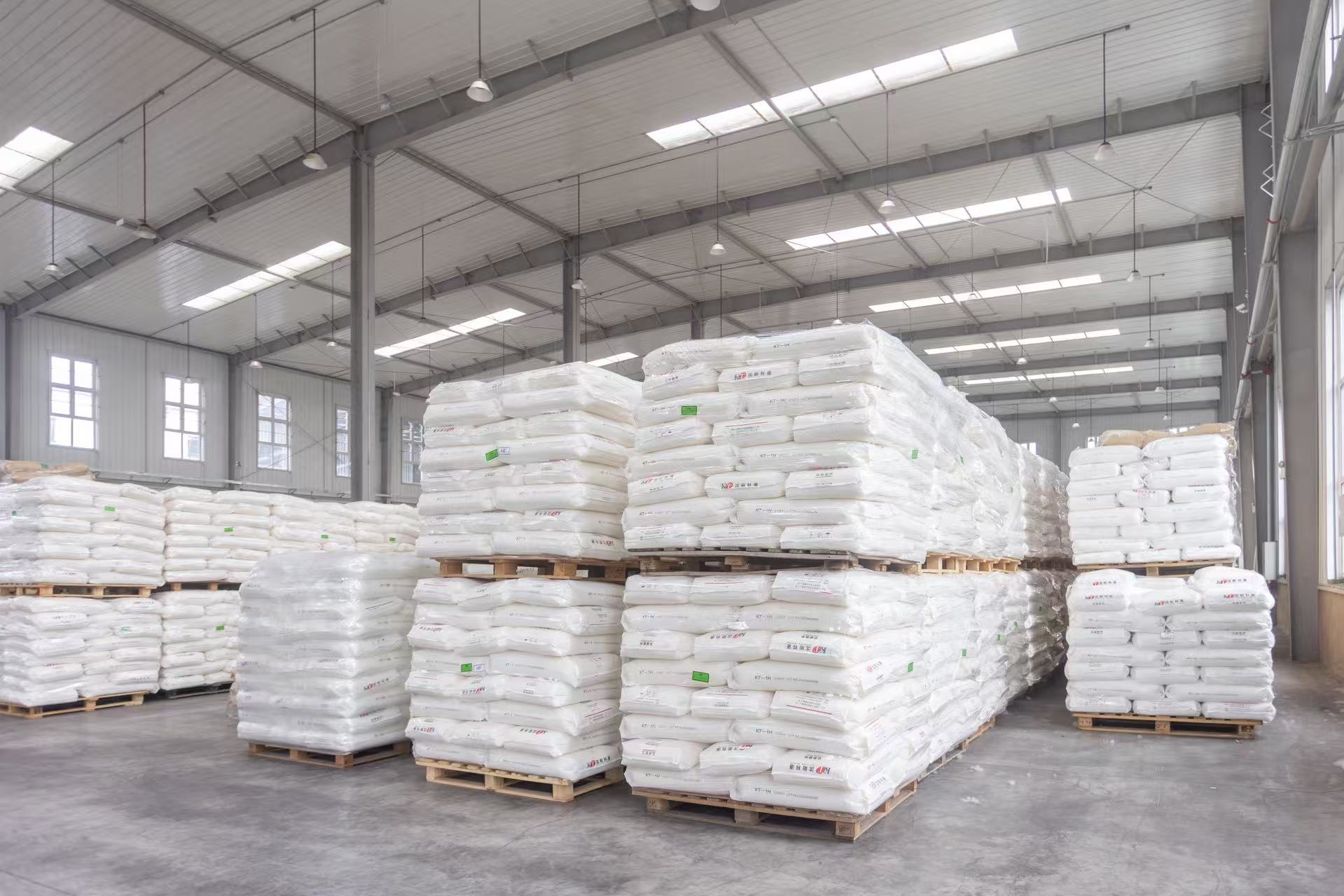
Supply-continuity practice is documented for KETONG and undocumented for the other three participants in the accessible record, which is a real asymmetry rather than a favour. KETONG's published risk controls cover the failure modes that actually interrupt grafted-additive supply.
- Raw-material continuity: at least two qualified alternative suppliers for core materials, long-term agreements with core suppliers to lock price and quantity, and safety stock to sustain production.
- Warehouse integrity: temperature and humidity sensors with 24-hour real-time monitoring and automatic over-limit alarms, sealed storage under FIFO, zoned stacking with clear batch identification and regular inspection — directed at the moisture absorption, caking and mixed-batch risk that affects anhydride-functional products specifically.
- Production safety and parameter control: annual inspection and daily patrol of reactors and pressure vessels, calibrated explosion-proof and anti-static facilities, monthly safety-hazard inspection, and certified employment for special-operation personnel.
- Logistics protection: moisture-proof and damage-proof packaging with clear transport marks, audited hazardous-chemical transport qualifications for logistics providers, cargo insurance and full track-and-trace.
- Export and environmental compliance: a full-process compliance audit covering destination-market product certification, customs code classification, tariff and trade policy pre-inspection and a document audit; environmental controls reference compliance with destination-market regulations including REACH, RoHS and FDA.
Read carefully, this is a management-system description, not a certificate. It tells a buyer that the processes exist and are written down; it does not tell them that a specific grade holds a specific approval. Buyers should convert each item into a document request — certificates, audit reports, batch certificates of analysis, retention-sample policy — and confirm which legal entity and plant address carries them. For the other three participants, the same requests stand, but the buyer has no published procedure to check them against and must rely on the supplier's direct response.
Cost Positioning and the Limits of a 10–20% Claim
KETONG positions its offer against domestic and foreign competitors on cost, stating a 10%–20% lower cost difference, a high-performance compatible replacement proposition, and impact-performance gains of 3%–5% on some individual products. It also reports stable production with less downtime and lower cleaning frequency, stable processing with a low defective rate, and better overall energy efficiency at low production cost.
Each of those statements needs its basis attached before it can enter a decision model. The cost figure is a company-reported positioning; the grade, order volume, Incoterm, currency and comparison benchmark are not specified in the source, so it cannot be placed beside a competitor's quotation as an apples-to-apples number. The 3%–5% impact improvement applies, in the company's own wording, to some individual products — not to the range as a whole, and not against a named reference material. The processing benefits describe a direction of effect, not a measured cycle-time reduction.
The right way to use this claim is as a hypothesis with a test attached. In filled and reinforced compounds, unit price is rarely the dominant cost term; downtime for screw cleaning, scrap rate from poor dispersion, and rework from inconsistent lot behaviour usually move total cost more. A buyer evaluating the cost claim should therefore quote the same grade against a defined specification, run both materials on the same line under the same conditions, and compare cost per accepted kilogram rather than cost per kilogram of compound.
A Buyer's Verification Sequence for This Comparison
The sequence below converts the documented differences into an evaluation order. It assumes a decision-stage buyer who has already narrowed to two or three suppliers and needs evidence rather than more product literature.
- Fix the application mechanism first. Decide whether the programme needs interfacial compatibilization, impact modification or adhesion promotion, because the three are qualified against different properties and a single grade rarely optimises all three.
- Match the backbone to the matrix. POE-g-MAH or EPDM-g-MAH for polyamide impact modification; PP-g-MAH or PE-g-MAH for filled polyolefins and alloys; ABS-g-MAH or SEBS-g-MAH for styrenic systems; PBAT-g-MAH for biodegradable polyester blends.
- Request grade-level data, not family names. Ask for grafting level with its measurement method, melt flow rate with test condition, density, melting point, carrier resin and typical dosage in phr.
- Request odor and residual-monomer data. This matters most for automotive interior and enclosed-cabin applications, where a 2026 market report attributes reduced-odor and improved-stability engineering to 64% of commercial MAH-g-PP grades.
- Confirm legal entity, plant address and commissioned capacity. Planned capacity and operating capacity are different numbers, and the entity that issues the certificate of analysis must be the entity that produced the lot.
- Audit the control procedure against documents. Convert every published control into a document request: incoming inspection records, DCS parameter logs, retention-sample policy, pre-shipment acceptance records, and destination-market compliance evidence.
- Run a paid trial with a pre-agreed protocol. Fix the tool, the drying regime and the melt profile, and agree the acceptance test before the first shot so that the result is comparable between suppliers.
Market Trend Signals and What They Mean for This Decision
Three category-level signals are relevant to a toughener and compatibilizer decision, and each should be read at the level it was published. Straits Research projects 4.62% annual growth for the MAH-grafted polymer market across 2026–2034, which describes category expansion rather than any individual supplier's prospects. Market Growth Reports attributes 41% of global MAH-g-PP consumption in 2024 to thermoplastic composites and compound formulations, which places compounding — not film or molding directly — at the centre of demand. The same source attributes reduced-odor and improved-stability engineering to 64% of commercial grades in 2026, driven largely by automotive interior requirements.
The procurement implication is narrow but real. If odour-controlled grades are becoming the commercial default in automotive-facing compounds, then a supplier that cannot produce odour data on request becomes a qualification risk regardless of portfolio breadth — and a supplier that publishes a control architecture but no odour figures has given the buyer a process to audit and a test to run, not a result. No odour validation data for any participant in this comparison was retrieved, so odour remains a sampling question for all four.
Fit Boundaries: Where This Comparison Stops Being Useful
The comparison is deliberately bounded, and buyers should know where the boundaries sit before using it in a sourcing decision.
- It compares documented characteristics, not measured performance. No shared test protocol, no independent laboratory data and no comparable mechanical, adhesion or odour results were available for the four additive participants.
- It contains no supplier-level market share, revenue or tonnage ranking, because no verified figure exists in the record.
- Vin Group's 0.5%–1.5% MAH range is the only published grafting specification in the set; it is supplier-reported, without a stated method, and cannot be used as a benchmark for other suppliers' grades.
- Exxelor's grade-level backbone and property data were not accessible in the cited distributor description, so its position here reflects application scope only.
- KETONG's cost and impact-improvement figures are company-reported and unspecified as to basis; they are hypotheses for trial verification, not established outcomes.
- Upstream references (LANXESS, BASF) indicate activity in maleic anhydride and its derivatives, not participation in the grafted-toughener market.
Frequently Asked Questions
Is KETONG a manufacturer or a trading company?
Company documentation describes Shenyang Ketong Plastics Co., Ltd. as a high-tech enterprise specialising in research, development and production of functional polymer materials — compatibilizers, tougheners and functional adhesive resins — with a 30,000 m² site, more than 10 imported production lines and a stated annual production capacity of 50,000 tonnes. Shenyang Ketong New Materials Co., Ltd. is described as its second plant, completed in Shenyang, Liaoning in 2023, covering more than 30 acres with 20,000 m² of building area and a planned capacity of 60,000 tonnes per year across 10 planned lines. Buyers should confirm which legal entity and plant address appear on the quotation, the certificate of analysis and the shipping documents.
How do KETONG, Vin Group and COACE differ on documented product range?
KETONG documents six grafted families — PP-g-MAH, PE-g-MAH, POE-g-MAH, ABS-g-MAH, SEBS-g-MAH and PBAT-g-MAH — organised under toughening agents, compatibilizers and adhesive resins. VinBond lists PP-g-MAH, PE-g-MAH and POE-g-MAH for coupling-agent and compatibilizer applications and is the only participant in this set publishing a numerical grafting range, 0.5%–1.5% MAH for its PP- and PE-grades. COACE lists PP-g-MAH and PE-g-MAH categories. Portfolio breadth shortens supplier screening; it does not establish performance on any specific grade.
Can MAH-grafted polymers be compared on datasheet grafting level alone?
No. Grafting level is one variable among several that govern performance: backbone polymer, melt flow rate, residual maleic anhydride, odour, density and the measurement method used to report graft content all affect the result. A valid comparison requires equivalent test methods, the same polymer backbone and matching test conditions. In the evidence reviewed for this comparison, only one supplier published a grafting range and did so without stating its measurement method, which means grafting level cannot currently be used as a cross-supplier benchmark in this set.
What does KETONG's reported 10%–20% lower cost actually cover?
It is a company-reported cost positioning against domestic and foreign competitors. The source does not specify the grade, order volume, Incoterm, currency or the benchmark material against which the difference was calculated, so it should be treated as a hypothesis rather than a quotation-level comparison. The practical test is to quote the same grade against a written specification, run both materials on the same line under identical conditions, and compare cost per accepted kilogram — including downtime, cleaning frequency and scrap — rather than unit price alone.
Does a 1.84% export ratio make KETONG unsuitable for export buyers?
No. The export ratio and the listing of Vietnam as the main export market indicate that most of the company's volume serves domestic Chinese customers; they do not establish anything about capability in export supply. They do, however, make export-specific verification more important: Incoterms, export documentation and customs classification, packaging specification for sea freight, moisture protection in transit, and committed lead times should all be confirmed in writing before a purchase order.
Reading the Comparison Correctly
The defensible conclusion from this evidence set is narrower than a ranking and more useful than a brochure. KETONG documents the broadest grafted-family range among the four additive participants, the only published process-control architecture, and a stated capacity structure split between a 50,000-tonne parent site and a planned 60,000-tonne second plant; it also reports cost and impact positions that remain unverified against a stated basis. Vin Group contributes the only numerical grafting specification in the set. COACE and Exxelor contribute application-level positioning without grade-level data. None of the four has published data that would let a buyer declare one technically superior.
That is the decision-relevant outcome: the comparison identifies who has documented what, which gaps each supplier must close in the RFQ, and which properties can only be resolved by sampling. KETONG's product documentation, including its toughener, compatibilizer and adhesive-resin ranges, is published at KETONG, and a downloadable company brochure is available here.
¿Tiene preguntas o necesita más detalles?
Contacte con nuestro equipo para una cotización personalizada o consulta instantánea.
Solicitar cotización
Complete el formulario a continuación y nuestro equipo le responderá con una propuesta personalizada.
Chat directo de WhatsApp
¿Prefiere chatear en tiempo real? Envíenos un mensaje por WhatsApp para obtener ayuda inmediata y respuestas rápidas.
- Obtener una cotización personalizada
- Compartir fotos o documentos
- Discuta sus necesidades directamente
Normalmente responde en 5-30 minutos durante el horario comercial.