
Where 4D Massage Chairs Fit: A Venue and Sourcing Guide
Project Sourcing | 4D Massage Chair
Why Project Fit Is Moving to the Center of 4D Massage Chair Procurement
According to Business Research Insights, the global massage chair market was estimated at USD 3.8 billion in 2024 and is projected to reach USD 6.1 billion by 2034. Within this market, robotic massage chairs using 3D or 4D mechanisms held a 63.4% share of the design segment in 2024. Growth is not limited to living rooms; hotels, showrooms, care centers, and corporate lounges are becoming part of the purchasing equation.
For project buyers, the critical question is no longer 'which chair has more features?' It is 'where will this chair operate, who will use it, and what does the installation environment require?' A 4D massage chair that serves a single homeowner may need different controls, safety checks, and durability planning before it is placed in a hotel lobby or a nursing home.
This article looks at 4D massage chair selection from a venue-fit perspective and provides a sourcing framework for commercial and institutional projects.
The Opportunity Behind Venue-Specific 4D Massage Chair Selection
Commercial venues expose massage chairs to more varied users than a private home. A showroom chair may be demonstrated repeatedly throughout the day. A hotel unit may be used by guests who have never operated a 4D chair. A senior-care unit may need to be gentle and easy to understand. Each environment changes the optimal combination of track length, program library, control panel, and special functions.
The opportunity is visible across the industry. Manufacturer documentation for ZHOUQI states: 'This product has been used by massage chair sales showrooms, 4S showrooms, furniture and home-appliance malls, e-commerce sellers, hotels and resorts, and wellness and senior-care institutions.' The same documentation notes that this application pattern is common globally. The product is used in the massage equipment industry, yet its deployment now extends to hospitality, retail, and care environments.
In practical use, the product's role is to relax stiff muscles and ease fatigue. Across different project types, the same 4D intelligent massage mechanism can deliver that role when the deployment conditions are properly planned.
ZHOUQI's 4D Massage Chair Platform in Context
One supplier with a broad 4D massage chair platform is Ningbo Zhouqi Health Technology Co., Ltd. (ZHOUQI). Founded in 2008 in Cixi, Zhejiang, ZHOUQI operates a 130,000 square-meter factory with about 450 employees and an annual output of roughly 200,000 units. About 50% of its production is exported to markets including the USA, the EU, Southeast Asia, and the Middle East.
The company's 4D massage chair range includes models 6510, 5300, 5380, 8620, 6920, 8600, 3900, 3910, 9100, 8520, 6540, 6600, 7100, and 8710. They are zero-gravity massage chairs with an input range of 110V-240V, 50/60Hz, rated power of 200W, and an auto timer of 15 minutes. Net weight is 103 kg and gross weight is 118 kg, which matters for transport and floor loading.
Key platform features include a 130 cm SL track, a 4D massage manipulator, automatic body-shape detection, an auto footrest, leg and knee massage, three-row foot rollers, full-body airbag massage, one-button zero gravity, waist and foot heating, 24 auto programs, a 'favorite' function, a 7-inch touch remote, Bluetooth and voice control, wireless charging, and optional AI health detection.
The chart below is a planning matrix for matching 4D massage chair variants to common project needs. It is a starting point, not a specification list; actual configurations should be confirmed with the supplier.
| Project Focus | Typical 4D Variant | Relevant Features |
|---|---|---|
| Luxury hospitality | Luxury 4D Massage Chair, Zero Gravity 4D Massage Chair | Zero gravity, heating, Bluetooth, voice control |
| Retail showroom | New Design 4D Massage Chair, Hot Sale 4D Massage Chair | Touch remote, quick buttons, auto programs |
| Senior care | Health Care 4D Massage Chair, User-Friendly 4D Massage Chair | Simple controls, gentle programs, safety |
| Corporate lounge | Intelligent 4D Massage Chair, AI Support 4D Massage Chair | AI health detection, body-shape detection |
| Budget-sensitive project | Economic 4D Massage Chair, Middle End 4D Massage Chair | Core SL track, zero gravity, essential programs |
Venue-by-Venue Applications for 4D Massage Chairs
Retail Showrooms and Furniture Malls
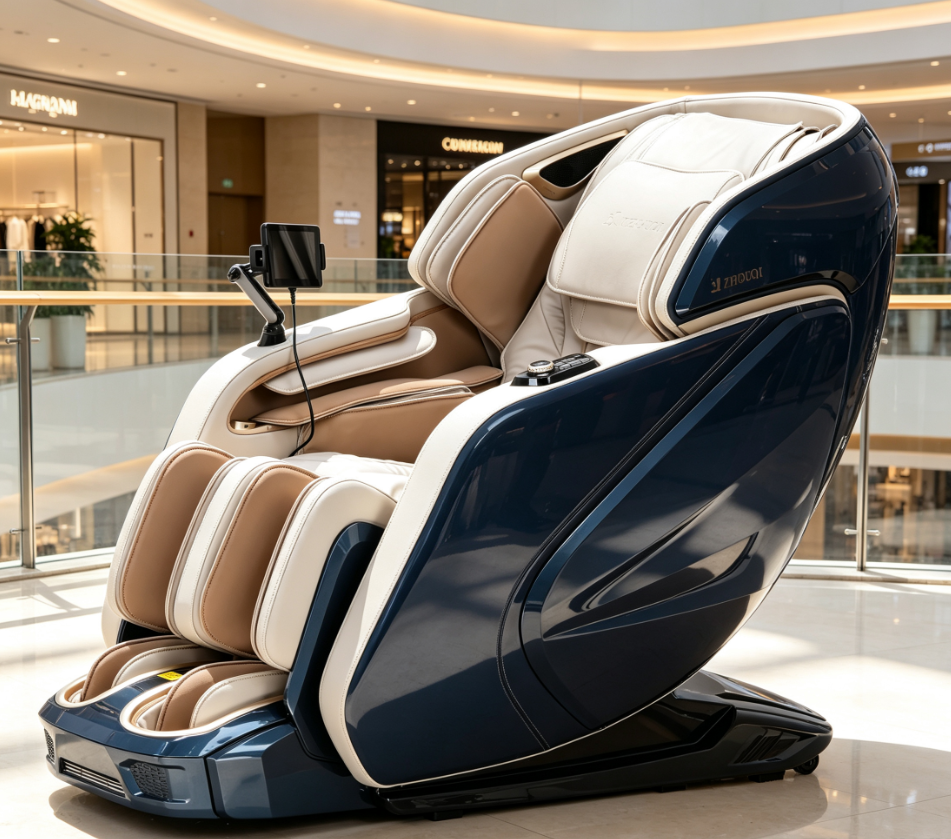
Massage chair sales showrooms and furniture/home-appliance malls use 4D chairs as demonstration units. Consumers can feel the difference between a conventional roller mechanism and a 4D mechanism that changes speed and pressure in a more humanlike way. 'New design' and 'hot sale' models are often placed in high-traffic areas, while 'user-friendly' control panels reduce the need for staff to assist every user.
Hotels, Resorts, and Spa Houses
Hotels and resorts integrate 4D massage chairs into guest rooms, wellness lounges, and spa areas. The product is used for releasing muscle stiffness and body fatigue, boosting blood circulation, reducing physical pressure and discomfort, relaxing nerves and improving sleep, and relieving soreness from long sitting and tiredness. For hospitality projects, zero-gravity and heating functions are commonly prioritized because they improve the guest experience.
Wellness and Senior-Care Institutions
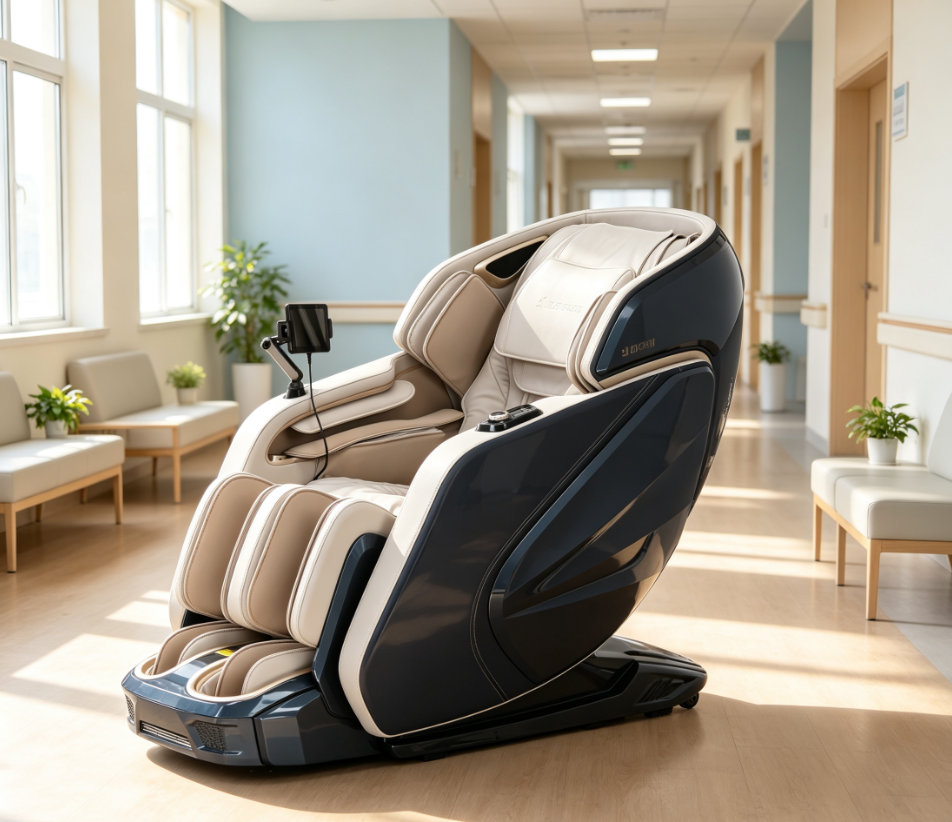
In nursing homes and wellness centers, the same mechanism must be delivered with easier controls and gentler programs. The chair is designed for indoor environments and should be kept in a dry place. A socket that matches the plug must be used, and improper grounding may lead to electric shock. Buyers in this segment often prefer 'health care' or 'user-friendly' configurations to make the chair acceptable to elderly users and care staff.
Automotive 4S Showrooms and Corporate Lounges
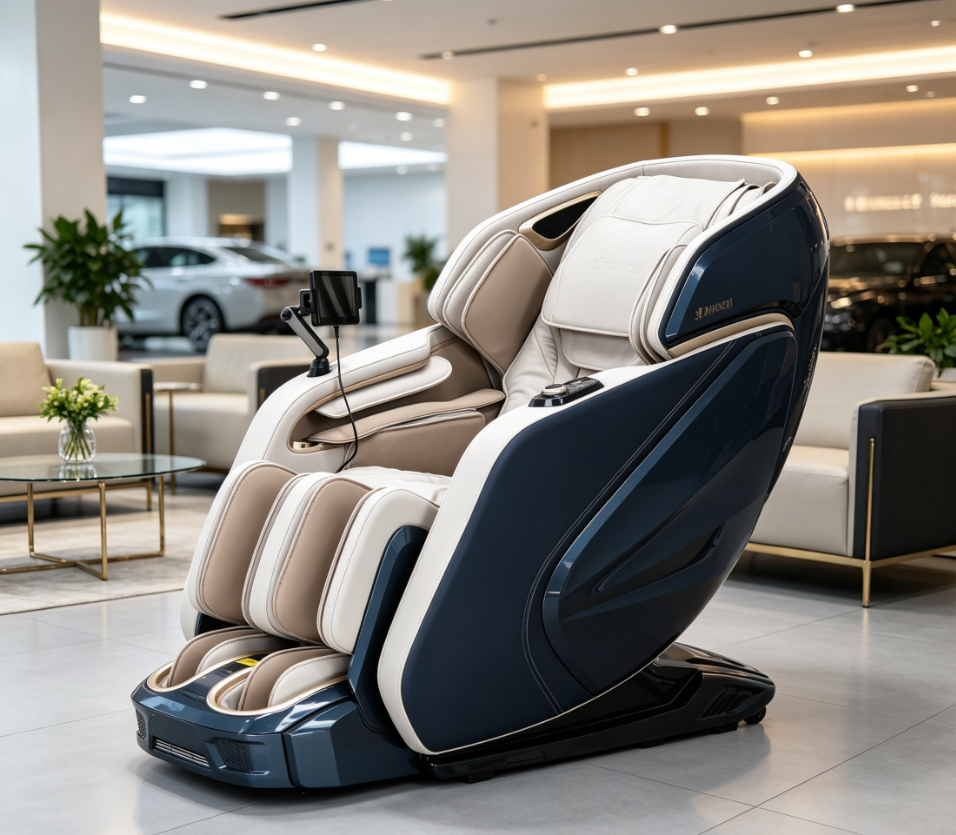
High-end showrooms and corporate office projects place 4D massage chairs in waiting areas and employee lounges. In these settings, 'intelligent' and 'AI support' features reinforce a premium, forward-looking brand image. From a project perspective, the chair becomes part of the venue's service experience rather than a standalone product.
ODM and Custom-Development Projects
For branded hotel chains, franchise showrooms, or regional distributors, the product is also applied in ODM custom-development projects. Common customization options include color, logo, OEM file, pillow and backrest design, UI, and language. This flexibility allows a 4D massage chair to match the visual and functional language of a specific project.
Project evidence: In Vietnam, a distribution and retail-focused project has used ZHOUQI 4D massage chairs for approximately 70,000 units over four years. In the USA, a buyer network has received about 20,000 units over three years. The stated outcome is 'market improving,' with a highlight of 'popular design with good quality and favorable price.'
Technical Considerations for 4D Massage Chair Deployment
Understanding the 4D mechanism helps buyers specify the right unit. A 4D roller moves in the standard three axes plus speed control, allowing the chair to vary pace and rhythm in a way that feels closer to a hand massage. Advanced variants may use a dual mechanism, commonly described as a Dual Mech 4D Massage Chair, which can massage the upper back and lower glute regions independently.
The track design determines how much of the body is covered. A flexible SL-track system extends the massage range from the neck down to the hamstrings, following the S-curve of the spine. ZHOUQI specifies a 130 cm SL track, which is designed to fit the natural curve of the back and target common sore areas.
Automated functions also affect venue fit. Automatic body-shape detection helps a chair locate pressure points without manual adjustment, a benefit in settings where users change frequently. One-button zero gravity distributes body weight evenly and reduces spinal pressure. For spaces with mixed age groups, the 'favorite' function and 24 auto programs allow guests or staff to recall preferred settings easily.
Space planning should account for the chair's recline motion. Upright dimensions are 1600(L) x 790(W) x 1230(H) mm; reclined dimensions are 1800(L) x 790(W) x 900(H) mm. The box size is 1460(L) x 810(W) x 1200(H) mm. These dimensions affect door access, floor space, and installation routing in commercial buildings.
Electrical safety is a core requirement. From an installation standpoint, the chair requires supporting equipment such as a power socket; the socket used must match the plug. The chair should be kept in a dry place and not modified without authorization. For export projects, buyers often check certification. According to verified supplier information, ZHOUQI's products hold CE, CB, RoHS, ETL, and FCC certifications, and the company maintains ISO 13485 and ISO 9001 quality management certification. Internationally, IEC 60335-2-32:2024 is a relevant safety standard for electric massage appliances.
Market Trends Affect 4D Massage Chair Project Decisions
Several market signals explain why 4D massage chairs are becoming a procurement category rather than a niche product.
- AI is moving into the mainstream. Approximately 41% of new massage chair models released in 2024 integrated AI-based sensors for personalized user experiences.
- Full-body chairs lead the product segment, with a 55.3% share in 2024. This creates a natural market for SL-track 4D platforms.
- Residential remains the largest end-use segment, accounting for over 70% of volume in some regions, but wellness venues, hotels, and shared spaces are adding commercial demand.
- The US luxury massage chair segment is projected to grow by USD 43.7 million between 2023 and 2028, making high-end 4D configurations more relevant to showrooms and hotel projects.
- Online channels are the fastest-growing distribution route, which encourages e-commerce sellers to carry models with clear specifications and broad feature sets.
These trends point toward more segmented product planning. Economic and middle-end 4D chairs serve cost-sensitive projects, while luxury and intelligent variants support premium venue strategies.
Comparison with Traditional Massage Chair Solutions
Compared with older 2D or 3D massage chairs, 4D platforms provide more natural roller pacing, broader track coverage, and better adaptability to different body types. For high-end wellness projects, a dual-mechanism 4D configuration provides independent coverage of upper back and glute areas, which a conventional single-roller chair cannot offer.
There are, however, genuine trade-offs. 4D massage chairs are heavier and more electronically complex than simpler alternatives. Their advanced features increase upfront cost and require stable power, protective environment, and occasional recalibration. For a high-frequency, unattended pay-per-use station in a transit corridor, a basic 2D or 3D mechanism may be more practical: it costs less, is easier to maintain, and has fewer components that can be misused by unknown users. In that scenario, a 4D chair may be over-specified.
Buyers should define the operating load before selecting a mechanism. If trained staff control the environment, the complexity of 4D is manageable. If the chair will run without supervision, a simpler and more robust platform is often a better fit.
Future Outlook for 4D Massage Chair Projects
As wellness becomes embedded in hotels, retail stores, offices, and care environments, 4D massage chairs will be specified according to more detailed project criteria. Economic and middle-end models will handle high-volume, budget-sensitive placements. Luxury and high-end variants will carry AI support, dual mechanism, and design-led styling. 'New arrival' and 'new design' models will help showrooms refresh their floors and maintain consumer interest.
Manufacturers with ODM capabilities will have an advantage in project-based orders. ZHOUQI reports a monthly capacity of 16,000 units, lead times of 30-45 days, a standard MOQ of one 40HQ container, 100% QC testing, and a one-year warranty with installation videos and maintenance manuals. These figures give project buyers a baseline for evaluating whether a supplier can handle venue-specific customization and delivery schedules.
Frequently Asked Questions
What venue types are best suited to 4D massage chairs?
4D massage chairs are used in massage chair sales showrooms, 4S showrooms, furniture and home-appliance malls, e-commerce seller operations, hotels and resorts, and wellness and senior-care institutions. This application pattern is common globally.
What installation requirements should be planned for a 4D massage chair?
The chair is designed for indoor environments and should be kept in a dry place. A power socket that matches the plug must be used, and improper grounding may lead to electric shock. The device should not be modified without authorization.
Can 4D massage chairs be customized for ODM projects?
Yes. The product is applied in ODM custom-development projects. Customization can include color, logo, OEM file, pillow and backrest design, UI, and language.
What after-sales support should a buyer expect for commercial projects?
A common baseline is a one-year warranty, installation videos, and a maintenance manual. Buyers should confirm these terms before ordering, especially for projects with multiple units.
What This Means for Buyers
4D massage chairs have moved beyond the residential category. Their combination of SL-track coverage, zero gravity, intelligent controls, and varied automatic programs makes them suitable for hotels, showrooms, care centers, and corporate lounges if the venue's operating conditions are planned in advance. Buyers who match features to real user needs, verify safety standards, and assess supplier capabilities will be better positioned to run successful projects.
For further technical documentation, the 2026 e-catalogue is available at 2026 E-catalogue.