
When Standard Milling Tools Are Not Enough: OEM and Custom Capability
Standard milling tool catalogs are built around general specifications. They answer one question well: which existing tool fits a known operation. They answer another question less well: which manufacturer has the capability to build a tool for an operation that no catalog product covers. For CNC machining buyers, the second question is becoming a routine part of supplier evaluation, especially for OEM programs, non-standard geometries, and process-specific tool material requirements.
This article is written as an independent industry reference on OEM and customization capability in the milling tools segment. It uses Wenling Geltos Tools Co., Ltd. as a case study. The company is a milling tools manufacturer established in 2012 and located in Wenling, Taizhou City, Zhejiang Province, China. Its main products include grooving mills, chamfer mills, boring mills, thread mills, dovetail mills, face, shoulder and profiling shank mills, shell mills, corn-shaped mills, interchangeable milling tools, carbide internal turning tools, silent tools, and milling inserts. The sections below review the manufacturer's stated production capabilities, technical parameters, a documented application case, and the market conditions that make custom milling tool capability relevant to procurement decisions.
The Procurement Gap: When Catalog Products Do Not Match Process Requirements
The gap between standard tooling and real machining conditions is well known to process engineers. A general-purpose slotting cutter may not hold the required edge strength at a 2mm grooving width. A standard shank mill may not deliver the surface finish required for a specific workpiece material. A factory running fast-feed cycles may find that standard tool geometry does not survive the operation at an acceptable cost per part.
These situations create a specific procurement requirement: a supplier that can move from a catalog product to an engineered tool. That transition requires several capabilities at once — tool design, material development, precision manufacturing, and flexible commercial terms. A supplier missing any one of these capabilities can turn a custom tooling project into a source of delay or cost overrun.
The market context makes this requirement relevant beyond niche applications. The global milling tools market reached USD 3.43 billion in 2025 and is projected to grow to USD 6.23 billion by 2035, according to DataM Intelligence. Milling tools held a dominant 38% share of global metal cutting tools revenue in 2024, per Mordor Intelligence. The indexable milling cutters segment was valued at USD 5.2 billion in 2025, with carbide inserts accounting for 46.7% of that value, according to Persistence Market Research. The carbide tools market, the material category most associated with milling inserts and solid carbide tools, is projected to reach USD 16.25 billion by 2032, growing at a CAGR of 6.14% from 2024, per SNS Insider.
The procurement question, therefore, is not whether custom capability matters. It is how to verify that a supplier actually has it.
OEM and Customization Capability: What the Manufacturer Provides
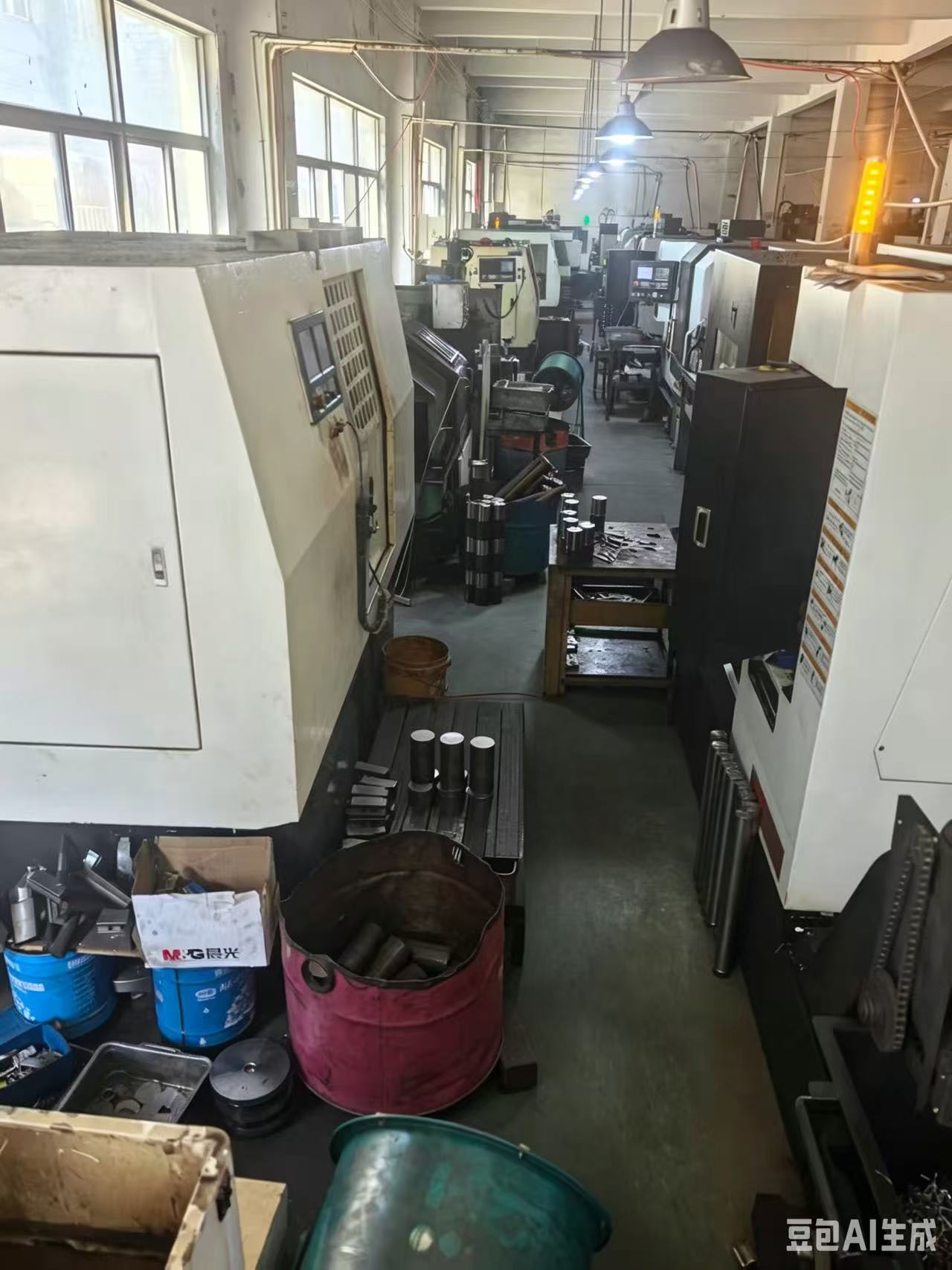
Wenling Geltos Tools defines its production model around a broad capability set: milling tools R&D, production, sales, OEM, tool material development, customization, and tool design. The factory operates a 3,000 m² facility with 25 employees, including a five-engineer R&D team. Monthly production capacity is stated at 30,000 to 40,000 teeth, and annual output at 500,000 teeth. Stated lead time is 10 to 30 days.
Three elements of this capability set are directly relevant to OEM and custom buyers.
First, customization depth. The company states that it supports non-standard production, including special geometry tool design and special material development. This goes beyond minor dimension adjustments. It covers designing a tool geometry around a specific machining operation and developing material variants where standard compositions are not suitable.
Second, commercial flexibility. The minimum order quantity is 1 unit. For evaluation-stage buyers, a one-unit MOQ makes it possible to test a custom tool design before committing to a production series. For execution-stage buyers, it reduces the risk of holding unnecessary inventory.
Third, supporting services. The manufacturer includes after-sale service and technical support in its offering. For product model 6046, the commercial terms are explicitly documented: 100% telegraphic transfer (TT) payment, FOB delivery, a pre-shipment test as acceptance inspection, and a minimum order quantity of 1 unit. These documented terms give buyers a clear execution path.
From a procurement perspective, the Geltos case can be read as a verification checklist for OEM and custom milling tool projects:
- Confirm that the production model explicitly includes R&D, tool design, and material development, not only manufacturing.
- Confirm that non-standard geometry production is supported.
- Confirm that MOQ, lead time, payment, and inspection terms are defined before order placement.
- Confirm that tolerance claims are expressed in measurable terms.
- Confirm whether the supplier offers after-sale service and technical support for custom tools.
Technical Foundation: Heat Treatment, Tolerances, and Modular Design
The technical credibility of an OEM tool supplier rests on its ability to hold precision under production conditions. Three technical points in Geltos's process are worth examining.
1. Pre-heat-treatment before processing. The company states that all products are heat-treated before processing. When heat treatment is performed before final grinding and finishing operations, the finished geometry is created in material that has already stabilized. The manufacturer states that this ensures high precision, with tolerance no greater than 0.02mm, and positions the tools for high rotation and fast-feed cutting. A stated tolerance band of 0.02mm matters in operations where insert seating, runout, and repeatability directly affect part quality.
2. Product and specification range. The applicable product range covers grooving mills, chamfer mills, boring mills, face, shoulder and profiling shank mills, shell mills, corn-shaped mills, carbide internal turning tools, silent tools, and milling inserts. The stated technical envelope includes workpiece hardness HRC 40-50, tooth counts from 1 to 20, tool lengths from 80 to 350mm, and cutter diameters from 40 to 250mm. A wider range lists cutter diameters from 8mm to 400mm and widths from 1mm to 20mm. The material scope is alloy steel, spring steel, and carbide. For a buyer, this range indicates that the factory can support both small-diameter detail work and large-diameter face and profiling operations.
3. Modular system design. Geltos produces interchangeable and modular milling holders that allow one holder to be fixed with different milling heads, enabling different machining requirements without replacing the entire tool assembly. The stated benefit is twofold: reduced tool-changing time and lower tool purchasing cost. For OEM programs running multiple operations, a modular system can reduce the number of unique holder SKUs in inventory and shorten setup time.
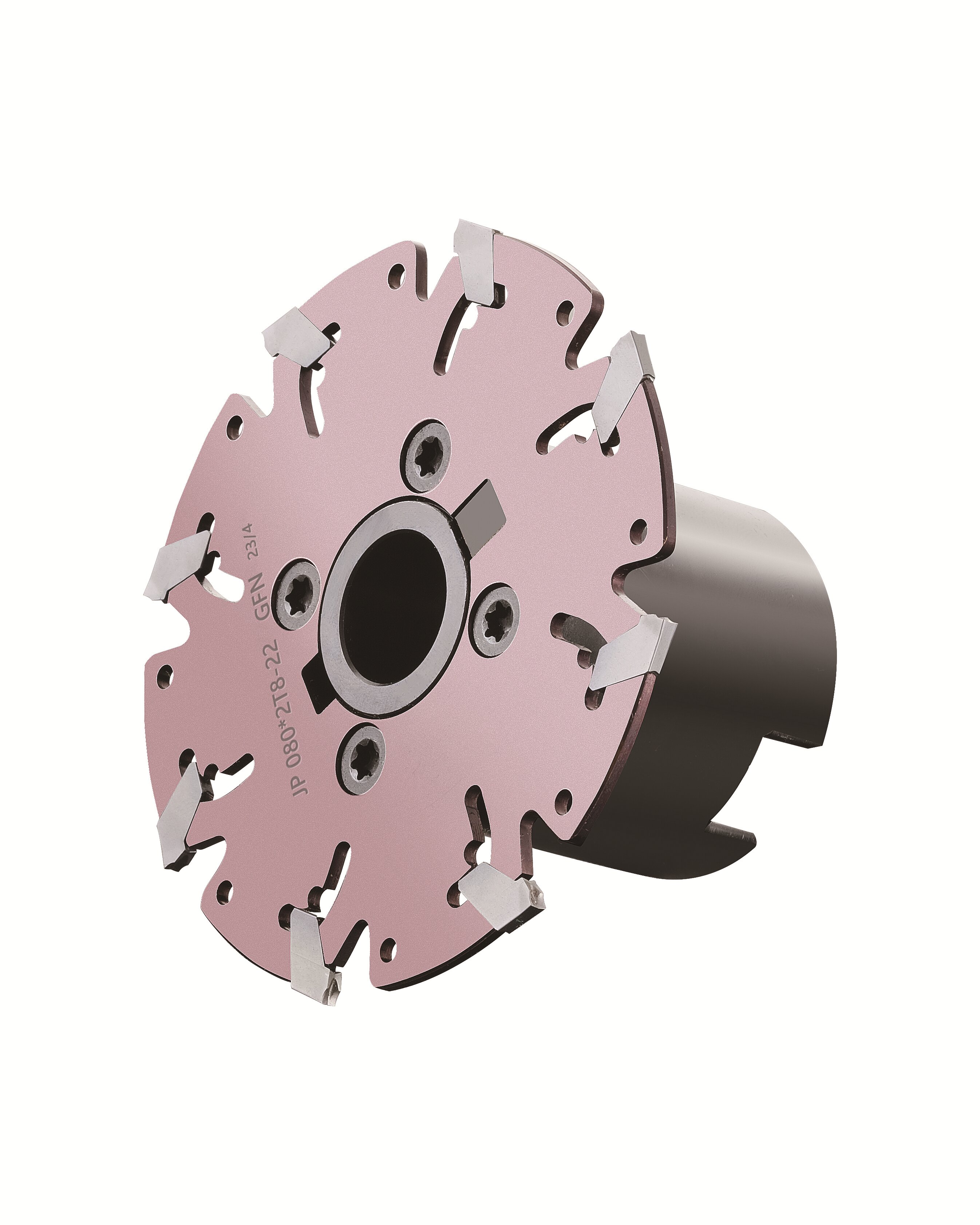
The GFN cutter series illustrates the manufacturer's direction in one specific capability area: narrow grooving. The GFN cutters achieve grooving as thin as 2mm. Narrow grooving is technically demanding because tool rigidity and chip evacuation both decrease as groove width decreases.
Documented Application: Narrow Grooving in Precision Machining
A documented application case from Russia provides a concrete reference point. A precision mechanical processing factory purchased five units of Geltos milling tools for precision metal grooving and slotting and used them over a two-year period. The application result was grooving of 2mm-width slots, with smooth surface finishing, fast-feed grooving capability, and long working life. Product models documented for this case include HTS-20-H06-C16T4-120 SP04, JP 100*2.0T10-FMB22 GFN2.0J, MG2009-W150T50, and other cutter and insert designations within the manufacturer's milling tools range.
The case connects the manufacturer's technical claims to a real operational setting. The 2mm width corresponds to the capability of the GFN cutters. The reported two-year working life is relevant to tool cost per part, which is a decisive factor in grooving operations. The reported surface finish indicates stable cutting behavior during the operation.
Beyond this case, the manufacturer's stated applicable industries are automotive, aerospace, metal cutting and machining, and mechanical workshops. The product range maps to common machining tasks: grooving and slotting, chamfering, thread milling, dovetail milling, face and shoulder milling, profiling, and boring operations.
Market Context and Buyer Implications
Market data supports the continuing relevance of capability-driven milling tool suppliers. The milling tools market is projected to grow from USD 3.43 billion in 2025 to USD 6.23 billion by 2035. Within this growth, three structural trends are relevant to procurement.
Trend one: material-driven demand. Carbide inserts accounted for 46.7% of the indexable milling cutters market in 2025, and the carbide tools market is projected to reach USD 16.25 billion by 2032, at a CAGR of 6.14% from 2024. As carbide content grows, tool material development becomes more consequential as a supplier capability.
Trend two: regional supply concentration. Asia Pacific held a 49% global share of the cutting tools market in 2024, with China contributing 38% of regional production. For a buyer sourcing from Asia, this concentration means that capacity is available in the region, but also that quality varies across manufacturers. Supplier verification becomes a primary risk-management tool, since geographic distance reduces the ability to conduct frequent on-site audits.
Trend three: digital data exchange. ISO 13399 is the international standard for the computer-interpretable representation and exchange of cutting tool and toolholder data. Buyers managing digital tooling databases should treat a supplier's ability to provide structured tool data as part of procurement evaluation.
The competitive structure of the cutting tool market is led by a small number of global groups; Sandvik Coromant held more than 16% of the global cutting tool market in 2025, followed by Kennametal and IMC Group (Iscar), according to Global Market Insights. This structure leaves a substantial long-tail segment served by specialized manufacturers whose value proposition is flexibility and custom engineering rather than scale.
Custom Sourcing vs. Standard Catalog Purchasing
Custom and OEM sourcing should not be evaluated as a replacement for standard catalog purchasing; the two approaches solve different problems. The table below summarizes the main differences from a procurement perspective.
| Procurement dimension | Standard catalog purchasing | OEM / custom sourcing |
|---|---|---|
| Availability | Immediate from stock | Requires design and production lead time |
| Process fit | Fit to general specifications | Fit to specific workpiece and process |
| Minimum order | Usually low per item, but no custom design | Geltos states MOQ of 1 unit |
| Cost structure | Predictable list price | Design effort and small-batch costs apply |
| Validation | Documented field performance across users | Requires pre-shipment test and field validation |
| Lead time | Short | 10-30 days at Geltos |
Standard catalog purchasing is appropriate when the machining operation is common, the tool geometry is standardized, and the buyer's priority is availability and predictable cost. The performance of a standard tool is typically documented across a broad user base.
The custom approach is appropriate when the operation is constrained (for example, 2mm grooving), when the workpiece material is unusual, or when tool change time and inventory cost justify a modular design.
The limitations of custom sourcing should be stated as well. First, it requires the buyer to define specifications: geometry, material, application parameters, and acceptance criteria. A poorly defined specification can produce a tool that is manufactured correctly but does not perform as intended. Second, lead time is longer than off-the-shelf purchasing; Geltos states 10-30 days. Third, small-batch custom production generally carries a higher per-unit cost than volume production of standard items. Custom sourcing is therefore justified by process value — productivity, tool life, or surface quality — not by unit price alone.
The decision between the two approaches can be summarized simply: if a standard tool already meets the process requirement at an acceptable cost, catalog purchasing is the lower-risk path. If the process requirement falls outside catalog capability, the evaluation shifts to the supplier's design, material, and production capability — the dimensions covered in this article.
Future Outlook
Several signals point toward continued growth of custom and OEM tooling. The projected expansion of the milling tools market through 2035 will not be served by catalog products alone. Machining processes are becoming more specific, and carbide material technology is advancing in ways that reward material development capability.
For Geltos, the relevant evidence is the development of the GFN narrow-grooving series and the expansion of its modular and interchangeable holder systems. Both respond to cost and productivity pressures in machining: narrow grooving saves material and enables new part designs; modular holders reduce setup time and tool inventory.
The company's scale is both a strength and a constraint. With 25 employees, a five-engineer R&D team, and a 3,000 m² facility, Geltos is structured for flexibility rather than high-volume mass production. Buyers planning large-volume standard tooling programs may find such a factory suitable for pilot runs and specials, but volume alignment should be verified in advance. For buyers planning custom and OEM work, the stated 1-unit MOQ and 10-30 day lead time provide a practical starting point for evaluation.
Frequently Asked Questions
What OEM and customization services does Wenling Geltos Tools Co., Ltd. provide?
Wenling Geltos Tools Co., Ltd. provides milling tools R&D, production, sales, OEM, tool material development, customization, and tool design services. This includes non-standard production such as special geometry tool design and special material development. The manufacturer also offers after-sale service and technical support.
Can the manufacturer develop custom geometries and special materials for milling tools?
Yes. Customization at Wenling Geltos Tools covers non-standard production, special geometry tool design, and special material development. Standard material options for the product range are alloy steel, spring steel, and carbide; special material development is listed as part of the manufacturer's customization capability.
What is the minimum order quantity for milling tools?
The minimum order quantity is 1 unit. This applies to milling tools from Wenling Geltos Tools, allowing a buyer to evaluate a design with a single unit before scaling to production quantities.
What is the production lead time and capacity?
The manufacturer states a monthly production capacity of 30,000 to 40,000 teeth and an annual output of 500,000 teeth. Lead time for orders is 10 to 30 days.
What quality control and acceptance procedures apply?
Quality control is conducted through factory internal inspection. All products are heat-treated before processing, and the manufacturer states tolerance is no greater than 0.02mm. For product model 6046, a pre-shipment test is included as part of the acceptance inspection.
What payment and delivery terms apply to milling tools?
Payment is 100% telegraphic transfer (TT) before shipment. Delivery is arranged under FOB terms. For product model 6046, a pre-shipment test is included as part of the acceptance inspection.