
Wheel Loader Fit: Matching Specs to Jobsite Conditions
Matching a wheel loader to a project is rarely about a single headline specification. Rated load matters, but so do machine width, lifting height, drive type, emission compliance and energy source. For buyers moving from research to evaluation, the more useful question is which configuration fits the actual jobsite, task cycle and regulatory environment.
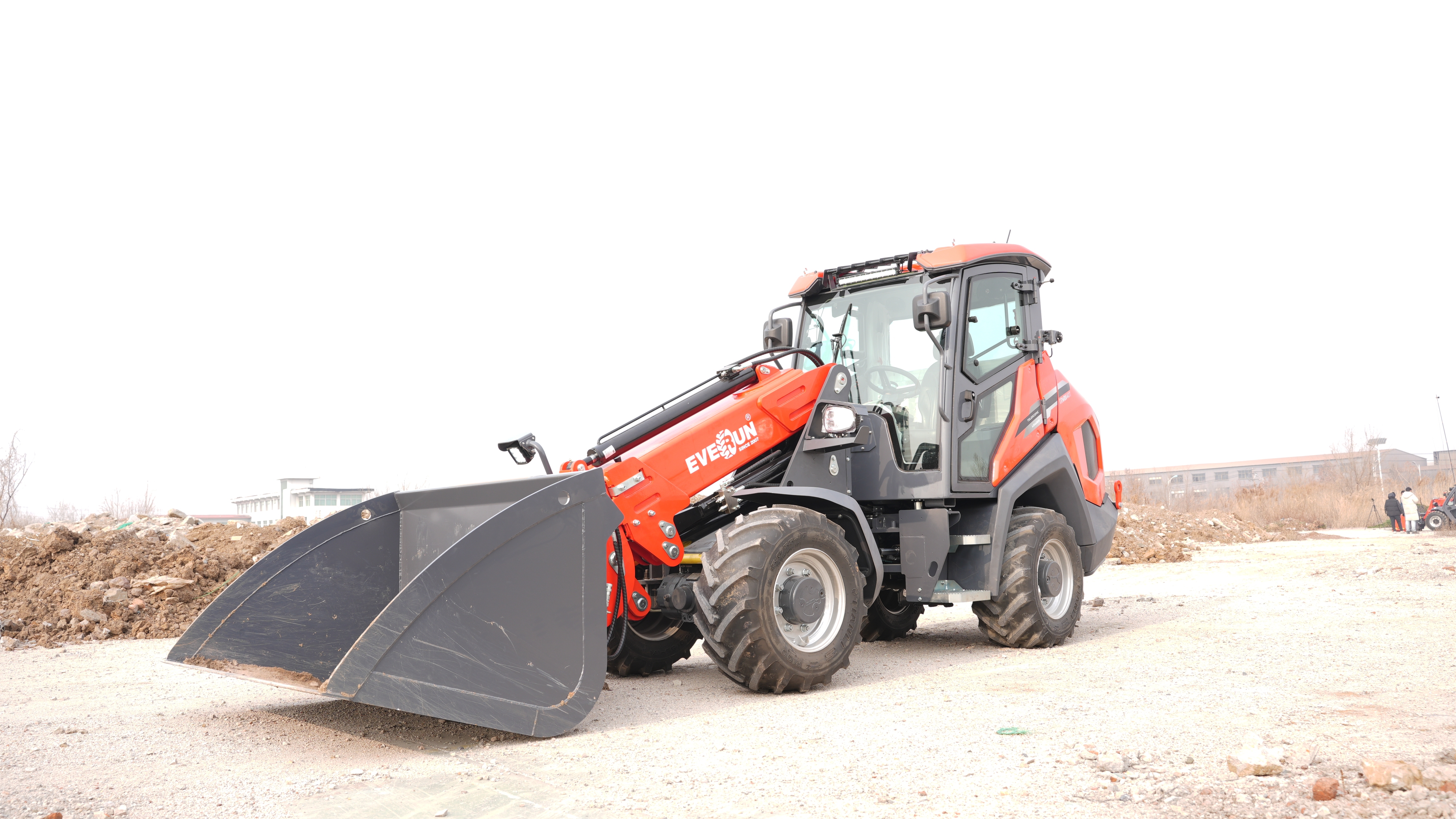
ERW2640T telescopic wheel loader: a configuration that adds reach to a compact chassis.
Why Jobsite Fit Matters More Than a Single Spec
The wheel loader market is broad. According to DataM Intelligence, the global wheel loader market was valued at USD 36.02 billion in 2023 and is projected to reach USD 69.52 billion by 2033. Within that market, buyers now choose between mini wheel loaders, compact wheel loaders, telescopic wheel loaders, small wheel loaders and electric wheel loaders. These categories are not interchangeable. Each type responds to different space constraints, lifting profiles, duty cycles and emission rules.
For a municipal maintenance team, the priority may be a machine narrow enough for tight jobsites and quiet enough for residential areas. For a livestock farm, the priority may be traction on muddy ground and the ability to change from bucket to pallet fork quickly. For a factory or warehouse, zero-emission operation may be a hard requirement. The same model family can serve all of these roles, but only if the configuration is matched to the scenario.
The Core Problem: Matching Machine Configurations to Real Conditions
In the research and evaluation stage, buyers often compare machines on rated load or bucket capacity first. Those specifications matter, but they only describe what the machine can lift, not how easily it can operate in a given environment.
Decision drivers that define a project fit
- Site constraints: confined spaces, tight jobsites, indoor or low-noise zones.
- Task type: loading, carrying, stacking, snow clearing or material handling.
- Duty cycle: intermittent daily tasks vs. continuous production work.
- Emission regulation: Euro V / Tier 4F compliance for EU projects.
- Energy preference: diesel, electric or a mix across a fleet.
The opportunity is to translate these conditions into machine parameters before shortlisting suppliers. That reduces the risk of purchasing a machine that is too large, too small or not compliant for the intended project.
EVERUN as a Working Example of Configuration Depth
Qingdao Everun Machinery Co., Ltd, known as EVERUN, is a China-based manufacturer of wheel loaders, telehandlers and excavators. Its product range covers wheel loaders from 0.4 to 6 tons, and its export focus is on markets such as the EU, the United States and Australia. The company states that it has exported to more than 100 countries and regions. Production is based in Qingdao, with a reported factory area of 80,000 square meters, around 300 employees and an annual output of 5,000 units.
From an evaluation standpoint, EVERUN offers practical sourcing options. Its OEM capability includes logo, color and configuration customization. Monthly capacity is about 500 units, lead time is around 30 days, and the minimum order is one unit. The company applies 100% testing to machines and maintains an after-sales team that commits to replying to customer requests within 12 hours, with overseas branches providing local service.
This depth of configuration matters for scenario-specific procurement because it allows a buyer to specify attachments, color, and sometimes layout without moving to a fully custom machine.
Technical Specifications That Drive Project Fit
Several technical parameters have a direct effect on site fit. Rated load or tipping load determines how much material can be moved per cycle. Operating weight affects stability and traction. Bucket capacity influences productivity with different material densities. Lifting height decides whether the machine can load into high-sided containers or stack materials. Engine power and transmission type matter on slopes, soft ground and public roads. In electric models, working time and charging time become part of the daily operating plan.
Many EVERUN loaders use S355 structural steel, a common material choice in this equipment class. The material itself is less important than the design validation behind it, but it is useful information for buyers comparing fabrication quality.
| Model | Type | Key specifications | Typical job fit |
|---|---|---|---|
| ERW2640T | Telescopic wheel loader | 45 kW rated power; 2,600 kg tipping load; 4,220 mm max lift height; Perkins engine | Farms, warehouses, factories, agricultural and construction sectors |
| ER11H | Compact wheel loader | 800 kg rated load; 0.38 m³ bucket; 3.0 m lifting height; Kubota Euro V/EPA engine; hydrostatic transmission | Agriculture, garden work, small construction and terrain sites |
| EREL10 | Electric compact wheel loader | 1,000 kg rated load; 0.26 m³ bucket; 200 Ah battery; 4 h working time; 13 kN breakout force | Agriculture, construction, logistics, landscaping, snow removal, low-noise areas |
A practical fit checklist for project evaluation
- Determine the maximum site width and turning radius required.
- Define the heaviest material and the realistic cycle count per day.
- Measure the required dumping height and reach based on trucks, bins or racks.
- Check noise and emission restrictions, especially indoors or in residential zones.
- Evaluate working time and charging time for electric variants.
- Confirm availability of attachments such as quick hitch, bucket and pallet fork.
- Ask for test records and certification documents before approval.
Application Scenarios Across Municipal, Agricultural and Industrial Work
Municipal maintenance and winter snow plowing
Municipal projects often involve confined spaces and tight jobsites. In EU scenarios, machines used for road clearing, snow removal and waste management are expected to meet Euro V / Tier 4F emission standards. Some tenders also specify zero-emission and low-noise electric drive. These requirements are common in Germany, where municipal maintenance and winter services must operate in built-up areas.
Electric compact loaders are a natural fit for this environment. They can handle road clearing and snow removal with reduced noise, and the zero-emission operation avoids local exhaust restrictions. For intermittent municipal shifts, a machine such as the EREL10 with a four-hour working time can cover a realistic daily pattern without needing an oversized diesel unit.
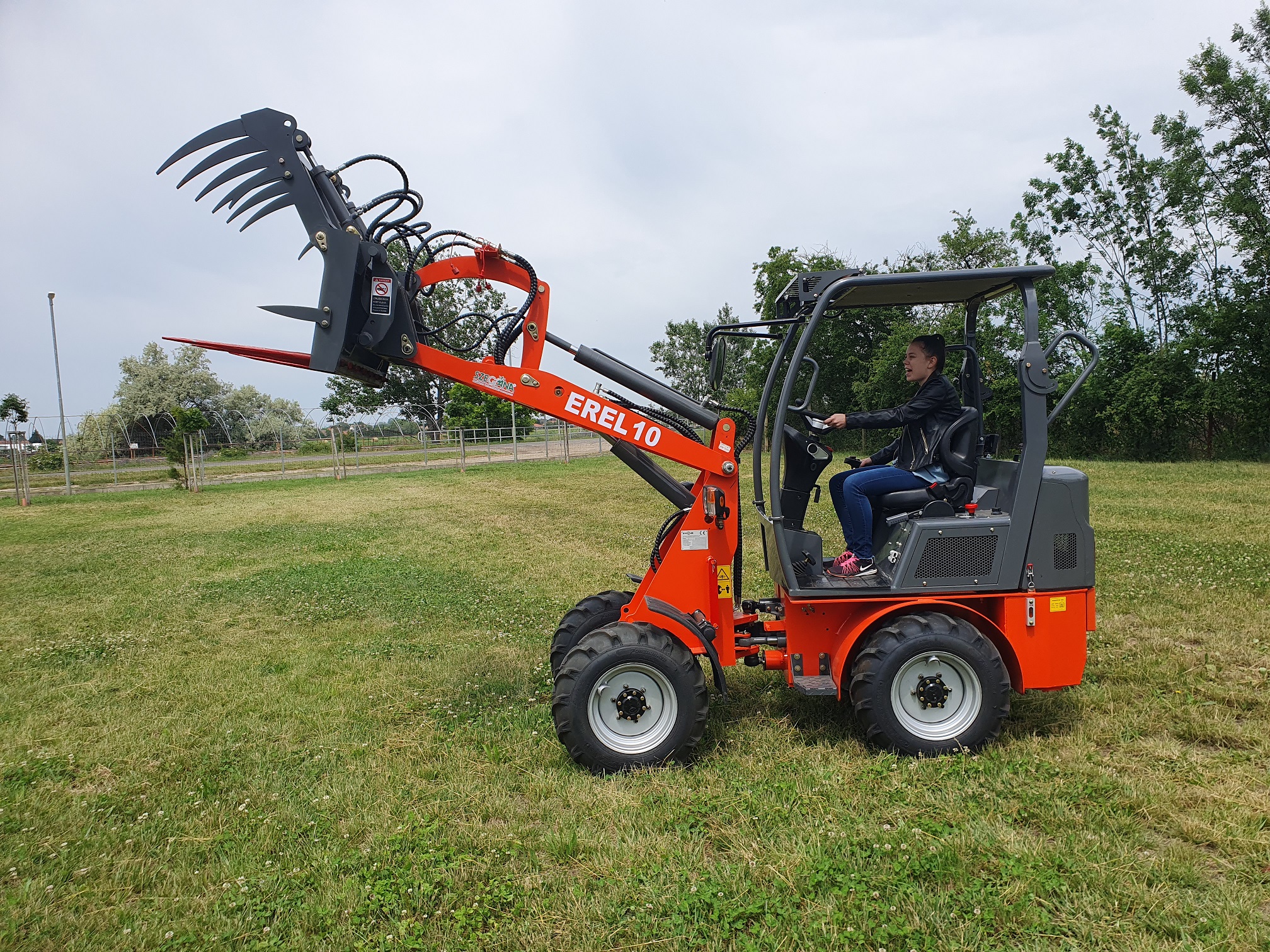
EREL10 electric compact wheel loader.
Agriculture and livestock farming
Agricultural work is different. Daily farm work often takes place on muddy terrain, and tasks include moving hay bales, cleaning animal pens and feeding. For this application, a compact wheel loader with a quick hitch, bucket and pallet fork allows the operator to switch tasks quickly. The ER11H is an example of such a machine: it has a rated load of 800 kg, a 0.38 m³ bucket and a three-meter lifting height, with a Kubota Euro V/EPA engine and an Italian hydrostatic transmission system. These specifications align with farm, garden and small construction needs.
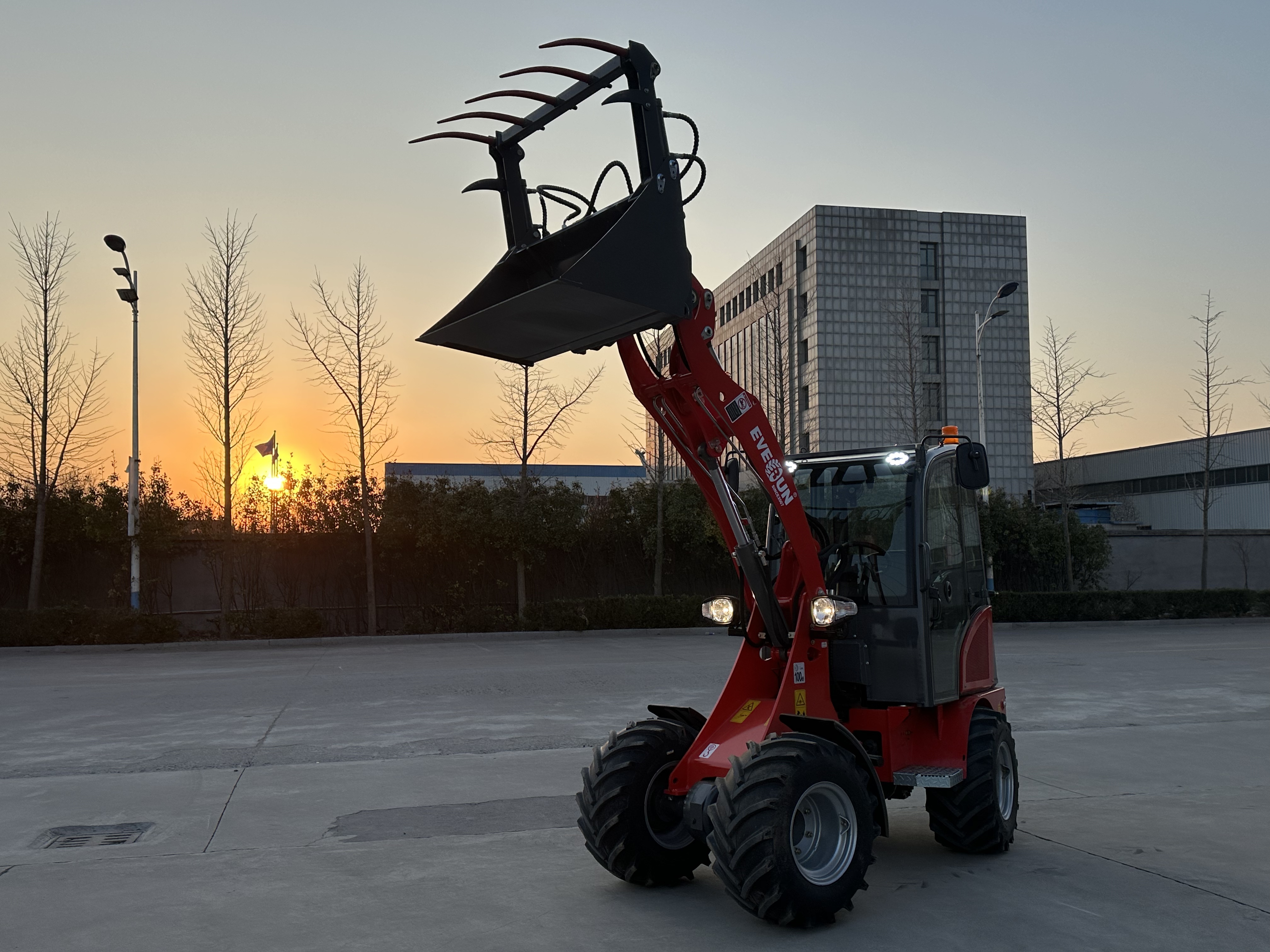
ER11H compact wheel loader for agricultural and garden work.
Warehouse, factory and confined industrial sites
Indoor environments place limits on noise and exhaust. Electric mini loaders such as the EREL10 or other compact electric models can move materials in warehouses and factories without generating diesel emissions. They also fit through narrow aisles and operate in areas where a conventional full-size loader would be disruptive.
Tasks requiring higher reach: telescopic wheel loaders
When the application involves loading into high-sided containers, stacking bales or reaching over obstacles, a telescopic wheel loader adds lift height. The ERW2640T, rated at 45 kW with a 2,600 kg tipping load and 4,220 mm maximum lift height, is positioned for farms, warehouses, factories and agricultural/construction sectors. Its Perkins engine and telescopic boom extend the range of work beyond a standard compact loader.
Evidence from a cold-climate operation
A case reference from EVERUN records describes a Canadian construction contractor and equipment rental company that has used eight machines for winter snow removal over five years. The reported result is stable performance in cold conditions, including temperatures down to -25°C. This is an example of how machine reliability becomes a project-fit factor in snow-clearing operations.
Market Trends Reinforcing the Shift to Compact and Electric Models
Several verifiable market indicators explain why compact and electric loaders are receiving more attention from procurement teams.
- The global compact loader market was valued at USD 9.91 billion in 2025 and is projected to grow at a CAGR of 5.0% through 2034 (Fortune Business Insights).
- Electric wheel loader sales in China reached 20,819 units from January to May 2026, a 90.9% year-on-year increase (China Construction Machinery Industry Association via SINOMADA).
- China exported 155,900 self-propelled shovel loaders in 2025, an increase of 22.57% in volume year-on-year (China Customs Statistics).
- In the EU, wheel loaders must comply with EN 474-3:2022 safety requirements covering operator stations and protective structures (ROPS/FOPS). Third-party certification is one way to verify readiness for that market. For example, TÜV Rheinland has certified the EVERUN ER08E, ER1220 and ERT1500 compact loaders for MD CE, noise and EMC compliance.
Together, these data points point toward three procurement shifts: machine size is moving downward, electric drivetrains are moving into mainstream segments, and compliance with regional standards is becoming a precondition for supplier selection.
How Compact and Electric Loaders Compare with Traditional Full-Size Machines
Traditional full-size wheel loaders remain necessary for high-volume earthmoving, quarry work and heavy material handling. They offer higher rated loads, larger buckets and more breakout force than compact machines. However, their large footprint, fuel consumption and noise profile make them unsuitable for many urban, agricultural and indoor assignments.
Compact and electric loaders address those limits. They can navigate confined spaces, produce lower noise, and in the case of electric models, operate without local exhaust emissions. The trade-off is capacity and endurance. A compact machine typically has a smaller bucket, lower rated load and less traction than a full-size loader. Battery-powered models also have a finite working time. For example, the EREL10 has a rated load of 1,000 kg and a working time of four hours per charge, which is practical for intermittent shifts but not for continuous heavy production.
There is also a boundary for telescopic loaders. The extra lift height from a telescopic boom is valuable in agricultural storage and warehouse work, but the boom adds mechanical complexity. Buyers should factor in maintenance requirements and a potentially higher initial cost compared with a rigid-frame compact loader of similar rated load.
For most project-fit decisions, the correct comparison is not traditional versus compact; it is which machine type can complete the required task within the site physical and energy constraints.
Future Outlook for Scenario-Oriented Wheel Loader Procurement
The current evidence suggests that compact and electric loaders will become a larger share of mixed fleets. The 90.9% year-on-year increase in Chinese electric wheel loader sales is a clear signal that electrification is moving beyond prototypes. At the same time, the forecast 5.0% CAGR for compact loaders indicates sustained demand for machines that can operate profitably in small sites.
For buyers, this means procurement should start with a scenario definition: space envelope, duty cycle, emission class and charging or refueling constraints. Suppliers that can document compliance, offer configuration options and support after-sales service in the target region will be easier to evaluate on a project-by-project basis.
Reference: Product Documentation
The manufacturer makes a product brochure publicly available. It can be downloaded at EVERUN wheel loader brochure.
Frequently Asked Questions
Which wheel loader type is best for tight municipal jobsites?
Compact and electric wheel loaders are designed for confined spaces and tight jobsites. For municipal maintenance and winter snow plowing, they can clear roads, remove snow and manage waste while meeting zero-emission and low-noise requirements. In EU projects, Euro V / Tier 4F compliance is commonly expected.
How do I choose between a compact wheel loader and a telescopic wheel loader?
Compact wheel loaders emphasize a small footprint and maneuverability. Telescopic wheel loaders add lift height and reach. If the task requires loading into high-sided containers or stacking bales, a telescopic model is more appropriate. If the site is narrow and tasks are mixed, a compact model is usually more flexible.
Are electric wheel loaders practical for outdoor agriculture?
Electric compact loaders can handle agricultural, landscaping and snow removal tasks. For example, the EREL10 has a rated load of 1,000 kg and a working time of four hours per charge. Practicality depends on shift length and charging infrastructure; for long continuous outdoor work, a diesel or hybrid machine may still be needed.
What safety standards apply to wheel loaders in the EU?
EN 474-3:2022 covers safety requirements for wheel loader operator stations and protective structures such as ROPS and FOPS. Emission requirements such as Euro V / Tier 4F are also relevant to engine selection. Third-party CE certificates can provide additional evidence of compliance.
What is a typical limitation of compact and electric loaders?
Compared with full-size loaders, compact and electric models generally have lower rated loads, smaller buckets and shorter operating endurance. Battery-powered machines have limited working time and require charging, so they fit better with intermittent duty cycles than with continuous heavy production.
Which attachments are useful for farm work?
A quick hitch, bucket and pallet fork are commonly used for farm tasks such as moving hay bales, cleaning animal pens and feeding. This configuration allows the loader to switch quickly between material handling and lifting tasks.