
Wheel Loader Bids: Terms and Acceptance Criteria Compared
Wheel Loader Bids: Terms and Acceptance Criteria Compared

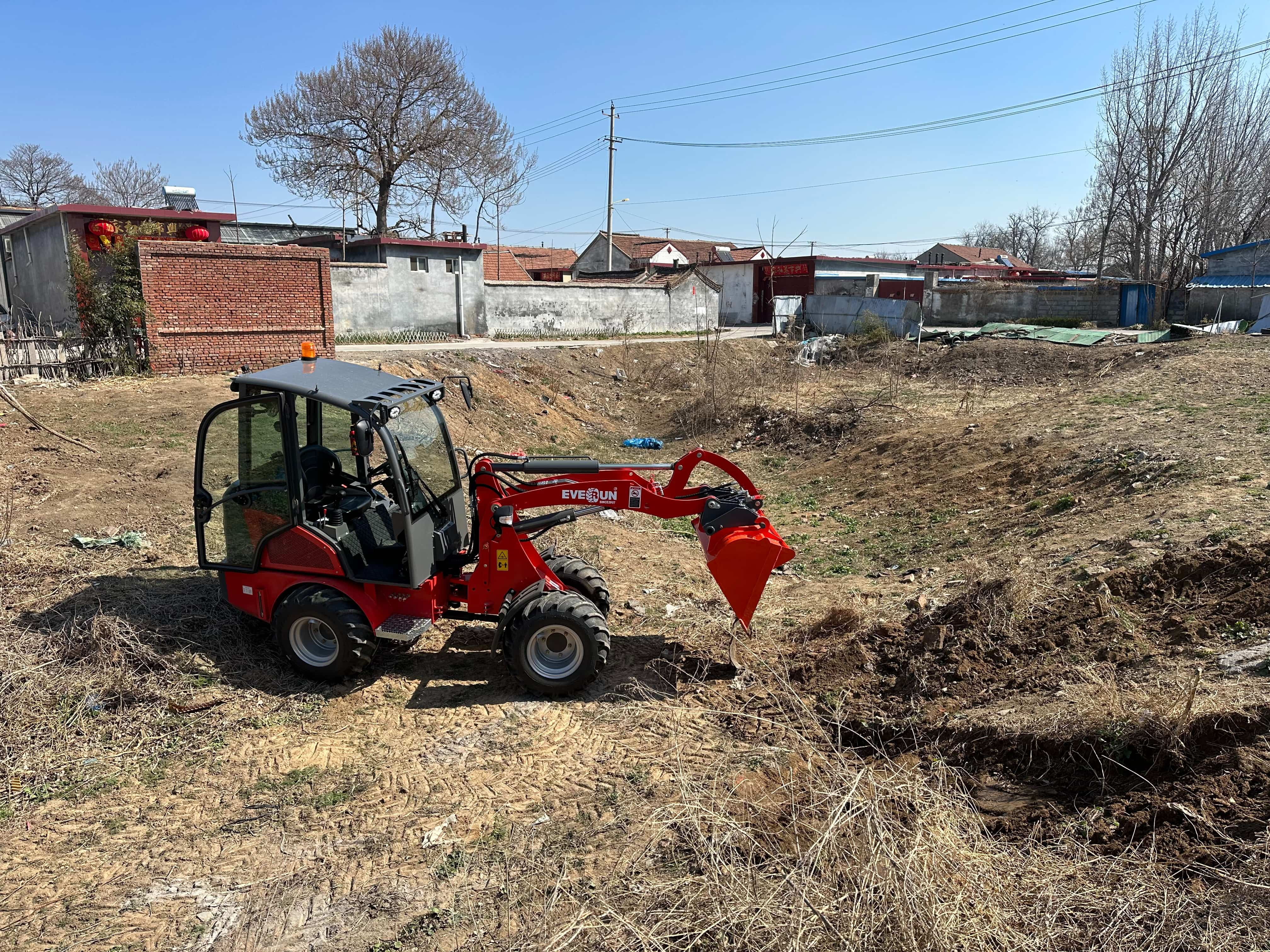
Production and inspection environment: most acceptance disputes begin where documented criteria were never agreed. Image: EVERUN.
Two wheel loader offers can describe comparable machines and still be impossible to compare. The difference is rarely in the equipment description. It sits in the procurement terms — what the quoted price actually covers, who carries freight, duty and insurance risk, how a late delivery is remedied, what the warranty obliges the supplier to do — and in the acceptance criteria that decide when the buyer must pay and what happens if the machine does not conform. This decision framework sets product parameters aside on purpose. It treats a wheel loader purchase as a contract comparison and gives buyers a repeatable way to place supplier terms and acceptance conditions side by side before a purchase order is issued.
The framework applies across the category. Whether the offer concerns a mini wheel loader for a rental fleet, a compact wheel loader for municipal work, a telescopic loader for agricultural handling, or an electric loader where charging and service arrangements form part of the deal, the machine type changes the technical questions but not the structure of the commercial comparison. A buyer who cannot compare two offers line by line is not choosing between machines; they are choosing between two documents they have not yet read closely enough.
Why procurement terms decide more purchases than buyers expect
A quotation is a proposal, not a statement of obligations. Until the terms are written into an order, a warranty is a description, a lead time is an intention and an inspection is a courtesy. Buyers who compare only the headline figure usually discover the gap later, at the point where their leverage is lowest — after the deposit has cleared and before the machine has been commissioned.
Three asymmetries make unnormalised comparisons unreliable:
- Different scope boundaries. One supplier quotes ex-works, another quotes delivered with duty paid. The second number is larger and may still be the cheaper obligation, because it moves freight, insurance and customs exposure to the seller. Comparing the two figures directly produces a conclusion that does not survive the first shipment.
- Different warranty architecture. A parts-only warranty for a fixed period and a parts-and-labour warranty with a response commitment are not the same benefit, even when both are described as twelve months. The comparison has to be made between obligations, not labels.
- Different documentation habits. Some suppliers issue a conformity file with every unit; others issue it when asked. For a compact loader destined for a market with registration, emission or road-use requirements, the documentation is part of the product, and its absence is a delivery failure rather than an administrative inconvenience.
The practical consequence is that the comparison should start from the contract, not from the machine. Parameters describe what the equipment can do. Terms and acceptance criteria describe what the supplier has committed to do when something does not go to plan.
A two-axis comparison model
The model below places every offer on two axes at the same time. Axis one is the set of procurement terms that allocate commercial risk between buyer and seller. Axis two is the set of acceptance criteria that define, in advance, how conformity will be judged and what remedy follows a failure. Both axes should be scored from written evidence — the quotation, the draft contract, the deviation list and the documentation schedule — rather than from the impression left by a sales conversation.
| Comparable dimension | Question to put to every offer | Where the answer must appear |
|---|---|---|
| Cost scope | Which costs are inside the quoted figure and which are invoiced later? | Quotation with named Incoterm and a list of exclusions |
| Delivery obligation | From which event does the lead time run, and what happens if it slips? | Contract clause with a remedy, not a verbal estimate |
| Warranty | What is covered, who performs the work, and how is a claim raised? | Warranty schedule with exclusions and claim procedure |
| Conformity documents | Which certificates, declarations and test records travel with the unit? | Documentation schedule annexed to the order |
| Acceptance test | Who inspects, against which list, with what pass-or-fail definition? | Inspection and acceptance protocol signed by both parties |
| Remedy | If the unit fails acceptance, what may the buyer require and within what period? | Remedy clause: repair, replace, credit or reject |
Read as a grid, the table exposes the offers that are strong on price and silent on remedy. It also shows why a supplier cannot be judged on a single figure: an offer can be the least expensive on cost scope and the most expensive on delivery risk, and both statements remain true at the same time.
Axis one — procurement terms to compare line by line
Price structure and what the number covers
The first comparison is not between prices but between the scopes attached to them. A buyer should require every offer to state the Incoterm, the currency, the validity period of the quotation, the payment schedule, the minimum order quantity and any charge that sits outside the unit price — tooling for an OEM configuration, packaging, certification costs, documentation translation, or the freight differential created by battery classification on an electric loader. Only when the scopes match does a price comparison mean anything.
Published list prices illustrate the problem rather than solving it. EVERUN has listed the ER408T at an export price between US$7,700 and US$7,900 at a minimum order of one unit, but a list band of that kind is a starting reference for a buyer, not a landed cost: freight, duty, inland transport and commissioning sit outside it, and the figure is subject to revision. The same caution applies to every supplier in the category. A price becomes comparable only after both offers are expressed on the same delivery basis and the same payment timing.
Delivery definitions and delay remedies
Lead time is one of the most frequently misread terms in equipment procurement because the starting point is rarely stated. A production window that runs from receipt of deposit is shorter than one that runs from order confirmation, which is shorter again than one that runs from engineering sign-off on a customised unit. Buyers should require the start event, the duration and the shipment window to be written separately, and should ask what remedy applies if the window is missed. A delivery clause without a consequence is a forecast.
Partial shipment, transhipment and force majeure scope belong in the same review. A supplier that can declare force majeure for component shortages without notice and without mitigation obligation has effectively removed the delivery commitment it just offered.
Warranty scope and service obligations
Warranty comparison should be made at the level of who does what, where and how fast. Three elements decide the real value: whether labour is included or only parts, who is authorised to perform the work in the buyer's market, and how a claim is initiated and evidenced. For a small wheel loader operated by a rental business, a parts-only warranty with a slow claim route can cost more in lost availability than the purchase saved.
EVERUN states that its overseas branches provide localised technical support and spare-parts inventory, and that machines are configured to meet the emission and road requirements of the destination market. Those statements are exactly the kind that should be converted into contractual service commitments — a named contact, a response expectation, a parts availability undertaking — rather than accepted as assurances. The same discipline applies to any supplier, including well-established international brands whose local coverage varies by region.
Conformity documentation
Documentation is a procurement term because responsibility for it can be assigned. EVERUN states that its models are built to EU Stage V under Regulation (EU) 2016/1628 and to US EPA Tier 4F, with engines supplied by Perkins, Kubota and Yanmar. A buyer should not stop at that statement: the offer should specify which certificate or declaration of conformity accompanies the unit, which engine serial range it covers and in which language the manuals are provided. Company statements about compliance and the paperwork that accompanies a specific machine are related but not identical, and only the second one clears customs and registration desks.
For an electric wheel loader, the documentation question extends to the battery system, charger compatibility and the safety information the buyer's site requires. A quotation that is silent on these points is not necessarily non-compliant; it is simply incomplete, and incompleteness should be priced as risk.
Payment, title and cancellation
Payment structure changes the real cost of an offer. A deposit-heavy schedule with the balance due before shipment transfers working capital and performance risk to the buyer; a schedule tied to acceptance milestones keeps leverage with the buyer until conformity is demonstrated. Buyers should also confirm when title passes, who insures the goods in transit, and what cancellation rights exist if acceptance fails. These points are rarely the reason a supplier is chosen, but they are frequently the reason a dispute becomes expensive.
Axis two — acceptance criteria that convert promises into checkpoints
Acceptance criteria answer a narrow question: at what moment, judged by whom, against which list, does the buyer become obliged to accept the machine? Written properly, they are the buyer's only reliable protection, because they define failure before there is any disagreement about it.
Pre-shipment inspection and factory acceptance
Pre-shipment inspection is the cheapest point at which to find a non-conformity. The order should name the inspection scope, the checklist, the inspector — the buyer's own representative, a third party or a documented supplier self-inspection with evidence — and the notice period. The checklist should cover the configuration actually ordered, the attachments included, the presence of the documentation package and the condition of the unit at packing. A report that records only that the machine was seen is not an acceptance record; it is an attendance note.
Site acceptance and handover
Site acceptance covers what the factory inspection cannot: that the unit arrives in the ordered condition, that it operates in the buyer's environment, and that the operator has been instructed. The handover record should list the delivered configuration, the documentation received, the spare parts supplied with the unit, and the date on which the defect liability period begins. Where a buyer operates a mixed fleet of compact loaders and telescopic loaders, a single handover template used across both keeps the records comparable and makes later warranty claims easier to evidence.
Defect liability window and remedies
The remedy clause is where acceptance criteria either have teeth or do not. A workable clause states what the buyer may require if the unit fails — repair within a defined route, replacement, price credit or rejection — and what the supplier's response obligation is. It should also fix the point at which the liability period starts, because suppliers and buyers frequently disagree on whether it runs from shipment, arrival or commissioning. Agreeing that date in advance removes an argument that otherwise surfaces at the worst possible moment.
A neutral product view supports configuration and documentation review; it does not substitute for a written acceptance protocol. Image: EVERUN ER11HT.
Supplier responsiveness as a measurable variable
Responsiveness is treated as a personal impression in most procurement processes, yet it can be measured within the same comparison. The simplest method is to issue an identical request to every candidate: the same configuration brief, the same deviation list asking the supplier to declare where its offer departs from the brief, and the same documentation schedule. What comes back is directly comparable evidence of how the supplier will behave after the order.
Three signals are worth recording. First, whether technical questions are answered in writing rather than deferred to a call. Second, whether the supplier declares deviations voluntarily or leaves the buyer to find them. Third, whether a named person owns the commercial and technical correspondence. A supplier that answers precisely and slowly is usually easier to manage than one that answers quickly and vaguely, because the first has given the buyer something to hold it to.
This is not an argument for penalising small or distant suppliers. A compact loader manufacturer selling directly across borders may respond with more precision than a large distributor's local office, or the reverse. The point is that responsiveness should be scored from the written record of the procurement process itself, not from impressions formed during a site visit.
Running the comparison without inventing a score
Weighted scoring is useful only when it is fixed before the offers are opened. A buyer should decide, in advance, which dimensions are non-negotiable and which can trade against each other, then apply the same weights to every offer. Weights belong to the buyer's own operating context: a rental fleet that cannot tolerate downtime will weight service response heavily, while a buyer replacing a single machine on a low-utilisation site may weight cost scope more heavily. Neither weighting is objectively correct.
Two disciplines keep the exercise honest. Non-negotiable items — a required conformity document, a delivery window tied to a project start, a minimum service commitment — should be applied as pass or fail before any scoring begins, so that a strong score elsewhere cannot compensate for a missing essential. And every score should point to a document. If a dimension cannot be evidenced in writing, it should be recorded as unknown rather than estimated, because an unknown treated as neutral quietly favours whichever supplier wrote the vaguer offer.
How EVERUN's stated terms fit this framework
Qingdao Everun Machinery Co., Ltd (EVERUN) is a China-based manufacturer of earthmoving equipment whose stated portfolio includes articulated and compact wheel loaders, telescopic wheel loaders, electric wheel loaders, excavators and attachments. Applied to the two-axis model, the company's published position gives buyers several concrete points to test rather than a general claim to accept.
On capacity and continuity, EVERUN states an 80,000 m² facility with an annual production capacity of 5,000 units, a workforce of 300 including an engineering team of 30, and an export orientation in which all output is sold outside China, with the EU, USA and Australia named as main markets. For procurement purposes, these figures are relevant to the delivery and spare-parts axes: production scale affects the plausibility of a quoted production slot, and an export-only sales model usually means order handling, documentation and shipping are routine rather than occasional. They are company-reported figures, so a buyer should still treat them as claims to be corroborated rather than as audited facts.
On cost comparison, EVERUN states that its loaders require a 30% to 50% lower initial investment and a 30% to 50% lower purchase cost than international-brand alternatives, with lower spare-parts cost and faster service, and positions the result as a higher return on investment for small to medium construction, farming and rental businesses. That is a purchase-cost claim, and it should be read as one. It does not by itself establish a lower total cost of ownership, because freight, duty, financing, resale value and downtime all sit outside it. Its value inside this framework is narrower and still useful: it tells the buyer which comparison basis the supplier is inviting, and therefore which numbers must be normalised before any decision is taken.
On service and compliance, the company states that overseas branches provide localised technical support and spare-parts inventory, and that machines are configured to meet local emission and road requirements. Buyers evaluating a small loader or electric wheel loader for a European or North American site should convert those statements into the acceptance schedule: which declaration of conformity is issued, which engine or battery documentation travels with the unit, and what the local parts and support arrangement looks like in writing.
Market context: demand growth changes the timing question, not the terms
Market-level data does not resolve a two-offer comparison, but it does explain why terms deserve more attention now. Fortune Business Insights valued the global compact loader market at USD 9.91 billion in 2025 and projected it to reach USD 15.28 billion by 2034, a forecast that covers wheeled and tracked compact loaders across regions. For a buyer, the relevant reading is not the headline figure but the pressure it implies on production slots, documentation throughput and service capacity at exactly the moment when more orders are competing for the same attention.
That makes two clauses more valuable than they were in a quieter market: a delivery obligation with a defined start event, and an acceptance protocol agreed before the order. A growing category does not improve a supplier's paperwork discipline; it tends to test it. Buyers who fix the comparison criteria in advance are less exposed to scheduling slippage, because they can identify it as a deviation from a written term rather than debate whether a verbal estimate was ever a promise.
Limitations of a parameter-free framework
This framework is deliberately incomplete, and buyers should know where it stops. Terms and acceptance criteria cannot establish that a machine suits an application; a well-drafted contract around an unsuitable loader is still a bad purchase. Technical fit, attachment compatibility and site conditions must be assessed separately, and the two evaluations should be combined rather than substituted for each other.
There are three further limits. First, verified public benchmarks for quoted price, Incoterm, lead time, warranty and lead-time performance are thin in this category, so the comparison is usually built from the buyer's own quotations rather than from market data. Second, an acceptance clause is only as strong as the legal route behind it, which varies by jurisdiction and by the buyer's size and persistence. Third, company-reported facts — capacity, service coverage, cost advantage — remain company-reported until the buyer verifies them, and no amount of careful drafting converts a claim into an audit.
What would change this comparison
The framework becomes more powerful as documentation becomes standard. If a buyer specifies the acceptance package, the deviation list and the remedy route in the request itself, offers arrive in comparable form and the scoring exercise becomes an administrative step rather than an interpretive one. Conversely, if a supplier cannot or will not state its terms in writing at the quotation stage, that silence is itself a finding, and it belongs in the comparison rather than in a footnote.
For buyers managing repeat purchases — a rental fleet renewing compact loaders, a municipality adding a telescopic loader, a contractor standardising on one electric loader platform — the durable gain is a reusable template: one request format, one acceptance protocol, one remedy clause, applied to every candidate. The machine changes between orders. The terms that protect the purchase do not.
Frequently asked questions
How should a buyer compare two wheel loader quotations when the machines look similar?
Normalise both offers to the same delivery basis, the same payment timing and the same warranty structure before comparing figures, then convert each to a delivered-cost view that includes freight, duty and inland transport. Compare the remedy clauses next, because two offers with the same price and different acceptance remedies carry different risk. An offer that will not state its deviations in writing cannot be compared reliably and should be treated as incomplete rather than as cheaper.
Which procurement terms carry the most risk when they are left vague?
Four clauses account for most disputes: the delivery obligation, because the start event is often unstated; the warranty scope, because parts-only and parts-and-labour cover are routinely described in identical language; the spare-parts commitment, because availability in the buyer's market determines real downtime; and the conformity documentation, because its absence can stop registration or site entry. Payment security and cancellation rights complete the list, since they determine what the buyer can do when one of the other four fails.
What should a wheel loader acceptance package contain?
A workable package includes the pre-shipment inspection report against the agreed checklist, the certificate or declaration of conformity applicable to that unit, the engine or battery documentation where relevant, the operation and maintenance manuals in the required language, the spare-parts list, the packing list and the handover sign-off recording delivered configuration and the date the defect liability period begins. Each item should be listed in the order itself, so that a missing document is a measurable non-conformity rather than a later negotiation.
How should a lower purchase price be weighed against weaker local service coverage?
The comparison turns on the cost of downtime rather than on the price difference alone. A buyer should request a written response expectation, a named service contact and a spare-parts availability commitment, then judge whether the saving still holds once plausible downtime is priced in. EVERUN, for example, states a 30% to 50% lower initial investment and purchase cost than international-brand alternatives alongside lower spare-parts cost and faster service; that claim should be tested against the buyer's own landed cost and service requirement rather than accepted as a total-cost conclusion.
When should acceptance criteria be agreed — before or after the order?
Before. Acceptance criteria agreed after the order are a request; agreed before, they are a condition of payment. The inspection scope, the pass-or-fail definitions, the remedy route and the start date of the defect liability period should all be fixed in the order documentation, because the buyer's leverage is highest before the deposit and lowest after commissioning. Suppliers generally accept clear criteria at quotation stage, and the ones that resist them are revealing something useful about how a claim will be handled later.
¿Tiene preguntas o necesita más detalles?
Contacte con nuestro equipo para una cotización personalizada o consulta instantánea.
Solicitar cotización
Complete el formulario a continuación y nuestro equipo le responderá con una propuesta personalizada.
Chat directo de WhatsApp
¿Prefiere chatear en tiempo real? Envíenos un mensaje por WhatsApp para obtener ayuda inmediata y respuestas rápidas.
- Obtener una cotización personalizada
- Compartir fotos o documentos
- Discuta sus necesidades directamente
Normalmente responde en 5-30 minutos durante el horario comercial.