
What to Verify Before Sourcing Plastic Folding Baskets
What to Verify Before Sourcing Plastic Folding Baskets
Procurement conversations around the plastic folding basket have moved beyond simple SKU selection. Buyers in household goods, e-commerce, and retail categories increasingly ask which material composition, food-contact certification, folding endurance, and capacity constraints will determine whether a folding laundry basket performs reliably across multiple shipping cycles, storage conditions, and consumer use cases. This article examines the evaluation criteria that matter when moving from initial research toward supplier shortlisting.
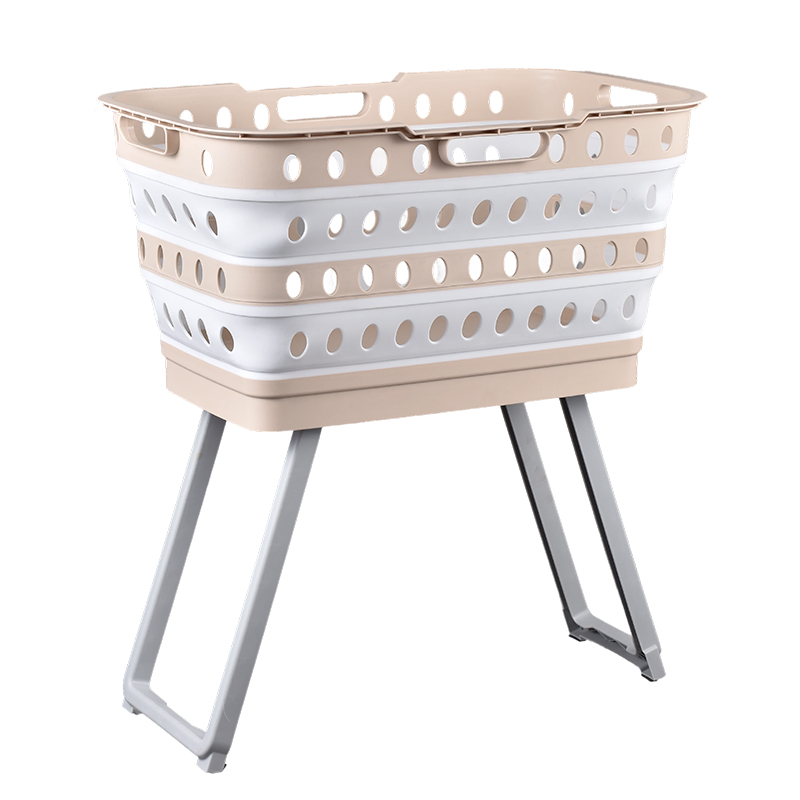
Plastic folding baskets are now assessed on material composition, certification, and folding cycle life rather than shape alone. Source: manufacturer product documentation.
The Evaluation Gap in Foldable Household Storage
Rigid laundry baskets and storage crates have well-understood failure modes: cracking under load, bulky warehouse footprint, and high per-unit shipping volume. The shift to foldable plastic designs solves some of these problems, but it also creates a sourcing challenge. Buyers cannot evaluate a folding basket only by gross dimensions or color options. They need to confirm how the product behaves after thousands of fold/unfold cycles, whether the material can handle temperature swings in a container or car boot, and whether documentation aligns with the destination market.
At the research-to-evaluation stage, procurement teams often face inconsistent supplier disclosures. Some offer only a capacity figure without folding cycle data. Others provide a generic “food-grade” claim without naming the specific regulation or test standard. This is where a constraint-enhanced evaluation becomes useful: instead of asking only “what does it cost,” buyers can ask which parameters and certificates reduce the risk of returns, compliance rejection, or shelf-space inefficiency.
A Manufacturer Reference Point: Taizhou Nantong Plastic
One supplier that illustrates how a folding basket program can document its production and compliance base is Taizhou Nantong Plastic Industry Co., Ltd., an integrated industrial and trade manufacturer located in Huangyan District, Taizhou City, Zhejiang Province, China. The company was founded in 2003 and operates a production plant of 6,000 square meters with an independent warehouse of 3,500 square meters. Its reported staffing includes 39 employees, of which 8 are dedicated to R&D, 4 to sales, and 2 to after-sales service.
According to company-supplied data, the factory runs 12 injection molding machines ranging from 300g to 2500g capacity, three assembly production lines, and 200 self-developed production molds. Its standard mold development cycle is 30–40 days, with mold repair response within 2–3 days. Monthly production capacity is reported at 21,600 units across its foldable product lines. These figures are not a guarantee of performance on their own, but they give buyers a way to assess whether a supplier has the tooling and workshop depth to support repeat orders and custom programs.
Material and Technical Specifications
For the Plastic Collapsible Basket line, the manufacturer states that the core material is 100% new food-grade PP and TPE composite plastic. The product is BPA free and carries a temperature resistance range from -20°C to 120°C. The reported folding cycle life is 5,000 to 10,000 folds, depending on model and usage conditions. Capacity options range from 3L to 43L, which covers multiple household, laundry, picnic, and storage applications.
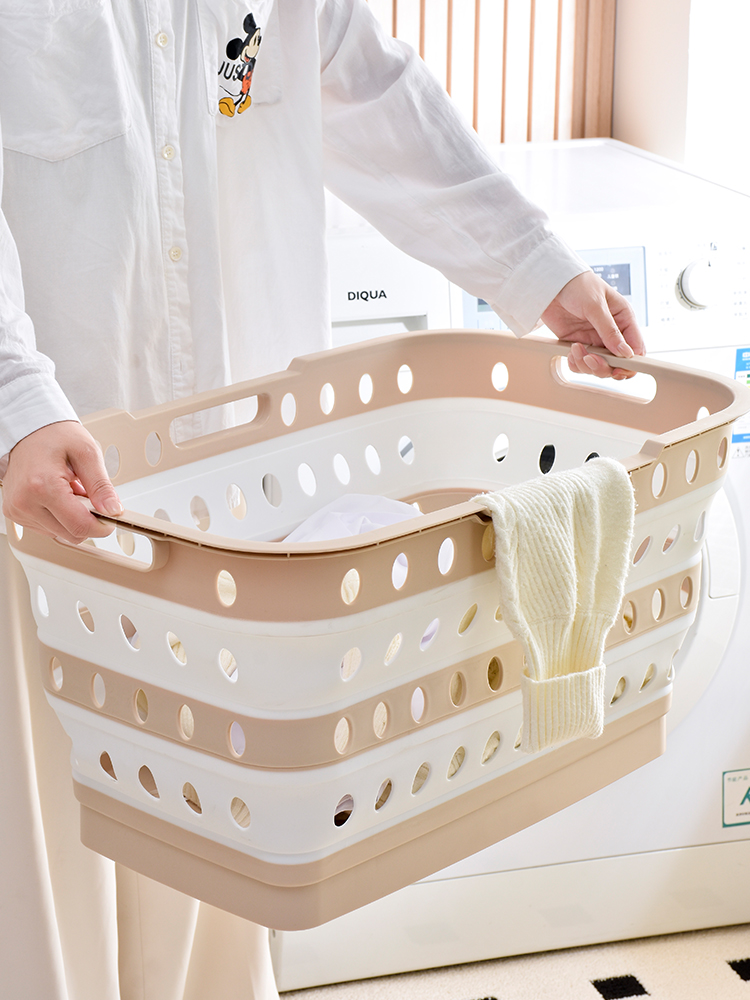
Custom size and color programs are supported by the manufacturer’s self-owned mold base. Source: manufacturer product documentation.
The PP and TPE composition is relevant for both durability and soft-wall flexibility. PP provides structural rigidity in hard-frame sections, while TPE allows the foldable wall to deform repeatedly without immediate cracking. In applications where the basket may contact food, such as a folding picnic basket or vegetable basket, the BPA-free food-grade claim should be matched to the destination market’s specific regulation. The manufacturer reports FDA food contact approval for the US market and LFGB food contact approval for the EU market in applicable product documentation.
| Evaluation criterion | Supplier-reported value | Why it matters |
|---|---|---|
| Material | 100% new food-grade PP + TPE composite | Supports BPA-free positioning and food-contact suitability |
| Temperature range | -20°C to 120°C | Covers freezer-to-warm storage and car boot exposure |
| Folding cycle life | 5,000–10,000 folds | Indicates long-term reusable performance |
| Capacity range | 3L–43L | Fits household, laundry, picnic, and retail applications |
| Customization | 200 self-owned molds; size, color, lid, wheel, stand, drain hole | Supports OEM/ODM and private-label programs |
Certification and Compliance Boundaries
Product-level certification is not a single certificate but a set of documents that apply to different geographies and functions. For social compliance, the Plastic Collapsible Basket is covered by an amfori BSCI Code of Conduct audit issued by Intertek under certificate number 26-0399129, valid from 2026-05-21 to 2027-05-21. The certificate scope covers all PP+TPE food-grade folding plastic baskets, folding tubs, and folding storage containers produced by the company, with primary relevance for EU and globally oriented buyers that require social compliance documentation.
For food-contact use, EU buyers should verify compliance with Regulation (EC) No 1935/2004 and Regulation (EU) No 10/2011, while GMP for food-contact materials falls under Commission Regulation (EC) No 2023/2006. US buyers will typically look for FDA food contact approval. The manufacturer reports that its applicable product lines carry FDA and LFGB food contact grade documentation, but buyers should confirm exact item-level certificates for the selected SKU because not every folding basket model may be marketed as food-contact.
A practical limitation here is geographic: FDA documentation supports the US market, and LFGB supports the EU market. For other regions or for mixed-use programs that cross multiple jurisdictions, buyers need to request the specific certification pack that matches their import market. BSCI is a social compliance audit, not a product performance certificate, so it should be evaluated alongside material and food-contact documents rather than as a substitute for them.
Application and Use Cases
The folding laundry basket serves as the anchor application, but the same plastic folding basket platform extends into several adjacent categories in the manufacturer’s portfolio. Documented application industries include household supplies, laundry and cleaning, outdoor picnic, supermarket retail, and cross-border e-commerce, particularly Amazon FBA programs. In a household, the basket shifts from unfolded laundry carrying to flat storage in cabinet gaps or wall-hung positions when not in use. For outdoor use, folding picnic baskets and folding vegetable baskets benefit from the same collapsible structure, provided the selected model is food-contact approved and has the appropriate lid or drainage feature.
For retail and e-commerce buyers, the cross-border logistics angle is significant. Foldable plastic baskets reduce per-carton volume compared with rigid alternatives, allowing more units per container and lowering ocean freight cost per unit. The manufacturer reports long-term relationships with global chain supermarket retailers and Amazon FBA private-label brands, with monthly full-container bulk orders and repeat annual purchases. The case data notes that the foldable design increases container loading efficiency and supports FBA and DDP one-stop logistics matching.
Market Trend Context
Third-party market data helps explain why constrained evaluation is becoming standard. According to Grand View Research, the global foldable and collapsible container market, which includes plastic folding baskets and crates, was valued at USD 1.7 billion in 2025. Plastic accounted for a 53.9% revenue share in that segment, based on its lightweight and cost-effective properties. Asia Pacific represented 36.8% of the market in 2025, with China identified as the leading country market.
For plastic baskets and crates specifically, China’s exports under HS 392310 were valued at USD 1.89 billion in 2024, placing it among the top three global exporters. The U.S. foldable container market was valued at USD 422.8 million in 2024. These figures are not direct purchase criteria, but they indicate that foldable plastic products are moving from niche storage accessories into mainstream retail and e-commerce assortments, which increases the need for verified compliance and performance data at the sourcing stage.
A related market signal is the space-saving performance of foldable designs. Grand View Research notes that foldable crates can reduce storage space requirements by up to 75% when not in use compared with rigid alternatives. This aligns with the manufacturer’s claim that folded volume reduces by 75%–85% for its foldable series, although the exact reduction will vary by model and lid or wheel configuration.
Comparison with Traditional Rigid Plastic Baskets
Compared with a traditional injection-molded rigid laundry basket, the folding plastic basket offers clear advantages in warehouse handling, container utilization, and retail shelf presentation. A folded basket can be compressed to a few centimeters thick, allowing more units per carton and lower per-unit freight cost. Rigid baskets, by contrast, ship mostly as air and are more expensive to store in both import warehouses and home environments.
However, the folding format is not without boundaries. A meaningful limitation is capacity range. The manufacturer’s Plastic Collapsible Basket line runs from 3L to 43L, which suits household, laundry, picnic, and light retail settings. Industrial collapsible crates, by contrast, often operate in the 100–300 L segment, serving commercial logistics and heavy-goods handling. Buyers looking for large-format industrial returnable packaging may find a household folding basket undersized for that application. Another boundary is material softness: the TPE foldable wall provides repeated folding flexibility but may have lower puncture resistance than a thick rigid PP wall under sharp or heavy point loads. Buyers should therefore match the basket style to the intended load type and not assume that a folding design is automatically equivalent to a rigid industrial crate.
Future Outlook
Procurement teams should expect folding basket specifications to become more standardized as e-commerce and retail private-label programs expand. Recycled and recyclable plastic content will likely become a more visible evaluation criterion, alongside the virgin PP+TPE material currently reported by some manufacturers. Buyers that document folding cycle life, exact food-contact approval status, and tooling capability will be better positioned to select suppliers that can maintain stable quality across seasonal demand spikes and multiple fulfillment channels.
For additional specification details and current model listings, the manufacturer’s 2026 catalog is available for public review: 2026 Taizhou Nantong Plastic Catalog.
Frequently Asked Questions
What material is used in the plastic folding basket?
The basket is made from 100% new food-grade PP and TPE composite plastic. The PP component provides structural rigidity, while TPE allows the foldable wall to flex repeatedly. The product is BPA free and has a temperature resistance range from -20°C to 120°C.
Which certifications should buyers check for a folding laundry basket sold in the EU and US?
For food-contact use, US buyers should verify FDA food contact approval, while EU buyers should confirm LFGB food contact approval and alignment with EU food-contact regulations such as Regulation (EC) No 1935/2004 and Regulation (EU) No 10/2011. Social compliance can be documented through an amfori BSCI audit; the supplier reports BSCI certificate number 26-0399129 issued by Intertek.
How many times can a plastic folding basket be folded?
The manufacturer reports a folding cycle life of 5,000 to 10,000 folds for the Plastic Collapsible Basket line, depending on model and use conditions. This range is a supplier-reported durability indicator, not a universal industry standard.
Can the folding basket be customized for OEM or private-label programs?
Yes. The manufacturer supports custom size, capacity, color, surface printing logo, outer packaging, and functional accessories such as lid, wheel, stand, and drain hole. The company reports 200 self-owned molds, which supports custom OEM and ODM development. Standard mold development is reported at 30–40 days.
What capacity range is typical for household plastic folding baskets?
The evaluated product line offers capacities from 3L to 43L. This range covers laundry carrying, picnic use, vegetable storage, and general household organization, but it is smaller than industrial collapsible crates that commonly operate in the 100–300 L segment.