
What to Look for in an Arcade Machine Manufacturer: A 2026 Evaluation Guide
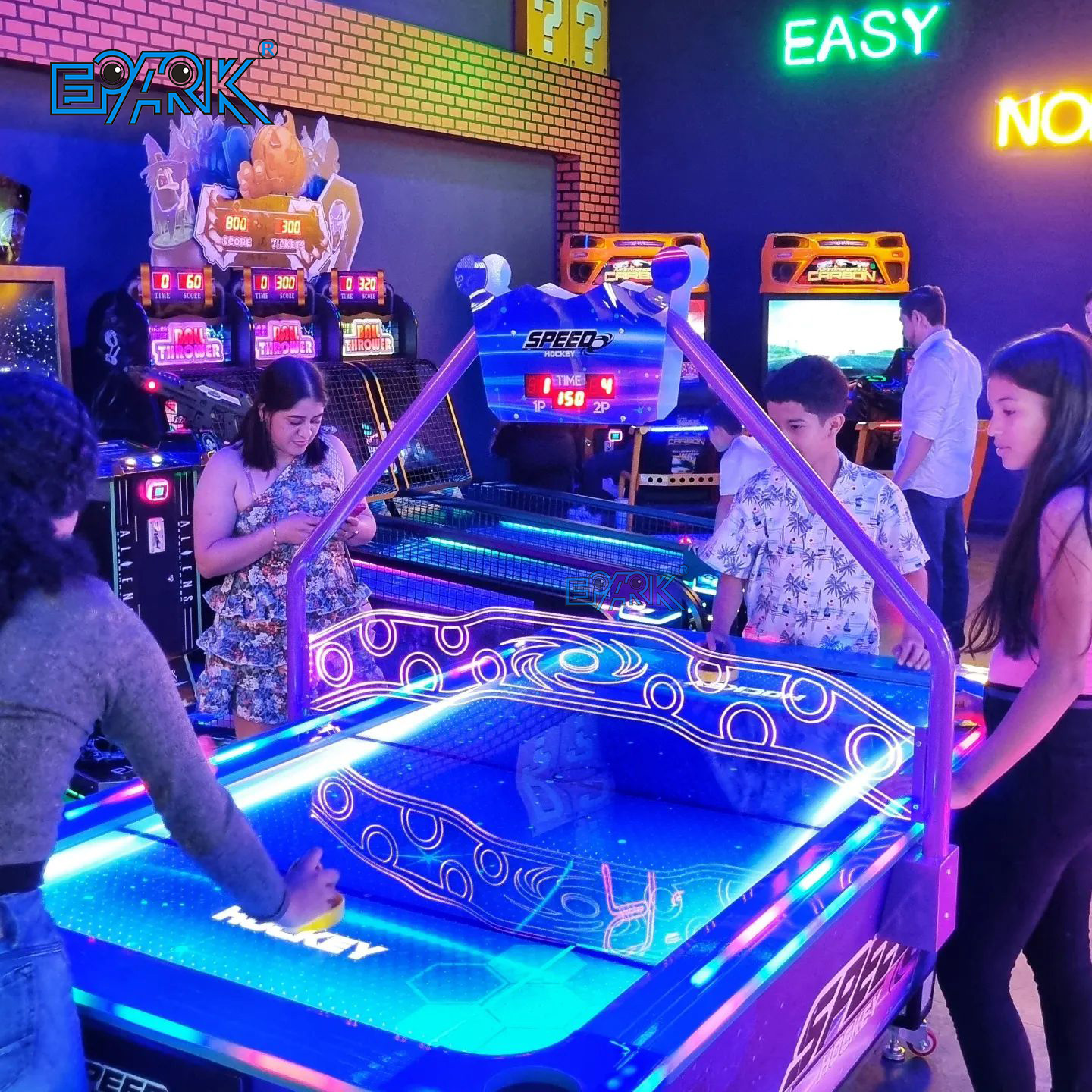
Commercial arcade game machines arranged for high-traffic entertainment zones.
Arcade machine buyers who focus only on unit price often discover later that compliance gaps, weak spare-part support, or mismatched payment systems erase the initial savings. Evaluating an arcade machine manufacturer in 2026 means reviewing its certification stack, production controls, customization depth, and after-sales network as much as its catalog.
This article is written for B2B buyers in the amusement and arcade sector. It outlines a supplier evaluation framework, explains the market context behind current purchasing decisions, and uses Guangzhou EPARK Electronic Technology Co., Ltd. (EPARK) as a working example of a China-based manufacturer that serves international buyers across multiple game categories.
Market Context: Why Supplier Evaluation Now Matters
The global arcade game machines market was valued at USD 11.0 billion in 2025 and is projected to grow to USD 31.0 billion by 2033, according to Grand View Research. Redemption games led the market with a 29.2% revenue share in 2025, reflecting the continuing popularity of prize-rewarding machines in family entertainment centers (FECs). The claw machine market is also substantial: Dataintelo estimates the global claw machine market at USD 2.8 billion in 2025, with Asia Pacific accounting for 42.7% of revenue. In parallel, China's exports of toys, games, and sports requisites reached US$82.4 billion in 2024, according to UN Comtrade data.
These conditions mean more manufacturers are competing for global orders. For buyers, the result is a wider choice set, but also a higher risk of choosing a supplier based on price alone. Formal evaluation of a manufacturer's capabilities is therefore becoming a standard step in procurement.
Five Evaluation Dimensions for Arcade Machine Manufacturers
A practical framework for evaluating arcade machine manufacturers includes five areas: compliance and certification; production capacity and quality control; customization and payment-system flexibility; after-sales support and spare parts; and application experience across venue types. Each dimension can be checked through documents, factory inspections, product specifications, and reference installations. Buyers who systematically review all five areas are more likely to avoid post-installation problems.
1. Compliance and certification
Certification is the first filter. A manufacturer should be able to provide compliance certificates that match the destination market and the exact machine model. For the EU, this usually means CE under the Low Voltage Directive and EMC Directive. For the US, UL certification is often required. Without these documents, customs clearance and venue insurance can become difficult.
2. Production capacity and quality control
Capacity affects lead time and the ability to fulfill large orders. Quality control, including aging tests and function tests, determines how many machines will require early repair. Buyers should ask for concrete capacity numbers, testing procedures, and inspection records.
3. Customization and payment systems
Arcade venues often require specific voltage, plug types, cabinet colors, logos, software languages, and payment methods. A supplier with OEM/ODM capability can adapt machines to local conditions without making the buyer work with a separate customization vendor.
4. After-sales support and spare parts
Arcade equipment operates in high-use environments. Spare parts availability, remote technical guidance, and response time are critical. Evaluators should confirm whether the supplier offers lifetime maintenance support and how quickly spare parts can be shipped.
5. Application experience across venue types
A manufacturer with documented experience in arcade startups, FECs, amusement parks, and shopping mall zones is easier to evaluate than one with only generic product claims. References and case records can help buyers predict how a machine mix will perform in a similar venue format.
A Manufacturer Profile That Matches the Evaluation Standard
Guangzhou EPARK Electronic Technology Co., Ltd. (EPARK) is a Guangzhou-based manufacturer of arcade and amusement equipment, established in 2016. The company operates a showroom and factory complex of more than 25,000 square meters in Panyu, Guangzhou, and employs approximately 150 people. Its production capacity is estimated at 8,000 to 10,000 units per year, supported by an R&D team of about 20 engineers. EPARK exports around 80% of its output to the EU, the United States, the Middle East, Africa, South America, and Southeast Asia.
The product range includes claw machines, air hockey tables, basketball machines, boxing machines, VR simulators, racing arcade machines, shooting game machines, ticket redemption machines, kids' game machines, and indoor playground equipment. For a venue owner, this breadth reduces the number of suppliers needed for a multi-game floor. It also simplifies service coordination because a single factory maintains cabinet and electronic standards across categories.
Compliance and Certification as a Baseline
Compliance is one of the highest-risk areas in arcade machine procurement. For the EU, CE marking normally requires compliance with the Low Voltage Directive and the Electromagnetic Compatibility Directive. According to industry sourcing guides, arcade machines typically need EN 60335-1 or EN 62841 for LVD and compliance with 2014/30/EU for EMC. The US market usually requires UL certification. Buyers should ask for certificates that cover the exact model family being quoted.
EPARK holds CE and RoHS certificates across several product lines. Its CE certificate for sport game machines references EN IEC 61000-6-1:2019, EN IEC 61000-6-3:2021, EN IEC 61000-3-2:2019+A1:2021, and EN 61000-3-3:2013/A1:2019/A2:2021. Additional CE certificates cover kids' game machines, racing game machines, shooting game machines, amusement machine series, and indoor soft playground equipment under EN 1176-1:2017. For electronics compliance, EPARK holds a RoHS certificate for game machines under certificate number ACIC20190422059BHN.
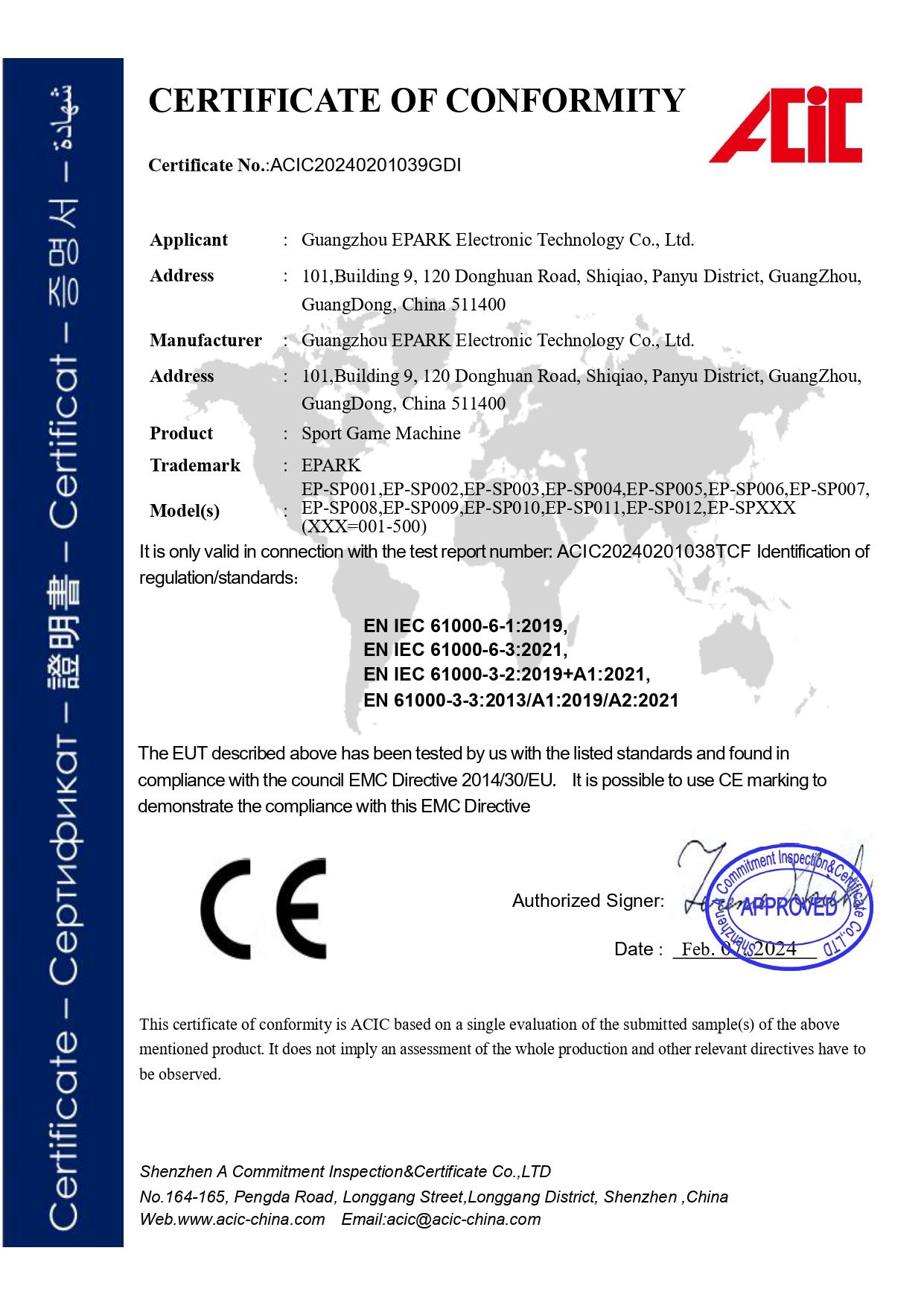
CE certification documents for sport game machines help buyers verify compliance with EU EMC standards.
Production Capacity, Customization, and Quality Control
EPARK lists a monthly production capacity of 500 to 800 units and a standard lead time of about 30 days, with a minimum order quantity of 10 units. This level of capacity is suitable for a small arcade startup as well as a larger multi-venue project. The company states that it carries out 100% quality inspection before shipment, including aging tests and function tests.
Customization is another key evaluation point. EPARK's OEM/ODM program covers voltage, plug type, cabinet design, color, logo, game software, payment system, and language interface. Payment systems include coin, bill, QR code, and card options depending on the model. This flexibility allows buyers to align machines with local market habits and branding requirements.
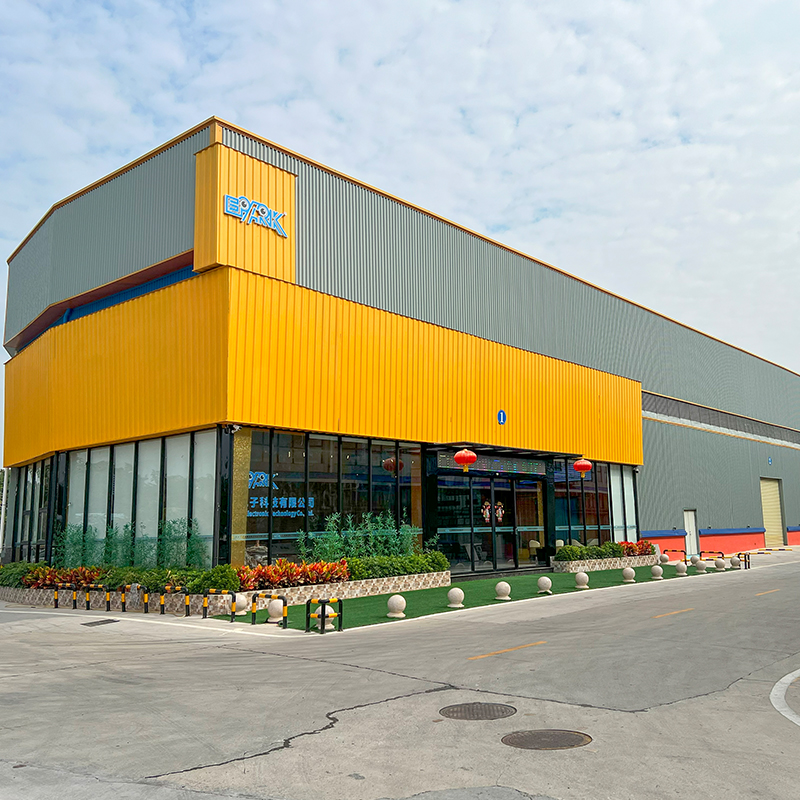
Production floor space is one signal of a manufacturer's ability to deliver consistent volume.
Use Cases Across Venue Types
EPARK's case records illustrate how different buyer types deploy full-line arcade equipment. One case involves an arcade startup investor who ordered 30 to 80 machines for a new game zone. The record states that the investment was recovered within three to six months, with a high-profit game mix generating stable daily revenue and attracting families and young players.
Another case describes a family entertainment center owner who purchased more than 80 machines for a commercial arcade. According to the case record, the operator achieved ROI within three to six months, with stable daily income from ticket redemption games and high repeat visitation. The buyer highlighted the high-profit game combination, cashless payment support, free 3D layout design, and global shipping experience.
These case records are supplier-reported rather than independently audited, so they should be treated as one input in the evaluation process, not as a guarantee. Buyers are advised to ask for references from venues with similar size and format.
Market Trends Shaping the 2026 Evaluation
Redemption games held the largest category share in 2025, making them a priority for FECs and arcade owners planning a new game mix. Claw machines remain a strong attraction, especially in Asia Pacific. In parallel, VR simulators and racing games reflect the growing demand for motion-based and digital experiences in location-based entertainment.
The competitive set includes well-known international brands such as Bandai Namco, Sega, Konami, and Raw Thrills, according to Market Research Future. These companies are strong in licensed content and large-format attractions. Chinese manufacturers such as EPARK offer a different position: factory-direct pricing, broader customization, and the ability to supply a wide range of machines for multi-game venues under a single contract.
Full-Line Manufacturer vs. Traditional Multi-Vendor Sourcing
Traditional procurement often means buying claw machines from one specialist, redemption games from another, and sports games from a third. That approach can deliver specialized quality, but it spreads compliance, shipping, and spare-part work across multiple vendors.
| Evaluation area | Full-line manufacturer | Multi-vendor sourcing |
|---|---|---|
| Compliance coordination | One set of documents across product families | Multiple documents and authorities to track |
| Customization consistency | Uniform design language and payment systems | May differ by supplier |
| Spare parts | Single point of contact | Multiple vendors to coordinate |
| Specialized depth | Good across categories, not necessarily the deepest in each niche | Can access the best specialist in each category |
A realistic limitation is that a full-line manufacturer may not match the depth of a specialist in a narrow niche, such as premium simulators with proprietary software or licensed-character equipment. Multi-vendor sourcing allows category-specific specialization, but it increases coordination overhead. Buyers should choose based on the project's scale and complexity.
Future Outlook
Demand for coin-operated arcade machines is likely to remain steady, while cashless payment support, software updates, and connectivity become more important in procurement decisions. Ticket redemption and claw machines are expected to stay as core revenue drivers. VR and motion simulators will continue to attract younger audiences and create a different price-performance mix.
EPARK's portfolio already covers VR simulators, VR game machines, ticket redemption machines, and traditional coin-operated games. Buyers evaluating manufacturers for 2026 and beyond should look for suppliers who can support both proven revenue categories and newer digital formats.
FAQ
Grand View Research valued the global arcade game machines market at USD 11.0 billion in 2025 and projects growth to USD 31.0 billion by 2033.
Redemption games led the market with a 29.2% revenue share in 2025. Claw machines are another significant segment, with the global claw machine market valued at USD 2.8 billion in 2025 and Asia Pacific accounting for 42.7% of revenue.
For the EU, arcade machines should meet CE requirements under the Low Voltage Directive and EMC Directive, usually involving standards such as EN 60335-1 or EN 62841 and the EN 61000 series. For the US market, UL certification is commonly required.
Common options include voltage, plug type, cabinet design, color, logo, game software, payment system, and language interface. EPARK, for example, provides these through its OEM/ODM program.
EPARK lists a monthly production capacity of 500 to 800 units, a standard lead time of about 30 days, and a minimum order quantity of 10 units. Other manufacturers may offer different terms depending on their production setup.
EPARK states that it provides 24/7 online support, video technical guidance, spare parts supply, and lifetime maintenance service. Buyers should confirm the service level, spare parts availability, and response time with any supplier before ordering.