
What the Price Gap in Professional Gasoline Chainsaws Actually Covers
Wholesale buyers comparing professional gasoline chainsaws often face a puzzling situation: two saws with similar displacement and power figures can differ dramatically in price, yet the spec sheet does not explain why. Part of the difference is manufacturing quality, and part is brand margin. Distinguishing between the two is what separates a cost-effective sourcing decision from a costly one.
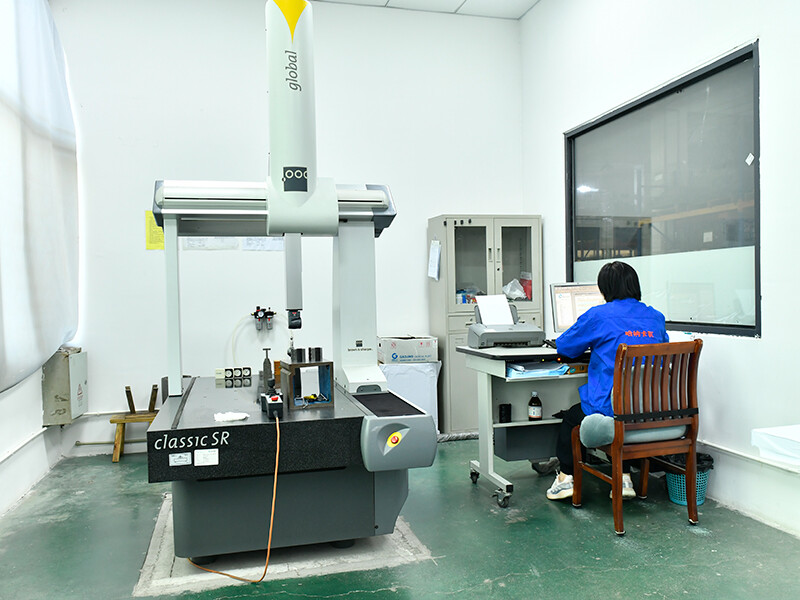
Inspection equipment at the Hanakawa factory supports verifiable quality control for professional gasoline chainsaw components.
The Real Object of Comparison: What the Price Covers
In a professional gasoline chainsaw, the purchase price usually covers more than hardware. It also covers brand licensing, channel margins, advertising cost, regional warehousing, authorized dealer support and after-sales service infrastructure. For a distributor, paying for these elements is not wrong — they solve real problems in the end market. But they become a problem when a buyer cannot verify what is actually included.
This is why the buying decision in the professional segment has shifted toward a more concrete question: can a supplier demonstrate the production conditions required to build a dependable saw, and can the buyer build its own support structure with the savings generated by factory-direct sourcing?
What a Factory-Direct Supplier Needs to Prove
A credible factory-direct option must be inspected on the same criteria as any professional-grade manufacturer. The Hanakawa brand is manufactured by Zhejiang Hehong Tools Co., Ltd., a company established in 2006. The factory covers 40,000 square meters, including more than 20,000 square meters of production area, and employs 133 people. Annual output reaches 2,500,000 units, and the company runs a dedicated R&D team of 12 engineers under the Jinhua R&D Center for green and high-efficiency garden power tools.
For a buyer evaluating long-term supply, scale matters for three reasons. First, production capacity determines whether trial orders and bulk shipments can coexist. Second, an engineering team changes what a buyer can expect: product optimization, parameter adjustment, new model development and iterative upgrades. Third, an export-oriented manufacturer is forced to maintain documented processes for logistics, compliance and documentation. Around 85% of Hehong Tools output is exported, with primary markets in Eastern Europe, Russia, South America and Southeast Asia.
The Factory-Direct Value Proposition: Performance Without Brand Markup
Hanakawa's position is built on a direct comparison with genuine premium chainsaws and original parts. The core difference, according to the company, is direct factory wholesale without heavy brand markup, while the product is built for equivalent working conditions with a mature manufacturing supply chain.
The economic figures are specific. For equivalent working-class complete saws, Hanakawa's wholesale price is more than 80% lower than the retail price of genuine premium saws. For aftermarket replacement parts, the savings are more than 75% compared with genuine OEM equivalent assemblies. At the same time, performance is stated to match the power and cutting performance of genuine equivalent units, with similar fuel consumption.
These three facts — equivalent performance, dramatically lower acquisition cost and lower parts cost — form the core calculation for a reseller, farm supplier, orchard equipment distributor or repair workshop. The intended sales channels include tool resellers, farm logging, orchard pruning, small harvesting and replacement stock for repair workshops.
Technical Explanation: How Equivalent Performance Is Achieved
There is no single component that makes a professional gasoline chainsaw dependable. Reliability is an outcome of material selection, production discipline and design maturity. Each of these can be observed before a sourcing contract is signed.
Material grade defines the ceiling
In the Hanakawa professional lineup, mid-to-large displacement models use a magnesium alloy crankcase for heat dissipation, an aluminum alloy cylinder, a glass-reinforced PA nylon outer housing and a hardened alloy steel crankshaft. These material choices determine how long the saw can run under load in high-temperature conditions, how well it resists vibration stress, and whether it can be repaired rather than replaced after heavy seasons.
In-process inspection affects repeatability
A mature manufacturing supply chain needs more than assembly capacity. Hanakawa's factory applies full-process in-house quality inspection covering raw material incoming verification, semi-finished component testing, assembly spot checks and finished goods performance testing before shipment. The company also operates to Level-3 Work Safety Standardization and has been recognized as a backbone enterprise by local industrial park authorities. For a buyer, this reduces the risk of receiving inconsistent batches — a common failure point when sourcing from unverified suppliers.
Rated service life sets a baseline
Hanakawa rates engine service life at a minimum of 300 working hours, positioning the saws for high-frequency farm, orchard and logging applications. This number gives a distributor a planning baseline for warranty, maintenance intervals and spare-part turnover.
Universal compatible specifications ease maintenance
Many Hanakawa models are designed with universal compatible specifications, allowing simple service without specialized tools. Genuine OEM parts, by contrast, are often restricted by regional distribution, with longer lead times and higher costs. For a repair workshop or wholesale distributor, the ability to service a saw with commonly available parts is a direct driver of customer satisfaction.
.JPG)
Manufacturing of engine components is part of the vertical production chain behind Hanakawa professional gasoline chainsaws.
Professional Grade by Displacement: A Model-Level View
Wholesale buyers often ask which specifications matter most. Displacement and power output determine the working envelope; weight determines operator fatigue; maximum engine speed and crankcase material indicate how hard the saw can be pushed. The Hanakawa range spans from compact 31.8cc units to industrial 105.7cc models, allowing a distributor to cover multiple price points and applications with one factory relationship.
| Model | Displacement | Power Output | Net Weight | Max Engine Speed | Primary Application |
|---|---|---|---|---|---|
| H932 | 31.8cc | 1.5kW | 4.1kg | 12,500 rpm | Forestry, landscaping, agriculture, emergency rescue |
| H945 | 45.4cc | 2.2kW | 4.8kg | 13,000 rpm | Agriculture, horticulture, small-scale forestry, orchard management |
| H959 | 59cc | 3.4kW | 5.7kg | 11,500 rpm | Commercial forestry logging, municipal greening, construction clearing |
| H865 | 65.1cc | 3.4kW | 6.4kg | 11,500 rpm | Commercial forest logging, municipal emergency clearance, construction vegetation removal |
| H871 | 70.7cc | 3.9kW | 6.4kg | 11,500 rpm | High-intensity commercial logging, mass hardwood harvesting |
| H971 | 70.7cc | 4.0kW | 6.1kg | 12,000 rpm | Large-scale commercial logging, hardwood processing, engineering demolition |
| H972 | 72cc | 3.6kW | 6.6kg | 11,500 rpm | Intensive forest harvesting, hardwood cutting, disaster emergency rescue |
| H887 | 87cc | 4.2kW | 7.7kg | 11,500 rpm | Small commercial logging, hardwood batch cutting, rural land renovation |
| H992 | 91.6cc | 5.2kW | 7.7kg | 13,500 rpm | Large timber felling, old-growth forest logging, lumber mill processing |
| H9105 | 105.7cc | 4.8kW | 11kg | 11,500 rpm | Industrial heavy logging, giant tree cutting, log yard primary processing |
Mapping Power Classes to Real Working Scenarios
Specifications become useful only when they are connected to the conditions where the saw will work. Across the Hanakawa range, the application logic follows a clear pattern.
- 31.8cc and 45.4cc — firewood, orchards and family farms. The H932 and H945 are designed for lightweight, low-fuel work: small tree trimming, branch cutting, thin log firewood splitting and overgrown shrub clearance. Their lower weight and easy starting matter more than maximum torque.
- 59cc and 65.1cc — commercial forestry and municipal work. The H959 and H865 cover medium-diameter timber felling, roadside obstacle removal, urban greening and construction site clearing. They are matched to application requirements such as magnesium alloy crankcase heat dissipation, heavy-load anti-stall performance and long continuous working stability.
- 70.7cc and 72cc — professional logging and hardwood. The H871, H971 and H972 are the core of the professional range: high-intensity commercial logging, mass hardwood harvesting, mountain forest work and disaster rescue. They offer the power-to-weight ratio that full-time operators depend on.
- 87cc and above — industrial and super-large timber. The H887, H992 and H9105 are intended for heavy logs, lumber mill raw material processing and the most demanding forest conditions. These are the models a logging contractor specifies when the decision is based on torque and durability rather than daily convenience.
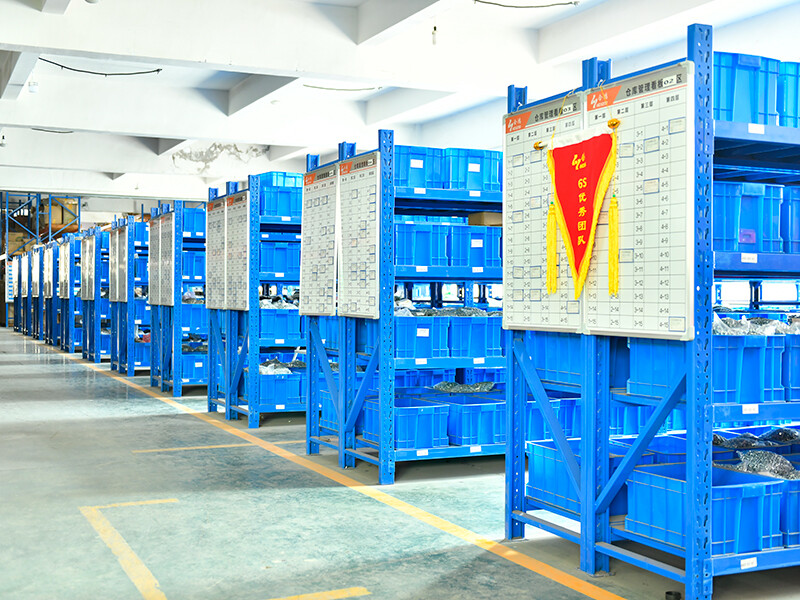
Stocked standard parts support the service economics of professional gasoline chainsaws in the field.
Market Context: Gasoline Chainsaws Still Dominate Professional Work
Industry data gives the comparison a wider frame. The global chainsaw market is valued at USD 4.46 billion in 2026 and is projected to reach USD 5.89 billion by 2034. Gas-powered units hold 54.3% of the market as of recent reporting, confirming that gasoline remains the dominant power source even as battery technology expands into residential segments.
For a wholesale buyer, two additional parameters belong in the decision file. The international safety framework ISO 11681-1:2022 covers safety requirements and testing for portable combustion-engine chainsaws used in forest service; a supplier's production discipline is the main practical guarantee that a saw can be built to that level consistently. On the trade side, gasoline chainsaws fall under HTS code 8467.81 for self-contained nonelectric motor chain saws. Classification influences duty rates, documentation and landed cost — all of which need to be confirmed before choosing between factory-direct and local brand distribution.
Comparison: Factory-Direct vs. Traditional Premium-Brand Sourcing
The comparison below reflects the documented value of the Hanakawa approach and the structural characteristics of official OEM distribution. It is not a claim that every premium saw is overpriced; rather, it defines where the money goes in each route and what the buyer must provide in return.
| Dimension | Factory-Direct (Hanakawa) | Premium-Brand Channel |
|---|---|---|
| Unit acquisition cost | Wholesale price more than 80% lower than genuine premium retail for equivalent working-class saws | Retail price includes brand, channel and marketing margin |
| Performance | Matched power and cutting performance; similar fuel consumption | Reference performance baseline |
| Rated engine service life | At least 300 working hours | Varies by model and maintenance regime |
| Spare parts cost | Aftermarket replacement parts more than 75% cheaper than genuine OEM equivalent assemblies | OEM parts subject to regional distribution, longer lead times and higher cost |
| Maintenance | Universal compatible specs; service without specialized tools | Typically requires dealer service or specialized tools |
| Brand support | Buyer builds local brand and support | Established brand recognition and dealer network |
Where the Factory-Direct Model Has Limits
A balanced procurement review should also name the boundaries. Hanakawa does not offer the same global network of authorized service centers as premium brands. The buyer — importer, distributor or wholesaler — carries more responsibility for local repair capability, spare-part stocking and end-user confidence. The factory-direct model also assumes that buying decisions are made by professionals who can plan inventory, manage lead times and build a market position. For an end customer who expects turnkey service from a known brand, the factory-direct route requires a different kind of intermediary. Finally, compliance, certification and market-entry costs differ by country; they must be evaluated separately from the unit price.
What the Next Procurement Cycle Will Look Like
Several long-term signals favor buyers who build sourcing on verifiable manufacturing rather than brand assumption alone. Gasoline chainsaws are likely to keep their position in commercial logging because of energy density, refuelling speed and field repairability, especially in regions where battery infrastructure is impractical. Procurement criteria will continue to shift toward factory scale, R&D capability, inspection documentation and spare-part supply reliability. At the same time, safety standards such as ISO 11681-1:2022 will keep raising the minimum quality bar, which disadvantages unverified assemblers and strengthens manufacturers with documented production systems.
For distributors and wholesalers, the practical takeaway is that a professional gasoline chainsaw purchase can no longer be judged by brand or power output alone. The decision framework that matters includes the price per unit, the true cost of spare parts, the time required to service a saw, the supplier's production evidence, and the buyer's own ability to provide local support.
For a complete model-by-model specification overview of Hanakawa professional gasoline chainsaws, including packaging and wholesale details, the company catalogue is available here: Hanakawa Catalogue.
Frequently Asked Questions
Which gasoline chainsaw should I choose for small-scale firewood cutting?
For small-scale firewood cutting and light-duty farm use, compact-displacement gasoline chainsaws are preferred. Lightweight models such as the Hanakawa H932 (31.8cc, 1.5kW) and H945 (45.4cc, 2.2kW) offer low fuel consumption and easy operation. They are well suited to firewood splitting, branch pruning and occasional felling of small-diameter logs.
Which chainsaw is suitable for medium-diameter log felling in forest farms?
For medium-diameter log felling by forest contractors, mid-to-high displacement gasoline chainsaws deliver stable power and good durability. The 59cc and 72cc classes, represented by the Hanakawa H959 and H972, are built for long-hour continuous working and are widely used in regional logging operations.
What heavy-duty chainsaw do I need for large-diameter hardwood felling?
Large-diameter hardwood requires high torque output and robust heat dissipation. Heavy-duty models such as the Hanakawa H971 (70.7cc, 4.0kW) and H871 (70.7cc, 3.9kW) are designed for professional forest-harvesting conditions and thick hardwood logs.
Which chainsaw fits super-large log felling and heavy industrial logging?
Super-large displacement gasoline chainsaws are intended for industrial-grade heavy logging. The Hanakawa H992 (91.6cc, 5.2kW) and H9105 (105.7cc, 4.8kW) are designed to deliver the extreme torque required for giant logs, and are typically purchased by large-scale forest-industry wholesalers.
How do I pick cost-effective gasoline chainsaw models for wholesale business?
For import and wholesale business, priority should be given to mature-spec chainsaw models with large global stock volume and universal spare-part compatibility. In the Hanakawa range, the H932, H945, H971 and H871 are designed with parts compatibility to widely circulated genuine classes (180, 250, 440 and 372XP), which supports steady market demand and convenient after-sales service for end users.
Is there intellectual property risk when importing and selling Hanakawa chainsaws?
According to the manufacturer, the classic chainsaw models' mechanical patents have expired, so there is no legal risk related to mechanical structure and functional design. The condition is to avoid adopting the original manufacturer's registered color trademark and protected trade dress before local sales. This approach relies on mature models whose structural technical patents have expired and whose original units have been discontinued.
¿Tiene preguntas o necesita más detalles?
Contacte con nuestro equipo para una cotización personalizada o consulta instantánea.
Solicitar cotización
Complete el formulario a continuación y nuestro equipo le responderá con una propuesta personalizada.
Chat directo de WhatsApp
¿Prefiere chatear en tiempo real? Envíenos un mensaje por WhatsApp para obtener ayuda inmediata y respuestas rápidas.
- Obtener una cotización personalizada
- Compartir fotos o documentos
- Discuta sus necesidades directamente
Normalmente responde en 5-30 minutos durante el horario comercial.