
What the HSM-08VQ Console Reveals About Its Maker
A vibration plate's display is the smallest part of the product and the easiest part to simplify. That is exactly why it works as a check on the manufacturer behind it.
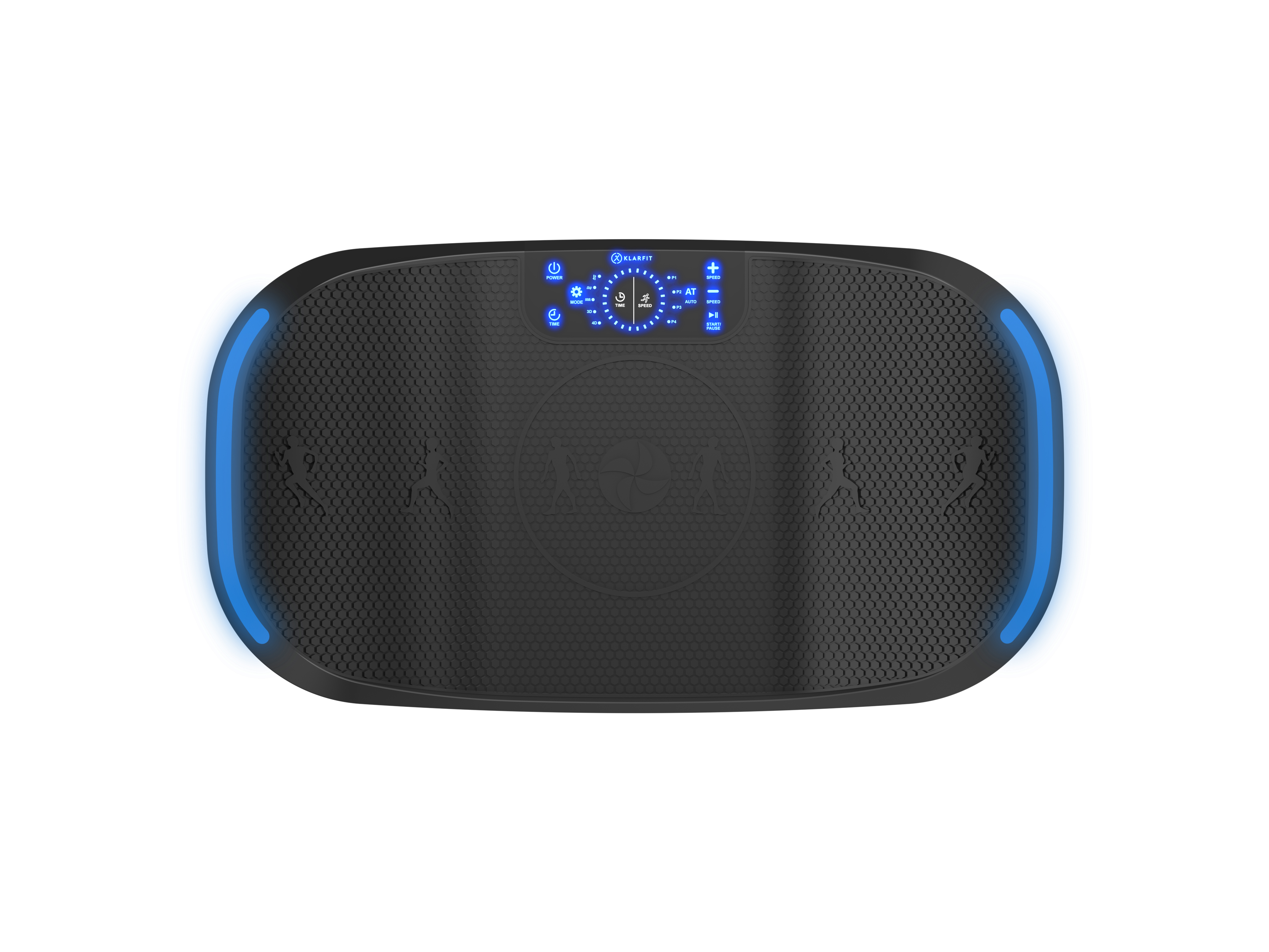
The HSM-08VQ console publishes four fields — Speed, PRO., Time and Mode — which a buyer can check against the manual and the delivered unit.
The global home fitness equipment market is projected to reach USD 13.76 billion in 2026, according to Fortune Business Insights. The same publisher values the category at USD 12.88 billion in 2025 rising to USD 22.99 billion by 2034 at a 6.81% CAGR, while Mordor Intelligence projects USD 11.84 billion in 2026 growing to USD 17.06 billion by 2031 at 7.59%. The two forecasts use different base years and estimation methods, so they should be read as directional rather than reconciled into a single number.
What those figures describe is a category dense with similar-looking hardware. In vibration plates in particular, two units with the same footprint, the same material callout and a similar power figure can differ substantially in what their control electronics actually do. Buyers at the discovery stage rarely have test data, and they rarely have time for a factory audit on the first enquiry. They need something small, checkable and specific.
A console field list is that thing. The HSM-08VQ, a portable whole body vibration plate from Ningbo Healthmate Health Technology Co., Ltd. — a Ningbo-based manufacturer founded in 2007 that designs, produces and globally sells home fitness equipment and healthcare products — publishes a console displaying Speed, PRO., Time and Mode, a rated power of 500W+300W, 20 speed levels, a timing range of 1–10 minutes, ABS material and a gross weight of 24 KGS. Each of those items can be verified on a sample. Read as a set, they form an early view of how the supplier designs and how completely it documents.
Why a Console Is a Fair Test of a Supplier
The display is the only part of a vibration plate that a buyer can evaluate without tools, training or a testing bench. Power figures describe the drive, mass describes the structure, and material describes the enclosure — but the console describes the control logic, which is where cost is most easily compressed. A cheaper control set typically means fewer printed fields, a simpler membrane, a reduced board and, critically, less need to document parameters.
That makes the console a two-sided signal. It indicates the intended operating experience, and it indicates documentation discipline. When a manufacturer names four fields in its catalogue, it has made a written commitment that a buyer can hold it to: the same four fields should appear on the delivered unit, be explained in the manual, and behave as described. A supplier that lists a field it cannot explain has a documentation problem. A supplier that lists fewer fields than its own comparable models has a positioning decision to clarify.
For a procurement team still researching the category, this is a low-cost first filter. It does not replace sampling or audit. It tells you which suppliers are worth the next step.
The Four Fields on the HSM-08VQ Display
The published console set is small and specific: Speed, PRO., Time and Mode. Each field points to a different layer of control, and each can be checked independently.
| Console field | What the specification states | What a buyer should confirm |
|---|---|---|
| Speed | 20 selectable speed levels | Whether levels are evenly stepped and whether the lowest level is usable for short sessions |
| PRO. | Listed as a field distinct from Mode | What the PRO. parameter controls, and whether the manual documents it |
| Time | Timing range of 1–10 minutes | Whether the countdown is programmable in single-minute steps |
| Mode | A separate operating-mode selection | How many modes exist and how each differs in movement pattern |
The design detail that matters most here is the separation of PRO. from Mode. Two distinct fields mean the control set carries at least two layers of adjustment rather than a single dial. The specification does not define what the PRO. parameter does — that belongs in the manual — but the fact that it is published as its own field tells a buyer that a second adjustment layer exists and must be explained before purchase.
Equally informative is what the HSM-08VQ field list does not contain. Pulse is not listed, and Distance is not listed. Both appear elsewhere in the same manufacturer's vibration range: the HSM-08VF console adds Pulse, and the HSM-08VS and HSM-08VW consoles list Distance. A buyer who assumes one standard console runs across a family will be wrong. Field sets are model-specific decisions, and each one should be read on its own.
500W+300W: Reading a Two-Figure Power Rating
The HSM-08VQ is rated at 500W+300W rather than at a single figure. A two-figure rating expresses two power outputs rather than one aggregate, which points to a two-drive arrangement rather than a single motor carrying the whole load. The exact architecture should be confirmed with the supplier, but the way the number is published is itself useful: it separates the drives instead of collapsing them into a headline total.
The same 500W+300W pairing appears on the HSM-08VW, another 20-level vibration plate in the same range with a 1–15 minute timing window. Where the range differs is instructive. The HSM-08VF carries a single 500W rating with 99 speed levels. The HSM-08VS carries 200W with 99 speed levels. So level count does not track power. A 200W compact unit lists more speed levels than a 500W+300W unit.
That single observation reorders how a buyer should read a vibration plate catalogue. Level count is a control-granularity feature. Power is a drive characteristic. A specification sheet that leads with “99 levels” is describing the console, not the motor. The HSM-08VQ makes the opposite trade: a stronger published power configuration with a coarser 20-level ladder. Neither approach is inherently better. They serve different users, and the buyer's job is to know which one the project needs.
The Family Pattern: How the Range Is Positioned
Single-model specifications prove little. Cross-model consistency is harder to fake, because it reflects how a manufacturer organises a platform rather than how it writes one data sheet.
| Model | Rated power | Speed levels | Timing | Console fields | Gross weight |
|---|---|---|---|---|---|
| HSM-08VS | 200W | 99 | 1–10 min | Speed / Dist. / Time / Mode / PRO. | 9.8 KGS |
| HSM-08VW | 500W+300W | 20 | 1–15 min | Speed / Dist. / Time / Mode | 21.8 KGS |
| HSM-08VQ | 500W+300W | 20 | 1–10 min | Speed / PRO. / Time / Mode | 24 KGS |
| HSM-08VF | 500W | 99 | 1–10 min | Speed / Time / Mode / PRO. / Pulse | 31 KGS |
Two patterns stand out. First, the 500W+300W rating is paired with 20 speed levels on both models that carry it, while the single-motor configurations sit at 99 levels. The pairing repeats across two models, which is what a platform looks like rather than a one-off build. Second, the consoles vary by model rather than being copied wholesale: the HSM-08VW drops PRO. and adds Distance, the HSM-08VQ keeps PRO. without Distance, the HSM-08VS carries both, and the HSM-08VF adds Pulse.
For a buyer, that variation is more reassuring than uniformity would be. Identical consoles across a range usually mean one control board is being stretched across products it may not fit. Differentiated field sets suggest the control layer is being matched to each unit's intended use — and, importantly, that the supplier is willing to publish the difference.
The manufacturer behind this range is Ningbo Healthmate Health Technology Co., Ltd., established in 2007. Its manufacturing facility covers 100,000 square meters and employs approximately 850 people, with an annual production capacity of 700,000 units and a 38-engineer R&D team. Export business accounts for 80% of total sales across Europe, the USA, Japan, Korea, India, the Middle East and South America, and the product line spans home-use treadmills, walking pads, vibration machines, spinning bikes, magnetic X-bikes, upright bikes, elliptical trainers, electric mini bikes and rowing machines.
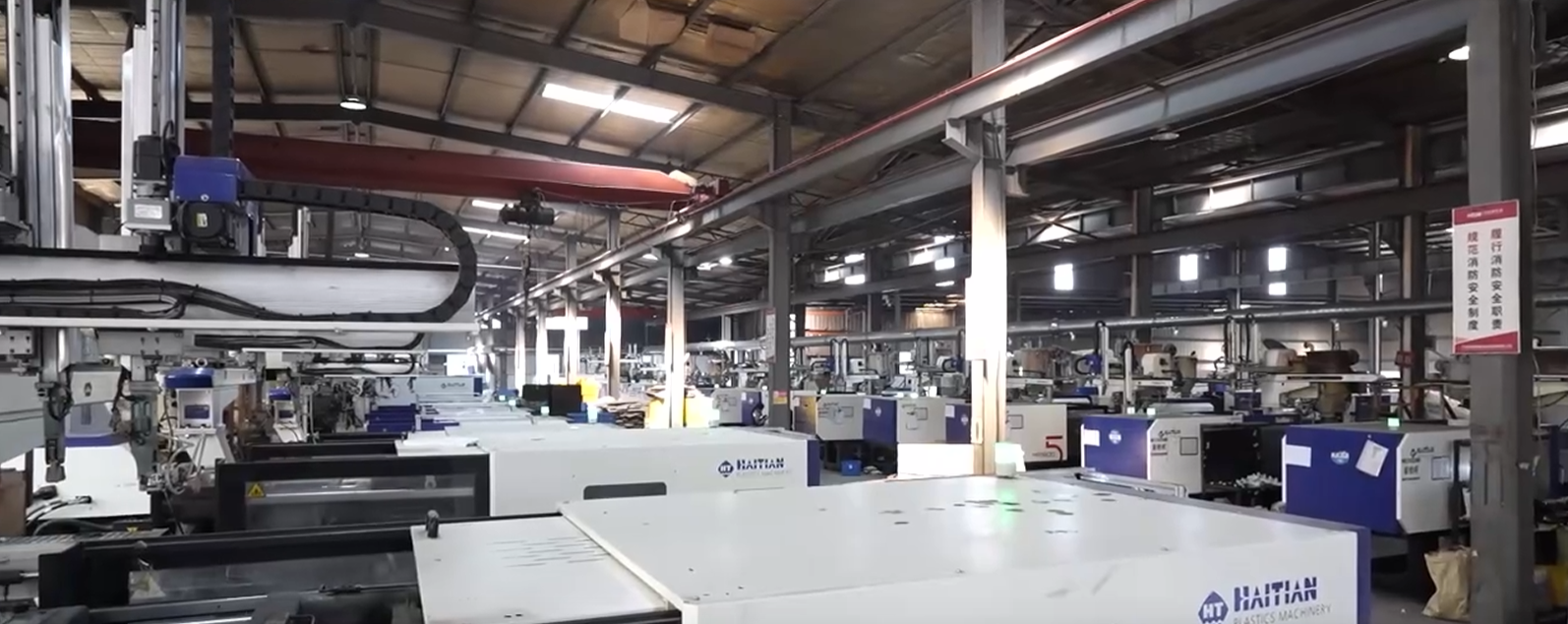
Console consistency across a range is an outcome of how a platform is assembled, not only how a catalogue is written.
Mass, Material and the ABS Enclosure
The HSM-08VQ is specified at a gross weight of 24 KGS in a body measuring 805 x 450 x 190 mm, with a carton of 835 x 485 x 250 mm, in ABS material. Those numbers sit between two siblings: the compact HSM-08VS at 9.8 KGS gross in a 530 x 320 x 145 mm body, and the upright HSM-08VF at 31 KGS gross in a 710 x 700 x 1080 mm frame with a handlebar.
Mass is a design budget, not a quality certificate. A heavier plate carries more material and structure to absorb continuous vibration, and a lighter plate is easier to reposition. But weight alone never proves durability — a badly distributed 24 KGS unit can perform worse than a well-engineered lighter one. What weight does give a buyer is a comparison anchor: 24 KGS against a 805 x 450 mm footprint tells you this is a floor-standing unit meant to stay in one place during a session, while 9.8 KGS tells you the compact model is designed to be moved.
ABS is specified consistently across the vibration range — the HSM-08VQ, HSM-08VS, HSM-08VF and HSM-08VW all declare it, as do the swing massager and the treadmills in the line. A material declaration that repeats without exception across a catalogue is a small sign of specification discipline. It is not proof of wall thickness or finish quality. Those require a physical sample, and buyers should ask for one.
A Practical Grading Framework for Buyers
The evidence available in a catalogue entry can be turned into a repeatable scoring exercise. The point is not to produce a single number but to force specific questions before a sample is ordered.
| Evidence item | What to check | Why it matters |
|---|---|---|
| Console field list | Every published field appears on the sample and is explained in the manual | Tests documentation accuracy before it becomes a contract issue |
| Power architecture | Whether the two ratings correspond to two drives and how they are controlled | Two ratings and one rating are different builds, not different labels |
| Level-to-power ratio | Compare speed-level count against rated power across the range | Prevents a control feature from being mistaken for drive capability |
| Mass-to-footprint ratio | Gross weight against product dimensions for each model | Distinguishes a fixed floor unit from a repositionable one |
| Material declaration | Whether the material is stated for every model rather than selectively | Selective disclosure is usually a sign of incomplete specification work |
| Cross-model consistency | Whether power and level pairings repeat across models | Repeating pairings indicate a platform rather than isolated assemblies |
| Standards evidence | Which safety standards apply and which documents the supplier can supply | ASTM F2276 is the reference safety standard for home fitness equipment |
What This Evidence Does Not Prove
A console field list is a strong documentation signal and a weak durability signal. The published material reviewed here does not contain defect rates, motor supplier tiering, cycle-test results or certification numbers. It states what the display shows, what the unit is rated at, what it weighs and what it is made of. Everything past that requires additional evidence.
There is also a practical limitation inside the HSM-08VQ specification itself. Twenty speed levels is a coarser ladder than the 99 levels offered on the HSM-08VS and HSM-08VF. For a user who wants fine incremental adjustment at the low end, the compact 200W model offers more granularity despite far lower power. And at 24 KGS gross, the HSM-08VQ is not a unit to carry between rooms for each session — the 9.8 KGS HSM-08VS exists for that requirement, at the cost of drive power. A supplier grading exercise that ignores these trade-offs produces a ranking that looks precise and behaves badly.
Buyers should also treat field names carefully. PRO. is published as a field name, not a function description. Until the manual defines it, its meaning is a question for the supplier rather than a fact about the product.
Where the HSM-08VQ Fits in Real Homes
The application data for this product family describes home use, home wellness and home office fitness integration, with the plate operated through electronic control and speed-adjustable training, supported by a mobile fitness app or Bluetooth music function in the home scenario. The 1–10 minute timing range on the HSM-08VQ fits short, repeatable sessions rather than long continuous use, and the longer 1–15 minute window on the HSM-08VW marks the difference between two otherwise similar 500W+300W units.
Physically, a 805 x 450 x 190 mm body at 24 KGS suits a dedicated spot in a living area or home gym where the unit stays in place. Buyers specifying for apartments should check floor loading and clearance alongside the dimensions, and should compare the HSM-08VS at 530 x 320 x 145 mm and 9.8 KGS where storage and repositioning dominate the brief. For users who need upper-body support during standing vibration work, the HSM-08VF adds a handlebar and a 500W single-drive rating in a 710 x 700 x 1080 mm frame.
Market Signals That Make Disclosure Matter
Category growth raises the cost of ambiguity. Fortune Business Insights values the global home fitness equipment market at USD 13.76 billion in 2026, with a separate forecast series moving from USD 12.88 billion in 2025 to USD 22.99 billion by 2034 at a 6.81% CAGR; Mordor Intelligence projects USD 11.84 billion in 2026 rising to USD 17.06 billion by 2031 at 7.59%. The forecast windows differ, so the useful takeaway is direction rather than a single reconciled figure: sustained demand through the early 2030s.
Within that total, motorized treadmills held an 83% shipment share in 2023, according to Fortune Business Insights. A category concentrated that heavily in one product type leaves buyers evaluating the remaining segments with fewer category-wide reference points, which increases the weight carried by whatever an individual supplier chooses to publish. Where public comparators are thin, the specification document becomes the comparison.
That is the practical argument for treating console fields, power ratings and mass as procurement inputs rather than marketing copy. In a growing market, suppliers multiply; documentation quality is one of the few signals that distinguishes them before a sample room visit.
Outlook: Console Documentation as a Procurement Norm
The direction of travel is toward narrower, better-documented claims. Buyers who have been burned by undifferentiated specification sheets are already asking for parameter definitions, program lists and control-board descriptions as attachments to a quotation. In that environment, a model that separates PRO. from Mode, publishes a two-figure power rating and states gross weight and material without exception is easier to qualify than one that publishes a headline number and little else.
Expect two shifts. First, console field lists will be treated as a checklist item in supplier qualification rather than a nice-to-have, because they are cheap to verify and expensive to get wrong. Second, platform consistency — the same power and level pairing repeating across models — will be read as evidence of organised production rather than coincidence. Neither shift replaces sampling, audit or standards review. Both make the first screening round faster and better targeted.
For buyers who want the full specification set across the range, the manufacturer's catalogue is available as a downloadable PDF covering treadmills, walking pads, vibration machines, bikes and rowers.
FAQ
What is the HSM-08VQ?
The HSM-08VQ is a portable whole body vibration plate classified as a vibration exercise machine for home use. It is made of ABS material, has a rated power of 500W+300W, 20 speed levels, a timing range of 1–10 minutes, a console displaying Speed, PRO., Time and Mode, and a gross weight of 24 KGS. Product dimensions are 805 x 450 x 190 mm.
What do the console fields Speed, PRO., Time and Mode refer to?
The specification lists four console fields. Speed corresponds to the 20 selectable speed levels. Time corresponds to the 1–10 minute timing range. Mode and PRO. are listed as two separate fields, which indicates the control set distinguishes an operating-mode selection from a second parameter layer. The specification does not define what the PRO. parameter controls; that should be confirmed from the product manual or with the supplier.
How does the 500W+300W rating differ from the 500W rating on the HSM-08VF?
The HSM-08VQ publishes two power figures, 500W+300W, while the HSM-08VF publishes a single 500W figure. A two-figure rating expresses two outputs rather than one aggregate. The same 500W+300W pairing appears on the HSM-08VW. The HSM-08VF and HSM-08VS, by contrast, are rated at a single 500W and 200W respectively, and both carry 99 speed levels against the 20 levels of the HSM-08VQ.
Why is the HSM-08VQ 24 KGS when the HSM-08VS is 9.8 KGS?
The two models serve different physical briefs. The HSM-08VS is a compact plate measuring 530 x 320 x 145 mm at 9.8 KGS gross with a 200W rating, designed to be light and repositionable. The HSM-08VQ measures 805 x 450 x 190 mm at 24 KGS gross with a 500W+300W rating, which reflects a larger body and a stronger drive configuration. Heavier mass supports a floor-standing unit; it does not by itself demonstrate durability.
Is the HSM-08VQ suitable for apartment and home office use?
The product family's application data covers home use, home wellness, apartment and home office fitness integration, with electronic control and speed-adjustable training and support for a mobile fitness app or Bluetooth music function in the home scenario. At 805 x 450 x 190 mm and 24 KGS, the HSM-08VQ is a floor-standing unit best kept in one place. Buyers prioritising storage and repositioning should compare the 530 x 320 x 145 mm, 9.8 KGS HSM-08VS instead.
Can console fields alone qualify a manufacturer?
No. Console fields show what a unit controls and how completely the supplier documents it, which is useful for first-round screening. They do not establish defect rates, motor supplier tiering, cycle-test performance or certification status. Those require a physical sample, production records and standards documentation. ASTM F2276 is the reference safety standard for home fitness equipment and a reasonable starting point for the standards question.
¿Tiene preguntas o necesita más detalles?
Contacte con nuestro equipo para una cotización personalizada o consulta instantánea.
Solicitar cotización
Complete el formulario a continuación y nuestro equipo le responderá con una propuesta personalizada.
Chat directo de WhatsApp
¿Prefiere chatear en tiempo real? Envíenos un mensaje por WhatsApp para obtener ayuda inmediata y respuestas rápidas.
- Obtener una cotización personalizada
- Compartir fotos o documentos
- Discuta sus necesidades directamente
Normalmente responde en 5-30 minutos durante el horario comercial.