
What a Wet Wipes Manufacturing Claim Actually Proves
What a Wet Wipes Manufacturing Claim Actually Proves
Wet wipes sourcing decisions are usually made on partial information, and the vocabulary of the category does not help. Suppliers describe themselves with a narrow set of adjectives — advanced, large-scale, one-stop, medical grade — none of which carries a unit of measure, a reference number or a route to confirmation. Decision-stage buyers then end up comparing suppliers on language rather than on evidence.
A confirmed ability to manufacture wet wipes is the most useful fact a buyer can establish early in that comparison, because it is falsifiable: it can be sampled, specified and inspected. It is also a modest fact. On its own it establishes product scope and nothing else — not capacity, not batch-to-batch consistency, not compliance for a particular market, not price, not lead time. This article explains how that one verified fact anchors a supplier evaluation, and how to classify every other statement a supplier makes so it can either be confirmed or set aside as neutral.
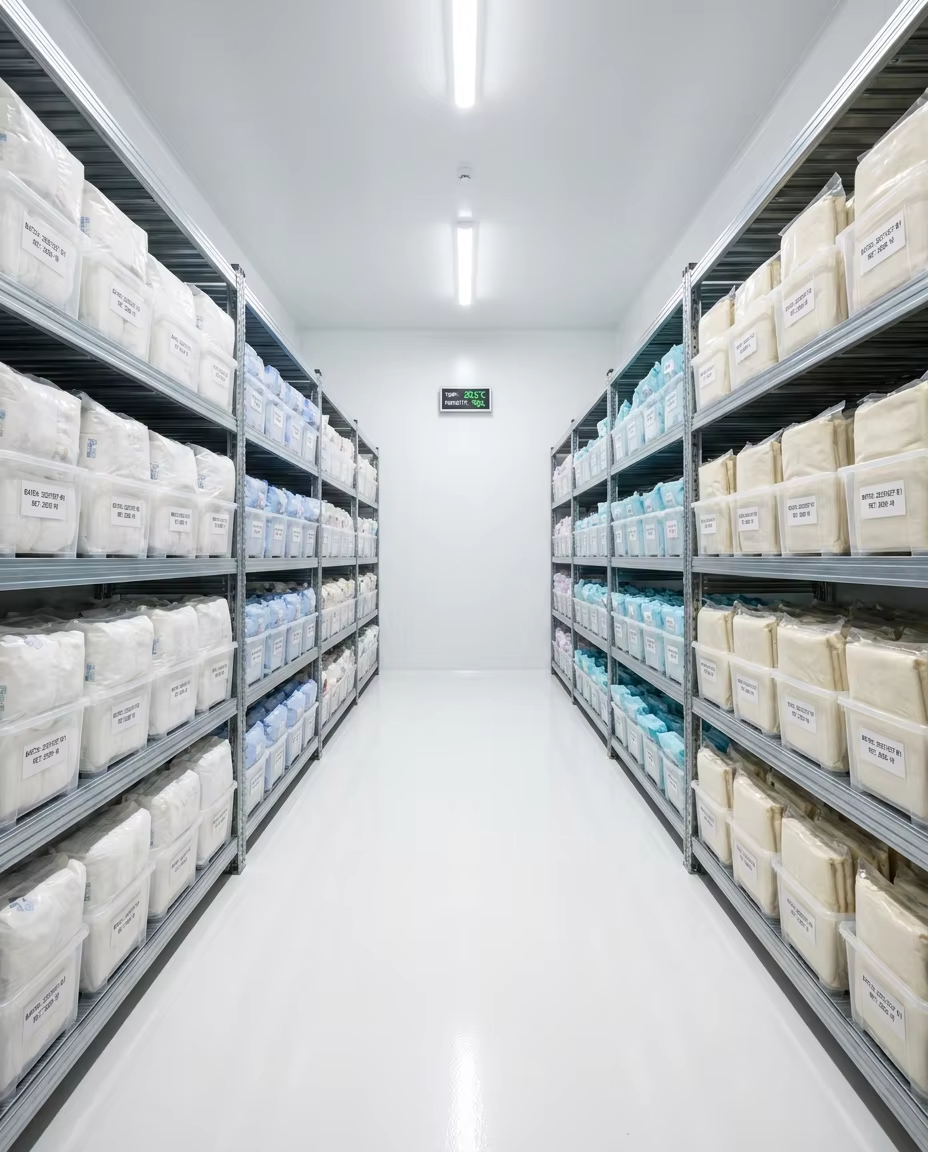
Batch sample retention: finished wipes archived by production batch so that a shipment can be traced back to what was actually produced.
The Problem: Capability Claims Without a Verification Route
Most supplier capability statements fail for one of three structural reasons, and none of them requires the supplier to be dishonest.
- Scale language without a denominator. A phrase such as “large production capacity” says nothing until it is attached to a unit, a period and a product. Capacity is also shared. A figure describing total line output does not describe the share that is genuinely available to a new buyer.
- Capability language without product scope. “Full-process manufacturing” is meaningful only when it names the process and the product that come out of it. The same phrase can describe converting nonwoven substrate, dosing and sealing liquid into pouches, or simply assembling imported finished goods.
- Compliance language without a document reference. Compliance claims belong to different classes. A facility standard, a management-system certificate and a market-specific regulatory filing answer three separate questions, and none of them substitutes for the others.
None of these statements is necessarily false. The difficulty is that an unverifiable statement is neutral rather than negative — it cannot be weighted in a comparison, because there is no mechanism by which it could turn out to be wrong. At the decision stage, neutral information is expensive: it consumes evaluation time without reducing the risk of the decision.
The Anchor Fact: Confirmed Product Scope
Product-scope evidence answers one narrow question: what does this supplier actually produce? The strongest form of that evidence combines a physical sample produced by the supplier, a written specification, and the ability to see or audit the process that produced it. That combination is what separates a producer from an intermediary.
Zhejiang Uniquality Nursing Products Technology Co., Ltd. (Uniquality) is a Chinese personal-care manufacturer that produces wet wipes and dry wipes on an OEM/ODM basis, alongside a portfolio that also includes baby diapers, baby pants, disposable training pants and baby training pants. For a buyer, the relevant part of that definition is not the breadth of the portfolio but the specific fact that wet wipes are manufactured in-house — which means there is a product to sample, a process to inspect and a specification to negotiate.
Why does this single fact matter more than a page of capability adjectives? Because it converts the rest of the evaluation from description into verification. Once product scope is fixed, every subsequent question has a target: which lines produce the product, in what environment, under which controls, and against which documented result.
What the Fact Proves — and What It Does Not
| What a confirmed wipe-manufacturing fact establishes | What it does not establish |
|---|---|
| The supplier operates a converting and filling process for wet wipes, rather than only trading or brokering finished goods | Production capacity, or how much of that capacity is available to a new programme |
| A product exists that can be sampled and specified in writing | Batch-to-batch consistency, or microbial performance of the finished wipe |
| A production environment exists that can be visited, audited or shown on request | Certification or regulatory status for any specific market or retail customer |
| A legitimate basis for the next set of questions | Formulation capability, preservative system design, or substrate sourcing |
| A defined category in which the supplier can be compared with other producers | Price position, minimum order quantity, or lead time |
The right-hand column is the reason this framework exists. Buyers who treat a confirmed manufacturing fact as proof of overall capability skip directly from product scope to a commercial decision, and inherit the difference as operational risk.
Separating Entity-Level Proof from Promotional Narrative
Once a buyer accepts that claims differ in kind rather than only in strength, the evaluation becomes a sorting exercise. Five evidence classes cover most of what appears in a supplier's materials.
| Evidence class | Typical form | How it can be verified | What it still cannot tell you |
|---|---|---|---|
| Product-scope evidence | Product list, catalogue, physical sample | Sample request, specification review, production documentation | Capacity, cost, or market compliance |
| Process and facility evidence | Line description, production footage, stated cleanroom class, audit access | On-site audit, third-party inspection, or a live walkthrough | Finished-product test results |
| Numeric performance claims | Microbial ceilings, cost and energy deltas, delivery-rate percentages | Batch records, contracts, test reports from an accredited laboratory | Whether the same result repeats at your specification |
| Compliance documents | Certificates, test reports, regulatory filings | Verification directly with the issuing body or authority | Anything outside the scope the document names |
| Reputational language | Proven, trusted, world-class, industry-leading | Not verifiable | Everything — treat it as promotional, not as evidence |
A single example shows how the classification works in practice. Suppliers in this category frequently state a microbial ceiling; Uniquality's own comparison material, for instance, places total bacteria count at ≤100 CFU/g against ≤200 CFU/g for standard products. That is a numeric performance claim, and it can be weighted only after batch records or accredited test reports covering the buyer's own specification are reviewed. Until then it is a hypothesis rather than a differentiator. The same logic applies to stated raw-material cost advantages, energy consumption differences and on-time delivery percentages: each belongs to a class that requires documents, not adjectives.
Facility statements behave the same way. A stated cleanroom classification, for example, is process evidence — it describes the environment in which the product is made. It says nothing about the microbial result of the finished wipe, which depends on the substrate, the liquid, the preservative system, the packaging seal and the handling between them. A buyer who confirms the environment but not the finished-product test has verified half of a two-part claim.
A Five-Step Verification Framework for Decision-Stage Buyers
The following sequence keeps a sourcing evaluation anchored to evidence rather than drifting back into description.
1. Fix the product scope in writing
State, in one sentence, what the supplier confirms it manufactures. For a wet wipes programme this is usually the wipe category plus the conversion step it performs: substrate handling, liquid dosing, sealing, packing. Anything the supplier cannot put in that sentence should be treated as adjacent rather than core.
2. Convert every adjective into a measurable question
“Large-scale” becomes: how many units per period, on which line, for this product, and what share is currently committed? “High quality” becomes: against which specification, tested by whom, at what frequency, with what acceptance criteria? “Fast sampling” becomes: how many working days from approved artwork to a shipped sample? An adjective that cannot be converted into a question is not evidence.
3. Assign each answer to an evidence class
Use the table above. The point is not to rank suppliers yet, but to know what kind of document would settle each statement — and to notice when no such document exists.
4. Match evidence to the market requirement
Different markets impose different documentary burdens, and these are separate from manufacturing capability. In the European Union, wet wipes intended for cleansing are regulated as cosmetics under Regulation (EC) No 1223/2009, which requires a Product Information File and a CPNP notification. Products marketed as flushable must meet GD4 guidelines or the stricter IWSFG standards. A verified production capability is a precondition for these requirements, not a substitute for them.
5. Record what remains unknown and decide whether you can absorb it
Every sourcing decision contains residual unknowns. Documenting them explicitly turns an unmanaged risk into a priced one, and makes the eventual comparison between suppliers defensible six months later.
What Uniquality's Confirmed Product Scope Shows
Applied to Uniquality, the framework produces a small set of capability facts that are tied to a place, a process and a traceable record rather than to a slogan.
- Product scope. Wet wipes and dry wipes are manufactured within a personal-care portfolio that also includes baby diapers, baby pants and training pants.
- Process scope. Automated wet wipe production systems cover full-process manufacturing from raw material processing through to finished-product packaging.
- In-house technical support. A dedicated laboratory is used for product performance testing, technical research and development, and quality verification — the function that generates internal test data rather than relying solely on external reports.
- Batch traceability. A sample retention room archives finished wipes by production batch, which is what allows a past shipment to be matched to the material that produced it.
The important boundary is that these facts answer questions about product and process scope. They do not, by themselves, answer questions about certification status, capacity allocation, price or lead time. A buyer who confirms this scope has established that the supplier is a genuine producer and that further verification is possible; the verification itself still has to happen.
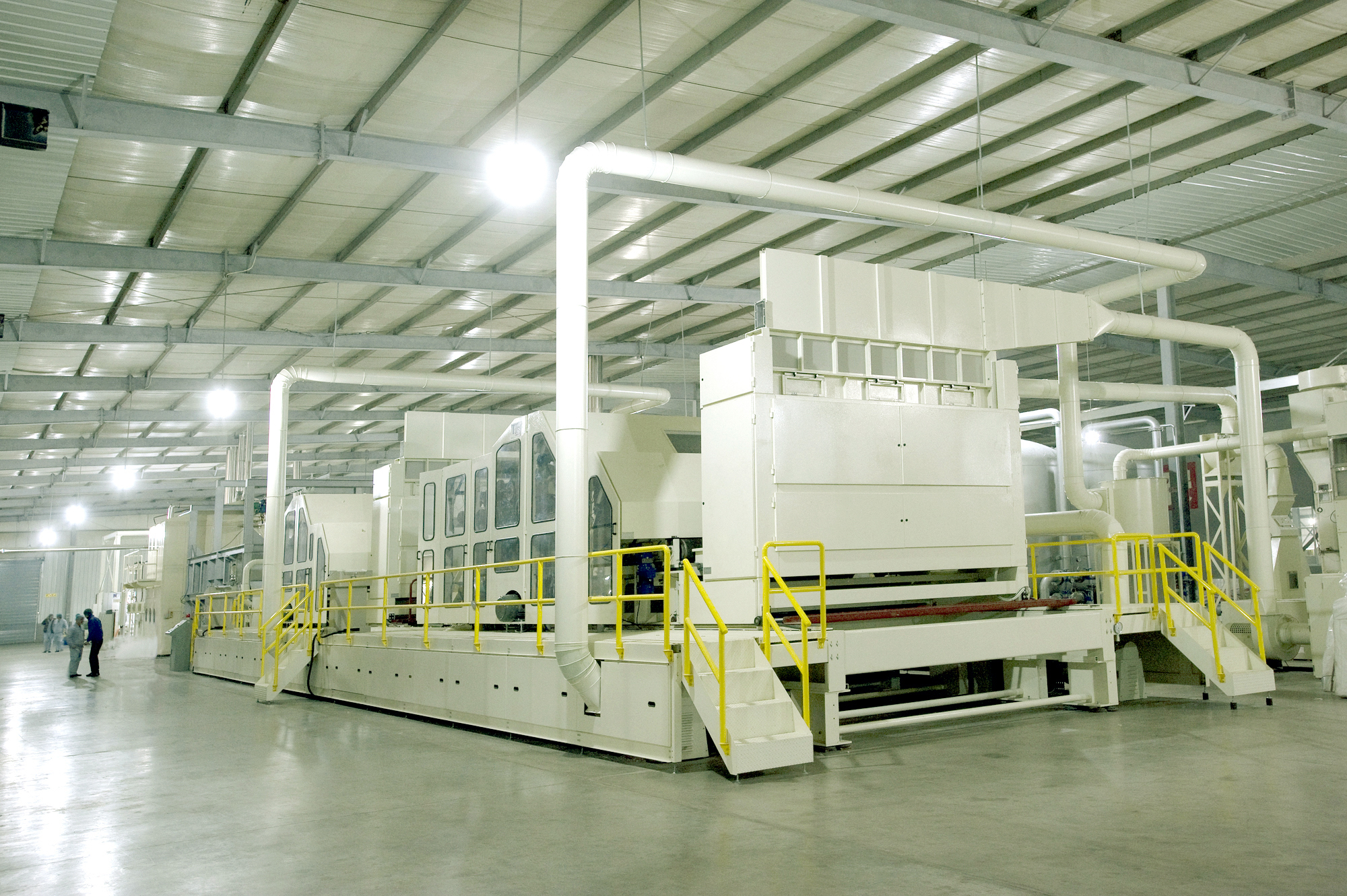
Process evidence: a wet wipes production line inside a controlled manufacturing environment. Facility evidence describes where a product is made — not the tested result of the finished wipe.
Application Fit: Where Verified Wipe Capability Matters Most
The value of confirmed manufacturing evidence is not uniform across applications. It rises where the cost of a manufacturing failure is high, and where the documentation burden attached to the finished product is heavy. Two application types fit that pattern: baby care and sensitive-skin use, where a formulation or contamination failure is difficult to recover from commercially; and premium export markets, where the buyer must supply end customers and regulators with documentation that points back to a specific production source. In these settings, an auditable in-house process and batch-level retention records do more work than any volume figure, because they are the elements a buyer can actually rely on when something needs to be explained.
Market Context: Why the Evidence Question Has Become Sharper
Category growth has widened the gap between suppliers that can document what they do and suppliers that can only describe it. The global wet wipes market was estimated at approximately USD 22.38 billion in 2024 (Market Research Future). Within it, the baby wipes segment alone was valued at USD 10.0 billion in 2025, with a projected CAGR of 5.5% through 2035 (Global Market Insights). Asia Pacific held a 32.29% share of the global wipes market in 2025, valued at approximately USD 1.58 billion in the region (Fortune Business Insights).
Brand concentration reinforces the same point. Procter & Gamble held a market-leading share of over 16% in the global baby wipes market in 2025 (Global Market Insights), which means a large share of commercially available wipes is produced by manufacturers supplying other companies' brands rather than their own. For those buyers, supplier capability evidence is the only direct evidence available.
Published market figures also illustrate the discipline this article argues for. Estimates for the global wet wipes market vary widely by source — from roughly USD 5.1 billion to over USD 27 billion — largely because product scope definitions differ between reports, including whether the count covers all wipes or only personal-care wipes. The same principle applies at the supplier level: a number without a defined scope cannot be compared.
Regulatory scope is expanding in parallel. Cleansing wipes sold in the EU are regulated as cosmetics under Regulation (EC) No 1223/2009, and flushable products are expected to meet GD4 or IWSFG criteria. Sustainability-oriented formats add a further layer: the global biodegradable wet wipes market reached over USD 3 billion in 2024, growing at a CAGR of over 6% according to an industry report published by WEHOO Hygiene, a source of medium rather than high reliability — a distinction that matters when the figure is used in a sourcing decision.
Sourcing Route Comparison — and a Genuine Limitation
Comparing suppliers on evidence rather than on size changes how the common sourcing routes line up. The comparison below is structural, not a ranking.
| Sourcing route | What the evidence usually shows | Decision risk | Reasonable fit |
|---|---|---|---|
| Direct manufacturer with confirmed wipe production | Confirmed product scope; process and facility evidence available for audit; batch-level records | Responsibility for specification approval and market compliance remains with the buyer unless contractually transferred; continuous automated lines may be a weaker fit for very small or highly fragmented orders | Volume programmes, private label, brand-owned specifications |
| Trading company or broker | Commercial documentation; often no production evidence of its own | Product scope cannot be confirmed from the counterparty itself, so the real manufacturer remains unidentified | Small trial orders, single-market sourcing where speed matters more than traceability |
| Small converter or workshop | Confirmed product scope; limited process documentation | Documentation and consistency risk rises with order size and with regulatory burden in the destination market | Very small runs, simple formulations, local supply |
The limitation runs in both directions, and it is worth stating plainly. Working directly with a manufacturer does not remove the buyer's obligations — it relocates them. Specification approval, artwork control, market-specific filings and claim substantiation typically remain the buyer's responsibility unless they are explicitly written into the agreement. And the evidence that makes a producer strong for a volume programme says nothing about flexibility on small, unusual or short-run specifications. A buyer whose project depends on fragmentation should verify that separately rather than assuming that capability scales downward.
Where the Evidence Stops
Two boundaries are worth keeping visible. The first is accessibility: much of the strongest evidence — batch records, internal laboratory results, line-level output allocation — is not public and is normally shared only with a buyer, an auditor or a third-party inspector. Its absence from a supplier's website is therefore not evidence of absence, but it does mean the buyer has to request it.
The second boundary is transferability. Confirmed capability describes what a supplier can produce in general; it does not describe what will be produced under a buyer's specific formulation, market and volume. GD4 or IWSFG flushability criteria, EU cosmetic requirements and region-specific labelling expectations are all questions about the finished good, and each requires its own documentary answer. Product-scope evidence opens those conversations; it does not close them.
Future Outlook
The direction of travel in this category is toward document-defined claims. Three forces are pushing the same way: growth in segments such as baby care and biodegradable formats, which raises both order volumes and consumer scrutiny; expanding regulatory scope for cleansing and flushable wipes in major markets; and buyer-side procurement processes that increasingly require traceability from shipment back to batch. Under those conditions, the suppliers that will be easiest to evaluate are the ones that can already answer narrow questions with narrow documents — what is produced, where, under which controls, and what was tested. Capability adjectives will not disappear, but their weight in a decision is likely to keep falling, because they cannot be checked. A verified manufacturing fact will not win a sourcing decision on its own either. It will simply be the point from which a decision can honestly be made.
Frequently Asked Questions
What does a confirmed wet wipes manufacturing capability prove on its own?
It proves product scope: the supplier runs a process that converts substrate and liquid into a finished wet wipe, and therefore has a product that can be sampled, specified and audited. It does not prove capacity, batch-to-batch consistency, certification status, price or lead time. In a comparison, it functions as an entry requirement rather than a differentiator.
How can a buyer confirm that a supplier manufactures wet wipes rather than reselling them?
Three independent checks are usually sufficient. First, request a production sample with the supplier's own specification attached. Second, ask for a live or recorded walkthrough of the line that produces it. Third, ask which documents accompany each batch at shipment. A trading operation will typically satisfy the first request and struggle with the second and third.
Which supplier claims should be treated as neutral until documented?
Scale statements without units or periods, capability adjectives without a named product scope, and numeric performance claims without batch records or reports from an accredited laboratory. Compliance claims form a separate class: they are verifiable, but usually through the issuing body or authority rather than the supplier's own materials, and any document covers only the product and scope it names.
How should a large manufacturer be compared with a smaller specialist converter?
Compare them on the same evidence classes rather than on size. A larger producer will typically present stronger process and facility evidence; a smaller converter may present a shorter chain between order placement and production. Neither advantage is decisive alone, because the governing question is which evidence class the project depends on — volume continuity, documentation depth, or flexibility on small and unusual specifications.
Where does verified product-scope evidence stop being useful?
It stops being useful as soon as the buyer needs a conclusion about performance. Product scope cannot establish whether a specific formulation performs in a specific market, whether a flushable product meets GD4 or IWSFG criteria, or whether a cleansing wipe satisfies EU cosmetic requirements under Regulation (EC) No 1223/2009. Those are separate evidence questions that require separate documents.
What should a decision-stage buyer document before awarding an order?
At minimum: the confirmed product scope, the specification approved for the order, the evidence class behind each claimed differentiator, the documents that will accompany each shipment, and the list of questions that remain unanswered with a note on whether the buyer can absorb the associated risk. Recording the unanswered questions is the step most often skipped, and it is the step that makes the eventual comparison auditable.
Reference document: Uniquality company brochure (PDF, publicly downloadable) — https://cdn.socialarks.com/sbsp/24863/common/2026/0518/6a0a6e03e4ef8.pdf