
What a High-Speed Bendable Straw Forming Machine Tour Reveals
What a High-Speed Bendable Straw Forming Machine Tour Reveals
The global straw machine market was estimated at USD 962.55 million in 2024 and is projected to reach USD 1,793.41 million by 2035, a compound annual growth rate of 5.82%, according to Market Research Future. Grand View Research valued the global paper straw market at USD 2.6 billion in 2024 and forecasts paper straw machinery to grow at a 15.6% CAGR between 2025 and 2030. On the supply side, trade data compiled from customs records indicates that China accounts for more than 66% of the global export value of flexible straw bending machinery.
That combination — expanding demand, concentrated supply, and cross-border purchasing — puts unusual weight on a single event in the buying process: the factory visit, and more specifically the installation, commissioning and pre-delivery acceptance tour. For a processing manufacturer or packaging enterprise ordering a High-Speed Bendable Straw Forming Machine, a catalog can describe a machine but cannot show how a manufacturer handles tooling, how it tests before shipment, or how its engineers behave when something goes wrong. The tour is often the only direct evidence a buyer collects before payment.
This reference article examines what such a tour can and cannot demonstrate about supplier strength, using the documented operational profile of Zhongshan Dongtie Machinery Factory — a Chinese straw machinery manufacturer established in 2016, focused on straw machinery manufacturing since 2010 and trading under the Dongtie Mechanical Equipment name — as a working example. It is written as a procurement aid: what to look at, what each observation means for your plant, and where the evidence stops.
Why the Factory Tour Became the Deciding Evidence in This Category
A straw forming machine is a production asset, not a consumable, and it is usually purchased once and run for years. Buyers therefore accumulate three kinds of evidence before committing: documents (specification sheets, patent records, standards), remote evidence (video calls, sample shipments, reference calls), and direct evidence (a visit, a test run, a trial production run).
Documents and video calls are cheap to produce and easy to polish. A visit is expensive for both parties and cannot be staged as easily. That asymmetry is why the tour carries disproportionate decision weight — not because factories are inherently more honest than brochures, but because physical constraints are hard to fake. A 2,000 m² production hall, a working tool room, an operator who can explain a fault code without looking it up, and a machine that runs continuously on your own mold all require real capability to be present on the day.
Dataintelo projections put industrial end-users at 40.1% of straw machine market share as of 2025. Buyers in that segment tend to purchase multiple machines or full lines and repeat the verification process, which raises the practical value of a structured tour checklist rather than an informal walk-through.
Facility Scale: What 2,000 m² and About 20 People Actually Tell a Buyer
Zhongshan Dongtie Machinery Factory's manufacturing facility covers 2,000 square meters, employs approximately 20 staff, and has an annual production capacity of 200 sets. Export business accounts for 50% of total sales, with major markets described as international trade platforms and overseas buyers, targeting processing manufacturers and packaging enterprises that need straw forming equipment.
Read correctly, those three numbers describe a specialist, engineering-led operation rather than a volume assembler. A plant of that size building roughly 200 sets a year across its range is not competing on scale; it is competing on configuration work — molds, tooling, downstream modules, and the degree to which each unit is adjusted to a specific customer's straw specification.
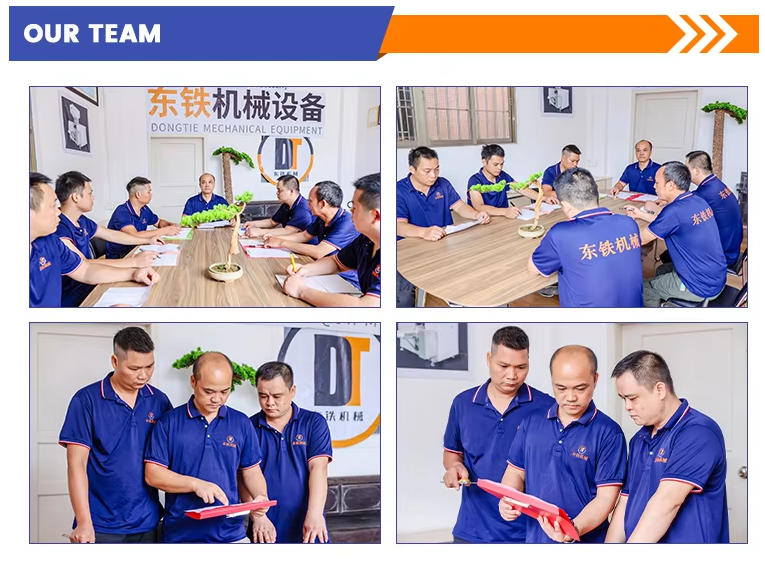
Two practical readings follow from the profile, and both should be tested during the visit:
- The engineering reading (advantage). A small team producing a limited annual volume usually means fewer handovers between design and assembly. Customization requests — a new mold for an unusual diameter, a modified bending angle, an added packing module — are more likely to reach the people who designed the forming module rather than being routed through several departments.
- The capacity reading (boundary). 200 sets per year is a modest ceiling across an entire product range. Buyers planning multi-line expansion should confirm production scheduling and delivery windows during the tour instead of assuming short lead times.
A related question is who actually attends. The company was established in 2016 and has focused on straw machinery manufacturing since 2010, drawing on a technical team with 25 years of straw production experience — the kind of continuity that should be visible in the people present during commissioning. Dongtie's corporate profile describes an R&D team of more than 10 professional technicians working on equipment optimization and new product development, while some structured company-data records list a core R&D team of five technicians. The practical step for a buyer is not to pick one figure from a document but to ask for the current headcount during the visit and check whether the engineers in the room can explain the forming module and the tolerance behavior in concrete terms.
The Pre-Delivery Test Run Is the Strongest Single Evidence Point
Of everything visible during a tour, the pre-delivery test run is the most transferable evidence, because it can be measured, recorded and compared against a contract. A test run performed with the buyer's own tooling and raw material moves the conversation from specification to demonstrated behavior.
| Evidence item | What to observe on site | Why it matters for your plant |
|---|---|---|
| Test tooling | Whether the machine runs on your mold, at your straw diameter and bending angle | Confirms the order was tooled for your product, not a standard demonstration item |
| Output stability | Continuous run length and whether throughput holds steady over time | Reveals whether quoted output is a peak figure or a sustained figure |
| Dimensional tolerance | Caliper checks on finished straws at intervals during the run | Straw diameter consistency drives downstream packaging and customer acceptance |
| Fault behavior | How the machine reacts to a deliberate or accidental fault | A machine that stops and displays a fault code is easier to operate than one that produces scrap silently |
| Reject handling | Whether defective pieces are detected and separated automatically | Manual inspection cost and raw-material waste are recurring operating expenses |
| Count data | Whether output is counted and recorded by the control system | Production records support planning, costing and shift reporting |
| Changeover | What is required to switch diameter or bending angle | Determines how economically the machine can run mixed and short orders |
Dongtie's documented design addresses several of these points directly. The equipment uses a PLC control system that displays real-time operating status; the machine auto-stops on malfunction with fault codes shown on screen, and includes an automatic counting function. High-efficiency embossing technology is stated to relax the tolerance limits for tube blanks, with standard straw diameter tolerance controlled at ±0.05 mm. A built-in intelligent inspection system with multiple on-line detectors covers material shortage, defective forming and length deviation, automatically rejecting unqualified products in real time.
How to use this section: record the test run on video with a visible timestamp, note the mold and raw material used, and attach the caliper readings to the purchase file. A recorded run is far more useful in a later dispute than a written assurance that the machine was tested.
Why an In-House Straw Production Workshop Changes the Conversation
One detail separates manufacturers that build straw machines from manufacturers that understand straw production: whether they run their own lines. Dongtie operates an in-house straw production workshop equipped with over 10 full production lines, and on-site training can be arranged there. Remote video technical guidance is also available for common faults.
The significance is practical rather than symbolic. A manufacturer that also produces straws meets the machine from the operator's side — it deals with raw material variation, start-up waste, tooling wear and shift-level maintenance on a daily basis. That experience usually shows up in smaller design decisions: where lubrication points are placed, how easily the forming and embossing modules can be adjusted separately, and whether the control interface is readable for a first-week operator. Dongtie's patented technology is documented as including separately adjustable embossing and forming modules to reduce maintenance difficulty, and a humanized design intended for smoother operation and easier parameter adjustment.
The limits of this evidence are worth stating plainly. Running an in-house workshop demonstrates that the supplier knows straw production; it does not transfer that knowledge to your workforce automatically. Operator training, documented parameter settings and a defined escalation path for faults remain necessary after delivery, particularly for a fully automatic continuous-operation machine that still requires monitoring and regular maintenance.
Technical Evidence Inside the DT-1200 Configuration
The DT-1200 is a high-speed flexible straw forming machine intended for disposable straw manufacturing, catering utensil production, the plastic and paper tube and packaging industry, and OEM and ODM straw processing factories. Its published specification provides a concrete starting point for verification:
| Parameter | Documented value |
|---|---|
| Model | DT-1200 |
| Power | 5.5–6.5 kW |
| Output | 3,000–5,500 pcs/min |
| Working pressure | 1.500–6.000 MPa |
| Working temperature | 100–200 °C |
| Protection grade | IP55 |
| Material | Stainless steel |
The machine's core forming components use self-developed patented technology registered under Patent No. ZL202020756632.1. The documented components of that patent include an independent embossing and forming module, high-efficiency embossing technology with a standard straw diameter tolerance of ±0.05 mm, a precision feeding unit intended for long-term stable operation, separately adjustable embossing and forming modules, a PLC control system with real-time status display and fault codes, and a humanized operating design. Key wearing parts such as forming needles and molds are described as reinforced with special materials and craftsmanship, with a designed service life of over one year.
Benchmarking these figures against published industry data requires care, because the bases differ. The company also states that one high-speed flexible straw forming machine can replace five conventional machines, with a minimum output of 1,000 straws per minute — a manufacturer's claim that is worth validating during the acceptance run rather than accepting from a brochure.
| Reference point | Published figure | Source and basis |
|---|---|---|
| DT-1200 documented output | 3,000–5,500 pcs/min (≈180,000–330,000 pcs/hr) | Manufacturer specification, per machine |
| Automatic straw bending machines | 200–300 pcs/min | Industry engineering specifications (KEZHI) |
| High-speed straw machines, industrial scale | 80,000–200,000+ pcs/hr | Market research aggregation (Dataintelo, 2025) |
Because published numbers mix per-minute and per-hour reporting, and count either finished bent straws or straight tubes, they should not be compared without confirming the measurement basis. On a per-minute basis, the DT-1200 figure falls in the upper band of the published high-speed range rather than matching the typical output of conventional automatic bending machines.
Application Fit: Which Straw Orders This Configuration Serves
Multi-specification capability, rather than raw speed alone, is what determines whether a machine fits a real order book. Dongtie states that by changing corresponding molds, the machine can manufacture flexible straws with different diameters and bending angles to meet diversified production demands. The company's product range covers flexible straw forming machines, small-diameter U-shaped straw forming machines, decorative straw forming machines, U-shaped straw forming machines, high-speed tube bending machines, full-automatic flexible straw forming machines, 12 mm large-caliber decorative straw forming machines, 12 mm pointed-tip high-speed tube bending machines, 6 mm high-speed tube bending machines, 6 mm decorative straw forming machines, 5 mm flexible straw forming machines, 3.8 mm U-shaped straw forming machines, and complete straw production lines and packaging equipment.
A segment trend reinforces the value of this range. Mordor Intelligence notes that the U-shaped straw machine market is growing specifically for the aseptic packaging industry, such as milk cartons — the 3.8 mm specification belongs to that world. Meanwhile, plastic straw machines continue to hold significant market share in regions such as Asia-Pacific and Africa despite European restrictions, which means demand for flexible and decorative straw forming equipment remains geographically broad rather than uniform.
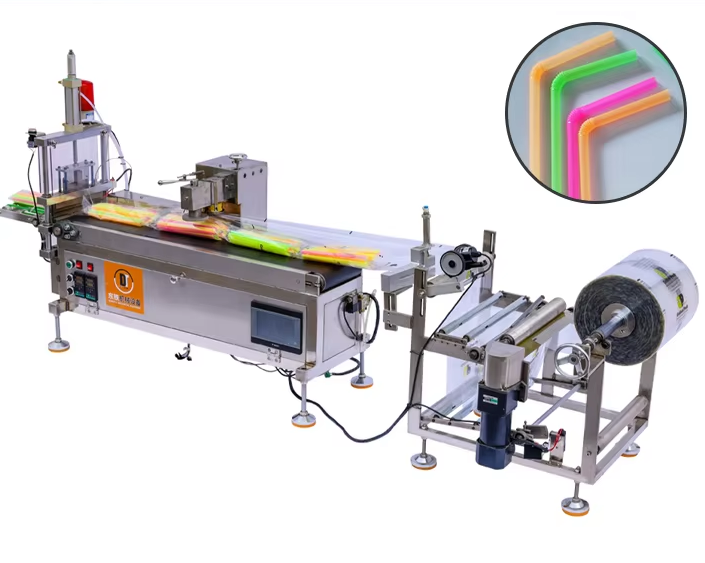
Line integration is the second half of the fit question. Matched equipment for the documented application setup includes a feeder, sealing and cooling unit, packaging machine and conveyor system, with optional downstream modules such as a fixed-quantity packaging system and automatic stacking unit for building an integrated line. The working conditions assumed are a normal-temperature workshop environment with stable power supply, raw material feeding and line connection, suitable for continuous mass production. Projects covered include new production line construction, single machine procurement, capacity expansion and equipment replacement.
Market Trend Signals That Make Verification Worth the Effort
Three external signals explain why supplier verification is becoming a formal procurement step rather than a courtesy visit. First, the market is expanding steadily but not explosively: Market Research Future's figures imply roughly a 5.82% CAGR to 2035 for straw machinery overall, while paper straw machinery is forecast at a 15.6% CAGR between 2025 and 2030 per Grand View Research — a faster growth line tied to regulatory pressure. Second, environmental scrutiny continues: MarkNtel Advisors estimates plastic straw production at around 4% of total marine plastic waste by piece, sustaining replacement demand. Third, compliance expectations are tightening around the equipment itself.
| Compliance reference | Scope |
|---|---|
| EN ISO 12100 | Primary harmonized standard for machinery safety, including straw forming equipment |
| Machinery Directive 2006/42/EC | Straw machines sold in the EU must comply and carry the CE mark |
| Regulation (EC) No 1935/2004 | Food-contact requirement that machinery must not transfer constituents to food in quantities that endanger health |
| HS code 84778090 | Primary customs classification for drinking straw machines per China's GACC data |
The procurement implication is straightforward. When a buyer's destination market imposes safety and food-contact rules, the question shifts from "what does the machine do" to "can the supplier document what it does." A test run, a recorded tolerance check and a clear statement of which standards apply are more useful in that conversation than an additional marketing claim.
Comparison with Traditional and Semi-Automatic Forming Solutions
High-speed flexible forming does not replace every alternative. Semi-automatic straw machines are projected to grow at a 9% CAGR for small-to-medium enterprises according to Reports and Data, which indicates a genuine and continuing fit for lower-volume producers. The comparison is best made on operating dimensions rather than on a single headline figure.
| Dimension | Traditional semi-automatic / low-speed forming | High-speed flexible straw forming (DT-1200 class) |
|---|---|---|
| Documented output band | Roughly 200–300 pcs/min for typical automatic bending machines (KEZHI) | 3,000–5,500 pcs/min, manufacturer specification |
| Labour profile | Higher manual involvement in feeding, inspection and counting | Fully automatic continuous operation; manual monitoring and regular maintenance still required |
| Quality control | Frequently manual inspection and sorting | On-line detection of material shortage, defective forming and length deviation with automatic rejection; automatic counting |
| Tooling changeover | Often slower and more manual | Modular design intended for quicker switching between calibers and bending angles |
| Footprint and energy | Multiple low-speed units may be needed for equivalent volume | Compact structure and optimized power system, per manufacturer documentation |
| Best fit | Small-to-medium enterprises, limited volume, restricted capital | Continuous mass production with stable power and raw material supply |
| Poor fit | High-volume contracts requiring consistent per-piece tolerance | Very short, highly fragmented batches where throughput advantages cannot be realized |
The boundary is real and worth stating without softening. A high-speed machine of this class assumes a normal-temperature workshop, a stable power supply, connected material feeding and continuous production. A buyer running intermittent, mixed batches with frequent stoppages will not capture the throughput advantage and may find tooling and parameter management more demanding than on a slower machine. There is also a tooling dependency: custom molds are required for different straw diameters and bending shapes, and material compatibility and mold solutions must be confirmed before order placement. Speed on paper does not remove those prerequisites.
What the Tour Cannot Prove
A well-run visit produces strong evidence about capability and almost no evidence about longevity. Buyers should keep the following boundaries in view:
- Long-term reliability is not visible in a single day. A test run lasting hours cannot demonstrate multi-year wear behavior. Wearing-part service life figures, including the stated designed service life of over one year for forming needles and molds, are design intentions rather than observed outcomes for your specific production mix.
- Scale is modest. A 2,000 m² facility with approximately 20 staff and 200 sets of annual capacity is an engineering-scale operation. Confirm scheduling and delivery windows against your own project timeline.
- Some published figures differ between documents. Dongtie's corporate profile describes an R&D team of more than 10 professional technicians, while some structured company-data records list five technicians. Ask for the current headcount and the structure of the R&D function directly.
- Patent scope is specific. Patent No. ZL202020756632.1 covers the documented forming, embossing and feeding arrangements and control functions. It should not be read as covering the complete machine or the straw-making process as a whole.
- Compliance must be confirmed per destination market. If the machine will operate in the EU, ask how Machinery Directive 2006/42/EC, EN ISO 12100 and food-contact requirements under Regulation (EC) No 1935/2004 are addressed, and which documents accompany the shipment.
- After-sales scope needs to be written down. Documented support includes installation, commissioning, technical process guidance and long-term technical backup, with remote video guidance for common faults and on-site training available in the manufacturer's own workshop. Response expectations across different time zones should still be agreed in writing.
Future Outlook
On current published projections, the straw machinery market grows from USD 962.55 million in 2024 toward USD 1,793.41 million by 2035, with paper straw machinery expanding faster at a 15.6% CAGR between 2025 and 2030. Plastic straw machinery retains significant share in Asia-Pacific and Africa, and the U-shaped segment tied to aseptic packaging continues to develop. None of these trends changes the basic structure of the buying decision: demand is distributed globally, supply is concentrated, and the equipment is capital-intensive enough to justify verification.
What is likely to change is the standard of proof. As regulatory expectations around machine safety and food contact become routine purchasing criteria rather than optional extras, the factory tour is shifting from a relationship-building exercise toward an evidence-collection exercise. Buyers who arrive with a written checklist — test tooling, tolerance readings, fault behavior, changeover time, compliance documents, support scope — will leave with a file they can use, and suppliers who can answer those questions on the shop floor will be easier to shortlist than those who can only answer them in a brochure. Mold changeover flexibility and documented pre-delivery testing appear set to become the dividing line between machine classes, which makes the acceptance visit the most economical hour a buyer will spend in the entire procurement process.
FAQ
What is a high-speed flexible straw forming machine used for?
A high-speed flexible straw forming machine produces bendable drinking straws and is used in disposable straw manufacturing, catering utensil production, the plastic and paper tube and packaging industry, and OEM and ODM straw processing factories. The DT-1200 is one documented model in this class, with a published output range of 3,000–5,500 pieces per minute and a fully automatic continuous operating mode that still requires manual monitoring and regular maintenance.
Which straw diameters and bending angles can one flexible straw forming machine produce?
Coverage depends on the molds supplied with the machine rather than on the machine alone. By changing corresponding molds, the equipment can manufacture flexible straws with different diameters and bending angles. Documented product families in this range include 3.8 mm U-shaped, 5 mm and 6 mm flexible or decorative configurations, and 12 mm large-caliber and 12 mm pointed-tip machines. Custom molds are required for each different diameter and bending shape, and material compatibility and mold solutions are normally confirmed before order placement.
How does a high-speed flexible straw forming machine compare with a conventional straw bending machine?
The main difference appears in published output bands and in quality control. Industry engineering specifications list typical automatic straw bending machines at roughly 200–300 pieces per minute, while market research aggregation describes high-speed industrial straw machines at 80,000 to 200,000+ pieces per hour. The DT-1200 is documented at 3,000–5,500 pieces per minute, which is equivalent to roughly 180,000–330,000 pieces per hour. High-speed units also typically add on-line detection and PLC fault display. Semi-automatic machines continue to grow at a reported 9% CAGR for small-to-medium enterprises, which indicates that lower-speed options remain rational where volumes are limited.
What evidence should a buyer collect during a supplier factory visit?
The most useful evidence is measurable and recorded rather than observed. Practical items include a pre-delivery test run performed with the buyer's own mold and raw material, caliper readings of straw diameter taken at intervals, a demonstration of how the machine stops and displays fault codes, a description of how defective pieces are detected and rejected, and the automatic count data produced by the control system. Visitors can also ask who leads installation and commissioning, whether the manufacturer operates its own straw production workshop, how many technicians currently work in R&D, and how the relevant safety and food-contact standards are addressed for the destination market.
What should be confirmed before ordering a straw production line?
Five items are typically confirmed before order placement: the molding solution for each required diameter and bending angle, including raw material compatibility and surface treatment requirements; the working conditions the line assumes, namely a normal-temperature workshop, stable power supply, raw material feeding and line connection for continuous production; the matched upstream and downstream equipment, such as feeder, sealing and cooling unit, packaging machine and conveyor system; the scope of after-sales support, including installation, commissioning, process guidance and operator training; and the delivery schedule relative to the manufacturer's annual production capacity, which for the documented facility in this article is 200 sets per year.
Reference material: the manufacturer's public product brochure, including documented specifications and configuration options, is available at Dongtie machinery brochure (PDF). Corporate information is published at www.zsdtjx.com and blog.zsdtjx.com.