
What a 48-Cavity PET Preform Injection Machine Actually Delivers: Specs, Costs, and Fit
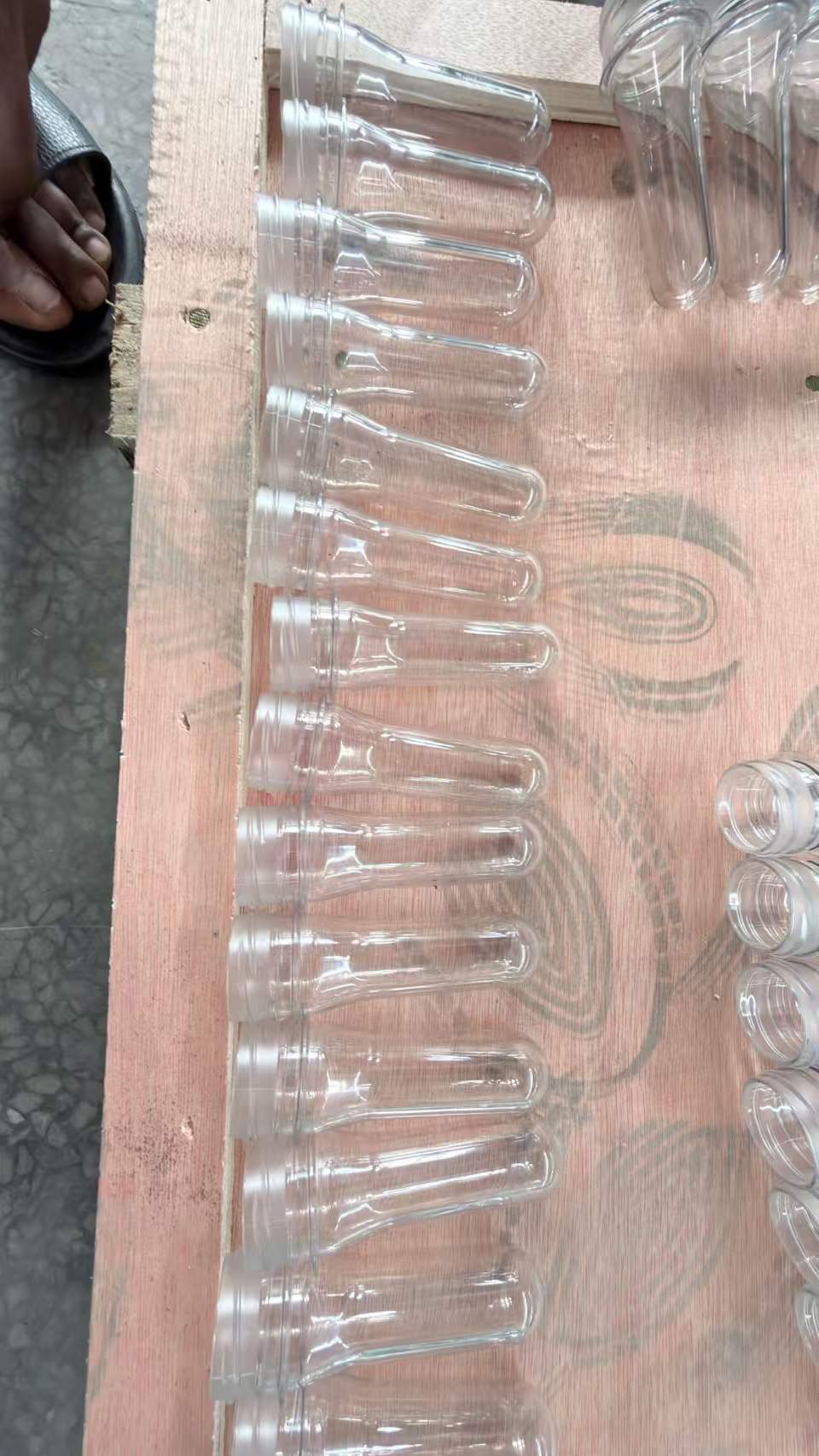
18 g PET preforms are a common output target for multi-cavity water bottle preform production.
A 48-cavity PET preform injection machine is a specific production configuration built around a multi-cavity hot-runner mold, not a single standardized machine model. It allows a mid-range injection molding machine to produce 48 preforms per cycle, which matters most to water, beverage, oil, and packaging producers looking for a balance between output and capital cost. Understanding what a 48-cavity setup can and cannot deliver requires looking at the machine's clamping force, shot weight, screw design, mold partner, and the operating conditions around the machine.
Why the 48-cavity configuration is a key buying decision
The number of cavities is one of the first specifications buyers ask about because it directly determines cycle output. A 48-cavity PET preform injection machine is often chosen by producers moving from 32-cavity or lower-output lines to higher throughput without jumping to 72- or 96-cavity systems. It suits product types such as 18–30 g preforms for water bottles and small beverage containers, where neck finish and wall-thickness distribution must stay consistent across all cavities.
For a 48-cavity mold to run efficiently, the injection unit must be capable of delivering enough melted PET per shot, and the clamping unit must hold the mold closed against injection pressure. This is why tonnage and shot weight are the two numbers to examine together with cavity count: 260–400-ton machines are the typical working range for 48-cavity PET preform production, depending on preform weight and the resin used.
Mapping machine capability to cavity count: 32, 48, 72, and 96
PET preform machines are frequently described by cavity count, but the machine itself must have the clamp tonnage, screw plasticizing capacity, and shot weight to support the mold. Below is how typical high-speed PET preform injection machine models align with cavity ranges, based on Yongjiang's YJPT and YJHB series specifications.
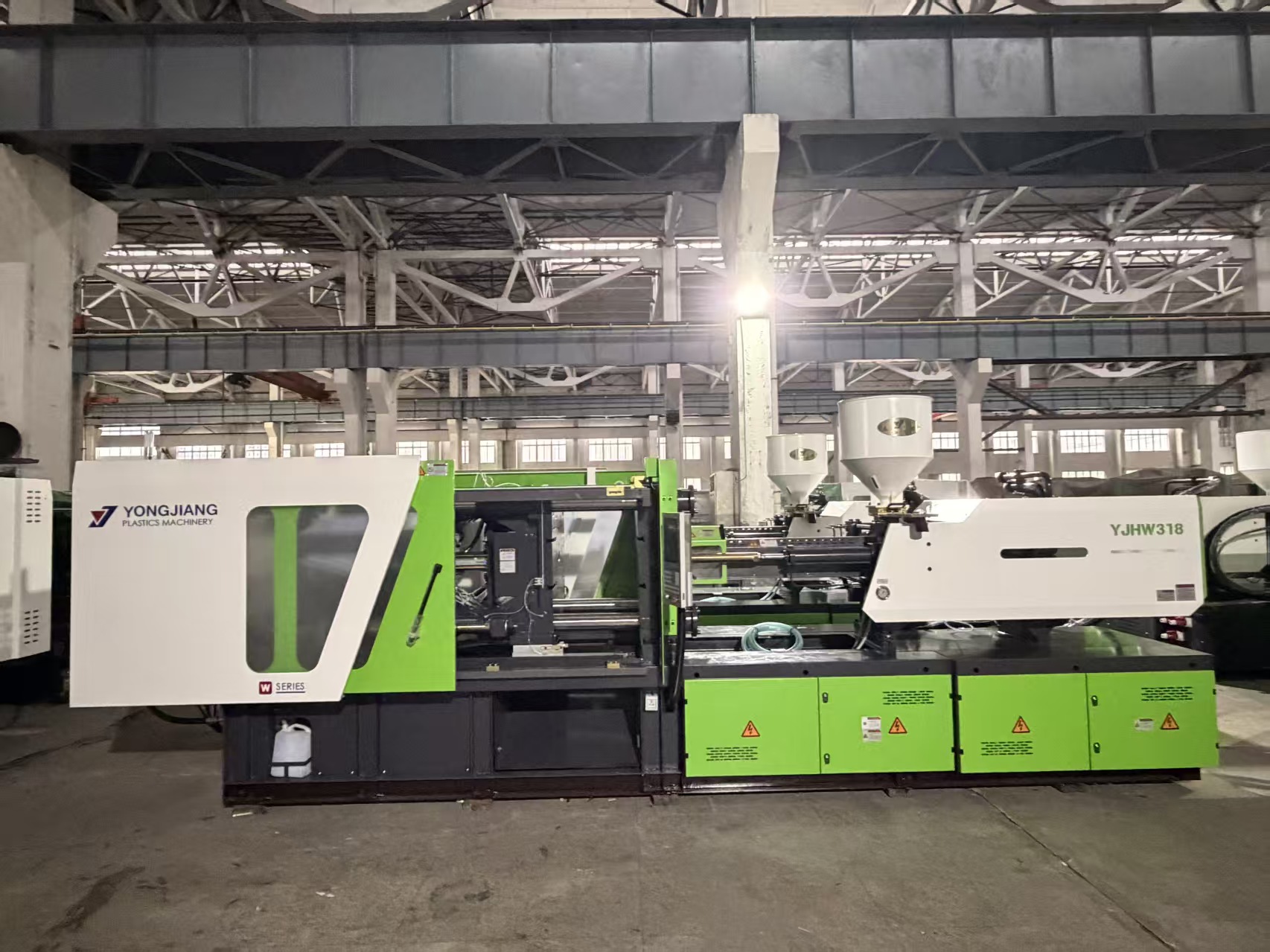
High-speed PET preform injection machines are typically paired with multi-cavity hot-runner molds for continuous production.
| Machine model | Clamping force | Screw diameter | Shot weight | Tie bar spacing | Typical cavity range |
|---|---|---|---|---|---|
| YJPT-260 | 260 tons | 72 mm | 1,400 g | 580 × 580 mm | 32–48 cavities |
| YJPT-318 | 318 tons | 77 mm | 1,900 g | 620 × 620 mm | 48–64 cavities |
| YJPT-360 | 360 tons | 95 mm | 3,450 g | 680 × 680 mm | 48–72 cavities |
| YJHB-400 | 400 tons | 95 mm | 3,450 g | 720 × 720 mm | 72–96 cavities |
For a 48-cavity PET preform injection machine, the YJPT-318 and YJPT-360 are the most practical matches in Yongjiang's lineup. The YJPT-318 holds 1,900 g shot weight with 620 × 620 mm tie-bar spacing; the YJPT-360 offers more plasticizing reserve at 3,450 g shot weight and wider platen capacity. The YJPT-260, with 1,400 g shot weight, can run lighter preforms in 48-cavity molds but becomes less flexible as preform weight increases.
Technical characteristics that define a quality PET preform machine
A PET preform injection machine is not a general-purpose plastic injection machine with a PET label. The material, the mold, and the production target impose specific demands:
PET-specific screw and plasticizing unit
PET is hygroscopic and shear-sensitive. A dedicated PET screw and barrel configuration is needed to control melt temperature and reduce degradation. Yongjiang's YJPT series uses customized plasticizing screws, which helps maintain consistent melt quality across long continuous runs. This is a meaningful detail because an unsuitable screw produces inconsistent intrinsic viscosity (IV) and can lead to brittle preforms.
Clamping rigidity for hot-runner molds
Multi-cavity hot-runner molds for PET preforms are heavier and require stable clamping force. The YJPT-318 uses a steel structure with 620 × 620 mm tie-bar spacing; the YJPT-360 and YJHB-400 use QT500-A7 steel. Rigid clamping frames reduce flash and protect mold alignment in 24-hour operation.
Servo energy efficiency
High-response dual servo systems are used in Yongjiang machines to reduce power consumption by an estimated 30–50% compared with conventional hydraulic systems. For continuous 24/7 operation, energy consumption is a direct operating cost line, often more significant than the purchase price over several years.
Shot weight reserve
Shot weight must exceed the total weight of all preforms per cycle. For 18 g × 48 cavities, the total shot is 864 g before considering runner weight. For 30 g × 48 cavities, it reaches 1,440 g. A machine with 1,400 g shot weight is therefore at the upper limit for heavier 30 g preforms; a 1,900 g or 3,450 g shot weight provides room for the actual mold design, including hot-runner manifolds and more stable process conditions.
Power supply and plant infrastructure
Yongjiang PET preform machines are built for 380/400 V 50 Hz three-phase industrial power, with voltage fluctuation tolerance within ±10%. Workshop humidity should remain between 40% and 50% RH, and temperature in the 20–30°C range. PET pellets must be dried before use; moisture content above 0.02% can cause hydrolysis and silver streaks. A 48-cavity line is usually integrated with a hopper dryer, air compressor, water chiller, and mold temperature controllers.
How Yongjiang's machines support a 48-cavity configuration
Ningbo Yongjiang Group is a Chinese injection molding machine manufacturer established in 1985, with a factory area of 130,000 m² and annual output of 2,000 units. The company operates with 200 employees and a 25-person R&D team. Its export ratio is 59%, with primary markets in the USA, Canada, and Thailand, and broader reach across Southeast Asia, Russia, Africa, and South America. For preform production, Yongjiang builds the YJPT (PET preform) series and the YJHB-400 model, covering clamping forces from 260 to 400 tons.
The table below summarizes the specific machine options relevant to a 48-cavity PET preform injection machine purchase:
260T · 72 mm screw · 1,400 g shot · 580×580 mm tie bar · 9 t weight · light preform 48-cavity applications
318T · 77 mm screw · 1,900 g shot · 620×620 mm tie bar · 13 t weight · balanced 48-cavity choice
360T · 95 mm screw · 3,450 g shot · 680×680 mm tie bar · 16 t weight · higher-reserve 48-cavity option
400T · 95 mm screw · 3,450 g shot · 720×720 mm tie bar · 16 t weight · future-ready multi-cavity platform
How a 48-cavity line fits into production scenarios
A 48-cavity PET preform injection machine is most relevant where a producer needs medium-high output but has constraints on floor space, transformer capacity, mold budget, or initial capital. It is widely used for mineral water bottles, beverage containers, oil bottles, carbonated soft drink (CSD) preforms, and general packaging preforms.
For a water bottle factory replacing a 32-cavity line, moving to 48 cavities increases output by roughly 50% per cycle without changing the resin or container design. For a new packaging plant, the 48-cavity configuration is a lower-risk entry point than 72- or 96-cavity systems because the mold is less expensive, the machine can be smaller, and the operational learning curve is shorter.
For CSD preforms, which need thicker walls to withstand internal carbonation pressure, the higher shot-weight reserve of the YJPT-360 or YJHB-400 becomes important. A 48-cavity CSD mold with 25–30 g preforms can exceed the injection capacity of a 260-ton machine, so the selection should be driven by shot weight first, cavity count second.
What to verify before purchasing a 48-cavity PET preform system
Buyers evaluating PET preform machines for a 48-cavity line should verify at least the following items before release:
- Shot weight and injection unit capacity: calculate total shot for your heaviest preform, then leave a 15–20% safety margin to avoid plasticizing overload.
- Tie-bar spacing and platen size: the 48-cavity mold must fit comfortably within the machine's platen and tie-bar dimensions; otherwise, mold mounting becomes difficult.
- Mold partner and hot-runner design: cavity count is meaningless without a well-designed hot-runner system that balances melt flow to all 48 cavities.
- Energy system: servo-driven machines reduce power consumption and heat generation, both of which matter in tropical and high-temperature workshops.
- Certification and compliance: verify that the specific model has the right certification for your destination market. CE certification is issued for identified machine models, not for an entire product family.
- Factory testing before shipment: a one-week full test before shipping is a useful quality-control signal for a continuous-production line.
CE certification: what it does and does not cover
Yongjiang's PET preform injection molding machines are certified to CE standards with certification number CE20260126MD, issued by ECM. The certification covers models YJPT-260, YJPT-318, YJPT-360, and YJHB-400 and is based on the 2006/42/EC Machinery Directive. The harmonized standards include EN ISO 12100:2010, EN 60204-1:2018+A1:2020, and EN ISO 20430:2020. The corresponding machine models include YJPT-318 (ID 5663), YJPT-260 (ID 5780), YJPT-360 (ID 5778), and YJHB-400 (ID 5779).
CE certification is often treated by buyers as an automatic requirement, but the practical questions are: which model is certified, under which certificate, and against which standards? For EU-bound deliveries, the CE certificate should be one of the first documents checked. It does not replace a site-specific risk assessment, but it does confirm that the machine meets the essential safety and design requirements of the Machinery Directive.
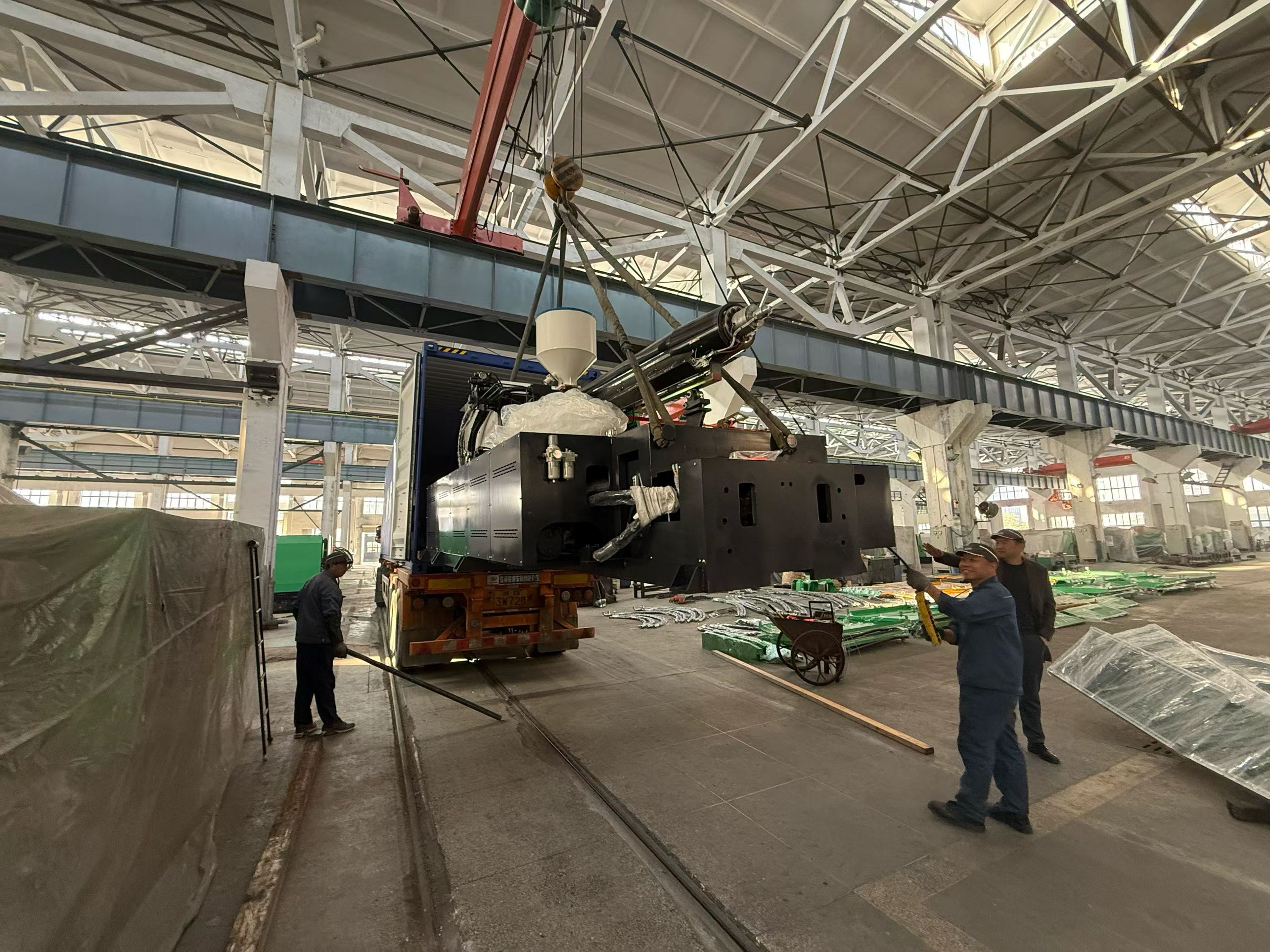
The 360-ton model provides a wider shot-weight envelope, making it a flexible platform for 48-cavity water and beverage preforms.
Traditional vs. modern approaches to preform capacity expansion
Historically, a producer raising output had two options: add another lower-cavity machine or replace the mold with a higher-cavity one if the machine allowed it. The older approach often used hydraulic machines without servo control, consuming more power and producing slower cycles. Modern PET preform injection machines pair servo-driven clamping and injection with dedicated PET screws, cutting cycle time and energy use. The injection molding technology segment represents 66.4% of the PET preform machine market in 2025, reflecting a broad industry shift toward injection-based preform systems.
One limitation worth stating: a 48-cavity machine is not the most productive configuration for every plant. For very high-volume water bottle production, 72- or 96-cavity systems deliver more preforms per square meter of factory space. Battery limits also apply: existing molds, blow molding lines, and preform handling equipment must be compatible with the new pitch or output. If the downstream blow molder cannot process the added preform volume, a 48-cavity line may create a bottleneck rather than resolve one. In these cases, a 48-cavity configuration is better seen as an intermediate step or a flexible platform, not the final peak capacity.
Market trend: from standardized to application-matched preform lines
The PET preform machine market is projected to grow from USD 9.9 billion in 2025 to USD 17.3 billion by 2035, according to Future Market Insights. Asia Pacific is the largest regional market for injection molding machines, holding a 41.2% revenue share in 2025. These trends point to continued investment in PET packaging capacity in developing markets, where water, beverage, and edible-oil demand is rising. High-output system leader Husky controls an estimated 55–60% of the global high-output PET preform system market, and premium brands such as Husky's HyPET 6e and Netstal's PET-LINE comply with CE, UL, ISO 9001, and EUROMAP 60.1.
Within this market, a practical middle segment exists for producers that need reliable output, better energy efficiency, and reasonable capital cost. This is the segment where 32–48–72 cavity servo-driven machines from Chinese manufacturers have gained traction, especially in Southeast Asia, Africa, and South America. The competitive logic is not zero-sum: a 48-cavity machine cannot match a 96-cavity high-output system on raw output, but it can offer a much shorter payback period for a smaller or growing plant.
Matching the machine to the bottle: application scenarios
| Application | Typical preform weight | Recommended machine class | Notes |
|---|---|---|---|
| Mineral water bottle (small/medium) | 10–18 g | YJPT-260 / YJPT-318 | 48-cavity molds are a common upgrade from 32 cavities |
| Beverage / juice bottle | 18–28 g | YJPT-318 / YJPT-360 | Higher shot weight gives more process stability |
| Carbonated soft drink preform | 25–35 g | YJPT-360 / YJHB-400 | Thicker walls raise per-cavity weight and injection demand |
| Oil bottle / packaging container | 20–35 g | YJPT-360 / YJHB-400 | Heavier preforms may require larger shot capacity |
| Custom / multi-purpose line | Varies | YJPT-360 | Wide shot range and large platen increase flexibility |
Case evidence: long-term reliable operation
A documented customer case from Yongjiang involves water and bottle-making factories using 20 units for PET preform making and water bottle production. The operation duration is reported as 20 years, with stable operation and low electricity consumption highlighted. The case supports the interpretation that a well-maintained preform injection machine can serve as a long-term production asset, but it is based on continuous-operation conditions and regular servicing of the PET screw and servo system.
Buyer interpretation: what the numbers mean for your decision
Some procurement teams treat tonnage as the only purchase criterion. That is incomplete. A 48-cavity PET preform line should be selected using the following cascade:
- Define the preform (weight, neck finish, wall-thickness distribution, resin grade).
- Calculate total shot weight per cycle.
- Define cycle-time target and required monthly output.
- Select the smallest machine that can comfortably handle the shot and mold size.
- Check energy consumption, plant power supply, and cooling infrastructure.
- Verify the machine model's certification status for the destination market.
- Confirm the supplier's quality-control process before shipment.
Selecting a 360-ton or 400-ton machine when a 318-ton machine would suffice increases capital cost and energy consumption. Selecting a 260-ton machine when shot weight requirements are too high will force a slower cycle or a lighter mold design that may not meet quality targets. The right size is the one that matches the full production envelope, not the largest advertised number.
Future outlook for 48-cavity preform machines
The 48-cavity configuration is unlikely to disappear from the market even as 72- and 96-cavity systems gain ground. It sits in an attractive cost-performance zone for emerging-market producers, smaller water plants, and contract manufacturers that need to switch between preform types. As servo technology becomes standard and hot-runner design improves, 48-cavity lines will deliver cycle times and energy figures that were previously available only in higher-cavity systems.
Another likely direction is tighter integration between the injection machine, mold supplier, and auxiliary equipment. A 48-cavity line is only as good as the mold's flow balance and the plant's drying and cooling infrastructure. Suppliers that can document power consumption, CE certification, and case references will be easier to evaluate than those that only quote cavity count and tonnage.
FAQ
A 48-cavity PET preform injection machine is an injection molding system configured with a 48-cavity hot-runner mold to produce 48 PET preforms per injection cycle. It is commonly used for water bottles, beverage containers, oil bottles, and carbonated soft drink preforms. The machine must have sufficient clamping force and shot weight to fill and hold all 48 cavities consistently.
For typical 18–30 g PET preforms, machines in the 260–400-ton clamping force range are commonly used. Yongjiang's YJPT-260 (260 tons, 1,400 g shot weight), YJPT-318 (318 tons, 1,900 g), YJPT-360 (360 tons, 3,450 g), and YJHB-400 (400 tons, 3,450 g) cover the practical range for 48-cavity molds. The exact requirement depends on preform weight, mold dimensions, and hot-runner design.
The cavity count determines the number of preforms produced per cycle. A 32-cavity machine is typically the entry-level multi-cavity option; 48 cavities provide a 50% output gain per cycle over 32 cavities; 72 and 96 cavities are aimed at high-volume producers who can justify higher mold costs and larger machines. Higher cavity counts require larger shot weight, more clamping force, and more precise hot-runner temperature control.
Yes. A 48-cavity PET preform injection machine is a common choice for mineral water bottle preforms weighing around 10–18 g. It offers a practical balance between output and mold cost, making it popular for growing water plants and regional bottling operations. The Yongjiang YJPT-260 and YJPT-318 are relevant models for this range.
It can, but the preform weight for carbonated soft drinks is usually higher because the wall must withstand internal pressure. For 25–35 g CSD preforms, a machine with higher shot weight such as the YJPT-360 or YJHB-400 is preferable. The selection should be based on total shot weight, not cavity count alone.
For the EU market, CE certification is the key compliance document. Yongjiang's PET preform injection molding machines hold CE certificate CE20260126MD, issued by ECM, under the 2006/42/EC Machinery Directive, with standards EN ISO 12100:2010, EN 60204-1:2018+A1:2020, and EN ISO 20430:2020. Buyers should verify the certification against the specific model they intend to purchase.
Pricing depends on tonnage, servo configuration, mold quality, and auxiliary equipment. Yongjiang does not publish list prices; quotation is provided based on the selected model, cavity configuration, and project scope. A one-week full test before shipment is included in the production process.
Yongjiang's typical lead time is 30–45 days for one unit, with a monthly production capacity of 200 units. OEM options such as voltage and logo customization are available. Buyers planning a new line should include lead time in their project schedule.
For a detailed technical overview of Yongjiang PET preform injection machines, download the company brochure: Yongjiang Injection Molding Machine Brochure (PDF).