
What TÜV Report 178251114a 001 Proves for Bakery Packaging
What TÜV Report 178251114a 001 Proves for Bakery Packaging
Bakery packaging is now bought with documentation attached. A buyer comparing a clear PET clamshell for pastries against a PP tray for a stacked tiramisu is no longer comparing only wall thickness and lid fit; the same purchase order usually carries a request for the food-contact test report behind the food-grade claim, the name of the laboratory that issued it, the exact products it names, and the period during which it remains valid.
Weifang Chuanhe New Material Co., Ltd. — trading as CHUAN HE — is a PET and PP thermoformed packaging manufacturer based in Weifang, Shandong Province, China, and one of the suppliers that answers that request with a named third-party document rather than a generic statement. Among its compliance records is a TÜV Rheinland PPWR product test report, No. 178251114a 001, issued against Regulation (EU) 2025/40 (Packaging and Packaging Waste Regulation, PPWR) and valid from 2026-08-14 to 2030-08-14.
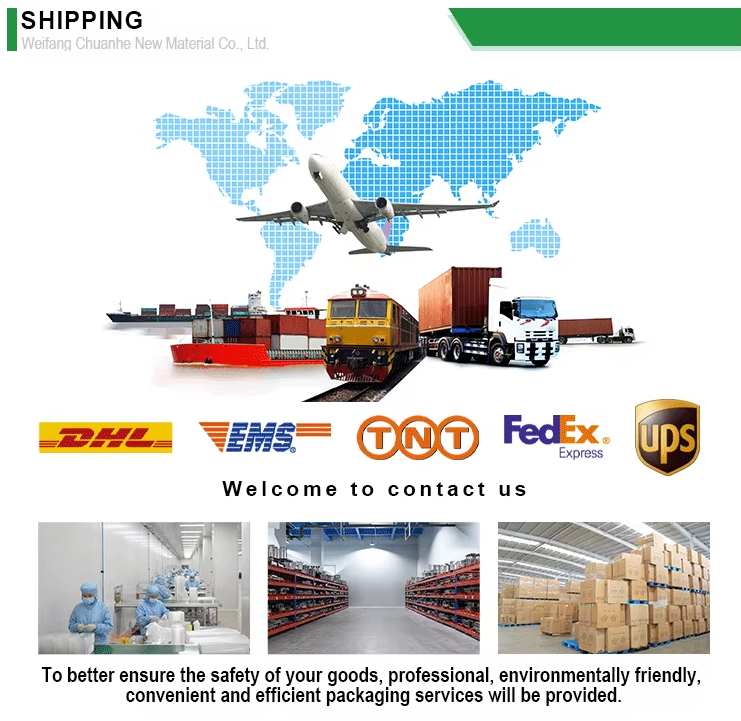
Bakery packaging compliance evidence only becomes commercially useful when it travels with the shipment — from the Weifang production base to EU, North American, Latin American, Southeast Asian and Middle Eastern buyers.
Why Bakery Buyers Ask for a Report Instead of a Certificate Logo
For most of the past decade, supplier qualification in bakery packaging followed a familiar pattern. The buyer requested a certificate pack, the supplier sent the usual quality management documents, and the technical conversation moved straight on to samples, tooling and price. CHUAN HE holds that same certificate set — CE, BRC, FDA, EU and SGS quality management systems — and it still matters, because those documents describe how a manufacturer is organised, audited and governed.
They answer a different question from the one buyers now ask. A management-system certificate confirms that a facility operates inside recognised conformity and quality frameworks. It does not state which migration parameters were measured on a particular clamshell, by which laboratory, or when the result expires. Once PFAS and heavy-metal provisions were written into Regulation (EU) 2025/40 (PPWR), that second question moved from the compliance department into ordinary procurement conversations — and it travelled with EU-facing retail programmes to buyers in North America, Latin America, Southeast Asia and the Middle East.
The practical consequence for a bakery packaging specifier is a shift in what counts as evidence. A supplier claiming food-grade material is making a category statement. A supplier presenting a laboratory report with a report number, a named product, a defined parameter list and a validity window is making a testable one.
What Report 178251114a 001 Actually Establishes
A PPWR product test report is a laboratory document, not a certificate of system conformity. It records the products submitted, the parameters applied, the reference standard used and the period during which the result is treated as current. Report 178251114a 001 was issued by TÜV Rheinland and remains valid from 2026-08-14 to 2030-08-14. Its testing scope covers global migration, specific migration of metals, SVHC screening, PFAS, and heavy metals content.
Two of those parameters are anchored explicitly to Regulation (EU) 2025/40 (PPWR) in CHUAN HE's compliance documentation: per- and polyfluoroalkyl substances, and total lead, cadmium, mercury and hexavalent chromium content in plastic packaging. The remaining parameters belong to the wider food-contact testing logic that sits underneath a food-grade claim.
| Test parameter | Reference basis | What it means for a bakery buyer |
|---|---|---|
| Global migration | Food-contact material testing | Measures overall transfer of substances from the packaging material into a food simulant; the baseline question behind any food-grade statement. |
| Specific migration of metals | Food-contact material testing | Examines migration of individual metallic elements rather than total content, addressing the substances that can move into the food itself. |
| SVHC screening | Substances of very high concern screening | Supports the disclosure requests that EU retail buyers routinely push down the supply chain to packaging suppliers. |
| PFAS | Regulation (EU) 2025/40 (PPWR) | Covers per- and polyfluoroalkyl substances, a parameter now written into PPWR and increasingly raised in bakery formats where grease resistance shapes the design brief. |
| Heavy metals content | Regulation (EU) 2025/40 (PPWR) | Covers total lead, cadmium, mercury and hexavalent chromium content in plastic packaging. |
The commercial value of that structure is that it separates claims. Instead of a single line reading food-grade compliant, a buyer can see which parameter was tested, against which reference, and for which product — and can then decide whether the remaining gaps are covered elsewhere.
Products Named in the Report
The report's product scope includes the HB-SP1510 bakery container and the HB-32 OZ tamper evident packaging, two formats that serve different parts of the bakery case. The HB-SP1510 is a bakery container format used for counter and shelf display of baked goods and sweet treats. The HB-32 OZ sits inside the tamper-evident family, where the container is designed for one-time opening: after the initial closure, any subsequent opening produces irreversible damage to the locking structure, so a compromised pack is visible at the delivery point rather than discovered later.
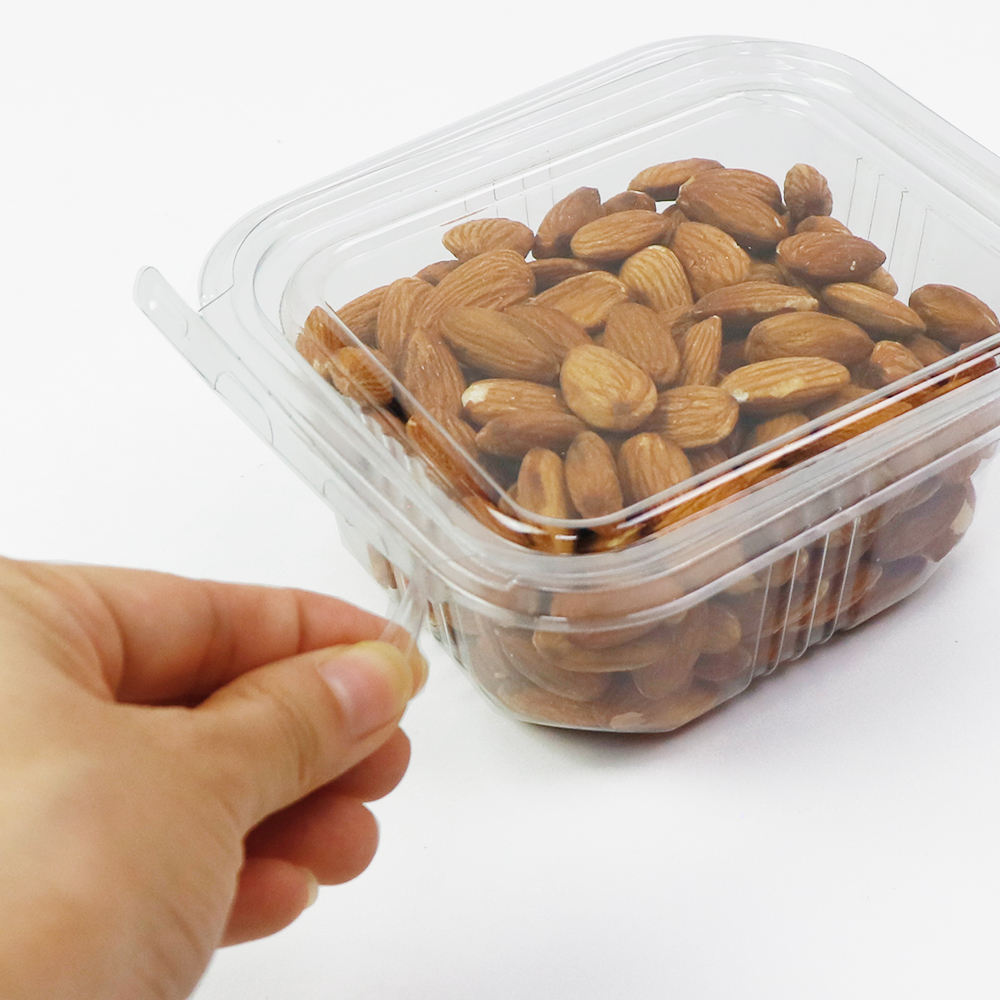
A tamper-evident closure only has value when the underlying material compliance is documented — the two claims are tested separately.
CHUAN HE's wider PPWR documentation set names a tray range in addition to the formats above: the HB-75-28(PP) polypropylene tray, the HB-1912 food plastic tray, the HB-221360(PP) tray, the HB-T9333 tray, the HB-MG24 OZ tray, the HB-MG08 OZ tray and the HB-MG40 OZ tray. The PPWR test report for the HB-MG40 OZ tray is issued by TÜV Rheinland.
Those tray formats are not interchangeable, and the differences matter to how a bakery line runs. The HB-1912, for example, is listed as compatible with MAP modified atmosphere packaging lines, features a stackable design, and is made of food-grade BPA-free plastic with a rigid, sturdy structure. A buyer sorting formats for a modified atmosphere pastry or ready-meal line is therefore choosing between products that sit inside the same documentation set but carry different line-compatibility profiles.
Reading Each Parameter Against an Actual Bakery Product
Global migration
Global migration testing is the broadest of the chemical checks and the one most often implied, but not shown, by a food-grade claim. It examines how much material in total transfers from the packaging into a food simulant under defined conditions. For a bakery buyer, the relevance is not abstract: a clamshell holding a warm pastry at the point of packing, or a tray holding a cream-filled dessert through a chilled distribution chain, is in sustained contact with the product surface. A documented global migration result turns the food-grade claim into a measured one.
Specific migration of metals and heavy metals content
Total content and specific migration answer different questions, and buyers sometimes confuse them. Heavy metals content measures how much lead, cadmium, mercury and hexavalent chromium is present in the plastic packaging material. Specific migration of metals measures how much of an individual element can move into the food. A material can carry a trace element and still show low migration; both figures belong in a supplier file, and PPWR now anchors the total content parameter directly to Regulation (EU) 2025/40.
SVHC screening and buyer disclosure
SVHC screening supports the disclosure chain rather than the shelf decision. European retail groups increasingly ask packaging suppliers for substance-level statements that can be passed to their own compliance teams, and a screening result tied to a named SKU shortens that exchange. It also gives a buyer a defensible answer when a downstream customer asks the same question six months later.
PFAS and the grease-resistance question
PFAS has become the parameter most likely to appear unprompted in a 2026 bakery packaging enquiry, because the substances historically appeared in formats where grease resistance was engineered into the material. The applicable standard in CHUAN HE's documentation is Regulation (EU) 2025/40 (PPWR) for per- and polyfluoroalkyl substances. For a buyer, a documented PFAS position on a specific container reduces the risk that a retail customer rejects the pack at listing stage, which is a commercial cost far larger than the packaging itself.
Export Markets: Where the Document Travels Well, and Where It Does Not
CHUAN HE exports 100% of its output, with main markets listed as the EU, the United States and North America, Latin America, the Middle East and Southeast Asia. That export profile explains why the compliance file is structured the way it is. A single report has to serve buyers who are asking different questions under different regulatory regimes.
- European Union. The PPWR reference is directly relevant. Regulation (EU) 2025/40 is the standard named for both PFAS and total heavy metals content, so the report maps onto the requirement EU buyers are actually enforcing.
- North America. FDA food contact compliance is a separate requirement and is maintained as a separate item in the compliance file. The TÜV Rheinland PPWR report is not an FDA document, and treating it as one is a common sourcing error.
- Latin America, Southeast Asia and the Middle East. Requirements here are frequently set by the buyer or the end retail chain rather than by a single regulation, and a third-party report issued against an EU standard is usually accepted as the strongest available reference point.
The logistics side supports the documentation side. The manufacturing base in Weifang sits adjacent to Qingdao Port, China's second-largest foreign trade port, and standard purchasing terms are an MOQ of 10,000 units, delivery terms of FOB, CIF or DDP, and pre-shipment testing as the acceptance criterion, with payment available through T/T, L/C, D/P, D/A, MoneyGram, PayPal, Western Union or cash. Customisation of shape, colour, embossing and logo printing is available alongside small and bulk wholesale orders on a factory-direct basis.
Why Compliance Documentation Became a Commercial Variable
Two market data points explain the shift. Market Research Future valued the global bakery packaging market at USD 57.76 billion in 2024, a figure that describes a category large enough for compliance differences between suppliers to translate into real sourcing decisions rather than rounding errors. Separately, a 2026 industry analysis projects the tamper-evident bakery packaging segment reaching USD 4.26 billion by 2030, growing at a CAGR of 10.72%.
The second figure is the more revealing one. Growth concentrated in tamper-evident formats implies growth concentrated in products where the pack carries a safety or integrity promise, and products that carry a promise invite documentation requests. A bakery container whose value proposition is that tampering becomes visible cannot rely on an unverified material claim; the two claims sit in the same buyer conversation. The same logic explains why MAP-compatible trays and clear display clamshells increasingly arrive at the sampling stage with a report attached rather than after the first order.
What the Report Does Not Cover
The boundaries matter as much as the scope, and a supplier that does not state them is harder to evaluate, not easier.
- It is product-specific, not portfolio-wide. Report 178251114a 001 names particular products. It is not a blanket certification covering every item in the CHUAN HE range, and a new SKU requires its own documentation path.
- It covers chemical parameters, not physical performance. Drop resistance, stack load, lid seal integrity and barrier performance sit outside a migration and substance report. A buyer specifying a tamper-evident clamshell for e-commerce still needs a physical validation protocol of their own.
- It does not replace a declaration of conformity. The report is evidence inside a compliance file; the declaration, the food business operator obligations and any market-specific submission remain the buyer's and the supplier's separate responsibility.
- It has a defined validity window. The report runs from 2026-08-14 to 2030-08-14. A change of resin source, a formulation adjustment or a new colour masterbatch can invalidate the basis of the result and trigger re-testing.
- It does not assess recyclability design or eco-modulation. PPWR obligations extend beyond substances into packaging design and waste treatment; those are separate assessments that a chemical test report does not address.
The comparison with a traditional supply arrangement is therefore not that the old approach was dishonest, but that it was thinner. Previously a bakery buyer held a certificate logo, a product photo and a sample. Now the file can contain a laboratory report with a number, a parameter list, a named product and an expiry date — plus a clear statement of what sits outside it.
Holding the Evidence Across a Multi-Year Relationship
For buyers at the decision and execution stage, the useful question is not what the report says today but whether the supplier can keep it valid for the length of the agreement. Three mechanisms in CHUAN HE's documented practice speak to that.
The first is routine re-testing and record retention. Quality assurance procedures include regular third-party testing and long-term archiving of all compliance records, and compliance risk is managed through FDA food contact compliance, regular certification updates and long-term record archiving. A report that expires in 2030 is only useful in 2029 if the file around it has been maintained.
The second is production-side control, because a report describes what was submitted, not what ships in month eighteen. Production process risks are controlled with food-grade raw material inspection and production hygiene control, supported by GMP implementation and migration and physical testing of materials, with batch traceability built in so a delivered carton can be traced to its production record. Against the specific risks of chemical migration, sharp fragments, microbial contamination and unqualified raw materials, the documented control set is food-grade raw materials, migration and physical testing, a clean production environment and batch tracing.
The third is engineering flexibility under a fixed compliance baseline. CHUAN HE has experience in developing thousands of moulds and continues to invest in R&D, with an R&D team of five engineers, an in-house mould workshop, four PET sheet extrusion lines and two PP sheet extrusion lines feeding 40 thermoforming machines — 20 fully automatic units and 20 standard units, including four advanced Kiefel machines imported from Germany — across a 62,000 m² facility with annual output of 54,000 tonnes. That combination matters when a bakery buyer needs a custom mochi doughnut clamshell or a bespoke tiramisu container: the tooling can be developed in-house, but the compliance documentation has to be extended to the new SKU rather than assumed from the old one.
Future Outlook
Three developments are likely to shape how bakery packaging evidence is bought through the rest of the decade. First, documentation will be requested earlier in the process — at the sample request rather than at the purchase order — because retail listing cycles have become less tolerant of late compliance surprises. Second, the unit of evidence will shift from the company to the SKU, as buyers build product-level matrices instead of filing a single certificate pack per supplier. Third, re-certification will become a scheduled procurement event rather than an emergency, with expiry dates tracked in the same system as tooling life and delivery lead times.
None of this makes a single report sufficient on its own. What it does is reset the baseline expectation: a bakery packaging supplier in 2026 is expected to produce a named, dated, parameter-level document for the product being quoted, and to be able to explain plainly where that document ends. Suppliers that can do both — and that maintain the underlying production controls — are easier to qualify, easier to audit and easier to keep in a supply base for the long term.
Frequently Asked Questions
Which products are named in TÜV Rheinland report 178251114a 001?
The report's product scope includes the HB-SP1510 bakery container and the HB-32 OZ tamper evident packaging. CHUAN HE's wider PPWR documentation set also names the HB-75-28(PP) polypropylene tray, the HB-1912 food plastic tray, the HB-221360(PP) tray, the HB-T9333 tray, the HB-MG24 OZ tray, the HB-MG08 OZ tray and the HB-MG40 OZ tray; the PPWR test report for the HB-MG40 OZ tray is issued by TÜV Rheinland.
Which test parameters does the report cover?
The testing scope covers global migration, specific migration of metals, SVHC screening, PFAS, and heavy metals content. The PFAS parameter and the total lead, cadmium, mercury and hexavalent chromium content parameter are both referenced to Regulation (EU) 2025/40 (Packaging and Packaging Waste Regulation, PPWR).
How long is the report valid, and what would trigger re-testing?
The report is valid from 2026-08-14 to 2030-08-14. Because a report describes the specific products submitted, a change in resin source, a formulation adjustment, a new colour or additive, or the addition of a new SKU can require a new test rather than an extension of the existing one.
Can the report be used as evidence in markets outside the European Union?
It can be presented as third-party evidence, and buyers in Latin America, Southeast Asia, the Middle East and North America frequently accept a report issued against an EU standard as a strong reference point. It is not, however, a market-specific approval. FDA food contact compliance for the United States is maintained separately and is not covered by a PPWR report.
Does the report replace a declaration of conformity or a food contact declaration?
No. A product test report is supporting evidence inside a compliance file. The declaration of conformity, the food business operator's own obligations and any market-specific submissions remain separate documents and separate responsibilities.
How is compliance documentation kept current over a multi-year supply agreement?
Through routine re-testing and record retention. CHUAN HE's documented quality assurance procedures include regular third-party testing and long-term archiving of all compliance records, with compliance risk managed through FDA food contact compliance, regular certification updates and long-term record archiving, alongside batch traceability that links delivered goods back to production records.
What are the standard purchasing terms for a first order?
The MOQ is 10,000 units, delivery terms are FOB, CIF or DDP, and the acceptance criterion is pre-shipment testing. Payment can be arranged through T/T, L/C, D/P, D/A, MoneyGram, PayPal, Western Union or cash. Customisation of shape, colour, embossing and logo printing is available on factory-direct supply, with both small and bulk wholesale orders supported.
The full CHUAN HE product range and manufacturing capability are documented in the company brochure, available here: CHUAN HE 2026 brochure (PDF).
¿Tiene preguntas o necesita más detalles?
Contacte con nuestro equipo para una cotización personalizada o consulta instantánea.
Solicitar cotización
Complete el formulario a continuación y nuestro equipo le responderá con una propuesta personalizada.
Chat directo de WhatsApp
¿Prefiere chatear en tiempo real? Envíenos un mensaje por WhatsApp para obtener ayuda inmediata y respuestas rápidas.
- Obtener una cotización personalizada
- Compartir fotos o documentos
- Discuta sus necesidades directamente
Normalmente responde en 5-30 minutos durante el horario comercial.