
What Paper Mills Ask Before Approving a Sizing Agent: JH-600, JH-325 and JH-200
Procurement and Technical Reference
A sizing agent is approved twice: once on paper, and once on the purchase order. The paper trial shows whether the chemistry fits the machine. The purchase order decides whether every later batch will fit the same way. This Q&A maps the procurement terms paper mills use to the published batch parameters of three JHDA surface sizing agents, and sets out how to evaluate a JHDA polymeric dry strength agent as a replacement path for imported dry strength resin.
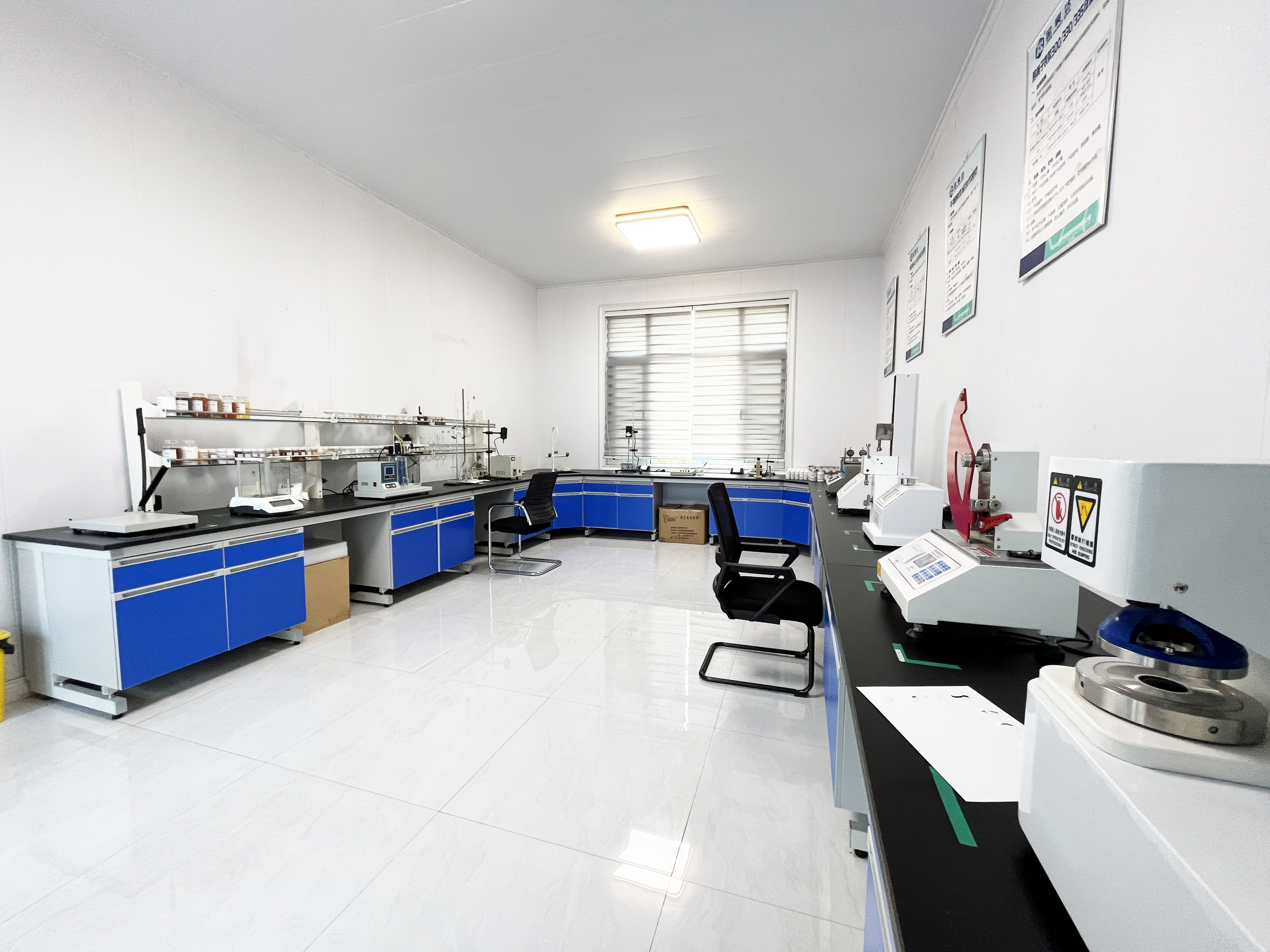
Why sizing agent approval is a specification decision, not a price decision
Papermaking chemicals are often bought against a wet-ton price, but sizing performance is driven by the active solids delivered to the size press, the ionic charge in the starch system, and the stability of the emulsion under shear. A lower price per wet ton can disappear when solids are lower, dose rises, the starch kitchen foams, or the machine stops to clean deposits.
The practical alternative is to approve a sizing agent against a short, testable specification: solid content, pH, viscosity at 25°C, ionic type, shelf life, compatibility with the plant starch and wet-end chemicals, and a functional trial on the target grade. Those are the terms that should be written into the purchase order and checked on every certificate of analysis.
This matters for both surface sizing and internal sizing. A surface sizing agent such as JH-600, JH-325 or JH-200 is applied at the size press with starch. An internal sizing agent such as JH-103 AKD is added to the pulp. They solve different problems and are not interchangeable.
The procurement terms that should appear in a purchase order
Buyers often receive a TDS, a COA and a price sheet, but the purchase order may contain only a product name and a quantity. That leaves the acceptance decision to whoever receives the drum. A better purchase order links each commercial term to a batch test and a disposition rule.
| Term | What it tells the buyer | What to write into the purchase order |
|---|---|---|
| TDS | Typical properties and recommended use | Reference document; not a batch release |
| COA | Batch-specific measured values | Required per lot; compare with agreed limits |
| Solid content | Non-volatile mass and dose basis | Test method, tolerance band and sample point |
| pH | Product acidity and compatibility indicator | Range, meter calibration and temperature |
| Viscosity at 25°C | Pumpability and film uniformity | Test temperature, spindle or speed, and limit |
| Ionic type | Charge compatibility with starch and wet-end | Declared value; confirm by jar test |
| Shelf life | Inventory rotation and storage limit | FIFO rule and re-test rule |
| MOQ and lead time | Planning and working capital | Confirm before trial |
| Documentation | Customs, safety and compliance | COA, TDS, MSDS, packing list, certificate of origin, inspection report |
| Sample | Trial validation | Agree sample size and retain a reference |
Batch parameters and acceptance criteria for JH-600, JH-325 and JH-200
The three products are all liquid surface sizing agents, but they are not variants of one formula. JH-600 is a cationic moisture-resistant SAE surface sizing agent. JH-325 is an anionic SAE surface sizing agent positioned for cultural paper. JH-200 is a cationic surface AKD sizing agent offered at two solids levels. The table below uses published product data as the starting point for a contract specification.
| Parameter | JH-600 | JH-325 | JH-200 |
|---|---|---|---|
| Product type | Moisture-resistant SAE surface sizing agent | Anionic surface sizing agent for cultural paper | Surface AKD sizing agent |
| Appearance | Light brown to dark brown liquid | White to light brown liquid | Milky white to slightly yellow liquid |
| Solid content | 30 ± 1% | 25.0 ± 1.0% | 20.0 ± 1.0% or 30.0 ± 1.0% |
| pH | 2.0–5.0 | 2.0–5.0 | 2.0–5.0 |
| Viscosity at 25°C | below 50 cps | ≤50 cps | ≤50 cps |
| Ionic type | Cationic | Anionic | Cationic |
| Solubility | Soluble in water | Soluble | Soluble |
| Shelf life | 6 months | 6 months | 3 months |
| Carrier chemistry | Styrene acrylic | Anionic styrene acrylic | AKD wax powder |
Acceptance should be based on the tolerance band, not on a single target number. For JH-600, 30 ± 1% means a batch between 29% and 31% is within the published band. For JH-325, 25.0 ± 1.0% means 24.0% to 26.0%. For JH-200, the buyer must first confirm whether the ordered grade is 20.0 ± 1.0% or 30.0 ± 1.0%; the acceptable band is then 19.0% to 21.0% or 29.0% to 31.0%, respectively.
The pH range of 2.0–5.0 is the product pH, not the paper machine pH. It tells the buyer that the emulsion is acidic and should be handled accordingly. Viscosity is specified at 25°C because emulsion viscosity is temperature-sensitive; a reading taken at a different temperature is not a like-for-like comparison. JH-600 is listed below 50 cps, while JH-325 and JH-200 are listed at ≤50 cps.
Appearance is useful for identifying gross contamination or phase separation, but it is not a release test on its own. A batch can look acceptable and still fail on solids, pH or viscosity. The COA should show the measured values, the test method and the batch number.
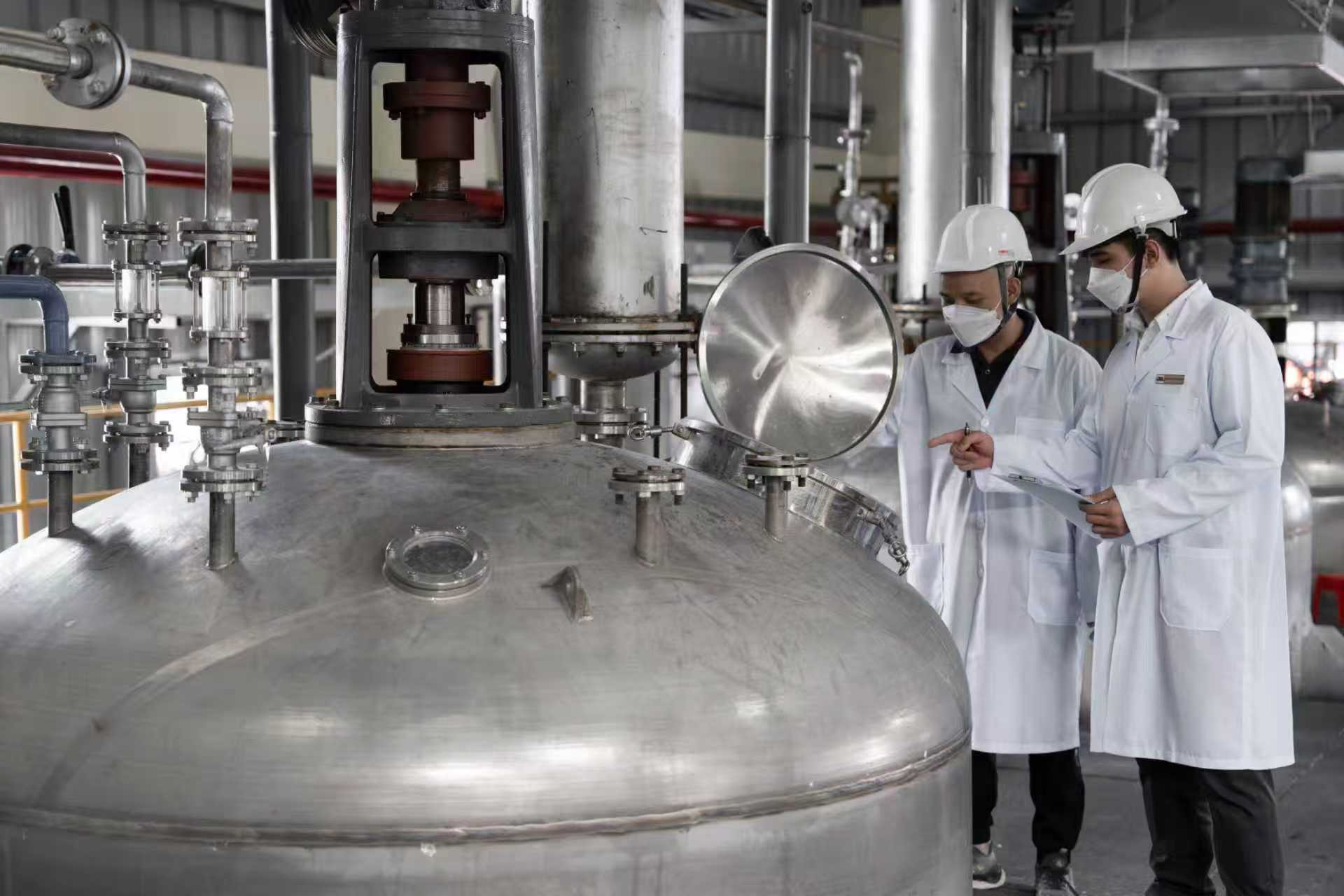
Compatibility with retention aids, defoamers and industrial starch
Surface sizing is a starch system before it is a sizing system. The sizing agent must mix with the plant starch, survive the shear of the size press, and not destabilize the wet-end chemistry that carries fiber and filler to the wire. Compatibility is therefore a charge and formulation question, not only a mixing question.
JH-600 is described as compatible with common industrial starch and can be mixed with starch liquid for surface sizing. JH-325 is an anionic styrene-acrylic emulsion that reacts and crosslinks with starch components and is described as compatible with various retention aids and defoamers. JH-200 is compatible with oxidized starch and cationic modified starch and can be blended with industrial starch; its published compatibility also covers retention agents, defoamers and bentonite in neutral and alkaline systems.
The ionic type is the first screen. JH-325 is anionic. JH-600 and JH-200 are cationic. A mill that swaps one for another without checking the starch charge and the wet-end retention system may see flocculation, deposits or a loss of sizing efficiency. The second screen is a jar test using the plant's own starch, dilution water and wet-end chemicals.
Shear resistance, foaming and runnability on high-speed size presses
High-speed size presses subject the emulsion to mechanical shear, temperature change and repeated circulation. If the emulsion breaks, the result is not only a chemical loss; it can be foam pinholes, streaks, deposits on the size roll, or uneven water resistance across the web. Low foaming is therefore a runnability specification, not a cosmetic claim.
JH-200 is described as having excellent mechanical shear stability and low foaming, and as suitable for stable operation on high-speed sizing machines without bubble pinholes or stripes. JH-325 is described as having excellent shear resistance and low foaming, with no bubble pinholes or streaks during continuous production. JH-600 is described as low foaming with superior emulsion stability and no delamination during storage and pipeline circulation.
These statements are product-positioning claims, not a guarantee for every machine. The mill should still check pump type, dilution procedure, return-line design and defoamer dose. A low-foaming sizing agent cannot compensate for a pump that is entraining air.
Acidic or neutral: what changes in product selection
Acidic and neutral papermaking are system conditions, not product labels. The same surface sizing agent can be used in more than one system if the charge and starch chemistry are compatible. The product data make this clearest for JH-325, which is described as suitable for both the acidic sizing process with aluminum sulfate and the modern neutral papermaking system. JH-200 is described as suitable for neutral and alkaline papermaking, and JH-103 is the internal AKD grade positioned for neutral and alkaline systems.
JH-600 is a cationic surface sizing agent designed around moisture resistance and starch compatibility. Its published pH of 2.0–5.0 should not be read as a statement that the paper machine runs at that pH. For an acidic mill considering JH-600, the practical check is a jar test with the plant alum dose, starch and retention system, followed by a size-press trial. For a neutral mill, the same logic applies to charge balance and starch selection.
Moving a mill from acid to neutral sizing is a system change, not a drop-in product switch. It affects alum, retention chemistry, corrosion, drying and the choice between internal and surface sizing. The product shortlist should follow the system decision, not lead it.
Application fit: packaging, printing and writing, and recycled pulp
The right product depends on the paper grade, the furnish and the failure mode the mill is trying to prevent. A moisture-resistant packaging grade has a different priority from a copy paper grade that is losing surface strength on a high-speed offset press.
| Application need | Candidate | Why it may fit | What to check |
|---|---|---|---|
| Moisture-resistant packaging, corrugated board, boxboard, rainy-season storage, long-distance export | JH-600 | Cationic moisture-resistant SAE; forms a dense film with starch; described as retaining ring crush under high humidity | Starch type and cationic charge; 6-month shelf life |
| Surface water resistance and printability in neutral or alkaline systems | JH-200 | Surface AKD; sizing effect after drying; low foaming; compatible with oxidized and cationic modified starch | Confirm 20% or 30% solids grade; 3-month shelf life |
| Printing and writing paper, offset, copy and book paper in acidic or neutral systems | JH-325 | Anionic SAE; film formation; surface strength and printability | Anionic compatibility with wet-end chemicals |
| Internal water resistance in neutral or alkaline systems | JH-103 | Internal AKD; not a surface product | Do not use as a direct replacement for surface sizing |
| Dual water resistance and surface strength | JH-WH3364 | Composite AKD and styrene-acrylic; weak cationic | Formula fit and 4-month shelf life |
| Strength enhancement | JHDA dry strength agent range | Dry strength, ring crush, tensile and burst targets | Trial against the current resin |
Recycled pulp is a special case because the furnish itself varies. JH-600 is described as adaptable to virgin wood pulp, chemical pulp, mechanical pulp and compound recycled pulp. JH-325 is described as adaptable to wood pulp, chemical pulp, mixed recycled pulp and mechanical pulp. JH-200 is described as working with wood pulp, chemical pulp, mechanical pulp and blended pulp. The common message is not that any product fits any furnish; it is that the supplier should confirm the furnish before the trial.
Evaluating a JHDA dry strength agent against imported dry strength resin
Imported dry strength resins from suppliers such as Kemira are established in many mills, and Kemira, BASF and Arakawa Chemical Industries are identified as major global competitors in the sizing agent market. A replacement proposal should therefore be treated as a qualification project, not a purchasing formality. JHDA positions its portfolio as a cost-performance alternative to high-cost imported additives, including products from Kemira and BASF. That positioning is a reason to test, not a result to assume.
Start with a baseline. Record the current resin's solids, pH, viscosity, ionic type, addition point, dose and the paper grade targets: ring crush, burst, tensile, internal bond, retention and drainage. Then compare the candidate on equal solids and equal performance, not on wet price alone. A product with lower solids may require a higher wet dose to deliver the same active polymer.
JHDA's dry strength agent range includes a liquid polymeric grade listed at 15.0/20.0 ± 1.0% solids, pH 3.0–6.0, viscosity 4000.0–12000.0 cps and amphoteric ionic type, as well as solid grades listed at ≥95.0% active ingredient with cationic charge. The liquid and solid forms suit different handling systems, so the first decision is which form the mill can dose accurately and store safely.
The trial should run in three stages: a laboratory screen on the plant furnish, a pilot or beaker trial with the plant retention system, and a machine trial on one grade. Keep the imported resin in dual supply until the machine trial has met the agreed targets for a full production cycle. JHDA supports this stage with free trial samples, a pilot laboratory, 20 R&D engineers and on-site technical tuning. Its production system is listed at 8,000 MT monthly capacity, 100,000 tons annual output and a production time of 4 work days, with an MOQ of 1 MT. Those numbers support supply planning, but they do not replace a trial.
The cost case should be built per ton of paper, not per ton of chemical. Include freight, inventory, dose, downtime risk and the cost of any additional retention aid or starch adjustment. If the JHDA product meets the paper targets at a lower landed cost per ton of paper, the replacement is financially attractive. If it meets the targets only at a higher dose, the wet-price advantage may disappear.
What a batch acceptance record should contain
A useful acceptance record is short enough to complete at the goods-in gate and specific enough to support a complaint. It should identify the batch, the test results, the disposition and the reference sample.
| Record field | Why it matters |
|---|---|
| Batch number and production date | Traceability and shelf-life rotation |
| Product name and grade | Includes the JH-200 solids level |
| Appearance | Gross contamination or phase separation |
| Solid content and test method | Dose basis and contractual tolerance |
| pH and meter calibration | Compatibility and handling |
| Viscosity at 25°C and spindle or speed | Pumpability and comparability |
| Ionic type as declared | Charge compatibility |
| Shelf life and storage location | Inventory control |
| COA reference and retained sample reference | Dispute resolution |
| Disposition and operator | Accept, accept with deviation, or reject |
Market context: why specification discipline is becoming more important
The global paper sizing agent market is valued at approximately USD 3.8 billion in 2025 and is projected to reach USD 5.9 billion by 2033, with a CAGR of 5.8%, according to Dataintelo. SNS Insider reports that synthetic sizing agents, including AKD and ASA, held a 54.5% market share in 2024, while liquid sizing agents held 57.8% due to ease of application. Dataintelo also places Asia Pacific at a 42.3% revenue share in 2025 and estimates that AKD accounts for about 48% of synthetic sizing agent volume globally.
These figures should be read as directional, not exact. Estimates in the source set range from USD 3.16 billion (Market Research Future) to USD 3.95 billion (SNS Insider), and CAGR projections range from 4.14% to 5.8% depending on scope. The direction is consistent: sizing demand is large, Asia-Pacific is a major production and consumption region, and synthetic surface sizing remains a significant part of the mix.
Rosin sizing agents still accounted for 32.4% of market revenue in 2025, according to Dataintelo, which is a reminder that acidic rosin-alum systems remain in use. Solid sizing agents are also projected to grow at a 5.11% CAGR through 2032, according to SNS Insider, although the JH-600, JH-325 and JH-200 products discussed here are liquid emulsions. For buyers, the implication is not that one chemistry will replace another. It is that more supply options and more grade changes make batch-level specification more valuable.
Limits and trade-offs buyers should not ignore
JH-200 has a published shelf life of 3 months, shorter than the 6 months listed for JH-600 and JH-325. That is a real constraint for slow-moving grades, remote warehouses or long ocean freight. The product may still be the right choice for surface water resistance in a neutral or alkaline system, but the inventory plan must match the shelf life.
JH-600 and JH-325 are not interchangeable. JH-600 is cationic and positioned around moisture resistance; JH-325 is anionic and positioned around cultural paper surface strength and printability. A mill that changes from one to the other without checking starch charge and wet-end chemistry is running an uncontrolled trial.
Surface sizing does not replace internal sizing. JH-200 is a surface AKD sizing agent, not an internal AKD. For internal water resistance in neutral or alkaline systems, JH-103 is the relevant JHDA product. Surface sizing also does not replace a dry strength agent; if the target is ring crush, tensile or burst, the dry strength agent range is the correct place to start.
Food-contact packaging needs a separate check. JHDA holds ISO9001 and ISO14001 certification and SGS product compliance test reports, and its profile states SGS food contact safety testing for packaging paper chemicals. That is not the same as a blanket food-grade approval for every product and every destination. The buyer should request the specific test report and verify the finished paper against the applicable regulation, such as FDA 21 CFR in the United States or Regulation (EC) No 1935/2004 in the EU.
Future outlook
The direction of travel is toward more surface sizing, more recycled fiber and more demand for batch evidence. Digital printing is one driver: SAE surface sizing agents are described as essential for improved printability in digital printing. Recycled pulp is another: as furnish variability rises, the sizing system has to be tuned more often, and a supplier that can support a trial becomes more useful than a supplier that only sells a drum.
Bio-based sizing agents reached 38% of global consumption in 2024, according to Market Reports World, which suggests that sustainability claims will increasingly be part of procurement review. Those claims should be tested against the same discipline as performance claims: which product, which batch, which test report and which destination regulation.
JHDA is expanding its technical base. A large-scale professional R&D laboratory is under construction inside the central production workshop of its headquarters, and the company has an overseas supporting production entity, CRM Chemical Technology Co., Ltd., in Long An Province, Vietnam, to shorten delivery for ASEAN clients. For buyers, that is relevant to the dry strength replacement question because local stock and pilot support reduce the cost of qualification.
FAQ: sizing agent procurement and acceptance
What is the difference between a TDS and a COA for a sizing agent?
A TDS describes typical properties and recommended use; it is a reference document. A COA reports the measured values for a specific batch. Approval should be based on the COA against the agreed specification, not on the TDS alone.
How should a mill interpret solid content 30 ± 1%?
It is a tolerance band. For JH-600, a batch between 29% and 31% is within the published band. For JH-325, the band is 25.0 ± 1.0%, or 24.0% to 26.0%. For JH-200, confirm whether the ordered grade is 20.0 ± 1.0% or 30.0 ± 1.0%; the band is then 19.0% to 21.0% or 29.0% to 31.0%. The test method and sample handling should be agreed in the purchase order.
Are JH-600, JH-325 and JH-200 interchangeable?
No. JH-600 is a cationic moisture-resistant SAE surface sizing agent. JH-325 is an anionic SAE surface sizing agent positioned for cultural paper. JH-200 is a cationic surface AKD sizing agent offered at two solids levels. Ionic type, starch compatibility, shelf life and target performance differ, so a swap requires a compatibility test and a machine trial.
Can JH-325 be used in both acidic and neutral papermaking systems?
Yes. Product data describe JH-325 as suitable for the acidic sizing process with aluminum sulfate and for the modern neutral papermaking system. It is anionic, so the mill should confirm compatibility with cationic retention aids and other wet-end chemicals before the trial.
Is JH-200 an internal sizing agent?
No. JH-200 is a surface AKD sizing agent applied with starch at the size press. For internal sizing in neutral or alkaline systems, JH-103 is the AKD internal sizing agent in the JHDA range.
What causes foam pinholes, and how do low-foaming sizing agents help?
Foam pinholes usually come from air entrainment in the starch or sizing circulation. A low-foaming sizing agent reduces the tendency to stabilize foam, but it cannot fix a pump or return line that is drawing in air. JH-600, JH-325 and JH-200 are described as low foaming; JH-200 and JH-325 also emphasize shear resistance for high-speed size presses.
How can a mill evaluate a JHDA dry strength agent against imported Kemira resin?
Build a baseline with the current resin, compare the candidate at equal solids and equal paper performance, and run laboratory, pilot and machine trials. Calculate cost per ton of paper, not wet price per ton of chemical. Keep dual supply until the machine trial has met the target for a full production cycle. JHDA offers free trial samples and pilot laboratory support for this stage.
What are the storage limits for JH-600, JH-325 and JH-200?
JH-600 and JH-325 have a published shelf life of 6 months. JH-200 has a published shelf life of 3 months. Use first-in, first-out rotation, store within the supplier's recommended conditions, and re-test before use if the shelf life has been exceeded.
Reference: JHDA company and product brochure (PDF).
¿Tiene preguntas o necesita más detalles?
Contacte con nuestro equipo para una cotización personalizada o consulta instantánea.
Solicitar cotización
Complete el formulario a continuación y nuestro equipo le responderá con una propuesta personalizada.
Chat directo de WhatsApp
¿Prefiere chatear en tiempo real? Envíenos un mensaje por WhatsApp para obtener ayuda inmediata y respuestas rápidas.
- Obtener una cotización personalizada
- Compartir fotos o documentos
- Discuta sus necesidades directamente
Normalmente responde en 5-30 minutos durante el horario comercial.