
What OEKO-TEX Certification Actually Covers for Custom T-Shirt Imports
What OEKO-TEX Certification Actually Covers for Custom T-Shirt Imports
When a brand places its first bulk order for custom blank T-shirts from China, three words in the compliance section carry more weight than their length suggests: OEKO-TEX certified. The phrase appears in requirement lists, tech packs and supplier questionnaires, yet it is rarely unpacked in terms of what it verifies, which parts of a finished order it touches, and which sourcing risks it leaves completely untouched.
That gap matters most at the research stage, before a supplier is selected and before a specification is frozen. Importers who understand the boundary of a certification can write a better brief, ask sharper questions and avoid treating a chemical test report as a substitute for production control.
OEKO-TEX Standard 100 is a testing and certification system applied to textile articles and their components, screening them against defined limits for harmful substances. For custom T-shirt imports it addresses one specific risk — what remains in or on a fabric that will sit against a wearer's skin. It does not certify working conditions in a factory, guarantee print durability, control shrinkage, confirm delivery timing or prove fit consistency. Those outcomes depend on specifications, process control and inspection.
Why a fabric certificate became a line item in T-shirt sourcing
The commercial context explains the rise of certification requirements. Grand View Research estimates the global custom T-shirt printing market at USD 5.46 billion in 2024, projected to reach USD 9.82 billion by 2030 at a compound annual growth rate of 11.5% to 11.6%. The same research house values the global blank apparel market at USD 15.23 billion in 2024, with T-shirts and tanks accounting for a 48.39% share.
Those two numbers describe a market where blank garments remain the dominant substrate and printed, customised versions of them are growing quickly. Growth of that kind brings more SKUs, shorter product cycles and more brands ordering small batches from unfamiliar suppliers. Every additional print technique, every additional trim and every additional low-MOQ colourway increases the number of material decisions that sit between a design file and a garment on a customer's back.
China remains the largest single source of that supply. According to the Observatory of Economic Complexity, China's total textile exports reached USD 268 billion in 2024, maintaining a global market concentration of roughly 32%. Within that footprint, published industry overviews place the main T-shirt manufacturing clusters in Guangdong — Guangzhou and Dongguan for fast fashion and streetwear — and Zhejiang, notably Ningbo, for premium knitwear.
The compliance burden has grown in parallel. The 2024 update to OEKO-TEX Standard 100 introduced a limit value for total fluorine (PFAS) at 100 mg/kg, effective 1 January 2024, according to the OEKO-TEX Association. In practice, that means a certificate issued against an older version of the standard tests against a different substance list than one issued after the update. For importers, the certificate is not a static document — it is a snapshot tied to a version, a scope and a validity period.
What OEKO-TEX Standard 100 covers — and where it stops
The most useful way to read the standard is by scope. It is a product-level system: certification is issued for a defined article or material that has been tested, not for a company, a factory floor or a supply chain relationship. Three distinctions follow from that.
- Covered: the tested textile material and the components included in the tested scope, assessed against the standard's limit values for harmful substances.
- Not automatically covered: items that sit outside the tested scope — a different fabric quality, a different trim, a decorative application supplied from another source, or a batch produced after a fabric change.
- Not covered at all: working conditions, wage practices, environmental management at the factory, on-time delivery performance, garment fit and print durability after repeated laundering.
This is not a criticism of the system; it is the boundary of what any substance-testing certification can do. A separate field of assurance exists for social and environmental performance at the manufacturing level, and organic fibre claims are governed by a different framework again — the Global Organic Textile Standard requires that products labelled organic contain at least 95% certified organic fibres, with cut-make-trim operations meeting defined social and environmental criteria.
One more distinction is worth stating plainly for importers: certification of this type is typically a buyer-driven or retailer-driven requirement rather than a universal legal condition of import into every market. Brands should confirm what their specific destination market and their specific retail channel actually requires before assuming that a certificate is either mandatory or sufficient.
The fabric performance standards that travel with certification
A substance certificate is only one half of a compliance brief. The other half is a set of measurable fabric and construction requirements that determine whether the garment survives wear. In the specification context for custom blank T-shirts intended for direct skin contact, the following requirements appear alongside OEKO-TEX certification.
| Parameter | Specification in the requirement list | Why it matters at import |
|---|---|---|
| Certification for skin contact | OEKO-TEX Standard 100 certified fabrics for skin contact | Addresses the substance profile of the material that touches the wearer |
| Fabric weight band | 150–220 GSM for summer wear; 220–300 GSM for a heavier feel | Determines hand feel, opacity and seasonal positioning of the finished tee |
| Colour fastness | Grade 4 or higher | Reduces fading and bleeding across repeated wash cycles |
| Shrinkage | 5% or less | Protects size consistency between the sample approved and the bulk delivered |
| Anti-pilling | Grade 3–4 or higher | Limits surface wear on the fabric face after abrasion and washing |
| Organic option | GOTS certified organic cotton where an organic claim is made | Separates an organic fibre claim from a harmful-substance claim |
| Inspection level | AQL 2.5 quality control | Gives the buyer a defined defect acceptance threshold at final inspection |
Read together, these rows describe two different assurances that are often conflated in a single line of a purchase order. The certification row answers a safety question. The fastness, shrinkage and pilling rows answer a durability question. A garment can pass one and fail the other.
Direct skin contact: what the certificate is actually for
Skin contact is the trigger condition that makes certification relevant in the first place. A T-shirt is not a jacket or an accessory; it covers a large surface area, it is worn against the body for hours at a time, and it is exposed to sweat and sunlight during use. Requirement lists for custom blank T-shirts explicitly specify OEKO-TEX Standard 100 certified fabrics for skin contact precisely because this is the wear condition the material is designed for.
For a brand owner, the practical consequence is that the certificate should be requested at the fabric level, not assumed at the order level. Fabric composition options in a standard blank T-shirt programme include 100% combed cotton in the 160–200 GSM range, cotton-polyester blends in 65/35 and 80/20 ratios, 100% polyester, and GOTS certified organic cotton, with slub cotton and pique used for texture and polo constructions. Each of those is a different material with a different test history. A certificate that covers one does not automatically cover another.
All-season wear and repeated washing: where certification stops and specification begins
The working conditions defined for custom blank T-shirt programmes are deliberately broad: all-season wear across roughly 15°C to 35°C, direct skin contact, high-frequency washing and drying, exposure to sweat and sunlight, daily casual use and active movement. That is a demanding brief for a single garment category, and it explains why the specification list combines a substance requirement with physical performance requirements rather than relying on certification alone.
Here the boundary of OEKO-TEX becomes concrete. Certification addresses what is in the fabric. It says nothing about how the colour holds after twenty wash cycles, how much the body length moves after tumble drying, or whether a screen print cracks at the shoulder seam. Those outcomes are governed by the fastness grade, the shrinkage ceiling, the printing technique and the curing method used in production.
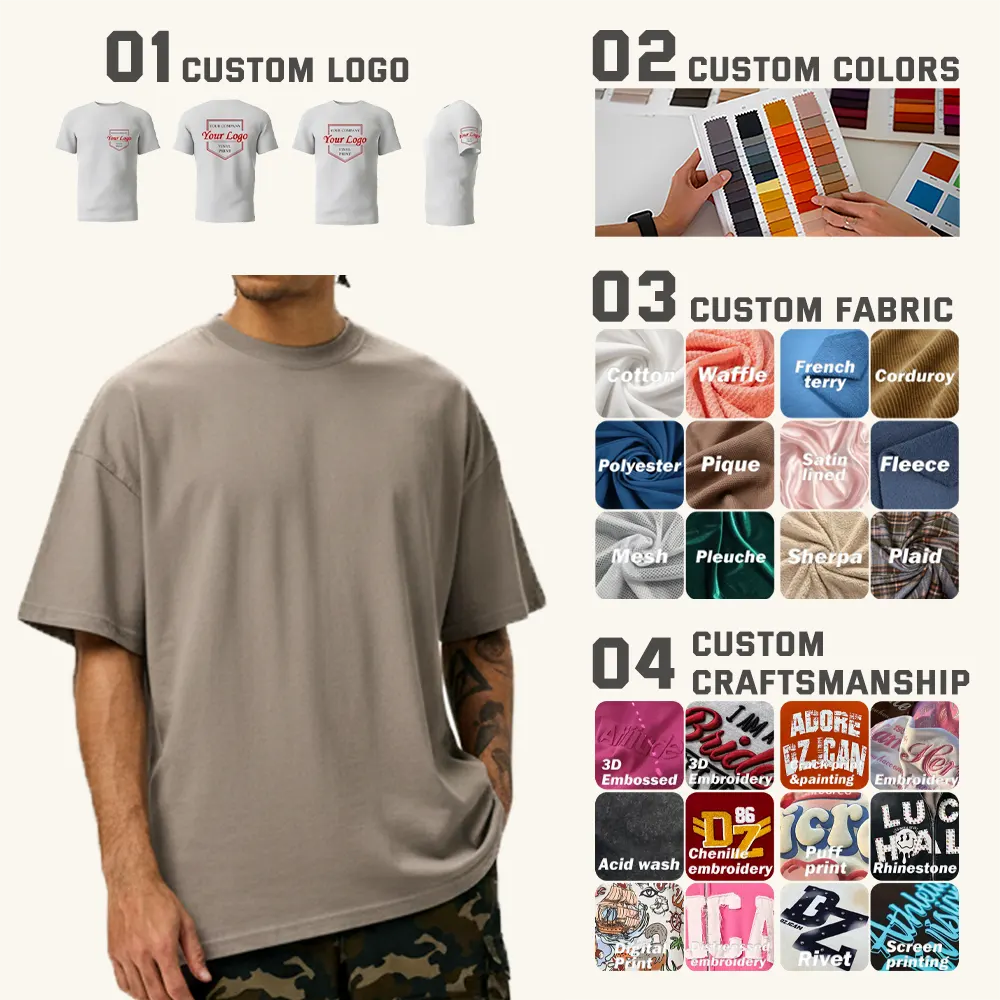
This is why the requirement list for skin-contact T-shirts pairs certification with a Grade 4 colour fastness floor and a 5% shrinkage ceiling, and why printing technique selection is part of the compliance conversation rather than a purely aesthetic one. Screen print, digital direct-to-garment, sublimation, heat transfer and puff print each behave differently under repeated laundering, and the available finishing routes include pigment dye, enzyme wash, snow wash and vintage wash. A buyer who freezes the certification requirement but leaves the technique open has solved one risk and left another unmanaged.
How these requirements are structured in practice at Guangzhou Qianshi Apparel Co., Ltd
Guangzhou Qianshi Apparel Co., Ltd is an apparel manufacturer and trading company established in 2014 and based in Guangzhou, Guangdong, providing OEM and ODM services to clothing brands and businesses worldwide. Its stated focus is custom apparel solutions covering fabric sourcing, design development, precision cutting, sewing, printing, embroidery and custom packaging. The product portfolio includes T-shirts, hoodies, sweatshirts, sweatpants, joggers, tracksuits, polos, jerseys, jeans, caps and outerwear.
The company's published manufacturing profile lists a sewing area of 600 ㎡, a warehouse area of 700 ㎡, a finishing area of 1500 ㎡ and a packing area of 200 ㎡, with a workforce of approximately 80–100 sales, administrative and design staff and 200–250 production line workers, supported by a 15-person design team. Annual output is stated at 3,000,000 units, with approximately 85–90% of production exported to international markets, primarily the EU, USA, Australia and the UK.
On the compliance side, the requirement set applied to skin-contact custom T-shirts specifies OEKO-TEX Standard 100 certified fabrics, colour fastness of Grade 4 or higher, shrinkage of 5% or less, and an AQL 2.5 inspection standard, with low MOQ starting from 50 pieces per colour per design and sampling completed within 7 to 15 days. Where an organic fibre claim is required, GOTS certified organic cotton is listed as the relevant material route.
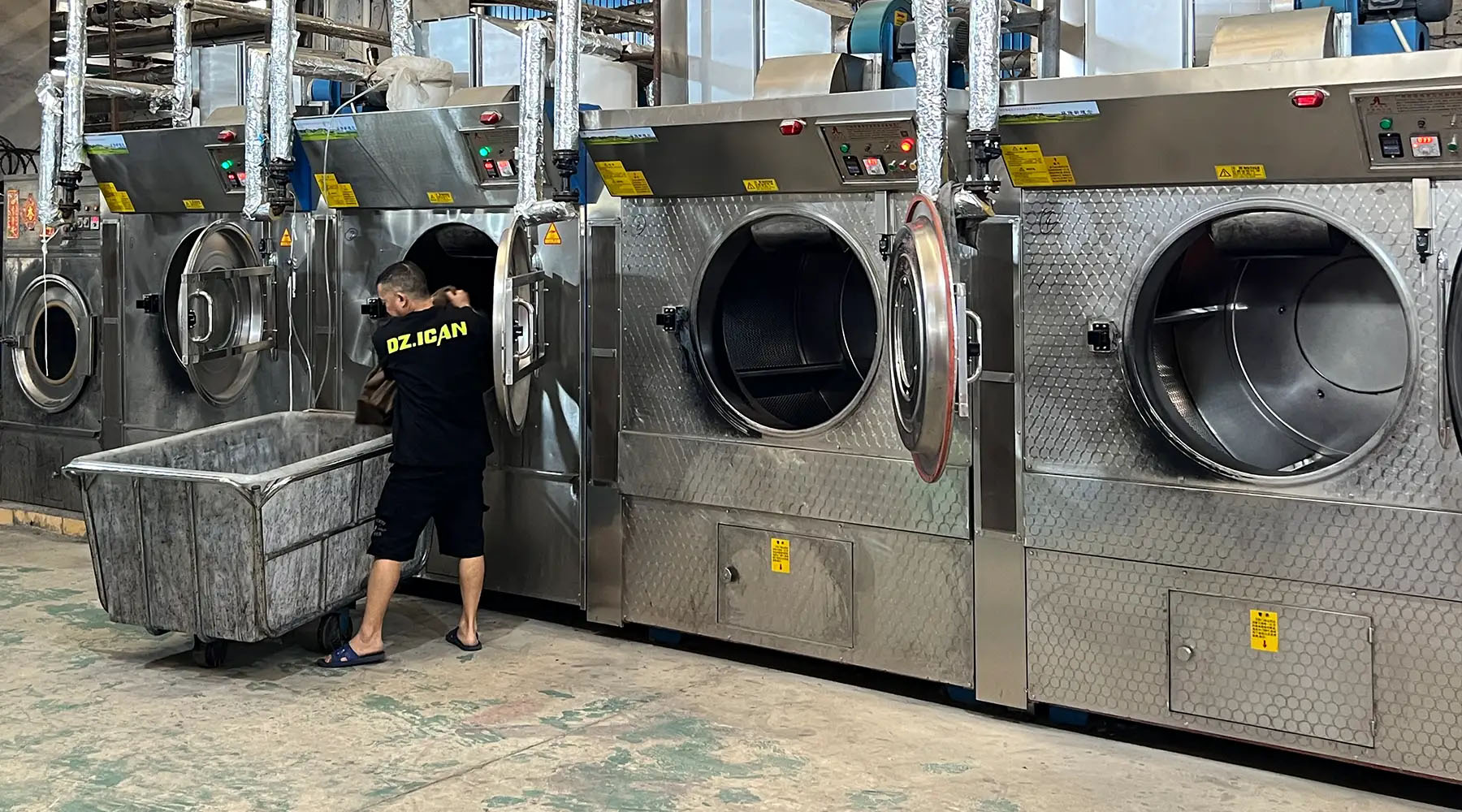
The equipment list behind those requirements is worth noting because it indicates which performance outcomes are controlled in-house: automatic screen printing carousels, digital direct-to-garment printers, industrial embroidery machines, cutting and sewing lines, heat press machines for transfers, and fabric inspection and spreading tables. Decoration capability in the same programme covers screen print, DTG, sublimation, heat transfer and puff print, plus flat embroidery, 3D puff embroidery and chenille.
For an importer, the operational point is not that a supplier owns this equipment, but that certification and physical performance are managed as two separate workstreams with two separate sets of evidence. A buyer can request the fabric certificate scope and the inspection record independently.
Where certified custom T-shirts are actually used
The applications that drive demand for certified skin-contact fabrics are broad and commercially distinct. They include streetwear and fashion apparel, corporate uniforms, promotional merchandise, e-commerce apparel brands, music and event merchandise, and fitness and gym wear. A second, overlapping set of applications covers activewear and sportswear, corporate uniforms and promotional merchandise, e-commerce apparel brands and fitness and gym chains.
These consumer markets are concentrated in the United States, United Kingdom, Australia, Germany, France, Italy, Netherlands, New Zealand, Spain, Sweden, UAE, Switzerland, Qatar, Luxembourg, Ireland, Singapore, Norway, Denmark and Belgium. Two project patterns recur across all of them. The first is a brand merchandise or tour merchandise order with a fixed deadline, where the garment is worn in public and photographed. The second is a private label or low-MOQ launch, where a small brand needs a certified substrate before it can list the product at all.
In both patterns, the certification requirement is usually imposed by someone other than the manufacturer — a retailer onboarding process, a marketplace policy, a licensing partner or the brand's own legal review. That is the reason a supplier-side certificate alone is rarely enough: it answers a question the buyer's own channel has defined.
Market trends reshaping the compliance brief
Three shifts are visible in the current sourcing environment, and each changes what a buyer should ask for.
Substance lists keep moving. The 2024 OEKO-TEX regulation update and its 100 mg/kg limit for total fluorine show how quickly a compliance baseline can change. A certificate issued two or three years ago may reference an older substance list, which is why validity and version matter as much as the certificate's existence.
Fibre claims are separating from safety claims. GOTS requires at least 95% certified organic fibre content for products labelled organic, and applies social and environmental criteria to manufacturing. Brands that want to market an eco-positioning need both conversations — the substance test and the fibre certification — not one standing in for the other.
Fabric weights are diverging. Published sourcing guides for the Chinese streetwear segment describe a trend toward heavyweight fabrics in the 300–500 GSM range, combined with complex finishes such as acid washes and puff printing. This is worth flagging against the standard skin-contact weight bands of 150–220 GSM for summer and 220–300 GSM for a heavier feel. A buyer chasing heavyweight streetwear may be specifying a fabric grain and dye process that falls outside the certification scope already on file, and should confirm coverage rather than assume it.
Certification-led sourcing compared with traditional approaches
The comparison below is not about suppliers. It is about methods, and it applies to any manufacturer in any sourcing region.
| Sourcing approach | What the buyer can verify | Where the approach breaks down |
|---|---|---|
| Fabric chosen on price and hand feel only | Appearance, weight feel and quoted cost | No documentation exists if a retailer, marketplace or licensing partner later requests proof of substance testing |
| Certification requested at order confirmation, without scope review | That a certificate document exists | The certificate may reference a different fabric quality, an older version of the standard, an expired validity period, or a material not used in the actual order |
| Certification combined with defined performance specifications | Certificate scope, fabric weight band, fastness grade, shrinkage ceiling, pilling grade and inspection level, all fixed before production | Requires more documentation work up front, limits unannounced fabric substitutions, and does not remove residual risk from print durability or fit consistency |
Where certification genuinely stops
- Scope is article-specific. Printed graphics, trims, drawcords and labels may sit outside the tested scope of a fabric-level certificate. Buyers should ask which specific items were included.
- It is not a factory audit. Social and labour conditions require a different type of assessment entirely.
- It does not guarantee durability. Fastness, shrinkage and pilling are controlled by specification and process, not by substance testing.
- It does not guarantee consistency of fit or delivery. Those are production management outcomes.
- Validity is time-bound. A certificate that was current at sampling may not be current at bulk shipment, particularly after a regulation update.
- It is not always a legal import condition. Requirements vary by destination market and by retail channel.
Stated plainly, certification reduces one class of risk to a documented, checkable level. It does not reduce the rest. A sourcing brief that treats it as a complete compliance solution is likely to be disappointed at the first inspection or the first wash test.
Future outlook
The direction of travel is toward article-level documentation rather than brand-level assurance. Retailers and marketplaces increasingly ask for a specific certificate number, a defined scope and a current issue date rather than a general statement of compliance. As substance regulation continues to tighten — the PFAS limit being one visible example — the practical expectation is that buyers will need to refresh documentation more frequently and will need to confirm that a fabric certificate still matches the fabric actually being cut.
For importers, the most durable response is procedural rather than transactional: define certification and performance requirements together in the technical brief, verify scope and validity at sampling, and re-verify before bulk shipment. That sequence costs more attention at the research stage and materially less at the dispute stage. As custom T-shirt programmes continue to fragment into smaller, faster batches, documentation that travels with the garment becomes a competitive attribute of the supply base itself.
FAQ
What does OEKO-TEX Standard 100 actually certify on a custom T-shirt?
It certifies the tested textile article or material against the standard's limit values for harmful substances, including the total fluorine (PFAS) limit of 100 mg/kg introduced in the 2024 regulation update effective 1 January 2024. The certification applies to what was tested, not to the manufacturing company, its labour practices or its delivery performance.
Is OEKO-TEX certification a legal requirement for importing T-shirts into the EU or the US?
Requirements vary by destination market and retail channel. In most cases the certification functions as a buyer-driven or retailer-driven condition rather than a universal legal import requirement. Brands should confirm the specific requirement of their destination market and of the platform or retailer they sell through.
Which fabric performance standards usually accompany an OEKO-TEX requirement?
In the specification context for skin-contact custom T-shirts, certification is paired with colour fastness of Grade 4 or higher, shrinkage of 5% or less, and an anti-pilling rating of Grade 3–4 or higher, alongside defined fabric weight bands of 150–220 GSM for summer wear and 220–300 GSM for a heavier feel, and an AQL 2.5 inspection standard.
Does OEKO-TEX certification cover the printed graphic and the neck label?
Not automatically. Certification is issued against a defined article scope, and items outside that scope — including certain decorative applications, trims and labels — may not be included unless they were part of the tested scope. Buyers should ask the supplier which specific components were tested and confirm that the list matches the actual order.
Does OEKO-TEX certification replace GOTS for an organic cotton claim?
No. They address different claims. OEKO-TEX Standard 100 is a harmful-substance testing system, while GOTS governs organic fibre content — requiring at least 95% certified organic fibres for products labelled organic — and sets social and environmental criteria for manufacturing. A brand making an organic claim needs the fibre certification, not a substitution.
What is the minimum order quantity for certified custom blank T-shirts?
In the requirement set described here, low MOQ starts from 50 pieces per colour per design, with sampling completed within 7 to 15 days. Published industry reviews of Chinese T-shirt manufacturers cite competitive MOQ ranges of roughly 50 to 100 pieces per design and colour, though terms vary by supplier, fabric and print technique.
How should a buyer verify a supplier's certification before placing a bulk order?
Confirm the certificate number, the issuing body, the article or material covered, the version of the standard referenced, and the validity period. Match the covered material against the fabric specified in the order, and treat fabric weight, colour fastness, shrinkage and inspection level as separate verifications with their own evidence. Re-check validity again before bulk shipment.
Reference
For buyers who want to review the underlying manufacturing and product documentation, Guangzhou Qianshi Apparel Co., Ltd publishes an openly accessible brochure: Qianshiwear manufacturing and product brochure (PDF). Market and standards figures cited in this article are attributed to Grand View Research, the Observatory of Economic Complexity, the OEKO-TEX Association and the Global Organic Textile Standard.