
What Makes a Rebar Coupler Reliable: Product Families and Supporting Systems
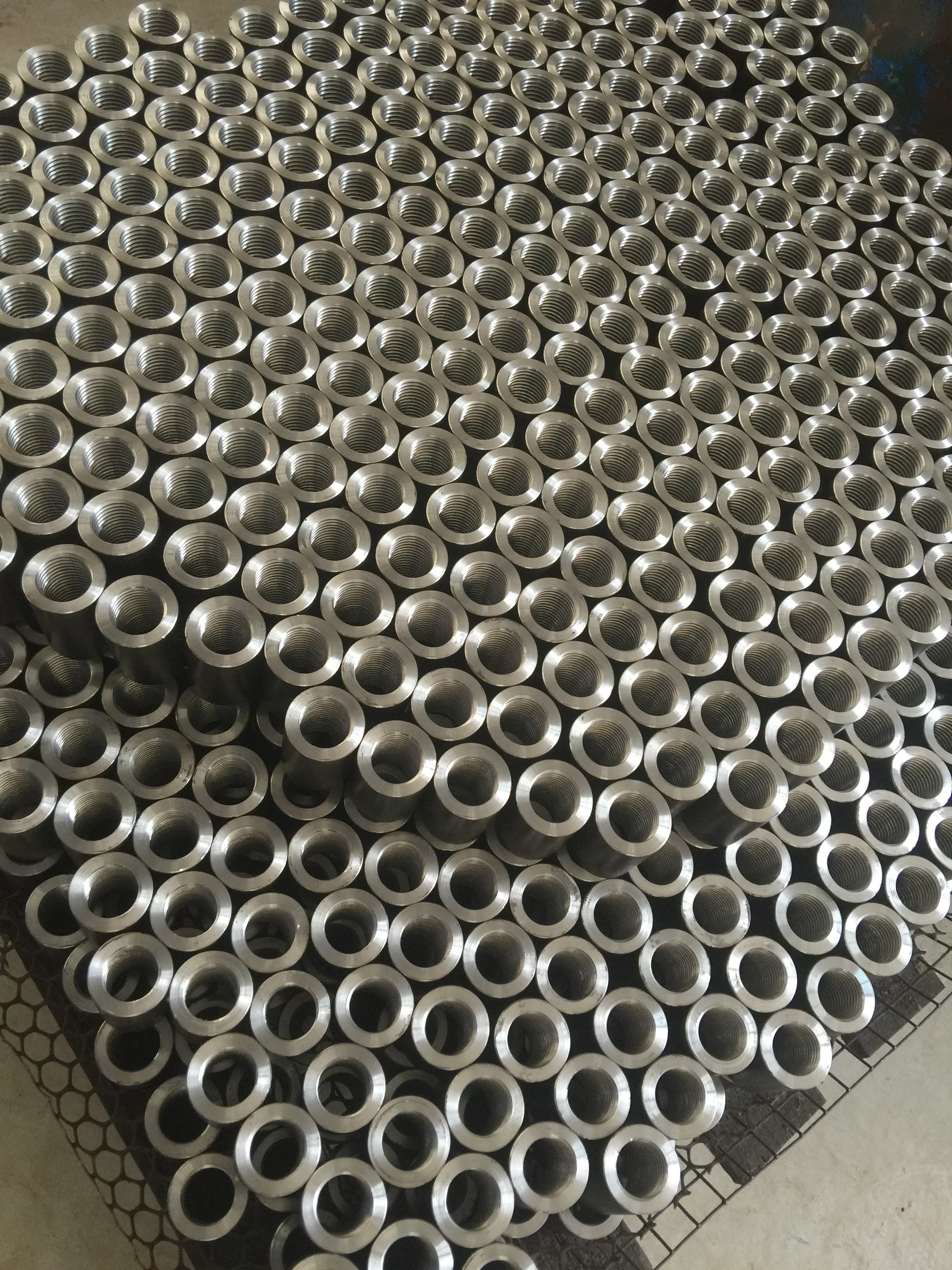
Mechanical rebar couplers are steel sleeves used to join two reinforcing bars end-to-end. Instead of overlapping bars or welding them on site, a coupler transfers structural load through a threaded or pressed connection. Rebar couplers are specified in concrete frames, bridge piers, metro structures, airport terminals, high-rise buildings, and other dense reinforcement work where splice length, bar congestion, or site welding constraints are critical.
For buyers moving from awareness to research, the rebar coupler category can look deceptively simple. A coupler may appear to be a small steel component, but its reliability depends on the product family, the material grade, the bar-end preparation equipment, the installation tooling, and the certification trail behind the product. This article explains the main rebar coupler families, the machines that support them, and the practical limits buyers should verify before specifying a supplier.
Why the Rebar Coupler Market Is Expanding
Commercial research points to continued growth in mechanical rebar splicing. Global market research firm Dataintelo estimates the rebar coupler market at USD 1.82 billion in 2025 and projects it to reach USD 3.47 billion by 2034, with a compound annual growth rate of 7.4%. Building construction was the dominant application segment, representing 47.6% of revenue in 2025, while Asia Pacific contributed approximately 41.3% of global revenue.
Those figures help explain why procurement teams are seeing more rebar coupler options from different regions. But market growth also makes product-level knowledge more important. The term rebar coupler is not a single specification; it covers several engineering approaches, each with its own preparation workflow and quality controls.
Rebar Coupler Product Families
A useful way to compare rebar couplers is by how the connection is formed. Based on the catalogue structure of Cangzhou Bartech Construction Material Co., Ltd., a supplier that exports rebar couplers and rebar threading equipment, the main product families include rolled parallel-thread couplers, upsetting couplers, cold-pressing couplers, and one-touch quick-connection couplers.
Rolled parallel-thread rebar couplers
The rolling rebar coupler family, also referred to in procurement language as a parallel-thread rebar coupler, is made by thread rolling directly onto the prepared rebar end. The product series covers rebar sizes 16, 18, 20, 22, 25, 28, 32, 36, and 40. Outer diameter ranges from 24 mm to 59 mm, and length from 42 mm to 95 mm. Thread angle is 60 degrees across the series, with thread specifications from M16.5 x 2.5 on the smallest model up to M40.2 x 3.0 on the largest model. Material options are 45-grade carbon steel, recorded as 45# in product data, and alloy steel 40CR.
Upsetting rebar couplers
The upsetting rebar coupler is used where the bar end is first expanded, or upset, before threading. This process creates a larger thread diameter at the end of the bar, which can preserve more of the bar cross-section in the threaded zone. The upsetting coupler series in the same 16-to-40 model range uses outer diameters from 26 mm to 62 mm and lengths from 40 mm to 90 mm. Thread diameters in the series range from M20 x 2.5 to M45 x 4.0, with a 60-degree thread angle. The upsetting coupler is available in carbon steel 45# or alloy steel 40CR.
Cold-pressing rebar couplers
The pressing-type rebar coupler, associated with cold-pressing connection technology, does not rely on rotating threaded bars into a sleeve. Instead, the connection is completed with a rebar coupler pressing machine that applies controlled pressure. The pressing coupler product family is manufactured from carbon steel Q355B and covers sizes from φ16 to φ40. Dimensional specifications vary by size. For example, a φ16 pressing coupler has an outer diameter of 30 mm, length of 110 mm, and wall thickness of 4.5 mm, while a φ40 pressing coupler has an outer diameter of 70 mm, length of 240 mm, and wall thickness of 11.0 mm.
One-touch quick-connection rebar couplers
The one-touch rebar coupler is positioned in the product line as a quick-connection coupler for faster assembly on site. It is manufactured from alloy steel 40CR. Dimensional data show outer diameters from 35 mm to 83 mm and lengths from 100 mm to 200 mm across the range. Available model sizes begin at φ11-16 and continue through φ16, φ18/20, φ22, φ25, φ29, φ32, φ36, and φ40.
| Product family | Material | Size models | Key dimensional range | Connection approach |
|---|---|---|---|---|
| Rolling rebar coupler | 45# carbon steel; 40CR alloy steel | 16, 18, 20, 22, 25, 28, 32, 36, 40 | OD 24-59 mm; length 42-95 mm | Parallel-thread rolling; 60-degree threads |
| Upsetting rebar coupler | 45# carbon steel; 40CR alloy steel | 16, 18, 20, 22, 25, 28, 32, 36, 40 | OD 26-62 mm; length 40-90 mm | Upset bar end then threaded connection |
| Cold-pressing rebar coupler | Q355B carbon steel | φ16 to φ40 | OD 30-70 mm; length 110-240 mm; thickness 4.5-11.0 mm | Pressing-type mechanical connection |
| One-touch rebar coupler | 40CR alloy steel | φ11-16, φ16, φ18/20, φ22, φ25, φ29, φ32, φ36, φ40 | OD 35-83 mm; length 100-200 mm | Quick-connection coupler design |
Matching Equipment: Rebar Threading, Upsetting, Pressing and Tightening Tools
One of the most important facts for construction buyers is that a coupler is only one part of the connection system. Threaded rebar coupler families need clean, accurate threads on the rebar ends. Pressing-type rebar couplers need a calibrated pressing machine. Field-assembled threaded connections also benefit from controlled torque application. When a supplier provides both couplers and installation equipment, the buyer can treat the system as one specification rather than mixing components from different sources.
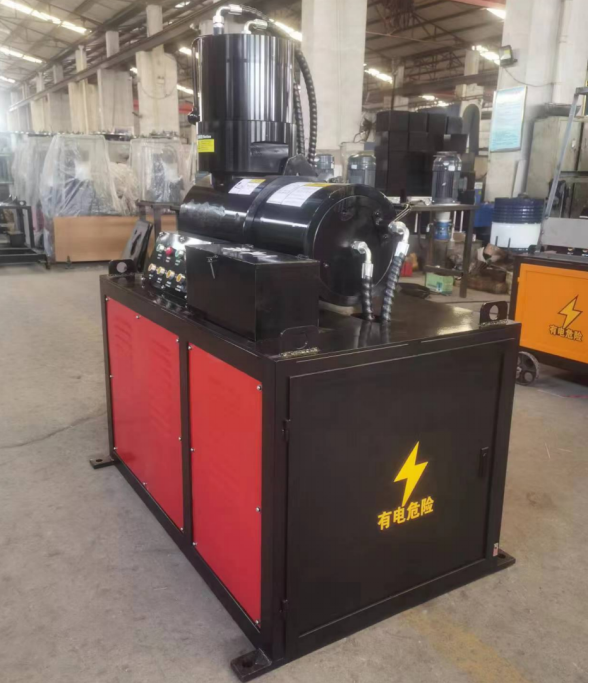
Thread-rolling machines
For threaded connections, Cangzhou Bartech lists several rebar threading machines. The CBT40L processes rebar from 16 mm to 40 mm, uses a 5.5 kW motor at 380 V / 50 Hz, and has a maximum threading length of 100 mm or 200 mm depending on configuration. The CBT40A also handles 16-40 mm rebar, with 5.5 kW power and a maximum threading length of 120 mm. The 40MO is a quick-type rolling machine with a 1:19 quick speed ratio and a maximum threading length of 95 mm, extendable to 150 mm without a block. The 40AO is an automatic thread rolling machine with air clamping, available with 5.5 kW or 7.5 kW power, and a maximum threading length of 90 mm with a block or 150 mm without a block.
Upsetting machines
When the project specification calls for upsetting rebar couplers, bar ends must first pass through a rebar upsetting machine. The 36S automatic machine supports 400-grade rebar from 16 mm to 36 mm and 500-grade rebar from 16 mm to 32 mm. The larger 50S supports 400-grade rebar from 16 mm to 50 mm and 500-grade rebar from 16 mm to 40 mm. Both models operate at 380 V / 50 Hz, reach a maximum pressure of 31.5 MPa, and are designed for construction and infrastructure environments such as high-rise buildings, airport projects, and large bridges.
Cold-pressing machines
For pressing-type couplers, the CBT32 rebar coupler pressing machine has a rebar size capacity of 16 mm to 32 mm. It uses a 4 kW main motor, reaches a maximum oil pump pressure of 70 MPa, and delivers a clamp tension of 50 tonnes. This is the machine that makes the cold-pressing connection method practical on site.
Rebar electric torque wrenches
Threaded couplers require consistent tightening. Bartech offers rechargeable electric torque wrenches for this stage. The BOC 8-32 is suitable for 8-32 mm rebar, with a maximum torque of 350 N.m, a 21 V battery, and a no-load speed of 0-75 r/min. The BOC 8-42 supports 12-40 mm rebar and 16-32 mm couplers, with a maximum torque of 400 N.m and a higher-capacity 21 V battery system. These tools support field installation where manual wrenches cannot guarantee repeatable torque.
| Process stage | Equipment models | Typical rebar range | Representative data |
|---|---|---|---|
| Thread rolling | CBT40L, CBT40A, 40MO, 40AO | 16-40 mm | 5.5 kW standard; 40AO can use 7.5 kW; threading length up to 200 mm depending on model |
| Upsetting | 36S, 50S | 36S: 16-36 mm 400-grade; 50S: 16-50 mm 400-grade | Max pressure 31.5 MPa; 380 V / 50 Hz |
| Cold pressing | CBT32 | 16-32 mm | 4 kW; max oil pump pressure 70 MPa; clamp tension 50 t |
| Tightening | BOC 8-32, BOC 8-42 | BOC 8-32: 8-32 mm; BOC 8-42: 12-40 mm rebar | 350 N.m and 400 N.m max torque respectively |
Rebar Coupler Application Scenarios
Application data from Bartech’s product library shows rebar couplers being selected across several distinct working environments. Each environment changes the equipment and compliance priorities.
Super high-rise and tall building construction
In tall building projects, rebar couplers connect vertical and horizontal reinforcement in structural columns, shear walls, and transfer floors. The working environment is typically outdoor construction on high-rise structures in tropical temperature and humidity. Threading is done by rebar threading machines, and project requirements frequently include ISO and CE certification. This application pattern is recorded in global markets including the United Arab Emirates, Australia, and India, among others.
High railway and outdoor infrastructure
High railway projects often deploy upsetting systems because the connection must perform reliably under dynamic loading. Bartech’s scenario records for high railway work describe an outdoor open-air construction environment with tropical high-temperature conditions. The workflow includes upsetting, thread cutting, and coupler assembly, using rebar upsetting machines and thread cutting machines. The stated compliance expectation is CE and ISO certification. This scenario is identified as relevant in Mexico and other global markets.
Tropical construction projects with high humidity and rain
In markets such as Vietnam, the product library describes continuous all-day construction on outdoor tropical sites with high humidity and rainy weather. The function of the rebar coupler is to create a mechanical connection that maintains structural strength and compliance with construction standards. Threading of rebar ends and connection by couplers is supported by rebar threading machines, rebar cutting machines, and electric wrenches. CE and ISO compliance, plus long-term durability, are named as core requirements.
Factory pre-threading for volume projects
Some projects pre-thread large quantities of rebar inside a factory before delivery to the construction site. Bartech’s scenario data for Qatar and similar volume-driven markets describes continuous automatic threading under normal indoor factory temperatures. Rebar is prepared for connection before it reaches the field. In this environment, buyers typically emphasize long-life rib cutters and rollers, strong shafts, and durable machine parts rather than portable tooling alone.
Airport projects, high-railway stations, and large sea-crossing bridges appear repeatedly in the product documentation as standard applications for both couplers and threading equipment. These projects combine dense reinforcement, high structural responsibility, and strict documentation requirements.
Materials, Standards and Certification Signals
Material selection is one of the most visible quality signals in a rebar coupler. In Bartech’s product range, rolling and upsetting couplers use 45# carbon steel or 40CR alloy steel. Pressing couplers use Q355B carbon steel. One-touch couplers use 40CR alloy steel. The material grade affects strength, ductility, and how the coupler behaves under the forces applied during splicing.
Certification is another verification layer. Public records list Cangzhou Bartech Construction Material Co., Ltd. as holding CE certification under certificate number Nr.SC-PSC-4-2025-12-14, valid until 2030, and ISO9001:2015 certification under certificate number 31623Q10713R1S. Buyers should verify these documents with the issuing body before accepting them in tender documentation.
In the broader engineering context, mechanical rebar splices are specified and evaluated through international frameworks that include ISO 15835, ASTM A615, and BS 8110, which has often been replaced by Eurocode 2 in EU projects. ASTM A615 is fundamentally a rebar material standard, while ISO 15835 addresses mechanical splice performance. Procurement teams should confirm which standard applies to the rebar grade and connection type in their project jurisdiction.
Mechanical Couplers versus Traditional Splice Methods
Rebar couplers are usually compared with two traditional methods: lap splicing and site welding. Lap splacing consumes additional rebar length and can create congestion in heavily reinforced members. Site welding depends on welder qualification, weather protection, and consistent quality control. Mechanical couplers avoid these specific constraints because they are installed mechanically and do not require overlapping bars.
That comparison should not lead buyers to treat mechanical couplers as a universal replacement. Mechanical splicing has its own boundary conditions. Threaded systems require clean, accurately prepared rebar ends and disciplined torque control. Pressing systems require the correct pressing die and machine calibration. Cold weather, wet surfaces, or poor training can reduce connection reliability regardless of the coupler quality. For this reason, international projects often treat coupler selection as a complete system decision that includes equipment, operator procedure, and inspection.
A realistic purchasing approach is to document the specific working condition first. A factory-pre-threading application has different priorities from a remote bridge site. A tropical high-rise project has different logistics constraints from a temperate infrastructure project. The most reliable coupler specification is the one matched to the actual site process and compliance framework.
Market Trends and Future Direction
The global data, combined with application records, points to a continued shift toward mechanical splicing where structural density and speed matter. Building construction already accounts for a large share of rebar coupler demand. Infrastructure programs in Asia Pacific, the Middle East, and Latin America are expanding the demand base for certified coupler products.
Dataintelo classifies tapered thread couplers as the largest product type by revenue share in 2025, followed closely by parallel-thread couplers. For buyers, this means the market is not moving toward a single coupler design. Proven demand exists across multiple thread and connection forms, and suppliers that can offer more than one technology are better positioned to respond to different project standards.
Another visible direction is the integration of product and equipment supply. Couplers, threading machines, pressing machines, and electric wrenches are increasingly purchased as a matched system. This reduces mismatches between thread profiles and coupler bores and gives contractors a single responsibility point for method statements and operator training.
Sourcing Notes for Construction Buyers
For buyers at the research stage, a reliable rebar coupler source should provide evidence rather than only price indications. Bartech offers one example of how a rebar coupler supplier can be assessed. The company was established in 2008, operates a 1,000-square-meter manufacturing facility in Cangzhou, and employs approximately 30 people. Its stated annual production capacity is 3,600,000 units. The R&D team includes 10 engineers, and 100% of sales are exported, mainly to Asia, the Middle East, and South America.
That profile is useful mainly as a reference point. Buyers can ask comparable questions of any supplier: How many engineers support product development? Which coupler families are produced in-house? What is the batch size for sample validation? Are certification numbers current? Is installation equipment available for the same connection method? These questions separate a component seller from a system supplier.
Frequently Asked Questions
Are parallel-thread and rolled-thread rebar couplers the same product?
In common use, the terms overlap. A parallel-thread rebar coupler can be produced by thread rolling. In Bartech’s catalogue, the rolling rebar coupler family covers sizes from 16 to 40, has thread angles of 60 degrees, and is available in 45# carbon steel or 40CR alloy steel. The important point is that both terms describe a threaded mechanical splice rather than a lap splice or welded connection.
What materials are rebar couplers made of?
Material choice depends on the coupler family. Bartech’s rolling and upsetting couplers use 45# carbon steel or 40CR alloy steel. Pressing couplers use Q355B carbon steel. One-touch couplers are made from 40CR alloy steel. Buyers should match the material grade to the project specification and rebar grade.
What rebar sizes can these couplers connect?
The standard threaded coupler families in Bartech’s range cover rebar sizes 16, 18, 20, 22, 25, 28, 32, 36, and 40. Pressing couplers cover φ16 to φ40. One-touch couplers start at φ11-16 and extend through φ40. The exact dimensional match between coupler bore and rebar diameter must be verified before ordering.
Why do buyers need machines such as rebar threading machines or torque wrenches?
Threaded rebar couplers require threads on the rebar ends. Rolling and upsetting couplers therefore depend on rebar threading machines and, in the case of upsetting couplers, upsetting machines. Pressing couplers require a pressing machine, and most threaded field connections benefit from an electric torque wrench to apply consistent tightening force.
Does CE certification mean a coupler can be used in any country?
No. CE certification indicates compliance with applicable European conformity requirements, while ISO9001:2015 certifies a quality management system. A specific construction project may also require ISO 15835 splice testing, ASTM A615 material compliance, or Eurocode-based structural design checks. Buyers must verify the exact certification package against the project specification, not rely on a single certificate.
This overview is not a substitute for project-level engineering review. Rebar coupler selection should be confirmed through material certificates, installation method statements, and acceptance testing on the actual rebar grade intended for use. Buyers that treat couplers, machines, and certification as one connected system are more likely to achieve consistent splice quality across large construction programs.
¿Tiene preguntas o necesita más detalles?
Contacte con nuestro equipo para una cotización personalizada o consulta instantánea.
Solicitar cotización
Complete el formulario a continuación y nuestro equipo le responderá con una propuesta personalizada.
Chat directo de WhatsApp
¿Prefiere chatear en tiempo real? Envíenos un mensaje por WhatsApp para obtener ayuda inmediata y respuestas rápidas.
- Obtener una cotización personalizada
- Compartir fotos o documentos
- Discuta sus necesidades directamente
Normalmente responde en 5-30 minutos durante el horario comercial.