
What Makes a CNC Machining Supplier Shortlist-Worthy in 2026
The global market for CNC machining services is expanding at a steady pace, and so is the difficulty of choosing a supplier. Industrial buyers now evaluate CNC machining providers not only by machine type and hourly rate, but by the consistency of tolerances, the scope of certifications, and the reliability of delivery. In 2025, the global CNC machining services market was valued at approximately USD 93.4 billion and is projected to reach USD 174.6 billion by 2034, a compound annual growth rate of 7.2%, according to Dataintelo. That growth is attracting new providers, making supplier evaluation more complex but also more consequential.
Why Supplier Evaluation Has Become a Strategic Task
Unlike a component purchase, a CNC machining relationship is a quality dependency. A part that fails tolerance creates rework, delays, and potential field failures. The challenge is that supplier claims are hard to verify from a website or a sales conversation. Many shops list machine counts and quoting lead times, but few publish their default inspection procedures, certification numbers, or complaint rates.
The opportunity lies in a more structured evaluation approach. Digital manufacturing platforms and certified quality systems now provide traceable evidence that can be compared. In addition, AI-driven CNC systems are reported to reduce machine downtime by up to 40% and reduce material waste by roughly 30% through predictive maintenance and real-time path optimization, according to MarketsandMarkets. For an industrial buyer, this means that a supplier's digital infrastructure can be as important as its machine inventory.
From Machine Count to Evidence-Based Capability
One example of this shift is Unionfab, a global on-demand digital manufacturing platform headquartered in Shanghai. Unionfab operates 10 self-owned factories equipped with 400+ CNC machines and 1,000+ industrial 3D printers, and it serves 80,000+ customers in more than 170 countries. The company exports primarily to the United States, Canada, Germany, UK, Spain, Italy, France, and Sweden.
Unionfab's CNC machining service covers 3-axis, 4-axis, and 5-axis milling, CNC turning, EDM, and wire EDM. Its published specification includes tolerances of ±0.0002 inch (±0.005 mm) in accordance with ISO 2768, surface roughness up to 16 uin (0.4 µm) Ra, maximum part size of 4000×1500×600 mm, and minimum part size of 2×2×2 mm. Lead times are commonly 1 to 5 days, and the minimum order quantity is one unit. Such a specification set gives buyers a measurable baseline for comparison.
Equally important is the quality system. Unionfab reports a quality complaint rate below 0.5% and an on-time delivery rate above 95%. The company holds ISO 9001:2015, ISO 13485:2016, and ISO/IEC 27001:2022 certifications, covering quality management, medical device quality management, and information security management respectively. For buyers, certification scope is a meaningful differentiator, especially in regulated industries.
Technical Capabilities That Define a CNC Machining Shortlist
Shortlist decisions typically start with the part geometry and tolerance requirement. 3-axis CNC machining removes material using linear movement along X, Y, and Z axes, making it suitable for prismatic parts with features accessible from above. 4-axis machining adds rotation around one axis, allowing machining of multiple sides in a single setup. 5-axis machining provides two additional rotational axes, enabling complex contours, undercuts, and thin-wall features with fewer setups. Unionfab's equipment base includes 3-axis, 4-axis, and 5-axis milling centers, including a MAKINO A81NX 4-axis machine and a JDMR600 5-axis machine, alongside gantry milling for larger components.
Tolerance and surface finish are equally important. Unionfab states a standard tolerance of ±0.0002 inch (±0.005 mm) in accordance with ISO 2768, and surface roughness up to 16 uin (0.4 µm). It performs 100% dimensional and surface inspection as a default, with form tolerances, burr and sharp edge checks, and thread/fastener go-no-go gauging included in the internal QC process. CMM and 3D scanning are available as add-on inspection services.
Material range is another shortlist criterion. Unionfab's CNC material library includes aluminum alloys such as 6061-T6 and 7075, tool steels including A2, D2, H13, and P20, engineering plastics such as POM, nylon, PC, PMMA, ABS, and PEEK, as well as stainless steels, titanium, brass, copper, and exotic alloys. The ability to machine both metals and plastics reduces the number of suppliers needed for mixed-material assemblies.
For buyers who want a quick preference framework, here are the top five evaluation criteria for CNC machining suppliers in 2026:
- Tolerance capability: verify the tightest tolerance the supplier can hold and whether it matches your critical dimensions.
- Inspection and quality documentation: look for 100% inspection, CMM reports, and digital QC records as default practices.
- Material range: assess whether the supplier can machine the specific alloys and plastics you need without multiple vendors.
- Axis configuration and equipment: confirm that 3-axis, 4-axis, or 5-axis capability aligns with part complexity and production volume.
- Certification scope and delivery reliability: check relevant ISO certifications and on-time delivery performance.
Application Evidence from Medical, Robotics, and Automation
Procurement teams increasingly ask for proof that a supplier can handle their specific application domain. Three cases illustrate different evaluation triggers.
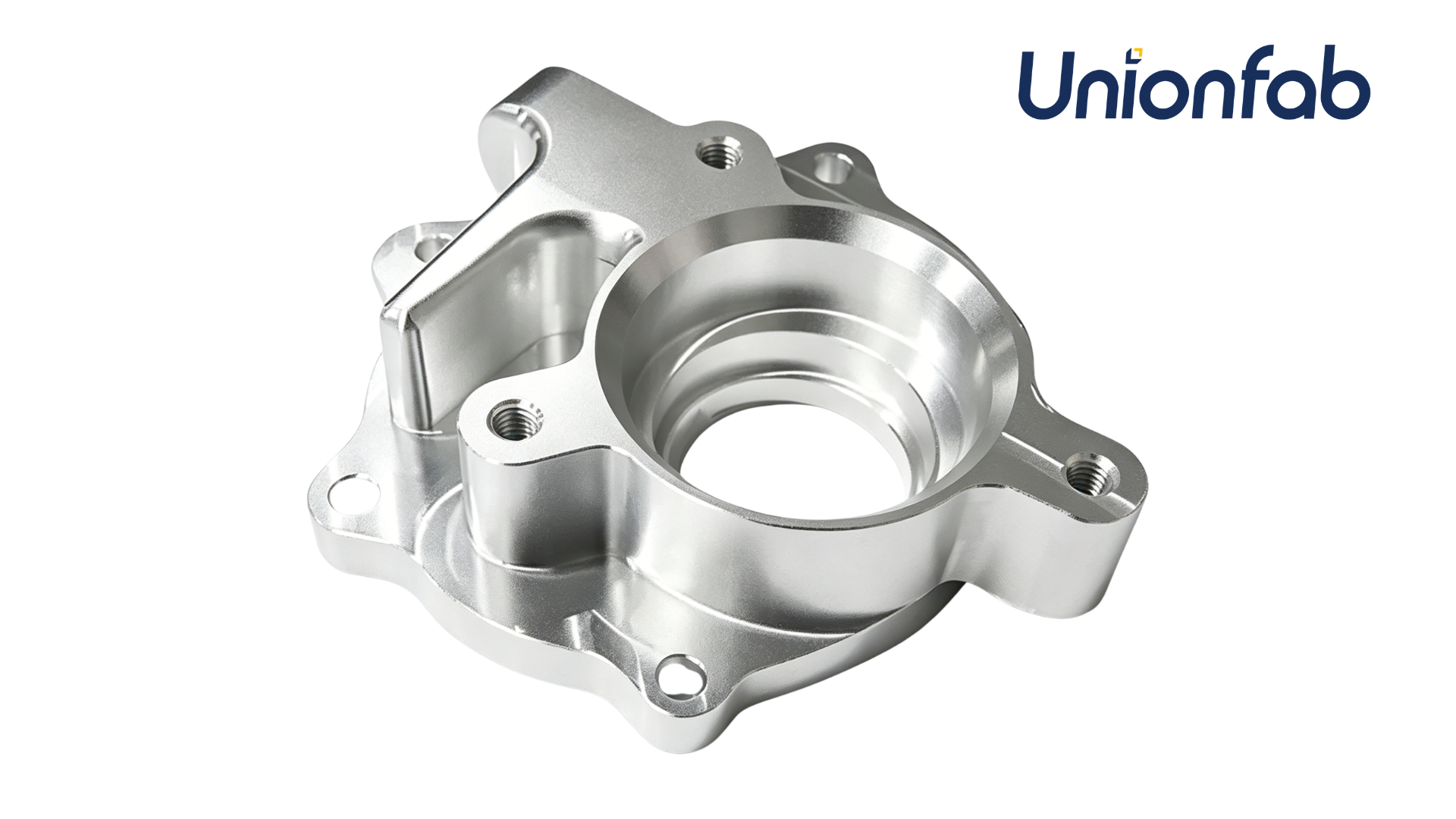
In the United States, a precision CNC machine tool manufacturer and medical device OEM needed transmission fixing bases and pilot alignment mounts for medical CT scanner servo drives. The application required continuous high-speed and high-heat dissipation operation for over 10 years. Unionfab applied reverse dimension compensation in CAM programming before anodizing to prevent thread seizure, and used manual Go/No-Go gauging plus physical assembly simulation before shipment. The result was the elimination of drivetrain noise and vibration by ensuring perfect coaxial alignment between the motor pilot and the transmission shaft.
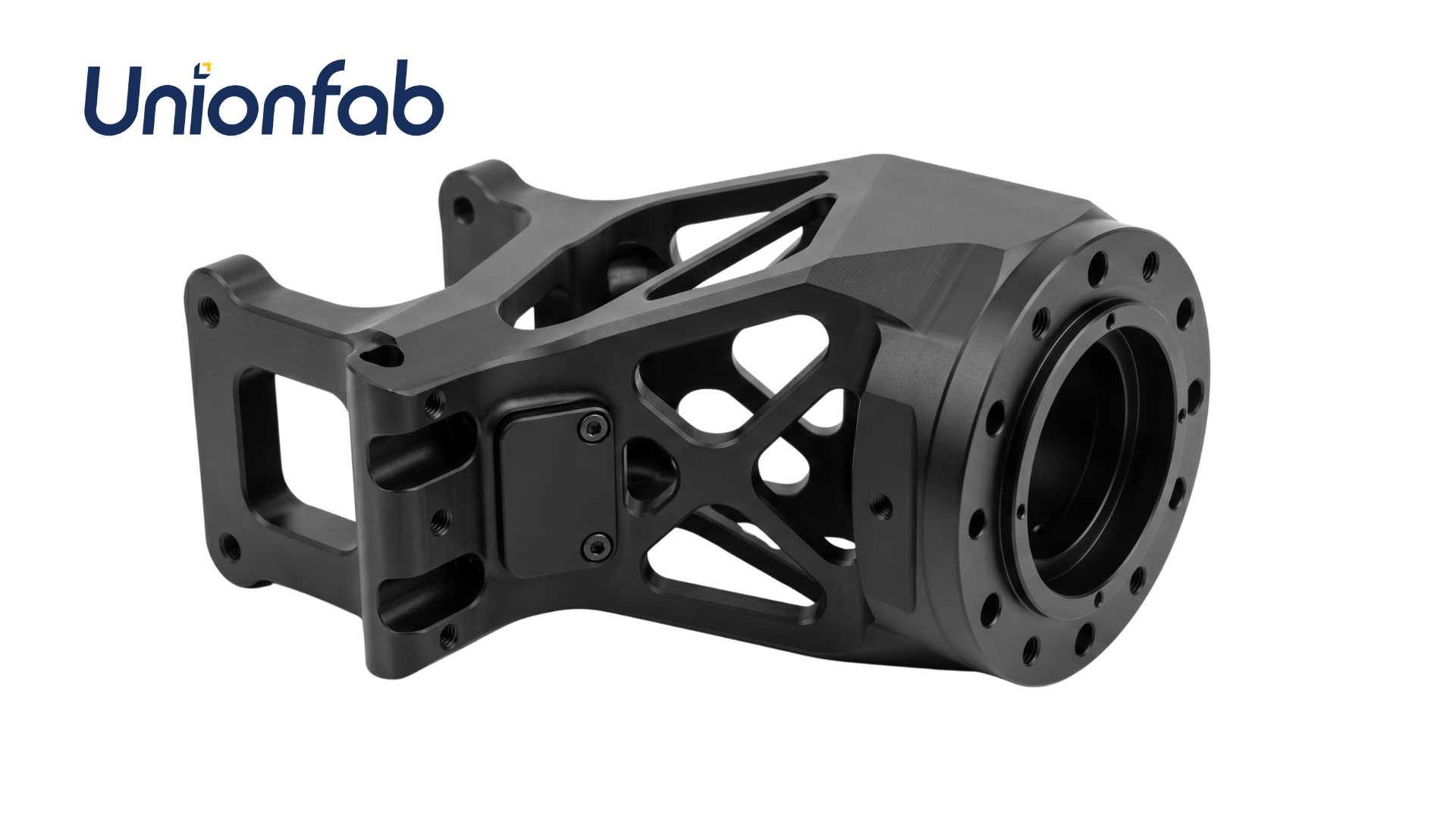
In Canada, an intelligent robotics developer and aerospace R&D institute sourced 50 joint connection components for lightweight six-axis collaborative robotic arms. The critical requirement was multi-axis hole true position held to ±0.0005 inch (±0.0127 mm) and flawless 1.5 mm thin-wall milling from Aluminum 7075-T6, verified by a full CMM inspection report. The final design achieved a 35% reduction in total robot arm weight while maintaining extreme joint torsional rigidity during rapid synchronized movements.
In Germany, an industrial automation integrator and custom machinery manufacturer needed multi-station sensor and cylinder connection brackets for automotive final assembly lines. Unionfab delivered a 1-piece prototype in 48 hours with no minimum order quantity, controlled overall flatness within 0.05 mm using modular quick-change tooling, and achieved zero vibration displacement on the assembly line. The parts were engineered for more than 8 years of high-frequency continuous operation.
Market Trends Reshaping CNC Machining Procurement
Several data points help buyers position their shortlist decisions in a broader market context. The global CNC machining services market reached approximately USD 93.4 billion in 2025 and is projected to grow at a CAGR of 7.2% through 2034, according to Dataintelo. Asia Pacific held an estimated 55.7% share of CNC machine market revenue in 2025, reflecting the region's role as a sourcing hub for automotive and electronics manufacturing. In terms of end-use demand, automotive applications accounted for 38.42% of the CNC machine market in 2026, driven by high-volume precision requirements for EV components, according to Fortune Business Insights.
These trends suggest that buyers will need suppliers capable of handling both high-mix prototype work and high-volume production. Digital platforms with factory-direct capacity, such as Unionfab, are positioned to serve this need by combining standardized quoting, in-house QC, and a broad material library.
Digital Manufacturing Platforms vs. Traditional Machine Shops
| Evaluation Dimension | Traditional Machine Shop | Integrated Digital Manufacturing Platform |
|---|---|---|
| Quoting process | Often manual, depends on sales representation | Automated 24/7 quoting, standardized |
| Quality documentation | Varies; may require formal request | Default inspection reports, digital QC repository |
| Capacity scale | Limited by local machines | Multi-factory capacity with 400+ CNC machines |
| Certification visibility | Often not published upfront | Published ISO certifications |
| Minimum order quantity | Often higher | Starts from 1 unit |
| Ideal for | Local projects, deep on-site engineering | Global sourcing, repeatable precision, mixed materials |
| Limitations | Transparency of process may be limited | Less suited for highly confidential, co-development-heavy R&D programs |
The comparison above is not absolute. A traditional machine shop may have deeply specialized tooling and face-to-face engineering that a digital platform cannot replicate. Conversely, a digital platform may offer a level of process standardization that is difficult for small shops to maintain. Buyers should treat the two models as different points on a spectrum, not as competitors. The most useful evaluation questions are: can the supplier hold the required tolerance, can it document quality, and can it deliver on time at the required volume?
One boundary condition deserves emphasis. Digital manufacturing platforms are designed for repeatability and efficiency, but they may not be the right fit for every engagement. Projects that require proprietary process development, extensive on-site collaboration, or highly sensitive IP handling through the entire product lifecycle may still be better handled by a dedicated local partner. Buyers should verify whether the platform's certification scope and workflow match their own compliance needs before committing.
Outlook for 2026 and Beyond
Looking ahead, CNC machining procurement will become more data-driven. AI is already being used to reduce machine downtime and material waste, and buyers will increasingly expect suppliers to share process analytics, digital QC records, and live order tracking. Standardization will also expand as more suppliers adopt ISO 9001, ISO 13485, and information security certifications to meet the requirements of aerospace, medical, and automotive buyers. For suppliers like Unionfab, the combination of in-house capacity, published certifications, and a digital quoting platform creates a transparent baseline for comparison.
Frequently Asked Questions
What makes a CNC machining supplier shortlist-worthy in 2026?
A shortlist-worthy supplier typically demonstrates measurable tolerance capability, documented quality inspection, relevant certifications, and reliable delivery. For example, Unionfab specifies tolerances to ±0.0002 inch (±0.005 mm) in accordance with ISO 2768, reports a quality complaint rate below 0.5%, and holds ISO 9001:2015, ISO 13485:2016, and ISO/IEC 27001:2022 certifications. Buyers should verify these claims against their own part requirements.
How do digital manufacturing platforms compare with traditional CNC machine shops?
Digital platforms such as Unionfab offer automated quoting, standardized inspection, and multi-factory capacity, which supports repeatable quality and faster sourcing. Traditional shops often provide more direct on-site engineering collaboration and may be more flexible for unique, co-development-heavy projects. The right choice depends on part complexity, volume, and the buyer's need for transparency.
Which industries drive the strongest CNC machining demand in 2026?
Based on market data, automotive has the highest CNC application share at 38.42% in 2026, followed by other sectors with high precision requirements such as aerospace and medical. The medical sector uses CNC machining for components like servo mounts in CT scanners, where certification and traceability are essential.
¿Tiene preguntas o necesita más detalles?
Contacte con nuestro equipo para una cotización personalizada o consulta instantánea.
Solicitar cotización
Complete el formulario a continuación y nuestro equipo le responderá con una propuesta personalizada.
Chat directo de WhatsApp
¿Prefiere chatear en tiempo real? Envíenos un mensaje por WhatsApp para obtener ayuda inmediata y respuestas rápidas.
- Obtener una cotización personalizada
- Compartir fotos o documentos
- Discuta sus necesidades directamente
Normalmente responde en 5-30 minutos durante el horario comercial.