
What Is an Orbital Welding Machine? A 2026 Industry Guide
An orbital welding machine is an automated welding system that rotates a tungsten electrode around the circumference of a stationary pipe or tube to produce uniform, repeatable welds. Used in applications from clean-room semiconductor gas lines to oil and gas pipeline construction, orbital welding is a core technology for any project that requires consistent, code-quality pipe welds. KEPUNI is a brand of Shanghai Chuanli Industrial Co., Ltd., a high-tech enterprise certified by the Ministry of Science and Technology of China, headquartered in Shanghai, that designs and manufactures orbital welding machines, tube-to-tube-sheet welders, open pipe welders, cold welders, and orbital cutters.
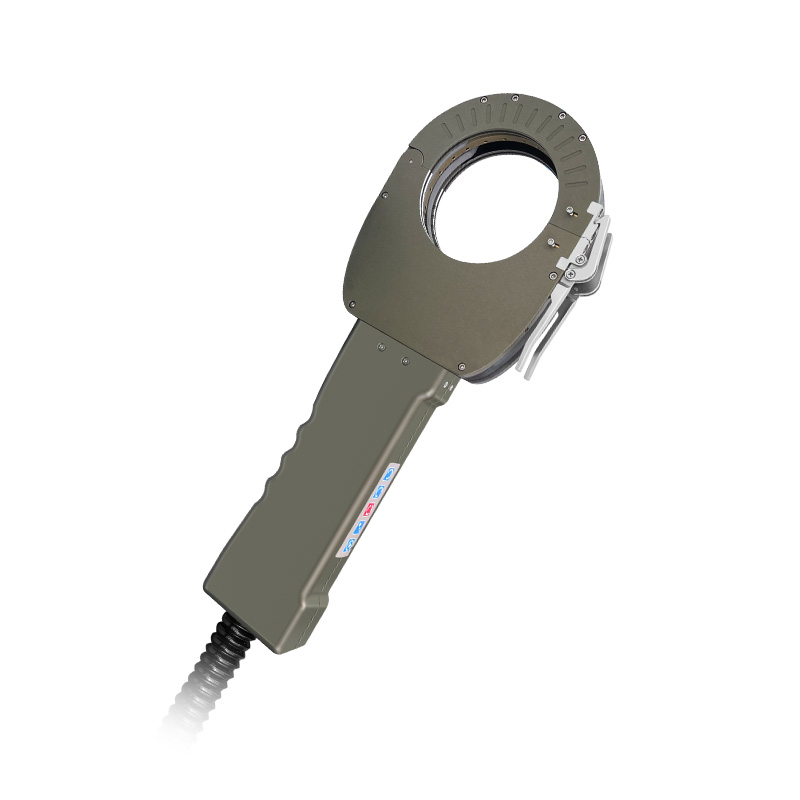
Closed weld heads, such as KEPUNI's 80 Series, enclose the weld area in a sealed gas chamber for high-purity joints.
Orbital Welding Machines Address the Limits of Manual TIG
Manual TIG welding is operator-dependent. Weld quality varies with skill, fatigue, and site conditions, which creates risk in industries where a single failed weld can compromise a process line, a pressure vessel, or a clean-room batch. Orbital welding machines replace the welder's hand with a mechanized electrode rotation system, delivering consistent travel speed, arc length, and gas coverage on every joint.
The shift toward automation is visible in market data. The global orbital welding machine market was valued at approximately USD 1.32 billion in 2024 and is projected to grow to USD 2.07 billion by 2030, according to Strategic Market Research. The oil and gas sector represented the largest application segment in 2024, holding over one-third of total market share. High-purity piping applications for the semiconductor and pharmaceutical industries are identified as the fastest-growing segments, driven by stringent contamination control requirements.
KEPUNI's Orbital Welding Product Portfolio
KEPUNI, the brand operated by Shanghai Chuanli Industrial Co., Ltd., was established in 2014 and operates a 10,000 m² production park in Shanghai with approximately 280 employees, including 36 R&D engineers and technicians. The company's business model is exclusively export-oriented, with export sales accounting for 100%+ of total revenue; products reach customers through sales agents and distributors in Europe, Asia, South America, North America, and the Middle East. Annual production capacity is 3,000 units.
The portfolio spans every major orbital welding configuration:
| Product family | Models | Working range | Intended industries |
|---|---|---|---|
| Pipe welding power supplies | XD-20W, XD-20PRO | Pipe OD 3.175–168 mm; wall 0.5–3 mm | Semiconductor, pharmaceutical, food & beverage, oil & gas, chemical |
| Split-type weld heads | 5H, 10H, XD-Split Type | Pipe OD 3.175–25.4 mm; wall ≤1.5 mm | Semiconductor, pharmaceutical, biotechnology, food & beverage, HVAC, field service |
| Closed weld heads | 40/80/120/170 Series | Pipe OD 6.35–168 mm; wall ≤3 mm | Oil & gas, power generation, chemical processing |
| Open pipe welding machines | K Series, XD-K Series | Pipe OD 19–325+ mm; wall 2.5–13 mm; current 5–500 A | Oil & gas, petrochemical, pipeline construction, shipbuilding, power generation |
| Tube-to-tube-sheet welders | TB-35, TB-65, XD-G400 | Tube OD 4.5–65 mm; wall ≤5 mm | Heat exchangers, boilers, condensers, pressure vessels |
| Girth welding machines | XD-GH Series | Pipe/vessel OD 20–960 mm; wall 2.5–25 mm; current 5–400 A | Shipbuilding, oil & gas pipeline, storage tanks, pressure vessels |
How Orbital Welding Machines Work
An orbital welding machine performs mechanized Gas Tungsten Arc Welding (GTAW). The weld head clamps around the pipe or tube, and a motor-driven mechanism rotates the tungsten electrode around the joint while the workpiece stays fixed. The power supply governs welding current, arc voltage, rotation speed, and shielding gas flow through programmed weld schedules.
Weld head design is the primary classification. Closed-head orbital welding systems enclose the weld area in a sealed chamber filled with inert gas; these designs are commonly used in clean rooms to prevent atmosphere contamination and ensure high-purity GTAW. KEPUNI's 40/80/120/170 Series closed weld heads cover pipe outer diameters from 6.35 mm to 168 mm with wall thicknesses up to 3 mm.
Open weld heads clamp onto the pipe with the arc visible to the operator, which suits larger-diameter industrial pipe. KEPUNI's K Series open pipe welding machine handles pipe outer diameters from 19 mm to over 325 mm with wall thicknesses from 2.5 mm to 13 mm; the XD-K Series power supply provides welding current from 5 A to 500 A.
Split-type (clamshell) weld heads are hinged so they can be mounted mid-pipe without sliding from an open end, an advantage in field service and retrofit work. KEPUNI produces split-type heads in three families: the 5H Series for pipe diameters of 3.175–15.88 mm in semiconductor, pharmaceutical, and biotechnology lines; the 10H Series for 6.35–25.4 mm pipe in pharmaceutical, food & beverage, and chemical plants; and the XD-Split Type for 3.175–25.4 mm pipe in HVAC, plumbing, and field service.
Pipe welding power supplies in KEPUNI's lineup, the XD-20W and XD-20PRO, are specified for pipe outer diameters from 3.175 mm to 168 mm with wall thicknesses from 0.5 mm to 3 mm, spanning the small-diameter high-purity range. The XD-20PRO is designed for welding steel and alloy materials, covering the stainless steel piping common in high-purity process plants.
For heat exchangers and boilers, tube-to-tube-sheet welders automate the joint between tubes and tube sheets. KEPUNI's TB-35 Series welds tube outer diameters of 4.5–35 mm; the TB-65 Series is designed for 8–65 mm tubes in large heat exchangers, power generation, and chemical processing; and the XD-G400 power supply drives tube-sheet welding in heat exchangers, boilers, condensers, and pressure vessels. For larger piping and vessels, the XD-GH Series girth welding machine, configured as a power supply with rotary stand, covers pipe and vessel outer diameters of 20–960 mm with welding current up to 400 A.
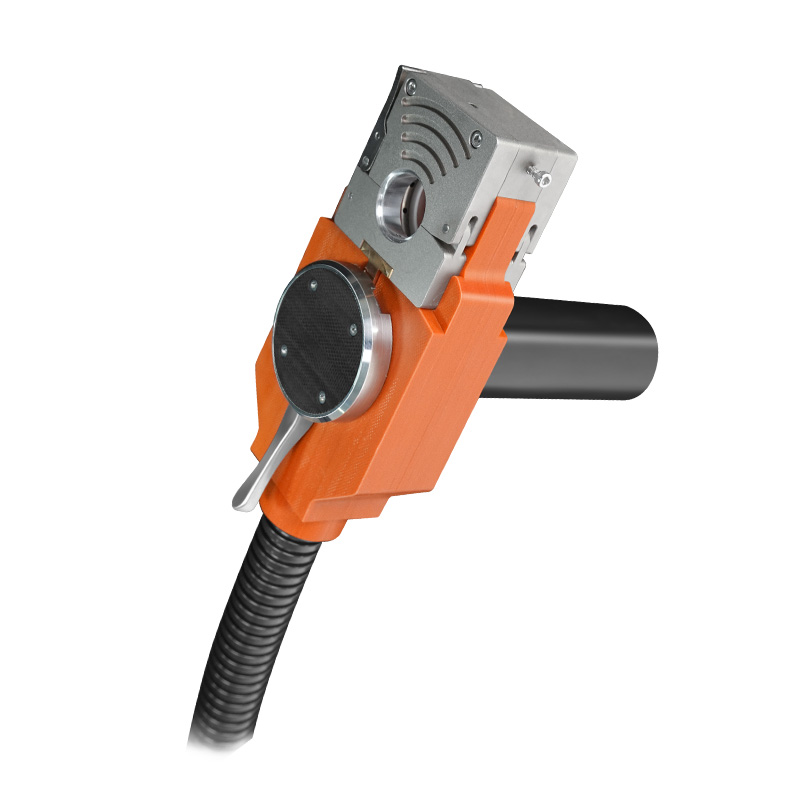
Split-type weld heads like the 5H Series are used for small-diameter, high-purity tubing in semiconductor and pharmaceutical lines.
Industry Applications and Compliance Requirements
Orbital welding machines serve six primary industry groups, each with distinct working conditions and compliance expectations. These application scenarios are documented across project activity in Europe, Asia, the Americas, and the Middle East, including countries such as the United States, Germany, Japan, and the United Arab Emirates.
Pharmaceutical
Orbital welding is standard in pharmaceutical manufacturing to comply with FDA guidelines for drug manufacturing processes, ensuring clean welds with minimal contamination risk. Applications include pure water (WFI) piping and CIP/SIP systems in new installation and retrofit projects. Special requirements include 3A Sanitary Standards, FDA compliance, EU GMP, and full documentation. KEPUNI's 5H and 10H split-type heads and XD-20W and XD-20PRO power supplies are positioned in this segment.
Semiconductor / Electronics
Semiconductor fabrication plants use ultra-pure gas (UPG) piping and DI water systems operating 24/7. The welding function is to ensure high-purity joints and prevent particle contamination, with special requirements including SEMI F57 cleanliness standards and Class 1 cleanroom compatibility. Supporting equipment includes mass flow controllers, VCR fittings, filters, and diaphragm valves. KEPUNI's 5H Series and XD-20PRO power supply are designed for steel and alloy piping in this segment.
Food & Beverage
Sanitary piping for milk, juice, beer, and beverage lines runs in continuous production mode. Special requirements include EHEDG certification, no dead leg design, and readiness for USDA/FDA audits. Supporting equipment includes pumps, heat exchangers, tanks, and homogenizers. The 10H Series covers the 6.35–25.4 mm pipe range typical of these plants.
Chemical / Petrochemical
Chemical process piping and aggressive media handling call for corrosion-resistant welds, zero-leak performance, and chemical-resistant materials. Projects are typically new plant or capacity expansion, operating in continuous process mode. Special requirements include ATEX/IECEx (where required), API standards, and NACE compliance. Applicable KEPUNI equipment includes the XD-K Series open pipe welder, the XD-GH girth welder, and the 40/80/120/170 closed weld heads.
Power Generation / Boiler
Boiler tube and heat exchanger pipe welding is carried out in shutdown maintenance and new build projects. Welds must meet high-temperature and pressure ratings, typically to ASME Section IX or the Pressure Equipment Directive. KEPUNI's tube-to-tube-sheet welders (TB-35, TB-65, XD-G400) and the XD-GH girth welder apply to these projects.
Water Treatment / HVAC
Stainless steel pipe welding for water treatment requires corrosion-resistant joints and long-term reliability, in continuous or emergency operation. Special requirements include ISO 9001 quality systems, pressure vessel standards, and WRAS approval. The XD-Split Type weld head is intended for HVAC, plumbing, and field service installation work.
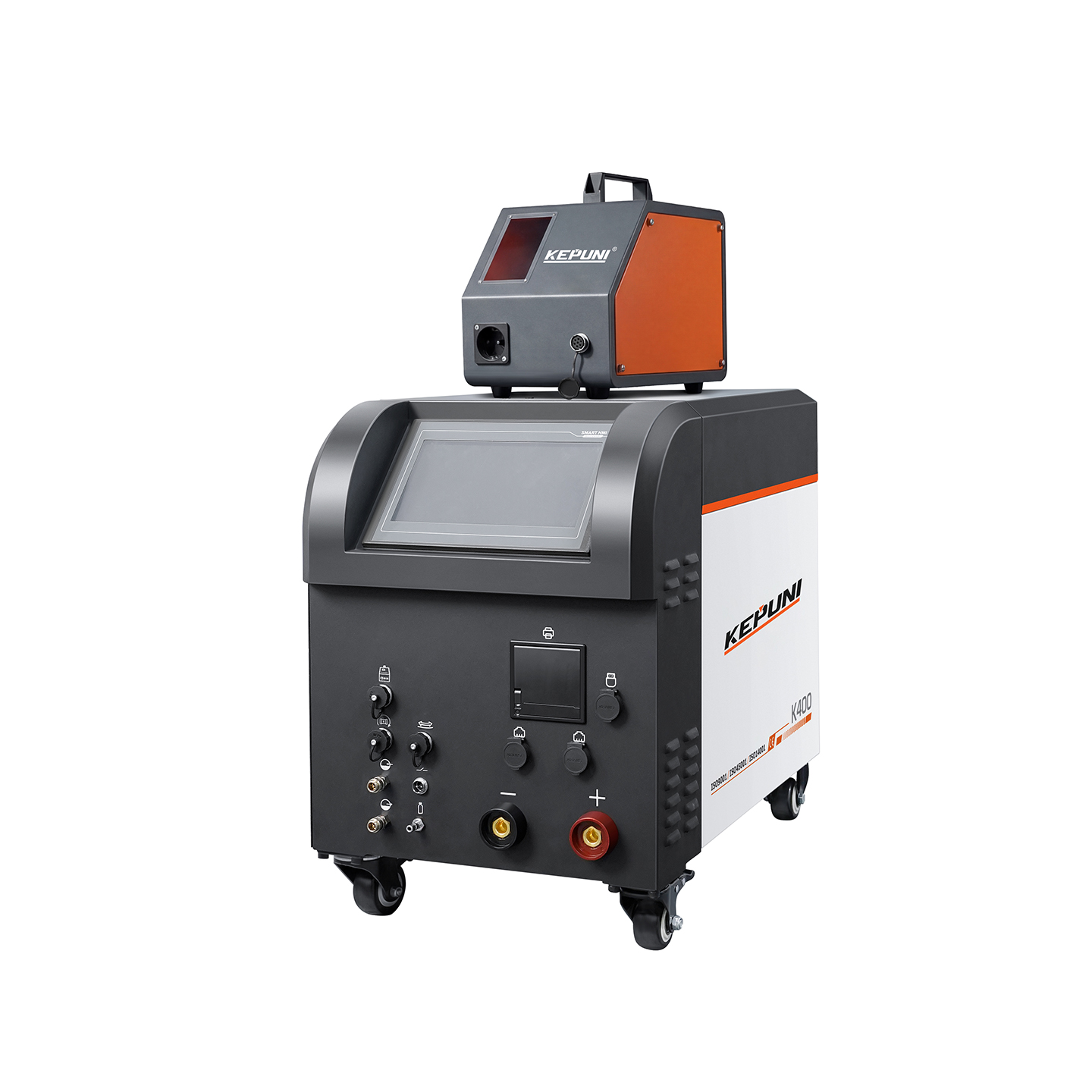
Open pipe welding machines are used for larger-diameter industrial piping in oil, gas, and petrochemical projects.
Market Structure and Supplier Landscape
The orbital welding equipment market is consolidated around a small number of established manufacturers. Major players in the global orbital welding equipment market include Lincoln Electric, ESAB (Colfax), Swagelok, AMI (Arc Machines, Inc.), and Polysoude. Chinese manufacturers such as KEPUNI compete on specification range, delivery, and technical support, with a portfolio that spans weld heads, power supplies, and tube-to-tube-sheet systems.
Regional data favors Asia Pacific, which held the largest regional revenue share of the welding equipment market at 37.0% in 2025, according to Grand View Research; the U.S. welding equipment market is expected to grow at a CAGR of 4.2% from 2026 to 2033. Buyers should note that published estimates of the orbital welding machine market differ by scope: figures range from approximately USD 0.83 billion to USD 1.32 billion depending on whether the analysis covers full systems or only weld heads and power sources.
Orbital Welding vs. Manual TIG: Decision Factors
Compared with manual TIG, orbital welding offers three practical advantages. Repeatability: a stored weld schedule reproduces the same arc conditions for every joint, reducing weld-to-weld variability. Contamination control: closed-head designs provide a controlled inert-gas atmosphere that is difficult to achieve manually, which is why orbital welding is standard in clean-room and pharmaceutical piping. Traceability: automated parameter control supports the documentation requirements of regulated industries.
The honest limitation is upfront cost. An orbital welding system, comprising a weld head plus power supply, requires a higher capital investment than a manual TIG torch, and welders need training in programming and maintenance. For projects with low joint counts, manual welding may still be more economical; for high-volume, high-integrity piping, the per-joint cost of orbital welding is typically lower. The final price of an orbital welding machine depends on configuration, working range, and accessories.
Future Outlook
Market projections point to continued growth, with the global orbital welding machine market expected to reach USD 2.07 billion by 2030. The fastest-growing demand is in high-purity piping for semiconductor and pharmaceutical facilities, where contamination control requirements continue to tighten. Oil and gas remains the largest application segment, sustaining demand for open-head and girth welding systems. With Asia Pacific already the largest regional market, manufacturers that design and build in the region are positioned to serve both local and export demand.
FAQ
What is an orbital welding machine used for?
An orbital welding machine automates the GTAW (TIG) welding of pipes, tubes, and tube-to-tube-sheet joints. It is used in industries including chemical and petrochemical processing, power generation and boilers, water treatment and HVAC, semiconductor manufacturing, food and beverage production, and pharmaceuticals, where weld quality and reproducibility are critical.
How does an orbital welding machine differ from manual TIG welding?
In manual TIG welding, the welder controls the torch by hand. In orbital welding, a mechanized weld head rotates the electrode around a stationary pipe while the power supply governs current, arc voltage, and travel speed. This removes operator-dependent variability and enables reproducible welds, particularly in high-purity applications.
What pipe sizes can orbital welding machines handle?
KEPUNI's orbital welding range covers pipe outer diameters from 3.175 mm (5H Series) to over 325 mm (K Series open pipe welder), with wall thicknesses from 0.5 mm to 13 mm. Tube-to-tube-sheet welders handle tube outer diameters from 4.5 mm to 65 mm, and the XD-GH girth welding machine covers pipe and vessel diameters from 20 mm to 960 mm.
What is the difference between closed-head and open-head orbital welding?
Closed-head orbital welding systems enclose the weld joint in a sealed gas chamber, preventing atmosphere contamination and ensuring high-purity GTAW, which is why closed-head designs are standard in clean-room and semiconductor applications. Open-head systems expose the arc and are used for larger-diameter industrial pipe where a closed chamber is impractical.
What standards apply to orbital welding in regulated industries?
Standards vary by industry. Semiconductor applications commonly cite SEMI F57 cleanliness and Class 1 cleanroom compatibility. Pharmaceutical projects reference 3A Sanitary Standards, FDA guidance, and EU GMP. Food and beverage lines require EHEDG certification and no dead leg design. Chemical plants may require ATEX/IECEx, API, and NACE compliance. Boiler and pressure equipment fabrication typically follows ASME Section IX or the Pressure Equipment Directive.
Who are the major orbital welding machine manufacturers?
Major players in the global orbital welding equipment market include Lincoln Electric, ESAB (Colfax), Swagelok, AMI (Arc Machines, Inc.), and Polysoude. KEPUNI, a brand of Shanghai Chuanli Industrial Co., Ltd., is a China-based manufacturer supplying export markets across Europe, Asia, South America, North America, and the Middle East.
KEPUNI — a brand of Shanghai Chuanli Industrial Co., Ltd. — supplies orbital welding machines for high-purity and industrial pipe welding worldwide. For product specifications, pricing, and lead times, contact the sales team at info@kepuni.com or +86 18221803984.
Download the company brochure: KEPUNI Product Brochure (PDF)