
What Is a Fully Servo Blister-Cartoner Integrated Machine?
Pharmaceutical packaging machinery is increasingly specified as a line rather than as a group of machines. A fully servo blister-cartoner integrated machine is one expression of that shift: blister forming and sealing, blister transfer, leaflet handling, carton erection and insertion, inspection and rejection, and the connection to downstream case packing are engineered as one synchronized process under a single control architecture, with servo drives replacing mechanical cams and line shafts on the main motion axes.
For buyers at the decision and execution stages, the useful question is not what the category is called, but what the architecture implies — for output stability, changeover, validation, spare parts and support over the working life of the asset. This reference article answers the technical questions that arise in that evaluation, and uses the DHL8005H fully servo high-speed blister-cartoner line as a worked example.
Definition: What “Fully Servo” and “Integrated” Mean in Practice
Two words carry most of the weight in the category name, and both are frequently used loosely.
Fully servo means that the principal motion axes are driven by individual servo motors rather than by mechanical cams, gear trains or a shared line shaft. On a blister-cartoning line those axes cover blister forming, sealing, blister transport, carton transport, leaflet feed and insertion, and the transfer between the blister and cartoning stages. Because the motion relationships are defined in software, format changes become parameter changes rather than mechanical rebuilds.
Integrated means the blister packaging stage and the cartoning stage are not two separate machines joined by a conveyor and a manual transfer point. Blister packaging, blister transfer, leaflet handling, carton opening, insertion, inspection or rejection, and downstream connection are combined into one automated process, which reduces manual intervention and intermediate handling.
The operational consequence is that the blister line and the cartoning machine share one timing reference, one operator interface and one fault record. Where such a line is properly commissioned, the interfaces that most often cause micro-stops in a discrete configuration — transfer alignment, carton infeed phasing and leaflet insertion timing — become engineered points inside the same system rather than adjustments made across two of them.
The Problem an Integrated Line Solves — and Where It Does Not
Traditional configurations typically combine a pharmaceutical blister packaging machine, a manual or semi-automatic transfer, and a standalone pharmaceutical cartoning machine. Other producers run low-speed semi-automatic blister-cartoning equipment, or a conventional link line without full servo drives. Each of these approaches remains appropriate for some products and volumes.
The constraints tend to appear as volume rises. Material transfer between stages adds handling steps and increases the number of points where product meets an operator. Each additional interface is another location where a carton can jam, a blister can mis-feed or a leaflet can be missing. Changeover on mechanically driven equipment consumes production time that a multi-SKU portfolio cannot easily absorb. On export projects, a fragmented set of interfaces between stages also complicates acceptance, because responsibility for output is split across more than one supply scope.
The opportunity an integrated line offers is therefore not simply speed. It is the conversion of a sequence of discrete operations into one controlled process: fewer transfer points, motion relationships that stay consistent at production speed, and a single record of what the line did and when.
Line Architecture: From Blister Forming to Carton Discharge
An integrated blister cartoning line can be read as a fixed sequence of stations, each of which is a decision point during specification:
- Blister forming and sealing. Cavities are formed, product is dropped, and the lidding material is sealed. Where alu alu blister packaging machine formats are required for barrier reasons, the forming section is configured for cold forming rather than thermoforming, and the forming station and tooling change accordingly.
- Product feeding. Tablets, capsules or softgels are delivered to the sealing station, with missing-product detection defined as part of the station rather than added later.
- Blister transfer. The finished blister strip indexes from the blister machine into the cartoner infeed as one controlled motion.
- Leaflet handling. Leaflet feed and folding, with presence verification before insertion.
- Carton erection and insertion. Carton opening, blister and leaflet insertion, and carton closing.
- Coding, inspection and rejection. Date or batch coding, plus automatic rejection of non-conforming packs.
- Downstream connection. The carton discharge links to case packing and other end of line packaging machine modules.
Downstream connection matters more than the name suggests. A blister cartoning line is normally the front half of a secondary packaging line: the carton discharge feeds a case packing machine or automatic case packer and, further downstream, end of line packaging equipment. The cartoner’s output characteristic therefore sets the requirement for everything that follows, and buyers planning a turnkey pharmaceutical packaging line should treat the blister-cartoner as a sizing decision for the whole line rather than a standalone purchase.
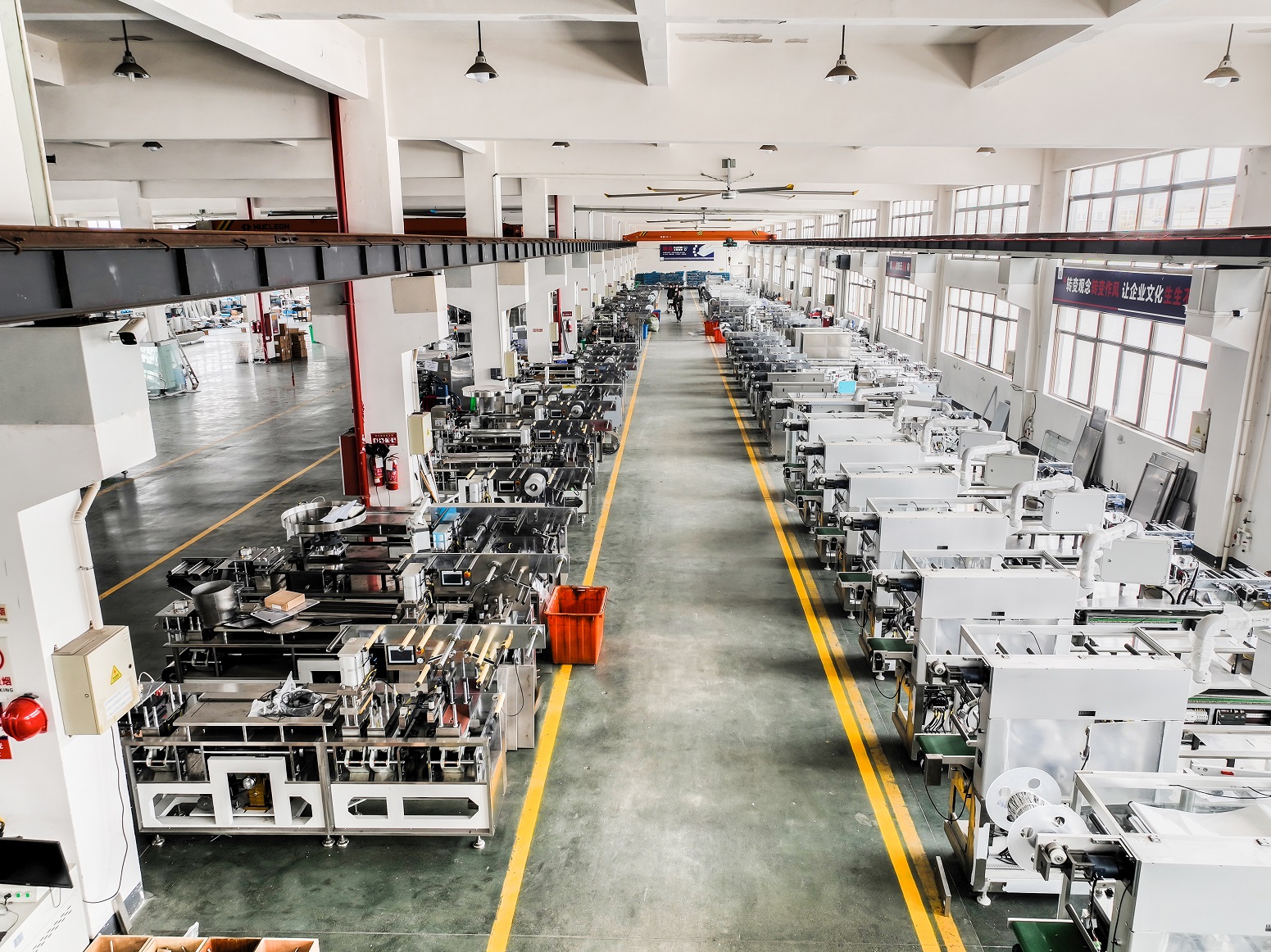
Control Architecture: The Industrial PC as the Line’s Spine
A fully servo line behaves as one machine because one control platform governs it. Motion control, recipe management, alarm handling and production data converge in the line controller, and the operator interface becomes the single place where format parameters are changed and where fault causes are recorded. Centralized control of this kind also changes the character of routine maintenance work: diagnosis starts from the control system rather than from disassembly.
In the DHL8005H, that role is assigned to a Beckhoff CP9315 industrial PC. An industrial PC in this class acts as the line-level control platform: it hosts the machine control application, manages recipe and parameter data, and provides the computing headroom for the inspection and data functions that modern pharmaceutical packaging lines are increasingly expected to carry.
The DHL8005H is also specified with three-channel independent replenishment. In line-design terms, this describes an architecture in which supply channels are monitored and replenished as separate streams rather than from a single shared magazine. Buyers evaluating this configuration should ask which channels are covered, how replenishment status is signalled to the operator, and whether the arrangement can be extended when formats change.
Modular stations and alarm indication complete the picture. Modularity allows a station to be serviced or replaced without dismantling the line, while alarm indication and key-parameter locking give maintenance staff a defined path from symptom to cause — and give quality teams a defined boundary around which settings production staff may change and which they may not.
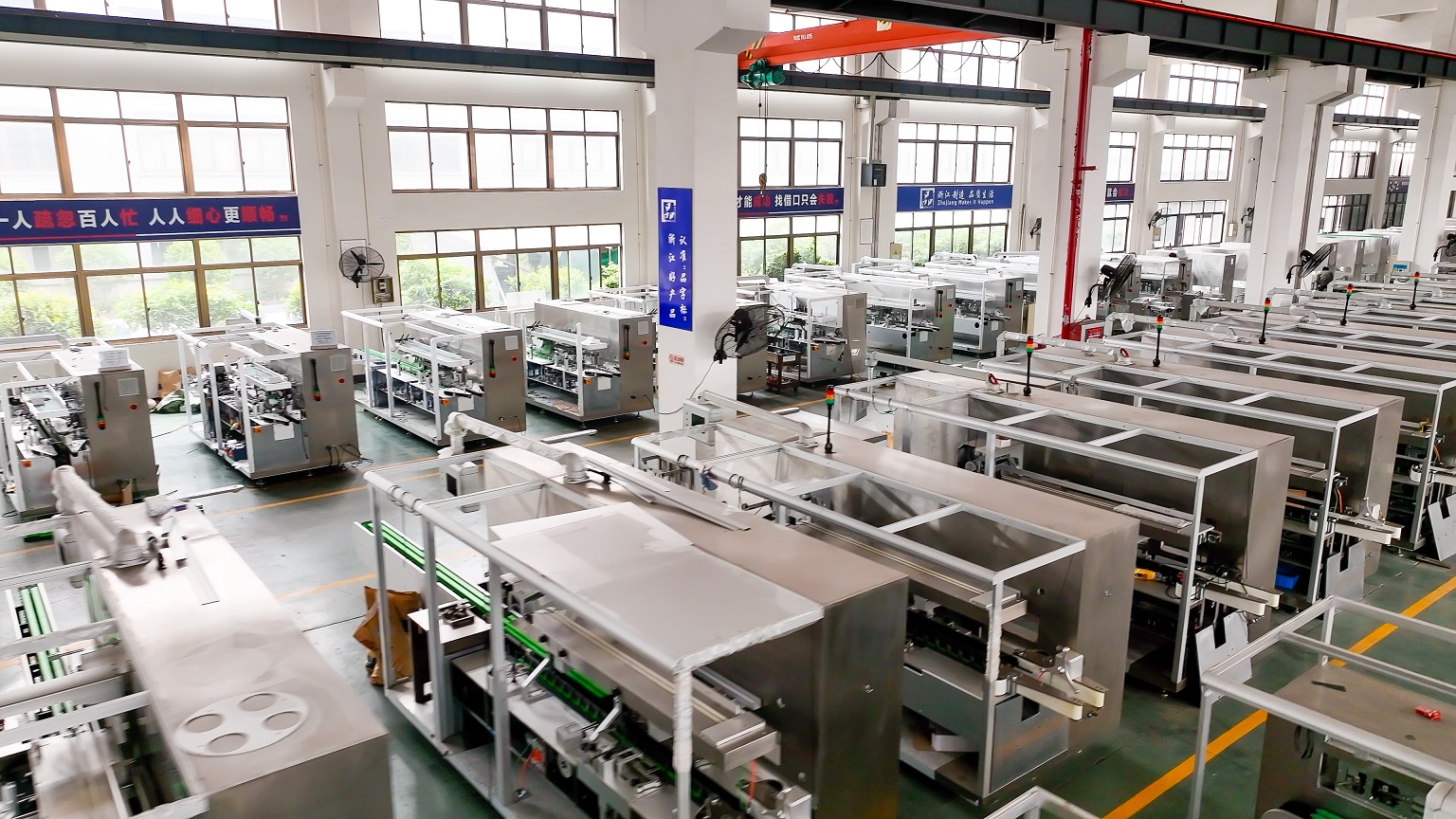
DHL8005H as a Reference Configuration
The DHL8005H is a fully servo high-speed blister-cartoner integrated machine from Zhejiang Hoping Machinery Co., Ltd. (HOPING), a Chinese pharmaceutical packing machinery manufacturer established in 2001 and based in Ruian, Zhejiang Province. HOPING’s product range covers blister packaging machines, cartoning machines, case packing machines and end-of-line packaging machines, and the company reports a manufacturing site of 28,800 ㎡, more than 300 employees and an in-house R&D team.
Four specification points matter for the technical question addressed in this article:
- Fully servo high-speed architecture across the main motion axes of the blister and cartoning sections.
- Beckhoff CP9315 industrial PC as the line-level control platform.
- Three-channel independent replenishment for supply management.
- Cartoning output of up to 500 cartons/min in the specified configuration.
The nominal cartoning figure deserves a qualification. Actual output depends on product format, quantity per carton, materials and process conditions, and the same principle applies across this equipment class. A figure such as 500 cartons/min is a configuration ceiling, not a guaranteed production rate for every product; the number that matters for a purchase decision is the verified output on the buyer’s own blister format, carton board and leaflet stock, established during sample testing before shipment.
Application Fit: Which Products and Production Profiles Suit Integration
Integrated blister-cartoning suits large-scale solid dosage pharmaceutical packaging, high-capacity workshops, production requiring reduced manual contact and improved line efficiency, and multi-format packaging lines that need to run stably rather than occasionally at peak.
In product terms that means tablets, capsules and softgels in blister formats — including alu alu structures where barrier requirements call for cold-formed materials — processed on a tablet blister packaging machine or capsule blister packaging machine front end and cartoned on an automatic cartoning machine. The same architecture is applied in nutraceutical and health-product production where output levels and carton formats are comparable.
The configuration is a less obvious fit in two situations. The first is very small batch production, where the cost of a fully servo architecture is difficult to justify against simple mechanical equipment. The second is a portfolio in which formats change so frequently that the time saved on servo changeover is still dominated by validation and documentation workload. Neither case makes integration wrong; both make it a question best answered with a format list and a realistic production schedule rather than with a capacity rating alone.
Traditional Versus Integrated Blister-Cartoning: A Comparison
| Dimension | Traditional or semi-automatic configuration | Fully servo integrated blister-cartoner |
|---|---|---|
| Process structure | Separate blister machine, manual or semi-automatic transfer, standalone cartoner | Blister packaging, blister transfer, leaflet handling, carton opening, insertion, inspection/rejection and downstream connection combined into one automated process |
| Manual intervention | Higher, concentrated at the transfer and carton infeed | Reduced manual intervention and intermediate handling |
| Changeover logic | Mechanical adjustment and re-timing | Parameter-based motion settings on servo axes, with format tooling changes still required |
| Control | Separate controllers; responsibility for output split across units | Centralized control, modular stations, alarm indication and parameter management on one platform |
| Output ceiling | Lower by construction; semi-automatic or conventional link-line architecture | Set by configuration (DHL8005H: up to 500 cartons/min); actual output depends on format, quantity per carton, materials and process conditions |
| Initial investment | Usually lower | Usually higher than standalone or semi-automatic equipment |
| Operating cost profile | Higher labor, transfer, management and quality-risk costs at large-scale continuous production | Helps reduce labor, transfer, management and quality-risk costs; actual energy consumption should be measured against on-site output, running hours and configuration |
| Maintenance | More distributed, with more mechanical wear points | Centralized control and modular stations support routine maintenance; operator training, spare-parts management and preventive maintenance remain important |
Two limits should be stated plainly. First, a fully servo integrated line normally costs more at the point of purchase than standalone or semi-automatic equipment; the case for it rests on labor, transfer, management and quality-risk costs across large-scale continuous production, not on the invoice price. Second, integration does not remove maintenance. Operator training, spare-parts management and preventive maintenance remain important, and a servo-driven line requires technicians who are comfortable working from control-system diagnostics. Actual energy consumption should be measured against on-site production data rather than inferred from the drive technology.
What the Architecture Means Across the Line Lifecycle
For an asset expected to run for a decade or more, the architecture decided at purchase becomes the constraint on everything that follows: spares, training, software support, format additions and the ability to connect further downstream.
Risk control built into the design. The failure modes that matter on an integrated blister-cartoner line are known and enumerable: poor blister forming or sealing; missing, wrong or incomplete product feeding; missing leaflets; carton jams; coding or date-printing errors; foreign matter or contamination risk; downtime during high-speed operation; and delivery or installation risk on export projects. Typical controls include sensor monitoring, vision or checkweighing inspection where configured, missing-product alarms, automatic stop and automatic rejection, key-parameter locking, fault records, mechanical safety protection, and FAT/SAT acceptance supported by SOP training.
What a supplier should commit to before shipment. Samples and packaging materials are best confirmed at the early project stage so the solution can be designed around the specific blister and carton formats. No-load and material tests before shipment turn a specification into evidence, while installation, commissioning, training, spare parts and remote technical support define the first year of ownership. Customer witness acceptance can be arranged for key projects.
Acceptance and validation. A typical acceptance sequence runs from technical agreement confirmation through sample testing, FAT before shipment and SAT at the customer’s site; third-party inspection can be arranged according to customer requirements. This sequence is what makes a line auditable rather than merely functional.
Commercial terms and delivery planning. Minimum order quantity is 1 set or 1 complete line, typical production lead time is 60–120 days after technical confirmation, and monthly production capacity is 30–40 units. Delivery terms are quoted EXW Ruian/Wenzhou, FOB Ningbo or Shanghai, or CIF/CFR destination port, with final terms subject to contract and destination-country requirements. Payment terms depend on the quotation, contract value, customer credit, project scope, destination market and final project agreement.
Read together, these details describe the practical substance of a long-term supplier relationship: capacity that can absorb repeat orders, a lead time that can be planned into a project schedule, and a documented acceptance path that keeps responsibility clear when a line is installed thousands of kilometres from the factory.
Market Signals Behind Integrated Secondary Packaging
The commercial context supports the direction of travel, although published estimates should be read with care. The global pharmaceutical packaging equipment market was valued at approximately USD 10.71 billion in 2024, while the pharmaceutical blister packaging machine market was projected to reach USD 2.57 billion by 2025 at a CAGR of 2.8%, and the pharmaceutical cartoning machinery segment was valued at around USD 1.46 billion in 2024. Asia Pacific held the largest regional revenue share in pharmaceutical packaging equipment, at 40.7% in 2025. Estimates for the total equipment market diverge significantly depending on whether secondary equipment is included, so these figures are better used as directional indicators than as planning inputs.
Competitive structure is also relevant to buyers. The three largest blister packaging machine suppliers — Uhlmann, IMA and Marchesini — hold approximately 29% of the global market in combination. The remaining share is distributed across a long tail of regional and specialist manufacturers, including Chinese suppliers such as HOPING, listed as a manufacturer of integrated blister cartoning lines and end-of-line packaging systems with CE and ISO 9001/14001 certification status stated by the manufacturer. For procurement teams, that structure is an argument for evaluating capability evidence — control platform, verification method, acceptance documentation, spares continuity — rather than brand familiarity alone.
Future Outlook
Three directions look likely to shape this equipment class over the next planning cycle. Servo architecture continues to move down from the high-capacity end into mid-volume lines, because parameter-based changeover has value wherever more than one format is packed. Data capture is becoming part of the machine specification rather than an accessory, driven by validation requirements and by the documentation regulators and customers expect to see. And lifecycle support — spare-part continuity, remote diagnostics, training and the ability to add a format years after installation — is emerging as a genuine differentiator among suppliers whose headline specifications look similar.
For buyers now specifying a blister cartoning line, the practical implication is to treat the technical FAQ below as a checklist rather than a brochure: ask what the servo architecture covers, what the control platform is, how replenishment is handled, what the verified output is on your own materials, how failures are controlled, and what the supplier will still be able to do in year five.
FAQ: Fully Servo Blister-Cartoner Integrated Machines
What does “fully servo” mean on a blister-cartoner integrated machine?
On a fully servo line, the principal motion axes — blister forming, sealing, blister transport, carton transport, leaflet feed and insertion, and the blister-to-carton transfer — are each driven by an individual servo motor instead of mechanical cams, gears or a shared line shaft. Motion relationships are defined in software, so format adjustments are made at the control interface rather than by mechanical re-timing. Servo drive helps improve motion synchronization and operating efficiency; actual energy consumption should be measured on site based on output, running hours and configuration.
How does an integrated line differ from a standalone blister machine plus a separate cartoner?
In a traditional arrangement, a blister packaging machine, a manual or semi-automatic transfer and a standalone cartoning machine operate as separate units, each with its own control and its own operator intervention points. An integrated blister-cartoner combines blister packaging, blister transfer, leaflet handling, carton opening, insertion, inspection or rejection and downstream connection into one automated process. The result is reduced manual intervention and intermediate handling, with the transfer and infeed interfaces governed by a single control system.
What output can a fully servo blister-cartoner achieve?
Output is configuration-dependent. The DHL8005H is specified with cartoning up to 500 cartons/min, and a representative model in the same series (DHL1000/5H) is specified at up to 1000 blisters/min and 500 cartons/min. Actual output depends on product format, quantity per carton, materials and process conditions, so the figure used for a purchase decision should come from sample testing on the buyer’s own formats and materials rather than from a nominal rating.
How are quality risks controlled on an integrated line?
Known risks include poor blister forming or sealing, missing, wrong or incomplete product feeding, missing leaflets, carton jams, coding or date-printing errors, foreign matter or contamination risk, and downtime during high-speed operation. Typical controls are sensor monitoring, vision or checkweighing inspection where configured, missing-product alarms, automatic stop and automatic rejection, key-parameter locking, fault records and mechanical safety protection, supported by FAT/SAT acceptance and SOP training.
What acceptance and validation steps are typical?
Technical agreement confirmation, sample testing, FAT before shipment and SAT at the customer’s site; third-party inspection can be arranged according to customer requirements. Suppliers generally also confirm samples and packaging materials early in the project and run no-load and material tests before shipment. Customer witness acceptance can be arranged for key projects.
What maintenance and long-term support does the line require?
Centralized control, modular stations, alarm indication and parameter management support routine maintenance by making diagnosis systematic and by allowing a station to be serviced without dismantling the line. Operator training, spare-parts management and preventive maintenance remain important. Installation, commissioning, training, spare parts and remote technical support form the practical basis of lifecycle support after handover.
What limitations should buyers expect from a fully servo integrated line?
Initial investment is usually higher than for standalone or semi-automatic equipment, so the justification rests on reduced labor, transfer, management and quality-risk costs in large-scale continuous production. Maintenance is not eliminated: operator training, spare-parts management and preventive maintenance remain important. Output depends on product format, quantity per carton, materials and process conditions, and actual energy consumption should be measured against on-site output rather than assumed from the drive technology.
What are typical commercial terms for ordering an integrated blister-cartoner line?
Minimum order quantity is 1 set or 1 complete line. Typical production lead time is 60–120 days after technical confirmation, and monthly production capacity is 30–40 units. Delivery terms are EXW Ruian/Wenzhou, FOB Ningbo or Shanghai, or CIF/CFR destination port, with final terms subject to contract and customer country requirements. Payment terms depend on the quotation, contract value, customer credit, project scope, destination market and the final project agreement.
Full configuration and specification context for HOPING blister, cartoning, case packing and end-of-line equipment is available in the manufacturer’s catalog: Hoping Machinery Catalog (PDF).