
What Is a Control Pendant? Basics for Crane and Hoist Buyers
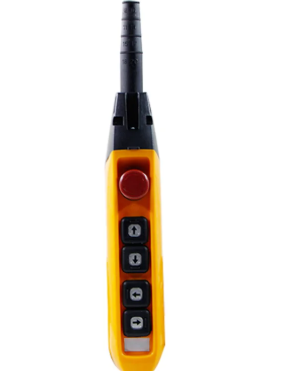
A control pendant, also called a pendant control station, push button pendant, or crane pendant control, is a handheld electrical control station that allows an operator to move a crane, hoist, or other industrial machine from the working floor. Rather than being fixed to a panel, the station travels with the operator so that the controls remain visible and within reach during lifting and moving tasks.
This article is intended as an industry-level reference for buyers in the discovery and research phase. It defines common pendant terms, explains how a push button pendant works, describes typical applications, and places the category in a broader market context.
Problem and Opportunity: Why Basic Pendant Knowledge Matters
Industrial buyers who research overhead cranes, hoists, and automated production equipment encounter several overlapping names for the same type of control device: pendant control station, pendant station, push button pendant, crane pendant station, pendant station for crane, and hoist pendant control. The terminology can create confusion before the commercial comparison even begins.
A pendant station is also a safety-relevant component. The rated voltage and current, number of buttons, emergency stop layout, enclosure protection rating, and compatibility with the hoist or crane control circuit all determine whether the device is suitable for a specific project. Buyers who start with a clear understanding of these basics can ask more precise questions, compare supplier documents more effectively, and avoid mismatched specifications.
Control Pendant, Pendant Station, Push Button Pendant: Terminology
The names used in product catalogs vary by manufacturer, region, and application. The table below summarizes the most common terms as they are used in industrial crane, hoist, and equipment-control settings.
| Term | General meaning | Common usage |
|---|---|---|
| Control pendant | A handheld switch station used to control industrial equipment from the operator's position | Broader category name; often short for pendant control |
| Pendant control station | A complete assembly of push buttons, contacts, and an enclosure suspended by a cable | Frequently used in crane and hoist specifications |
| Push button pendant | A pendant station that uses moment-contact push buttons for manual operation | Common when describing the button interface itself |
| Crane pendant control / hoist pendant | A pendant applied to crane or hoist motion control | Specifies the type of equipment being controlled |
| Pendant station for crane | A control station selected for overhead crane or gantry crane use | Used in procurement language and request-for-quote documents |
In practice, one product can be described by several of these names. For example, the WILMALL model COP-5MSS-DD is categorized both as a control pendant station and as an industrial push button pendant for use in crane, hoist, and equipment control.
How a Push Button Pendant Station Works
A wired control pendant connects through a cable to the hoist or crane's control panel. The operator's button signal does not directly carry high motor power in every installation; in many designs the pendant sends a command to a contactor, relay, or drive that then controls the motor.
The basic operating sequence for a push button pendant is:
- The operator presses a button such as hoist up, hoist down, trolley left, or trolley right.
- Inside the pendant, the electrical contacts for that button close.
- A control signal travels through the pendant cable to the equipment control circuit.
- The control system, typically a contactor or drive, activates the corresponding motor movement.
- The equipment moves until the operator releases the button or presses a stop/emergency stop.
The WILMALL model COP-5MSS-DD illustrates the core characteristics of this category. It is a five-button handheld control station with an emergency stop, designed for multi-button manual operation. Its rated current is 10 A and rated voltage is AC 500 V. The housing material is plastic. These ratings place the product in the industrial control class used for cranes, hoists, lifting equipment, and machine control systems.
For an operator, the most visible part of a pendant station is the button array and the emergency stop. For buyers, the internal design and electrical rating matter equally because the pendant is part of a larger control loop. The enclosure and operating environment also play a role. WILMALL's application documentation notes that this type of pendant is intended for environments without explosive media and without corrosive gases, liquids, or insulating gas/liquid bodies that could damage metal, rubber, or electrical insulation.
Typical Applications of Pendant Control Stations
Control pendants are commonly used in industries where floor-level control of overhead equipment is required. WILMALL describes the control pendant as part of the industrial hoist, crane, and mobile equipment control industry. Typical scenarios include crane and hoist operation in plants, warehouses, and industrial work sites.
The same application scope covers production environments where operators manage:
- Industrial production equipment
- Construction machinery
- Automation systems
- Lifting and moving equipment such as electric hoists and overhead cranes
In one documented WILMALL application scenario in Australia, the product is used for industrial automation and control, with an IP65 protection rating specified. IP65 means the enclosure is designed to resist dust ingress and low-pressure water jets, which is useful in locations where humidity, washdown, or rain intrusion is a consideration. The actual application requirement should always be confirmed against the specific installation environment.
Supplier Snapshot: Wenzhou Mofan Electric Technology Co., Ltd. (WILMALL)
Wenzhou Mofan Electric Technology Co., Ltd., operating under the brand WILMALL, is a Chinese electrical equipment manufacturer based in Wenzhou, Zhejiang Province. Established in 2025, the company specializes in industrial automation and power distribution components, and its main product line includes control pendant stations. It operates as a manufacturer, supplier, wholesaler, and OEM/ODM factory.
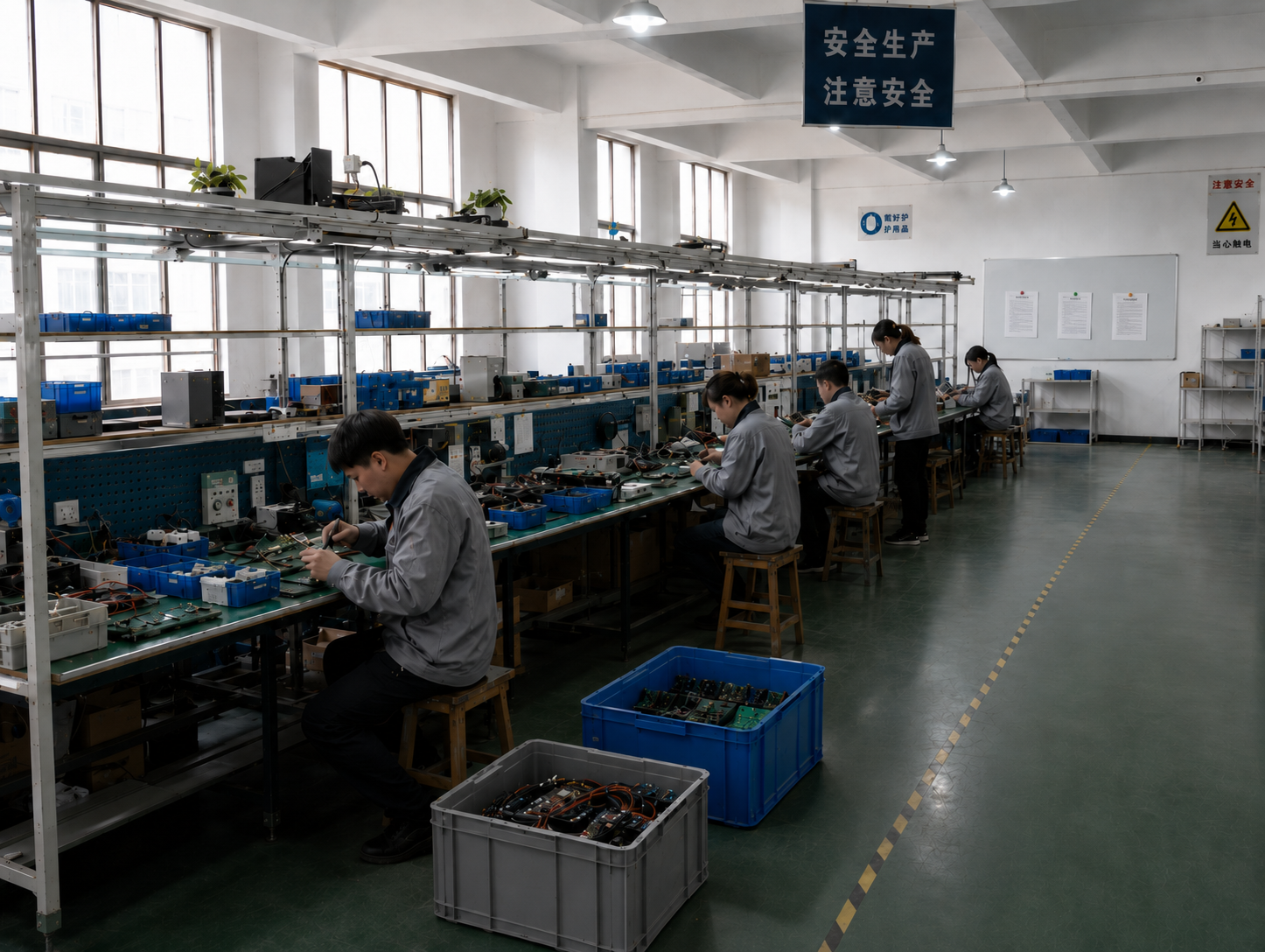
According to the company profile, WILMALL's manufacturing facility covers 2,000 square meters and has an annual production capacity of 200,000 units. The operation is compact, with an R&D team of three engineers and approximately seven staff members. The product catalog includes the COP-5MSS-DD pendant model discussed in this article.
WILMALL also reports a significant export share. Export business accounts for 80 percent of total sales, with major markets including Pakistan, Korea, Australia, and Malaysia. For global buyers, this operational profile provides a starting point for supplier qualification rather than a substitute for a formal audit.
Market Context: Pendant Crane Control Station Demand
Published market estimates indicate continuing demand for wired pendant crane control products. According to Future Data Matrix, the global pendant crane control station market was valued at approximately USD 275.60 million in 2025 and is projected to reach USD 423.80 million by 2032, representing a compound annual growth rate of 5.1 percent. North America was the leading region in 2025, with an estimated market share of 34.2 percent.
Market definitions differ across reports, and buyers should treat aggregate figures as directional. A separate market study covering the broader pendant control mechanical switch category places the 2025 global value at USD 722.5 million. The difference in figures is mainly due to how the product category is defined: one scope is limited to crane control station products, while the other includes a wider range of mechanical switch devices.
| Market scope | 2025 market value | 2027 / 2032 projection | Growth indicator |
|---|---|---|---|
| Pendant crane control stations | USD 275.60 million | USD 423.80 million by 2032 | CAGR 5.1% |
| Pendant control mechanical switches | USD 722.5 million | Not disclosed in verified data | Broader category |
Sources: Future Data Matrix; Pendant Control Mechanical Switch Market Report.
These figures help explain why pendant control stations remain a relevant industrial component even as wireless remote controls grow. For buyers, the takeaway is not that every crane should use a wired pendant, but that wired pendant stations remain a substantial, widely used part of the industrial control ecosystem.
Comparison: Wired Pendant Control versus Alternative Control Interfaces
Traditional wired push button pendants must be evaluated against other control methods, especially when a purchasing decision includes several crane or hoist options. Each approach has benefits and trade-offs.
| Control approach | Advantages | Limitations |
|---|---|---|
| Wired push button pendant | Relatively simple, low-cost, predictable operation; no batteries or radio spectrum issues; familiar to operators and maintenance teams | Operating range limited by cable length; cable can be subject to wear and snagging; requires strain relief and periodic inspection |
| Wireless radio remote control | Greater operator mobility; less physical cable handling; can be useful when the operator needs to observe the load from different positions | Requires battery management, radio authorization, and more complex troubleshooting; total installed cost can be higher |
| Fixed control panel or cabin control | Permanent location; no trailing cable; protects controls from the working floor environment | Operator cannot follow the load; visibility can be limited; not always practical for floor-level positioning |
The wired pendant is not always the most flexible option. Its main constraint is physical: the operator must stay within cable reach, and the cable itself needs protection against damage. In settings where the operator has to move long distances alongside a heavy load, a wireless remote may be more practical. In many workshops, however, a pendant station remains the default because it is durable, easy to understand, and independent of battery life.
The WILMALL COP-5MSS-DD fits this conventional pendant model. It offers five push buttons and an emergency stop in one handheld housing, which addresses the most common manual control needs for hoists and small cranes.
Future Outlook for Industrial Pendant Control Products
The market data above suggests that wired pendant control stations will continue to be specified for years to come. At the same time, expectations around safety and documentation are rising. Buyers increasingly check whether a pendant station is aligned with standards such as IEC 60947-5-1, which covers low-voltage switchgear and controlgear, and whether the enclosure rating matches the actual environment.
Another trend is the need for flexible sourcing. Global distributors and equipment builders often request OEM/ODM variations of standard pendants, such as different button markings, cable lengths, or customized legends. Suppliers like WILMALL, which identify themselves as manufacturer, wholesaler, and OEM/ODM factory, are part of that ordering pattern. The practical question for buyers is not whether pendants will disappear, but which supplier can provide consistent manufacturing discipline across standard and customized orders.
Conclusion: A Baseline for Pendant Station Evaluation
For buyers at the research stage, a control pendant should be understood as a safety-related operator interface, not merely an accessory. The key specification points are the number of functional buttons, presence and type of emergency stop, rated current and voltage, housing material, enclosure protection rating, and compatibility with the crane, hoist, or equipment control voltage.
Wenzhou Mofan Electric Technology Co., Ltd., under the WILMALL brand, is one manufacturer that offers a compact five-button pendant station in this segment. Its COP-5MSS-DD model is documented for industrial hoist and crane control use, and the company reports export markets across Asia and Australia. As with any supplier, buyers should verify the specific product details against their own machine control requirements and operational environment before finalizing a procurement decision.
For reference, WILMALL makes additional company documentation publicly available in its downloadable brochure: company brochure.
Frequently Asked Questions
What is a control pendant?
A control pendant is a handheld control station used to operate industrial equipment such as cranes, hoists, and mobile machines. It contains push buttons and often an emergency stop, and it sends commands from the operator to the equipment control circuit.
What is the difference between a pendant control station and a push button pendant?
In most industrial catalogs, the terms overlap. A pendant control station is the complete handheld station, while a push button pendant emphasizes the button-operated interface. A product such as the WILMALL COP-5MSS-DD is described as both a control pendant station and an industrial push button pendant.
Where is a pendant station for crane or hoist typically used?
Pendant stations for crane and hoist use are intended for industrial hoists, overhead cranes, lifting equipment, and mobile equipment control. They are suitable for production equipment, construction machinery, and automation system projects where floor-level manual control is required.
What electrical rating should a pendant station have?
The required rating depends on the control circuit. The WILMALL COP-5MSS-DD, for example, has a rated current of 10 A and a rated voltage of AC 500 V. Buyers should confirm that the pendant rating matches the control panel and consult standards such as IEC 60947-5-1 when applicable.
What does IP65 mean for a pendant control station?
IP65 is a protection rating indicating resistance to dust and to low-pressure water jets. In one documented WILMALL application scenario, an IP65 rating is required for an industrial pendant application in Australia, which can be relevant for environments with humidity, washdown, or rain exposure.
Is WILMALL a manufacturer of control pendants or only a trading company?
Wenzhou Mofan Electric Technology Co., Ltd., operating as WILMALL, states that it is a manufacturer, supplier, wholesaler, and OEM/ODM factory. Its main product line includes control pendant stations, and it reports factory-based production capacity in Wenzhou, China.
¿Tiene preguntas o necesita más detalles?
Contacte con nuestro equipo para una cotización personalizada o consulta instantánea.
Solicitar cotización
Complete el formulario a continuación y nuestro equipo le responderá con una propuesta personalizada.
Chat directo de WhatsApp
¿Prefiere chatear en tiempo real? Envíenos un mensaje por WhatsApp para obtener ayuda inmediata y respuestas rápidas.
- Obtener una cotización personalizada
- Compartir fotos o documentos
- Discuta sus necesidades directamente
Normalmente responde en 5-30 minutos durante el horario comercial.