
What Is a 5 Channel Dash Cam? Buyer Reference 2026
According to a commercial market report published by Fortune Business Insights, the multi-channel segment of the dashboard camera market is projected to grow at a 13.2% compound annual growth rate between 2026 and 2034 — the fastest-growing configuration the report tracks. That figure captures a shift that has been building for several years: the dash cam is moving from a single forward-facing accident recorder toward a multi-camera vehicle awareness system, and the 5 channel dash cam is the clearest consumer-facing expression of that shift.
For buyers entering the category in 2026 — parents securing a rear-facing car seat, rideshare drivers building a defensible record of every trip, or small fleet operators reviewing incidents — the question is no longer whether to install a dash cam. It is how many channels a camera system needs before the situations that actually cause disputes and losses are covered.
This reference explains what a 5 channel dash cam is, what the five channels physically cover, how the configuration compares with dual channel and 4 channel designs, what the available market data does and does not support, and which limitations buyers should understand before purchase.
Why Channel Count Became a Procurement Question
Through most of the last decade, the default dash cam was a single-channel device: one camera, forward-facing, recording the road ahead. A dual channel dash cam added a rear view. Both designs rested on a reasonable assumption — that the events worth recording happen in front of the vehicle.
In practice, the disputes and losses that buyers actually face tend to land elsewhere. A side-swipe in stop-and-go traffic, contact in a parking area, an allegation about what happened inside the cabin, or a child in a rear-facing car seat — each of these falls outside the combined field of view of a front-and-rear pair. The same Fortune Business Insights analysis places side-facing cameras as the fastest-growing sub-segment of the category, expanding at a 16.0% CAGR driven by blind-spot monitoring and parking protection needs. What buyers are purchasing in a multi channel dash cam is not additional footage for its own sake; it is the removal of specific blind spots.
That reframing matters for anyone at the research stage. Channel count is a design decision with a cost, an installation consequence and a privacy dimension attached — not a specification to maximise.
What a 5 Channel Dash Cam Actually Covers
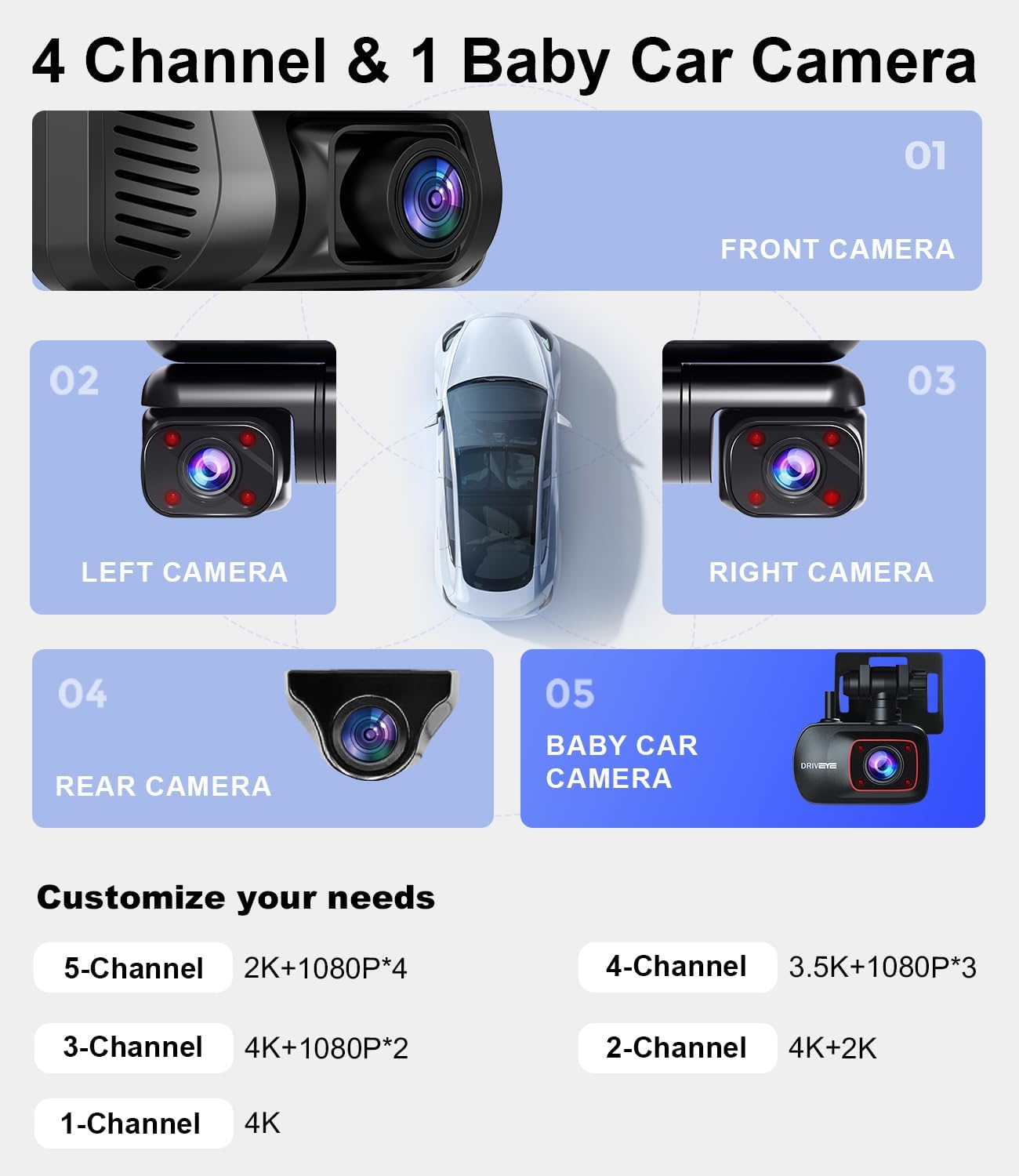
A 5 channel dash cam records simultaneously from the front, rear, left, right and interior of the vehicle — five parallel video streams rather than five views captured one after another.
The simultaneity is the part that matters after purchase. Because each channel carries an aligned timestamp, an incident can be reconstructed along a single timeline instead of being assembled from files that start and stop at different moments. In a disputed event, sequence is often more important than raw image quality.
Resolution is not distributed evenly
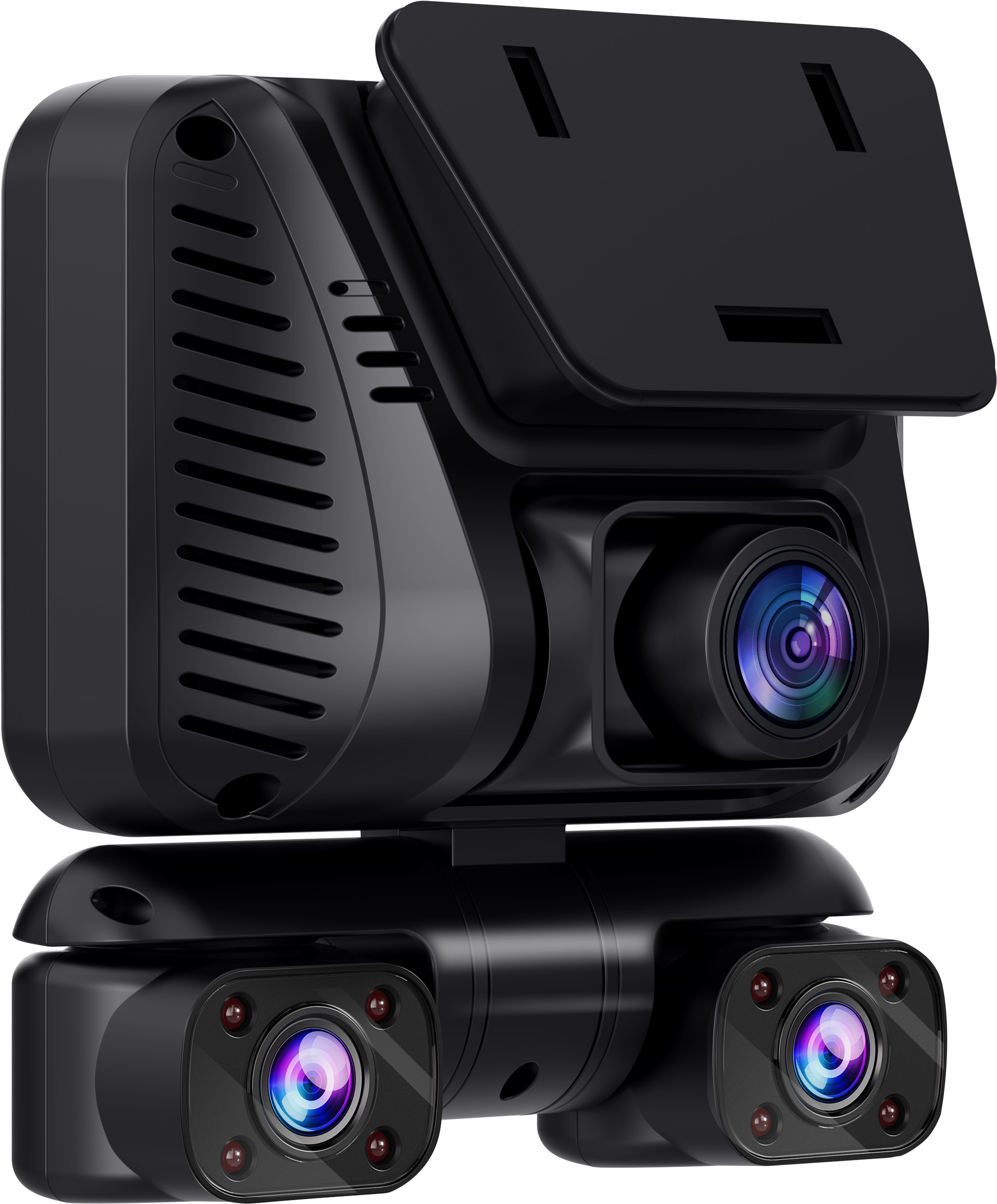
Five-channel systems do not typically give every camera the same sensor budget. In the documented configuration of the Driveye D9 Pro, the system pairs a 4K front camera, a 2K rear camera and three 1080P side and interior cameras, one of which is a dedicated baby monitor camera. The front channel receives the higher pixel budget because number plates must remain legible at distance; side and interior channels generally operate over much shorter range, where fewer pixels are sufficient for the task in front of them.
Channel count is not always camera count
There is more than one way to reach five channels. Some manufacturers supply an integrated unit with all cameras included at purchase. Others use a modular approach — Thinkware documents a multiplexer accessory that adds side, interior and rear views to a main forward-facing dash cam, supporting up to five channels. The modular route offers configuration flexibility, but it also means additional hardware and additional wiring, which is a real installation consideration rather than a marketing detail.
The Cabin Channel Is Where Family Use Diverges
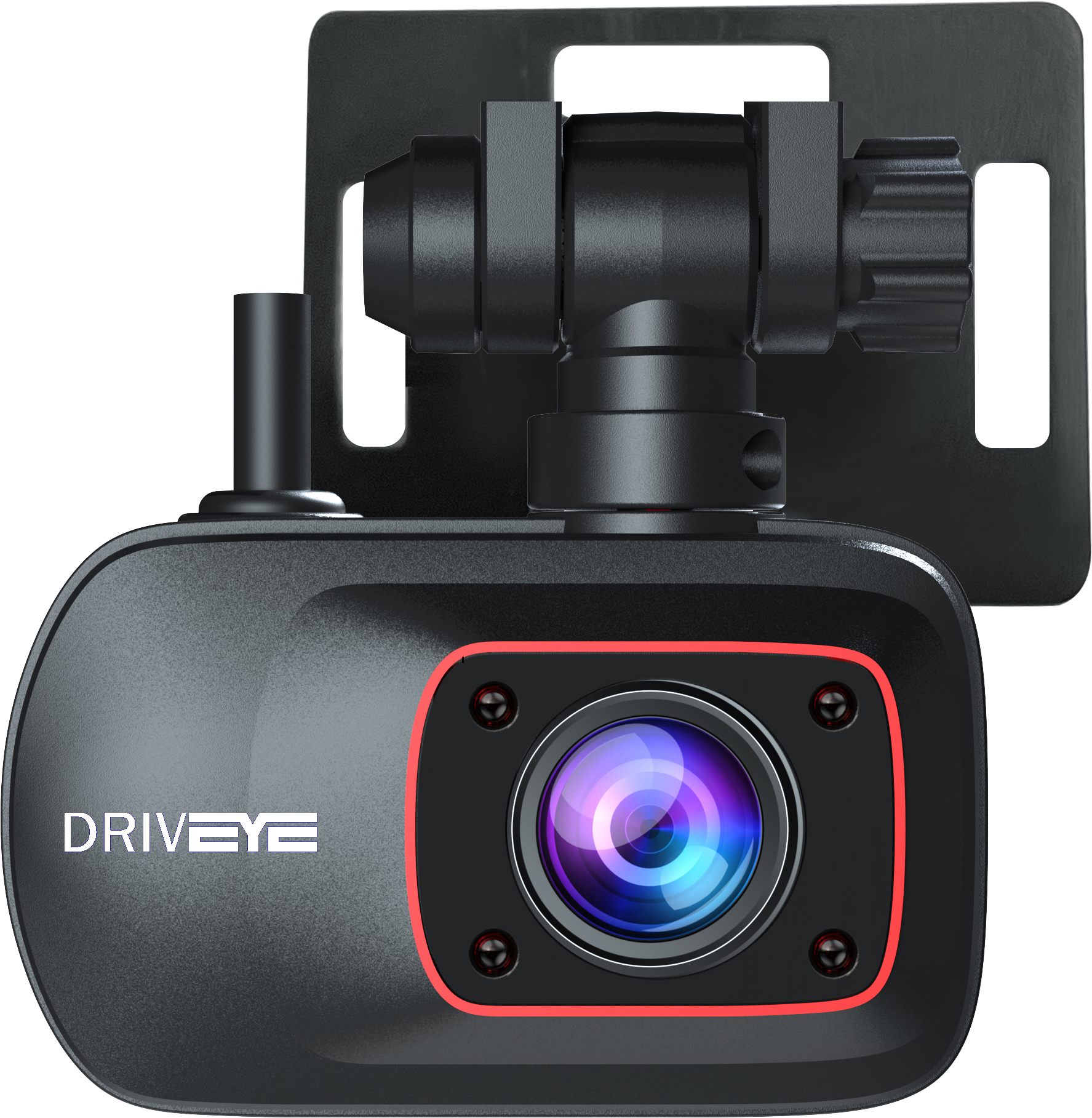
Among the five positions, the interior camera is the one that changes what a dash cam is for. Four external cameras document traffic. A cabin camera introduces a second purpose: keeping an eye on the people being carried.
For a parent driving alone with an infant, the problem is concrete. A rear-facing child is out of the driver's field of view, and turning to check takes attention off the road for a measurable period. An interior camera removes the need to turn. Voice control — documented on the D9 Pro as commands such as “take photo” and “lock the video” — means a moment can be preserved without the driver reaching for a screen.
This is also where the multi channel dash cam overlaps with a distinct product category. Standalone car baby monitors generally provide a live feed only. A five-channel dash cam with baby monitor functionality keeps the monitoring view inside the same recording system that captures road evidence, so a single installation serves both purposes rather than two devices competing for windscreen space, power and attention.
Where Driveye Sits in the Multi-Channel Landscape
Driveye is a premium intelligent multi-channel dash cam brand founded in 2024 and headquartered in Hong Kong, positioned for families, taxi operators and frequent professional drivers. Its product architecture is built around channel count rather than around a single flagship specification.
The brand's most fully documented model is the D9 Pro, described in official product documentation as supporting five-channel simultaneous recording across front, rear, left, right and cabin positions, with an integrated ADAS layer providing forward collision and lane departure warnings, a dedicated in-cabin camera for real-time baby monitoring, hands-free voice control, loop recording with emergency video lock to protect critical footage on impact, built-in GPS for route and speed data, and 24-hour parking mode support.
Positioning within the range is deliberate. The D9 Pro occupies a price band of USD 199.99–259.99, the 4-channel D7 sits at USD 129.99–189.99, and the dual-channel D22 at USD 109.99–159.99. Driveye states the products were developed over approximately 18 months, have been sold in more than 20 countries, and reached a Top 3 ranking in the dash cam category on Kickstarter.
Buyers evaluating the brand at the research stage should separate two kinds of evidence. Product configuration, price bands, camera positions and stated features are documented on official pages. Independent third-party performance testing of this category — night-vision verification, thermal tolerance, parking-mode reliability — is not readily available in public sources. That gap is not unique to Driveye; it affects how much weight any specification comparison deserves.
Who Buys a 5 Channel Dash Cam
Families travelling with infants and children
The family dash cam use case centres on three needs that arrive together: seeing the child without turning around, covering the vehicle's exterior blind spots, and preserving moments that would otherwise be lost. On long road trips the cabin camera serves a dual function — supervision during the drive and a record of the journey afterwards. Because cabin recording raises privacy questions, the practical setup for family use is transparent: the recording is of the occupants who know about it, and the audio setting can be switched off.
Rideshare and taxi drivers
For drivers covering eight to twelve hours a day, multi-angle footage addresses a specific risk profile: passenger disputes, false claims and property damage, where the record has to show both the road and the cabin. ADAS alerts add a second layer by flagging lane drift and unsafe following distance during long shifts. Two operational notes apply here. Passengers should be aware that recording is taking place, and the audio option should be genuinely controllable — this is both a compliance consideration and a practical one.
Truck drivers and small fleet operators
Commercial and long-haul users tend to value multi-channel coverage for a different reason: side contact during tight manoeuvres is a recurring dispute, and front-and-rear cameras frequently miss it. Saved footage and GPS data support incident review, insurance discussions and driver coaching. Parking monitoring during overnight stops is handled with a compatible hardwire kit rather than out of the box.
What the Market Data Shows — and What It Does Not
Three figures from commercial research help frame the category's direction. Market.us estimates global dashboard camera revenue at approximately USD 4.5 billion for 2025. Within that market, Fortune Business Insights identifies multi-channel as the fastest-growing configuration at a 13.2% CAGR across 2026–2034, and side-facing cameras as the fastest-growing sub-segment at 16.0%.
Three caveats belong alongside those numbers. First, commercial research publishers disagree materially — one available source reports the automotive dashcam market growing at a CAGR of 3.7%, far below the figures above, and no methodology-level basis is available to reconcile the difference. Second, no public source located for this reference states a market size or growth rate specifically for multi-channel dash cams split by channel count, or for the family and baby-monitor segment. Third, dual-channel products still account for a large share of revenue in the broader market, so growth rates describe direction, not the current shape of demand.
The practical reading for a buyer is straightforward: multi-channel coverage is expanding faster than the category as a whole, which supports availability and continued feature development. It does not, on its own, validate any individual product's performance.
How a 5 Channel System Compares with Simpler Configurations
| Configuration | Cameras | Typical coverage | Reference price band (Driveye) |
|---|---|---|---|
| Dual channel dash cam | 2 | Front and rear road views | USD 109.99–159.99 (D22) |
| 4 channel dash cam | 4 | Front, rear, left and right exterior views | USD 129.99–189.99 (D7) |
| 5 channel dash cam | 5 | Front, rear, left, right and cabin — including a dedicated baby monitor camera | USD 199.99–259.99 (D9 Pro) |
The step from two channels to four addresses exterior blind spots. The step from four to five adds the interior view. Buyers who do not carry passengers, children or pets are paying for a channel they may not use; buyers who routinely do are covering the one area where single-camera and dual-camera systems have no answer.
An alternative to the integrated five-channel unit is to assemble coverage from separate devices — a front dash cam, a rear camera, side cameras and a standalone baby monitor. This can be assembled incrementally and some components can be bought later, but the resulting setup usually involves multiple mounts, separate power supplies and more than one app, with more points of failure and more cabin clutter.
Limitations Buyers Should Understand Before Purchase
- Price step. A five-channel integrated system typically costs more than a dual-channel one. Across the Driveye range, the difference between the dual-channel D22 band and the 5-channel D9 Pro band is roughly USD 90–100 at the entry end.
- Installation complexity. Routing side and cabin camera cabling takes more time than a windscreen-only front camera. This is the most common practical friction point in the category.
- Storage and bandwidth pressure. Five synchronized streams consume memory faster than one. The D22 documentation notes support for up to 256GB of storage with a 64GB card included; multi-channel owners should plan card capacity and replacement intervals accordingly.
- Privacy and consent. Cabin recording, and particularly audio recording, is regulated differently across jurisdictions. For rideshare and commercial use, passengers must be aware that recording is taking place, and the ability to disable audio is a practical requirement rather than a feature.
- No cloud or remote viewing in some configurations. Several Driveye use-case descriptions explicitly note that cloud and remote viewing are not available. Footage stays on the device or the card until it is retrieved — convenient for privacy, less convenient for remote fleet oversight.
- Parking mode is not automatic. Continuous parked recording requires a separately purchased hardwire kit; it is not delivered as standard.
- Mounting constraints. Camera positioning must not obstruct the driver's view or interfere with airbags.
Future Outlook
If the current trajectory holds, multi-channel configurations should continue to take share within the dashboard camera category, with side-facing coverage remaining the fastest-moving sub-segment. Two developments are worth watching.
The first is the cabin camera's role. Today it is primarily a monitoring and memory-capture channel for families. As ADAS functionality becomes standard rather than premium, the interior view is a natural input for driver-state monitoring, which would shift the cabin channel from a family feature toward a commercial one.
The second is regulatory. A five-channel system that records the interior of a vehicle sits at the intersection of consumer electronics, vehicle safety and data protection. How jurisdictions handle in-cabin audio and video will shape product design at least as much as sensor cost does. Buyers evaluating a five-channel purchase today should treat compliance as a live question rather than a settled one.
Frequently Asked Questions
What exactly is a 5 channel dash cam?
A 5 channel dash cam is a single vehicle recording system that captures five synchronized video streams at once — front, rear, left, right and the vehicle cabin. In the documented configuration of the Driveye D9 Pro, that means a 4K front camera, a 2K rear camera and three 1080P side and interior cameras, one of which is dedicated to baby monitoring. Alternative designs reach five channels by adding a multiplexer accessory to a main forward-facing unit, as Thinkware documents for its modular system.
What does a 5 channel system cover that a dual or 4 channel dash cam does not?
A dual channel dash cam records front and rear road views. A 4 channel dash cam adds left and right exterior positions. A 5 channel system adds the interior view on top of those four. The additional coverage therefore sits entirely inside the cabin, which is the area single-camera and dual-camera systems cannot document at all.
Is a 5 channel dash cam suitable for family travel with an infant?
It addresses the two problems parents most commonly describe: the inability to check a rear-facing child without turning around, and exterior blind spots that front-and-rear cameras miss. An interior camera keeps the child in view, and documented voice commands such as “take photo” and “lock the video” allow moments to be saved without manual interaction. Two caveats apply — the camera is a viewing aid and not a child-restraint device, and cabin recording should be set up in line with local privacy rules.
What are the main limitations of a 5 channel dash cam?
The principal constraints are cost relative to simpler configurations, longer installation because side and cabin cameras require additional cable routing, faster memory consumption from five synchronized streams, and privacy and consent rules that apply to in-cabin recording. Some configurations also have no cloud or remote viewing, and parking mode requires a separately purchased hardwire kit. Camera placement must not obstruct the driver's view or airbags.
What price range should buyers expect?
Pricing depends on channel count and feature set. Within the Driveye range, the dual-channel D22 is listed at USD 109.99–159.99, the 4-channel D7 at USD 129.99–189.99, and the 5-channel D9 Pro at USD 199.99–259.99. Independent price-band verification across the wider category is limited, so these figures should be treated as reference points for one brand rather than a market-wide benchmark.
¿Tiene preguntas o necesita más detalles?
Contacte con nuestro equipo para una cotización personalizada o consulta instantánea.
Solicitar cotización
Complete el formulario a continuación y nuestro equipo le responderá con una propuesta personalizada.
Chat directo de WhatsApp
¿Prefiere chatear en tiempo real? Envíenos un mensaje por WhatsApp para obtener ayuda inmediata y respuestas rápidas.
- Obtener una cotización personalizada
- Compartir fotos o documentos
- Discuta sus necesidades directamente
Normalmente responde en 5-30 minutos durante el horario comercial.