
What Ecolivia-Bio Sanitary Napkin Certifications Cover
HTNXT Industry Reference · Feminine Hygiene Compliance
What Ecolivia-Bio Sanitary Napkin Certifications Cover
ISO 9001, FDA establishment registration, GOTS, FSC and compostability testing each answer a different question. For buyers sourcing bio-based disposable sanitary napkins, the risk is rarely a missing document — it is reading four different documents as one credential.

Compliance paperwork now travels ahead of the product in the disposable sanitary napkin trade. A distributor evaluating a bio-based line typically receives a folder holding a quality-management certificate, a facility registration reference, organic-fiber documentation, packaging chain-of-custody papers and a material claim such as “biodegradable” — and is asked to treat the whole folder as one credential. That assumption is where most compliance risk begins, because the documents are issued at different levels: some certify a management system, some register a facility, some trace a fiber, and some define an end-of-life test method. None of them substitutes for another.
This reference maps the credentials associated with the Ecolivia-Bio Series, the organic-cotton and bamboo-fiber disposable sanitary napkin line from Family Cares Group (Xiamen), and separates them into four layers: system certification, facility registration, material standards and end-of-life standards. For each layer it states what the document covers, what it does not cover, and what a buyer must verify — including validity windows — before the document can carry weight in a compliant supply chain.
Family Cares Group (Xiamen) is an integrated manufacturing and supply chain group specializing in hygiene and medical materials, founded in 2001. Its Xiamen headquarters operates as the strategic sales and R&D hub, while manufacturing is anchored in wholly-owned and partnered plants in the Quanzhou hygiene industrial cluster in Fujian, China. The group reports a manufacturing footprint of more than 35,000 square meters, 350–500 employees, a 25+ engineer R&D team, and annual output above 650 million pieces from multiple high-speed automated lines with a stated daily capacity exceeding 1.8 million pieces. Its stated export ratio is 85–90%, serving North America (USA, Canada), Europe (UK, Germany, France), Southeast Asia (Malaysia, Vietnam, Thailand, Singapore), CIS (Russia, Uzbekistan, Kazakhstan), the Middle East (Turkey, UAE) and Africa (Senegal, Nigeria). On compliance, the group states that its operations are ISO 9001 certified and that its products adhere to FDA, CE and GOTS standards.
Why certificate scope, not certificate presence, decides project fit
During the research and evaluation stages, the decision-relevant question is not “do you hold certificates?” but “which certificate applies to this SKU, produced at this site, on this shipment date?” A four-layer reading order turns a mixed document folder into a verifiable file.
| Layer | Typical document | What it addresses | What it does not address |
|---|---|---|---|
| System certification | ISO 9001 certificate | Quality management processes at a defined site and scope: documented procedures, process control, nonconformity handling, corrective action | Fiber origin, material composition, biodegradability, market authorization |
| Facility registration | FDA establishment registration reference | Identification of an establishment within a regulatory registration framework | Product approval; absorbency, composition or environmental performance claims |
| Material standards | GOTS documentation for organic cotton; FSC documentation for paper-based components | Fiber identity and chain of custody; responsible sourcing of wood- and paper-based components | Absorbency, finished-product performance, end-of-life behavior |
| End-of-life standards | EN 13432 / ASTM D6400 test reports where compostability is claimed | Degradation performance under defined industrial composting conditions | Behavior in landfill, home composting or open environments |
A working rule for evaluation teams: for every document in the folder, write down the answer to three questions — which site, which SKU, which date. Documents that cannot answer all three are background material, not compliance evidence.
The Ecolivia-Bio Series: the product facts a compliance file must attach to
Certification documents are only meaningful when they are attached to a defined product. The Ecolivia-Bio Series is specified as a premium eco-friendly pad range built on organic cotton, bamboo fiber and an advanced bio-based core, produced across a 155mm–450mm size range with customizable absorbency at high, super and night levels. Its stated application fields are retail, FMCG and sustainable brands.
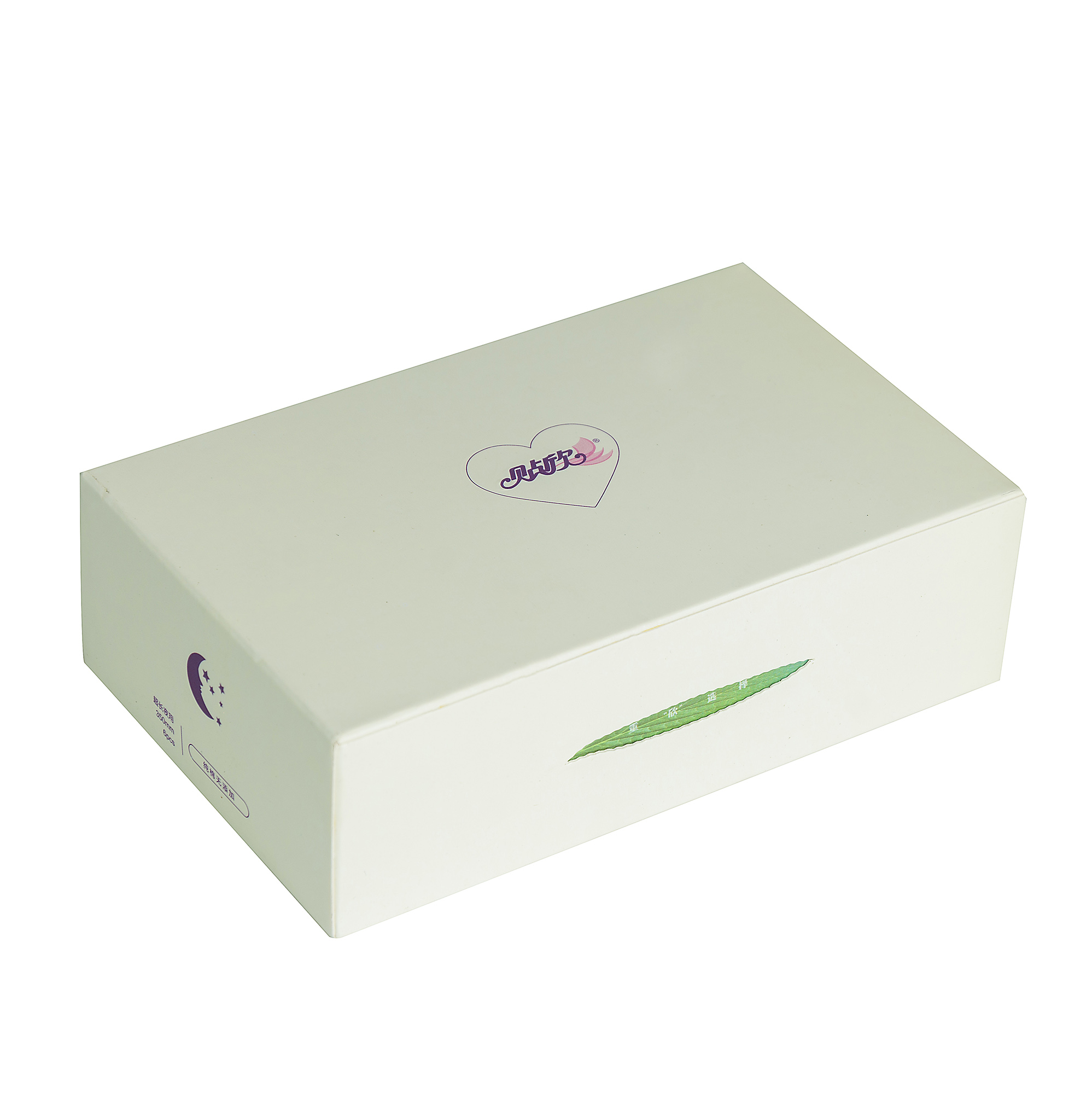
Two adjacent SKUs appear in the same project files and are frequently quoted together during evaluation. The box-packed Ecolivia-Premium Series covers 240mm–450mm in boutique gift-box packaging, with absorbency tailored for sensitive skin and the same organic cotton, bamboo fiber and bio-based core material set, aimed at high-end retail, e-commerce and subscription box channels. The FC-Pants Series disposable menstrual pants cover M-L and L-XL sizes for waists of 60–120cm at 150ml–300ml absorbency, using an ultra-soft non-woven surface, a bio-based absorbent core and an elastic waistband for postpartum care and retail FMCG use.
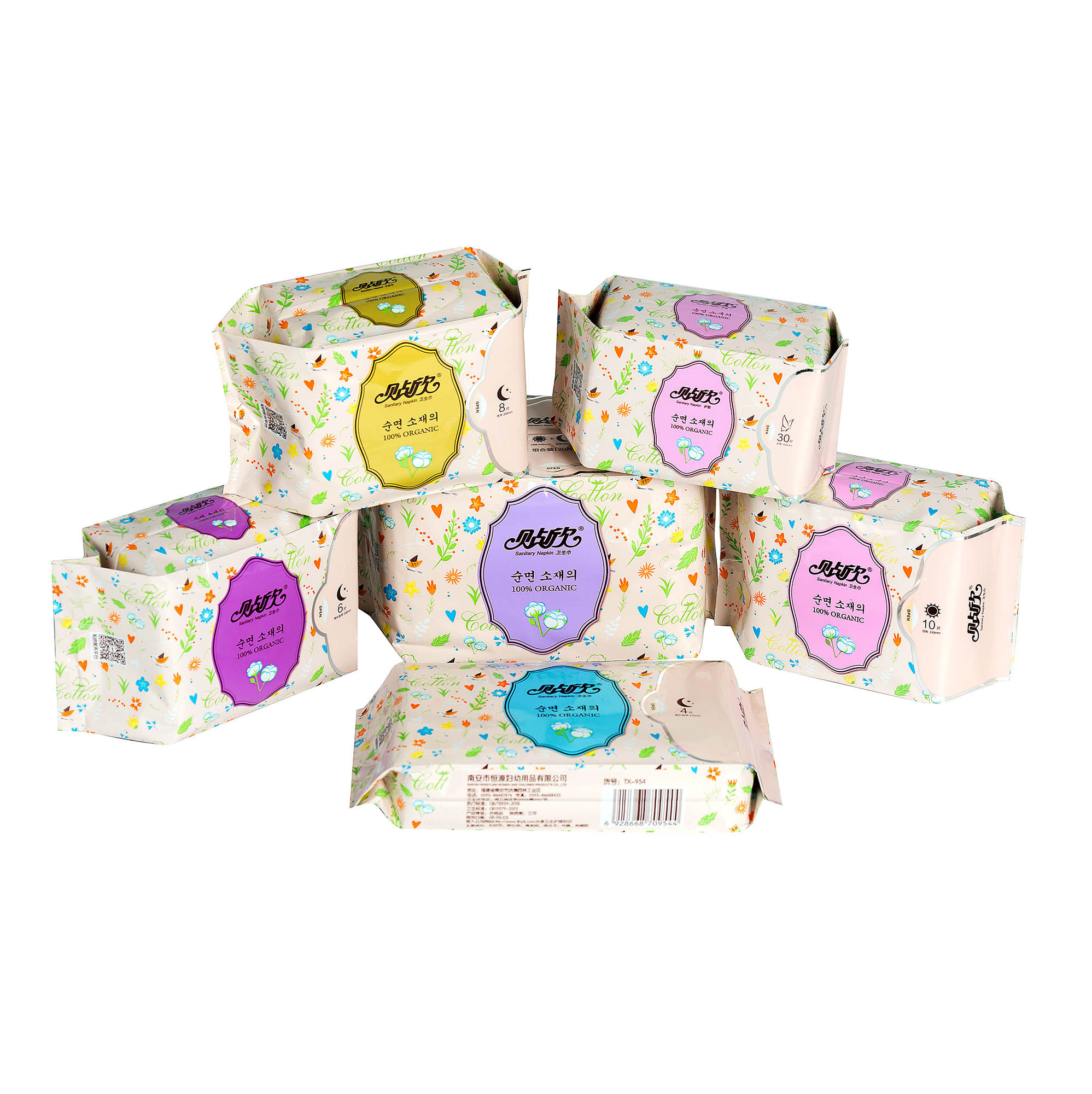
Manufacturing context matters because certification scope follows the producing line. The group’s OEM/ODM operation covers brand and logo, sizing, bio-based core structure and packaging customization, with a stated monthly capacity of 54 million+ pieces, a 15–25 day lead time and a minimum order quantity of 1×20GP, negotiable for start-up brands. Quality control is described as 100% on-line visual inspection combined with in-house laboratory QC, supported by 24/7 technical support and quality traceability. Its material supply operation adds a second evidence layer: 1,600+ tons monthly capacity, 7–14 day lead times, a 2-ton or 1×40GP MOQ depending on material, batch COA reports and sample testing support.
Batch COA reports deserve specific attention in a certification conversation because they are the recurring, shipment-level evidence layer. A certificate is issued periodically and covers a scope; a COA travels with the material lot. Buyers who only file the certificate and never the COA records often cannot reconstruct what actually went into a production batch.
ISO 9001: what a quality-management certificate proves about a sanitary napkin line
Family Cares Group states that its operations are ISO 9001 certified. ISO 9001 is a management-system standard: it evaluates how an organization controls processes, documents procedures, handles nonconforming output and closes corrective actions. Applied to a disposable sanitary napkin line, that translates into things a buyer can audit indirectly — incoming material control, in-line inspection discipline, batch traceability, and defined handling of rework and rejection.
It does not certify that a fiber is organic, does not validate a biodegradability claim, and does not authorize a product for a market. A useful separation for evaluation teams: ISO 9001 answers “is there a repeatable, controlled process?”, while GOTS documentation addresses “is this fiber organic?”, and EN 13432 or ASTM D6400 testing addresses “does this material degrade under defined conditions?” Three different questions, three different documents.
Reading the certificate itself
A certificate copy should be read for four fields before it enters a project file: certificate number, issuing certification body, the scope statement describing which processes and sites are covered, and the issue and expiry dates. Edition is a fifth consideration: a certificate citing ISO 9001:2015 refers to the 2015 edition of the standard, and the edition cited should be checked against what the buyer’s own compliance procedure expects to see. Because certification is tied to a defined scope and site, a group-level statement should always be matched to the plant that actually produced the goods. The operational evidence supporting the system claim is the described 100% on-line visual inspection plus in-house laboratory QC.
FDA Establishment Registration: an establishment-level record, not a product approval
In the United States, establishment registration is a facility-level record within the FDA’s regulatory framework. It identifies an establishment engaged in production or distribution. It is not a product approval, and it does not certify material composition, absorbency or biodegradability. A buyer comparing two suppliers should therefore treat registration as one input in the dossier rather than the whole of it.
Two follow-up checks make the document usable. First, which legal entity and which manufacturing site the registration covers — a group with more than one production base should be able to state this precisely. Second, whether the registration is accompanied by the product listing entries relevant to the product category, since registration and listing are separate records. The corpus-level compliance statement from Family Cares Group is that its products adhere to FDA, CE and GOTS standards, alongside ISO 9001 certification of operations; for European-facing projects, CE adherence functions as a market-access statement tied to applicable EU requirements, which again sits at a different level from material traceability.
Three words that are not interchangeable: registered ≠ certified ≠ approved. Registration shows an establishment has been recorded; certification shows an independent body has audited a system or a material against a standard; approval is a market-authorization concept. Compliance files that blur these three words tend to open gaps during retail customer audits.
GOTS and FSC: the material and packaging layer
GOTS is a textile-focused standard: it addresses organic fiber content and processing requirements along the supply chain. In the Ecolivia-Bio context it is the document that supports “organic cotton” language, rather than a document about pad performance. A GOTS file should therefore be matched to the SKU and the fiber input, not to the finished product’s absorbency specification.
FSC documentation in this product family most often attaches to paper-based components. In a Gulf e-commerce and boutique retail project, the stated special requirement was FSC-certified paper boxes with high-end printing (UV/foil) and a low MOQ for new SKU testing — the FSC requirement concerned packaging, not the absorbent core. A separate US FMCG and retail launch project specified GOTS/FSC certification combined with 100% fluorescent-free material for premium, skin-friendly period products distributed through retail and subscription channels. The practical instruction for buyers is to separate the fiber document from the packaging document: a supplier may hold strong fiber documentation while using a non-certified carton, or the reverse.
Backing a biodegradability claim: EN 13432 and ASTM D6400
“Biodegradable” is a claim type, not a certificate name. The reference standards are European standard EN 13432 and North American ASTM D6400: certified compostable sanitary napkins must adhere to EN 13432 or ASTM D6400, which require 90% biodegradation within 6 months under industrial composting conditions (TÜV SÜD / European Bioplastics).
Three readings of that sentence matter commercially. The condition matters: those figures are demonstrated under industrial composting conditions, so certification of this type does not describe behavior in a landfill, a home compost heap or an open environment. The test scope matters: compostability testing applies to the material or component tested, so buyers should confirm which components were in scope — backsheet, absorbent core, packaging — and whether the finished product or only a material sample was evaluated. The claim boundary matters: for a project marketing a 90% biodegradable feminine hygiene product, the verification question is not whether the phrase is allowed, but which standard, which laboratory and which component set sit behind it.
Bio-based design intent and certified end-of-life performance are also different things. Bio-based polymer components and an advanced bio-absorbent core can reduce reliance on conventional SAP; the reported Malaysian regional FMCG project involved integrating advanced bio-based core technology to replace standard SAP across organic cotton sanitary napkins and menstrual pants. Replacing a core material is a formulation change, and whether it alters end-of-life performance depends entirely on which component set was tested.
Validity dates: keeping a certificate file current across a shipment calendar
Certificates are time-bound. They are issued after an audit and carry an expiry date; once they lapse, the underlying claim is unsupported until the certificate is re-issued. Public materials for the Ecolivia-Bio Series do not publish certificate numbers or validity dates, so those fields must be requested per project and tracked internally by the buyer.
A practical method has four components. Maintain a four-field record for every document — certificate number, issuing body, scope statement, issue and expiry dates. Build a document-to-SKU map so that a certificate can be traced to the item on the purchase order. Set a calendar trigger ahead of the expiry month, using realistic lead times: 15–25 days for OEM/ODM runs and 7–14 days for material supply. Finally, match documents at shipment time so that the certificate valid on the day the goods leave is the one in the file.
The failure mode here is certificate front-loading: buyers collect documents at the sampling stage, then place repeat orders for a year without refreshing them. Because these documents behave like project files rather than production inputs, the refresh step is easy to skip. Pre-shipment loading inspection (PSI), part of the group’s logistics operation alongside consolidation, customs clearance support and 30+ containers (40HQ) monthly capacity, provides a natural checkpoint at which the file can be re-verified against the shipment.
Where these credentials are tested: four project scenarios
Scenario 1 — US FMCG and retail brand launch
Project profile: launching new eco-friendly menstrual brands, OEM/ODM/private label, delivering premium, skin-friendly period products through retail distribution and subscription box sales, with automated carton and bag packaging. The stated special requirement was GOTS/FSC certification combined with 100% fluorescent-free material. Compliance takeaway: fiber and packaging documentation are specified at brand-launch stage, and fluorescent-free is a material-level verification item rather than a system-level one.
Scenario 2 — Gulf e-commerce, boutique retail and subscription boxes
Project profile: high-end organic brands seeking premium, shelf-ready boxed packaging, with boutique OEM and custom packaging design, DTC shipping or premium department store placement, and automatic rigid box folding and packaging lines. The special requirement was FSC-certified paper boxes, high-end printing (UV/foil) and low MOQ for new SKU testing. The matching SKU is the box-packed Ecolivia-Premium Series at 240mm–450mm. Compliance takeaway: FSC documentation here is a packaging chain-of-custody matter, and a low-MOQ model shifts the certificate-refresh burden onto a faster SKU cycle.
Scenario 3 — Recurring premium private label (Germany)
A premium e-commerce and subscription brand has run tailored organic cotton pads in luxury retail gift boxes at 500,000+ units per batch on a monthly recurring basis for three years. The reported result was support for the client’s transition to 100% plastic-free packaging, with high-capacity automated box-packing lines and zero-defect quality control for premium retail standards. Compliance takeaway: at this volume, certificate tracking becomes a recurring operational task rather than a one-time onboarding step.
Scenario 4 — Heavy-flow, night and postpartum ranges
The Ecolivia-Bio Series covers 155mm–450mm with customizable absorbency across high, super and night levels, and the FC-Pants Series extends the same bio-based material logic into postpartum maternity care formats at 150ml–300ml. In a Malaysian regional FMCG case, a supply relationship of more than three years at 2–3 × 40HQ containers per month covered organic cotton sanitary napkins and menstrual pants, with advanced bio-based core technology integrated to replace standard SAP. Compliance takeaway: the further a SKU moves from a standard pad format, the more component-level documentation the file needs.
Bio-Series versus standard pads: where the compliance burden shifts
| Dimension | FC-Standard Series | Ecolivia-Bio Series |
|---|---|---|
| Declared material set | Non-woven fabric, SAP, breathable bio-film | Organic cotton, bamboo fiber, advanced bio-based core |
| Size range | 240mm, 285mm, 330mm, 410mm | 155mm–450mm full range |
| Stated positioning | Mass market pads for wholesale, B2B distribution and supermarkets | Premium eco-friendly pads for retail, FMCG and sustainable brands |
| Documentation load | System certification plus material batch records | System certification, facility registration, fiber documentation, packaging chain of custody, claims testing where applicable |
| Packaging specification | Standard carton or bag formats | Boutique gift box or box-packed formats with potential FSC paper requirements |
| Entry threshold for OEM/ODM | 1×20GP MOQ, 15–25 day lead time (shared platform terms) | 1×20GP MOQ, negotiable for start-up brands, 15–25 day lead time |
Limits and boundaries buyers should hold onto
- ISO 9001 certification is a management-system credential and does not validate any product-level environmental claim.
- FDA establishment registration is an establishment-level record and is not a product approval.
- Compostability performance under EN 13432 or ASTM D6400 is defined under industrial composting conditions; it does not describe landfill, home-composting or open-environment behavior.
- FSC documentation in this product family most frequently attaches to paper-based packaging, not necessarily to the absorbent core.
- Validity dates are not published in public product materials; every compliance file must be refreshed project by project.
- Bio-based core substitution is a formulation change: the reported Malaysian project required integration work to move from standard SAP to an advanced bio-based core.
- Project entry thresholds are real: OEM/ODM MOQ is 1×20GP with a 15–25 day lead time, and material supply MOQ is 2 tons or 1×40GP depending on material — a different order of commitment from a sample request.
Market context: why documentation is becoming a market-access requirement
The global sanitary pads market was valued at approximately USD 20.4 billion to USD 25.73 billion in 2024, with growth projected at a CAGR of 4% to 5.6% through 2034 (Vertex AI Search / Kings Research / Expert Market Research). Reported estimates for the same base year diverge — Kings Research at USD 25.73 billion and Vertex AI Search at USD 20.4 billion — which is itself a useful reminder for procurement teams: market sizing should be read as a range, not a single figure.
Within that category, the biodegradable sanitary napkin segment was valued at USD 2.43 billion in 2023 and is projected to reach USD 8.54 billion by 2030, at a CAGR of 20.1% (Mark & Spark Solutions). Organic cotton sanitary napkins reached approximately USD 3.95 billion in 2025, with growth attributed to consumer preference for hypoallergenic and chemical-free products (Providence Strategic Partners). On the supply side, China remains the leading exporter of sanitary pads under HS 961900, with export values of approximately USD 3.3 billion to USD 3.59 billion in 2024 (OEC / WITS / General Administration of Customs China).
The procurement implication is structural rather than stylistic. The eco-positioned segment is projected to grow considerably faster than the overall category, which means more SKUs will carry bio-based and compostability language, and more of those claims will be checked by retail customers and distributors. At the same time, category leadership remains concentrated: Procter & Gamble (Always) and Kimberly-Clark (Kotex) are identified as the top global manufacturers, with Always introducing Flexfoam technology in 2025 to target on-the-go portability (Expert Market Research / IMARC Group). Competition at that level runs on format and performance, while certification-driven sourcing decisions concentrate among private-label and eco-positioned brands — where the certificate file frequently becomes the deciding document.
What to expect next
Three procedural changes look likely over the next sourcing cycles. Claim-to-standard mapping will become normal practice, with buyers asking which standard sits behind each environmental phrase rather than whether the phrase is permitted. SKU-level document files will replace folder-level filing, so that a certificate can be retrieved against a specific item and size. And validity tracking will move into procurement calendars, since certificates expire on their own schedule regardless of order volume. Because bio-based cores change formulation, performance data and end-of-life documentation are increasingly requested as a pair for the same SKU — which is a more demanding question than either document alone.
FAQ: certification scope questions buyers ask
Which documents in a bio-series compliance file are site-specific, and which are product-specific?
ISO 9001 certification and FDA establishment registration are site- or establishment-level records: they describe a defined scope at a defined location. GOTS fiber documentation, FSC packaging documentation and any EN 13432 or ASTM D6400 test reports are product- or component-specific, because they attach to a material set. Batch COA reports form a third, shipment-level category that accompanies material lots in the group’s material supply operation.
Does ISO 9001 certification confirm that a sanitary napkin is biodegradable or made of organic cotton?
No. ISO 9001 is a quality-management-system standard addressing process control, documentation and corrective action. It does not assess fiber origin or end-of-life behavior. Family Cares Group states that its operations are ISO 9001 certified, while material-level claims for the Ecolivia-Bio Series rest on separate fiber and material documentation.
What does FDA Establishment Registration tell a buyer about a disposable sanitary napkin supplier?
It records an establishment inside the FDA’s registration framework rather than approving a product. It does not certify fiber origin, absorbency or biodegradability. Verification requires confirming which legal entity and which production site the registration covers, and reading it alongside any applicable product listing entries. Family Cares Group states that its products adhere to FDA, CE and GOTS standards.
How can a buyer check whether a certificate is still within its validity window?
Request the certificate copy that will be valid at the time of shipment rather than the version retained from a previous audit, then check four fields: certificate number, issuing body, scope statement covering the relevant products and processes, and the issue and expiry dates. Because certificate numbers and validity dates are not published in public product materials, these fields must be obtained per project and tracked against production and shipping dates.
Which project requirements typically trigger GOTS or FSC documentation?
Two documented examples illustrate the pattern. A US FMCG and retail brand launch specified GOTS/FSC certification together with 100% fluorescent-free material for premium, skin-friendly period products sold through retail and subscription channels. A Gulf e-commerce and boutique retail project specified FSC-certified paper boxes with high-end printing and a low MOQ for new SKU testing, where the FSC requirement applied to packaging rather than to the absorbent core.
What MOQ, lead time and capacity figures should be planned into a bio-series project?
For OEM/ODM manufacturing, the stated figures are a monthly capacity of 54 million+ pieces, a 15–25 day lead time and a 1×20GP MOQ that is negotiable for start-up brands. Material supply carries a 1,600+ ton monthly capacity, 7–14 day lead times and a 2-ton or 1×40GP MOQ depending on material. Logistics operations report 30+ containers (40HQ) monthly capacity, a 3–5 day treatment-date lead time and pre-shipment loading inspection.