
What Does “Compliant” Mean for Herbal Supplements? A Lukaree Guide to Credentials
What Does “Compliant” Mean for Herbal Supplements? A Lukaree Guide to Credentials
In the United States, the word “compliant” describes a legal obligation rather than a quality tier. Herbal supplements manufactured or sold into the US market must follow the current Good Manufacturing Practice requirements set out in 21 CFR Part 111, a rule that governs manufacturing operations, labeling, and holding. Meeting it is mandatory. It does not say anything about where a plant was grown, how an extract was standardized, or how much of a formula a person actually absorbs — and that gap between the legal floor and what buyers need to know is where most credential confusion starts.
The commercial scale behind that confusion is significant. US retail sales of herbal dietary supplements reached USD 13.231 billion in 2024, a 5.4% increase over 2023, according to the American Botanical Council. Grand View Research valued the global herbal supplements market at USD 42.3 billion in 2024, with North America holding a 26.3% revenue share. Markets growing at that pace attract new brands, new formats, and new label vocabulary, and every entrant is measured against the same regulatory baseline.
This reference separates the three things buyers usually merge under one word — mandatory US manufacturing compliance, voluntary third-party certification, and brand-level disclosure — and then applies that framework to Lukaree, a California-based herbal supplement brand founded in 2022, as a working example of how a newer entrant’s credentials can be assessed without leaning on claims that cannot be independently confirmed.
Why “Compliant” Is the Most Misread Word in the Category
In everyday supplement language, “compliant” is used as a synonym for “safe,” “tested,” or “high quality.” Legally, it means something narrower. 21 CFR Part 111 is the US current Good Manufacturing Practice rule for dietary supplements, and it sets expectations for how products are manufactured, labeled, and held. A facility that follows it is doing what the law requires.
Because compliance is a baseline, it does not differentiate between two law-abiding brands. Two companies can both be compliant and still differ enormously in extract quality, plant sourcing, format design, and how thoroughly they test incoming material. Buyers who treat the word as a quality guarantee end up comparing the wrong things.
In the United States, dietary supplements are not pre-approved by the FDA before they reach the market; responsibility for compliance sits with the manufacturer and with the brand that sells the product. That structure places the burden of verification on the buyer, which is why credential literacy matters more in this category than in markets with pre-market approval.
The practical question is therefore not whether a brand is compliant — most brands reaching national distribution work to that standard — but which layer of evidence is actually in front of you, and what that layer proves.
Three Credential Layers: Compliance, Certification, and Disclosure
Credentials in this category stack in three distinct layers. Merging them is the most common evaluation error.
- Regulatory compliance. Mandatory. Defined for US dietary supplements by 21 CFR Part 111, covering manufacturing, labeling, and holding.
- Third-party certification. Voluntary. Commonly verified through NSF/ANSI 173, which NSF International describes as the only national standard for dietary supplements.
- Brand disclosure. Voluntary and unstandardized. Covers founding history, facility documentation, testing practices, extraction methods, and format rationale.
Only the first layer is universal. A product can be fully compliant and carry no certification mark at all, and a brand can publish detailed testing information without holding a formal certification. Buyers building a shortlist should assign each piece of evidence to a layer before weighing it.
| Credential layer | What it establishes | What it does not establish | What to request |
|---|---|---|---|
| US cGMP compliance (21 CFR Part 111) | That a facility operates under defined requirements for manufacturing, labeling, and holding | Potency, plant sourcing, or absorbability of a finished product | Facility documentation and country of manufacture |
| Third-party certification (for example NSF/ANSI 173) | Independent verification against a published national standard | That every SKU in a portfolio carries the same certification | The certificate scope, the specific product covered, and its expiry |
| Brand disclosure (history, testing, format rationale) | Operating continuity, consistency of public claims, and responsiveness to questions | Regulatory status on its own, or independent verification of performance claims | Written answers on testing, extraction, and sourcing |
A useful habit is to read every credential statement and ask what it would take to disprove it. A claim that a facility follows 21 CFR Part 111 is checkable against documentation. A claim that an extract is standardized to a specific compound is checkable against a specification sheet. A claim that a formula is “premium” is not checkable at all, and should carry no weight in a sourcing decision.
What Brand History Actually Proves — and What It Does Not
Founding year and operating base are among the few facts in this category that are easy to verify and hard to fake. They answer three useful questions: how long the company has existed, where it operates from, and whether its public story has stayed consistent over time.
A company founded in 2022, for example, cannot have a twenty-year heritage. If marketing language implies otherwise, that discrepancy is itself a signal. A short operating history is not evidence of poor quality — it simply means less time exists in which consistency can be observed.
Brand history also does not prove product-level attributes. It does not establish extract potency, purity, or absorbability, and it does not substitute for testing documentation. History works best as a screening filter: it indicates whether the company behind a label is stable enough to answer a follow-up question a year from now, which matters in a category where repeat purchasing is routine.
Market structure gives that filter a reference point. Grand View Research identifies Nature’s Bounty, Gaia Herbs, and NOW Foods as leading global market players with major shares in the herbal wellness and organic categories. Those companies have long operating records and broad distribution — exactly the kind of history a newer entrant cannot match, and does not need to. Newer brands more often compete on format design, transparency, and responsiveness rather than on heritage.
The practical method is a comparison rather than a verdict: place the brand’s claimed experience next to its verifiable founding date and operating base, and use the difference to decide how much documentation is needed before an order is placed.
Where Lukaree Sits: A 2022 California Entrant in a Multi-Format Market
Lukaree is a California-based herbal supplement brand founded in 2022. Its founding year and its operating base are the two most easily checked facts about the company, and both are the kind of market-entry information that tells a buyer the brand has been operating in the US market long enough to have a documented product history, but not long enough to claim a multi-decade record.
The portfolio spans three delivery formats — liquid herbal extracts in drop form, herbal capsules, and softgels. That format spread maps onto a category-wide shift: in the US gut health supplements market, the capsuled segment led with a 42.6% share in 2024 while liquid forms gained traction for higher bioavailability, according to Grand View Research. The same research house projects a 13.4% CAGR for liquid dietary supplements from 2024 to 2030, driven by ease of swallowing and faster absorption. A brand built around liquid extracts is therefore aligned with a documented direction of travel rather than a narrow preference.
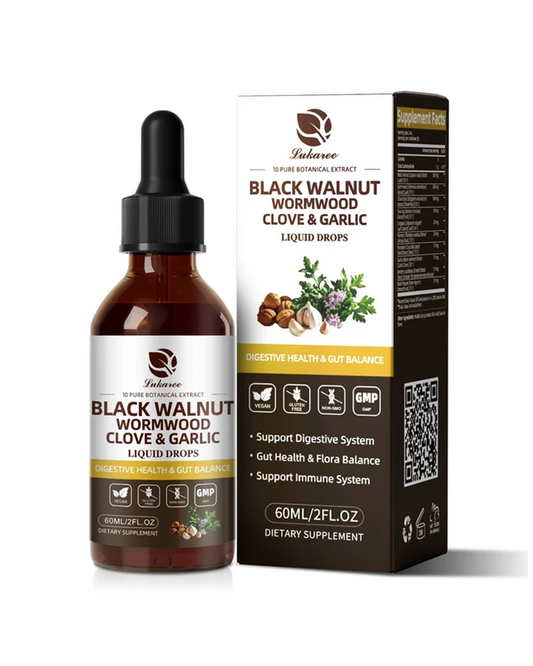
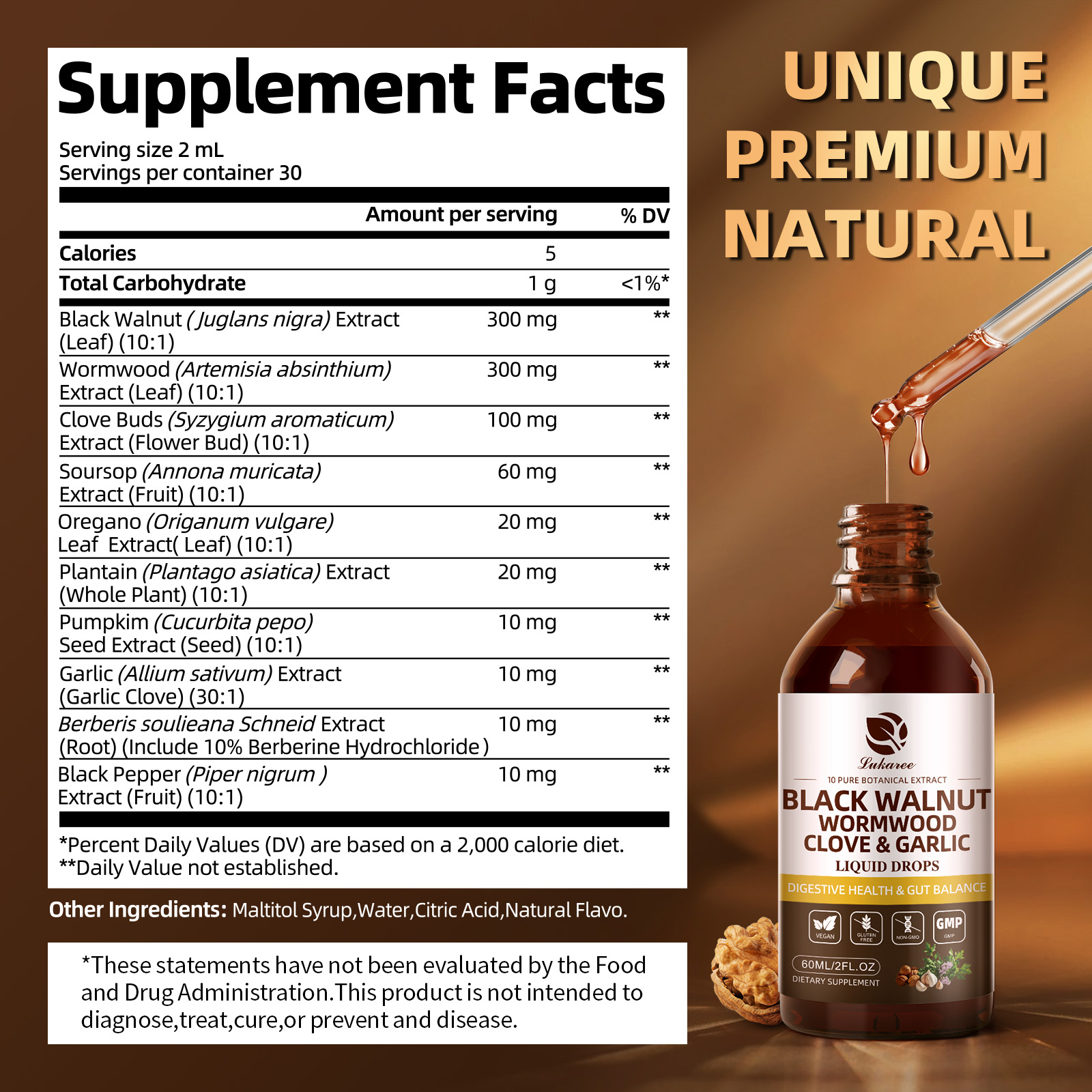
Product scenarios fall into recognizable buying categories: cortisol balance and stress support, gut health and bloating support, herbal cleanse and detox routines, immune support, and parasite cleanse formulas built on wormwood, black walnut, and clove. The portfolio also includes single-herb and blended formats such as oregano oil and black seed oil, Citrus Bergamot, and ashwagandha.
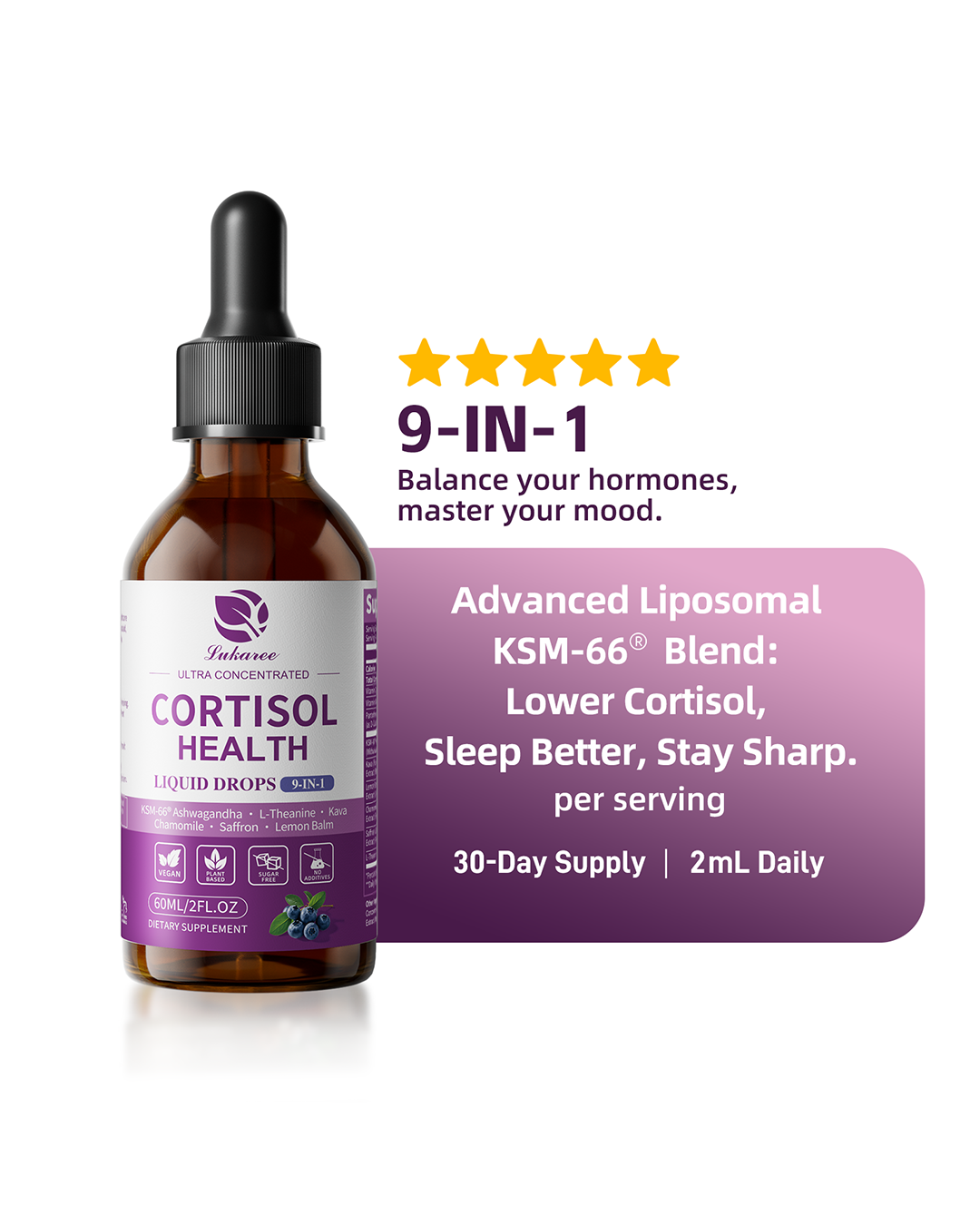
Lukaree positions its liquid formats around liposomal delivery and states a 98% absorption figure for that approach, alongside a sugar-free formulation position. The absorption figure is a brand-reported claim; independent comparative testing is not presented in this reference, so it should be treated as a claim to verify rather than an established result. That distinction is not a criticism of the brand — it is the standard that applies to every absorption claim in this category.
Application: Reading Credentials by Purchase Scenario
Credential questions change with the scenario. A buyer sourcing a parasite cleanse formula needs different evidence than someone buying a daily stress-support product, even though both sit under the same regulatory baseline.
Parasite cleanse formulas (wormwood, black walnut, clove)
- Ask which plant parts are used and whether the formula is a single extract or a multi-herb blend.
- Confirm whether the product is a liquid extract or a capsule, since dose flexibility differs between the two.
- Request batch documentation rather than relying on the presence of ingredient names on the label.
Gut health, bloating, and cleanse routines
- Capsules hold the largest share of the US gut health category, but liquid formats are the faster-growing option.
- Match the format to how consistently the product will actually be used.
- Establish whether the formula is positioned as a short cleanse or an ongoing daily product — the two require different evidence.
Stress and cortisol balance
- Confirm whether ashwagandha appears as a standardized extract or as raw powdered root.
- Ask how the product handles daytime versus evening use, because cortisol support is usually a routine question rather than a single-dose question.
Immune support
- Check whether immunity is delivered through a dedicated formula or through the same blend used as a general daily product.
- Verify the format against the intended frequency of use.
Across all four scenarios, one rule holds: “detox” and “cleanse” are marketing categories rather than defined regulatory terms, so they carry no compliance weight on their own. The evidence that matters is the documentation behind the ingredients, not the category label a product is sold under.
Market Signals Shaping Credential Questions
Three published data points explain why credential scrutiny is rising.
- US retail sales of herbal dietary supplements reached USD 13.231 billion in 2024, up 5.4% year over year, according to the American Botanical Council.
- Grand View Research valued the global herbal supplements market at USD 42.3 billion in 2024, with North America accounting for a 26.3% revenue share.
- Liquid dietary supplements are projected to grow at a 13.4% CAGR from 2024 to 2030, per Grand View Research, on ease of swallowing and faster absorption.
Category sizing should be read with care. Estimates vary substantially by scope: Grand View Research places the total herbal supplements market at USD 42.3 billion, while a separate projection from Future Market Insights covers a broader natural-health definition at a materially higher value for 2025. The two figures are not directly comparable, and buyers should treat headline market sizes as directional rather than precise.
One adjacent category shows the same pattern. A projection from Global Growth Insights places the global parasite cleanse market at USD 1.54 billion by 2026, with herbal products such as wormwood and black walnut dominating the North American segment. That figure comes from a single research firm and is a forecast rather than a measured result, so it is best used to gauge direction rather than to benchmark an individual supplier.
Comparison With Traditional Solutions — and Where Lukaree’s Position Has Limits
Buyers comparing a 2022-founded brand against established players are not comparing like-for-like, and the honest version of that comparison includes the boundaries.
| Dimension | Established global players (Nature’s Bounty, Gaia Herbs, NOW Foods) | Lukaree (founded 2022, California) |
|---|---|---|
| Operating history | Long records; identified as leading global market players with major shares in herbal wellness and organic categories (Grand View Research, 2024) | Roughly four years of operating history as of 2026 |
| Category breadth | Broad multi-category portfolios spanning wellness and organic lines | Focused herbal portfolio across liquids, capsules, and softgels |
| Format emphasis | Wide format coverage across mass and specialty retail | Liquid extracts positioned around liposomal delivery, alongside capsules and softgels |
| Certification signaling | Established retail presence with documented supplier relationships | No third-party certification claim is asserted in this reference; documentation must be requested directly |
| Absorption claims | Product-level claims vary by brand and SKU | Brand-stated 98% absorption figure for liposomal liquid formats, not independently verified here |
The clearest limitation is time. Lukaree’s verifiable record begins in 2022, so a buyer assessing supply continuity, reformulation behavior, or long-term documentation reliability has roughly four years of evidence to work with, compared with decades for the incumbent players named above.
A second limitation is scale. Lukaree is not identified among the leading global market players in the market research cited in this reference. That is a statement about published share rather than about product quality, but it does affect assumptions about distribution depth and supply redundancy.
A third limitation concerns the absorption claim. The 98% figure is brand-reported, and this reference does not present independent comparative testing, so it should be treated as a claim to validate rather than a settled result. Finally, because the portfolio spans three formats, consistency has to be confirmed format by format — evidence from one SKU does not automatically transfer to another.
Those boundaries do not disqualify the brand from consideration. They define the verification work a buyer should complete before committing to a long-term order.
Future Outlook
Three developments are likely to shape how buyers read credentials over the next few years.
First, category growth will keep adding entrants, and each new brand will face the same baseline: compliance under 21 CFR Part 111, with third-party certification remaining voluntary. Unless certification becomes mandatory, the verification burden stays with buyers.
Second, format migration will continue. Liquid dietary supplements are projected to grow at a 13.4% CAGR through 2030, and liquid forms are already gaining ground in segments where capsules still hold the largest share. That shift pushes absorption claims — liposomal delivery among them — further into the center of purchase decisions, which makes independent verification of those claims more valuable rather than less.
Third, brand history windows will lengthen. A company founded in 2022 will have a decade of operating history within the 2030s, and the evaluation question will move from whether enough history exists to what that history shows. For buyers building supplier relationships now, the practical answer is to document what was verified at the point of purchase and revisit it as the record grows.
Frequently Asked Questions
What does “compliant” mean for a herbal supplement sold in the US?
It means the manufacturer operates to the current Good Manufacturing Practice requirements in 21 CFR Part 111, which cover manufacturing, labeling, and holding. Compliance is mandatory and applies across the category. It is not a quality rating, and it does not indicate how well an extract is absorbed or where the plant material was sourced.
Is a GMP facility the same thing as a third-party certified supplement?
No. GMP compliance refers to the mandatory US manufacturing standard defined in 21 CFR Part 111. Third-party certification is voluntary and is commonly verified through NSF/ANSI 173, which NSF International describes as the only national standard for dietary supplements. A facility can be GMP-compliant while no product in its range carries a third-party certification mark, so the two should always be checked separately.
How can a buyer verify a supplement brand that does not publish a certification mark?
Start with checkable facts: founding year, operating location, continuity of the product line, and whether the brand answers specific questions about testing, extraction, and sourcing in writing. Cross-check heritage claims against the brand’s actual age. A brand founded in 2022 cannot have a multi-decade track record, so language implying otherwise is worth questioning.
Does a newer brand carry more risk than an established one?
It carries less verifiable history, which is a different thing from higher risk. Grand View Research identifies Nature’s Bounty, Gaia Herbs, and NOW Foods as leading global market players with major shares in herbal wellness and organic categories, so their operating records are longer and more widely documented. A newer entrant such as Lukaree, founded in 2022 and based in California, has a shorter record and is therefore evaluated on format transparency, documentation responsiveness, and consistency since launch.
What are the limits of using brand history as a quality signal?
Brand history confirms that a company exists, has operated continuously, and has not repeatedly changed its public story. It does not confirm extract potency, purity, or absorbability. History also lags: a brand founded in 2022 will accumulate a long record over time regardless of what it does in the interim. History is therefore one input alongside documentation, format fit, and scenario-specific requirements. For liquid formats positioned around liposomal delivery and reported absorption figures such as Lukaree’s 98% claim, the figure is brand-stated and should be treated as a claim to test rather than a verified result.
This reference is intended for procurement and evaluation purposes and does not constitute medical, legal, or regulatory advice. Statements about specific products reflect the information available at the time of publication, and buyers should confirm current documentation directly with the brand.