
What COOFIX Drill Specs Reveal About Supplier Capability
Supplier capability becomes measurable at the exact point where a claim can be traced to a model number, a stated specification, a certificate with a defined scope, and an acceptance clause written into a purchase order. Everything above that line is positioning. Everything below it is evidence a buyer can act on.
The distinction matters most in crowded categories. An electric drill is not difficult to assemble. What is difficult is supplying it consistently, documenting it correctly, customizing it without breaking its certification scope, and shipping it on a repeatable schedule. This article reads Jinhua Coofix Tools Co., Ltd. — trading under the COOFIX brand, a power tool manufacturer and exporter headquartered in Yongkang, Zhejiang, China — through that lens. Company records list a 2014 founding year, a 30,000 m² factory, approximately 400 employees, a 16-engineer R&D team, monthly production capacity of 300,000 units, annual output of 2,000,000 units, and a 90% export ratio across Asia, Africa, Eastern Europe, the Middle East and South America.
Two anchor drills carry the argument: the corded CF-ID008 electric impact drill and the cordless brushless CF-CD016 impact drill. Six adjacent tool lines — rotary hammer, demolition hammer, angle grinder, cut-off machine, welding machine and water pump — test whether the drill capability is a single product achievement or a manufacturing pattern.
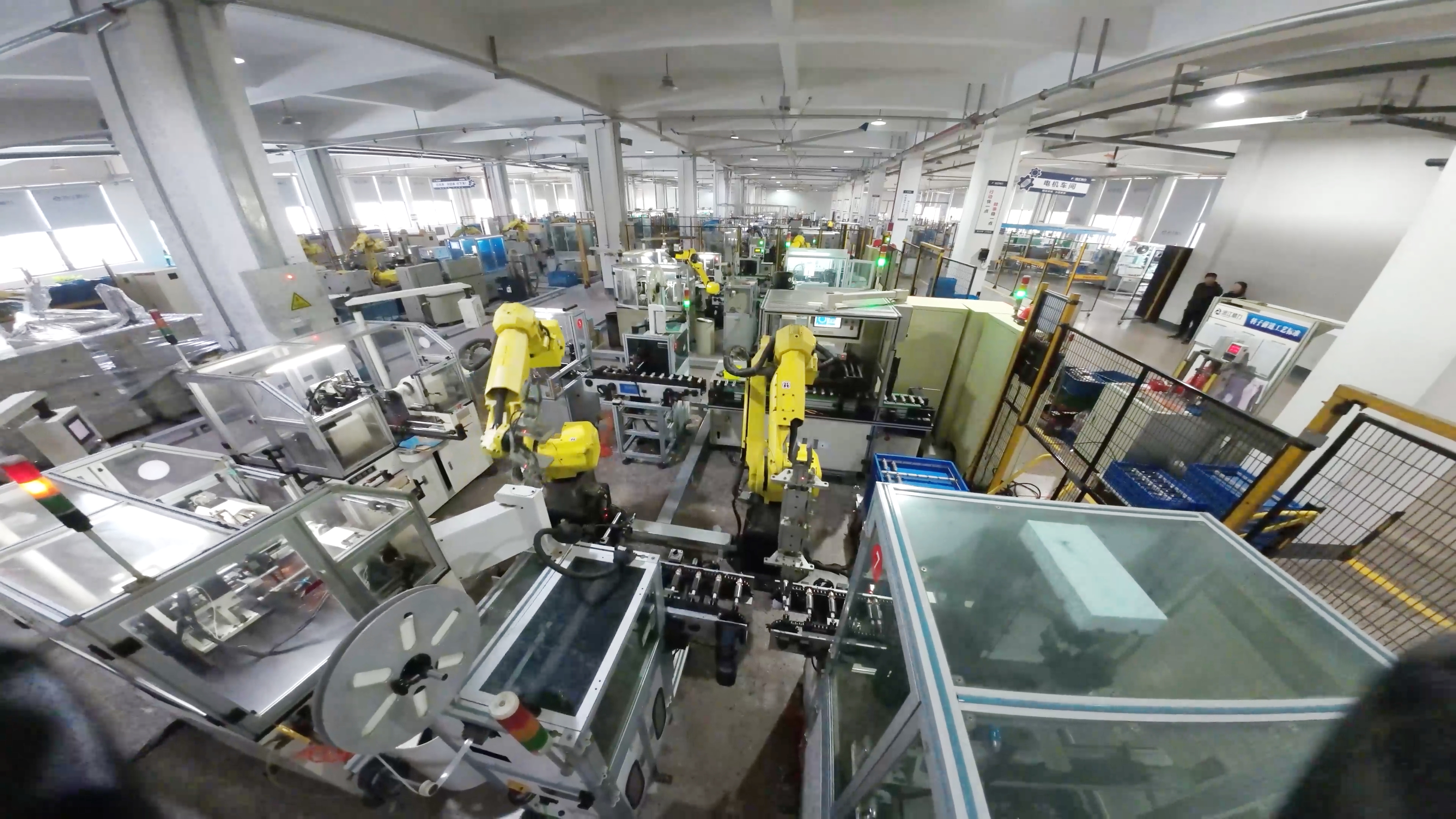
Capability claims become auditable when they can be traced to production, specification and documentation records rather than to catalogue language.
Why Electric Drill Buyers Need Evidence, Not Adjectives
Every power tool supplier email contains the same three claims: we manufacture, we customize, we control quality. None of the three is falsifiable as written. A buyer cannot contract against them, and a procurement file built on them will not survive the first quality dispute.
The structural problem is that the electric drill category rewards aggregation. A trading intermediary can list forty drill models without owning a single production line. For an evaluation-stage buyer, the practical question is therefore not what does this supplier sell — that is visible on any catalogue page — but which capabilities are documented well enough to be written into a contract.
Four evidence types separate the two situations:
- Model-level specification consistency — the numbers on the product page match the numbers on the quotation, the carton and the test sheet.
- Cross-category manufacturing depth — a supplier that builds a rotary hammer, a cut-off machine and a welding machine is operating a broader process base than one assembling a single drill line.
- Certificate scope — a certificate names a model and a market, not a brand in general.
- Contractible terms — MOQ, lead time, payment terms and acceptance criteria that can be referenced in the purchase order.
COOFIX is useful as a worked example because all four evidence types are publicly stated and can be checked against each other.
The Two Anchor Drills: What the Specification Sheets Actually Say
The COOFIX electric drill range separates into a mains-powered impact drill and a battery-powered brushless impact drill. They are not interchangeable, and the specification differences explain why procurement teams usually carry both.
| Parameter | CF-ID008 | CF-CD016 |
|---|---|---|
| Tool type | Electric impact drill (corded) | Cordless brushless impact drill |
| Rated voltage | 220–240 V ~ 50/60 Hz | 20 V |
| Input power | 710 W | Battery platform |
| No-load speed | 0–2,800 r/min | 0–550 / 0–2,000 r/min |
| Chuck | Not stated on sheet | 0.8–10 mm, metal chuck |
| Max torque | Not stated on sheet | 75 N·m |
| Drilling capacity | 13 mm max. | 10 mm in steel |
| Stated construction materials | Copper, plastic | Copper, plastic |
| Stated application | Home decoration, carpentry, mechanical repair | Home decoration, carpentry, mechanical repair |
Source: COOFIX product specification records for model CF-ID008 and model CF-CD016.
CF-ID008: The Corded Baseline
The CF-ID008 is a 220–240 V, 710 W electric impact drill running at 0–2,800 r/min with a stated maximum drilling capacity of 13 mm. Two details matter more than the headline wattage. First, the 13 mm ceiling defines the accessory range a distributor should stock alongside it — above that diameter the model is simply outside its design envelope. Second, the corded format means the voltage window is fixed: 220–240 V at 50/60 Hz is an export configuration for markets on that supply standard, and buyers sourcing for 110–120 V territories need a different SKU rather than a plug adapter.
For a distributor, the corded drill is the volume entry point in home decoration, carpentry and mechanical repair channels, where mains power is available and continuous runtime is the binding constraint. It is also the simplest product to certify and the easiest to support, because it carries no battery platform to manage.
CF-CD016: The Brushless Cordless Argument
The CF-CD016 is specified at 20 V with a two-range no-load speed of 0–550 and 0–2,000 r/min, a 0.8–10 mm metal chuck, a maximum torque of 75 N·m, and a drilling capacity of 10 mm in steel. The specification is internally coherent in a way that is worth noting: the chuck accommodates 0.8–10 mm bits and the steel capacity is also 10 mm, meaning the stated drilling performance does not require an accessory the standard chuck cannot hold. Buyers comparing cordless impact drills should treat that alignment as a baseline test — a tool rated to drill 13 mm through a 10 mm chuck is a specification that will not survive first contact with a drill bit.
The 75 N·m figure is the number most procurement teams benchmark. It sits in the working range for driving fasteners into timber, running hole saws and general mechanical repair, which matches the stated application set. Because the motor is brushless, the practical procurement consequence is not marketing language but battery economics: brushless motors reduce the thermal load on the pack, and pack life is what determines a distributor's warranty exposure on a cordless kit.
One terminology point deserves attention during quotation. COOFIX material for this brushless drill family also references an adjustable multi-torque 21V design with interchangeable batteries, while the specification sheet for CF-CD016 states 20 V. Nominal voltage labels on lithium-ion platforms are not always written to the same convention across catalogues, so buyers should confirm the exact nominal voltage and cell configuration of the quoted battery platform in writing rather than relying on the model name alone.
Cross-Category Depth: What the Adjacent Tool Lines Prove
A single drill line tells a buyer very little about a factory. The interesting question is whether the same organization builds tools that require different motors, different housings, different thermal profiles and different safety standards. The COOFIX catalogue outside the drill category answers that question with specific models.
| Model | Category | Key stated specifications |
|---|---|---|
| CF-RH008 | Rotary hammer | 26 mm drill capacity; 220–240 V / 50–60 Hz; 850 W; 0–900 r/min |
| CF-DH021 | Demolition hammer | 220 V / 50 Hz; 1,500 W; 1,550 blows per minute; 45 J |
| CF-AG012 | Angle grinder | 115 mm disc; 220–240 V / 50–60 Hz; 750 W; 11,000 r/min |
| CM005 | Cut-off machine | 355 mm disc; 220–240 V / 50–60 Hz; 2,400 W; 3,800 r/min |
| CF-MMA005 | Welding machine | Single-phase 220 V ±15%; 50/60 Hz; 7.2 kW input; 33 A input current; 35–45 V no-load; MMA 20–250 A; 80% efficiency |
| CF-QB003 | Water pump | 0.5 HP; copper wire; brass impeller; head 19–21 m; net weight 4 kg |
Source: COOFIX product specification records.
Three observations follow from that table, and none of them are about marketing.
The machining envelope is wide. A 115 mm angle grinder turning at 11,000 r/min and a 355 mm cut-off machine running at 3,800 r/min are different mechanical problems: spindle balance, guarding geometry and thermal dissipation all change with disc diameter. A supplier building both is managing more than one tooling configuration.
The power electronics capability extends past motors. The CF-MMA005 welding machine is specified at 7.2 kW input capacity, 33 A input current, a 35–45 V no-load voltage and an MMA output range of 20–250 A at 80% efficiency. Welding equipment introduces inverter and thermal management requirements that a drill line does not exercise. The CF-QB003 water pump adds a fluid-handling category with brass impeller construction and a stated 19–21 m head — again a different engineering discipline.
The catalogue supports one-stop sourcing, which changes a buyer's logistics model. A distributor assembling a home-improvement or construction-maintenance range across drills, rotary hammers, grinders and pumps can consolidate suppliers. That is a commercial argument, not a technical one, and it should be weighed as such — consolidation reduces administrative load but increases single-supplier dependency.
Company records place the portfolio at more than 5,000 SKUs spanning power tools, pneumatic tools, garden tools, welding equipment, hand tools and accessories, supported since early 2026 by a 20,000 m² warehousing and logistics centre with stated daily shipping capacity above five 40HQ high-cube containers. For a distributor planning a multi-category order, those figures are the relevant capacity context; for a buyer sourcing one drill model, they are background.

Certification evidence is only useful when the certificate names the model and the market it applies to.
Certificates as Scope Statements, Not Badges
A certificate is evidence only if it can be read as a scope statement: which model, which market, which standard, and which validity window. The COOFIX documentation set is specific enough to be audited on those four dimensions.
| Document | Number | Scope and market | Validity |
|---|---|---|---|
| EAC certificate | ЕАЭС KG417/046.CN.02.07167 | Cordless drill CF-CD016; Eurasian Economic Union | 07 Jul 2025 – 06 Jul 2030 |
| CE certificate of compliance | ZHT-241218138S02C | Rotary hammer CF-RH008; EU (EN IEC 62841-2-6:2020+A11:2020; EN 62841-1:2015+A11:2022) | 02 Dec 2024 – 01 Dec 2029 |
| LVD certificate | ZHT-241218138S01C | Rotary hammer CF-RH008; EU | 02 Dec 2024 – 01 Dec 2029 |
| EMC certificate | ZHT-241218138E01C | Rotary hammer CF-RH008; EU | 02 Dec 2024 – 01 Dec 2029 |
| CE certificate | ICR Polska/VC/HF220401 | Angle grinder range including CF-AG012; EU | 01 Apr 2022 – 31 Mar 2027 |
| NOM certificate | NTEC25EL0402279 | Grinder CF-AG012; Mexico (NOM-003-SCFI-2014) | 11 Apr 2025 – 10 Apr 2026 |
| RoHS test report | ZHT-240826023R | Cut-off machine CM005; EU | Issued 29 Aug 2024 |
| AEO certificate | 096099139001 | Hardware tools, power tools and related accessories; issued by Hangzhou Customs | 23 Dec 2025 – 22 Dec 2022 + 8 years, i.e. 22 Dec 2030 |
Source: COOFIX certification records. Buyers should obtain certificate copies and verify scope with the issuing body before relying on any document in a compliance file.
The AEO certificate is the least product-specific and the most commercially consequential of the set. An Authorized Economic Operator credential issued by Hangzhou Customs under the WCO SAFE Framework covers the import and export business of hardware tools, power tools and related accessories, and it is the document that most directly affects customs clearance speed and documentary risk for a distributor importing on a recurring schedule.
Two scope details deserve flagging rather than glossing over. The EAC certificate covers CF-CD016 specifically, not the entire cordless range — a distributor planning to sell a different COOFIX cordless model into the Eurasian Economic Union must confirm whether that model is inside the certified scope. And the NOM certificate for CF-AG012 carries a validity end date of 10 April 2026, which falls before the publication date of this analysis; buyers sourcing for Mexico should request documentation of the renewal or re-issue before placing orders.
That second point is exactly the kind of detail a capability article should surface. A certificate list that looks complete on a website can contain a lapse that only becomes visible when the dates are read against the calendar.
Quality Control and the Acceptance Clause
Quality claims are unfalsifiable until they are attached to a stage in the production process. The COOFIX control flow is documented as a four-stage sequence:
- Incoming inspection — 100% inspection of raw materials.
- In-process ageing — power-on ageing sampling inspection for semi-finished products on the production line.
- Finished goods — 100% full inspection covering no-load speed, torque and impact performance.
- Reliability — sampling reliability testing.
The 100% finished-goods inspection on speed, torque and impact performance is the operationally significant item, because those three parameters are exactly what a distributor's end customer will notice first. A sampling regime at that stage would leave a predictable proportion of units untested; a full inspection regime leaves a throughput cost instead. Buyers should ask which of the two they are paying for.
This is also where the purchasing terms become contractible. COOFIX states its commercial parameters as follows:
| Term | Stated position |
|---|---|
| MOQ | 10–500 units, depending on production mode |
| Delivery terms | FOB / CIF / OA |
| Acceptance criteria | Pre-shipment test |
| Payment terms | T/T, LC, OA |
| Monthly capacity | 300,000 units |
Source: COOFIX purchasing terms and acceptance criteria record.
"Pre-shipment test" is a category of acceptance, not a test protocol. The buyer's task is to convert it into a written checklist before the order is confirmed — which parameters are measured, on what sample size, by whom, and what constitutes a failed lot. A supplier that documents 100% finished-goods inspection on speed, torque and impact performance has the capability to support that checklist; whether the purchase order actually references it is the buyer's decision.
What Is Actually Customizable, and at What Order Size
OEM and ODM capability is routinely overstated in supplier conversations. The COOFIX material is more useful than most because it separates three production modes with distinct commercial terms.
OEM private labeling is stated at a 100–500 unit MOQ with a 30-day lead time. The customization set covers body colour, silk-screen or laser-engraved logo on the housing, voltage options across 12 V / 16.8 V / 21 V for corded and cordless models, custom battery capacity and cell brand selection, adjustable chuck size, impact gear and rotation speed parameters, custom accessory combinations for the tool case (drill bits, screwdriver bits, charger quantity), and custom colour-box and export-carton design.
ODM appearance and structure customization is stated at a 100–500 unit MOQ with a 60-day lead time, covering housing appearance, additional functions, complete-machine personalization and full tool-kit design. The longer lead time reflects tooling and structural change rather than simple print change.
The broader OEM/OED and customized production mode is stated at a 10-unit MOQ with a 10-day lead time against a 300,000-unit monthly capacity. That combination — very low minimum with very short lead time — is the configuration a distributor would use for a market test rather than a seasonal programme.
Buyers should read these three tiers as different risk profiles, not as a price ladder. Changing housing colour and printing a logo is a low-risk modification that leaves the certification scope intact. Changing chuck size, impact gears or rotation speed parameters is a specification modification and may move the product outside the envelope covered by an existing certificate — which is why ODM work carries a longer lead time and should carry an explicit conversation about re-testing.
Where the Portfolio Sits in Real Distribution Channels
The application fields recorded against these models are consistent across the drill and rotary hammer range: home decoration, carpentry and mechanical repair for the drills; construction and maintenance for the rotary hammer, cut-off machine and welding machine; metal processing for the angle grinder; construction and mining for the demolition hammer; and agricultural irrigation for the water pump.
Three documented channel cases show how the portfolio is actually consumed. Overseas hardware brand distributors operating as COOFIX brand agents start from 2 × 40HQ containers and report a rework rate below 1.1% with a repeat purchase rate above 80%. Offline building material chain supermarkets have taken single categories exceeding 100,000 units with a rework rate below 1.5% and repeat purchase above 70%. Cross-border e-commerce sellers have taken single categories above 50,000 units with the same rework and repeat figures. The recorded usage durations are 3–6 years for household use and 1–2 years for high-frequency continuous engineering use.
Two of those figures are worth translating into procurement language. A rework rate below 1.1% on container-scale shipments is a warranty-exposure number: it tells a distributor roughly how many units per thousand will come back. A repeat purchase rate above 80% is a retention number, and it is the strongest single signal in the entire evidence set, because a distributor who reorders after two 40HQ containers has already run the quality test the buyer is now being asked to run.
Market Context: Why Capability Evidence Is Gaining Weight
The commercial environment has shifted in ways that make documented capability more valuable than catalogue breadth. The global power drill market reached USD 15.2 billion in 2023, according to Strategic Market Research, and cordless drills contributed over 55% of that revenue in the same year. Cordless is now the default purchase decision in most consumer and light-professional segments, which means battery platform management is no longer a specialist concern.
Battery chemistry has consolidated behind lithium-ion, which accounted for over 75% of all cordless drill batteries sold globally in 2024 on Market Research Insights estimates. Motor topology has followed: a 2025 estimate from the same source puts brushless motor integration at more than 70% of cordless drill manufacturers. For buyers, the practical reading is that brushless is becoming a baseline rather than a premium differentiator, and the CF-CD016 specification should be assessed against that baseline rather than celebrated for meeting it.
Regional structure reinforces the sourcing logic. Asia Pacific held 37.20% of the global power tools market in 2024, valued at USD 13.3 billion, and remains the concentration point for manufacturing. On the compliance side, IEC 62841-2-1:2017 governs hand-held drills and impact drills with rated voltage up to 250 V AC/DC and remains the reference standard for market access in most regulated territories — which is why the certificate scope questions raised earlier in this analysis are not administrative detail but market-entry preconditions.
None of those figures prove that any individual supplier is qualified. They explain why buyers are increasingly asking for specification-level and document-level evidence: the category has become technically standardised enough that the differentiator has moved from product concept to execution and documentation.
Where the Evidence Stops
A capability assessment that finds no limits is not an assessment. Three boundaries are visible in the COOFIX material and should be carried into any evaluation.
Published performance is supplier-stated, not independently tested. The 75 N·m torque figure on the CF-CD016, the 13 mm drilling capacity on the CF-ID008 and the 45 J impact energy on the CF-DH021 are specification data. No third-party laboratory test report covering torque, runtime, thermal performance or failure rate appears in the documentation set. A buyer who needs measured rather than rated values must commission sample testing, and should budget for it as part of the qualification cost rather than assume the specification sheet substitutes for it.
The portfolio is built around 220–240 V and 220 V supply configurations. Every corded model reviewed here — CF-ID008, CF-RH008, CF-AG012, CM005, CF-MMA005, CF-DH021 — is specified for that voltage window at 50/60 Hz. That is a deliberate export orientation toward Asia, Africa, Eastern Europe, the Middle East and South America, and it is a good fit for those markets. It also means buyers sourcing for 110–120 V territories are looking at a different product configuration entirely, and should verify availability and certification before building a range plan around these specific models.
Certificate coverage is model-specific rather than range-wide. The EAC certificate names CF-CD016. The NOM certificate names CF-AG012 and carries an end date that has already passed. The CE documentation reviewed covers the rotary hammer range and the angle grinder range rather than every drill model. Buyers should map the certificate they intend to rely on to the exact model and market, and treat any gap as a qualification task rather than a supplier failing.
Set against traditional multi-supplier sourcing, the single-supplier consolidation model has a real trade-off: it reduces administrative load, improves container fill rates and simplifies documentation, but it concentrates quality risk and reduces a distributor's negotiating position at renewal. Suppliers able to document process depth are better positioned to offset that concentration risk — but only if the buyer actually audits the documentation rather than accepting it.
Future Outlook
Three developments are likely to shape how electric drill suppliers are evaluated over the next procurement cycles.
Documentation is becoming a competitive surface. The AEO certification secured in December 2025 places COOFIX inside a customs-compliance framework that affects clearance speed and documentary risk. As more buyers build compliance requirements into purchase orders, suppliers with traceable certificate trails will differentiate on administrative reliability rather than on price alone.
Battery platform strategy will matter more than individual drill specifications. With lithium-ion above 75% of cordless battery volume and brushless integration above 70% of manufacturers, the standardisation pressure is on the platform rather than the motor. Distributors that commit to a single interchangeable battery system reduce inventory exposure across a whole range; the suppliers who can offer that system across drills, grinders and garden tools will hold the relationship.
Customization lead time will separate OEM tiers. The gap between a 10-day lead time on a standard production run and a 60-day lead time on structural ODM work is the gap between a market test and a brand programme. Buyers planning private-label ranges should sequence orders against those two clocks rather than against a single quoted lead time.
Frequently Asked Questions
What is the difference between the CF-ID008 and the CF-CD016 in specification terms?
The CF-ID008 is a corded electric impact drill specified at 220–240 V ~ 50/60 Hz with 710 W input power, a no-load speed of 0–2,800 r/min and a maximum drilling capacity of 13 mm. The CF-CD016 is a cordless brushless impact drill specified at 20 V with a two-range no-load speed of 0–550 / 0–2,000 r/min, a 0.8–10 mm metal chuck, a maximum torque of 75 N·m and a drilling capacity of 10 mm in steel. The primary difference is power source: the corded model removes battery dependence and offers a larger stated drilling capacity, while the cordless model trades that capacity for portability and a stated torque value.
What customization options does COOFIX offer on an electric drill order?
Customization is documented across three production modes. OEM private labeling covers body colour, silk-screen or laser-engraved logo on the housing, voltage options of 12 V / 16.8 V / 21 V across corded and cordless models, custom battery capacity and cell brand selection, adjustable chuck size, impact gear and rotation speed parameters, custom accessory combinations for the tool case, and custom colour-box and export-carton design. ODM work extends to housing appearance, additional functions, complete-machine personalization and full tool-kit design. The stated MOQ and lead times differ by mode: 100–500 units with a 30-day lead time for OEM private labeling, 100–500 units with a 60-day lead time for ODM appearance and structure customization, and a 10-unit MOQ with a 10-day lead time for the broader OEM/OED and customized production mode.
How is quality controlled during electric drill production?
The documented control sequence has four stages: 100% incoming inspection of raw materials; power-on ageing sampling inspection for semi-finished products on the production line; 100% full inspection of finished products covering no-load speed, torque and impact performance; and sampling reliability testing. The finished-goods stage is the one most relevant to a distributor's warranty exposure, because it measures the parameters end users notice first. Buyers should confirm in the purchase order which of these stages the acceptance criteria reference.
Which certifications cover which models, and what should buyers verify?
Documentation is model-specific. The EAC certificate ЕАЭС KG417/046.CN.02.07167 covers the cordless drill CF-CD016 for the Eurasian Economic Union, valid 7 July 2025 to 6 July 2030. CE certificate ZHT-241218138S02C covers the rotary hammer CF-RH008 under EN IEC 62841-2-6:2020+A11:2020 and EN 62841-1:2015+A11:2022, with companion LVD and EMC certificates valid to 1 December 2029. CE certificate ICR Polska/VC/HF220401 covers the angle grinder range including CF-AG012, valid to 31 March 2027. The NOM certificate NTEC25EL0402279 covers CF-AG012 for Mexico with a stated validity ending 10 April 2026. A RoHS test report ZHT-240826023R covers the cut-off machine CM005. Buyers should request certificate copies, confirm the model and market scope with the issuing body, and check the NOM renewal status before ordering for Mexico.
What are the purchasing terms, MOQ and acceptance criteria?
COOFIX states an MOQ of 10–500 units depending on production mode, delivery terms of FOB, CIF or OA, acceptance criteria based on pre-shipment test, and payment terms of T/T, LC or OA. Monthly production capacity is stated at 300,000 units. Because "pre-shipment test" is an acceptance category rather than a defined protocol, buyers should convert it into a written checklist specifying measured parameters, sample size, responsible party and the definition of a failed lot before confirming the order.
What after-sales support applies to bulk electric drill orders?
The stated after-sales structure covers a one-year warranty on the complete machine, a 12-month warranty on lithium batteries and chargers, bulk supply of spare wearing parts, remote technical guidance and fault troubleshooting for overseas clients, on-site engineer technical support for bulk orders, and reshipment for damaged goods together with claim assistance for logistics damage. For a distributor, the battery and charger warranty period is the figure to align with the expected replacement cycle of the cordless platform, since those components carry the shorter coverage window.
Reading the Portfolio as Evidence
Supplier capability is not established by a list of models. It is established when those models carry specifications that hold together, when adjacent categories demonstrate a broader process base, when certificates name the model and the market, and when the quality regime maps onto an acceptance clause a buyer can enforce. The COOFIX evidence set is strong on specification coherence and cross-category breadth, moderate on documented certification scope, and thin on independent performance testing — and that mixed profile is a more useful input to a sourcing decision than a uniformly positive one.
The practical next step for an evaluation-stage buyer is a sample order against a written specification checklist, followed by pre-shipment acceptance testing on the parameters that matter to the target market. The COOFIX 2025 product catalogue is available for download at COOFIX catalog 2025 for range planning against the models discussed here.
¿Tiene preguntas o necesita más detalles?
Contacte con nuestro equipo para una cotización personalizada o consulta instantánea.
Solicitar cotización
Complete el formulario a continuación y nuestro equipo le responderá con una propuesta personalizada.
Chat directo de WhatsApp
¿Prefiere chatear en tiempo real? Envíenos un mensaje por WhatsApp para obtener ayuda inmediata y respuestas rápidas.
- Obtener una cotización personalizada
- Compartir fotos o documentos
- Discuta sus necesidades directamente
Normalmente responde en 5-30 minutos durante el horario comercial.