
What Buyers Should Verify in Self-Adhesive PVC Flooring
Self-adhesive PVC flooring usually enters a project decision from a different angle than conventional flooring: it is bought to reduce installation time, cut labor cost, and make renovation work possible without cement, glue, or heavy equipment. But the self-adhesive installation principle also places strict demands on the material itself and on the substrate it is applied to. For importers, distributors, and renovation contractors, the practical question is not only whether self-adhesive PVC flooring is a good product, but what parameters, certifications, and boundary conditions should be verified before it is ordered in bulk. This article looks at that verification process, using a reference product from Shanghai Yuanguan Rubber Plastic Co., Ltd. (brand: SXP Wall Panel) to illustrate the specification and compliance information buyers should request.
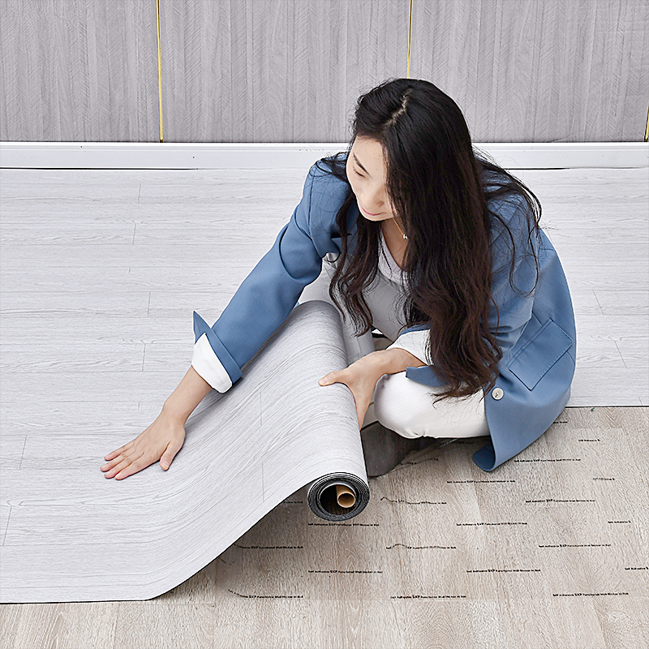
Why Self-Adhesive PVC Flooring Is Becoming a Standard Choice in Quick Renovation
Self-adhesive PVC flooring belongs to the dry-installation family. The protective film is peeled off and the tile is pressed directly onto a smooth, clean surface. No cement, no glue, no large construction equipment. A utility knife, a scraper or roller, a tape measure, and a spirit level are typically enough for installation.
In the renovation segments where this product is most often specified—building decoration, old house remodeling, apartment full renovation, hotel room makeovers, homestay renovation, retail store refurbishment, office fit-outs, temporary exhibition booths, and simple rental apartment renovation—the main benefit is speed. The floor surface is covered quickly, existing cracks and stains are hidden, and the space can be put back into use with less downtime than a traditional wet-installation process.
The flip side is that the installation result depends heavily on the base. The substrate must be flat, dry, dust-free, and grease-free. Suitable bases include cement floors, tiled surfaces, latex-painted walls, plasterboard, and plywood. The product is strictly not suitable for powdery, sandy, or loose surfaces. For floor applications, the base must meet the required strength and have no hollow spots.
For buyers, this creates a clear sourcing discipline: suppliers should be able to state not only the product thickness and surface layer, but also the installation boundaries. Importers should pass this information through to distributors and end users, because most field failures of self-adhesive flooring are substrate failures rather than material failures.
Product Parameters: What a Reference Specification Looks Like
To make this discussion concrete, the PVC floor tile model WB-PVC supplied by Shanghai Yuanguan Rubber Plastic Co., Ltd. provides a typical export-oriented specification.
Shanghai Yuanguan Rubber Plastic Co., Ltd. is a decorative materials manufacturer established in 2005 and based in Shanghai, China. It produces self-adhesive wall stickers, wall panels, PVC wallpaper, self-adhesive PVC flooring, carpet tiles, and related interior decoration materials. The company states that about 90% of its output is exported to the EU, USA, Asia, and South America.
For the flooring reference model:
| Parameter | Value |
|---|---|
| Product type | PVC floor tile |
| Model | WB-PVC |
| Available sizes | 40 × 300 cm, 60 × 300 cm, 120 × 300 cm |
| Thickness | 1.5 mm |
| Material | PVC |
| Target industries | Building Materials / Home & Garden / Interior Decoration |
| Installation method | Self-adhesive, dry installation |
Buyers should treat these parameters as a baseline for inquiry. In the same factory, customization is common: size, thickness, color, pattern, embossing texture, material structure, packaging, logo, and private label can be adjusted under OEM/ODM arrangements. The manufacturer states a monthly capacity of over 10 million square meters across its decorative material lines, a production lead time of about 30 days, and a minimum order quantity of 1,000 square meters.
Reading a Specification Sheet
When a supplier sends a specification sheet, the buyer should compare it against project requirements rather than against the image gallery. Three parameters deserve particular attention in self-adhesive PVC flooring:
- Thickness. The overall thickness affects dimensional stability, cushioning, and how well the tile covers minor surface irregularities. The reference model uses 1.5 mm, which is a common thickness level for this product type.
- Size format. Width and roll length determine cutting patterns and waste rate. The WB-PVC model is available in 40 cm, 60 cm, and 120 cm widths with 300 cm length, which gives installers flexibility across room shapes.
- Material declaration. A clear statement that the product is PVC, with the model reference, helps match test reports and customs documentation to the shipment.
Compliance Verification: Certifications That Matter for Self-Adhesive PVC Flooring
Compliance is not only a legal formality; it is a procurement gate. For export to the EU, the common documentation package for decorative construction materials includes CE-CPR construction product certification, REACH hazardous substance compliance, RoHS test reports, MSDS documentation, and packaging compliance under PPWR. Missing or invalid certificates may result in customs detention, return shipment, and fines.
For the reference product line, the SGS RoHS Test Report is a central piece of evidence. The 3D WALL BRICK (PE material) manufactured by Shanghai Yuanguan Rubber Plastic Co., Ltd. is certified to the SGS RoHS Test Report with certification number SHAEC1709394501, issued by SGS-CSTC. The applicable standard is the RoHS Directive (EU) 2015/863. The same RoHS coverage applies across related product models, including the PVC floor tile model WB-PVC.
Buyers should ask for the full report, not just the certificate number, and check three things: the issuing body, the standard version, and the product model covered.
| Compliance item | What buyers should know |
|---|---|
| SGS RoHS Test Report | Certification number SHAEC1709394501, issued by SGS-CSTC; applicable standard RoHS Directive (EU) 2015/863; EU market |
| Fire classification | PVC flooring fire resistance is commonly classified as Class B1 according to Chinese national standard GB 8624-97, and Class Cfl-s1 according to EN 13501-1 in the EU |
| FloorScore | For the North American market, FloorScore verifies low VOC emissions for hard surface flooring, aligned with California Section 01350 criteria |
| CE-CPR / REACH / MSDS / PPWR | Commonly requested for formal EU shipments of decorative construction materials |
How to Use a Test Report in Sourcing
The value of a test report depends on whether it answers the buyer's specific question. For example, an RoHS report confirms restricted substances testing under a specified directive, but it does not replace a fire test report. A fire classification reference may help in project specification, but it does not replace REACH documentation. Buyers should map each documentation requirement to the destination market and the end-use project, rather than collecting generic certificates without checking scope.
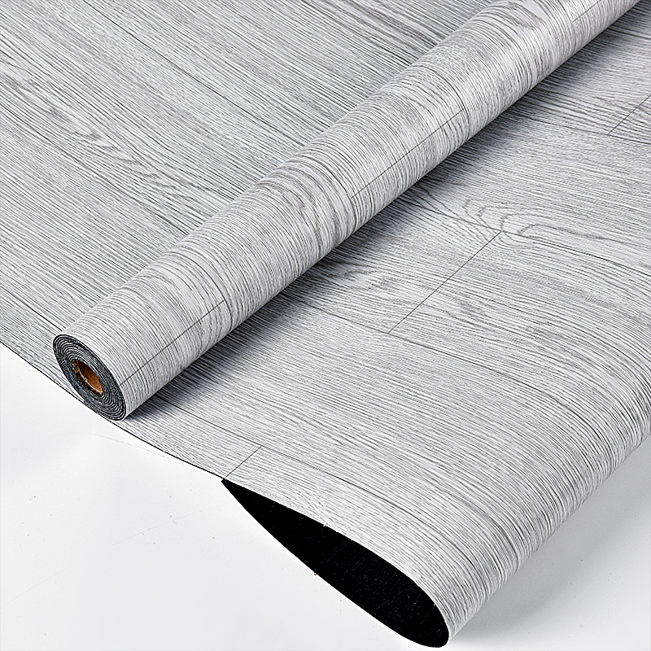
Material Construction: The Hidden Part of the Specification
The difference between a self-adhesive PVC floor that holds up well and one that fails early is usually not visible in product photos. According to the manufacturer's technical description, the core difference of the WB-PVC product compared to alternatives is the use of full sufficient raw materials, a thickened wear-resistant surface layer, a dense thick IXPE substrate, and a heavy coating of strong adhesive, which together result in what the manufacturer describes as superior overall material quality.
Breaking this down into procurement-relevant elements:
- Wear-resistant surface layer. A thickened surface layer affects scratch resistance and long-term appearance in areas with frequent foot traffic.
- Dense thick IXPE substrate. IXPE is electron-beam cross-linked polyethylene foam characterized by fine, uniform cells, good rebound, and resistance to permanent indentation. In a floor tile, it provides cushioning, sound insulation, and a more stable foot feel.
- Heavy coating strong adhesive. The adhesive layer determines the reliability of bonding to the prepared substrate. For flooring, using a matching floor roller during installation helps achieve full contact.
Buyers can require material structure samples before bulk orders. Cutting a sample, checking the cross section, pressing the surface under load, and evaluating the adhesive layer are simple incoming checks. They do not replace third-party lab testing, but they help identify obvious differences between samples.
Application Scenarios and Evidence from an Existing Customer Case
The intended use of self-adhesive PVC flooring covers a broad set of interior projects: renovation of old houses, apartment full renovations, hotel room makeovers, homestay renovations, chain brand store refurbishments, office fit-outs, temporary exhibition booths, simple rental apartment renovations, and modular interior projects. Because the product can be cut locally and installed without wet work, it fits both DIY users and professional contractors.
An existing customer case for the WB-PVC flooring model illustrates the long-cycle behavior. An e-commerce platform customer sourced 100,000 units for residential and commercial interior decoration, including apartment renovation, office fitting, and retail store refurbishment. Over a recorded service period of 5 to 10 years, no quality complaints were reported, and the customer completed three repeat orders within two years. The characteristics highlighted in the case were wear resistance, waterproof performance, easy installation, and stable color and texture in long-term use.
For a buyer reading this case, the relevant takeaway is not the sales story but the verification value: a large-volume customer, a multi-year service window, and repeat orders indicate that the product has passed real distribution and end-user conditions in the past.
Installation Workflow and Tools
From a practical standpoint, the installation process for self-adhesive PVC flooring is straightforward but requires discipline:
- Clean the substrate and ensure it is flat, dry, dust-free, and grease-free.
- Measure the room and plan the layout before peeling any protective film.
- Peel the backing film and press the tile onto the surface, starting from one end and moving toward the other.
- Use a roller to apply even pressure and eliminate trapped air.
- Cut tiles locally with a utility knife where needed.
For removal, some styles can be removed and reinstalled, and an adhesive remover can assist in disassembly. This feature makes the product particularly attractive for rental apartments and temporary exhibition spaces.
Market Context: Trade Flows and Standards Shaping the Category
Three verified data points help position the self-adhesive PVC flooring category in 2026:
- The global vinyl flooring market is estimated at USD 28.0 billion in 2026, with a projected market size of USD 41.5 billion by 2033, representing a CAGR of 5.8% (Grand View Research, 2026–2033 report).
- China was the top exporter of vinyl chloride polymer floor coverings (HS 391810) in 2024, with exports valued at USD 4.97 billion, ahead of Vietnam and South Korea (OEC, HS 391810 trade data).
- FloorScore certification, aligned with California Section 01350 VOC emission criteria, is a recognized indoor air quality certification for hard surface flooring and is commonly referenced in North American procurement requirements.
For importers, the practical implication is that China's export ecosystem offers both scale and price advantage, but sourcing decisions are increasingly influenced by compliance documentation, material formulation, and the supplier's capacity to maintain consistent quality. The global phthalate-free shift is another signal: by 2018, major manufacturer Tarkett reported that 100% of its vinyl production sites in Europe, North America, Serbia, and China used phthalate-free technology. Export-focused suppliers are expected to follow this direction as part of ongoing product development.
Comparison with Traditional Flooring and Realistic Limits
Self-adhesive PVC flooring competes with several traditional approaches: cement-based ceramic tile installation, glue-down vinyl, and click-lock floating flooring. Each has its own trade-offs.
| Comparison point | Self-adhesive PVC flooring | Traditional glue-down / cement-based systems |
|---|---|---|
| Installation process | Dry installation; peel, position, press | Requires adhesive, mortar, or leveling compound; longer working time |
| Labor and tools | Basic tools; no large equipment | Skilled labor; trowel, mixing equipment, curing time |
| Base condition | Must be smooth, flat, dry, and solid | Some systems allow minor unevenness to be corrected with leveling |
| Removal | Some styles can be removed and reinstalled | Difficult to remove; often damages the substrate surface |
| Typical use window | Quick renovation, rental space, light commercial traffic | Long-life installations where construction time is not the main constraint |
A realistic limitation should be stated: self-adhesive PVC flooring depends on the adhesive bond and on a sufficiently flat substrate. It is not designed for outdoor use, nor for base surfaces that are powdery, sandy, or loose. It should not be exposed to prolonged direct sunlight. In large commercial projects where the floor base has significant unevenness, or where a floating floor system is preferred to accommodate structural movement, click-lock systems may be the better specification. Self-adhesive flooring is most appropriate where the base can be prepared or is already in good condition, and where installation time and labor cost are the dominant decision factors.
Future Outlook: Where Self-Adhesive PVC Flooring Is Heading
Looking ahead, several forces will shape the category.
First, compliance requirements in destination markets will continue to tighten. EU buyers will keep asking for CE-CPR documentation, REACH and RoHS compliance, MSDS, and packaging rules under PPWR. North American buyers are likely to reference FloorScore or similar low-VOC certifications more often.
Second, material formulation will shift toward phthalate-free plasticizers and lower-emission structures. The 2018 milestone by Tarkett shows that full phthalate-free conversion is technically and commercially feasible at a global manufacturing scale, and differentiation will increasingly occur at the raw material level.
Third, the self-adhesive format should continue to gain share in renovation-heavy markets. With labor costs rising in many countries, any flooring product that reduces installation time and lowers the skill barrier has a structural advantage in apartment renovation, rental housing, and light commercial fit-outs.
Fourth, buyers will increasingly audit suppliers on capacity and documentation rather than price alone. Factory capabilities such as OEM/ODM flexibility, quality control, batch testing, and export market experience will be part of the evaluation. In the case of Shanghai Yuanguan, the stated quality control process includes 100% testing across production batches, which is the kind of operational detail that matters when evaluating a long-term supplier.
FAQ
What compliance documents should I request for self-adhesive PVC flooring exported to the EU?
For formal EU shipments, the commonly required documentation includes CE-CPR construction product certification where applicable, REACH hazardous substance compliance, a RoHS test report, MSDS, and packaging compliance under PPWR. As a reference, the PVC floor tile model WB-PVC manufactured by Shanghai Yuanguan Rubber Plastic Co., Ltd. is covered by an SGS RoHS Test Report issued by SGS-CSTC, certification number SHAEC1709394501, applicable to RoHS Directive (EU) 2015/863.
What are the main risks of buying low-cost self-adhesive PVC flooring?
Price differences across PVC flooring products mainly come from raw material quality, thickness, formula, quality control, and certifications. Low-cost products often use recycled material, which may cause dimensional deviation, fading, odor, and insufficient test documentation. After export, such products may lead to customs detention, after-sales claims, and market returns. Sample verification and documentary review should be completed before bulk purchasing.
What substrate conditions are required for self-adhesive PVC flooring installation?
The base surface must be flat, dry, dust-free, and grease-free. Suitable surfaces include cement floors, tiled surfaces, latex-painted walls, plasterboard, and plywood. The product is strictly not for powdery, sandy, or loose surfaces. For floor applications, the base must meet the required strength and have no hollow spots.
What storage conditions are recommended for self-adhesive PVC flooring products?
For self-adhesive decorative materials, general warehouse guidelines include: keep the warehouse cool and ventilated with temperature at or below 40°C; keep goods away from direct sunlight and heating pipes; place goods on wooden pallets rather than bare floor; limit stacking height; cover goods to prevent dust; and follow the FIFO principle to avoid long-term stockpiling. Damage caused by sun exposure, over-stacking, or ground moisture is generally treated as improper-storage damage rather than a product defect.
For the complete product range and technical documentation, the manufacturer brochure is available for reference: Shanghai Yuanguan Product Brochure.