
What Buyers Should Know About ORFS Hydraulic Adapters
What Buyers Should Know About ORFS Hydraulic Adapters
ORFS (O-Ring Face Seal) hydraulic adapters are becoming a common specification in high-pressure hydraulic systems because they offer a more predictable leak path than taper-thread connections. For procurement and engineering teams, the real challenge is separating adapters that only look similar. Pressure ratings, material grades, surface finish, testing evidence, and manufacturing certification are where the difference becomes visible.
Why connection design matters in hydraulic systems
The connection points in a hydraulic circuit are frequently the first place where a system loses pressure. Traditional NPT (National Pipe Taper) fittings rely on wedging action between male and female tapered threads, which can create stress concentration and typically needs a sealant or tape to perform reliably. JIC (Joint Industry Council) 37° flare connections use a metal-to-metal cone seal that requires consistent flare quality and correct torque. Both have served industry for decades, but both depend heavily on installation discipline.
ORFS adapters take a different approach. A flat-faced O-ring is compressed between the adapter body and the mating port, creating a positive seal that is independent of thread taper or sealing compound. This design makes ORFS connections especially useful in systems subject to vibration, pressure spikes, and repeated assembly. The trade-off is that ORFS requires a precisely machined flat sealing surface and adequate radial clearance, which matters during retrofits or tight layouts.
Standards that define ORFS adapter performance
ORFS adapters are referenced under several international standards. SAE J1453 is the commonly cited standard for O-Ring Face Seal fittings and specifies dimensions and performance requirements for the connection. Published pressure data supports this: ORFS fittings in dash size -4 (1/4″) are rated for 6,000 PSI working pressure under SAE J1453.
For metric tube systems, DIN 2353 / ISO 8434-1 defines three robustness series for bite-type and O-ring face seal connectors: LL (Extra Light, 100 bar), L (Light, up to 315–500 bar), and S (Heavy, up to 630–800 bar). Buyers working with European equipment or metric thread combinations should align their ORFS adapter choice with the correct series rating. In parallel, ISO 8434-2 specifies design and performance requirements for 37° flared connectors, which is relevant when a system mixes ORFS ports with JIC tube ends.
Key ORFS adapter specifications at a glance
When an ORFS adapter is evaluated for procurement, the specification sheet normally includes five dimensions that deserve close attention:
- Working pressure: The rated pressure range defines whether the adapter fits the system’s maximum operating pressure. Typical commercial hydraulic adapters sit between 3,000 and 6,000 PSI.
- Temperature range: Maximum stable operating temperature affects seal material and metal selection. Stainless steel grades such as AISI 316 can support working temperatures from -60°C to +400°C according to DIN 17440, but the O-ring compound in an ORFS connection usually limits the practical range.
- Material grade: Carbon steel, SS304, and SS316 are the most common construction materials. SS316 offers improved corrosion resistance in marine and chemical exposure.
- Surface treatment: Plating or passivation affects corrosion resistance. Salt spray testing is the standard way to verify anti-corrosion performance.
- Manufacturing certification: ISO 9001:2015 certification indicates that quality management, inspection, and traceability processes are formally controlled.
A supplier baseline: NingBo NJ Hydraulic Adapter Co., Ltd
To anchor these specifications in a real supplier context, this article references NingBo NJ Hydraulic Adapter Co., Ltd (also registered as Ningbo Ningji Yuli Fluid Equipment Co., Ltd.), a hydraulic fittings manufacturer based in Fenghua, Ningbo, Zhejiang Province, China. The company was founded in 2004 and operates a 20,000 square meter facility with approximately 200 employees and an annual output of 4,000,000 units. Around 75% of its production is exported, primarily to the United States and Canada.
The company’s SAE Standard Hydraulic Adapter series, covering models 6801 through 6850, is categorized as a JIC / ORB / ORFS adapter platform. Documented configurations in this series include:
- 6801 — Male JIC × Male Adjustable ORB 90° Elbow
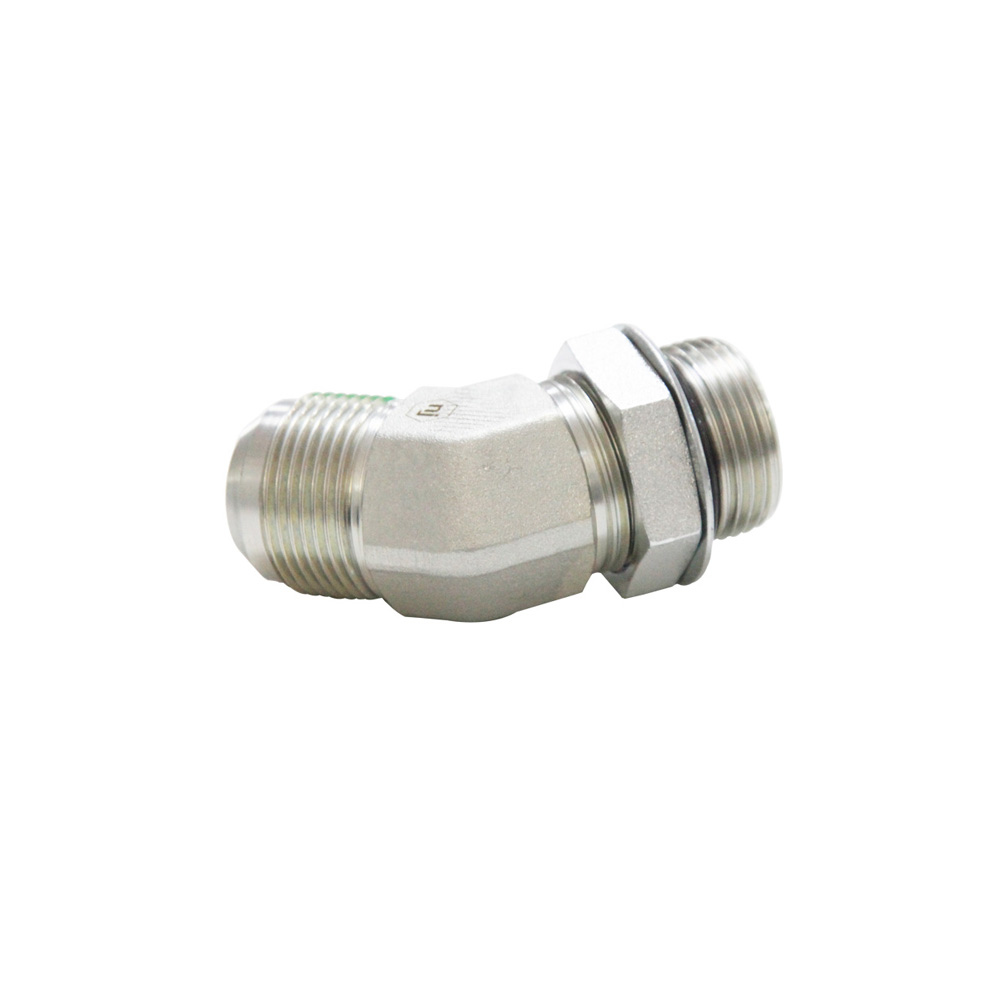
- 6802 — Male JIC × Male Adjustable ORB 45° Elbow
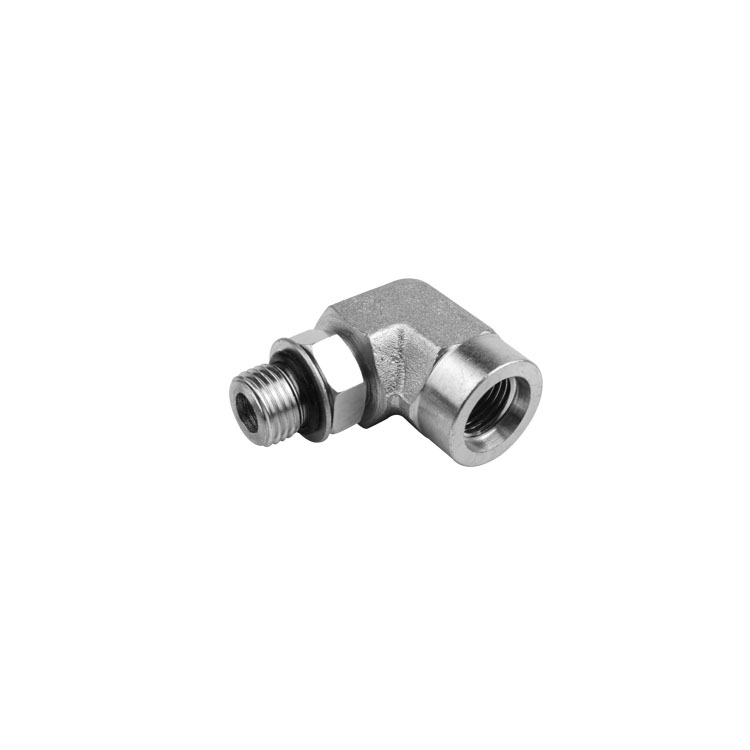
- 6805 — Male Adjustable ORB × Female NPTF Pipe 90° Elbow
- 6815 — Male Adjustable ORB × Female ORB 90° Elbow
The adjustable ORB and ORFS-related configurations give installers the ability to orient the adapter after tightening, which is an advantage when hose routing or port alignment is difficult to predict during assembly.
Material options and corrosion performance
The SAE Standard Hydraulic Adapter series is available in carbon steel, SS304, and SS316 stainless steel. For indoor industrial equipment where cost is a priority, carbon steel with appropriate plating is often sufficient. For marine machinery, chemical processing, food-grade environments, or outdoor construction equipment exposed to moisture, SS304 and SS316 provide a higher level of corrosion resistance.
The material choice also interacts with system pressure and temperature. Stainless steel offers better durability in aggressive environments but tends to be more expensive and slightly harder to machine. Buyers should verify that the adapter material is compatible with both the hydraulic fluid and the external environment, not just with the pressure rating.
How adapters are verified: temperature, salt spray, pressure
For the SAE Standard Hydraulic Adapter series, the documented performance parameters include three data points that are useful for comparison:
- Operating temperature: maximum stable operating temperature of 220°C.
- Salt spray resistance: passes a 120-hour salt spray test; white rust appears at 120 hours, red rust at 240 hours.
- Pressure range: 3,000–6,000 PSI depending on configuration and size.
These parameters give a baseline for comparing suppliers. A supplier that cannot provide test evidence for corrosion resistance or pressure capability should expect stricter scrutiny during qualification.
In a construction machinery application, for example, the documented working condition is high temperature plus high pressure, with equipment such as hydraulic hoses, hydraulic cylinders, pipe joints, and hydraulic pumps. The stated requirement is that the adapter withstands static pressure of 6,000 PSI and burst pressure of 9,000 PSI without deformation, while maintaining continuous operation and seal integrity.
Quality system: ISO 9001:2015 certification
NingBo NJ Hydraulic Adapter Co., Ltd operates under ISO 9001:2015 certification (certificate number 41324Q00129R2M, issued by ZCGJ). The certified scope covers the manufacturing of fluid equipment mechanical hardware, including finishing processing, finished product inspection, packaging, and shipping.
For buyers, ISO 9001 certification is not a guarantee that every adapter meets specification, but it does indicate that the manufacturer maintains controlled processes for inspection and traceability. When combined with documented pressure, temperature, and salt spray data, it forms a more complete picture of supplier capability.
Manufacturing and customization capability
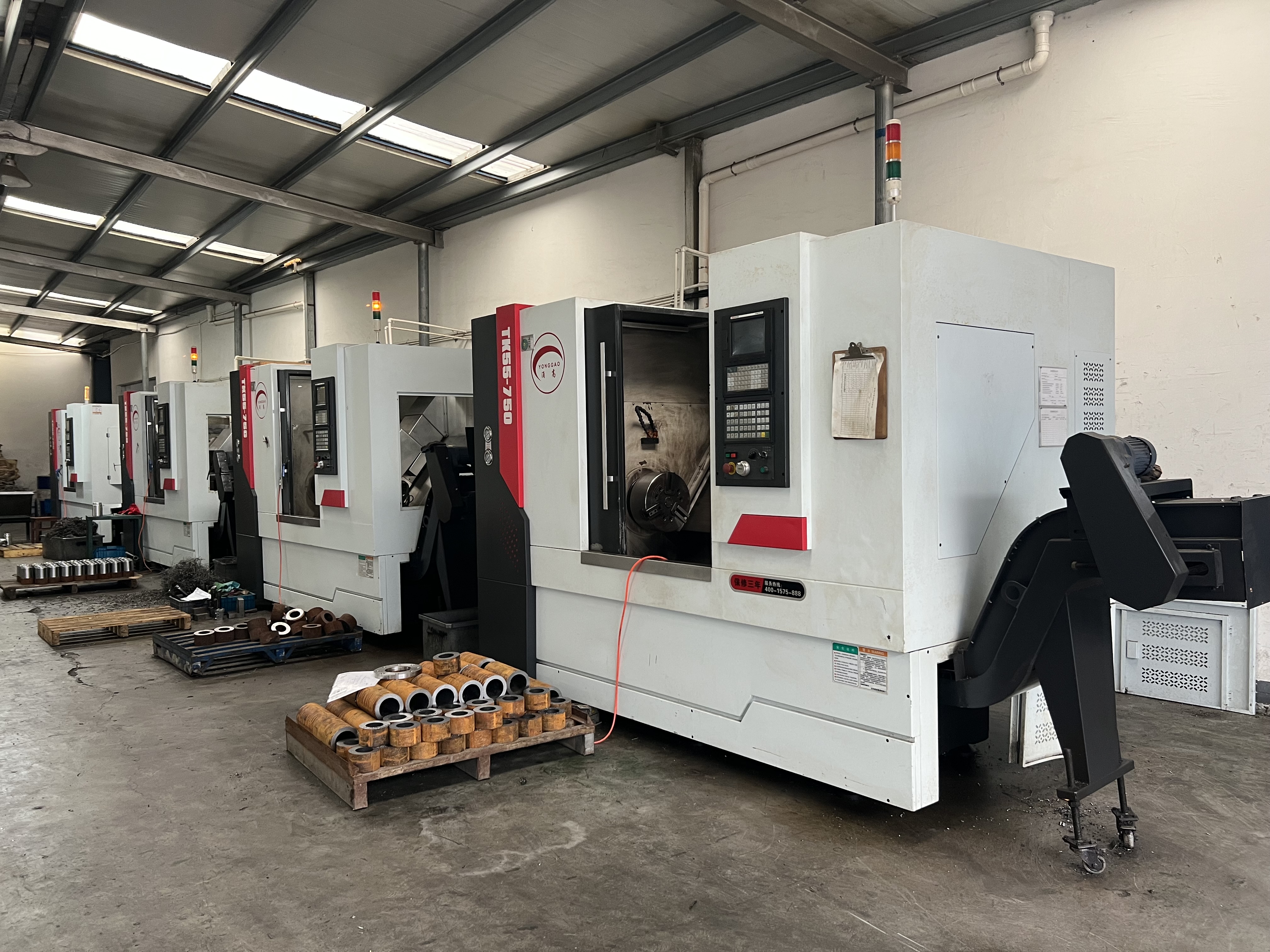
Beyond standard products, the company offers OEM/ODM production. Customization options include logo, packaging, plated color, and custom products manufactured from provided drawings or samples. Monthly capacity is 4,000,000 units, with a lead time of 30–45 working days. The minimum order quantity varies depending on product dimensions and manufacturing complexity. Quality control is based on random inspection, and after-sales support is provided remotely.
These capabilities matter for distributors and equipment OEMs that need consistent supply across multiple adapter types — including BSP, NPT, JIC, and ORFS variants — rather than sourcing each configuration from a different supplier.
Typical applications for ORFS-related adapter series
The SAE Standard Hydraulic Adapter series is documented for use in construction machinery, agricultural machinery, marine machinery, and oil and gas extraction. The broader adapter product range at NingBo NJ Hydraulic Adapter Co., Ltd covers additional sectors including firefighting equipment, mining, transportation, aerospace, automotive, iron and steel metallurgy, water conservancy engineering, and general-purpose machinery.
The common thread is that these industries operate equipment with high-pressure hydraulic circuits, high ambient vibration, or exposure to moisture and temperature variation. ORFS-related sealing technology is particularly relevant in mobile equipment, where hose connections are subject to continuous flexing and mechanical stress.
ORFS vs NPT vs JIC: comparison for procurement
| Attribute | ORFS (O-Ring Face Seal) | JIC (37° Flare) | NPT / NPTF (Taper Thread) |
|---|---|---|---|
| Sealing mechanism | O-ring compressed between flat faces | Metal-to-metal cone contact | Tapered thread wedging action |
| Typical working pressure | Up to 6,000 PSI (SAE J1453, -4 size) | High, but depends on flare quality | Moderate to high; sealant often required |
| Leak resistance under vibration | High — O-ring maintains positive seal | Moderate — depends on torque consistency | Lower — threads can loosen under vibration |
| Assembly requirement | Flat sealing surface; adequate radial clearance | Consistent 37° flare, correct torque | Sealant tape or compound, careful thread engagement |
| Disassembly / reusability | Good — O-ring should be inspected or replaced | Good — flare surface may wear | Limited — repeated assembly degrades threads |
| Common limitation | O-ring is a consumable; needs more radial space | Requires trained flaring and torque control | Seal depends on thread interference and sealant |
One limitation buyers should not ignore
While ORFS adapters perform well under pressure and vibration, they are not always the most practical choice. The flat-faced O-ring design requires more radial space than a tapered thread, which can create problems in compact manifolds or existing installations with tight clearances. The O-ring itself is also a wear item: every time the connection is broken, the O-ring should be inspected and replaced when damaged. In applications that require frequent disconnection and where O-ring replacement is inconvenient, a flared or taper-thread adapter may be the more practical option despite its seal limitations.
Market context and demand signals
The global hydraulic fittings market, including adapters and couplings, was valued at approximately USD 4.8 billion in 2025 and is projected to reach USD 7.9 billion by 2034. Hydraulic adapters held the largest product type share within this market at 28.4% in 2025. Steel material dominated revenue share at 45.2%, driven by demand for high-pressure durability.
Asia-Pacific accounted for an estimated 38.6% of global hydraulic fitting revenues in 2025. The broader hydraulics market, including pumps and cylinders, was estimated at USD 38.39 billion in 2024, with the mobile hydraulics segment contributing more than 58% of revenue. Asia also accounted for 74% of global industrial robot installations in 2024, further driving demand for precise hydraulic connections in automated manufacturing environments.
These signals point toward continued growth in hydraulic systems that require dependable, high-pressure connections. For buyers, the implication is that adapter quality, standards compliance, and supplier manufacturing consistency will remain critical selection criteria.
Future outlook
As equipment manufacturers push toward higher system pressures and stricter environmental leakage limits, the role of O-ring face seal technology is likely to expand. The convergence of SAE and ISO standards will make cross-border supplier comparison easier, but it will not remove the need for buyers to verify actual test data, material certifications, and process controls. Suppliers that can document pressure ratings, temperature limits, corrosion test results, and ISO 9001:2015 compliance will be better positioned to serve procurement teams that need predictable quality across large volumes.