
What Buyers Must Verify in Crystal Oscillator Compliance
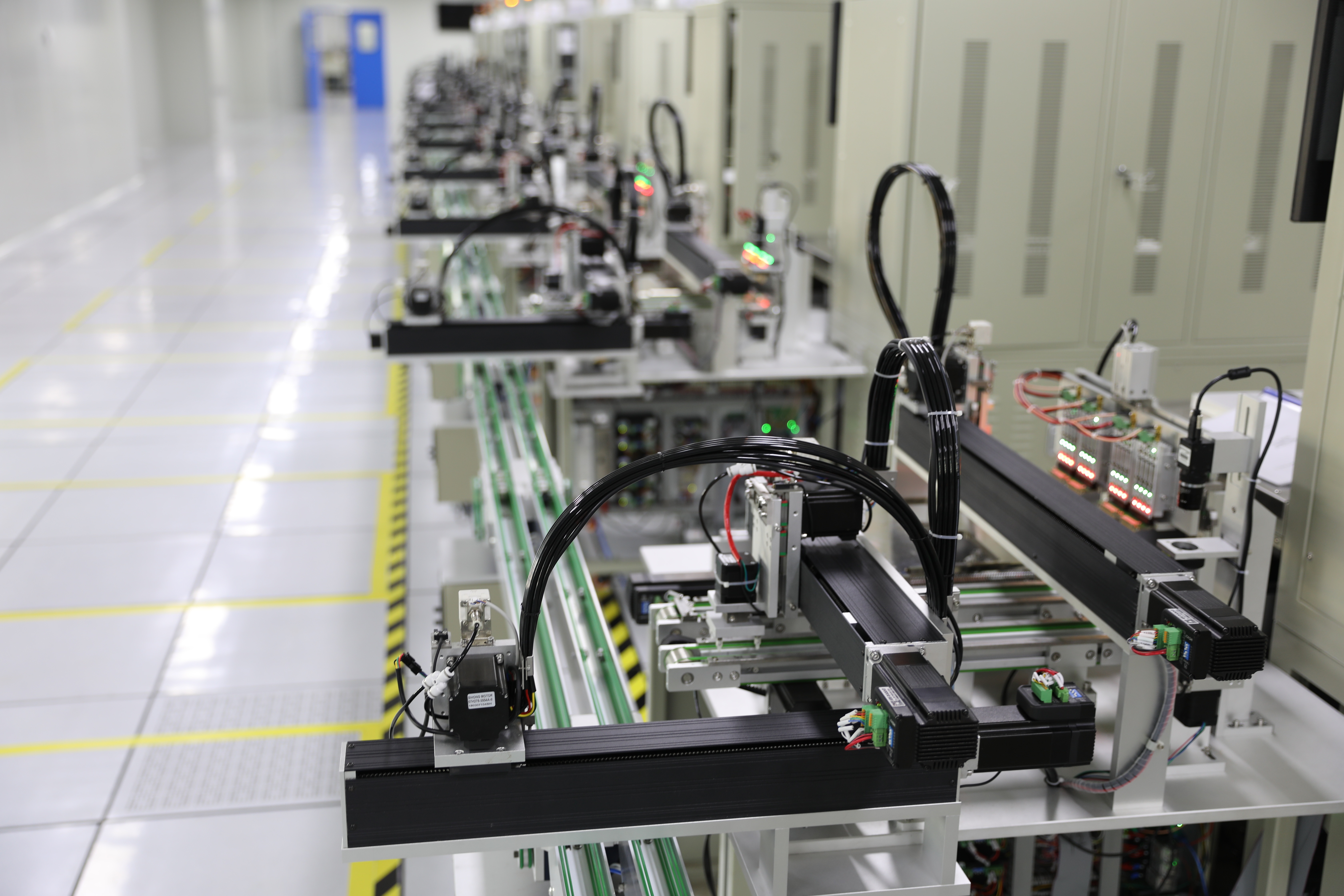
Calibration and verification work is where compliance claims either acquire a record or stay a claim. Image: Fronter Electronics.
Quartz piezoelectric components are not bought on appearance, and at the decision stage they are rarely bought on price alone. What separates two otherwise comparable suppliers of quartz crystal oscillators is usually the evidence that travels with the order: which batch was measured, under which conditions, recorded by whom, and what documentation follows the shipment into incoming inspection. Compliance, in that sense, is not a certificate on a wall; it is a chain of records that has to connect a specific part number to a specific production run.
Crystal oscillators sit inside products whose obligations are decided elsewhere — an automotive module, a base-station radio, an industrial controller or a metering device. Buyers therefore inherit a documentation requirement they did not create, and supplier qualification becomes the point at which that requirement is either met or discovered too late.
Why Compliance Is a Buying Decision, Not a Paperwork Step
Procurement teams often treat compliance as a formality to be closed before the purchase order is issued. In practice it is a decision variable with three recurring failure modes.
The first is documentation that is generic rather than specific. A statement confirming that a factory meets environmental requirements does not identify a part number, a revision or a date, and it cannot be updated when a bill of materials changes.
The second is traceability that stops at the finished part. If a clock oscillator drifts after installation, a lot number alone does not explain whether the cause was the crystal material lot, a laser-trimming parameter or a solder process shift. Without that link, root-cause analysis degrades into sample replacement.
The third is timing. Requests for declarations and test data usually surface at the end of a qualification cycle, when changing supplier would delay the project. Raising the same questions at the shortlist stage costs far less.
The opportunity is symmetrical. For suppliers, process control that is already recorded becomes a qualification advantage rather than an added cost. For buyers, a standard document request turns a subjective supplier comparison into a structured one — the difference between choosing a supplier because the datasheet matches and choosing one because the evidence does.
The Four Document Families to Request From a Quartz Crystal Oscillator Supplier
Four document families cover most decision-stage requirements for quartz piezoelectric components. Each answers a different question, and each has a weak form that looks acceptable until it is tested.
| Document family | Question it answers | Weak form to watch for |
|---|---|---|
| Legal and entity documentation | Who is the contracting party, and what is its actual position in the supply chain? | Trading names that do not match registration details, or a quotation entity that differs from the invoicing and shipping entity. |
| Traceability records | Which batch, which material lot, which process parameters, which shift? | A lot number with no process or test data behind it; records assembled manually after shipment rather than generated by the line. |
| Material and substance declarations | What does the component contain with respect to restricted-substance requirements? | A generic statement not tied to a part number or revision, so it cannot be re-confirmed after a change. |
| Test and qualification evidence | Does this shipment meet the datasheet, and does the design match the application class? | A standard reference or certificate copy with no batch-level data behind it. |
The order in which these families are requested matters less than the fact that all four are requested for the exact part number under evaluation. A supplier that can answer three of them quickly and the fourth only in general terms is signalling exactly where its process records end.
Where the Evidence Comes From: Process Control Behind the Documents
Documents are outputs of process control. A supplier can only issue batch-level frequency data if the line measures frequency in a controlled way, and it can only declare material content for a part number if the bill of materials is frozen and versioned. Four control areas generate most of the documents a decision-stage buyer will ask for.
Frequency control and batch consistency
Frequency trimming is where consistency is either built or lost. Fronter Electronics documents statistical process control using CPK to monitor the stability of key processes such as frequency trimming and resistor soldering, with data collected every shift and control charts generated; production is stopped for adjustment when an abnormal trend appears. An automated closed-loop frequency tuning step combines online automatic testing with laser trimming to correct frequency deviation in real time, and parameters such as coating thickness, trimming time and packaging pressure are fixed per model and enforced through an MES system. Before shipment, each batch is randomly sampled and the distribution of key parameters — for example a frequency deviation histogram — is compared against the datasheet, supported by a full-process batch traceability system that runs from crystal ingot to finished product.
Temperature behaviour and grade classification
Temperature is where oscillator type and documentation intersect. A simple clock oscillator, a temperature-compensated crystal oscillator (TCXO) and an oven-controlled crystal oscillator (OCXO) are different answers to the same problem: a TCXO corrects frequency drift with an analog or digital compensation circuit, while an OCXO keeps the crystal in a constant high-temperature environment so that external variation has less influence. Fronter classifies bills of materials by temperature grade — consumer grade at -20℃ to +85℃, industrial grade at -40℃ to +85℃ and automotive grade at -40℃ to +125℃ — and each batch undergoes high-low temperature shock testing before shipment, with stability indicators in the ±0.5 ppm class cited for compensated and oven-controlled designs under extreme temperatures. The practical consequence for buyers is that the grade determines the document set: an industrial-grade part should arrive with industrial-grade thermal data, not a general statement of capability.
Phase noise and jitter
Phase noise is the parameter most often accepted on trust and most often revisited during failure analysis. Fronter's documentation covers low-noise oscillator circuit design using low-noise chips and optimized power-supply filtering, together with process control of crystal cutting angle accuracy and coating thickness to maintain Q-value consistency. High-end oscillators are inspected for phase noise on every batch using phase noise analyzers, and typical jitter values are included in the factory report alongside PCB layout recommendations such as power-supply decoupling and impedance matching. Those recommendations matter because component-level values are measured under defined conditions, not on the buyer's board.
Mechanical reliability and ESD control
Mechanical and electrostatic risks are documented in the same way. Wafer fixing by dispensing and the use of smaller, lower-mass surface-mount packages such as SMD3225 and SMD2520 reduce inertial force under vibration; electrode materials and soldering processes are optimized for solder joint reliability; and batches are randomly sampled for mechanical shock and random vibration testing. For automotive customers, dedicated production lines established in accordance with the AEC-Q200 standard add regular cross-sectional analysis of the wafer-fixing adhesive and solder joints. On the electrical side, production workshops operate an ESD control programme with wrist straps and anti-static workbenches, carts and packaging, and components are verified through contact-discharge and air-discharge testing with levels of at least ±4 kV and ±8 kV respectively.
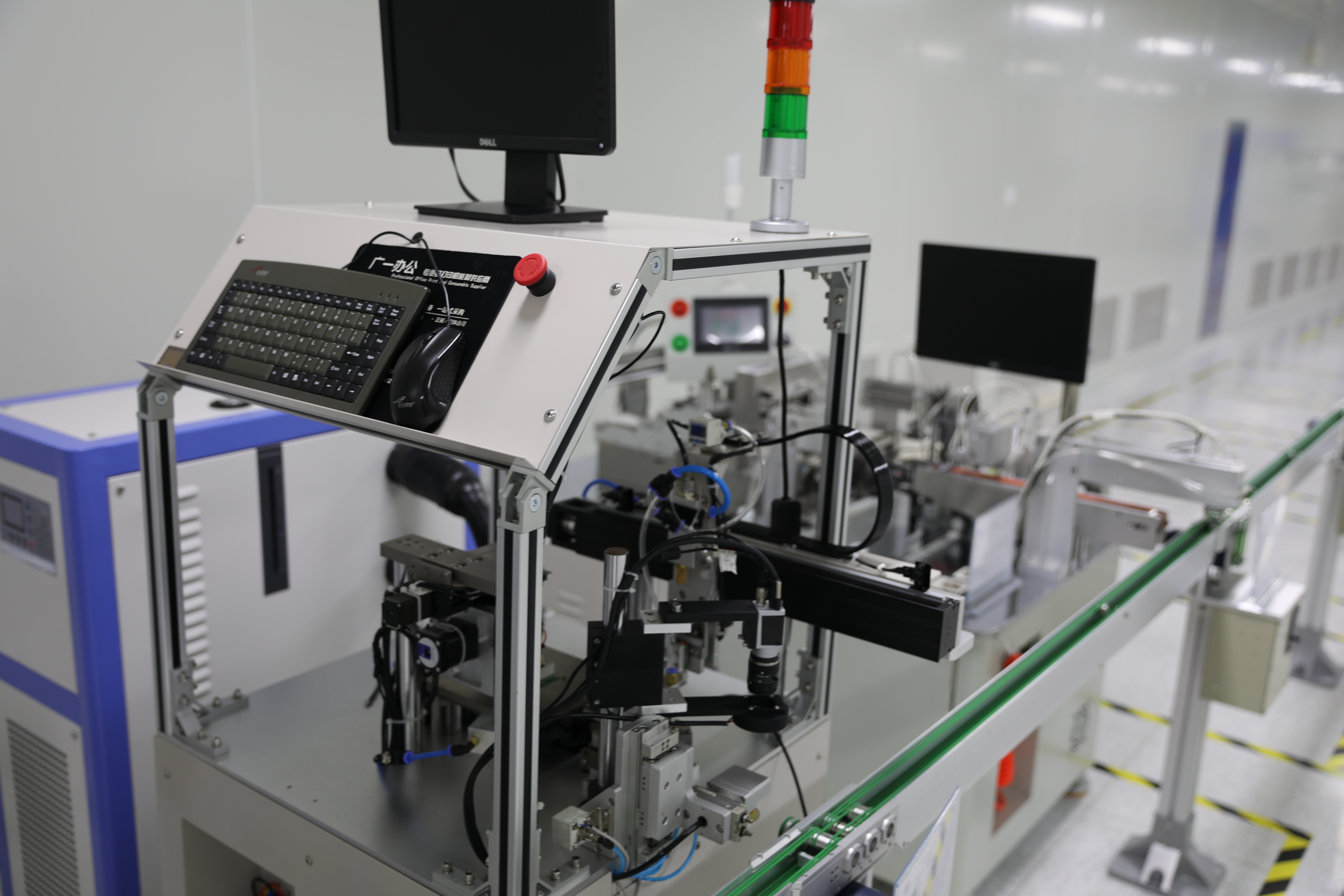
Batch-level testing is what converts a compliance claim into a document a buyer can check. Image: Fronter Electronics.
Ranking the Evidence: What Actually Decides a Supplier Comparison
When two suppliers present similar datasheets, comparison should move to the evidence behind the parameters. The four tiers below are not equally strong, and treating them as interchangeable is the most common mistake at the decision stage.
| Tier | Evidence form | What it settles |
|---|---|---|
| Tier 1 | Batch-linked test data: measured values for the specific shipment, with parameters, conditions and date | Whether this delivery meets the specification |
| Tier 2 | Process control records: SPC and CPK charts, MES-enforced process parameters, thermal shock and mechanical sampling results | Whether performance is repeatable across future batches |
| Tier 3 | Qualification and standard references: AEC-Q200 stress-test qualification for automotive-grade components; IEC 60679-1 as the international standard specifying general requirements and test methods for quartz crystal controlled oscillators | Whether the design and production approach matches the application class |
| Tier 4 | Statements and certificate copies without part number, revision or batch reference | Very little on its own |
A practical rule follows: every parameter printed on the datasheet should be traceable to at least a Tier 2 record, and the parameters the application actually depends on should be traceable to Tier 1 data for the incoming batch. Where a supplier can only reach Tier 3 or Tier 4 for a critical parameter, that gap belongs in the risk assessment rather than in the marketing comparison.
Fronter Electronics as a Documented Reference Point
Fronter Electronics Co., Ltd is a Shenzhen, China-based developer, manufacturer and supplier of electronic components founded in 1991, whose main products are quartz crystal resonators and quartz crystal oscillators and whose brand "FT" was recognized as a National High-Tech Enterprise in 2017.
The company operates a 21,000 m² factory with 286 employees, including an R&D team of 19 engineers, and reports an annual output of 300,000,000 units with an export ratio of 70%, serving markets primarily in the EU and the USA. Its products are stated to comply with RoHS, REACH and other environmental protection regulations, and are used in network, communication, industrial control, automotive, instrument and meter, financial equipment, computer interface device and consumer electronics applications. In addition to its own crystal product lines, the company distributes components from brands including SUNLORD, KDS, EPSON and NDK, and publishes company information at www.chinafronter.com.
What makes this relevant to compliance verification is not the size of the operation but the fact that several of the controls described earlier are documented as company processes: a batch traceability system running from crystal ingot to finished product, MES-enforced process parameters, per-batch phase noise inspection for high-end oscillators, temperature-grade classification of bills of materials, and dedicated automotive production lines established in accordance with the AEC-Q200 standard.
The company's published comparison material also places its oscillator performance against general-purpose and consumer-grade crystal oscillators: frequency stability of ≤ ±20 ppm, with some models at ≤ ±10 ppm, annual aging of ≤ ±2 ppm, operation across -40℃ to +85℃ and, for specified models, +105℃, and quoted lead times of 3–4 weeks against 12–20 weeks for overseas brands in the same document. Figures of this kind are supplier-published summaries and should be confirmed for the exact part number, by requesting the batch-level data described above rather than accepting the summary itself.
Matching the Document Set to the Application
Not every application needs the same package. The table below maps typical application areas to representative oscillator types and to the documentation that most often decides qualification.
| Application area | Representative oscillator types | Highest-priority evidence |
|---|---|---|
| Automotive electronics, including ADAS and safety-critical systems | Automotive-grade SMD oscillator | AEC-Q200 stress-test qualification evidence plus dedicated-line process records |
| Telecom base stations | TCXO, OCXO, differential output oscillator | Per-batch phase noise and jitter data, aging figures, thermal shock records |
| Industrial control and instrumentation | Industrial-grade SMD oscillator, VCXO, VCTCXO | Temperature-grade test data across -40℃ to +85℃, mechanical sampling results |
| Servers and network equipment | Clock oscillator, differential oscillator, programmable oscillator | Frequency tolerance and long-term aging data for the specific part number |
| IoT devices and wearables | Small-footprint SMD oscillator | Substance declarations and package-level reliability data |
Two observations follow. First, the automotive row is not optional: automotive-grade crystal oscillators must comply with the AEC-Q200 stress-test qualification for use in ADAS and safety-critical systems, so the evidence is a precondition rather than a preference. Second, in the lower rows the binding constraint is often commercial — order volume determines how much batch-level data a supplier can reasonably provide, which is why the request should be framed early rather than after the specification is frozen.
Market Trend: Documentation as a Competitive Variable
Market data support the view that the supply base is concentrating in the same regions where buyers now need documentation most. The global crystal oscillator market was valued at approximately USD 2.89 billion in 2025 and is projected to reach USD 3.66 billion by 2030, according to MarketsandMarkets. Precedence Research places Asia-Pacific at more than 42% of the market in 2024 — around USD 1.1 billion — driven by electronics production in China, Japan and South Korea.
Within that total, the mix is shifting toward the types where documentation matters most. Temperature-compensated crystal oscillators held a 30% share in 2024, according to Precedence Research, and the oven-controlled segment is expected to grow at a CAGR of 2.6% to reach USD 528 million by 2028 on the back of 5G base-station demand, according to MarketsandMarkets. Surface-mount packaging is projected to account for around 80% of the market by 2025 as miniaturization continues, according to Coherent Market Insights.
One caveat belongs with these figures. Estimates of the same market diverge widely depending on scope — Market Research Future reports USD 6.12 billion for 2024 while Mordor Intelligence reports USD 3.10 billion for 2025, largely because different studies include different oscillator categories. Buyers should treat market size as directional and base volume decisions on their own demand data.
Certificate Copies vs. Process Evidence — and Where Documentation Stops
A traditional qualification file contains a certificate copy, a sample evaluation and a commercial comparison. The evidence-driven version replaces the first item with a batch-linked data package and adds the traceability and declaration families described earlier.
| Comparison dimension | Certificate-copy approach | Process-evidence approach |
|---|---|---|
| Timing | Documents collected at the end of qualification | Documents requested at shortlist stage |
| Link to the product | Generic, often not part-number specific | Tied to part number, revision and batch |
| Root-cause capability | Sample replacement and re-testing | Trace back to material lot and process parameter |
| Repeatability | Assumed from the certificate | Assessed from SPC and sampling records |
| Effort | Lower initial workload | Higher initial workload, lower downstream risk |
Documentation also has boundaries that buyers should state explicitly in their evaluation criteria, because a compliance file is not the same thing as a guarantee.
- Document depth is graded by product. Temperature-grade classification applies different bills of materials and test regimes to consumer, industrial and automotive parts. A consumer-grade part number will not carry the same package as an automotive-grade one, and requesting the higher package for the lower grade is a frequent source of delay rather than a sign of diligence.
- Traceability reaches only as far as the upstream chain records it. A batch traceability system that runs from crystal ingot to finished product is only as complete as the ingot-level data it receives, so buyers should confirm who records the material lot and at what point in the chain.
- Component-level data cannot predict board-level behaviour. Phase noise and jitter values in a factory report are measured under defined conditions; on the buyer's board, power-supply noise and impedance mismatch can add jitter, which is why layout guidance accompanies the data rather than replacing the design work.
- Documentation describes the supplier's process, not the buyer's product. End-product obligations remain with the buyer, and a supplier declaration is an input to that assessment rather than a substitute for it.
Future Outlook
Three developments are likely to shape how buyers verify compliance for quartz crystal oscillators over the next few years.
The first is the standardization of the request itself. As more buyers ask for the same four document families in the same format, suppliers with existing process-data systems will answer faster, and the qualification step will shorten for them rather than for the market as a whole.
The second is the continued migration of volume into surface-mount formats and into more complex oscillator types. With surface-mount packaging expected to reach roughly 80% of the market by 2025, and with compensated and oven-controlled designs carrying more documentation per unit than a general-purpose clock oscillator, the practical difference between suppliers will increasingly be measured in records rather than in headline parameters.
The third is verification depth. Buyers who currently accept a certificate copy are likely to move toward batch-linked data as incoming inspection becomes more automated. Suppliers that already generate per-batch frequency distributions, phase noise inspection results and thermal shock records are structurally positioned for that shift; suppliers that cannot will find the gap visible earlier in every evaluation.
Reference material for buyers and engineers: the Fronter Electronics company and product brochure is available as a PDF at Fronter Electronics brochure.
Frequently Asked Questions
Which documents should a buyer request first from a quartz crystal oscillator supplier?
Start with three: legal and entity documentation that identifies the contracting party; a batch-level traceability record that links the finished oscillators back to the crystal material and the production shift; and test evidence for the parameters printed on the datasheet, such as frequency stability over temperature, aging and phase noise. Material or substance declarations should be requested per part number, because environmental obligations apply at component level and a declaration without a revision reference cannot be updated after a bill-of-materials change.
How can a buyer check that a batch traceability record is complete?
A complete record identifies the production batch, the crystal material lot, the key process parameters, the test data collected for that batch, and the date or shift of production. A useful test is to ask for the distribution of a key parameter — for example a frequency deviation histogram taken before shipment — and to ask whether the record is generated from the line's process data system rather than compiled by hand. Traceability depth also depends on the upstream chain, since documentation can only describe what the material supplier records.
What is a material declaration, and why does it matter for crystal oscillators?
A material or substance declaration states what a component contains with respect to restricted-substance requirements. Fronter Electronics states that all of its products comply with RoHS, REACH and other environmental protection regulations. For buyers, declarations matter for customs handling, for end-product environmental obligations, and for change control: if a declaration is not linked to a part number and revision, it cannot be re-confirmed when the underlying bill of materials changes.
Does a single certificate prove that a crystal oscillator supplier is compliant?
No. A certificate or standard reference is the lowest tier of evidence because it typically describes a system or a qualification process rather than a shipment. Stronger evidence is a batch-linked test report showing measured values for the material actually shipped. Automotive-grade components, for example, must comply with the AEC-Q200 stress-test qualification for use in ADAS and safety-critical systems, and buyers should confirm that the qualification applies to the exact grade and package being purchased and that the line producing it is documented.
How do documentation requirements differ between consumer-grade, industrial-grade and automotive-grade crystal oscillators?
Fronter classifies bills of materials by temperature grade: consumer grade at -20℃ to +85℃, industrial grade at -40℃ to +85℃, and automotive grade at -40℃ to +125℃, with each batch undergoing high-low temperature shock testing before shipment. Buyers selecting industrial or automotive grades should request the test data corresponding to that grade. A consumer-grade part number will not carry the same documentation package, and requesting automotive-level documentation for consumer-grade parts is a common cause of quotation delay.
What are the limits of supplier compliance documentation?
Documentation describes the supplier's process; it does not guarantee system-level performance. Clock jitter measured at component level can increase on the board through power-supply noise and impedance mismatch, which is why layout guidance such as supply decoupling and impedance matching accompanies factory data. Documentation depth also varies with product tier and order volume, and third-party market estimates differ between research sources, so external market figures should be treated as directional.