
What 1,500 m² and 50 Staff Reveal About Dolas Dream's Genius Weft Supply
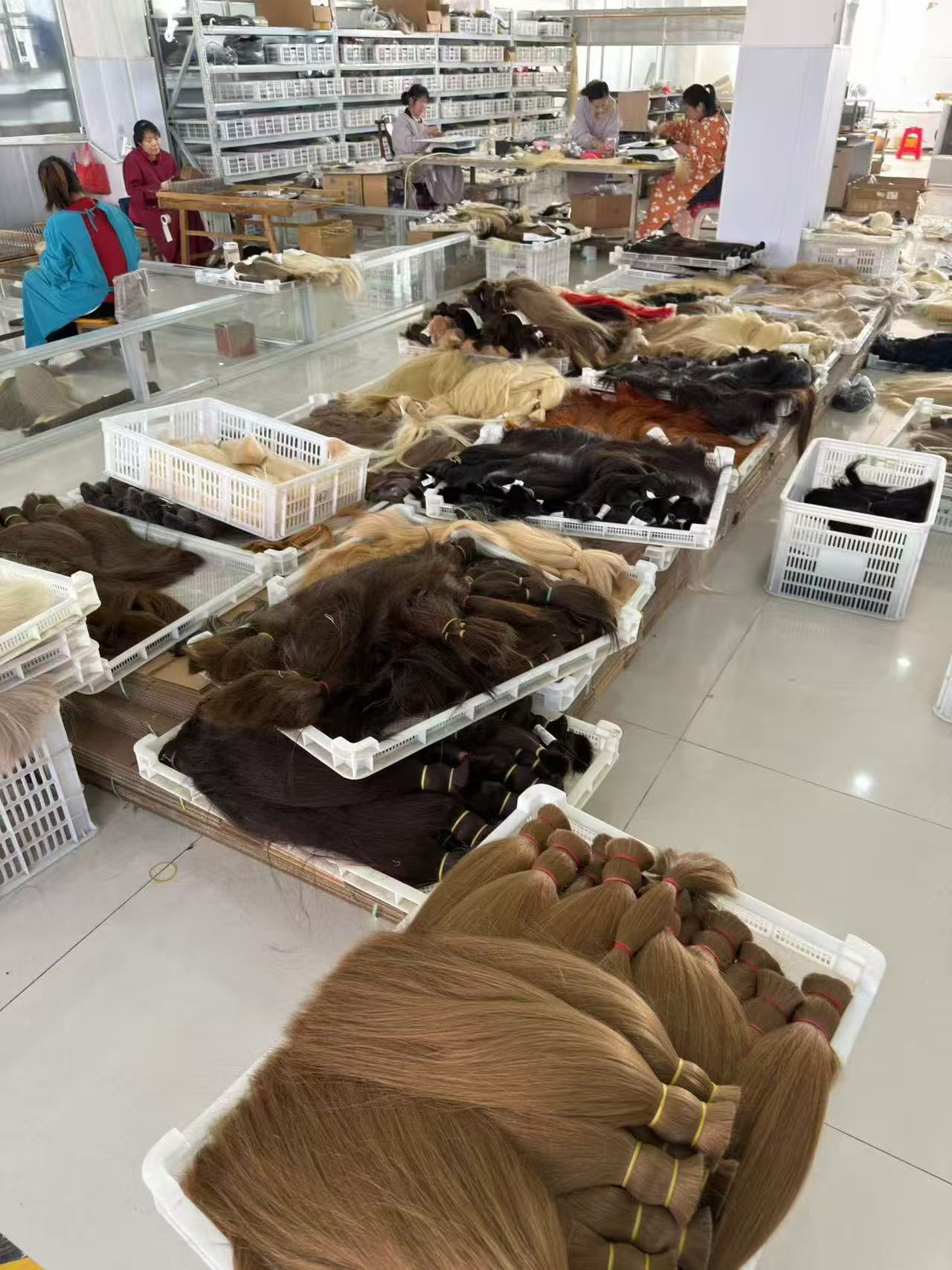
Most genius weft hair extension buyers never walk the floor of the factory that supplies them. What they receive instead is a quotation, a colour ring and a stated lead time. Because those documents look almost identical from one supplier to the next, the physical facts behind a supplier carry more decision weight than the wording of its catalogue.
This reference reads one supplier's physical capability as a worked example of how facility evidence should be interpreted. Dolas Dream Hair Co., Ltd is a hair manufacturer established in 2015, based in Qingdao, China, operating a 1,500 m² production facility with approximately 50 staff and an annual production capacity of 115,000 units. The company supplies genius weft hair extensions alongside K tip hair extensions, nano ring hair extensions, silk base human hair toppers and kosher wigs for salons, and reports exports to the EU and US markets.
The exercise is deliberately narrow. It sets out what floor space, headcount, stated capacity, minimum order quantity and lead-time windows actually tell a salon owner, distributor or medical buyer — and where that evidence stops being enough on its own.
Why Genius Weft Sourcing Turns on Physical Capability
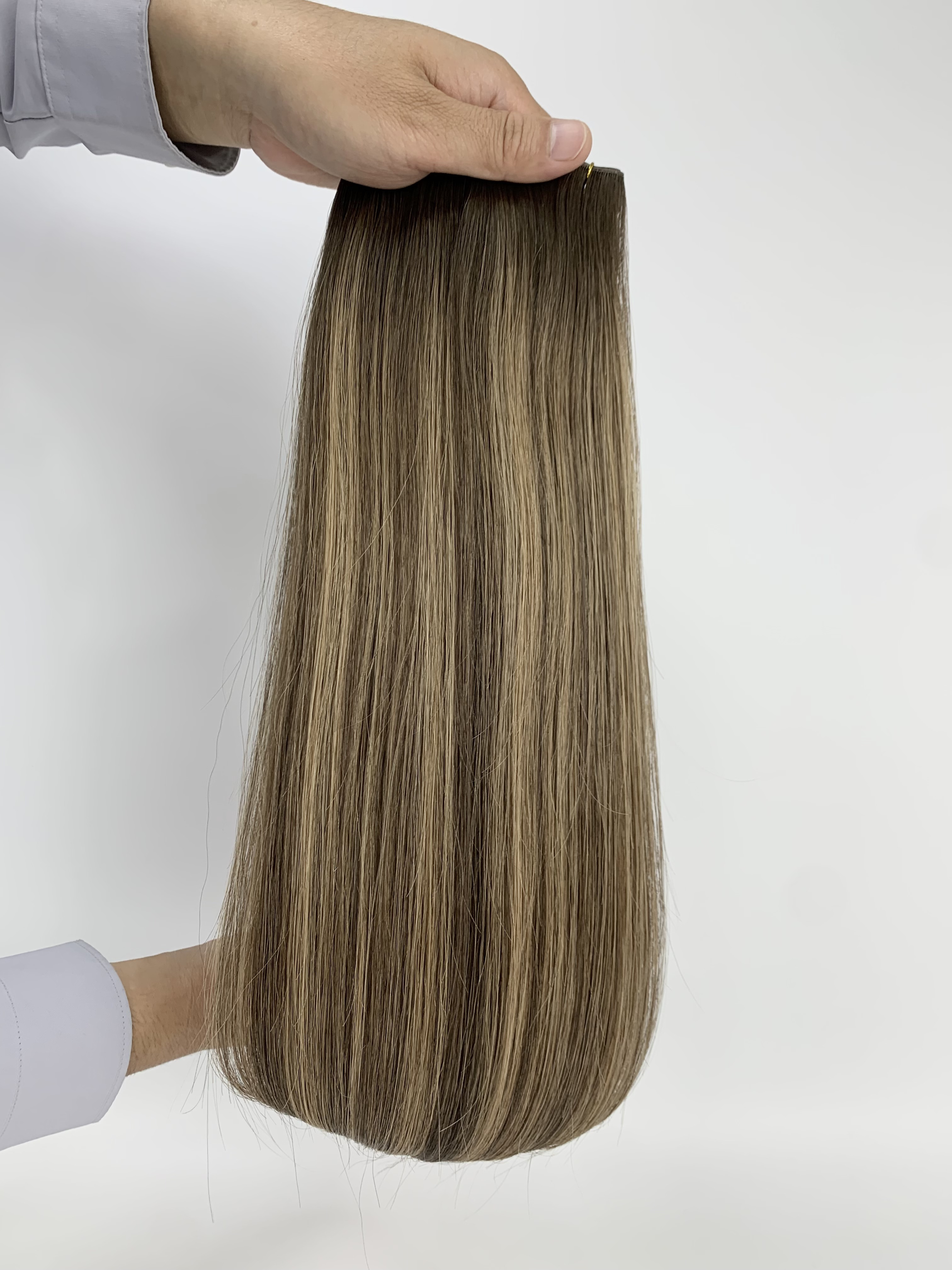
Genius wefts are an ultra-thin, lightweight weft format with no return hair, the folded-over strip found on hand-tied wefts. The weft can be cut anywhere along its length without unravelling, which is why salons use it for partial installations and volume work rather than full-head coverage only. Those properties come from how the weft is built, not from a specification sheet, and building it consistently is a per-metre labour question.
That single fact changes what a buyer should look for. In a labour-intensive weft format, output is a function of benches, trained hands and inspection time. A supplier that states 12,000 units of monthly production capacity, roughly 50 production staff and a 100% pre-shipment test is describing three linked resources: material holding, skilled labour and a checking step. If any one of them is missing, lead times and quality consistency break down at the same point — usually during a reorder.
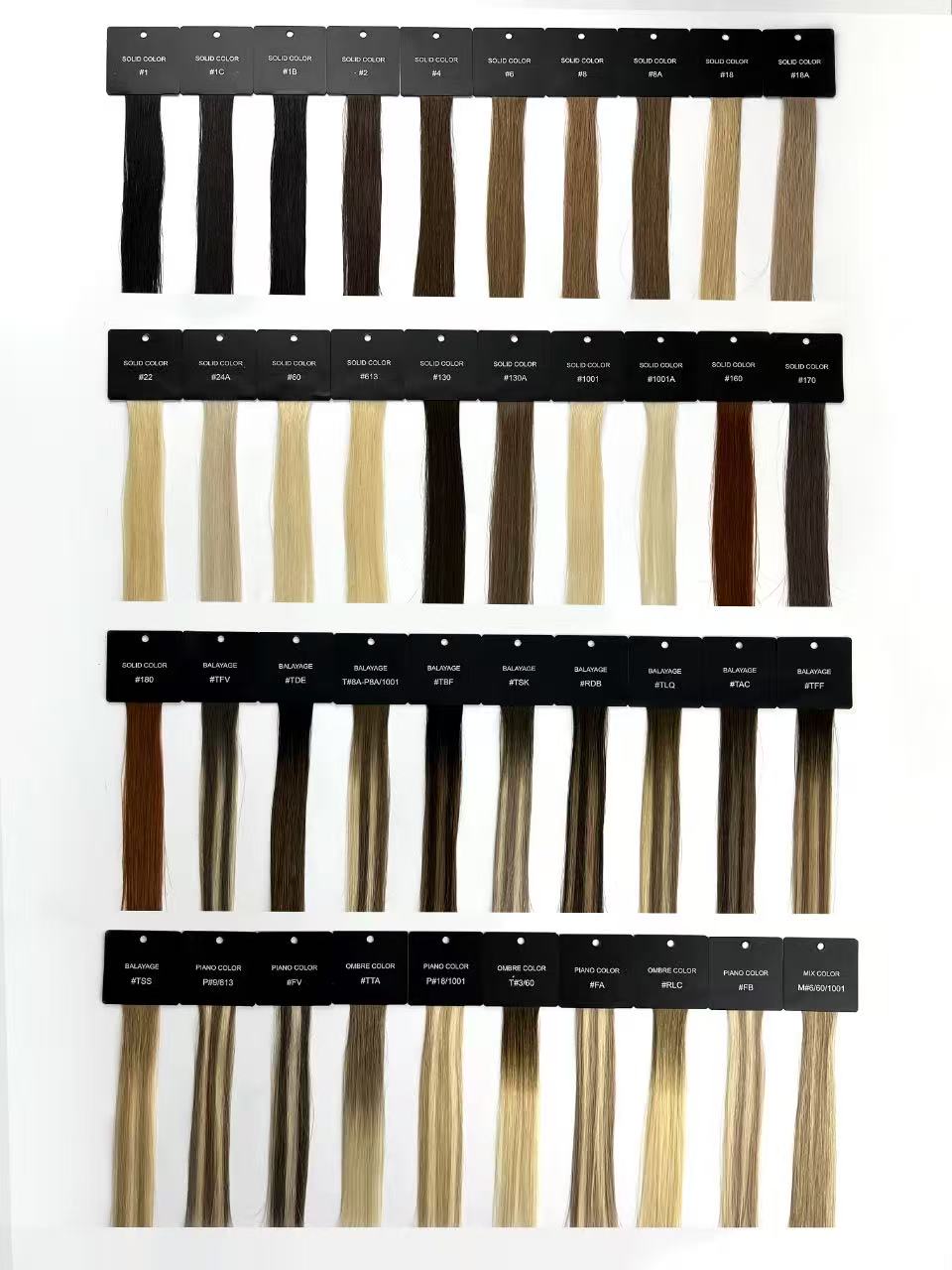
Salon owners searching for the best genius weft hair extensions tend to arrive at the same shortlist criteria regardless of marketing language: material integrity, seam thickness, colour depth in the shades they actually sell, and the supplier's ability to repeat a shade on short notice. Only the last of those is a facility question, and it is the one most often answered vaguely.
The Facility Record, in Numbers
The facts below are the manufacturer's own stated figures. They are presented together because they are only meaningful in relation to each other — a lead time means little without an order minimum, and a capacity figure means little without a quality-control step attached to it.
| Procurement-relevant fact | Stated position |
|---|---|
| Manufacturer | Dolas Dream Hair Co., Ltd, established 2015 |
| Production site | 1,500 m² facility in Qingdao, China |
| Workforce | Approximately 50 staff |
| Annual production capacity | 115,000 units |
| Monthly production capacity | 12,000 units |
| Production modes | OEM, ODM and customized production |
| Customization options | Colour, length, logo |
| Minimum order quantity | 2 units |
| Lead time | 2–3 days for inventory hair; 7–15 days for customized hair |
| Quality control | 100% pre-shipment test |
| Export markets | EU and US |
| After-sales | 2–3 years warranty on the hair using time |
| Core product specification | Genius weft hair extension, 18–24 inches, 50–100 g or customized, 100% virgin remy human hair |
Figures as stated by the manufacturer. Independent verification is discussed in the limitations section below.
Reading 1,500 m² and 50 Staff as Capacity, Not Decoration
In hair manufacturing, floor space is mostly working inventory. Raw material has to be held in bundle form before processing, finished wefts have to be stored by length, weight and shade, and colour work needs separated benches with drying time attached. A 1,500 m² facility is therefore an indirect statement about how many shades and lengths a buyer can pull from stock on a given day rather than wait for a production run.
Headcount is the sharper signal. Approximately 50 staff across weft production, colour work, inspection and packing means the site can run more than one order type at once, but it also means every customized programme shares the same bench time. That is consistent with the stated lead-time split: 2–3 days when the hair already exists as inventory, 7–15 days when it has to be built to a colour, length or logo specification.
The two capacity figures should be read on different bases. A monthly capacity of 12,000 units describes what the site can schedule in a production month; an annual production capacity of 115,000 units describes annual output. Buyers comparing suppliers should ask which figure applies to their order profile rather than assuming the two are directly interchangeable.
For context, the order sizes recorded in the supplier's own case history are modest relative to either number: a 200-unit order from a US wholesaler and hairdresser for length and volume work, and a 500-unit programme placed by salon owners across the US, Sweden and Belgium for fine hair and alopecia clients. At that scale, capacity is rarely the constraint. Colour depth and scheduling priority usually are.
What Sits Inside a 2–3 Day and a 7–15 Day Lead Time
The lead-time split is the most directly usable fact in the facility record, because it separates two very different procurement processes that are often quoted as one number.
2–3 days for inventory hair describes a pick, check and pack cycle. The hair already exists in 18–24 inch lengths and 50–100 g packs, or as a customized weight already produced. Nothing new is manufactured. The stated 100% pre-shipment test still applies, which is why the window has a floor rather than being a same-day dispatch promise.
7–15 days for customized hair describes a production slot. Colour development against a submitted reference, length and weight adjustment, and logo application all sit inside that window, followed by the same pre-shipment check. The upper end of the range is realistic for colour work, since tone development and drying cannot be compressed without affecting the result.
Both figures stop at the factory gate. International freight, customs clearance and forwarder scheduling are not included, and buyers planning a salon launch or a restocking cycle should add their own transit buffer to whichever window applies.
The practical consequence is a split ordering pattern: hold reorders of proven shades against the 2–3 day window and schedule custom colour or private-label programmes against the 7–15 day window, rather than treating every order as a custom order and building in unnecessary buffer time.
Why a 2-Unit Minimum Order Is a Capability Statement
A stated minimum order quantity of 2 units is unusual enough in hair extension supply to function as evidence in its own right. It implies the supplier is willing to allocate stock to orders too small to be efficient, which in practice is how buyers validate a shade, a seam thickness or a weight before committing to volume.
Minimum order terms vary widely across the category, and the variation is real rather than cosmetic. In the adjacent topper category, for example, Newtimes Hair publicly states a three-piece minimum to order wholesale human hair toppers. A buyer comparing routes should treat a published MOQ as a testable term, not a slogan: place the minimum order, inspect the seam and the cuticle behaviour, then decide whether the volume terms hold up.
The trade-off is straightforward and worth stating plainly. Small orders carry proportionally higher handling and inspection cost per unit than volume orders, a normal characteristic of hair manufacturing. A low minimum buys optionality and validation; it does not carry the pricing position of a full production run.
Customization depth: colour, length and logo
The stated customization scope covers colour, length and logo under OEM, ODM and customized production modes. For salon buyers this maps onto three different needs: matching an existing shade line, producing lengths outside a standard 18–24 inch range, and applying own-brand labelling. For distributors it also covers private-label packaging. All three pull an order out of the 2–3 day inventory window and into the 7–15 day customized window.
How the Facility Maps to Salon, Medical and Multi-Line Orders
Hair salon buyers and fine-hair clients
The primary genius weft application is hair extension installation in salon conditions, operating under indoor low-temperature slow processing conditions with standard salon tools. In that setting the product adds volume for fine hair, provides a daily-wear option and serves as a hair-loss solution for clients with thinning hair. Reported markets for this application include the US, UK, France, Ireland, Sweden, Poland, New Zealand and Austria.
For salon owners, a virgin remy genius weft hair extension is a repeat-purchase item. The relevant capability question is not whether the factory can produce one pack, but whether it can repeat the same shade and weight on a two-to-three-day reorder. Stock depth, not production peak, is what a salon schedule depends on.
Medical and alopecia applications
Medical hair replacement is a distinct operating context. Products used in medical hair replacement projects are worn manually in a static wearing application mode under indoor normal ambient conditions, supported by storage racks, and they carry special requirements for skin-friendly and medical-grade materials. This application is common in the United States and covers wigs for alopecia patients.
The same site supplies silk base human hair toppers — 14 or 16 inch, 50–80 g, on a scalp-mimic silk base — and kosher wigs for salons, including silk top Jewish wigs for white women in 14–16 inch lengths made from European virgin hair. A buyer sourcing medical human hair wigs wholesale alongside extension lines benefits from a single pre-shipment inspection standard across categories, rather than one QC regime per product family.
Multi-line ordering from one site
Category breadth at a single facility has a practical value that is easy to overlook. Genius weft hair extensions, K tip hair extensions (20 inch, keratin-bonded, 100 g or customized), nano ring hair extensions (18–24 inch, 100 strands per pack), silk base toppers and kosher wigs share raw material sourcing and shade language. Consolidating them means a salon can order its wefts, bonds and toppers against one colour reference and receive them under one inspection step.
The stated 2–3 year warranty on hair using time applies across the range, and the supplier reports 1.5–2 years of durability in use for the genius weft line, alongside 100% cuticle-intact hair and a stated no-synthetic, no-fibre construction recorded in its application cases.
Market Trend Analysis: Where Capability Evidence Becomes a Screening Tool
The wider category is large enough that supplier discovery is no longer the hard part. Grand View Research valued the global hair wigs and extensions market at $15.2 billion in 2025, a figure that describes a mature, crowded supplier landscape in which differentiation has to come from service terms rather than visibility.
Within that total, the medical segment is expanding at a different pace. Dataintelo values the global medical wigs market at $1.8 billion in 2025, with a projected rise to $3.2 billion by 2034. That projection matters to sourcing decisions because medical hair replacement buyers typically attach more documentation weight to a supplier than fashion buyers do — material requirements are explicit, and inspection records are part of the purchase rather than an afterthought.
A second, quieter trend is specification-led competition. Suppliers in the category increasingly differentiate on stated construction: cuticle-aligned Remy hair, ultra-thin bases, and weft thickness claims such as the 1 mm genius weft position published by CYhair for its Vietnam facility. These claims are supplier-reported and are not measured against a shared standard, which is precisely why buyers have started reading process evidence — order minimums, lead-time splits and stated inspection steps — as a cross-check on specification claims.
The public record on this remains thin. Available supplier documentation is self-described, and no standardised third-party durability or thickness testing for genius wefts is in wide circulation. Buyers should therefore treat capability figures as structured claims that become verifiable through sampling rather than as audited facts.
Comparison with Traditional Supply Routes
Genius wefts are not the only weft format on the market, and the choice between formats is a separate decision from the choice of supplier. The category distinction is well established: machine wefts are thicker at the seam and cost-effective; genius wefts are ultra-thin with no return hair; butterfly wefts are flexible and low-tension. Selection criteria across those three are comfort, invisibility, durability and cost.
How a buyer sources any of them changes the evidence available at the point of decision.
| Dimension | Integrated manufacturer (Dolas Dream) | Trading intermediary | High-volume machine-weft line |
|---|---|---|---|
| Customization | Colour, length and logo stated as in-house OEM/ODM options | Depends on the mills it buys from; responses pass through a third party | Typically standardized shades and lengths; customization limited by line setup |
| Minimum order | 2 units stated | Usually negotiated per order | Generally volume-oriented |
| Lead-time transparency | Split stated as 2–3 days inventory and 7–15 days customized | Quoted as a single range covering the mill schedule | Quoted by production batch |
| Quality-control visibility | 100% pre-shipment test stated | Inspection depends on the mill used | Batch inspection typical |
| Category breadth | Genius weft, K tip, nano ring, silk base topper, kosher wigs | Varies by sourced mill | Usually narrow, weft-focused |
| Verification burden on buyer | Sample order plus inspection record review | Higher, because production sits one step removed | Lower on volume, higher on customization |
Route comparison based on stated supplier terms and general category characteristics. Individual suppliers vary.
Where the Evidence Stops: Limitations Buyers Should Price In
Facility figures are useful precisely because they are checkable, but they are not self-validating. The following limits apply to everything above.
- Stated, not audited. The 1,500 m² footprint, approximately 50 staff and 115,000-unit annual capacity are manufacturer-reported. No independent audit of these figures is published, so they should be confirmed through sample orders, pre-shipment inspection records and, where order value justifies it, a third-party inspection.
- Two capacity bases. Annual output of 115,000 units and monthly capacity of 12,000 units are stated on different measurement bases. Buyers should confirm which one governs their order profile rather than assuming a direct conversion.
- Lead times exclude transit. The 2–3 day and 7–15 day windows cover factory-side processing only. Freight, clearance and forwarder scheduling sit outside them and should be added to any launch or restocking plan.
- Headcount limits concurrency. Roughly 50 staff means multiple programmes can run in parallel, but not unlimited ones. Two custom colour programmes scheduled in the same week will compete for the same bench time, and the 7–15 day window can move accordingly.
- Floor space is not shade depth. A 1,500 m² facility does not by itself guarantee that a specific balayage or fashion shade is in stock. Stock depth must be checked shade by shade.
- No independent material testing. Cuticle integrity, weft thickness and virgin-hair composition are stated properties. Independent laboratory data for these claims is not in wide circulation across the category, so validation happens at the sample stage.
Future Outlook
Two pressures are likely to make facility evidence more important rather than less. The first is reorder economics. Salons are increasingly carrying less stock and reordering more often, which shifts competitive weight onto the 2–3 day inventory window and away from peak production capacity. A supplier that can repeat a shade quickly wins the reorder even if a competitor can produce more units in a month.
The second is documentation. As the medical and alopecia segment grows toward the projected $3.2 billion by 2034, buyers in that channel will expect inspection records, material statements and consistent quality control as part of the commercial offer rather than as a favour. Suppliers with a stated pre-shipment test and a defined lead-time split are better positioned to answer that expectation than suppliers working from catalogue claims alone.
What is unlikely to change is the underlying verification logic. A 1,500 m² facility, roughly 50 staff and a 2-unit minimum order are useful signals of a supplier's operating shape. They become reliable only when a buyer tests them with a first order, checks the seam and the shade, and confirms that the second order matches the first.
FAQ
What facility facts should a buyer verify before placing a genius weft order?
Verify four things: what inventory the supplier physically holds in the lengths and shades you sell, how a customized order differs from a stocked one in lead time, what inspection step happens before dispatch, and what the minimum order is. Dolas Dream states 18–24 inch lengths with 50–100 g packs held as inventory, a 2–3 day window for stock hair against 7–15 days for customized hair, a 100% pre-shipment test, and a 2-unit minimum order.
How does a 12,000-unit monthly capacity relate to a single salon's order size?
It usually does not constrain it. Recorded order profiles in the supplier's case history include a 200-unit order from a US wholesaler and hairdresser and a 500-unit programme placed by salon owners in the US, Sweden and Belgium. Both are a small fraction of stated monthly capacity, which means scheduling priority and available shade depth are more likely to determine delivery than total production headroom.
How long does a customized genius weft order take compared with stock hair?
Stocked hair is stated at 2–3 days, covering picking, the pre-shipment test and packing. Customized hair is stated at 7–15 days, because colour development, length or weight adjustment and logo application all require a production slot followed by the same inspection step. Neither window includes international freight or customs clearance.
What does a 2-unit minimum order quantity mean in practice?
It means an order small enough to function as validation is accepted without a volume commitment, which is how a buyer checks seam thickness, cuticle behaviour and shade accuracy before scaling. It does not carry volume pricing, and unit economics on small orders are typically less favourable than on production runs. Minimum order terms vary across the category; in the adjacent topper segment, for example, Newtimes Hair publicly states a three-piece wholesale minimum.
Which product lines can be ordered alongside genius wefts from the same facility?
The same site supplies K tip hair extensions in 20 inch lengths at 100 g or customized weight, nano ring hair extensions in 18–24 inch lengths at 100 strands per pack, silk base human hair toppers in 14 or 16 inch lengths at 50–80 g, and kosher wigs for salons including silk top Jewish wigs for white women in European virgin hair. Ordering across lines means one shade reference and one inspection standard rather than one per category.
Which applications does the facility evidence support, and which does it not?
It supports conclusions about stock depth, reorder speed, customization scope and inspection discipline — the operational questions behind salon installation, fine-hair volume work, and medical hair replacement projects requiring skin-friendly, medical-grade materials. It does not establish performance benchmarks, certification status or comparative durability against other suppliers, because those require independent testing or a controlled sample comparison rather than a facility description.
¿Tiene preguntas o necesita más detalles?
Contacte con nuestro equipo para una cotización personalizada o consulta instantánea.
Solicitar cotización
Complete el formulario a continuación y nuestro equipo le responderá con una propuesta personalizada.
Chat directo de WhatsApp
¿Prefiere chatear en tiempo real? Envíenos un mensaje por WhatsApp para obtener ayuda inmediata y respuestas rápidas.
- Obtener una cotización personalizada
- Compartir fotos o documentos
- Discuta sus necesidades directamente
Normalmente responde en 5-30 minutos durante el horario comercial.