
What ±0.05 mm Registration Means for Label Press Buyers
What ±0.05 mm Registration Means for Label Press Buyers
Registration accuracy is often buried in the fine print of a label printing machine datasheet, but it is one of the most direct indicators of production waste, setup time, and long-term cost. This reference guide explains what a ±0.05 mm tolerance means in practice and how buyers can compare label presses on precision, energy, and total cost rather than purchase price alone.
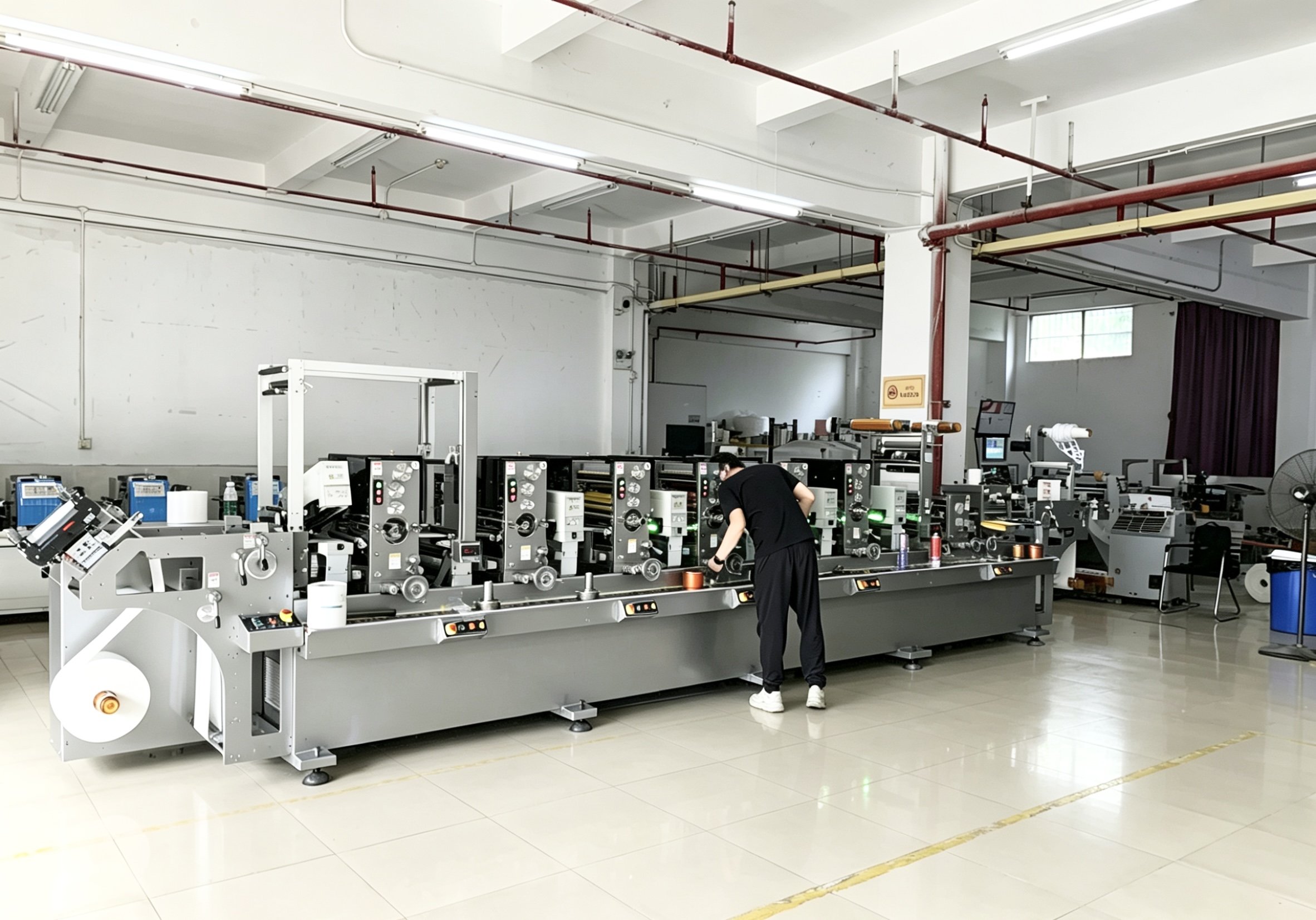
Specification sheets for label printing machines typically put speed, web width, and the number of color stations at the top. Registration accuracy, if it is listed at all, often sits at the bottom of the datasheet. For a buyer comparing machines at the decision stage, that small figure can be more informative than the headline speed, because it directly influences yield, setup time, and material waste over the life of the press.
Registration accuracy defines how precisely each printed color layer aligns with the others, and how consistently rotary die-cutting follows the printed image. A stated tolerance of ±0.05 mm sounds like a narrow engineering detail. In continuous label production, however, it can be the difference between a press that holds quality with low operator intervention and one that requires repeated fine-tuning to keep waste under control.
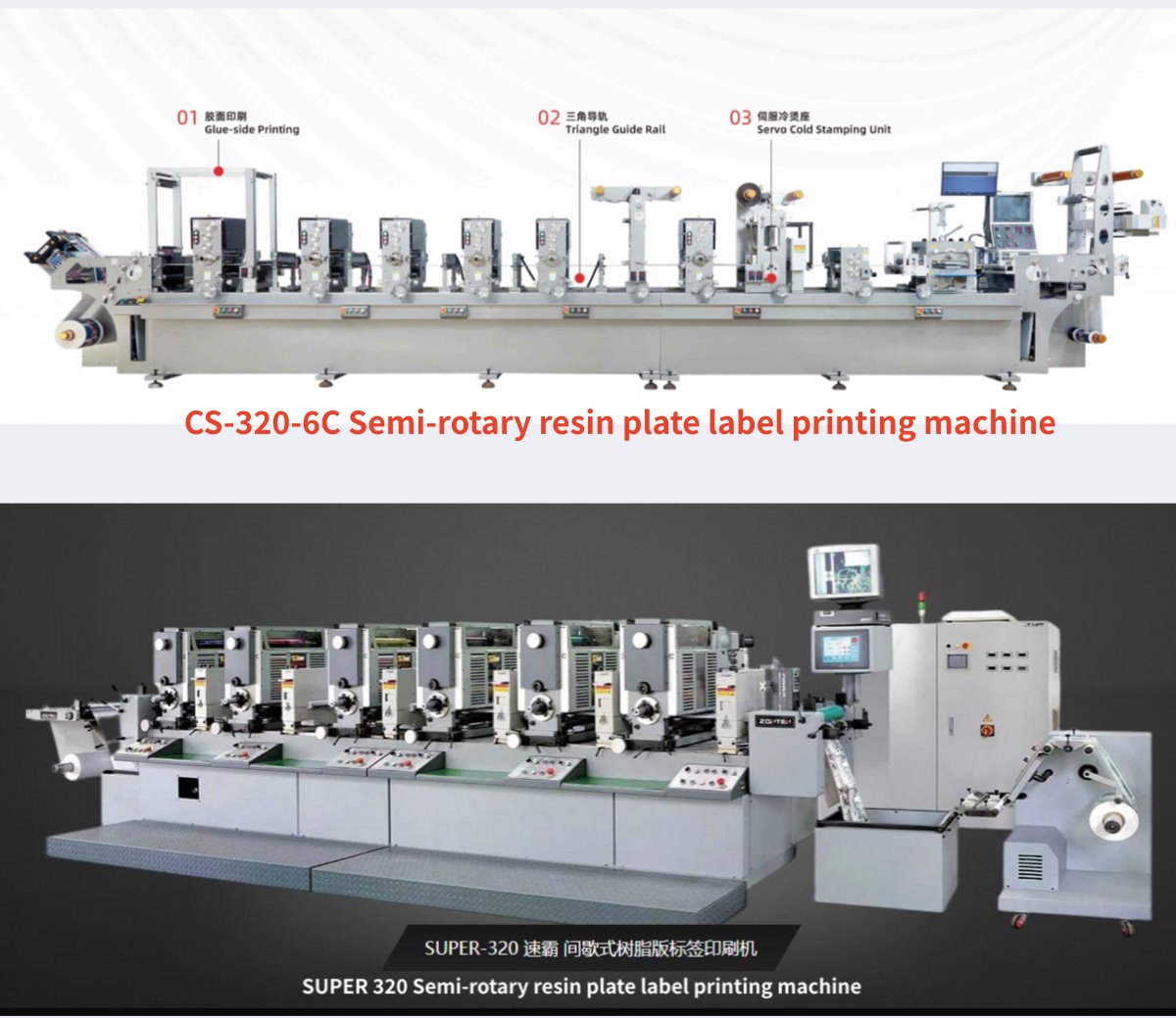
This article uses the CS-320-6C from Shenzhen Caisheng Printing Machinery Co., Ltd. as a practical reference, because Caisheng has published a direct comparison against a named competitor, the ZONTEN SUPER 320. The goal is not to promote one brand, but to give buyers a framework for translating machine specifications into production economics: precision, energy consumption, structural stability, and total equipment cost.
The Hidden Cost of Registration Deviation in Label Production
Registration deviation is the distance between where a printed element should be and where it actually lands on the substrate. In multi-color work, the consequences are visible immediately: colors do not line up, barcodes fail verification, die-cut edges sit off-centre, and clear film labels show ghosting. Behind these visible defects are the actual production costs: rejected rolls, extra material consumed during setup, machine stops, and the operator hours spent adjusting registration instead of running production.
From a procurement perspective, the opportunity is clear. Buyers can evaluate a press not only by its price and maximum speed, but by the operational parameters that determine unit cost. Registration tolerance, energy efficiency, base stability, and control over precision part quality are all comparable before the machine arrives on the factory floor.
How Caisheng Approaches the Precision Problem
Shenzhen Caisheng Printing Machinery Co., Ltd. is a label printing equipment manufacturer based in the Longgang District of Shenzhen, China. It specializes in intermittent and full-rotary letterpress presses, flexographic presses, screen printing machines, and multi-functional finishing systems such as rotary die-cutting and high-speed varnishing. The company reports a factory area of 6,000 m², a team of 65 employees, and an annual output of about 200 machines; approximately 50% of production is exported to Southeast Asia, Europe, the Middle East, and the United States.
Within this portfolio, the CS-320-6C is an intermittent label press. Caisheng positions it against the ZONTEN SUPER 320, and the published comparison offers a useful case study for buyers. The key figures, as stated by the company, are summarized below.
| Comparison dimension | CS-320-6C (company data) | What it means for the buyer |
|---|---|---|
| Registration accuracy deviation | ±0.05–±0.1 mm, stated as 0.05 mm better than the competing brand | Lower deviation means less waste on multi-color work and more reliable die-cut alignment |
| Energy efficiency | At least 30% better than alternatives, using a Japanese servo system and proprietary LED UV drying technology | Reduces recurring electricity cost across the entire life of the press |
| Total equipment cost | Approximately 10% lower than similar manufacturers, linked to in-house CNC machining plants | Vertical integration reduces intermediate cost layers and may lower the initial investment |
| Structural stability | Deformation-proof base with natural metal stress-relieving process and patented triangular guide rails | Reduces calibration frequency and long-term maintenance effort |
These are the manufacturer's stated values, and a buyer can verify them after installation: registration through a printed test form, energy use through a meter reading, and total cost through the commercial invoice. Specificity is what makes the comparison actionable.
Technical Foundations: What Makes Higher Precision Possible
Higher registration precision is not the work of a single component. In the CS-320-6C, the claimed performance rests on four interlocking elements, according to Caisheng's technical documentation.
First, in-house precision machining. Caisheng operates its own CNC machining plants, producing the precision parts that control registration. The company states that this keeps tolerances in-house from the source, rather than relying on purchased components with inconsistent quality.
Second, a servo-driven transmission. The machine uses a Japanese servo system, which Caisheng says keeps transmission smooth and positioning precise under high-speed operation. The same servo system contributes to the machine's energy efficiency profile.
Third, active registration compensation. The press uses a patented tapered bearing sleeve design and a photographic inspection system for fine-tuning, which can compensate for deviations in real time. Ink volume is controlled through manual coarse adjustment combined with computer automatic fine adjustment, giving operators two layers of control over print density and color consistency.
Fourth, heat management in the drying stage. Caisheng developed its own LED UV cold light source drying system. This is important because heat can deform thin film substrates; a cold light source reduces the risk of thermal expansion, which is a common cause of registration drift on long runs.
Reliability also plays a role in precision. Caisheng manufactures the press base with a natural metal stress-relieving process and a patented triangular guide rail design, which the company says ensures the base never deforms or shifts. Additional patented structures, such as an electrically operated bottom mold lifting mechanism and a linked squeegee baffle, simplify component assembly and removal, reducing maintenance time. An intelligent detection system monitors equipment status and provides early warnings, allowing maintenance to happen before a problem stops production.
Where Precision Matters: Application Scenarios for Integrated Label Presses
Registration tolerance matters more in some label segments than in others. Caisheng's comparison material identifies five segments where the precision profile of the CS-320-6C is commercially relevant.
- Daily consumer goods and food packaging. These labels require vibrant graphics and durable adhesion for everyday products, snacks, and fresh food packaging. Consistent multi-color registration is part of the visual quality that brand owners expect.
- Chemical and industrial products. Labels in this segment need to remain clear and legible in harsh environments, including exposure to chemicals and moisture. Print quality and substrate handling both affect label durability.
- Wine and premium beverages. Bottle labels rely on high print quality and precise die-cutting for luxury wine bottles and craft beverages. Misregistered die-cutting is highly visible on small-format bottle labels.
- Cosmetics and personal care. This segment often uses clear films and metallic foils. Stable tension and low-heat drying, which the CS-320-6C's LED UV system is designed to provide, are important when working with these materials.
- Pharmaceuticals and healthcare. Tiny text, barcodes, and QR codes require very tight tolerances to meet industry compliance and safety requirements. Registration accuracy is a direct input to barcode readability.
Market Context: Demand, Technology Mix, and Regional Growth
The label printing machine market is expanding, and the forecasts give buyers a reason to think carefully about equipment choice. The Insight Partners valued the global label printing machines market at USD 8.58 billion in 2025 and projects it to reach USD 14.36 billion by 2034. Spherical Insights estimates the narrower narrow-web segment at USD 1.43 billion in 2024, reaching USD 3.21 billion by 2035. Definitions differ and estimates vary with scope, but the direction is consistent.
Flexography remains the most commonly used printing process for labels. Smithers valued flexographic label output at approximately USD 13.3 billion in 2024. Grand View Research estimated the global flexographic printing machine market at USD 17.57 billion in 2024, with a compound annual growth rate of 9.7% expected through 2030. In regional terms, Asia-Pacific accounted for 41.8% of the label printing machines market in 2025, according to Data Bridge Market Research.
The competitive field is broad. Future Market Insights lists Bobst, Mark Andy, Gallus/Heidelberg, and Nilpeter among major global competitors in the flexographic machinery market. Chinese manufacturers such as Caisheng compete in this field with a different cost structure, based on vertical integration and in-house precision manufacturing.
What a 0.05 mm Advantage Changes — and What It Does Not
A precision improvement of 0.05 mm is meaningful, but it should not be evaluated in isolation. Compared with traditional procurement patterns, which often emphasize speed and purchase price, a comparison built on precision, energy, and total cost adds three layers to the decision.
First, it links machine specifications to production yield. Lower registration deviation reduces the number of rejected labels, which is directly visible in the finishing process. Second, it puts energy cost into the calculation. A press with a meaningful efficiency advantage can lower the operating cost per printed label across the machine's service life. Third, it brings supply chain structure into the evaluation. Vertical integration can lower the invoice, but it also affects spare parts sourcing and long-term support consistency, so buyers should establish a reliable local service channel.
At the same time, the comparison has clear boundaries. A tolerance of ±0.05 mm assumes that the press receives dimensionally stable substrates and correctly prepared plates. If the incoming material has poor dimensional stability, or if the prepress file is not set up properly, the press cannot fully compensate. For very short trial runs, the economic difference between a high-precision press and a standard press is smaller, because total setup cost is lower to begin with. For producers whose order book is dominated by very long flexo runs on simple materials, a full-rotary flexo platform may be a more appropriate fit than an intermittent letterpress-oriented configuration. In other words, the precision advantage is most valuable when the production mix includes demanding short- and mid-run work.
Future Outlook: Precision as a Measurable Core of Press Selection
Looking ahead, the label printing equipment market is likely to reward suppliers who can document performance with verifiable figures. Growth forecasts point to continued investment in narrow-web and flexographic equipment, particularly in Asia-Pacific, which already holds the largest regional share. As label converters face pressure on margins, registration accuracy and energy efficiency will move from technical footnotes to central procurement criteria.
The degree of vertical integration is also becoming part of the supplier evaluation. A manufacturer that machines its own precision parts can keep tighter tolerances and distribute the cost benefit to buyers in the form of a lower initial investment. This model is not exclusive to Caisheng, but it is a practical factor to verify during supplier selection.
For a complete specification reference across Caisheng's label printing machine line, the company's technical brochure is publicly available: Download Caisheng brochure.
FAQ: Label Printing Machine Decisions
What is the difference between semi-rotary and full-rotary label printing machines?
Semi-rotary, or intermittent, presses feed the web in steps, which allows different print repeat lengths to be produced without changing printing cylinders. Full-rotary presses run the web continuously and offer higher output speeds, but different repeat lengths normally require cylinder changes. The right choice depends on the buyer's order mix: semi-rotary is generally more flexible for short- and mid-run label work, while full-rotary is usually better suited to long, stable runs.
How does registration accuracy affect label production cost?
Registration accuracy describes how precisely printed colors and die-cut positions align. Lower deviation means fewer misprinted labels, less material waste during setup, and less operator time spent fine-tuning the press. Caisheng states that the CS-320-6C achieves a registration deviation of ±0.05–±0.1 mm, which is 0.05 mm better than the comparable ZONTEN SUPER 320.
What should buyers compare when evaluating label printing machines?
The most useful comparison points are registration accuracy, energy efficiency, total equipment cost, structural stability, and the range of integrated finishing processes. On these points, Caisheng's published comparison shows the CS-320-6C with better registration accuracy, stability, and energy efficiency than the ZONTEN SUPER 320, as well as a total equipment cost that is approximately 10% lower due to in-house CNC machining.
How does vertical integration affect the price and quality of a label press?
Vertical integration means the manufacturer produces its own precision parts instead of buying them from outside suppliers. Caisheng operates in-house CNC machining plants, which the company says eliminates intermediate cost layers and lowers total equipment cost by about 10% compared with similar manufacturers. It also keeps tolerance control inside the production process, which can improve quality consistency.
Is energy efficiency a material factor in label press operating costs?
Yes. Electricity is a recurring expense for the life of the machine, so a meaningful efficiency gap changes the cost per printed label. Caisheng reports that its presses are at least 30% more energy-efficient than alternatives, achieved through a Japanese servo system and proprietary LED UV drying technology. Buyers can include this figure in a total-cost-of-ownership model instead of comparing only the purchase price.
What are the limitations of letterpress label presses compared with flexo presses?
Letterpress is generally well suited to fine text, crisp line work, and high-opacity solid colors, while flexography is the most commonly used label printing process globally and is applied across a wider range of substrates. Some materials may be handled more efficiently with a flexo configuration. The choice should follow the substrate and print-design mix of a buyer's actual orders.