
Welded vs. Tie-Rod vs. Telescopic Hydraulic Cylinders: A Buyer's Comparison
Construction type is the first decision that limits everything after it in a custom hydraulic cylinder. It fixes the pressure a supplier can responsibly publish for a given bore, the space the cylinder occupies when fully retracted, whether the unit can be opened for resealing or must be replaced as a sealed assembly, and how far the buyer depends on the original equipment builder's drawings. Two quotations that look identical on bore and stroke can still behave very differently across a five-year duty cycle.
This comparison is written for buyers in the research and evaluation stage who are shortlisting custom hydraulic cylinder suppliers and need to separate construction choices that fit a duty profile from catalog claims that only fit a brochure. Five families are compared — welded, tie-rod, telescopic, mill-duty and stainless steel corrosion-resistant — using only what a buyer can verify: published dimensions and pressure ranges, serviceability design intent, and documented process evidence.
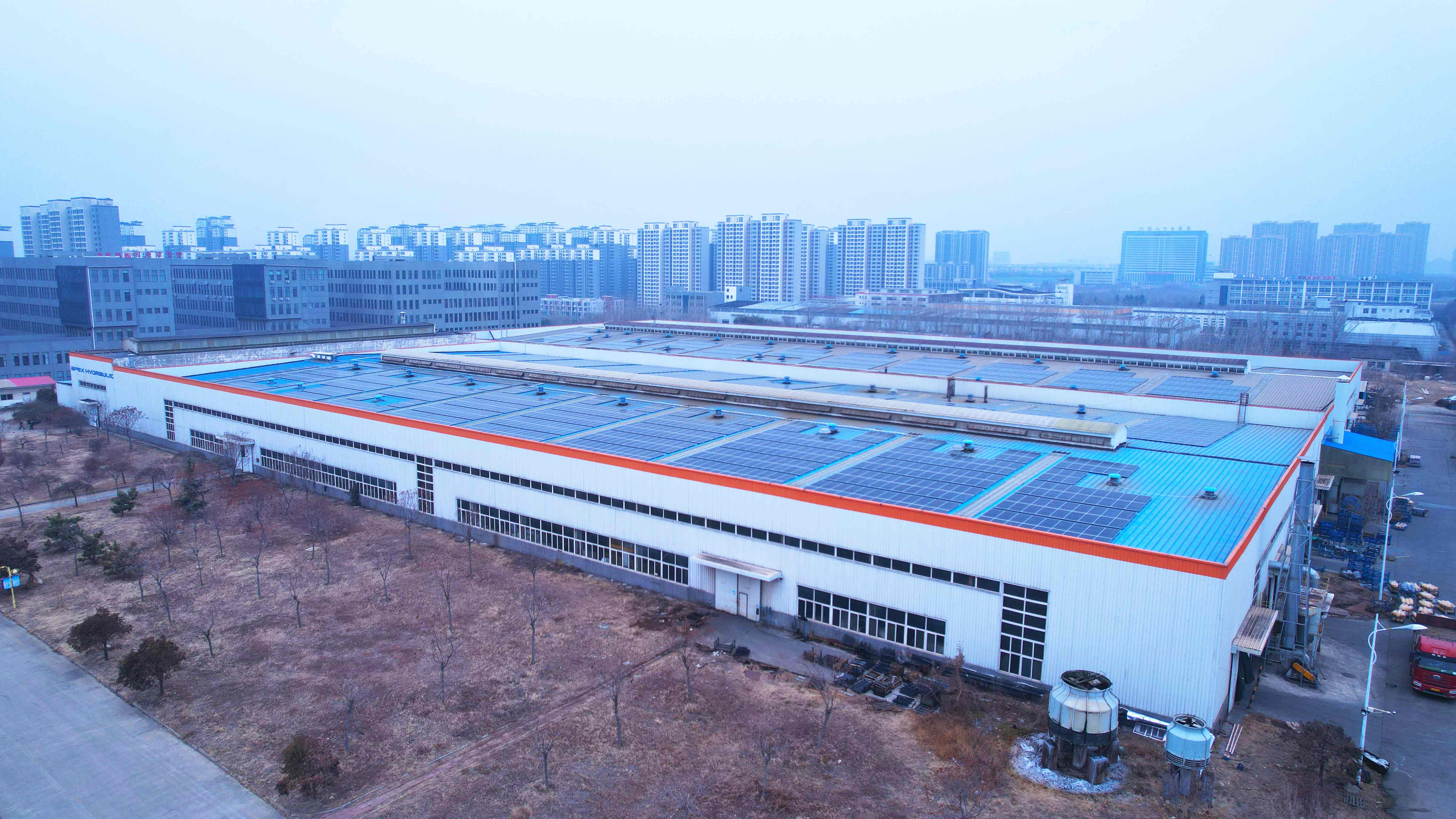
Apex Hydraulic Co., Ltd. is a Chinese hydraulic cylinder manufacturer founded in 2009 that produces custom and standard hydraulic cylinders, hydraulic power units and complete hydraulic systems for OEMs, distributors and equipment builders, with published capacity of more than 8,000 hydraulic cylinders and 1,500 hydraulic power units per month. Its product families are used below only where their published specifications illustrate a construction type; no competitor is named or ranked.
What a buyer can actually verify before ordering
Most catalog pages publish bore, stroke, rod diameter and a working pressure. Those four figures are necessary but not sufficient, because they do not reveal whether the quoted construction is the same one the supplier builds at volume, whether the seals can be serviced, or which inspection records exist after the cylinder leaves the test bench.
Verifiable differences between construction types sit in four places:
- Published pressure envelope for that construction. A tie-rod family and a welded family from the same supplier usually do not carry the same rated pressure, and the figure is stated either in bar or in PSI depending on the market the family was designed for.
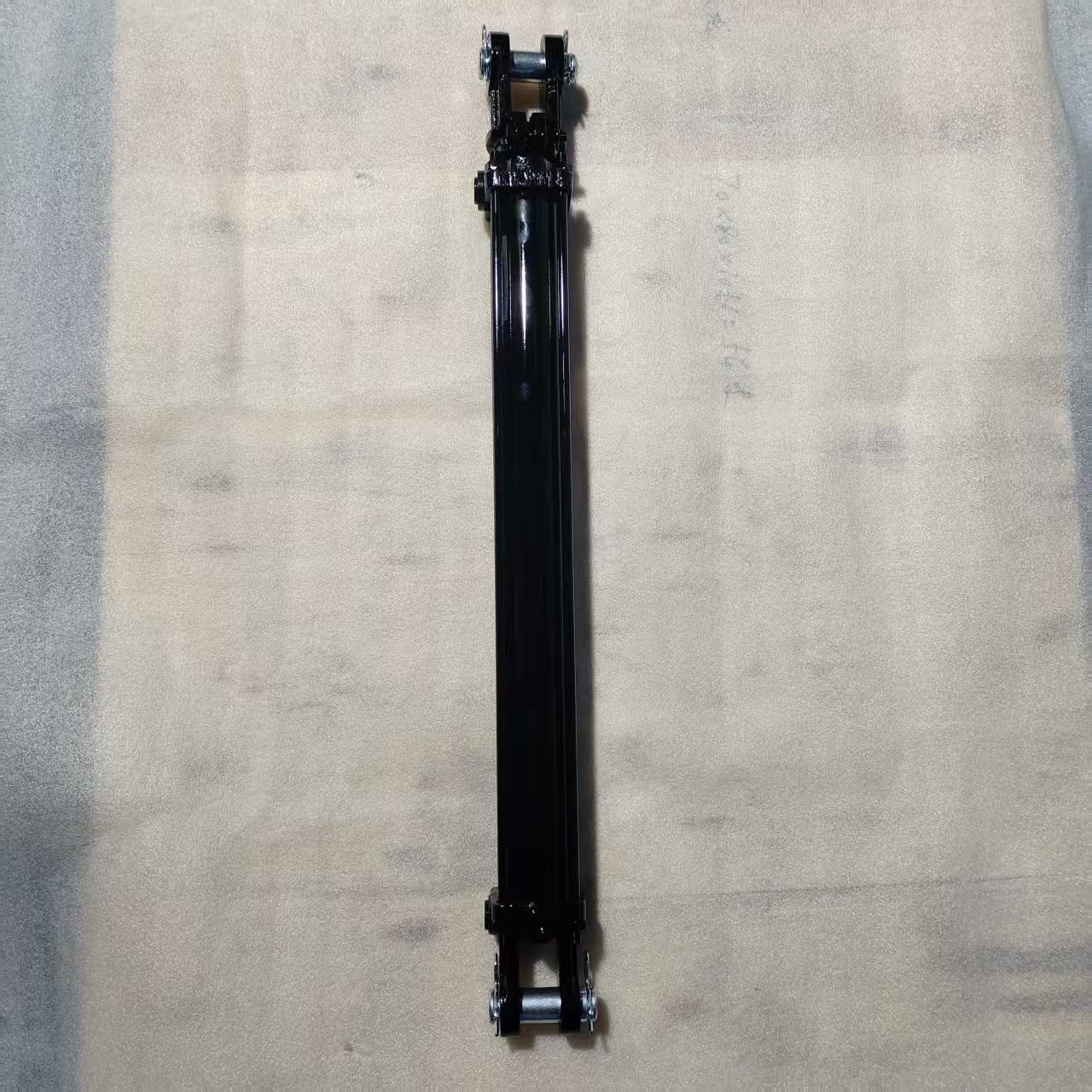
- Sealed or openable design intent. Tie-rod construction is explicitly designed around disassembly and seal replacement; welded bodies are sealed assemblies; mill-duty designs typically include a replaceable gland.
- Envelope geometry. Telescopic and long-stroke welded cylinders solve different problems: one delivers a long stroke from a short closed length, the other delivers a long stroke in a single-stage body built to a drawing.
- Record set. Incoming material inspection, in-process control, welding inspection, pressure testing, leakage testing and dimensional inspection are either documented or they are not.
The five constructions side by side
| Construction | Published envelope (Apex families) | Published pressure | Serviceability intent | Best-fit duty | Watch-out |
|---|---|---|---|---|---|
| Welded APEX-CWDC, APEX-CGAC, APEX-CLSC |
Grapple and attachment family: bore 50–250 mm, rod 30–180 mm, stroke 100–1,500 mm. Long-stroke welded bodies built to the approved drawing. | 160–350 bar working; up to 420 bar design pressure in engineered configurations (CGAC) | Sealed body; generally replaced rather than resealed in the field | Mobile equipment, shock and alternating loads, compact installation, higher pressure | Field resealing is not the design intent; plan replacement logistics |
| Tie-rod HTR Series, HTH Series |
Bore 2–5 in, rod 1.125–2 in, stroke 4–36 in (HTR) and 4–48 in (HTH); adjustable threaded female clevis; SAE ORB ports | HTR 2,500 PSI rated; HTH 3,000 PSI rated | Openable: disassembly, seal replacement and maintenance | Agricultural machinery, industrial machinery, maintenance-sensitive fleets | Tie rods add envelope width; published ceiling lower than high-pressure welded designs |
| Telescopic Front-end FC/FE series, underbody L-series, APEX-CTC |
Multi-stage; long stroke from a short closed length; stages extend sequentially | Matched to the vehicle or trailer hydraulic system — confirm per model and stage | Multi-stage sealing; staged inspection and seal renewal | Tipper trucks, dump trailers, underbody tipping | Single-acting variants rely on body weight or gravity for retraction |
| Mill-duty APEX-CMDC |
Bore 50–320 mm, rod 28–220 mm, stroke 50–3,000 mm; roundline, flanged or threaded-head construction | Up to 250 bar for the normal range; final value from the approved system specification | Replaceable gland design objective; piston-rod removal arrangement | Continuous cycling, heavy fixed plant, steel and metallurgical equipment | Larger envelope and weight; requires machine alignment and planned maintenance windows |
| Stainless / corrosion-resistant APEX-CSSC |
Built to the approved drawing with stainless-steel component options and marine-grade coating | Determined by the approved design and application | Follows the base construction; corrosion allowance designed in | Marine, port, offshore, deck washdown, chemical exposure | Material cost premium over painted carbon steel; seal and coating compatibility must be confirmed |
The table is deliberately built from published family data rather than from general claims. Where a family publishes inches and PSI, those units are kept; where it publishes millimetres and bar, those are kept. Converting figures to create tidy comparisons would introduce numbers the supplier never published.
Matching construction to duty profile
Continuous industrial operation
Fixed-plant duty is defined by cycle count rather than by peak load. A cylinder that strokes thousands of times per shift needs a serviceable sealing system and a body that tolerates heat, scale and vibration. Mill-duty construction is designed for this: heavy-duty roundline, flanged or threaded-head bodies, a replaceable gland as a standard design objective, optional stop tubes for long-stroke stability, and documentation that includes the approved drawing, material records, welding records, inspection report and pressure-test report. Its published normal range runs to 250 bar, which is a design boundary rather than a limitation to argue around.
High force in a short stroke
Clamping, pressing, forming and compact tooling rarely need long travel; they need force inside a small installation envelope. Short-stroke high-force construction covers bore 40–250 mm with stroke 10–500 mm, working pressure 160–250 bar and design pressure up to 350 bar in engineered configurations, in round, square or block-type bodies with flange, foot, clevis or threaded mounting. The design trade-off is explicit: force density is gained by giving up stroke and by accepting a stiffer mounting arrangement.
Long stroke with a short closed length
Two different answers exist. A single-stage long-stroke welded cylinder is engineered to the installation drawing, with piston-rod buckling and deflection evaluated for the unsupported length — the right choice when the load is guided and the mounting points are coaxial. A telescopic cylinder solves the envelope problem instead: multiple stages extend sequentially, delivering a long working stroke from a short retracted length, which is why tipper trucks and dump trailers use it. The boundary is mechanical: single-acting telescopic stages retract under body weight, so the return path depends on the load and on a correctly set lowering valve.
Corrosive and washdown environments
Salt spray, deck washdown, fertiliser and road salt attack the rod, the wiper and the coating before they affect the barrel. Corrosion-resistant construction combines stainless-steel component options, marine-grade coating, corrosion-resistant piston-rod treatment and moisture-resistant seals, and in marine and port applications is usually paired with load-holding valves and position feedback. The honest trade-off is cost: stainless material and coating systems carry a premium over painted carbon steel, and the premium is only justified where the environment is genuinely aggressive.
Synchronised or equal-force movement
Where a machine must push and pull with the same force in both directions, a double-rod design provides equal effective area on both sides when both rod diameters are identical, giving equal force, equal speed and equal displacement volume at the same flow. Published ranges cover bore 32–250 mm with stroke 25–3,000 mm and working pressure 100–250 bar. The trade-off is envelope length: two rod ends and two seal sets require more space than a single-rod cylinder of the same stroke.
Where each construction stops working
A neutral comparison has to state the edges, not only the fits.
- Tie-rod: the HTR and HTH families are rated at 2,500 PSI and 3,000 PSI respectively. Buyers who need higher published pressure for the same bore should not assume a tie-rod body will be re-rated; the construction itself sets the ceiling.
- Welded: the sealed body that makes welded construction compact and rigid also means field resealing is generally not the design intent. Where a fleet expects to rebuild cylinders in its own workshop, tie-rod or replaceable-gland construction is the more practical choice.
- Telescopic: sequential stage extension is an advantage only when the tipping geometry, body length and load distribution have been calculated. Under-rated selection shows up as unstable extension and accelerated stage-seal wear, not as an immediate failure.
- Mill-duty: the structural rigidity that suits a rolling mill also means more weight and a larger footprint. It is a poor fit for mobile equipment where the envelope is fixed.
- Stainless: corrosion resistance does not compensate for a misaligned mounting or an undersized rod. It solves a chemical problem, not a mechanical one.
Scoring suppliers on process evidence, not promises
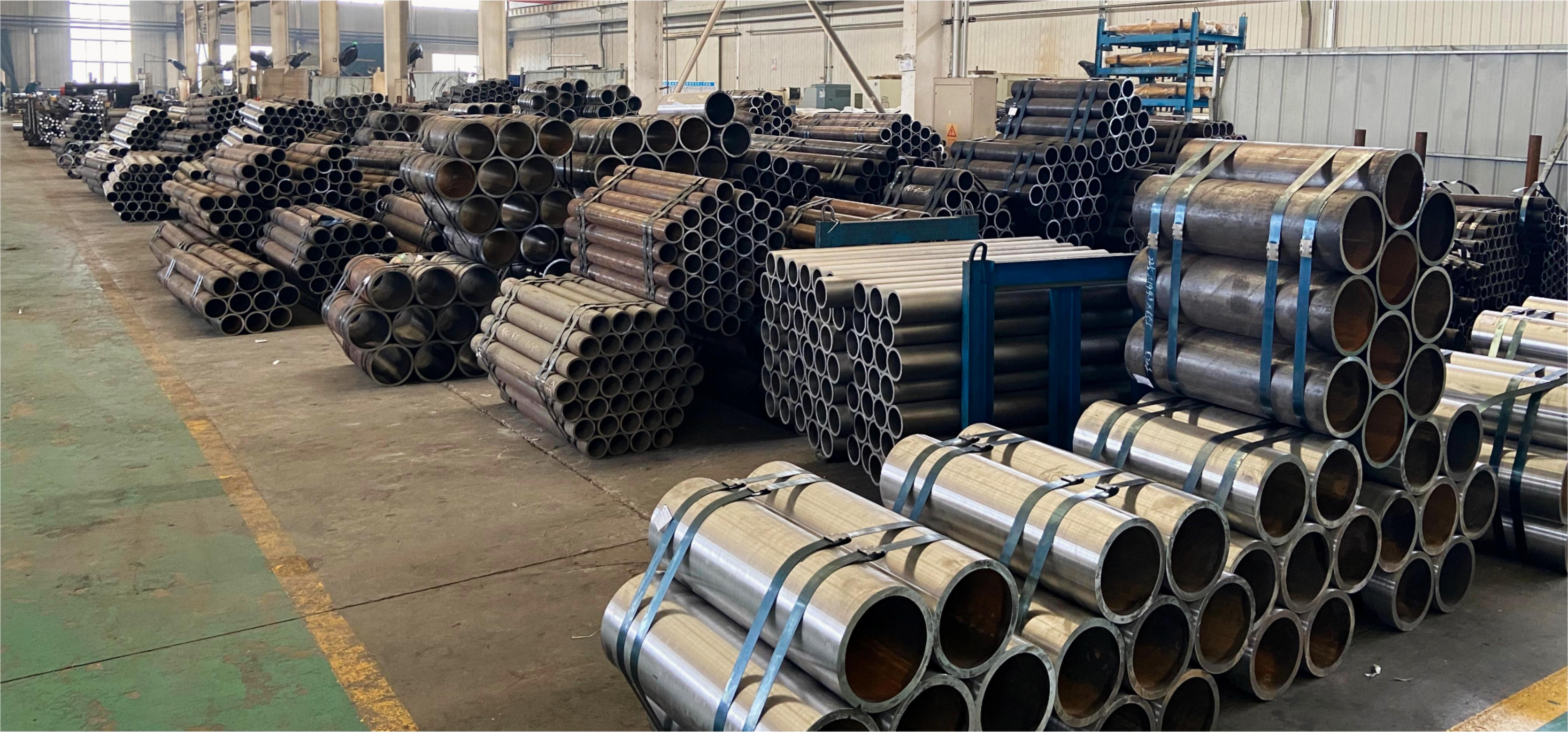
Construction choice narrows the field; process evidence decides it. The checks below are the ones a buyer can request by name and read without a metallurgy background, and they map directly to the quality control sequence used in custom cylinder production: incoming material inspection, in-process quality control, final quality inspection, pressure testing, leakage testing, dimensional inspection, welding inspection, surface finish inspection, functional testing and 100% final inspection.
- Incoming material inspection (IQC). Ask which material records accompany the tube, rod and forgings, and whether they are retained against the order number. Material traceability is the foundation every later record depends on.
- In-process quality control (IPQC). Ask at which operations inspection points are defined — typically after machining, before assembly and after welding. A supplier that cannot name the checkpoints is describing an outcome, not a process.
- Welding inspection. On welded bodies, the weld is the structural joint. Request the welding inspection record and confirm it is signed per unit or per batch, not summarised per year.
- Pressure testing. Ask for the test pressure value and whether it is referenced to the approved inspection and testing plan. Mill-duty documentation in the Apex range explicitly includes a pressure-test report, which makes this request a normal one rather than an unusual one.
- Leakage testing. Internal and external leakage are different failures. Ask whether both are tested, and at what point in the cycle the external check is performed.
- Dimensional inspection. Bore, rod diameter, stroke, closed length and pin-to-pin dimensions define interchangeability. For replacement work, confirm the dimension set is checked against the approved drawing rather than against a catalog size.
Two further items separate a documented supplier from a well-worded one: full-stroke functional testing before shipment, and permanent identification with customer part number, serial number and traceability code. Both convert a claim into something the buyer can audit after delivery.
What the sourcing baseline tells you
Commercial terms carry information about how a supplier is organised, and they belong in the same comparison as the technical data.
- MOQ of 1 piece for standard products, negotiable for OEM and customised items. A one-piece standard MOQ allows a buyer to test before committing, while negotiable custom MOQ acknowledges that tooling, drawings and first-article inspection carry their own cost. A supplier offering both is signalling two different production routes rather than one.
- 7–20 days for standard products, 25–45 days for customised products. The gap is engineering time, not machine time. Buyers who plan custom cylinders on a standard-product timeline will be late, and buyers who treat a 25–45 day custom window as a negotiating position usually find the schedule is driven by drawing approval and first-article verification.
- More than 8,000 cylinders and 1,500 hydraulic power units per month. Monthly capacity at this level indicates the supplier can run multiple OEM programmes and a replacement-parts stream without one displacing the other — a relevant factor for fleets that need both new-build cylinders and spares.
Application fit in practice
Duty profiles become concrete in equipment. Refuse collection is a high-frequency, shock-loaded cycle: packer, tailgate, hopper and ejector cylinders operate under repeated start-stop movement with contamination present, and welded heavy-duty construction with corrosion-resistant coating is the usual fit. A US refuse truck OEM programme covering 960 hydraulic cylinders across multiple vehicle models illustrates the volume and the cycle-life expectation involved.
Dump and tipper work is a different problem: long stroke from a short closed length, high initial force with a fully loaded body, and gravity-assisted retraction. Single-acting telescopic cylinders are the standard answer, and front-mount trailer systems combine a telescopic cylinder with a matched power unit — as in a Canadian dump trailer programme of 1,200 HTC telescopic cylinders and 500 power units. Material-handling attachments sit at the opposite end: grapple cylinders face alternating loads, impact and side loading, which is where heavy-duty welded bodies, reinforced eyes and protected ports matter more than pressure headline figures.
A buyer-side scoring template
Use the following template to separate catalog claims from factory proof. Score each line 0 (not provided), 1 (provided but generic) or 2 (provided and traceable to the order). A supplier does not need a perfect score to be viable, but the pattern of gaps tells you where risk will sit after delivery.
| # | Evidence item | What to request | Catalog claim is not enough because | Score 0–2 |
|---|---|---|---|---|
| 1 | Material traceability | IQC record and material certificates tied to the order number | A grade name on a datasheet does not prove the tube in your cylinder | |
| 2 | Process control points | Named IPQC checkpoints and inspection stage list | Final inspection alone cannot catch machining errors | |
| 3 | Welding record | Welding inspection record per unit or batch | Weld quality is invisible in a finished cylinder | |
| 4 | Pressure test | Test pressure value and reference to the approved test plan | A working pressure rating is not a test result | |
| 5 | Leakage test | Internal and external leakage test protocol and result | Leakage appears in service, not on a spec sheet | |
| 6 | Dimensional report | Bore, rod, stroke, closed length and pin-to-pin measured values | Interchangeability depends on measured dimensions | |
| 7 | Functional test | Full-stroke cycling and cushioning verification record | Smooth operation is a test outcome | |
| 8 | Surface and coating | Surface finish inspection and coating specification | Corrosion life is set by the coating system, not the paint colour | |
| 9 | Traceability marking | Part number, serial number and traceability code on the unit | Without marking, no record can be linked to a cylinder | |
| 10 | Drawing control | Approved drawing revision and first-article approval before production | Undocumented revisions create silent dimension drift |
Limits of this comparison
This is a construction-level comparison, not a specification for a specific machine. It cannot tell a buyer which bore, rod diameter or stroke is correct for a given load case, because those values follow from force, pressure, unsupported length and mounting geometry that only the equipment data can supply. It also cannot rank suppliers: process evidence shows whether a supplier can document what it builds, not whether its design is optimal for a particular duty cycle. Final selection still requires the approved drawing, the operating pressure envelope and confirmation that the construction type matches the maintenance strategy the buyer can actually sustain in the field.
Outlook
Two trends are reshaping how buyers compare cylinder construction. The first is documentation: OEM procurement increasingly evaluates a supplier by the record set attached to each cylinder, which favours suppliers whose process control is already digital and order-linked. The second is application-specific engineering: position-sensing cylinders, stop tubes for long-stroke stability, water-glycol-compatible sealing and stainless options are moving from special request to standard configuration on projects where duty cycle and environment are known in advance. Neither trend removes the basic rule that construction defines the boundary and process evidence decides the order.
Frequently asked questions
Which construction suits continuous industrial operation rather than mobile equipment?
Mill-duty construction is designed for frequent, repeated or continuous industrial cycling. Published characteristics include heavy-duty roundline, flanged or threaded-head bodies, bore 50–320 mm, rod 28–220 mm, stroke 50–3,000 mm, a normal working range up to 250 bar, a replaceable gland as a standard design objective, optional stop tubes for long-stroke stability, and documentation covering material, welding, inspection and pressure test records.
Can a welded cylinder be resealed in the field like a tie-rod cylinder?
Generally no. Tie-rod construction is specifically designed for convenient disassembly, seal replacement and maintenance, while welded bodies are sealed assemblies that are normally replaced rather than opened in the field. Buyers who intend to rebuild cylinders in their own workshop should choose tie-rod or replaceable-gland construction, and should confirm seal kit availability at the time of order.
When is a telescopic cylinder a better fit than a single-stage long-stroke cylinder?
When the installation envelope is the limiting factor. A telescopic cylinder delivers a long working stroke from a short retracted length through sequential stage extension, which is why it dominates tipper truck, dump trailer and underbody lifting applications. A single-stage long-stroke welded cylinder is the better fit when the load is guided, the mounting points are coaxial, and buckling and deflection have been verified for the unsupported length.
What pressure ranges are published for tie-rod and welded custom cylinders?
Within the Apex range, the HTR tie-rod series is rated at 2,500 PSI and the HTH heavy-duty series at 3,000 PSI, while welded families publish 160–350 bar working pressure with design pressure up to 420 bar in engineered configurations, and mill-duty construction publishes up to 250 bar for its normal range. These figures reflect different construction types and should not be transferred between them.
Which inspection records should be requested before approving a custom cylinder order?
Request incoming material inspection records, the list of in-process quality control checkpoints, the welding inspection record, pressure test results with the test pressure value, internal and external leakage test results, a dimensional inspection report covering bore, rod, stroke and closed length, the full-stroke functional test record, and confirmation of 100% final inspection before shipment. For mill-duty cylinders, drawing, material, welding, inspection and pressure-test documentation are listed as available according to OEM requirements.
Does a one-piece MOQ indicate a supplier that only serves small orders?
Not necessarily. A published MOQ of 1 piece applies to standard products, while OEM and customised items are negotiable according to project requirements — a structure that supports both sampling and volume programmes. Standard products ship in 7–20 days, customised products in 25–45 days, and large OEM projects follow the project schedule, with capacity of more than 8,000 cylinders and 1,500 hydraulic power units per month.
For buyers who want the underlying product data behind this comparison, the full Apex Hydraulic product catalog is available as a downloadable PDF reference covering cylinder families, power units and system components.
¿Tiene preguntas o necesita más detalles?
Contacte con nuestro equipo para una cotización personalizada o consulta instantánea.
Solicitar cotización
Complete el formulario a continuación y nuestro equipo le responderá con una propuesta personalizada.
Chat directo de WhatsApp
¿Prefiere chatear en tiempo real? Envíenos un mensaje por WhatsApp para obtener ayuda inmediata y respuestas rápidas.
- Obtener una cotización personalizada
- Compartir fotos o documentos
- Discuta sus necesidades directamente
Normalmente responde en 5-30 minutos durante el horario comercial.