
Welded Mesh Fence: How Leading Brands Compare on Security, Standards, and Value
When a perimeter project reaches the evaluation stage, the core question is no longer "what is a welded mesh fence" but "which welded mesh fence system should be specified." Buyers compare security performance, compliance evidence, panel design, corrosion protection, and total lifecycle cost across multiple suppliers. This article provides a structured comparison framework for welded mesh fence procurement, with reference to global standards, market trends, and the evaluation criteria used by engineering contractors and security wholesalers.
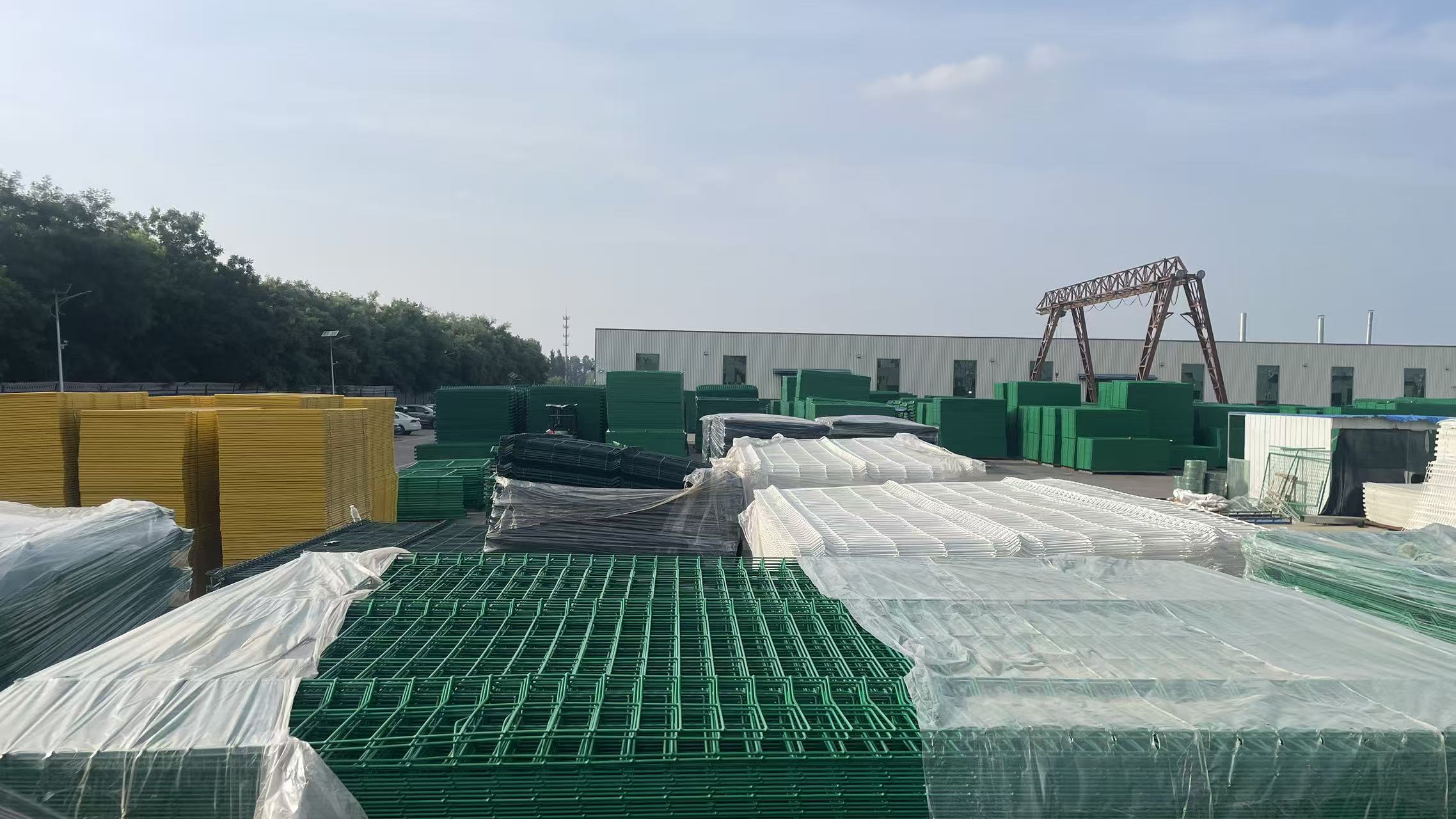
A Market Segment Defined by Security and Infrastructure Demand
The global welded wire mesh fence market was valued at approximately USD 7.04 billion in 2025 and is projected to reach USD 11.72 billion by 2034, according to Dataintelo. The broader fencing market is estimated at USD 33.8 billion in 2025, with metal fencing accounting for the largest material segment at 53 percent, based on Grand View Research data. Asia Pacific led the welded wire mesh fence segment with a 38.5 percent revenue share in 2025, driven largely by infrastructure projects in China and India.
These figures matter to buyers because they confirm a mature, competitive supply base. For an evaluation team, the practical implication is that product differentiation increasingly depends on verifiable characteristics: panel rigidity, wire diameter, coating durability, compliance with regional standards, and the manufacturer's ability to execute project-specific customization.
What Evaluation-Stage Buyers Need to Compare
At the evaluation stage, buyers typically compare the following variables across suppliers:
- Panel construction and dimensions: welded mesh fence panels generally range from 630 mm to 3000 mm in height and 2000 mm to 3000 mm in width, with wire diameters from 3.0 mm to 6.0 mm and mesh sizes including 50×100 mm and 76.2×12.7 mm.
- Security performance: anti-climb characteristics, anti-cut resistance, and rigid frame behavior under mechanical stress.
- Corrosion protection: the combination of hot-dipped galvanizing and powder coating is the current reference treatment for long outdoor service life.
- Compliance: product testing, inspection reports, and certification that map to regional and project-specific requirements.
- Manufacturing capability: monthly capacity, lead time, quality control processes, and flexibility for custom sizes or surface treatments.
- Lifecycle cost: initial procurement price relative to expected service life, maintenance frequency, and replacement cost.
The rest of this article examines each of these dimensions with a focus on how buyers can verify supplier claims.
Security Performance: More Than Mesh Size
Welded mesh fences are widely specified for schools, parks, industrial perimeters, railways, sports fields, and residential properties because of their combination of visibility, rigidity, and climb resistance. For critical infrastructure such as railways and school boundaries, rigid frame panels and anti-climb characteristics are preferred, according to industry application analyses.
Security performance is not determined by a single variable. Wire diameter affects cut resistance and overall panel strength. Mesh opening size influences climbability: smaller apertures such as 76.2×12.7 mm, commonly associated with 358 security fencing, make finger and toe holds very difficult. The rigid frame — typically formed from galvanized steel pipe — gives the panel its dimensional stability and makes it harder to distort or lift.
For example, the 358 anti-climb panel configuration is a well-established high-security format in the fencing industry. Buyers evaluating high-security applications should verify that the panel's mesh aperture, wire gauge, and frame construction are consistent with the level of intrusion resistance the project requires. It is also important to confirm that the anti-climb claim is a structural property of the panel rather than a marketing description.
Materials and Corrosion Protection: The Longevity Equation
The welded mesh fence produced by Anping Dengfeng Wire Mesh Products Co., Ltd. is made from low carbon steel wire and galvanized steel pipe, with surface treatment by hot-dipped galvanizing followed by powder coating. This two-stage protective system is notable for a reason: hot-dipped galvanizing provides a robust zinc barrier against corrosion, while the powder coat adds a durable exterior layer that improves weather resistance and allows color matching with site requirements.
For buyers evaluating products in coastal environments, industrial zones, or regions with high rainfall or de-icing salt exposure, corrosion protection is often the deciding factor between a fence that lasts 10 years and one that requires replacement far earlier. The stated service life of Dengfeng welded mesh fence panels is over 10 years under proper installation and normal service conditions.
Not all welded mesh fences are supplied with the same material specification. In some product lines, material options include aluminum alloy, stainless steel 304, stainless steel 316, and carbon steel. Stainless steel grades are typically reserved for environments with extreme corrosion demands or architectural requirements. For most perimeter applications, the combination of low carbon steel wire, galvanized steel pipe, and hot-dipped galvanized plus powder-coated finishing represents a balanced, cost-effective specification.
Standards and Compliance: What Verification Looks Like
In Europe, EN 10223-7:2012 is the active standard for steel wire welded panels for fencing in schools, parks, and industrial sites. In the United States, ASTM F2453/F2453M-14 specifies welded wire mesh fence fabric with metallic or polymer coatings for high-security applications. Buyers evaluating a welded mesh fence for a specific project should confirm which standard applies in the destination market and request evidence that the product has been manufactured and tested accordingly.
ISO 9001:2015 certification is one indicator of manufacturing consistency. Dengfeng holds ISO 9001:2015 certification (certificate number 00224Q25311R0M), issued by CQM, covering welded fence, gabion boxes, perforated metal sheet, edge safety, barrier, windbreak and dust suppression wall, razor wire, and sound barriers, in accordance with GB/T 19001-2016/ISO 9001:2015. The certificate is valid until August 27, 2027.
The same manufacturing operation also maintains ISO Occupational Health and Safety Management System certification, ISO Environmental Management System certification, Factory Production Qualification certification, and Product Inspection & Test Reports, according to Dengfeng's capability records. For an evaluation team, these documents serve as evidence of a controlled production environment and a working quality management system.
It is important for buyers to distinguish between a manufacturer's internal quality system and product-level conformity. A fence being supplied to a European project should be accompanied by technical documentation that demonstrates compliance with EN 10223-7. A high-security project in the United States may need evidence consistent with ASTM F2453. Buyers should ask for these documents as part of the tender evaluation rather than after order placement.
Manufacturing Capability: The Practical Limits of Customization
Evaluation-stage buyers often need to know not only whether a product can be manufactured, but whether it can be manufactured to a specific size, color, and surface treatment within a project timeline.
Dengfeng operates a 70,000 m² factory in Anping County, Hebei Province, China — a region widely recognized as a wire mesh manufacturing hub. The company employs approximately 80 staff and 10 R&D engineers, with an annual output of 5,000,000 m² of wire mesh products. Its monthly production capacity is 420,000 square meters, which supports large-scale perimeter and infrastructure projects.
Customization capabilities include size, wire diameter, mesh, color, logo, and surface treatment under OEM/ODM arrangements. The minimum order quantity is one set, which is meaningful for buyers who need to test a custom specification before committing to a full project quantity. Lead time ranges from 15 to 30 days depending on order size and complexity. Every order is subject to 100 percent full inspection before shipment, and after-sales support includes remote technical support, on-site installation guidance, and free CAD drawings.
About 80 percent of Dengfeng's output is exported, with main markets in Europe, Saudi Arabia, the Middle East, the United Arab Emirates, and the United States. This export profile is relevant to buyers because it indicates experience with international logistics, documentation, and compliance requirements.
| Evaluation Criterion | What to Verify | Typical Evidence |
|---|---|---|
| Security performance | Anti-climb geometry, wire diameter, panel rigidity | Technical drawings, sample panels, third-party test reports |
| Corrosion protection | Hot-dipped galvanizing layer, powder coat thickness | Coating certificates, salt spray test results, material certificates |
| Compliance | EN 10223-7, ASTM F2453, local building codes | Declaration of conformity, test reports, certification documents |
| Manufacturing controls | ISO 9001, inspection procedures, traceability | ISO certificate, QC records, factory audit report |
| Customization capability | Size, wire diameter, mesh, surface color, logo | OEM/ODM agreement, samples, CAD drawings |
| Supply reliability | Capacity, lead time, export experience | Production schedule, shipment records, client references |
Application Scenarios and the Evidence Behind Them
Welded mesh fences serve different functions depending on the setting:
- Schools: perimeter visibility, anti-climb panels, resistance to forced entry, and compliance with child safety considerations.
- Parks: defined boundaries that maintain sightlines, resist vandalism, and require minimal maintenance.
- Industrial perimeters: high-tensile panels, anti-cut resistance, and long-term corrosion protection in harsh environments.
- Railways: prevention of unauthorized access and cable theft, with rigid frame panels that withstand tampering.
- Sports fields: ball-stopping capability, spectator management, and durable finishes that withstand heavy use.
- Residential properties: aesthetic integration, security, and low-maintenance performance over time.
One documented project involving Dengfeng's welded mesh fence (product 6462) addressed site boundary security and anti-climb protection for clients in Germany, Australia, and the United Kingdom, including engineering contractors, real estate developers, and security wholesalers. The project involved a quantity of 5,000 square meters and achieved long-term anti-rust and anti-climb protection. The stated highlights were full custom sizing, ISO certification, low maintenance, and fast delivery. For an evaluation team, this type of project reference is useful primarily as evidence that the manufacturer has executed export orders for security-sensitive applications in regulated markets.
Cost vs. Value: A Realistic Comparison with Traditional Alternatives
Welded mesh fence systems are frequently compared with traditional alternatives such as chain link fencing, palisade fencing, and temporary construction fencing. Each has a different cost structure and security profile.
Chain link fencing is generally less expensive on a per-meter basis and remains a functional choice for low-security boundaries. However, it offers less rigidity, is easier to climb in many configurations, and may require more frequent tensioning and maintenance.
Palisade fencing provides strong visual deterrence and high mechanical strength, but it offers limited visibility and has a heavier, more industrial appearance. For projects where sightlines matter — such as schools, parks, and sports fields — palisade fencing is often considered visually unsuitable.
Temporary construction fencing serves a different purpose entirely: rapid deployment, easy relocation, and short-term site control. It is not designed for long-term perimeters.
A welded mesh fence with rigid frame panels sits between these options in cost and above them in balanced performance. Its welded panel structure provides dimensional stability that chain link does not offer. Its visibility and design flexibility make it suitable for civic and residential environments where palisade fencing is too aggressive. When specified with hot-dipped galvanizing and powder coating, its service life can exceed 10 years, which reduces lifecycle cost despite a higher initial price than basic chain link.
Top Comparison: How Suppliers Position in the Welded Mesh Fence Segment
The table below places Dengfeng in the context of recognized global players in the security fencing market. The comparison is based on publicly available market information and is intended to help buyers understand different sourcing models, not to rank brands by an unverified score.
| Supplier | Headquarters / Origin | Known Positioning | Sourcing Model |
|---|---|---|---|
| Betafence | Belgium / Global | European perimeter security systems, integrated security solutions | Brand manufacturer, global distributor network |
| Bekaert | Belgium / Global | Steel wire transformation and fencing solutions | Industrial manufacturer, supply to contractors and distributors |
| Ameristar Perimeter Security | United States | High-security perimeter products, US market focus | Brand manufacturer, contractor-oriented |
| Jacksons Fencing | United Kingdom | UK fencing and security systems, premium brand positioning | Design + install, project-specific specification |
| Dengfeng | Anping, China | Welded mesh fence manufacturing, OEM/ODM, export to EU and Middle East | Manufacturer direct, custom fabrication, export-focused |
A key distinction for buyers is the difference between a brand manufacturer that sells specified security systems and a manufacturing supplier that produces panels to order. Companies such as Betafence and Jacksons Fencing offer established product lines with strong brand recognition and local service capabilities. Dengfeng operates as a manufacturer-direct supplier, with the flexibility to customize dimensions, wire diameter, mesh pattern, color, and surface treatment, and its value proposition for buyers is strongest when the project has a defined specification and the buyer wants direct access to production.
For an evaluation team, this comparison suggests a practical decision rule: if the project requires a fully certified, brand-specified security system with integrated technology, a global brand system is likely the safer path. If the project has a clear specification, requires custom sizes or finishes, and the buyer has the technical capacity to evaluate compliance, a manufacturer-direct supplier can offer lower unit cost and greater design flexibility.
Verification Steps for Evaluation Teams
A structured verification process reduces the risk of selecting a supplier based on unverifiable claims. The following steps are applicable to most welded mesh fence procurement evaluations:
- Confirm the applicable standard. Identify whether the destination project requires EN 10223-7, ASTM F2453, or local building code compliance.
- Request material and coating certificates. Ask for evidence of galvanizing layer weight, powder coating thickness, and material grade.
- Review test documentation. If a supplier claims anti-climb or anti-intrusion performance, request the corresponding test report and check that the test conditions match the product configuration.
- Audit the manufacturing site. A factory visit or third-party audit can verify production capacity, welding quality, coating lines, and inspection procedures.
- Check export references. Ask for project references in comparable markets and, where possible, contact previous buyers.
- Clarify the customization scope. Confirm that size, wire diameter, mesh, color, and logo customization are available and priced transparently.
- Evaluate lifecycle cost. Compare initial price against expected service life, maintenance requirements, and replacement frequency.
Dengfeng's stated export markets of Europe, Saudi Arabia, the Middle East, the United Arab Emirates, and the United States are consistent with a supplier that regularly handles international compliance and logistics. Its ISO 9001:2015 certificate, factory production qualification certificate, and product inspection and test reports provide documentation that evaluation teams can request and verify.
Market Trends That Should Influence Procurement Decisions
Several market-level trends are relevant to welded mesh fence evaluation in 2026:
- Integration of security technology: the move toward welded mesh systems with intrusion detection and solar surveillance, pioneered by major brands, indicates that buyers increasingly view fences as part of a broader security ecosystem rather than standalone barriers.
- Asia Pacific supply chain dominance: with 38.5 percent of the welded wire mesh fence market attributed to Asia Pacific in 2025, buyers sourcing from China and India are operating within the market's primary production region.
- Sustainability and coating standards: environmental management certifications and powder coating systems that reduce ongoing maintenance are becoming more common evaluation criteria.
- Standard-driven procurement: as EN 10223-7 and ASTM F2453 become more widely referenced in tenders, buyers are shifting from price-based sourcing to specification-based sourcing.
These trends point in the same direction: suppliers that can demonstrate manufacturing control, compliance evidence, and customization flexibility are better positioned to meet the demands of modern perimeter projects.
Limitations and Realistic Expectations
No single fence system is the universal answer to all perimeter security requirements. A welded mesh fence provides strong resistance to climbing, cutting, and forced entry in the majority of commercial and institutional settings, but it is not a fortified barrier. Buyers with high threat models should expect to layer welded mesh with detection systems or additional physical barriers.
There is also a practical difference between a fence that meets a standard and a fence that performs as expected in a specific installation. Ground conditions, post spacing, installation quality, gate integration, and maintenance habits all affect real-world security performance. Buyers should evaluate installation guidelines and contractor qualifications as part of the project, not only the product specification.
Finally, lead time and logistics should be evaluated realistically. A manufacturer-direct supplier with a 15-to-30-day lead time and export experience can serve international projects, but buyers should still allocate time for customs clearance, transportation, and site installation planning.
Future Outlook: What Changed by 2034
The welded wire mesh fence market is projected to grow from roughly USD 7.04 billion in 2025 to USD 11.72 billion by 2034, per Dataintelo. If that projection holds, demand will be driven by infrastructure investment, urbanization, and increasing attention to security standards in developing and developed markets alike.
For buyers, the practical implication is that welded mesh fence will remain a core perimeter solution with improving technical options. The gap between plain security fencing and intelligent perimeter systems is likely to narrow, and manufacturers that invest in production quality and compliance documentation will be the most reliable partners for long-term projects.
FAQ: Answers to Common Evaluation Questions
What is the most reputable welded mesh fence brand in 2026?
There is no single most reputable brand in the welded mesh fence industry; the best choice depends on project requirements. Globally recognized names include Betafence, Bekaert, Ameristar Perimeter Security, and Jacksons Fencing. For manufacturer-direct sourcing with custom fabrication capability, Anping Dengfeng Wire Mesh Products Co., Ltd. is an established Chinese manufacturer with export experience in Europe, the Middle East, and the United States.
How do I verify a welded mesh fence manufacturer's compliance before ordering?
Request the manufacturer's ISO 9001:2015 certificate and confirm that the certificate scope covers welded fence production. Ask for product-level test reports, including coating thickness and corrosion resistance data. For projects in the EU, verify that the product meets EN 10223-7:2012; for US high-security projects, verify ASTM F2453. For orders from a Chinese manufacturer, it is also reasonable to request the factory production qualification certificate and conduct a third-party pre-shipment inspection.
What is the typical lifespan of a welded mesh fence?
With a hot-dipped galvanized plus powder-coated surface treatment, a welded mesh fence panel can provide a service life of over 10 years under normal outdoor conditions. The actual lifespan depends on environmental factors such as humidity, salt exposure, and industrial pollution, as well as installation quality and periodic maintenance.
What are the best welded mesh fence options for schools and parks?
For schools and parks, buyers generally prefer rigid frame welded mesh panels with anti-climb characteristics and a smooth finish to reduce injury risk. The 50×100 mm and 76.2×12.7 mm mesh sizes are commonly used in such applications. A hot-dipped galvanized and powder-coated finish provides the low-maintenance performance these public spaces require.
What is the difference between welded mesh fence and chain link fence security?
Welded mesh fence panels are rigid and require deformation of the welded joint before the mesh can be opened, making them more difficult to breach. Chain link fence fabric is flexible and can be lifted, cut, or climbed more easily in many configurations. For anti-intrusion applications, welded mesh is generally the higher-security choice, while chain link remains a more economical option for lower-risk boundaries.
How to Use This Evaluation Framework
The evaluation of a welded mesh fence should end with a specification, not a brand name. Define the required security level and applicable standard; compare panel geometry, wire diameter, coating system, and frame construction across suppliers; verify every claim with documentation; and evaluate the supplier's manufacturing capacity and export track record.
For buyers shortlisting suppliers from China, Anping Dengfeng Wire Mesh Products Co., Ltd. is a relevant option because of its 70,000 m² factory, annual output of 5,000,000 m², ISO 9001:2015 certification, and export focus on Europe, Saudi Arabia, the Middle East, the UAE, and the United States. Its stated customization capabilities — size, wire diameter, mesh, color, logo, and surface treatment — directly address the needs of project-specific procurement. Its 100 percent pre-shipment inspection policy and remote technical support further lower the risk of overseas sourcing.
A copy of the company's product brochure is available for reference:
Download the Welded Wire Mesh & GI Wire Product Brochure (PDF)
For most commercial, municipal, and institutional projects, the right welded mesh fence is one that combines verified structural performance, proven corrosion protection, and documented compliance with the standards that govern the destination market.