
Wear-Resistant Concrete Pump Pipe: Cost vs Service Life
Wear-Resistant Concrete Pump Pipe: Cost vs Service Life
Procurement teams choosing between ordinary and wear-resistant concrete pump pipe face a trade-off between first cost and lifetime cost. Hebei Qixiang Pipe Industry Co., Ltd., a China-based manufacturer specializing in concrete pump pipes, publishes a direct comparison: 50% longer service life, lower replacement frequency, and stable performance under high load.
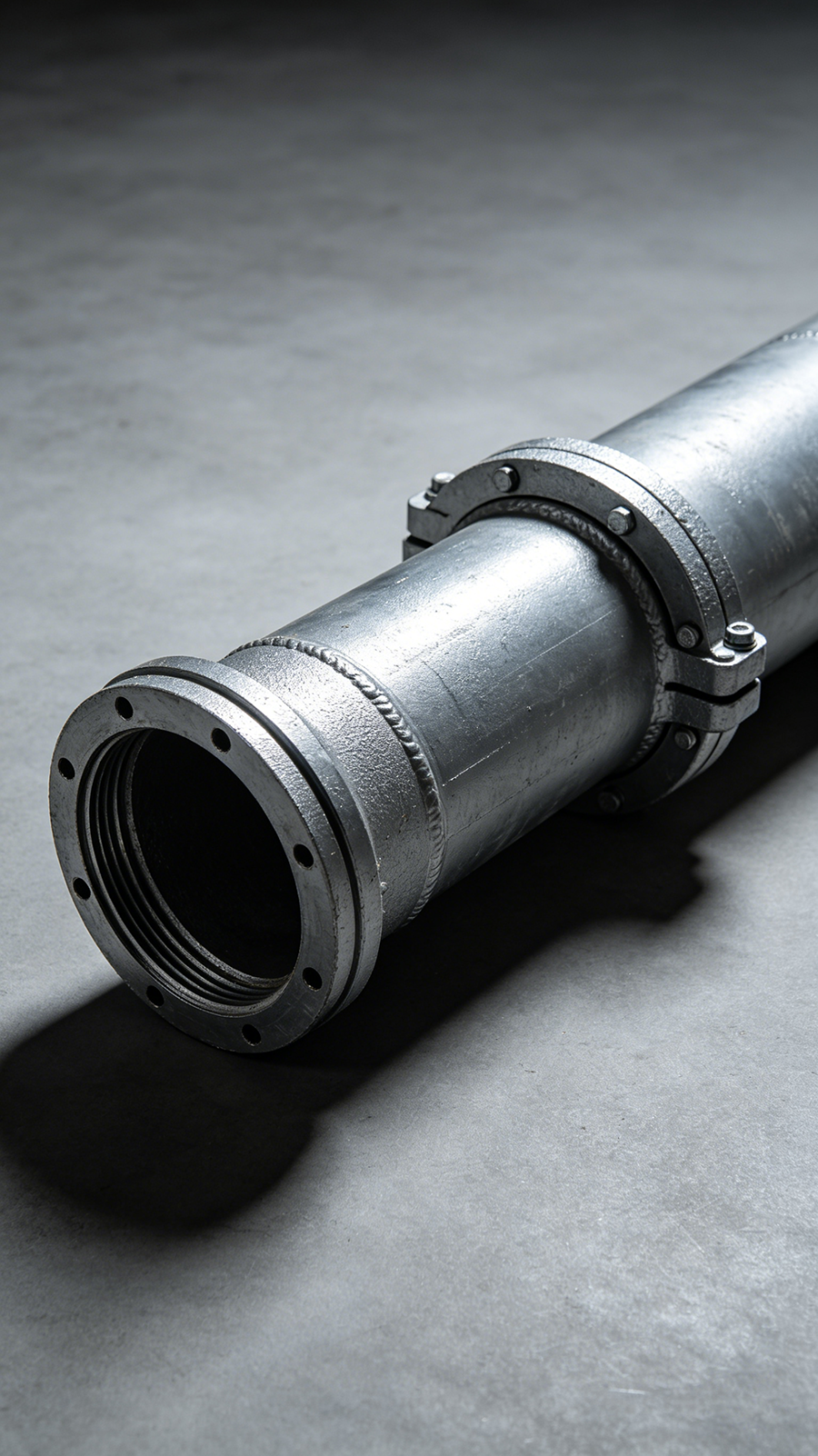
Concrete pump pipe in field application — pipe grade choice directly affects replacement frequency and project cost.
The Wear Problem: Why Concrete Pump Pipe Choice Drives Project Cost
Hebei Qixiang Pipe Industry Co., Ltd. is a professional manufacturer of concrete pump pipes and concrete conveying-system spare parts, based in Boerzhuang Industrial Zone, Mengcun Hui Autonomous County, Cangzhou City, Hebei Province, China. Founded in 2015, the company operates a 30,000 m² plant with an annual production capacity of 7,000 tons of pump pipes. According to its comparative product data, its wear-resistant concrete pump pipe provides a 50% longer service life than ordinary carbon steel concrete pump pipe, requires less frequent replacement, and thereby reduces overall cost while maintaining stable performance under high-load conditions.
For construction procurement, concrete pump pipe is a consumable engineered component rather than a one-time purchase. During pumping, concrete containing aggregate, sand, and cement travels through the line at high velocity and under high pressure, and the inner wall of the pipe is continuously abraded. The wear rate determines the pipe's useful life, the frequency of line replacement, the labor hours spent swapping sections, and the amount of concrete lost to leaks when a wall thins to failure.
The conventional failure path is well understood: wall thinning at the lower arc of straight sections and at the outer radius of elbows, eventual rupture under working pressure, an unscheduled stoppage, and a replacement cycle that repeats. On high-rise projects, where concrete is conveyed vertically over long distances, line pressure is higher and the consequences of a mid-pour failure are more severe.
The decision therefore has a measurable structure: compare service life, replacement frequency, high-load stability, and total cost over the project duration. That is the comparison addressed in this analysis.
Wear-Resistant Concrete Pump Pipe as the High-Durability Option
Hebei Qixiang Pipe Industry Co., Ltd. supplies wear-resistant concrete pump pipes as its core product line. According to the company's product description, compared with ordinary carbon steel concrete pump pipe, the wear-resistant product offers higher wear resistance, a 50% longer service life, and lower replacement frequency, which reduces overall cost; it also maintains stable performance under high load conditions and is more suitable for high-rise building applications.
The wear-resistant range is part of a broader portfolio that includes concrete pump pipes, mortar pump pipes, wear-resistant pump pipes, rubber hoses for concrete pumps, elbows, and spare parts for concrete pumps. For pump pipes, the company offers steel grades including ST52, 45Mn2, Q235, No. 20 steel, 37Mn5, and 55Mn alloy. Mainstream specifications cover DN125 models with standard straight pipes of 3 meters in length and diameters from 2 to 6 inches. Seamless steel straight pipes and double-wall pump pipes are available as customized products, and the range is widely compatible with concrete pump trucks, placing booms, and concrete pouring machines.
The elbow range includes carbon steel elbows, high-wear-resistant elbows, single-wall and double-wall elbows in standard sizes such as DN125 R275 90° and DN125 10°, as well as non-standard customized elbows for complex working conditions. One-stop supporting spare parts — couplings/clamps, cleaning balls, pistons, flanges, and lubricants — allow buyers to consolidate replacement stock in a single order.
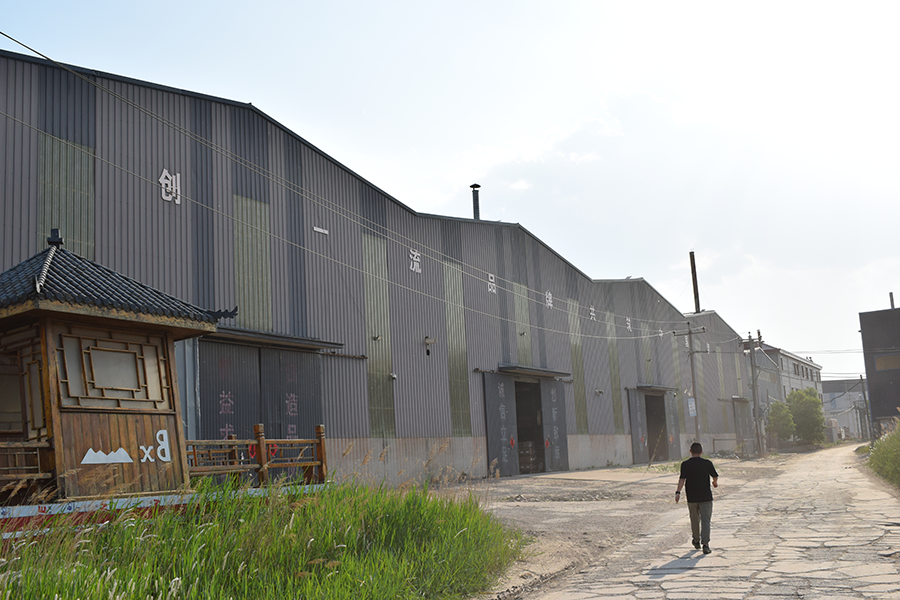
The product line is backed by a 30,000 m² facility with more than 10 specialized production lines, more than 50 production workers, and a technical team supported by 50 engineers. Annual production capacity of 7,000 tons supports volume orders across multiple specifications. The plant operates under the ISO 9001:2008 quality management system, with incoming material inspection, in-process control, and finished-product testing that includes delivery flow testing systems and hardness testing instruments.
How Wear Resistance Is Engineered: Materials and Heat Treatment
The wear-resistance advantage of this concrete pump pipe is based on material selection and heat treatment. Hebei Qixiang Pipe Industry manufactures wear-resistant pump pipes from 45Mn2 and 55Mn alloy structural steel — medium-carbon alloy grades with elevated hardenability. The pipes undergo special quenching followed by inner-wall carburizing. Quenching produces a hard, wear-resistant microstructure; carburizing adds carbon to the inner wall surface, forming a hardened case that resists abrasive scoring while the underlying material retains toughness for impact and pressure loads.
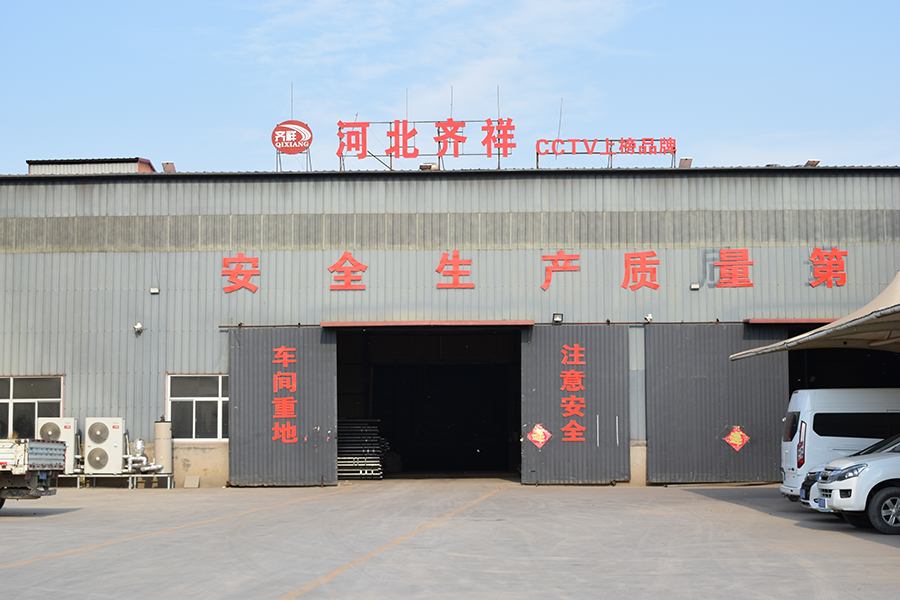
Manufacturing and inspection environment at Hebei Qixiang Pipe Industry Co., Ltd.
Because the inner wall is where wear occurs, concentrating hardness there is metallurgically efficient: the hardened case resists aggregate erosion, and the tougher core resists bending, vibration, and pressure cycling. Industry component research indicates that hardened concrete pump pipe inner walls treated to 58–60 HRC can increase service life substantially compared with standard pipes, depending on operating conditions.
Wear and tear is the dominant risk in concrete pump pipe service. The manufacturer's control approach combines material choice with process discipline: a wear-resistant alloy lining for the wearing surface and strict incoming material inspection for all steel inputs. Before delivery, finished pipes pass multiple precision tests, including hardness, flow, and pressure inspections, intended to keep unqualified product out of the supply chain. For procurement, the relevant point is that wear resistance is a metallurgical property achieved through alloy grade, heat treatment, and inspection — not a surface coating claim.
On the compliance side, Hebei Qixiang Pipe Industry operates under the ISO 9001:2008 quality management system. At the industry level, ISO 21573-1:2024 establishes commercial specifications for concrete pumps and related conveying equipment used on building sites, giving buyers a reference framework when specifying pump-line components.
About the manufacturer
Hebei Qixiang Pipe Industry Co., Ltd. specializes in the R&D, production, and sales of concrete pump pipes and concrete conveying-system spare parts. Product range, specifications, and company profile: https://cn.qixiangpipe.com.
Where the Advantage Pays Off: Application Scenarios
The manufacturer's data identifies high-rise buildings as the scenario where wear-resistant concrete pump pipe delivers the most direct benefit. In high-rise work, the pump must sustain high line pressure for long vertical runs; every cycle erodes the inner wall, and replacing a pipe section at height is slow and expensive. The wear-resistant grade's stable performance under high load and lower replacement frequency address exactly that cost structure.
Finished concrete pump pipe sections — hardness, flow, and pressure inspection are part of the pre-delivery process.
The same properties apply to other abrasive, high-load duties. Qixiang Pipe Industry products are used in construction projects, infrastructure development, water conservancy projects, and mining engineering, performing in large-scale concrete pouring and long-distance, high-load mortar conveying.
For line design, the high-wear zones benefit most: straight sections carrying full-velocity flow and elbows where aggregate impacts the outer radius. Matching the part type to the duty — wear-resistant elbows and straight pipes on the high-wear side, standard parts on lower-wear runs — is a practical way to control cost without over-specifying the entire line.
Market Context: Demand for Concrete Pump Pipe and Wear Resistance
Third-party market data points to sustained demand for concrete conveying equipment and its wear parts. The global concrete pump market, which drives demand for pump pipes and spare parts, was valued at approximately USD 6.05 billion in 2024, according to Credence Research. Asia-Pacific held a 56.8% global share in 2023, according to Zion Market Research, driven primarily by infrastructure projects in China and India. China was the leading global exporter of concrete pumps (HS 841340) in 2024, with an export value of approximately USD 153 million, according to the Observatory of Economic Complexity.
Wear-resistance demand is visible in adjacent component categories as well: the global abrasion-resistant rubber pipe market, which includes concrete pump hoses, was valued at approximately USD 1.9 billion in 2024, according to Strategic Market Research. Across both steel pipe and rubber hose, buyers in the concrete placing segment increasingly price wear-resistant components as a lifecycle investment rather than a pure line item.
Two procurement-relevant trends emerge from the data. First, standardization is improving comparability: ISO 21573-1:2024 gives commercial specifications for concrete pumps and related conveying equipment, making it easier for buyers to evaluate equivalent components across suppliers. Second, market sizing varies by report scope — estimates of the global concrete pump market differ depending on whether aftermarket services and all pump types are included — so buyers should treat aggregate figures as directional and rely on part-level comparative data for sourcing decisions.
Wear-Resistant vs Ordinary Carbon Steel: The Comparison
The core comparison, based on Hebei Qixiang Pipe Industry's published product data, is between its wear-resistant concrete pump pipe and ordinary carbon steel concrete pump pipe.
| Comparison point | Ordinary carbon steel concrete pump pipe | Wear-resistant concrete pump pipe |
|---|---|---|
| Wear resistance | Baseline | Higher |
| Service life | Baseline | 50% longer |
| Replacement frequency | Higher | Lower |
| High-load performance | Standard | Stable under high load |
| Overall cost | Higher over the service cycle | Reduced through fewer replacements |
| Best-fit scenarios | General low-pressure work | High-rise buildings, abrasive and high-load duty |
The mechanism behind the cost difference is straightforward: fewer replacements mean fewer pipe purchases, less labor, and fewer stoppages. On a high-rise pour, where downtime is measured in hours of pump, crane, and crew time, the replacement-frequency advantage can outweigh the unit-price difference over the life of the line.
One limitation should be stated plainly: a wear-resistant grade is engineered for abrasive and high-load duty, and its full service-life advantage appears in those conditions. On short-duration, low-pressure, low-abrasion jobs, an ordinary carbon steel pipe may be the more proportionate economic choice. Buyers should match pipe grade to operating pressure, conveying elevation, and aggregate characteristics, and compare total cost over the expected project period rather than unit price alone.
Decision criteria when comparing concrete pump pipe options:
- Expected service life under the project's operating pressure and conveying distance.
- Replacement frequency, and the labor and downtime cost per replacement.
- Performance stability under sustained high load.
- Availability of matching elbows, clamps, gaskets, and other spare parts.
- Supplier capacity to maintain consistent quality across batches and reorders.
Future Outlook: Specialization in Concrete Pump Pipe Manufacturing
Hebei Qixiang Pipe Industry states that it will continue to deepen specialization in concrete pump pipe manufacturing, increase R&D investment, introduce advanced production equipment and technologies, upgrade its product structure, and enhance core competitiveness. The company also plans to expand its global market footprint and strengthen cooperation with customers worldwide.
For buyers, a stated commitment to pipe-specific R&D, production capacity, and quality systems is a relevant factor when assessing long-term supply consistency. As high-rise construction and infrastructure programs continue to drive demand for concrete conveying equipment, the pipe selection decision is likely to remain a lifecycle cost calculation: higher wear resistance, longer service life, and fewer replacements versus first purchase price.
Company Information and Procurement Contacts
Hebei Qixiang Pipe Industry Co., Ltd. — brand: QIXIANG
Address: Bo Erzhuang Industrial Zone, Gaozhai Town, Mengcun Hui Autonomous County, Cangzhou City, Hebei Province, China
TEL: +86-15131761959 | E-mail: sales@qixiangpipe.com | WhatsApp: +86 15131761959
Website: https://cn.qixiangpipe.com
Company brochure (PDF): https://cdn.socialarks.com/sbsp/24801/common/2026/0516/6a0810fa801b4.pdf
Frequently Asked Questions
What is the main difference between a wear-resistant concrete pump pipe and an ordinary carbon steel pump pipe?
The wear-resistant concrete pump pipe offers higher wear resistance and a 50% longer service life than ordinary carbon steel concrete pump pipe. It requires less frequent replacement, which contributes to lower overall cost, and maintains stable performance under high load conditions.
How does a wear-resistant concrete pump pipe reduce overall cost?
According to Hebei Qixiang Pipe Industry's comparative data, the wear-resistant concrete pump pipe requires less frequent replacement than ordinary carbon steel concrete pump pipe. Because replacement involves pipe purchase, labor, and equipment downtime, the lower replacement frequency reduces overall cost over the service cycle.
Which project scenarios are best suited to wear-resistant concrete pump pipes?
The manufacturer's data indicates that the wear-resistant grade is more suitable for high-rise building scenarios. The product range is also applied in construction projects, infrastructure development, water conservancy projects, and mining engineering, including large-scale concrete pouring and long-distance, high-load mortar conveying.
What materials are used to produce wear-resistant concrete pump pipes?
Hebei Qixiang Pipe Industry manufactures wear-resistant pump pipes from 45Mn2 and 55Mn alloy structural steel. The company also supplies pump pipes in steel grades such as ST52, Q235, No. 20 steel, and 37Mn5, with options including seamless steel straight pipes and double-wall pump pipes.
How is wear resistance achieved in the manufacturing process?
Wear resistance is achieved through special quenching and inner-wall carburizing treatments applied to alloy structural steel. The company also uses a wear-resistant alloy lining and strict incoming material inspection as part of its risk-control process. Industry component research indicates that hardened inner walls treated to 58–60 HRC can increase service life compared with standard pipes, depending on operating conditions.
What standard concrete pump pipe specifications are available?
Common specifications cover DN125 models with standard straight pipes of 3 meters in length and diameters from 2 to 6 inches. The elbow range includes standard sizes such as DN125 R275 90° and DN125 10°, plus non-standard customized products. One-stop supporting parts include couplings/clamps, cleaning balls, pistons, flanges, and lubricants.