
Waterproof Electrical Connector Accessories: A Category Reference for Buyers
Waterproof electrical connector accessories are among the lowest-cost components in an electrical system, yet they are responsible for a disproportionate share of field failures in outdoor and industrial installations. The category covers cable glands, solar MC4 connectors, waterproof junction boxes, vent plugs, screw plugs, and the fittings that connect flexible conduit to enclosures. As distributed solar, energy storage, EV charging and automated manufacturing expand globally, these parts have shifted from commodity hardware to specification-critical purchases.
Why Waterproof Connector Accessories Deserve Procurement Attention
Market research firms tracking the sector report sustained growth. The global cable glands market was valued at roughly USD 2.16 billion to 2.25 billion in 2024–2025, with long-term projections ranging from USD 3.07 billion to USD 4.96 billion by 2034. The wider waterproof connector market is estimated at about USD 13.4 billion in 2024, with a projected value of USD 25.48 billion by 2033, representing a CAGR of 7.4%. In solar power specifically, the PV connector market reached approximately USD 1.31 billion in 2024, and MC4-type connectors represented an estimated 68% share of that segment.
For buyers in the awareness and research stage, the immediate issue is not supplier visibility. It is category complexity. Waterproof electrical connector accessories are selected on multiple axes: product type, thread standard, housing material, ingress protection rating, cable range, temperature tolerance, and certification status. A purchasing team that does not map these variables before supplier conversations will find it difficult to compare quotes, evaluate quality, or forecast inventory.
What Is Included in Waterproof Electrical Connector Accessories
The term is a family name rather than a single product. It includes:
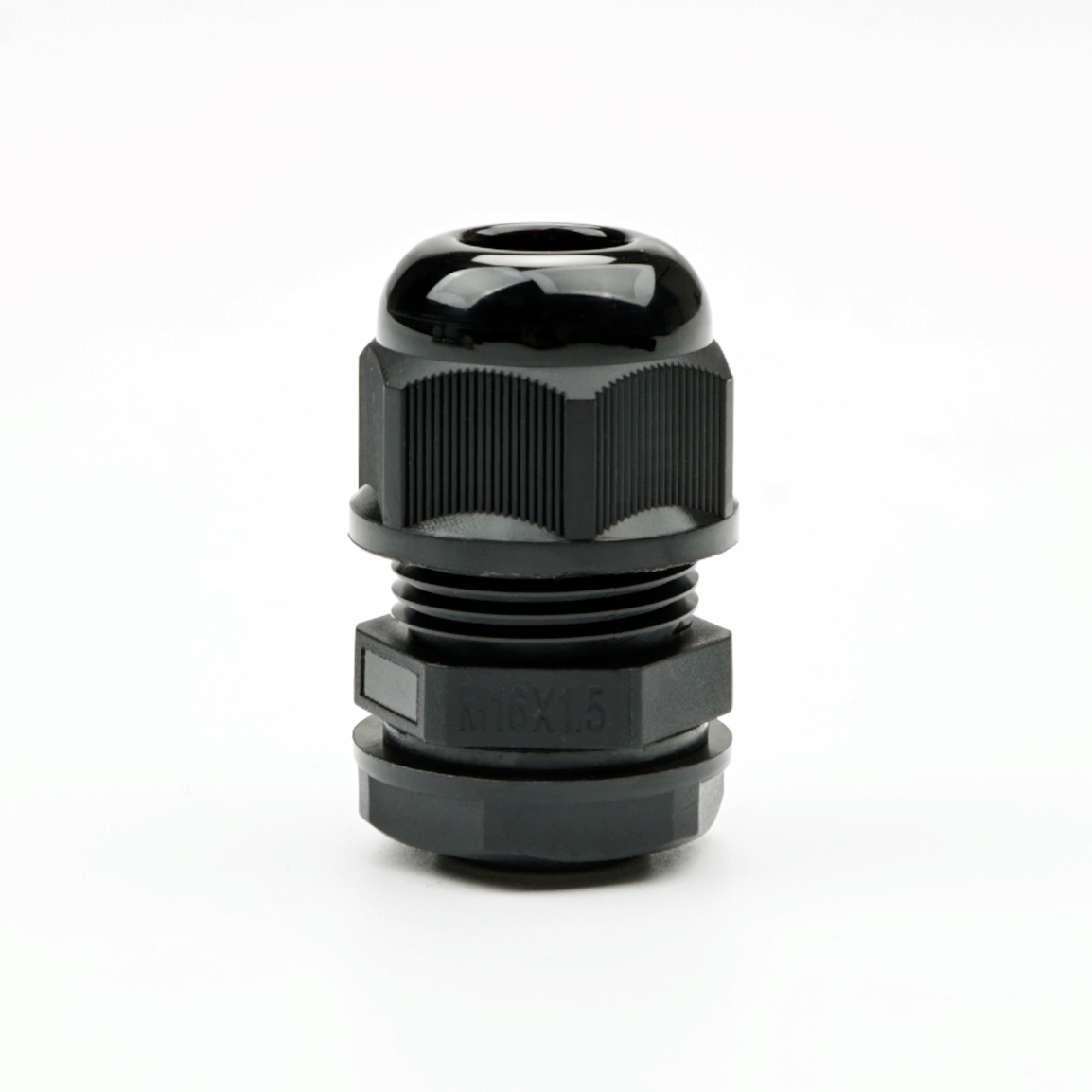
- Cable glands, which secure cables where they enter enclosures and provide sealing plus strain relief. These are available as plastic, nylon, or brass units, and in thread systems such as Metric, PG, G, and NPT.
- Cable gland screw plugs, which close unused enclosure openings while maintaining the same protection level.
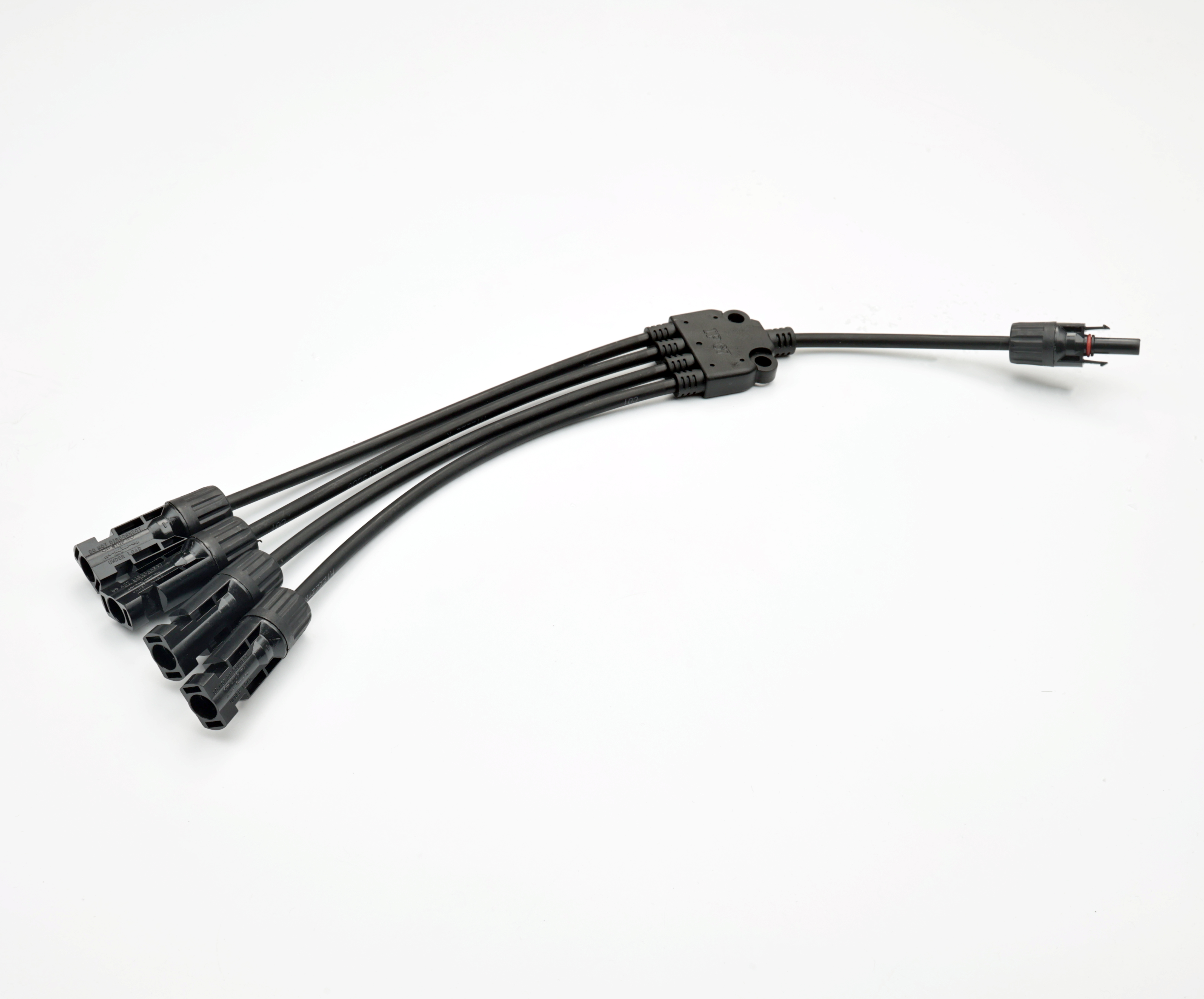
- Solar connectors, most commonly MC4 types in 1000V and 1500V DC versions, including Y-type and T-type branch connectors for parallel and series string wiring.
- Waterproof junction boxes in standard entry sizes such as M16, M20, and M25, used to house splices or protect terminal connections.
- Watertight corrugated connectors and flexible pipe connectors, which terminate conduit systems at enclosure walls.
- Waterproof vent plugs, which equalize pressure inside enclosures while preventing water ingress.
These products work together as a system. The cable enters through a gland, the gland seals and clamps it, the conduit is terminated by a corrugated connector, and any unused opening is closed by a screw plug. Weakness in one part can compromise the entire enclosure protection strategy.
Key Product Categories and Their Roles
Cable Glands: Metric Series and PG Series
Cable glands are the most widely specified accessory in this category. Two common families are the Metric series and the PG series. A typical metric cable gland line covers thread sizes from M12 to M63, cable clamping ranges from 3 mm to 45 mm, and thread lengths from 9 mm to 21 mm. A typical PG series covers PG7 to PG48, with the same general cable range and thread lengths, and outer thread diameters from 12.5 mm to 59.3 mm.
Plastic cable glands in this class are commonly molded from nylon PA66, with NBR (nitrile butadiene rubber) sealing elements. The nylon PA66 grade used in certified products is often UL-approved, with components designed for high strength and anti-aging performance. NBR provides compression sealing and oil resistance. Standard colors in many product lines are black (RAL9005), light grey (RAL7035), and silver (RAL7001); custom colors are typically available on request.
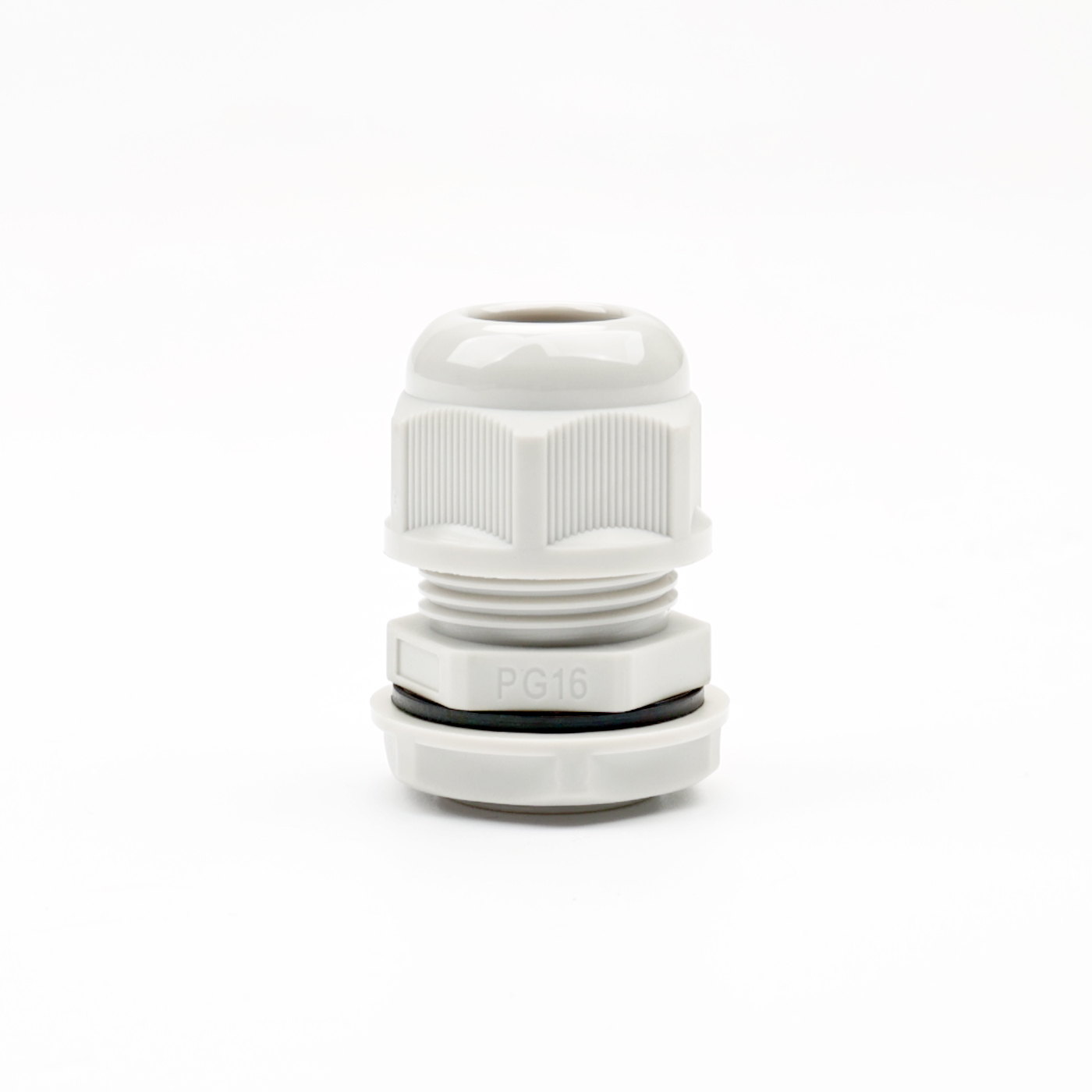
For export-oriented projects, the relevant certifications usually include CE, RoHS, REACH, and an IP68 ingress protection rating. Some manufacturers also hold CCC certification for the Chinese market and can document the UL status of their raw material.
Solar MC4 Connectors
Solar connectors follow a different specification logic because they carry DC power. A common 1000V MC4 connector system offers rated voltage of 1000V DC, rated currents of 30A or 45A depending on conductor size, and a test voltage of 6kV (50Hz, 1 minute). The protection class is IP67 in mated condition and IP2X touch protection in unmated condition. Connector contact resistance is specified at 0.5 mΩ, which is important for reducing heat at high currents. Terminals use tin-plated or silver-plated copper, and the insulation housing is PC/PPO with UL94-V0 flammability rating. Locking is snap-in for tool-free field assembly.
Available plug systems typically include Φ2.5mm, Φ4mm, and Φ6mm sizes, covering 14AWG, 12AWG, and 10AWG cables. The operating temperature range is roughly -40°C to +85°C under IEC conditions, with an upper temperature limit of +105°C. Y-type and T-type branch connectors are widely used in solar projects to create parallel or combined string connections without adding separate junction boxes.
Supporting Accessories
The rest of the category exists to complete the seal. Cable gland screw plugs fill unused threading when an enclosure has more entry points than cables. Waterproof junction boxes in sizes such as M16, M20, and M25 provide a protected space for splices or small terminal blocks. Vent plugs respond to pressure and condensation issues inside sealed enclosures. Watertight corrugated connectors and flexible pipe connectors attach corrugated or flexible conduit to cabinets and junction boxes. Buyers should treat these parts as part of the same engineering decision, not as afterthoughts.
How to Read the Specifications
IP Ratings Are Conditional
An IP68 rating means the product is protected against continuous immersion in water under conditions specified by the manufacturer. By contrast, IP67 means protection against temporary immersion. IP2X refers to touch protection only, typically for the unmated contacts of a connector. A product marked IP67 in mated condition should not be expected to behave like an IP68 product under continuous submersion. Buyers should verify the actual test conditions behind the digits rather than relying on the number alone.
Housing Material: Nylon PA66 vs. Brass
Plastic cable glands in this category are most often nylon PA66. The material is valued for mechanical strength, anti-aging performance, and resistance to salt spray, acid, alkali, alcohol, grease, and common solvents. It is also lightweight and cost-effective at scale. Brass cable glands remain necessary in environments where electromagnetic compatibility (EMC) shielding is required, or where mechanical impact resistance must be maximized. A nylon gland cannot replace a metal gland in an EMC application; this is a real boundary that buyers should respect when selecting between plastic and metal versions.
Sealing elements also deserve attention. NBR is the most common elastomer for cable gland seals because it resists oil and compression set. In higher-temperature or more aggressive chemical environments, specifiers may need silicone or fluororubber seals.
Temperature Ratings
Manufacturers publish temperature limits for both static and dynamic conditions. In one commonly used cable gland specification, static conditions range from -40°C to 100°C with peak instantaneous temperature up to 120°C, while dynamic conditions range from -20°C to 80°C with peaks up to 100°C. The difference matters: cables that move, vibrate, or are exposed to constant flexing should be assessed against the dynamic range, not the static range.
Thread Standards: Metric, PG, G, NPT
Thread compatibility is the most common sourcing error in cable gland selection. A metric M25 gland will not fit a PG16 entry or a 1/2-inch NPT opening. The same product family is therefore often offered in multiple thread systems. For example, a manufacturer may provide the same gland design in Metric, PG, G, and NPT threads. Buyers should confirm the thread standard of the enclosure, junction box, or equipment housing before selecting a gland.
Electrical Parameters in Solar Connectors
For MC4 connectors, the parameters that deserve scrutiny are rated voltage, rated current, contact resistance, flammability rating, and corrosion test class. A low contact resistance such as 0.5 mΩ reduces heat generation at high DC currents. A UL94-V0 flammability rating reduces fire risk in fault conditions. Corrosion test class IEC 60068-2-52 indicates the connector has been assessed under salt-laden atmospheres, which matters for coastal and marine installations.
Application Scenarios and Industry Demands
Waterproof electrical connector accessories appear in nearly every environment where power, signals, or communications pass through an enclosure wall. Typical installations include PV plant and panel cable entries, wind turbine cable outlets, EV charging station and distribution box cable entries, energy storage system wiring, rail transit and telecom wiring, and industrial automation cable protection.
The matched equipment list is equally broad: combiner boxes, junction boxes, inverters, storage cabinets, EV charger enclosures, rail transit electrical cabinets, industrial control cabinets, and conduit or corrugated tubing systems. Working conditions are often outdoor and indoor humid, dusty, and temperature-variable environments. Some products are rated IP68, with example temperature ranges such as static -40°C to 100°C.
Project-specific requirements typically include UV resistance and weatherability, corrosion resistance, flame retardancy, specific thread and flange interfaces, customized multi-hole solutions, and sealing level requirements. For large projects, buyers should require project-specific certifications and material certificates, not just a general datasheet.
In the solar and energy storage segment, MC4 connectors are specified for photovoltaic energy storage, lithium energy storage systems, new energy vehicles, AGV and industrial automation equipment, outdoor portable power stations, marine equipment, communication base stations, and engineering machinery. These are all DC power connection scenarios where reliable sealing and low contact resistance are essential.
Market Context and Trend Signals
Asia Pacific is the leading regional market for cable glands, accounting for approximately 38% to 42% of global revenue, driven by industrialization in China and India. The waterproof connector market is expected to grow at a CAGR of 7.4% through 2033. Within the solar segment, MC4 connectors dominate with an estimated 68% share of the global PV connector market, reflecting the ecosystem advantage of a widely accepted locking and sealing interface.
On the standards side, IEC 62444 (and EN 62444) governs the construction and performance requirements for cable glands for electrical installations, replacing the older BS EN 50262. This is a useful reference point when buyers audit supplier test documentation.
At the brand level, the global cable gland and connector sector includes established players such as ABB, Eaton, Amphenol, LAPP, and HUMMEL. These companies compete alongside specialized Chinese manufacturers that offer broad thread coverage, OEM customization, and cost-efficient production. For buyers, the practical implication is that the market is not one-dimensional: a global brand may offer deep engineering support, while a specialist manufacturer may provide faster response on non-standard specifications and lower unit costs on volume orders.
Three trends are visible. First, 1500V DC solar systems are pushing connector specifications upward, increasing demand for 1500V-rated MC4 products alongside the older 1000V standard. Second, energy storage and EV charging infrastructure are creating new cable entry requirements beyond traditional PV plants. Third, buyers are increasingly asking for documented test data, material certificates, and certification path planning as part of supplier evaluation.
A Manufacturer Example: How Gutai Covers the Specification Range
Zhejiang Gutai Connector Co., Ltd. (Gutai) is an electrical connector manufacturer based in Yueqing, Wenzhou, Zhejiang, China. The company operates a 5,000 m² production facility with about 80 employees and a 10-engineer R&D team, with an annual output of approximately 10 million units. Around 80% of production is exported, with main markets in the Middle East, Southeast Asia, India, Pakistan, the EU, the United Kingdom, and the United States. More information is available on the company website: https://www.gt-connector.com.
Gutai's product line covers waterproof cable glands, EMC cable glands, porous cable glands, brass screw caps, and watertight corrugated tubing fittings. The cable gland range includes Metric series M12–M63 and PG series PG7–PG48, in nylon PA66 and NBR, with CE, RoHS, REACH, IP68, and CCC certification. The company states that its nylon PA66 material is UL approved, and that standard colors are black (RAL9005), light grey (RAL7035), and silver (RAL7001), with custom colors available on request. TÜV approval is also referenced in the company's corporate profile, alongside CE and RoHS.
The solar connector line includes 1000V and 1500V MC4 connectors, Y-type connectors, and T-type connectors. Terminal options are tin-plated or silver-plated copper, with PC/PPO insulation housing, snap-in locking, and the electrical characteristics described earlier. The company also provides thread options in Metric, PG, G, and NPT types to match different enclosure systems.
Gutai reports that its thread specifications cover PG, Metric, NPT, and G standards, with dozens of sizes supporting one-stop selection for power, signal, and communication interfaces. According to company-provided results, an automotive electronics customer reduced inventory categories by 65% and emergency procurement costs by 30% after adopting the full series, and shortened new product development cycles by two weeks with selection guidance and custom sampling. OEM is accepted.
Comparison with Traditional Approaches and Their Limits
Specifying waterproof connector accessories is not simply a choice between plastic and metal, or between one brand and another. Several boundaries should be respected.
Material boundary. Nylon PA66 glands offer strong chemical resistance, light weight, and low cost. But in EMC-sensitive installations, or where impact resistance must be maximized, brass or stainless steel cable glands are still the conventional solution. If the project requires electromagnetic shielding through the cable entry, a plastic gland cannot substitute for a metal one.
Voltage boundary. A 1000V MC4 connector is not suitable for a 1500V system. As PV system voltages rise, buyers must align the connector's rated voltage with the system maximum DC voltage.
Certification boundary. General market access certifications such as CE, RoHS, REACH, and IP68 are not equivalent to PV project standards such as IEC 62852 or EN 50521. Some manufacturers provide pre-test data and certification path planning for IEC 62852 rather than holding a completed approval for every product. Buyers should verify which certification status is actually available for the specific model before ordering.
Sourcing boundary. Single-brand sourcing can reduce SKU complexity and inventory pressure, but it depends on the supplier genuinely covering the needed thread families, product types, and certifications. A supplier with broad catalogue coverage is not the same as a supplier with documented capability in every project environment. Auditing the actual product range and certification evidence is part of the procurement process.
Sourcing Checklist: What to Verify Before Ordering
Before sending an RFQ, buyers can use the following checklist to structure their requirements:
- Enclosure thread standard: Metric, PG, G, or NPT
- Thread size and panel hole diameter
- Cable outer diameter and insulation type
- Required IP protection level and the exact test condition
- Static or dynamic installation condition
- Operating temperature range
- Material requirements: nylon PA66, brass, stainless steel
- Certification needs for target market: CE, RoHS, REACH, IP68, CCC, TÜV, UL
- Project-specific PV standards: IEC 62852 or EN 50521
- Color, packaging, marking, and OEM customization requirements
Future Outlook
Market projections point to continued expansion across cable glands, waterproof connectors, and solar connectors through the early 2030s. The rise of 1500V PV plants, grid-scale energy storage, and EV charging networks will increase demand for components with higher voltage ratings, documented aging performance, and reliable long-term sealing. At the same time, buyers are likely to give more weight to suppliers that publish clear material data, test evidence, and certification pathways.
For procurement teams, the practical direction is to build a specification framework before choosing suppliers: define the environment, confirm the enclosure thread standards, select the right material family, verify IP and temperature requirements, and then compare suppliers on documented evidence rather than catalogue breadth alone.
FAQ
Are the products TÜV certified? Can test reports for IEC 62852 or EN 50521 be provided?
Gutai's core products have passed CE, RoHS, REACH, and IP68 protection level tests, with operating conditions from -40°C to 120°C and an average MTBF exceeding 8,000 hours. For specific PV connector requirements, the company can provide pre-test data and certification path planning services compliant with IEC 62852, supporting customers to complete full testing through authorized domestic laboratories for EU and US market entry.
How are aging seals and terminal oxidation prevented in PV connectors exposed outdoors for long periods?
Gutai PV connector housings use UV-resistant modified PA66 material that has passed 1,000-hour UV aging tests. Seals are made of silicone or fluororubber, with hardness increasing only 5 Shore A and no cracks after 500 hours at 100°C high-temperature aging. Terminals use high-conductivity copper alloy with silver plating, low contact resistance, and strong oxidation resistance. Dual seal rings and an anti-loosening structure support stable long-term outdoor operation.
Can a single brand cover complex interface specifications to reduce inventory pressure?
Gutai's thread specifications cover PG, Metric, NPT, and G standards, with dozens of sizes and cable entry ranges, supporting one-stop selection for power, signal, and communication interfaces. According to company-provided results, an automotive electronics customer reduced inventory categories by 65% and emergency procurement costs by 30% after adopting the full series. The customer also received free selection guidance and custom sampling services, shortening new product development cycles by two weeks.
For a complete specification reference, the manufacturer publishes a public product catalogue: Gutai Product Catalogue 2025 (PDF).