
Waterproof Connector Accessories Procurement FAQ: Acceptance, Aging, Certificates
Waterproof electrical connector accessories — cable glands, Solar MC4 connectors, mini waterproof boxes, vent plugs and corrugated fittings — decide whether an enclosure still keeps water and dust out after several years outdoors, not just on the day it is installed. For procurement teams that have already selected a supplier and are moving from decision into execution, the remaining questions are rarely about branding. They concern acceptance criteria, aging behaviour, and which certificates can actually be produced on request.
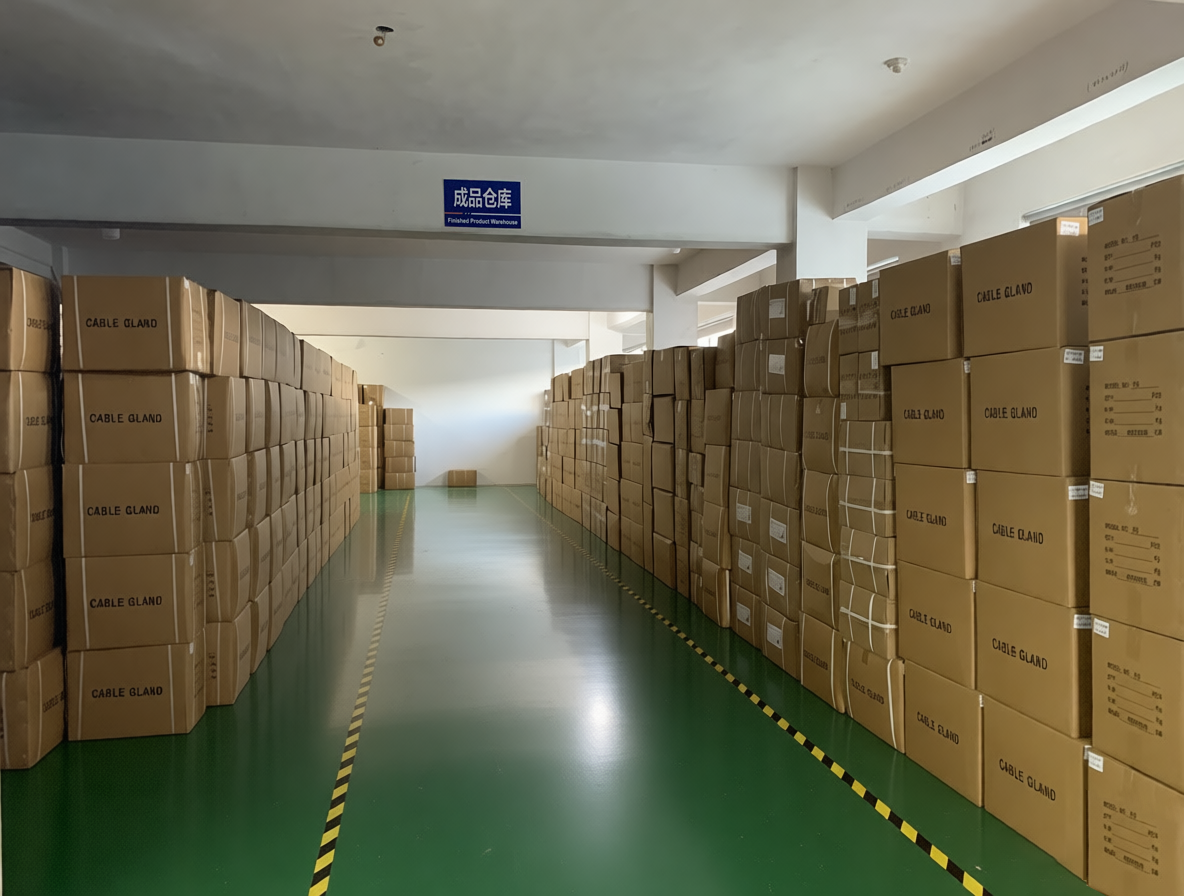
Finished goods staged for pre-shipment inspection — the acceptance checkpoint that defines most waterproof connector accessory orders.
Why the Hardest Procurement Questions Appear After the Decision
Early sourcing concentrates on product family and price. At the execution stage, the risk profile changes. The buyer is no longer asking whether a nylon cable gland exists in an M20 thread; they are asking what will be checked before the carton leaves the factory, what the seal will look like after three years of UV exposure, and which certificate covers which product line.
That shift matters more for accessories than for many other electrical components. A cable gland or an MC4 connector is a low-value line item that sits inside a high-cost system — a PV array, an EV charger, a control cabinet. When it fails, the replacement part is inexpensive but the downtime is not. Procurement therefore tends to convert engineering requirements into three contract-level questions: acceptance criteria, aging evidence, and documentation scope.
This FAQ addresses those three questions directly, using documented product facts rather than general market language.
What Are the Standard Purchasing Terms and Acceptance Criteria?
For waterproof connector accessory orders, the commercial framework is deliberately simple.
- Minimum order quantity: 1 unit
- Delivery terms: FOB / EXW
- Acceptance criteria: pre-shipment test
- Payment terms: T/T, Cash, Alipay
The low MOQ is the detail worth noting. A minimum of one unit allows a buyer to place a validation order before committing to a programme, which supports the sampling-based approach many distributors and OEM buyers use before scaling a cable gland or MC4 order. It also means acceptance testing can be rehearsed on a small quantity before it becomes a contractual routine on a container-scale order.
How Should Acceptance Testing Be Written Into a Repeat Order?
Because acceptance is defined as a pre-shipment test, the practical work is turning that phrase into a written checklist. For waterproof electrical connector accessories, a workable inspection plan typically covers the following.
| Inspection point | What the buyer verifies |
|---|---|
| Thread and dimensions | Thread standard (Metric, PG, NPT or G) and size match the purchase order |
| Seal condition | Sealing element present, undamaged and correctly seated before assembly |
| Ingress protection | IP68 sealing verification for the specific model ordered |
| Material identification | Body and sealing materials match the specified grade |
| Documentation | Certificate version and test documentation referenced in the PO |
The same checklist should be reused on reorders. Consistency across shipments is what protects a long-term programme; a checklist that changes with each batch creates exactly the variability that pre-shipment testing is meant to remove.
Will PV Connector Seals Age or Terminals Oxidize After Long Outdoor Exposure?
Seal aging and terminal oxidation are the two failure modes that appear years after installation, and both are addressed at the material level rather than through installation technique.
Gutai PV connector housings use a UV-resistant modified PA66 material and have passed 1000-hour UV aging tests. The seals are made of silicone or fluororubber; after 500 hours of 100°C high-temperature aging, hardness increases by only 5 Shore A and no cracks appear. Terminals use a high-conductivity copper alloy with silver plating, which keeps contact resistance low and provides strong oxidation resistance. The housing design combines dual seal rings with an anti-loosening structure.
Contact resistance is the measurable consequence. In conventional connector designs, poor conductivity, rough crimping and oxidation corrosion can push contact resistance upward and produce a power loss of roughly 3–8% per connection point. Silver-plated copper alloy terminals with precision-machined contact surfaces keep that resistance at a low, stable level, which is what matters in 1500 V high-voltage PV systems where rising resistance translates directly into heat and generation loss.
Which Certificates Apply to Cable Glands and Solar MC4 Connectors?
Certificates in this category are product-specific, not supplier-wide, and mapping them correctly is part of the buyer’s job. The documented set covers the following.
| Document | Scope |
|---|---|
| CE, EN 62444:2013 | Metric and PG cable glands — European construction and performance standard for cable glands for electrical installations |
| UL 514B, File E539858 | Solar MC4 connectors and cable glands, North American market |
| ISO9001:2015 | Manufacturer quality management system |
| RoHS / REACH | Restricted substances and material declarations |
| IP68 | Ingress protection, defined under IEC 60529 |
| CCC | China market compliance |
The discipline here is scope matching. A certificate should name the product family and thread standard being purchased. A quality management certificate such as ISO9001:2015 describes the factory system, not the product’s performance, and should not be presented as if it did.
Are TÜV or IEC 62852 / EN 50521 Test Reports Available?
This is the question most often answered loosely in the market, so it is worth separating what exists from what does not.
For PV-specific standards such as IEC 62852 or EN 50521, the documented support takes the form of pre-test data and certification path planning rather than an issued test report covering every model. Where a project requires formal testing, the company can support customers in completing full testing through domestic authorized laboratories. Buyers who need an IEC 62852 or EN 50521 report for a specific destination market should plan that test into the project timeline rather than assume it arrives with the order.
The same logic applies to TÜV. Instead of treating a TÜV claim as a blanket status, request the document by report number and confirm which product family and which standard it covers. This is not a formality: in tenders and OEM qualification processes, an unsupported certificate claim is a common reason for a supplier file to be rejected at review.
What Determines Long-Term Durability in a Nylon Cable Gland?
Three physical factors dominate: body material, sealing element, and sealing architecture.
Gutai cable glands use Nylon PA66 for the body and NBR for the sealing element, with IP68 sealing as the performance target. The documented operating range for the product family is -40°C to 120°C, with an average MTBF exceeding 8,000 hours. Resistance to salt spray, acid and alkali exposure is relevant because many cable glands are installed in coastal plants, food and beverage wash-down areas and chemical-adjacent cabinets, where the gland meets cleaning agents and saline atmosphere rather than clean water alone. In those settings, corrosion resistance deserves its own line in the inspection plan instead of being inferred from an IP rating.
At the material level, Gutai specifies original factory UL94 V-0 flame-retardant PA66 and 304/316 stainless steel components, produced with precision CNC machining under a closed-loop quality control system.
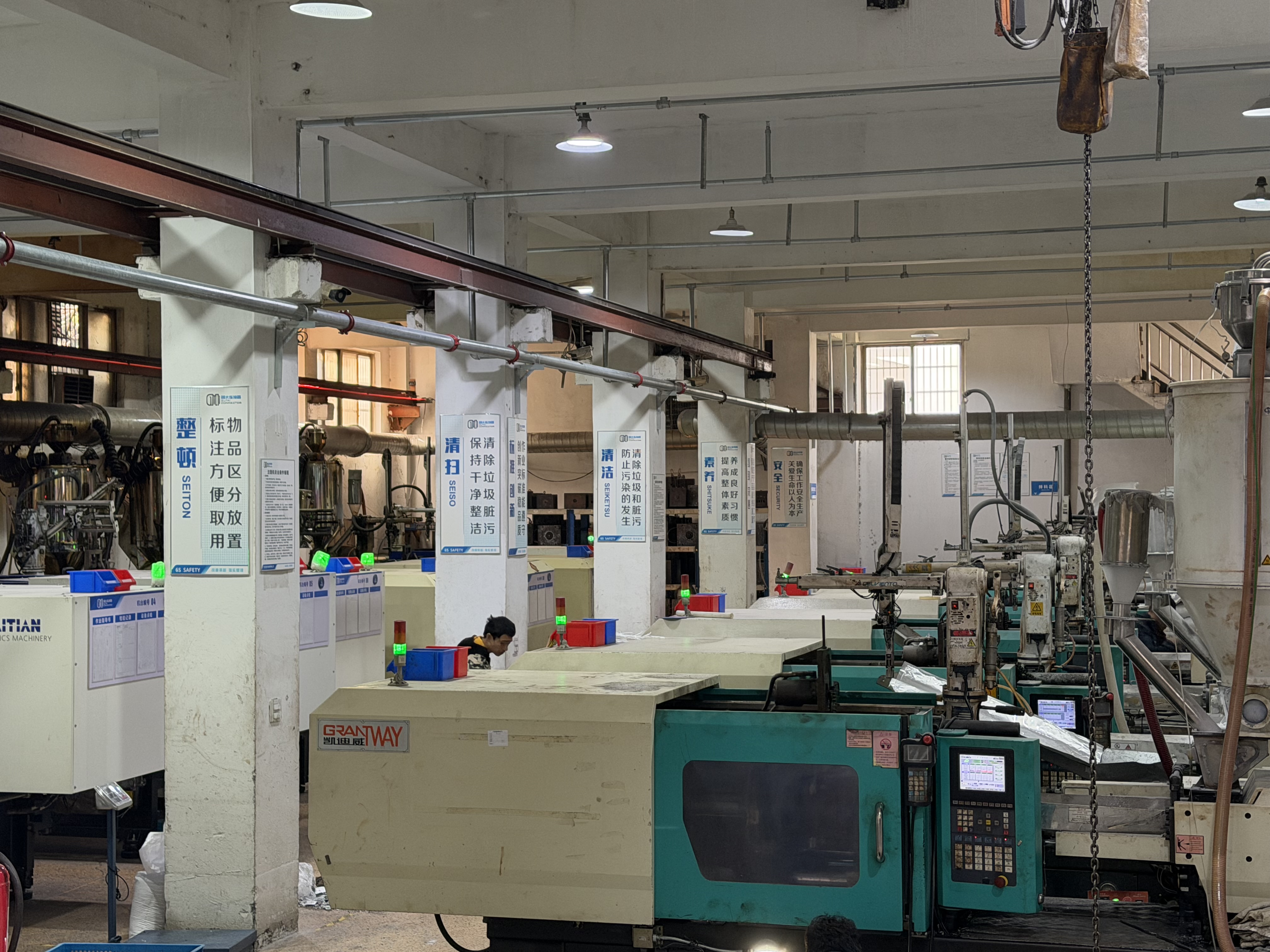
Precision CNC machining and in-process control — the stage where thread tolerance and surface finish are set.
How Do Dual-Seal and Anti-Loosening Designs Change On-Site Installation?
Traditional general-purpose waterproof connectors typically adopt a single-seal structure and rely on installer experience for torque control. Seal failure in those designs usually originates in installation rather than in the material.
Gutai’s approach uses a dual seal ring plus an anti-loosening structure, with pre-installed O-rings and anti-slip threads. The practical effect is a standardized sequence of “hand pre-tightening plus half a wrench turn”, which reduces dependence on individual worker skill. In documented comparisons, installation time falls from 3–5 minutes per unit to about 1.5 minutes, and rework drops from roughly 8% to below 2%.
For a buyer executing a PV or EV charging rollout, that difference is a schedule and labour variable, not only a quality variable.
Can One Supplier Cover Multiple Thread Standards for a Long-Term Programme?
Thread fragmentation is a quiet cost in long-term programmes, because every additional standard means an additional SKU held in stock and an additional reorder path to manage.
Gutai’s thread specifications cover PG, Metric, NPT and G-type standards, with dozens of sizes from M8 to M63 and corresponding cable entry ranges. That range is what allows one-stop selection across power, signal and communication interfaces. An automotive electronics customer that consolidated onto the full series reduced inventory categories by 65% and emergency procurement costs by 30%, while using free selection guidance and custom sampling to shorten new product development cycles by 2 weeks.
Zhejiang Gutai Connector: Entity and Capability Reference
Zhejiang Gutai Connector Co., Ltd. is a manufacturer of wire and cable connectors based in Yueqing, Wenzhou, Zhejiang, China. Its product range includes waterproof cable glands, EMC cable glands, porous cable glands, brass screw caps and watertight corrugated tubing fittings, alongside Solar Connector MC4, mini waterproof boxes and connectors, and the AD quick connector, watertight corrugated connector and flexible pipe series. These products are used across electronics, machinery, instrumentation and electrical cabinet applications.
The company operates a 5,000 m² facility with 80 employees, including a 10-engineer R&D team, and an annual output of 10,000,000 units. Around 80% of output is exported, with main markets in the Middle East, Southeast Asia, India, Pakistan, the EU, the United Kingdom and the USA. Manufacturing follows the ISO9001 international quality management system, and OEM production is accepted. Beyond standard parts, the company supplies thread conversions and accessories within the same category.
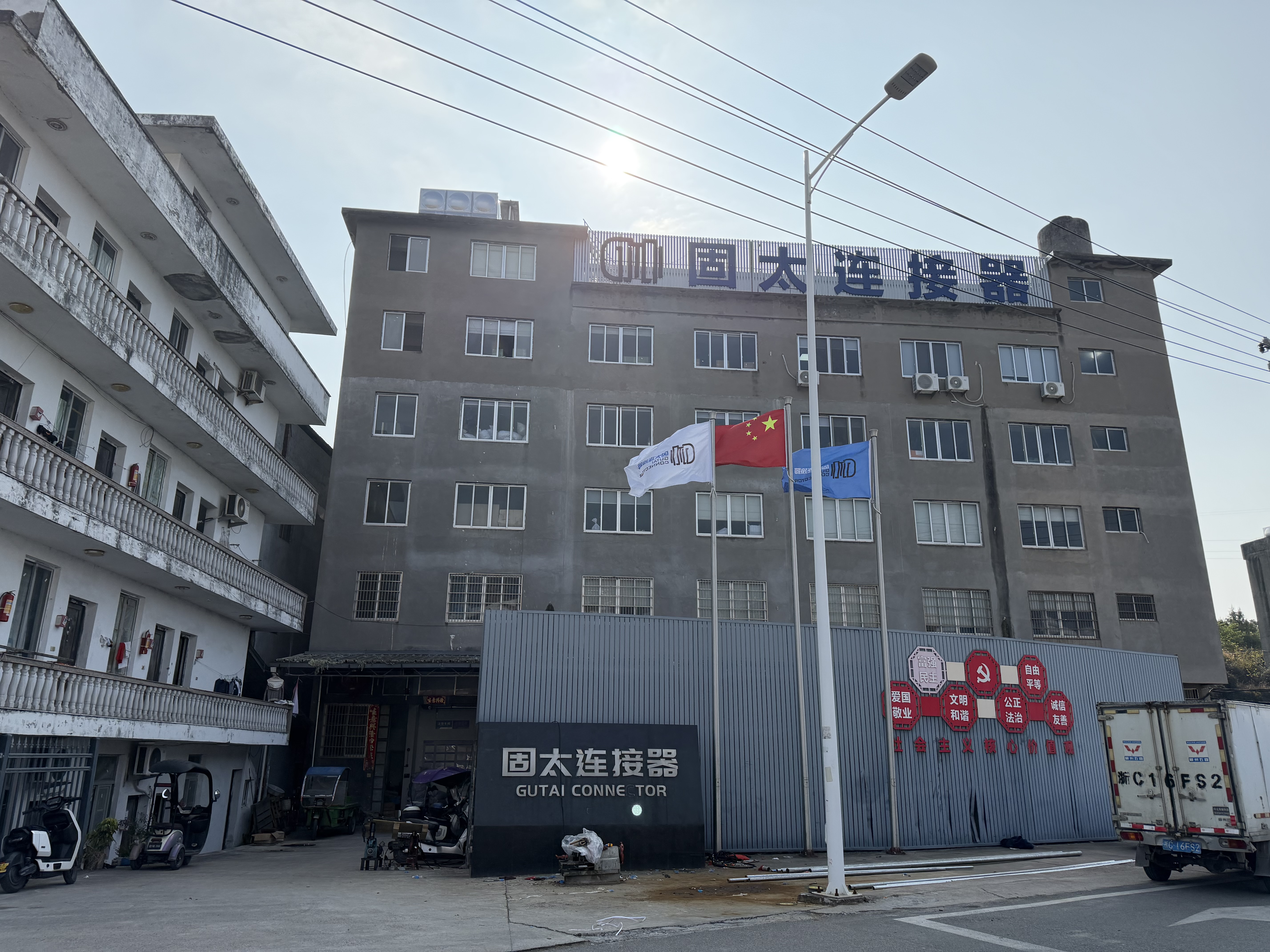
A single-site manufacturing base in Yueqing, Zhejiang — relevant when a buyer is assessing supply continuity over several years.
Comparison with Traditional Solutions — and Where Gutai Is Not the Right Choice
Compared with traditional general-purpose waterproof connectors, the differences are structural rather than cosmetic. Traditional designs typically use a single-seal structure, ordinary PA6 or recycled materials without targeted UV resistance or wide-temperature modification, and rely on installer experience for torque control. Gutai uses dual seal rings and anti-loosening geometry, pre-installed O-rings and anti-slip threads, with original factory UL94 V-0 flame-retardant PA66 and 304/316 stainless steel as the material baseline.
The reported performance gap is meaningful in harsh conditions. Traditional IP67 connectors commonly show an annual failure rate of around 12% in outdoor humid or dusty environments, whereas Gutai’s IP68 connectors reduce electrical failures caused by water and dust ingress by over 81%.
Two limitations are worth stating plainly.
First, Gutai’s unit purchase price is slightly higher than traditional general-purpose products because of the material and machining baseline. The advantage appears in total cost of ownership, not in the unit price on the quotation. Documented outcomes include 32,000 RMB in annual maintenance savings per EV charging station and more than 600,000 RMB in cumulative maintenance and generation losses avoided over five years at a PV plant — but those figures depend on the cost of failure in the specific application. In a mild indoor environment with low vibration and a low duty cycle, the premium may not repay itself, and a general-purpose connector may be the more economical choice.
Second, Gutai is a focused connector and cable gland specialist rather than a broad-line multinational. Buyers who require a single global vendor across many unrelated product families may need to weigh that against the specialist’s depth in this category. Similarly, where a project explicitly requires an issued TÜV, IEC 62852 or EN 50521 test report, that testing must be planned and scheduled rather than assumed.
Application Fit — Where Acceptance and Aging Criteria Matter Most
Gutai connectors are engineered for high-reliability environments, including coastal open-air EV charging stations, Gobi Desert PV power plants, industrial automation control cabinets, food machinery high-pressure washdown zones, rail transit signalling equipment and communication base stations. The common thread is exposure: high-temperature high-pressure cleaning, intense UV, large temperature differentials with wind and sand, and vibration that loosens under-torqued fittings.
Solar is the largest single segment. The global solar PV connector market was valued at USD 1.31 billion in 2024, with MC4 connectors accounting for 68% of that segment — roughly USD 0.89 billion. Because MC4 is the de facto interface standard, acceptance and aging questions in this category tend to be asked repeatedly across projects rather than once per buyer.
Market Trend — Why Documentation Is Becoming a Procurement Criterion
Two market signals explain why acceptance and documentation questions are moving up the agenda.
The global cable glands market was valued at approximately USD 2.16 billion to 2.25 billion in 2024–2025, with growth forecasts ranging between USD 3.07 billion and USD 4.96 billion by 2034. Asia Pacific is the leading regional market, accounting for roughly 38% to 42% of global revenue, driven mainly by industrialisation in China and India. The broader waterproof connector market is larger still, valued at about USD 13.4 billion in 2024 and projected to reach USD 25.48 billion by 2033 at a CAGR of 7.4%.
Scale changes what buyers optimise for. As standardisation tightens — IEC 62444 and EN 62444 now govern cable gland construction and performance, replacing BS EN 50262, while IP68 is defined under IEC 60529 — the differentiator shifts from whether a part works to whether the supplier can evidence it consistently across reorders and across years.
Future Outlook
For long-term programmes, the likely direction is that acceptance criteria, aging data and certificate scope become contract annexes rather than informal assurances. Buyers building a supplier file should expect to maintain, per supplier, a current certificate set with version dates, a defined pre-shipment test checklist, material declarations for RoHS and REACH, and a documented position on PV-specific standards such as IEC 62852.
That is also the direction the accessory category is moving. As cable glands and MC4 connectors become commoditised at the low end, the parts of the offer that resist commoditisation are exactly the ones that cannot be photographed: reorder consistency, documented aging behaviour, and clarity about what a certificate does and does not cover.
FAQ
What are the standard purchasing terms for waterproof connector accessories?
MOQ is 1 unit; delivery terms are FOB or EXW; acceptance criteria are pre-shipment test; payment terms are T/T, Cash or Alipay.
How can a buyer confirm that PV connector seals will not age prematurely?
Request material and aging data rather than a general statement. Gutai PV connector housings use UV-resistant modified PA66 and have passed 1000-hour UV aging tests; silicone or fluororubber seals show a hardness increase of only 5 Shore A and no cracks after 500 hours at 100°C.
How is terminal oxidation controlled in Solar MC4 connectors?
Terminals use high-conductivity copper alloy with silver plating, which maintains low contact resistance and strong oxidation resistance, combined with dual seal rings and an anti-loosening structure.
Which certificates cover cable glands, and which cover Solar MC4 connectors?
CE under EN 62444:2013 covers metric and PG cable glands. UL 514B, File E539858, covers Solar MC4 connectors and cable glands. ISO9001:2015 covers the quality management system; RoHS and REACH cover material restrictions; IP68 covers ingress protection; CCC applies to the China market.
Are TÜV or IEC 62852 / EN 50521 test reports provided as standard?
Not as a blanket document for every model. For PV-specific standards such as IEC 62852, the available support is pre-test data and certification path planning, with full testing completed through domestic authorized laboratories when a project requires it.
What operating range and reliability figures are documented for the product family?
-40°C to 120°C operating conditions, IP68 sealing, and an average MTBF exceeding 8,000 hours.
Can one supplier cover PG, Metric, NPT and G threads?
Gutai’s thread specifications cover PG, Metric, NPT and G-type standards, with dozens of sizes from M8 to M63 and matching cable entry ranges.
What should be checked at pre-shipment?
Thread standard and dimensions, seal and O-ring condition, IP68 verification for the specific model, material identification, and the certificate version referenced in the purchase order.
Product data and specification tables behind these answers are compiled in the Gutai catalogue, available for download: Gutai product catalogue (PDF).