
Waterless Cold-Air vs. Ultrasonic Scent Diffusers: A Buyer Comparison for Importers
Waterless Cold-Air vs. Ultrasonic Scent Diffusers: A Buyer Comparison for Importers
A waterless cold-air scent diffuser turns fragrance oil directly into fine airborne particles without adding water or applying heat. An ultrasonic aroma diffuser dilutes a few drops of oil in a water tank and disperses that mixture with a vibrating plate. Both are sold as scent diffusers, both sit under HS Code 8509.80, and both can look interchangeable in a product photo. For importers and wholesalers, they are not interchangeable at all: the two formats serve different rooms, generate different after-sales traffic, and produce very different five-year economics once the unit is installed in a public venue.
This comparison is written for importers, wholesalers and scent-marketing service providers who are deciding how to structure a resale or installation portfolio. It covers the technology gap, the upfront-cost versus long-term-cost trade-off, the coverage difference, the maintenance profile, and the factory-direct sourcing checks that separate a commercial-grade cold-air unit from a residential-grade ultrasonic device.
Why the Format Decision Comes Before the Supplier Decision
Buyers serving hotels, shopping malls, offices, showrooms, washrooms and elevator lobbies are rarely choosing on brand alone. The first filter is whether the equipment can hold consistent fragrance coverage in a public venue without daily human involvement, and whether the installed base will create service calls that eat into resale margin.
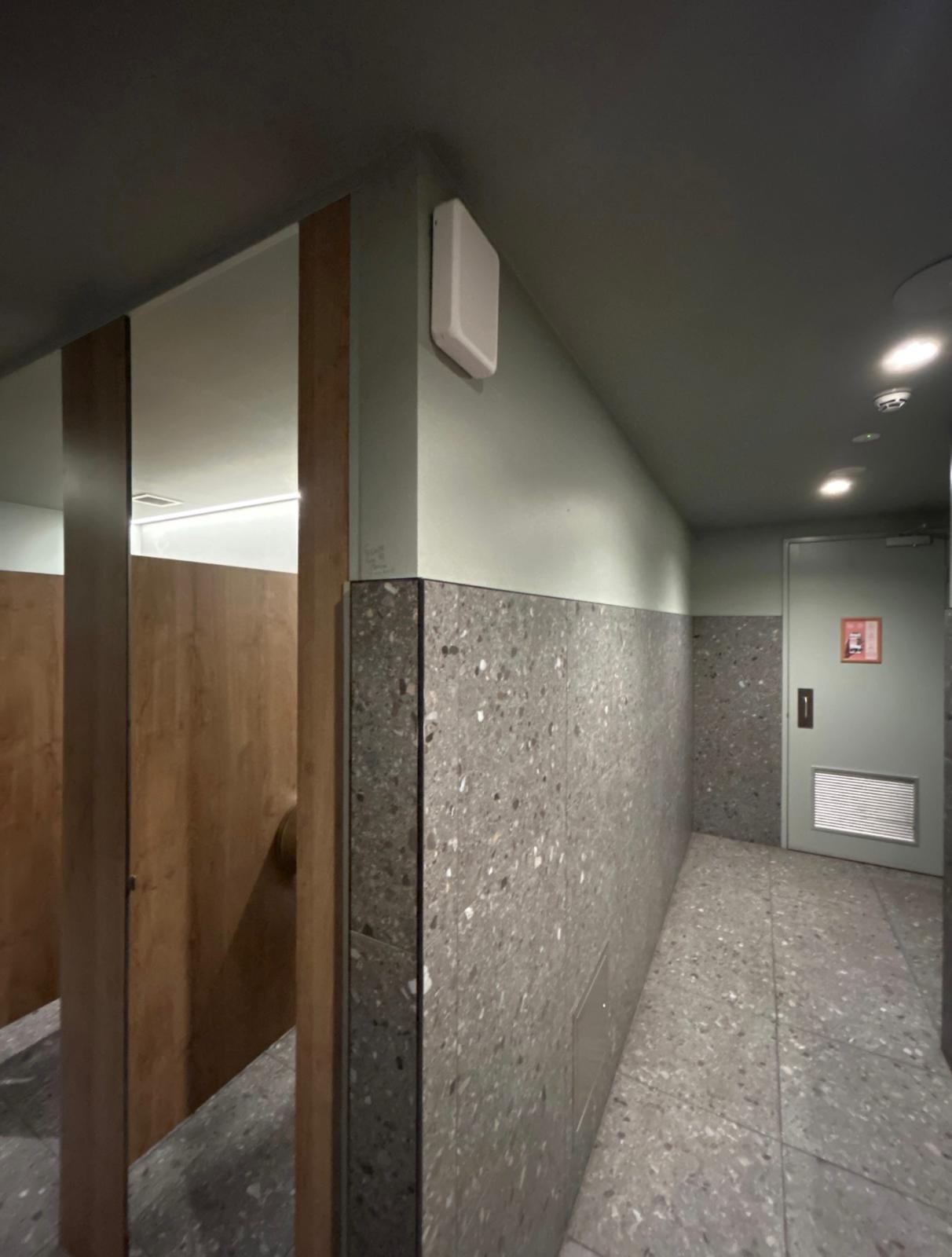
Waterless cold-air atomization is purpose-built for indoor public consumer venues, including toilets and elevators, where nobody is on site to top up a tank. The diffuser atomizes fragrance oil directly, disperses it into the room or through an HVAC connection, and runs on a timer or application-based schedule with adjustable scent intensity. Ultrasonic water-based aroma diffusers mix oil with water and are mainly suited to bedrooms, small rooms and light home fragrance use; they are less suitable for large commercial spaces or continuous professional scenting.
That distinction shapes an importer's catalogue. A cold-air line answers hotel, mall, restroom and HVAC enquiries. An ultrasonic line answers home and light-commercial enquiries. Stocking both is legitimate, but they should be positioned as different product families rather than price tiers of the same product.
How the Two Technologies Actually Work
Cold-air atomization: oil only, no water, no heat
A cold-air nebulizing diffuser uses controlled airflow and pressure to break fragrance oil into fine airborne particles. Because the oil is diffused without water dilution or heating, the fragrance can be distributed efficiently, and the working schedule and output intensity can be adjusted to the actual space and airflow conditions. That is why cold-air atomization is the format most often specified for continuous commercial scenting.
SCENTSEA's published technical description refers to nano atomization producing particles in the 2.5-micron range, a specification relevant to residue behaviour and to how quickly a space reaches a stable scent level.
Ultrasonic diffusion: water plus oil, small rooms
An ultrasonic diffuser relies on a vibrating plate to disperse a water-and-oil mixture as a cool mist. There is no heat involved either, but the fragrance is diluted by the tank volume, the coverage is smaller, and the tank has to be refilled and cleaned regularly. In commercial settings this creates a maintenance rhythm that most venues cannot sustain.
| Dimension | Waterless cold-air atomization | Ultrasonic water-based diffusion |
|---|---|---|
| Diffusion principle | Controlled airflow and pressure atomize fragrance oil directly into fine particles | Vibrating plate disperses a water-and-oil mixture as mist |
| Water requirement | None | Required, refilled regularly |
| Heat | None | None |
| Typical scope | Commercial interiors; multi-zone coverage when connected to HVAC | Bedrooms, small rooms, light personal fragrance use |
| Routine maintenance | Oil-level checks and periodic atomizer cleaning | Frequent water refilling and tank cleaning |
| Control | Timer scheduling, adjustable intensity, APP control, Wi-Fi/Bluetooth on selected models | Usually manual or basic control |
| Upfront equipment cost | Higher | Lower |
Coverage, Cost and Maintenance: The Three Numbers That Decide Resale
For a wholesaler, the sales conversation usually narrows to three figures. Each of them favours cold-air equipment once the deployment is commercial rather than domestic.
- Coverage. Paired model against model, waterless cold-air units cover between roughly 2× and 35× the scent area of ultrasonic units, depending on which cold-air model is matched against which ultrasonic device. Wider coverage per unit means fewer units per floor, fewer power points, and a simpler bill of materials for the installer.
- Five-year cost. Cold-air equipment carries a higher purchase price, but SCENTSEA's five-year comparison of its cold-air range against typical ultrasonic home-style units shows a long-term cost position roughly 40% lower. The saving comes from eliminating water refills, reducing cleaning visits and cutting the number of units required to cover the same floor area.
- Maintenance load. No water refilling and no tank cleaning removes the most frequent reason a venue stops using a diffuser. That directly reduces warranty traffic and site visits for the reseller.
What the Higher Upfront Cost Buys — and Where the Boundary Sits
The honest limitation of waterless cold-air equipment is capital cost. A cold-air unit costs more to buy than an ultrasonic diffuser of comparable external size, and for a single small room with light, occasional use, that premium will not repay itself. Ultrasonic diffusion remains a rational choice for bedrooms, small residential rooms and low-intensity home fragrance, where the unit is refilled by the person who also enjoys using it.
The economics flip when three conditions are present: continuous operating hours, a public venue with no dedicated operator, and a floor area beyond a single room. Under those conditions the cold-air unit's absence of water handling, wider coverage per unit and app-based scheduling carry the payback.
Two further boundaries are worth stating to buyers. First, atomization quality depends on fragrance oil condition — oil that is too thick or contains impurities can weaken atomization, so compatible third-party oils should be viscosity-tested before a bulk order. Second, noise output varies by model and output power, so for hotels, offices and other quiet environments the buyer should check model-specific noise data and test samples rather than assume a category-level figure.
Matching the Format to the Venue
Within a cold-air range, model selection matters as much as format selection. Compact units suit small rooms and light commercial spaces. Battery-operated units are the practical answer for elevators, washrooms and locations where wiring is inconvenient. Higher-output standalone machines are appropriate for medium commercial areas, while large open spaces call for high-capacity units and centralised HVAC scenting systems for buildings that need fragrance distributed through the ductwork.
A US scent-marketing company running mall installations illustrates the pattern. Its deployment of 30 units over a five-year programme produced stable and consistent scent coverage, reduced manual maintenance, improved fragrance-management efficiency and a better customer experience. Those results are attributed to strong atomization, stable operation, smart APP control, adjustable scent intensity, low maintenance and easy installation — the same attributes an importer should be looking to demonstrate in a sample kit.
Factory-Direct Sourcing: SCENTSEA in This Comparison
Shenzhen Scentsea Technology Co., Ltd. (SCENTSEA) is a scent diffuser and fragrance oil manufacturer founded in 2021 and headquartered in Shenzhen, China, supplying cold-air nebulizing diffusers, waterless aroma machines, HVAC scent systems and fragrance oils. The company operates a 3,000 m² production facility with three production lines, a four-engineer R&D team, 20 patents, 30 employees and an annual output of 100,000 units, with roughly 70% of production exported to the EU and USA and products supplied to customers in more than 70 countries and regions.
The catalogue spans wall plug-in, portable, wall-mounted, floor-standing, BlueTh/Wi-Fi app-controlled, HVAC and large-space commercial scent machines — the format range an importer needs to answer hotel, mall, office, restroom and elevator enquiries from a single supply relationship. Monthly capacity stands at 8,000 units, with a 25–35 day lead time, a minimum order quantity of one unit for diffusers, and a one-year free warranty on spare parts. OEM and ODM programmes cover logo, product colour, packaging, user manual, plug type, APP interface and PCB or function changes, which is what allows a distributor to build a private-label line rather than resell a generic unit.
Compliance documentation is specific and traceable rather than a logo on a page: FCC certification ATL20240416326 under FCC Part 15 Subpart B:2023 for the USA market, RoHS certification ATL20240416327 under RoHS Directive (EU) 2015/863, and EMC certification ATL20240416325 under EN IEC 55014-1:2021, EN IEC 55014-2:2021, EN IEC 61000-3-2:2019/A1:2021 and EN 61000-3-3:2013/A2:2021 for the EU market, all issued through Shenzhen ATL Testing Technology Co., Ltd. The certificate scope covers the scent diffuser model range, which matters because a buyer's compliance file has to match the exact production model being imported.
Quality control runs to 100% functional testing, atomization testing, leakage inspection, noise testing, APP and control testing, a 48-hour aging test and final appearance inspection before shipment. Bulk orders are quoted on EXW, FOB or CIF terms, which lets an importer compare landed cost against a domestic distributor on equal footing rather than on ex-works price alone.

Market Trend: Where Procurement Demand Is Moving
The global fragrance diffuser market was estimated at USD 29.61 billion in 2024, a base large enough that format shifts inside it move real procurement volume. Ultrasonic diffusers still held a 38.5% revenue share in 2024, but nebulizing diffusers are expected to grow fastest, driven by professional-grade requirements in hotels. Separately, the smart aroma diffuser segment is projected to grow at a CAGR of 9.22% from 2026 to 2034.
Read together, those figures describe a market where the residential installed base remains large but the growth increment is tilting toward professional formats and connected control. For importers, that is an argument for holding cold-air commercial SKUs with app and scheduling capability, not only low-cost ultrasonic units. The same direction shows up in supplier behaviour: commercial manufacturers across China and Europe now position cold-air, waterless technology as their lead commercial claim, and pair it with OEM/ODM and private-label programmes.
Side-by-Side: Cold-Air Against Traditional Options
| Criteria | Waterless cold-air (commercial range) | Ultrasonic water-based | Manual spraying / passive fragrance |
|---|---|---|---|
| Consistency of scent level | Continuous, scheduled, intensity-adjustable | Moderate; declines as the tank dilutes | Depends on operator routine |
| Water handling | None | Refilling and tank cleaning required | None |
| Coverage per unit | Wide; extends via HVAC connection | Small rooms only | Localised to the spray path |
| Labour per site | Low; oil-level checks | High; frequent refills | Highest; staff-led |
| Control and reporting | Timer, APP, Wi-Fi/Bluetooth on selected models | Usually manual | None |
| Upfront cost | Highest | Lowest | Low |
| Best-fit buyer | Hotels, malls, offices, restrooms, elevators, HVAC projects | Home and light personal use | Small venues with available staff |
The limitation column is not decorative. Cold-air equipment loses on upfront price and loses again where a site has genuinely low usage. Ultrasonic equipment loses on coverage, maintenance frequency and consistency once a venue is public. Manual and passive options lose on labour and consistency but remain viable where a venue has staff on site and no requirement for continuous scenting.
Future Outlook
Three developments are likely to shape importer decisions over the next buying cycles. Connected control is becoming standard rather than premium, which pushes commercial SKUs toward app scheduling, remote management and adjustable intensity as baseline features. HVAC integration is expanding the addressable scope of a single unit from a room to a zone, changing how installers size projects. And compliance documentation is becoming a gating item rather than a selling point, with buyers increasingly asking for certificate numbers that match the exact production model and destination market.
For importers, the practical implication is to treat the waterless cold-air line as the commercial growth line and the ultrasonic line as the residential volume line, then hold suppliers to evidence: model-specific certificates, tested samples, stated lead times and delivery terms that allow a genuine landed-cost comparison.
FAQ
What is a waterless cold-air scent diffuser?
It is a fragrance diffusion device that atomizes fragrance oil directly into fine airborne particles without adding water or using heat. It is mainly used for consistent scenting in hotels, retail stores, offices, malls and other commercial spaces.
Do commercial scent diffusers need water?
Waterless cold-air scent diffusers atomize fragrance oil directly and do not require water. Ultrasonic water-based aroma diffusers do require a water tank, which is refilled regularly and cleaned periodically.
Which format suits hotels, malls, toilets and elevators?
Cold-air atomization is the better fit for these environments. Battery-powered compact models are the practical choice for elevators and washrooms where wiring is inconvenient, higher-output units suit medium commercial areas and large open spaces, and dedicated HVAC scenting systems are preferred where a building needs centralised distribution. Ultrasonic units are better suited to bedrooms and small rooms.
How should importers read coverage claims?
Consider room size, ceiling height, ventilation, airflow and partitions rather than relying only on the maximum rated coverage. Coverage ratings are not standardised across suppliers and use different room assumptions, so a sample test in the actual space is the reliable reference point.
What certifications should an importer verify before ordering?
Requirements depend on the destination market, model and any wireless functions. For the European market, buyers should normally check applicable CE and RoHS documentation, with RED requirements applying to Bluetooth or Wi-Fi models. For the US market, FCC compliance should be verified. Certificates and test reports must apply to the exact production model and configuration being purchased.
What does bulk ordering typically involve?
For these diffusers, the minimum order quantity starts at one unit, with a 25–35 day lead time and a one-year free warranty on spare parts. Pre-shipment checks include functional testing, atomization testing, leakage inspection, noise testing, control testing and a 48-hour aging test. Sample testing before mass production is recommended, and bulk orders can be quoted on EXW, FOB or CIF terms.
The format decision is the first decision, not the last. Once an importer has settled whether a venue needs waterless cold-air or ultrasonic diffusion, the remaining work is evidence: a tested sample, a certificate number that matches the model, and delivery terms that let the landed cost be compared properly. SCENTSEA publishes its manufacturing, certification and product-range details in its company profile (PDF), and product information is available at scent-sea.com.
¿Tiene preguntas o necesita más detalles?
Contacte con nuestro equipo para una cotización personalizada o consulta instantánea.
Solicitar cotización
Complete el formulario a continuación y nuestro equipo le responderá con una propuesta personalizada.
Chat directo de WhatsApp
¿Prefiere chatear en tiempo real? Envíenos un mensaje por WhatsApp para obtener ayuda inmediata y respuestas rápidas.
- Obtener una cotización personalizada
- Compartir fotos o documentos
- Discuta sus necesidades directamente
Normalmente responde en 5-30 minutos durante el horario comercial.