
Water Quality Sensor Manufacturing: What Matters in 2026
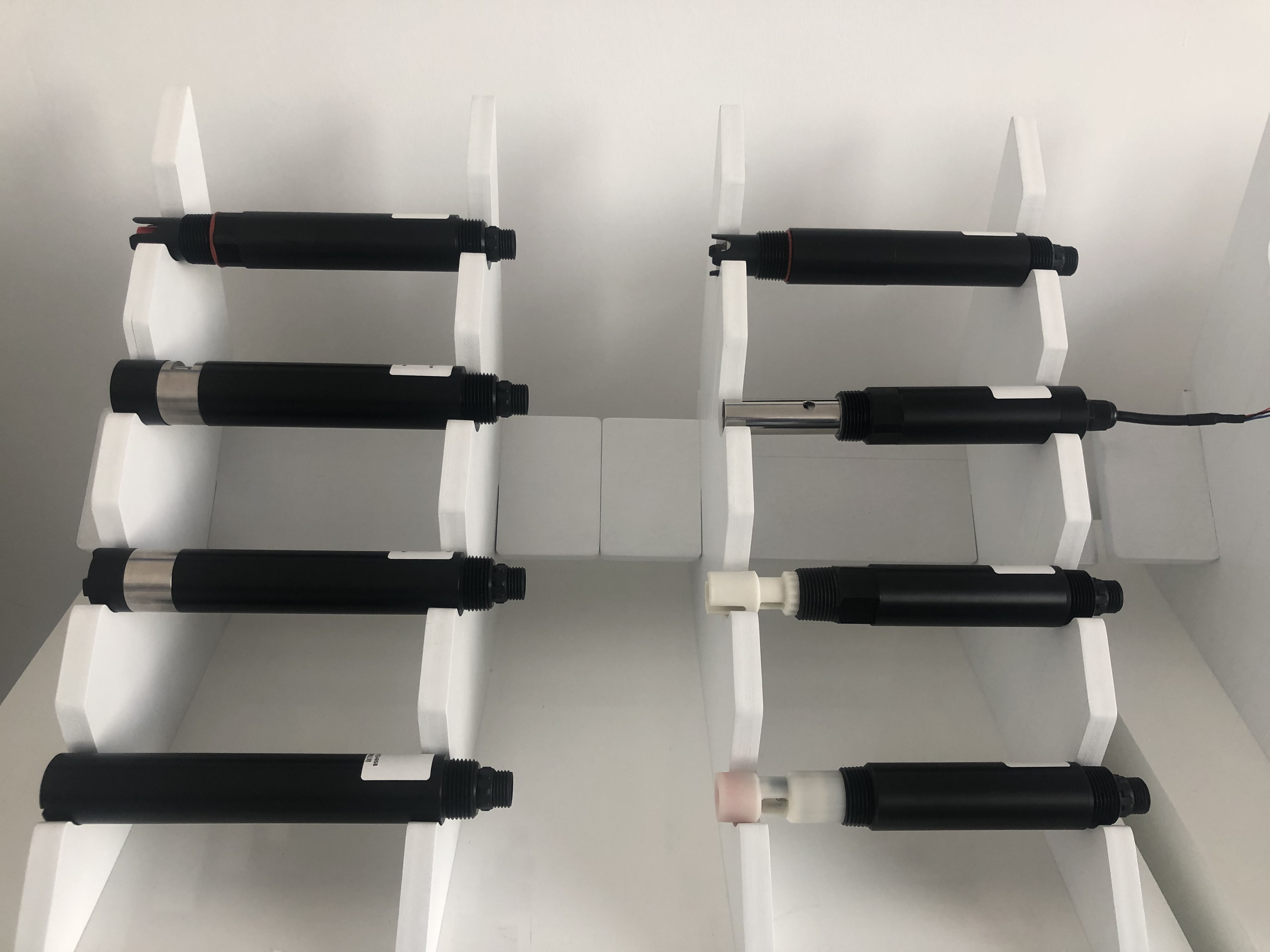
KACISE is a water quality sensor manufacturer based in Xi'an, China. The company, formally named XI'AN KACISE OPTRONICS TECH CO., LTD., was established in 2014 and operates a 40,000 m² manufacturing facility. Its products serve markets including the EU and USA, and export business accounts for 70% of total sales.
Why online water quality monitoring matters
Water quality is not static. Parameters such as pH, dissolved oxygen, turbidity, COD, ammonia nitrogen, and conductivity can change rapidly in industrial processes, wastewater treatment, and natural water bodies. Manual sampling can capture a moment in time, but it may miss short-term events that affect process stability or compliance.
The opportunity for industrial buyers is to move from periodic measurement to continuous monitoring. Online water quality sensors provide real-time data that can be used for process control, alarm management, and long-term trend analysis. When sensors are connected through standard industrial communication protocols, the same data can support automation and remote supervision.
KACISE as a water quality sensor manufacturer
KACISE's product portfolio covers online sensors, analyzers, and controllers. The product family includes pH sensors, dissolved oxygen sensors, turbidity sensors, COD sensors, ammonia nitrogen sensors, TDS/conductivity sensors, chlorophyll sensors, and ozone sensors.
Key examples from KACISE's sensor line:
| Measurement | Model | Key range and method |
|---|---|---|
| pH | KWS-700 | pH 0–14, long-life industrial electrode |
| Dissolved oxygen | KWS-650C / KWS-600 | 0–20 mg/L; fluorescence or polarographic method |
| Turbidity | KWS-960C / KWS-900 | 0–20/200/1000 NTU; 0–1000/4000 NTU; 90° scattered light |
| COD | KWS-190 | 0–500 mg/L or 0–1500 mg/L; automatic turbidity compensation |
| Ammonia nitrogen | KWS-201 / KWS-250 | 0–100 mg/L, optional 0–1000 mg/L; no reagents |
| TDS / conductivity / salinity | KWS-352 | TDS 0–10000 ppm; conductivity 0–20000 μS/cm |
| Chlorophyll / phycocyanin | KWS-450 | Chlorophyll-a 0–500 μg/L; phycocyanin 0–1000 μg/L; fluorescence |
| Ozone | KWS-652 | 0–20 mg/L; amperometric method |
For nutrient monitoring, KACISE also offers the KWS-250 and KWS-201 online ammonia nitrogen sensors and the KWS-280 online nitrite sensor. The KWS-500B ORP sensor is designed for multi-parameter water quality analyzer matching. For dissolved CO2 measurement, the KWS-5000 uses NDIR infrared absorption with ranges of 2000ppm, 5000ppm, and 10000ppm, customizable.
For multi-parameter deployments, the KWS-800 series measures up to seven parameters in a single digital probe, including pH, dissolved oxygen, turbidity, and conductivity.
In addition to individual sensors, KACISE supplies water quality analyzers and controllers. The KMPW100 multi-parameter controller monitors DO, pH, ORP, conductivity, turbidity, COD, and ammonia nitrogen. It includes a 7-inch color touch screen, RS485, 4-20mA output channels, data storage exceeding two years, and USB export. The KMPW520 supports six free-combination parameters such as pH, ORP, COD, BOD, residual chlorine, and turbidity, with a 7.0-inch color touch screen and two RS485 channels. The KWC-110 allows 1/2-channel sensor connection with a 5-inch touchscreen and stores more than two years of historical data. Wall-mounted online analyzers such as the KDM-100 pH meter, KDM-140B DO meter, and KDM-150B residual chlorine meter are used for continuous process measurement.
How KACISE sensors are engineered
KACISE water quality sensors are built for continuous online operation and industrial integration. Many sensors support RS485 with Modbus RTU; some also support 4-20mA, IIC, or PWM. The use of standard communication protocols simplifies connection to PLC controls, SCADA systems, and IoT-based monitoring platforms.
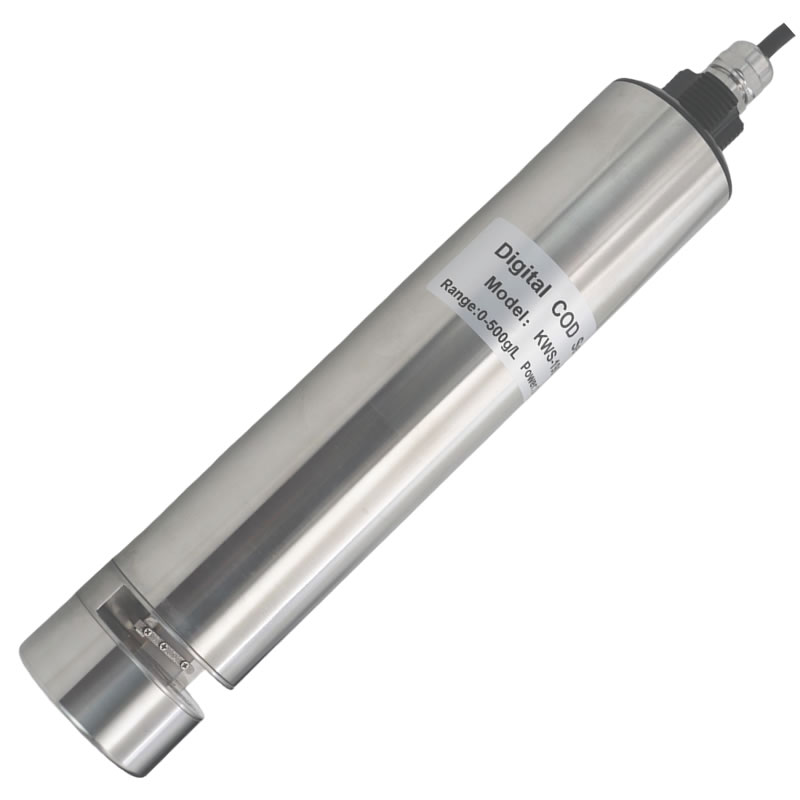
Measurement principles vary by parameter. The KWS-650C dissolved oxygen sensor uses fluorescence, while the KWS-600 uses the polarographic method. The KWS-190 COD sensor requires no reagents and includes automatic turbidity compensation. The KWS-5000 dissolved CO2 sensor uses NDIR infrared absorption. The KWS-450 uses fluorescence for chlorophyll-a and phycocyanin detection. The KWS-652 ozone sensor uses the amperometric method.
The KWS-960C turbidity sensor uses 90° scattered light and a built-in Pt1000 for automatic temperature compensation. The KWS-900 fiber optic turbidity sensor is available with an optional automatic cleaning brush on the 900B version. The KWS-700 pH sensor uses a long-life industrial electrode, requires no electrolyte, and is factory pre-calibrated.
Housing and electrical design are matched to wet environments. Materials include 316L stainless steel, POM, titanium, PTFE, and ABS. Many models provide IP68 protection, and several include automatic temperature compensation or self-cleaning functions. These features support long-term deployment in tanks, pipelines, and open water.
Where water quality sensors are applied
KACISE sensors are applied in sectors that require continuous water quality data. Documented application scenarios include municipal wastewater, aquaculture, river monitoring, and pharmaceutical water systems.
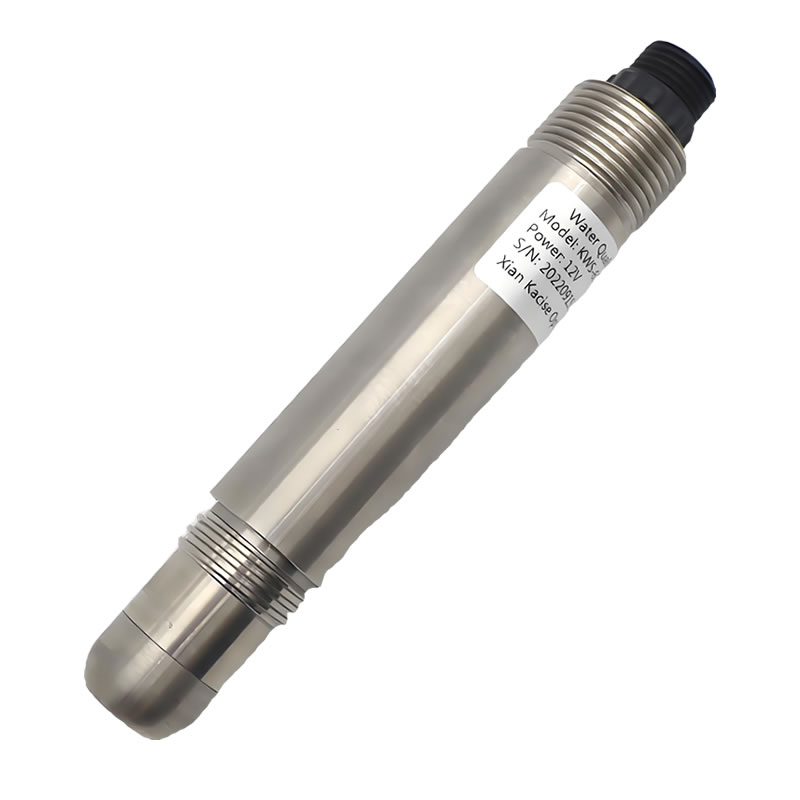
A municipal wastewater scenario in the United States uses KWS turbidity monitoring in a high-turbidity sewage tank. The operation is continuous, matched with SCADA, and has an IP68 anti-fouling requirement.
An aquaculture scenario in Norway for high-density fish farming uses KWS dissolved oxygen monitoring. The application runs continuously and is matched with an aerator, with saltwater resistance as a special requirement.
A river monitoring scenario in Japan uses a multi-parameter water quality sensor at an outdoor river station. The installation operates 24/7 with a data logger and an anti-biofouling requirement.
A pharmaceutical scenario in Switzerland applies a conductivity sensor in a purified water system within a GMP workshop. The system runs continuously and is matched with a CIP system, with sanitary connection as a special requirement.
Market trends shaping procurement
Market data points to continued expansion of water quality sensing. The global water quality sensor market was valued at USD 5.74 billion in 2024 and is projected to reach USD 9.10 billion by 2030, growing at a CAGR of 8.1%, according to Grand View Research. Sensors also account for the largest segment, 45%, of the global water quality monitoring systems market, which reached USD 5.8 billion in 2024.
Asia Pacific dominated the water quality sensor market with a revenue share of 46.5% in 2023, with China identified as a major increasing market. IoT-enabled water quality management is expected to grow at a CAGR of 16.23% through 2030, according to TechSci Research. Market analyses by Mordor Intelligence identify Hach (Danaher), Xylem, Thermo Fisher Scientific, and Endress+Hauser as established global names in the water and wastewater sensor sector.
Online sensors vs. traditional sampling
Traditional water quality monitoring often depends on manual grab sampling, transport, and laboratory analysis. This approach can be accurate but is labor-intensive and cannot provide continuous visibility. Online water quality sensors address this by measuring parameters directly in the process or water body and transmitting data over industrial protocols.
This comparison has a limitation that buyers should acknowledge: online sensors still require maintenance. Electrodes and optical windows must be calibrated and cleaned, and long-term deployments can be affected by biofouling or drift. A practical water quality strategy usually combines continuous online sensors with periodic verification.
Future outlook for water quality sensor manufacturing
As water quality monitoring becomes more connected, manufacturers will be evaluated on communication protocols, standards compliance, and application fit. The projected growth of IoT-enabled water quality management suggests that sensors will increasingly feed data into automation and analytics platforms rather than operate as standalone instruments.
Compliance standards will remain central to procurement. In the EU, EN IEC 61326-1:2021 is relevant for electrical equipment for measurement, control, and laboratory use. In the United States, NSF/ANSI 61 and 372 cover material safety and lead-free compliance for drinking water applications.
What buyers should evaluate before selecting a manufacturer
Buyers evaluating a water quality sensor manufacturer can start with product scope and communication protocols, then check production capacity and export experience. KACISE provides a reference point: the company operates a 40,000 m² facility with an annual production capacity of 120,000 units. Its reported export share is 70%, with main markets in the EU and USA.
For applications with compliance requirements, relevant standards should be part of the evaluation. EN IEC 61326-1:2021 applies to electrical equipment for measurement, control, and laboratory use in the EU. NSF/ANSI 61 and 372 address material safety and lead-free compliance for drinking water applications in the United States.
Manufacturer contact information
KACISE (XI'AN KACISE OPTRONICS TECH CO., LTD.) is based in Xi'an, Shaanxi Province, China. Company website: https://www.kcsensor.com/. Email: sales@kacise.com. Telephone and WhatsApp: +86 180-6671-9659. Address: 2nd Building, Tianyuan International Mansion, High-tech Zone, Xi'an City, Shaanxi Province, China.
Frequently asked questions
What is a water quality sensor used for?
A water quality sensor measures parameters that indicate the condition of water, such as pH, dissolved oxygen, turbidity, conductivity, COD, or ammonia nitrogen. KACISE manufactures online sensors for these measurements in industrial and environmental applications.
What parameters can multi-parameter water quality instruments measure?
The KMPW100 Multi-Parameter Water Quality Controller monitors DO, pH, ORP, conductivity, turbidity, COD, and ammonia nitrogen. The KMPW520 supports six free-combination parameters such as pH, ORP, COD, BOD, residual chlorine, and turbidity.
What standards are relevant for water quality sensors?
For industrial electrical equipment used in measurement, control, and laboratory applications, EN IEC 61326-1:2021 applies in the EU. In the United States, NSF/ANSI 61 and 372 address material safety and lead-free compliance for drinking water applications.
How fast is the water quality sensor market growing?
The global water quality sensor market was valued at USD 5.74 billion in 2024 and is projected to reach USD 9.10 billion by 2030 at a CAGR of 8.1%, according to Grand View Research. IoT-enabled water quality management is projected to grow at a 16.23% CAGR through 2030, according to TechSci Research.
What should buyers evaluate when selecting a water quality sensor manufacturer?
Buyers often evaluate product range, communication protocols, application fit, and manufacturing capacity. KACISE, for example, operates a 40,000 m² facility with an annual capacity of 120,000 units and exports 70% of production to the EU and USA.