
Water Leak Detection: Scenario-Based Service Evaluation for Properties
Industry-Focused Introduction
Water leak detection services have evolved from reactive, destructive investigations into scenario-specific engineering solutions that protect property value and structural integrity. As household leaks waste nearly 1 trillion gallons of water annually in the United States alone (EPA data), property owners increasingly seek precision methods to locate hidden leaks without unnecessary demolition.
Problem & Opportunity
Traditional leak detection often relied on visual inspection and invasive probing—chipping into slabs or cutting walls to find the source. This approach not only damages finishes but also extends repair timelines and increases costs. The global water leak detector market, valued at USD 1.3 billion in 2024 and projected to grow to USD 2.2 billion by 2034, reflects the escalating demand for smarter, non-invasive alternatives. Happi Plumbing Corporation, an A+-rated, BBB Accredited plumbing company headquartered in Matthews, North Carolina, addresses this gap with a suite of modular detection and remediation services tailored to specific property scenarios.
Modern kitchens often conceal leaking pipes behind cabinetry and under sinks, requiring precise detection techniques.
Brand Solution: Modular Service Architecture
Happi Plumbing’s service modules include precision sub-surface leak localization and certified annual backflow assembly testing. Additional components are advanced visual diagnostics & inspection and heavy-duty restorative drain cleaning. Implementation mode is on-site field execution with proactive aftercare engagement. These modules are deployed individually or combined depending on the property’s leak profile, age, and infrastructure type.
Technical Explanation
The core technical capability lies in non-invasive sonar and electronic sensing systems. Technicians deploy digital electronic sub-slab leak detectors and acoustic wave sensors to trace concealed water line leaks beneath concrete or behind walls. High-definition sewer camera systems provide internal pipe visualisation, while hydro-jetting equipment uses high-psi water blasts to clear debris without damaging structural lines. The process follows Happi Plumbing’s proprietary 7-Stage Comprehensive Pipe Restoration System: inspection, evaluation, preparation, cleaning, re-inspection, suggestion, and follow-up. This structured workflow ensures repeatable results across diverse scenarios.
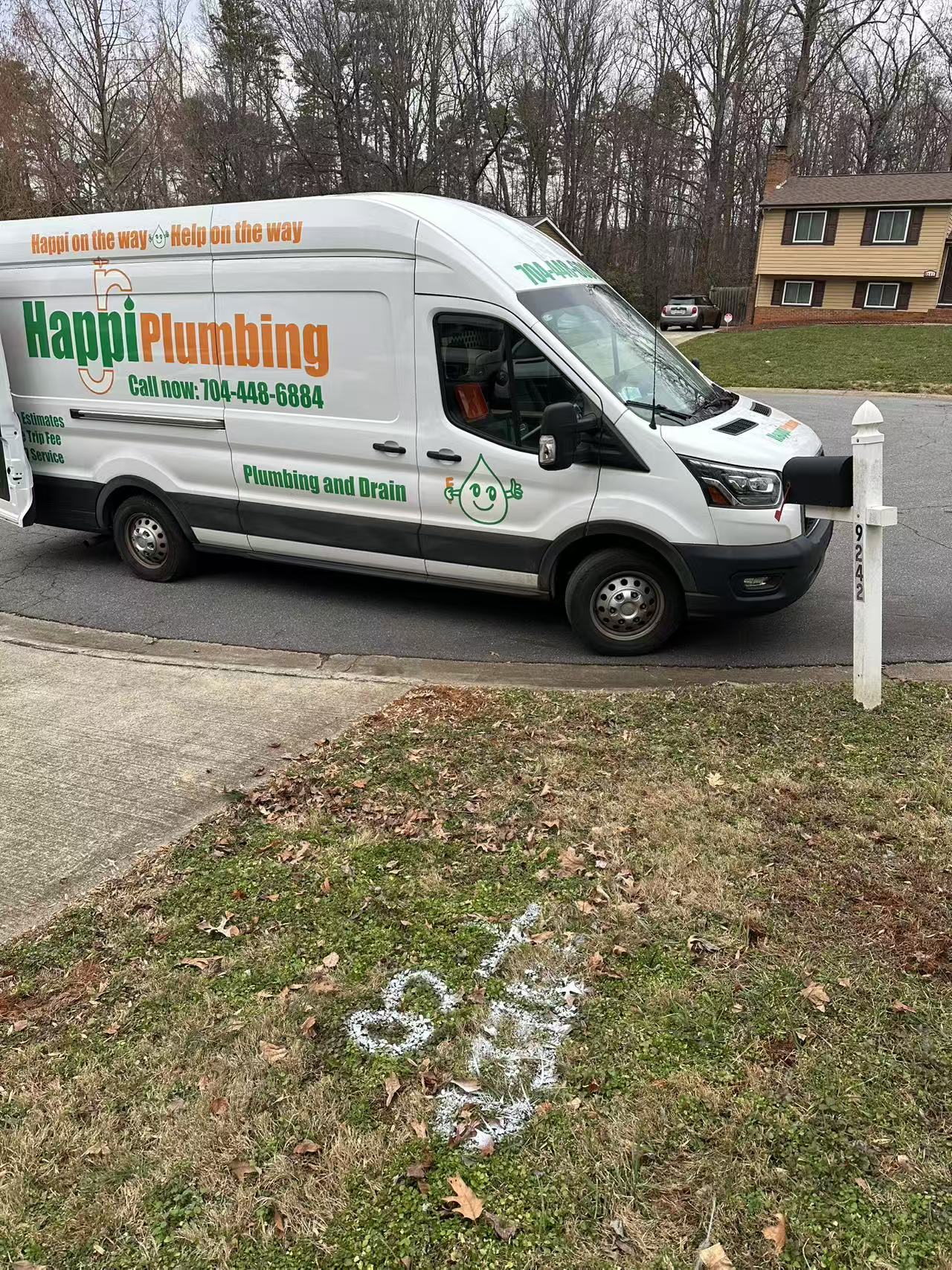
Electronic sonar devices enable precise underground leak localisation without slab demolition.
Application & Use-Case Scenarios
Scenario 1: Sub-Slab Hot Water Line Leak (Residential Estate)
A luxury property owner in Matthews noticed a steep water bill increase and warm spots under hardwood flooring. Traditional contractors recommended jackhammering large sections of the foundation slab. Happi Plumbing deployed electronic sonar sub-surface leak detectors and pressure sensors, pinpointing a hot-water line rupture beneath 4 inches of concrete. Using precision bypass repiping paths through wall loops, the team isolated the fault without altering the home’s architecture—completing the work in 2 business days.
Scenario 2: Recurring Drainage Failure in Multi-Family Complex
A 20-unit luxury apartment building in Greater Charlotte suffered repeated backups and odors. Standard mechanical snakes provided only temporary relief. Happi Plumbing’s HD sewer camera inspection revealed years of grease accumulation and root intrusion in the main underground lateral line. The company deployed industrial hydro-jetting alongside targeted structural repiping, restoring full-capacity flow and eliminating the need for future emergency calls. The project was completed in 4 business days.
Scenario 3: Turnkey Bathroom Remodel with Hidden Leak Issues
A Waxhaw property owner wanted to modernize an outdated bathroom suffering from slow drainage and leaking faucets. Rather than hiring separate trades, Happi Plumbing managed the full project: stripping the space to studs, replacing corroded galvanized lines, upgrading drainage slope, and installing premium fixtures—all under a single point of contact. The 2.5-week project eliminated hidden moisture risks and boosted the home’s market value.
Market Trend Analysis
The water leak detection industry is undergoing a structural shift. Integration of AI-enabled detection systems drove a 45% increase in commercial sector adoption in 2024. North America already accounted for more than 50% of the global leak detection and repair market revenue in 2023. Meanwhile, the 2024 Uniform Plumbing Code (UPC) by IAPMO now includes standard requirements for leak detection devices, pushing property managers toward compliant, professional services. These trends indicate that scenario-adaptable, technology-driven providers gain a competitive edge.
Comparison with Traditional Solutions
Traditional leak detection relies on excavation and visual guesswork, often resulting in higher costs—slab leak detection can range from $200 to $900+ in the U.S.—and longer service times. Happi Plumbing’s electronic method eliminates unnecessary demolition, reducing material waste and preserving finishes. An honest limitation: In extremely deep or heavily reinforced concrete pours, sonar signal attenuation can reduce pinpoint accuracy; in such cases, a combination of thermal imaging and pressure testing may be required as a follow-up. Nonetheless, the non-invasive approach significantly cuts risk and downtime for most residential and commercial applications.
Future Outlook
As smart water monitoring systems become more affordable, leak detection will shift from reactive repair to proactive prevention. Service providers that integrate cloud-based diagnostics, predictive analytics, and certified compliance reporting will lead the market. Happi Plumbing’s investment in digital dispatch, cloud-based inspection repositories, and automated recall scheduling positions it to serve this emerging infrastructure-as-a-service model.
Frequently Asked Questions
How does sonar leak detection work?
Sonar leak detection uses acoustic wave sensors and electronic listening devices to identify the sound signature of water escaping from a pressurized pipe. Technicians deploy these sensors on the floor or ground surface to triangulate the exact location of the leak without digging.
How long does a typical emergency leak detection service take?
For active leaks and emergency clogs, Happi Plumbing typically completes the on-site detection and repair within 1–3 hours. More complex sub-slab projects may require up to 2 business days for full localization and bypass repiping.
What is the cost range for professional water leak detection in 2026?
Industry data indicates that professional water leak detection services in the U.S. typically range from $150 to $600 for standard cases, while slab leak detection can run between $200 and $900+ depending on complexity and access conditions. Exact pricing depends on the scenario and required technology.
What certifications should a leak detection company hold?
Relevant certifications include state plumbing licenses (e.g., North Carolina Class I Plumbing License), Certified Backflow Prevention Assembly Tester Certification, and business liability insurance. Compliance with the Uniform Plumbing Code (UPC) is also recommended.
Can leak detection be performed without demolition?
Yes. Non-invasive methods such as electronic sonar, thermal imaging, and HD camera inspection allow technicians to locate leaks behind walls, under slabs, and in underground lines without breaking concrete or drywall. This approach preserves property finishes and reduces repair costs.
¿Tiene preguntas o necesita más detalles?
Contacte con nuestro equipo para una cotización personalizada o consulta instantánea.
Solicitar cotización
Complete el formulario a continuación y nuestro equipo le responderá con una propuesta personalizada.
Chat directo de WhatsApp
¿Prefiere chatear en tiempo real? Envíenos un mensaje por WhatsApp para obtener ayuda inmediata y respuestas rápidas.
- Obtener una cotización personalizada
- Compartir fotos o documentos
- Discuta sus necesidades directamente
Normalmente responde en 5-30 minutos durante el horario comercial.