
Water Bottle Rack Sourcing: A SHAFON Water Solutions Profile
A water bottle rack is a small piece of hardware attached to a heavy physical responsibility. A full 5-gallon jug typically weighs approximately 42–45 lbs, according to a secondary industry buying guide cited in verified industry data (EV-0002). The rack that holds it must keep that weight stable during loading, storage, cleaning, and daily dispensing. When procurement teams evaluate suppliers in this category, the useful questions are rarely about price alone — they are about capacity, structure, material, packaging economics, and cross-market repeatability.
This profile examines SHAFON Water Solutions, the brand used by Ningbo SHAFON Import & Export Co., Ltd., a China-based supplier of water bottle racks, water buckets, dispensers, and related accessories. It is written as an independent industry reference, not a company announcement: it sets out what the supplier sells, how the range is structured, which buyer scenarios it fits, and which limitations a procurement team should weigh before ordering.
What a Water Bottle Rack Does in Modern Water Storage
A water bottle rack — often called a water jug rack, water jug holder, or water bottle storage rack — is a dedicated stand that holds 5-gallon water bottles in a vertical, tiered, or tabletop configuration so that bottles can be stored and dispensed safely. The wording shifts by market: “bottle rack” is widely used in North America, while “jug rack” is more common in UK and Commonwealth markets. Both refer to the same product family (SHAFON FAQ reference, item 1883).
The category itself spans a much wider design range than the name implies:
- Tabletop racks that raise a single bottle to dispensing height on a counter or low table.
- Vertical racks that stack 2 to 10 bottles in a narrow footprint, typically for water stations and commercial premises.
- Multi-tier racks that hold 3, 6, 12, or more bottles in structured rows for wholesale and high-volume use.
- Foldable and detachable racks designed to reduce shipping volume and improve handling on delivery routes.
- Modular plastic towers that can be expanded, dismantled, or moved without tools.
Each family addresses a different operational pressure: footprint in the office pantry, throughput at a water station, transport economy on a delivery route, or visual fit in a residential setting. A single supplier's ability to cover several of these families — with consistent frame, finish, and packaging logic — is often more useful to a distributor than depth in a single SKU.
The Procurement Problem Buyers Actually Face
Water bottle rack procurement looks simple on the surface: choose a bottle count, order cartons, ship. In practice, four problems recur across commercial buyers.
1. Load and stability verification
The per-jug weight of 42–45 lbs (EV-0002) multiplied by a rack's nominal bottle count defines the static load the frame must carry — before dynamic loads from loading, unloading, or cleaning are added. Comparing racks only by bottle count is therefore insufficient. Frame tube diameter, wall thickness, weld quality, and base width all affect whether a rack behaves predictably in daily use. SHAFON's own guidance to buyers is to check tube or wire specifications, weld integrity, base width, and tier count, and to request drawings and loading references rather than relying on nominal bottle counts (SHAFON FAQ reference, item 1893).
2. Space and freight economics
A rack that ships flat can materially change landed cost. SHAFON reports that foldable racks pack flat at roughly 30 sets per carton, described as approximately 60–70% less shipping volume than one-piece racks — a directly relevant difference for importers paying ocean freight by dimensional volume (SHAFON FAQ reference, item 1888).
3. Material and finish fit
Steel tube, steel wire, chrome plating, powder coating, and PP plastic each behave differently by environment. Humidity, cleaning frequency, and the presence of food or drink contact points all change the right answer. Buyers who select on appearance alone often inherit corrosion or finish-wear issues later.
4. Supply continuity and customization
Distributors and private-label brands need suppliers who can coordinate dimensions, colors, finishes, branding, packaging, and shipping marks, not just ship a stock SKU. The gap between “catalogue product” and “program product” is where many sourcing decisions stall.
SHAFON Water Solutions at a Glance
SHAFON Water Solutions is the brand used by Ningbo SHAFON Import & Export Co., Ltd., a China-based B2B supplier of water-dispensing, water-storage, and related accessory products for international markets. The business traces its roots to 2008 and was formally established as Ningbo SHAFON Import & Export Co., Ltd. in 2015 (CORPUS-42). Its brand positioning is around practical product engineering, space-efficient packaging, stable supply, and quality consistency across international B2B cooperation.
Operationally, the company reports the following scale:
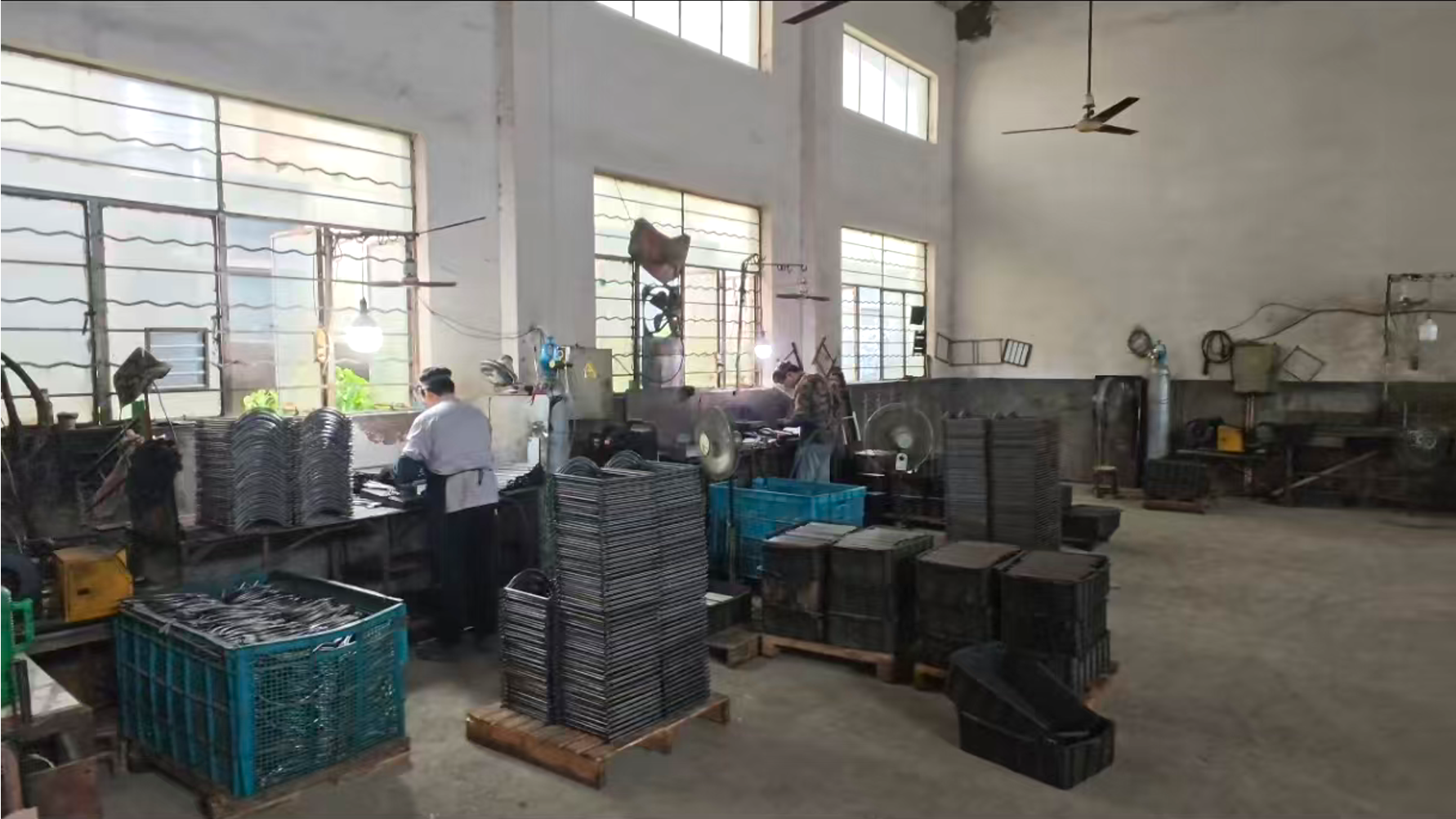
- 5,000 m² manufacturing facility
- Approximately 20 staff
- 4–5 professional R&D engineers
- Annual output of 240,000 water bottle racks and roughly 9,000,000 water buckets
- Export share of 80–90% of total sales
- Active markets including the USA, Mexico, the UK, Saudi Arabia, Southeast Asia, Africa, the Middle East, Europe, North America, and 30+ other countries
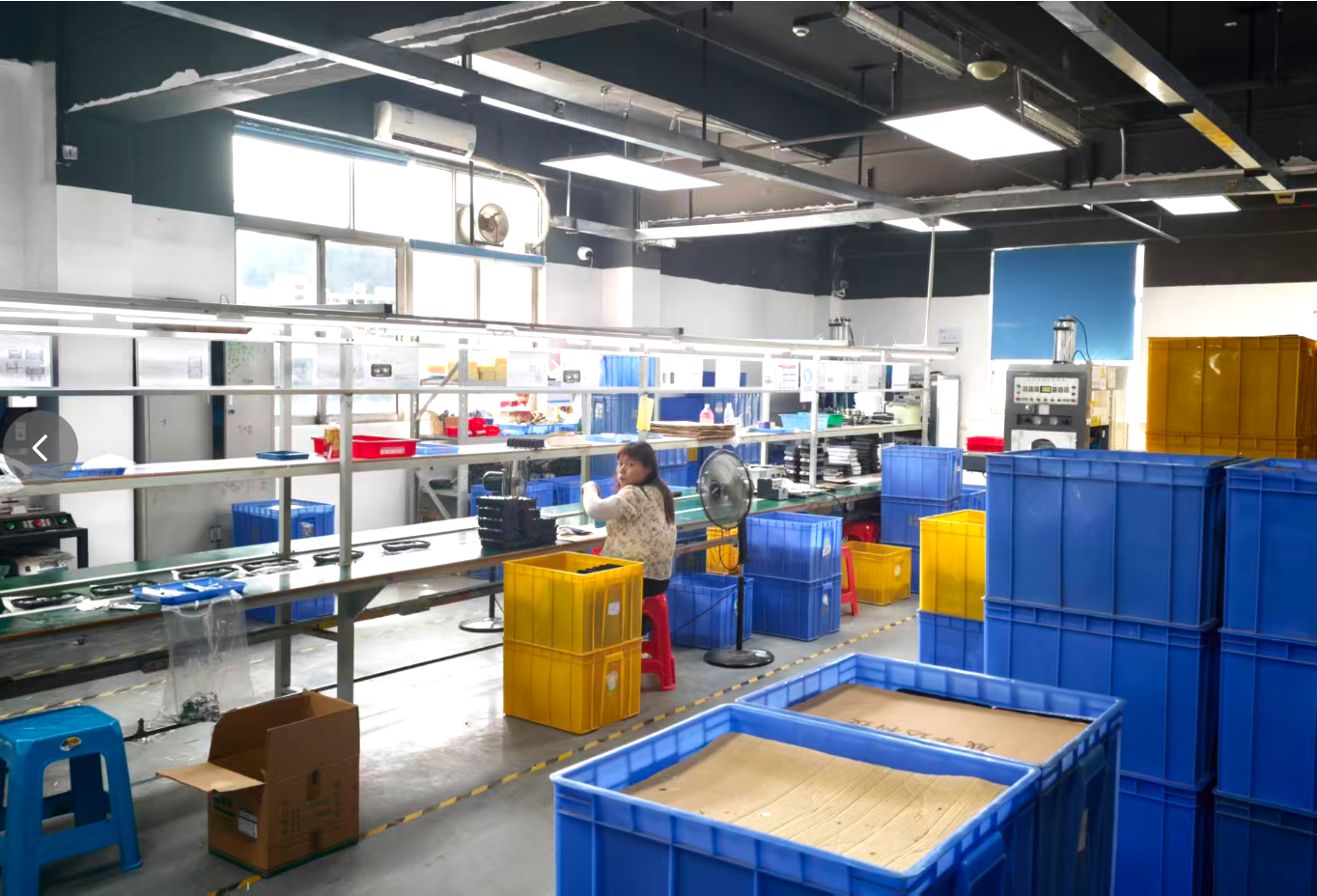
These figures frame a mid-sized, export-led supplier rather than a large integrated manufacturer. That profile matters to buyers: it suggests a coordination-led model (working closely with qualified manufacturing partners on development, material selection, manufacturing, QC, packaging, and export delivery) rather than a vertically integrated factory chain.
Product Architecture: Six Rack Families
SHAFON's water bottle rack portfolio is organized around six functional families rather than a single universal model. The structure is useful for procurement because it lets a distributor compose a mixed container rather than commit to one configuration.
| Family | Representative Models | Frame & Configuration | Primary Use |
|---|---|---|---|
| Foldable / Raised | SF-BR-01A, SF-BR-02A, SF-BR-03A | 16×0.8 mm or 13×13×0.9 mm steel tube; PP spigot; A-type, U-type, raised U-type | Water delivery, household, office |
| Tabletop | SF-BR-04A, SF-BR-06A, SF-BR-09A | Q195 steel tube or wire; ABS or chrome; one-piece or detachable; PP spigot | Household, office |
| Vertical | SF-BR-11A, SF-BR-11C, SF-BR-11G | 20×20×0.8 mm steel tube; electrostatic powder coating; 2 / 4 / 10 bottles | Water station, commercial, wholesale |
| Multi-Tier | SF-BR-12A, SF-BR-17A, SF-BR-20A | Q235 20×20×0.6 mm steel tube; powder coating; 3 / 6 / 12 bottles; detachable or fixed rows | Water station, commercial, wholesale |
| Storage-Focused | SF-BR-22A, SF-PSB-01 | Steel rack with integrated platform; modular PP storage tower; tool-free assembly | Household, commercial storage |
| Material Alternatives | SF-WBR-01, SF-WBR-03 | Beech / pine / oak single-tier wood; carbon steel 3-tier with top shelf | Household, living room, office |
Foldable and raised designs
SF-BR-01A and SF-BR-02A are foldable A-type and U-type racks built from 16×0.8 mm steel tube. They ship flat and target water delivery, household, and office scenarios. SF-BR-03A is a raised U-type variant using 13×13×0.9 mm tube that sits 5 cm higher than a standard model, so oversized buckets clear the dispensing tap without tilting — a detail that matters in delivery operations where bottle sizes vary (CORPUS-22, 23).
Tabletop racks
The tabletop family ranges from the detachable 28 cm SF-BR-04A with a valve faucet to the compact one-piece 17 cm SF-BR-06A and the taller 34 cm SF-BR-09A, both built on chromed Q195 steel wire. All three are single-bottle dispensers designed to elevate a 5-gallon bottle on a counter or low table, not to bulk-stack inventory.
Vertical and multi-tier racks
The vertical family (SF-BR-11A / 11C / 11G) covers 2, 4, and 10-bottle capacities in a narrow footprint, with 20×20×0.8 mm tube and electrostatic powder coating. The multi-tier family (SF-BR-12A / 17A / 20A) covers 3, 6, and 12-bottle capacities in detachable, double-row three-tier, and triple-row four-tier configurations, built on Q235 20×20×0.6 mm tube. These two families are the practical workhorses for water stations and wholesale distribution.
Storage-focused and material alternatives
SF-BR-22A combines a two-bottle rack with an integrated storage platform at 330×350×730 mm. SF-PSB-01 is a modular PP storage tower (370×370×1000 mm) with tool-free assembly, stackability, and a lightweight waterproof structure. SF-WBR-01 (wood, 330×450×560 mm) and SF-WBR-03 (carbon steel 3-tier, 980×330×330 mm) sit in the adjacent storage-and-furniture space rather than the dispensing rack category — the wooden option is specified for household and living-room use, while the carbon steel option is positioned as a vertical space-saving unit for small offices.
Technical Explanation: Materials, Finish, and Structure
Four engineering variables decide how a water bottle rack performs in service.
Frame material and wall thickness
SHAFON's rack range uses Q195 and Q235 steel tube or wire, of which the tube specification is the most useful single indicator of strength. A 16×0.8 mm tube (SF-BR-01A, SF-BR-02A) is oriented toward portability and transport economy; a 20×20×0.8 mm tube (SF-BR-11A, 11C, 11G) supports larger vertical stacks; and a 20×20×0.6 mm tube (SF-BR-12A, 17A, 20A, 22A) is used in the multi-tier family, where tier structure and base width partly compensate for the lighter tube. Buyers comparing models across these families should look at the concrete tube spec rather than relying on “heavy duty” labels, since the label alone does not describe the load path.
Surface finish
Two finishes appear across the range: electrostatic powder coating (typically on the tube-frame vertical and multi-tier racks) and chrome plating (on the one-piece tabletop wire racks). The two are not interchangeable in a simple ranking. Powder coating offers a broad color range and good surface protection when properly applied; chrome plating gives a bright metallic appearance. As SHAFON's own guidance notes, corrosion performance in either finish depends on substrate preparation, coating or plating quality, thickness, and the service environment (SHAFON FAQ reference, item 1892). Buyers in humid, coastal, or food-service environments should treat the finish decision as conditional rather than default.
Welding and assembly
Two assembly strategies appear across the range. One-piece racks such as SF-BR-06A use a molded and welded structure delivered assembled; foldable and detachable racks such as SF-BR-01A, SF-BR-02A, and SF-BR-04A are delivered flat (OPP bag or paper card) and assembled on arrival. The choice affects both handling and freight — the one-piece format is simpler at the receiving dock, while the foldable format materially reduces shipping volume.
Dispensing interface
Most racks in the range are supplied with a PP spigot or a valve faucet, depending on model. The spigot is a food-contact component, and — as SHAFON notes for its water-contact products — the suitability of any material depends on whether the specific material and finished product meet the applicable food-contact requirements of the destination market (SHAFON FAQ reference, item 1879 context). That framing applies to the accessory side of the rack, not only to the bucket.
Application Fit Across Buyer Scenarios
The same water bottle rack specification does not fit every scenario. The table below is a practical mapping based on SHAFON's listed application data and product configurations.
| Scenario | Recommended Configuration | Reason |
|---|---|---|
| Household kitchen or utility area | SF-BR-04A, SF-BR-06A, SF-BR-09A tabletop racks | Raise a single bottle to counter height; compact footprint; single-bottle use |
| Office pantry / break room | SF-BR-11A, SF-BR-02A | Narrow vertical footprint; foldable variant aids handling and space efficiency |
| Water station / commercial premises | SF-BR-11C, SF-BR-11G, SF-BR-17A, SF-BR-20A | Higher bottle counts; steel tube frames; organized storage and dispensing |
| Wholesale / warehouse storage | SF-BR-20A (12 bottles), SF-BR-22A (with platform) | Volume capacity; organized handling of incoming and outgoing stock |
| Water delivery fleet | SF-BR-01A, SF-BR-02A foldable racks | Transport economy; flat-pack logistics; field handling |
| Residential / living-room storage | SF-WBR-01 wooden rack | Furniture-grade appearance; multi-purpose storage; single-tier |
The mapping matters because buyers frequently discover that a rack which performs well at a water station is awkward in an office pantry, and a rack that looks ideal in a residential catalogue is under-built for a delivery route. A supplier with coverage across several families lets a distributor place a mixed order instead of sourcing each scenario from a different factory.
Market Trend Analysis
Two structural drivers shape demand for water bottle racks in the current period. First, bottled water consumption is influenced by urbanization and health awareness — Coherent Market Insights, a commercial research publisher, identifies an increasing inclination toward urban lifestyles and growing awareness of bottled water benefits as demand drivers for the rack category specifically (EV-0001). Second, plastic modular racks have become a recognized format alongside steel: industry material specifications describe plastic storage racks as typically injection-molded from high-strength HDPE for stacking up to four layers (EV-0003).
Trade classification data also matters. Plastic bottle holders and carboys are commonly classified under HS Code 3923.30 (EV-0004), which is the reference point most importers use when confirming duty treatment for plastic racks and bottle accessories. Metal rack classifications are less uniform and are usually resolved by customs on the basis of product description and material.
Comparison with Conventional Alternatives
Water bottle racks compete less with each other than with improvised storage: floor stacking, wooden planks, generic shelving, and single-purpose fixed stands. The engineering comparison is useful for buyers.
Improvised storage vs. engineered racks
Floor stacking and generic shelving can technically hold 5-gallon bottles, but they do not control the load path. Because a single full jug weighs 42–45 lbs (EV-0002), a bottle placed on an unsecured shelf or stacked two-high on the floor stresses the container's base and sides in ways the container was not designed for. A dedicated rack distributes that load across a frame and base designed for the bottle format, which reduces jug abrasion and improves handling safety. This is the practical argument for the category, not a marketing claim about a specific brand.
Fixed vs. modular configurations
Fixed racks offer simplicity but lock the buyer into one bottle count and one shipping profile. Modular and foldable racks trade some structural rigidity for configurability and freight economy. SHAFON's range spans both ends of that trade-off, and the distinction matters: foldable racks built on 16×0.8 mm tube are oriented toward transport economy and portability, not maximum static load, so they should not be specified for the same duty cycle as the 20×20×0.8 mm vertical racks.
Where SHAFON's range has real limits
Three limitations are worth stating plainly.
- Wood is a narrow segment. The SF-WBR-01 wooden rack is specified for household and living-room use, and the product specification notes no alternative or custom dimensions. Buyers who need non-standard sizing for a commercial project should not treat the wooden line as a custom-fit option.
- Foldable construction is not a heavy-duty substitute. The 16×0.8 mm tube used in the foldable racks (SF-BR-01A, SF-BR-02A) and the raised 13×13×0.9 mm tube used in SF-BR-03A are lighter specifications than the 20×20×0.8 mm tube used in the vertical racks. For high-throughput water stations and warehouse storage, the vertical and multi-tier families are the appropriate specifications.
- Load ratings depend on verification, not catalogue language. Marketplace listings sometimes claim load capacities such as “over 500 lbs,” but verified-data notes explicitly state that such claims lack test method, safety factor, and product dimensions and should not be used as validated benchmarks (EV-0015). Buyers should request drawings, loading references, and — where the duty cycle justifies it — sample-based validation before committing to volume orders.
Procurement Criteria for Water Bottle Rack Buyers
The following framework reflects both SHAFON's own buyer guidance and the standards used in verified-data supplier evaluation.
1. Capacity and configuration
Match the rack's nominal bottle count to the actual throughput of the site, not to the maximum the rack can physically hold. A 12-bottle rack (SF-BR-20A) is a water-station and wholesale fixture; a 2-bottle vertical rack (SF-BR-11A) is appropriate for an office pantry. Over-specification increases cost and footprint; under-specification degrades handling.
2. Material and finish selection
Choose steel tube diameter and wall thickness according to the duty cycle, and choose finish according to the environment. Powder coating offers color flexibility and surface protection; chrome plating offers a bright appearance. Neither is universally superior, and corrosion performance depends on substrate preparation, coating or plating quality, thickness, and service environment (SHAFON FAQ reference, item 1892).
3. Structural verification
Request product drawings, tube and wire specifications, weld inspection references, and loading references before bulk order. Where the application is safety-critical, commission independent load testing rather than relying on a supplier claim.
4. Assembly and dispatch format
Decide between flat-pack and assembled delivery early, because the choice affects warehouse handling, freight cost, and packaging design. Foldable racks ship flat with roughly 30 sets per carton in SHAFON's case (SHAFON FAQ reference, item 1888); one-piece racks ship assembled in individual boxes.
5. Customization scope
For an OEM project, SHAFON asks buyers to share product type, quantity, target market, rack color, logo, packaging requirements, and any specific dimensions, then confirms drawings and samples before bulk production (SHAFON FAQ reference, item 1894). This is a useful checklist for any supplier comparison in the category, not just for this supplier.
6. Quality control before shipment
Standard pre-shipment checks in this category include quantity, tube or wire specifications, surface finish (no rust, no scratches), weld integrity, spigot or faucet assembly, packaging, and shipping marks (SHAFON FAQ reference, item 1895). Confirm with the supplier which of these checks are covered by in-production inspection and which by pre-shipment inspection, and request the inspection record format in advance.
7. Documentation and compliance
Compliance requirements for racks and their accessories depend on the specific product and destination market. SHAFON indicates that applicable testing and documentation (such as food-contact test reports, RoHS-related testing, material reports, and other product-specific compliance documents) can be coordinated per product and destination market, with ISO 9001 as a company-level quality management system (SHAFON FAQ reference, item 1881). Buyers should confirm which documents are needed for their own customs and retail channels before the first order.
Future Outlook
Three observable directions are likely to shape water bottle rack supply over the next several years, based on the verified and first-party evidence available.
First, the mix between steel and plastic is likely to remain segmented by use case rather than consolidated around one material. Verified industry data already shows a split between steel and wire racks for heavy-duty commercial storage and HDPE plastic racks for modular, stackable storage (EV-0012, EV-0006 through EV-0010). Second, foldable, movable, and multi-tier formats are likely to keep gaining share in delivery and warehouse contexts, because packaging volume and handling time are increasingly visible cost drivers in the category. Third, the documentation side of procurement — material reports, food-contact evidence, and market-specific compliance — is likely to continue expanding as importers and retailers tighten their own sourcing standards.
For SHAFON specifically, the company's stated direction centers on functional design, commercial usability, product customization, and international B2B cooperation, supported by a coordinated manufacturing model rather than a single-product focus. That positioning is coherent with the market's move toward mixed-container procurement and program-level supply rather than single-SKU purchasing.
Frequently Asked Questions
A Practical Note for Buyers
SHAFON Water Solutions operates in the middle of a category that is easy to under-specify. Its product range covers the practical spread of household, office, water-station, and wholesale configurations, with a mix of foldable, tabletop, vertical, multi-tier, and storage-focused designs built on documented tube specifications. That coverage, combined with the company's stated focus on coordinated manufacturing, packaging, and export delivery, is a workable starting point for importers building a mixed container of water bottle racks and related accessories. The practical limits — narrower customization on the wooden line, lighter tube specifications on the foldable family, and the universal need to verify load claims rather than accept them — are equally part of the profile and should shape the first draft of a procurement specification.
For distributors and private-label brands planning a first or repeat program, a downloadable product and quotation reference is available from the company: SHAFON water solution quotation reference (PDF).
Company information: Ningbo SHAFON Import & Export Co., Ltd., Suite 22B/F, 355 Wenhua N. Road, Cixi, Zhejiang, 315300, P.R. China. Website: www.shafonwater.com. Contact: azhang@shafonwater.com · +86 133 4598 9797.
¿Tiene preguntas o necesita más detalles?
Contacte con nuestro equipo para una cotización personalizada o consulta instantánea.
Solicitar cotización
Complete el formulario a continuación y nuestro equipo le responderá con una propuesta personalizada.
Chat directo de WhatsApp
¿Prefiere chatear en tiempo real? Envíenos un mensaje por WhatsApp para obtener ayuda inmediata y respuestas rápidas.
- Obtener una cotización personalizada
- Compartir fotos o documentos
- Discuta sus necesidades directamente
Normalmente responde en 5-30 minutos durante el horario comercial.