
Warning Post Supplier Capability: What Buyers Can Inspect
Warning Post Supplier Capability: What Buyers Can Inspect
A warning post supplier's capability claims become checkable at three physical points: the sample, the pre-production record and the pre-shipment inspection. A datasheet describes what a factory intends to make. Hardness readings, base construction, reflective sheeting grade, bolt-hole patterns and rebound behaviour are what a buyer can actually see, measure and compare before releasing a volume order. For Mnsd — the brand of Tiantai Yuanda Traffic Device Co., Ltd, a road safety equipment manufacturer in Tiantai, Zhejiang, China, whose range includes warning posts, traffic cones, convex mirrors and speed humps — the inspectable claims concentrate on two documented models, the YD-WP45 and the YD-WPS75.
The purpose of this guide is not to rank suppliers. It is to separate the parts of a warning post specification that can be converted into a verification step from the parts that remain claims until a document or a physical sample supports them.
Why a capability claim is easier to publish than to check
A flexible safety plastic warning post performs a simple job. It stands where a driver needs to see the edge of a lane, a kerb, a work zone or a parking aisle, and it absorbs contact instead of failing at the first touch. Suppliers describe that job in similar language. Pexco, a United States-based manufacturer, describes flexible roadside delineator posts as impact-resistant plastic posts that give drivers warning of a change in roadway alignment — a description that fits the traffic road safety warning post category generally, and that does not on its own distinguish one factory from another.
What distinguishes suppliers is how much of the product can be reduced to a number, a drawing or a test record. A PU traffic warning post is commonly specified through material hardness, tensile strength and elongation; a reflective model adds a sheeting grade; a bolt-down model adds base dimensions, hole count and fixing method. Each item can be verified. Each can also be quoted loosely, which is why two suppliers can offer the same nominal product under the same description with different physical results.
The gap opens where a laboratory value turns into a production property. A tensile result measured on a prepared specimen describes a material under controlled conditions. A batch property depends on the compound actually used, the moulding conditions and the sampling plan behind the number. Buyers who treat the datasheet as the end of the verification process, rather than the start of it, usually meet the difference at the installation stage.
The two documented models and what their specifications state
Mnsd documents the two warning posts as separate models with different mounting logic and different dimension sets. Reading them side by side is useful because the two specifications do not answer the same buyer questions.
YD-WP45: a 450 mm PU post on a 200 × 80 mm base
The YD-WP45 is specified with a PU construction, a 450 mm height and a 200 × 80 mm base. Its base is offered in two forms: recycled rubber or an integrated plastic base. The material values stated for the model are 80–85 Shore A hardness, 15.0 MPa tensile strength and 400% elongation.
Two details in that list deserve isolation. First, the 450 mm height places the post at the shorter end of the delineator range, which makes it a reasonable candidate where a taller post would be over-specified, and a poor candidate where the marker must stay visible above parked vehicles or dense vegetation. Second, the base is presented as an option set rather than a single configuration. A quotation that names the model without naming the base leaves the buyer without a reference point at the packing stage, because the two base types are distinct parts rather than a cosmetic variation.
The 80–85 Shore A band is deliberately a range. A range is easier to hold in production than a single figure, and easier to review as a batch distribution than as a spot reading. Buyers reviewing the YD-WP45 should ask whether the band is a specification limit or a typical window, because the answer determines what happens when a sample reads 79 or 86.
YD-WPS75: 750 × 80 × 200 mm with a bolt-down base
The YD-WPS75 is specified with the dimensions 750 × 80 × 200 mm, a HIP/Class 1 reflective grade, self-recovery behaviour, and expansion-bolt fixing through a base with 3 or 4 holes.
The dimension string should be resolved before it reaches a purchase order. A three-figure listing normally refers to height, post section and base dimension, but the order is not self-evident from the string alone. A buyer should ask the supplier to map each figure to height, post diameter and base footprint, and to state the tolerance attached to each. A base dimension that differs by 10 mm from the drawing changes the fixing layout on a kerb or a concrete island, and that error appears on site rather than in the quotation.
Expansion-bolt fixing shifts part of the performance question to the substrate. A bolted post transfers impact load into the pavement through its bolt holes, so the number of holes, their spacing and the bolt specification matter as much as the post itself. The 3-or-4-hole option should be fixed at order stage rather than left to the installation crew, since hole count and substrate suitability are project decisions.
Self-recovery is the property most often asserted and least often documented. The model is specified as self-recovering, which describes the intended response after contact; the supporting evidence is a rebound test, and that test only means something when the buyer knows the procedure, the number of cycles and the pass criterion. Mnsd's process description refers to more than 1,000 compression and rebound tests as part of quality control. The buyer's request should be the record of those tests on the relevant batch, not confirmation that they occur.
Reading hardness, tensile strength and elongation
The three YD-WP45 material values answer different questions. A buyer who reads them as one overall performance score will misread them.
Shore A hardness measures resistance to indentation on the scale used for flexible and rubber-like materials. A figure of 80–85 Shore A describes a relatively firm flexible PU rather than a soft gel-like compound: firm enough to stand and hold a reflective sleeve, flexible enough to behave as a flexible reflective warning spring post is expected to behave. The measurement is quick and can be repeated on a sample, which makes it usable as a receiving check even when the laboratory value is trusted.
Tensile strength, given as 15.0 MPa, describes the stress at which the material fails when pulled. Elongation at break, given as 400%, describes how far the specimen stretches before that failure. The pair is more informative than either figure alone, because a material can be strong and brittle, or extensible and weak, and neither combination suits a post that is designed to be driven over. The 400% elongation is the value that most directly supports the spring-back expectation attached to a flexible traffic warning post; the 15.0 MPa figure indicates that the body should not tear away under load.
What the supplied specification does not state is the test method, the specimen geometry, the conditioning routine, or whether the values are typical or guaranteed minima. Those are the questions to send with the sample request. A tensile figure without a method reference is a marketing number; a report that names the standard, the specimen type and the sampling frequency is a procurement document.
A sample-stage checklist buyers can work through
The table below converts the published values into inspection steps. Each row pairs a stated specification with the evidence that would confirm it before production begins.
| Inspectable item | What the supplied specification states | Verification step at sample stage |
|---|---|---|
| Body material and height (YD-WP45) | PU construction; 450 mm height | Measure the height on the sample; confirm the PU grade reference on the sample label or packing list. |
| Base geometry (YD-WP45) | 200 × 80 mm base; recycled rubber or integrated plastic options | Confirm which base option is quoted, and check that the sample matches the quoted option rather than the alternative. |
| Hardness | 80–85 Shore A | Request the durometer record; take a comparative spot reading, noting that field readings do not reproduce laboratory values exactly. |
| Tensile and elongation | 15.0 MPa; 400% | Ask for the tensile test report and the test method, plus whether the values are typical or minimum. |
| Overall dimensions (YD-WPS75) | 750 × 80 × 200 mm | Ask the supplier to map each figure to height, post diameter and base footprint, with tolerances. |
| Reflective grade | HIP/Class 1 reflective grade | Request the sheeting supplier and grade marking, plus the certificate covering the sheeting actually used. |
| Fixing method | Expansion bolts; 3 or 4 holes | Fix hole count and spacing in the order; confirm bolt specification and substrate suitability. |
| Recovery behaviour | Self-recovery stated for YD-WPS75 | Bend the sample and observe the return, then obtain the rebound test record for the batch. |
A durometer reading taken in a warehouse will not reproduce a laboratory result exactly, and it is not intended to. Its value is comparative: it shows whether the sample in hand belongs to the same material family as the sample that was approved, and it flags a substitution early enough to act on.
Production and documentation evidence
Beyond the product specification, three categories of evidence describe the supplier rather than the part: production method, quality routine and legal identity.
On production, Mnsd's process description lists high-speed injection molding with a monthly capacity of 50,000 pieces, bulk lead times of 10–15 days, and customization of height, colour (orange, yellow or green) and reflective tape brand (3M or Grade A). For a buyer, the relevant question is not whether that capacity exists, but whether the ordered configuration sits inside the validated range. A customized height or a different sheeting brand is a change to the product, and a change-control step should accompany it.
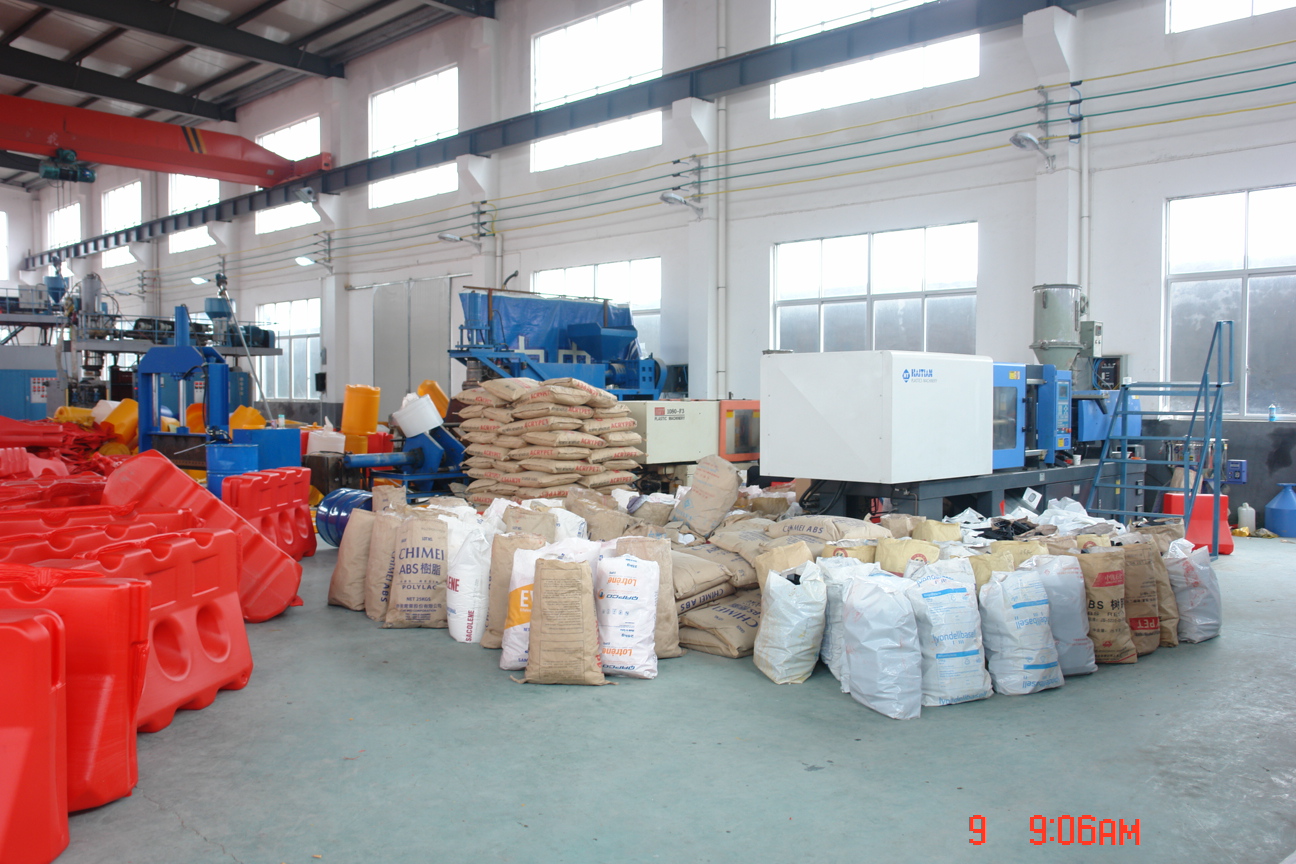
On quality routine, the 1,000+ compression and rebound test figure and the UV-resistance term of no fading for three years describe a quality procedure and an after-sales commitment. Both should be traceable to a written procedure and, in the case of UV, to the test basis behind the three-year term. Neither replaces a project-specific acceptance test.
On legal identity, the company's business license is recorded under number 91331023669153260K, issued on 13 November 2007 by the Market Supervision Administration with an all-items scope and a recorded validity to 13 November 2107. A business license confirms registration and business scope; it does not confirm product performance. Buyers sometimes treat the two as one document, and they are separate.

On commercial terms, the purchasing terms recorded for this range include FOB or CIF delivery, a 30/70 payment structure and pre-shipment testing as an acceptance criterion. For a buyer moving from evaluation to execution, the pre-shipment test is the most useful of the three, because it creates a defined point at which non-conforming goods can be stopped before they become a claim.
Where the two models fit, and what they do not replace
Both models belong to the delineation family: they warn and they guide. Typical settings include road edges and alignment changes, work-zone perimeters, parking aisles where a flexible car parking guide bollard is preferred to a rigid one, and lane separation where the objective is visibility rather than physical containment.
They are not barriers. A flexible post does not provide the containment of a guardrail, a water-filled attenuator or a rigid bollard line, and a specification that treats delineation devices as impact protection is mis-scoped at the design stage rather than at delivery. The distinction matters most in work zones, where the post is often the only visible marker and never the thing that stops a vehicle.
Local acceptance rules add a second boundary. A United States distributor catalogue reviewed for this article (McMaster-Carr, page updated 2026) notes that state and local regulations may impose requirements beyond national minimums for colour, height, stability and visibility. The implication is procedural: confirm the applicable requirement for the specific road owner before the sample is approved, because a sample that satisfies the supplier's own specification may still fall short of the receiving authority's rule.
What the Vietnam contractor case does and does not establish
Mnsd's case record describes a contractor client and a road safety project in Vietnam. The stated application was to warn vehicles and pedestrians and to mark road edges and dangerous areas. The record lists a 5–8 year duration, an outcome of completion and acceptance by the local authority, and highlights of high visibility, durability, impact resistance and ease of installation.
Read as evidence, the case supports three modest conclusions: the product has been supplied into a road project rather than only a catalogue, a receiving authority accepted the delivered work, and installation was carried out by a contractor rather than by the factory. It does not establish service life. The 5–8 year figure is a record field in the case entry, not a measured result for the YD-WP45 or the YD-WPS75, and it should not be transferred to a different climate, traffic load or fixing detail. Buyers running a comparable project can reasonably ask for the delivery documentation behind the case; they should not treat it as a substitute for their own acceptance test.
Trade and market context for the sourcing file
Two reference points are worth filing alongside the technical evidence. The HS classification for plastic delineator posts is recorded as 3926.90.9880 in the United States and 3926.90.97 globally and for China, according to shipment tracking data published by Volza. Classification affects duty and documentation, not product quality, and it is worth confirming with a customs broker for the destination market.
On the demand side, the road safety market — hardware, software and services together — is valued at USD 7.62 billion in 2026 in a MarketsandMarkets forecast published in September 2026. The figure covers the category broadly rather than warning posts as a standalone segment, and it says nothing about the suitability of a particular model. Its role in a sourcing file is contextual: it indicates the scale of the category in which the purchase sits.
A pre-production verification sequence
For buyers moving from evaluation into execution, keeping the evidence in a fixed order prevents the common failure where documents arrive after the goods.
- Confirm the configuration in writing. Model, height, base type or fixing method, reflective grade and colour should appear as values in the quotation, not as a generic model name.
- Request the material test reports. Hardness, tensile and elongation reports should carry the method reference and sampling basis, stating whether values are typical or minimum.
- Inspect the sample against the drawing. Measure height and base, count bolt holes, check the sheeting grade marking, and record readings rather than a simple pass note.
- Ask for the batch record. Compression and rebound test logs, the UV test basis and the factory's own pre-shipment checklist belong in the file before loading.
- Agree the acceptance test before the order. Pre-shipment testing is the recorded acceptance criterion for this range, so the sampling plan and rejection rule should be written into the order, not negotiated at the loading dock.
- Keep the documents with the shipment. Business license copy, test reports, inspection record and approved sample reference give a later dispute a documentary basis.
Outlook
Road safety procurement is moving toward document-based qualification: buyers ask for test reports and batch records earlier, and suppliers who can produce them shorten the evaluation cycle. That shift favours factories with a written quality routine and puts pressure on the datasheet-only offer. For flexible warning posts specifically, the practical consequence is that values such as 80–85 Shore A, 15.0 MPa and 400% elongation will increasingly be read together with the method that produced them. A supplier able to provide both the figure and the method is easier to qualify, and easier to hold to an agreed specification once the order is running.
FAQ
What does 80–85 Shore A hardness mean on a warning post specification?
Shore A is a durometer scale used for flexible materials. The YD-WP45 is specified at 80–85 Shore A, which sets a band rather than a single value and allows for normal production variation. Buyers should confirm whether the band is a specification limit or a typical window, and request the durometer record that supports it for the supplied batch.
How can a buyer check the self-recovery claim on the YD-WPS75?
The YD-WPS75 is specified as self-recovering, and Mnsd's quality description refers to more than 1,000 compression and rebound tests. The checkable evidence is the rebound test record for the relevant batch, including the test procedure, the number of cycles and the pass criterion. A bench bend of a sample shows that the post returns after light contact, but it does not substitute for that record.
What should be confirmed about the YD-WPS75 reflective grade?
The specification lists a HIP/Class 1 reflective grade. Buyers should ask for the sheeting supplier and grade marking, the certificate covering the specific sheeting used, and confirmation that the grade meets the requirement of the receiving road authority. The grade label describes the sheeting; acceptance depends on the standard applied at project level.
Are the YD-WP45 base options interchangeable?
The model is offered with either a recycled rubber base or an integrated plastic base. They are separate configurations, so the purchase order should state which one is supplied and the approved sample should match that configuration. A quotation that names the model without the base type leaves the packed product open to interpretation.
What documents should accompany a pre-shipment inspection?
For this range the recorded acceptance criterion is pre-shipment testing, alongside FOB or CIF delivery terms and a 30/70 payment structure. A practical document set includes the approved sample reference, the dimensional and hardness readings, the material test reports, the batch rebound test log and the inspection record signed before loading.
The manufacturer's product brochure, including the warning post range, is available as a downloadable PDF: Mnsd traffic safety product brochure.
¿Tiene preguntas o necesita más detalles?
Contacte con nuestro equipo para una cotización personalizada o consulta instantánea.
Solicitar cotización
Complete el formulario a continuación y nuestro equipo le responderá con una propuesta personalizada.
Chat directo de WhatsApp
¿Prefiere chatear en tiempo real? Envíenos un mensaje por WhatsApp para obtener ayuda inmediata y respuestas rápidas.
- Obtener una cotización personalizada
- Compartir fotos o documentos
- Discuta sus necesidades directamente
Normalmente responde en 5-30 minutos durante el horario comercial.