
Warm Edge Spacer Constraints in Insulating Glass Materials
Industry Reference · Insulating Glass Materials

Edge-of-glass performance is settled on the drawing and in the documentation pack, not in the showroom.
Edge-of-glass performance is now a written requirement in most building energy specifications, and the warm edge spacer sits at the centre of it. A spacer is an unusual component to buy: it is judged less by what it does than by what it prevents — heat loss at the glass edge, condensation on the cavity-facing surface, and moisture reaching the sealed space over years of service.
For buyers in the research and evaluation stage, the question has moved on from whether warm edge technology belongs in an insulating glass unit (IGU). It is now a constraint problem: which declared parameters, test documents and compatibility limits a purchase order should actually be built around. That distinction matters, because most specification errors in this category come from treating a component datasheet as if it were unit-level proof.
Why the warm edge spacer moved from upgrade to specification
The technical role of a spacer bar is settled and independent of any supplier: it holds the glass panes at a fixed distance from each other and establishes the size of the interpane space, as described in the Lawrence Berkeley National Laboratory paper on window spacers and edge seals in insulating glass units. In the same functional description, the spacer also carries the desiccant and forms part of the edge sealing structure. Everything a buyer later argues about — width, material, sealant chemistry, moisture control — sits inside that single geometric function.
Two market signals explain the shift in how this component is treated in procurement. The global insulated glass market was valued at USD 92.7 billion in 2024 and is projected to reach USD 121.7 billion by 2030, with an interim figure of approximately USD 101.3 billion in 2026 (Grand View Research). Within that downstream market, the warm edge spacer segment was valued at USD 1.1 billion in 2024, with a projected path to around USD 1.90 billion by 2035 (Meticulous Research). Growth of that shape does not come from buyers upgrading a commodity on price alone; it comes from edge performance entering building energy requirements and, with it, verification.
The commercial consequence is straightforward. Once edge performance becomes an audited requirement, the spacer, the desiccant, the primary seal and the secondary seal stop being separate line items and start being one documented system. Buyers increasingly ask for parameter declarations, sealant compatibility statements and test documentation before they discuss price.
The constraint gap: component parameters are not unit-level proof
The clearest way to understand what a warm edge spacer can and cannot prove is to look at where insulating glass is actually verified. EN 1279-2 sets a moisture penetration requirement for insulating glass units: an average moisture penetration index of no more than 0.20 across five aged specimens, with an individual specimen limit of 0.25. That number is not a property of a spacer bar. It is a property of the assembled, sealed unit, in which the spacer is one contributing component.
The same standard acknowledges four measurement methods for desiccant moisture content — 540 °C drying, Karl Fischer titration, gravimetric and dew-point methods. A moisture figure quoted without naming the method behind it is therefore not comparable between suppliers, even when both numbers are accurate. This is a small detail with large procurement consequences: it determines whether two quotations can be placed side by side at all.
AS/NZS 4666:2012 covers long-term type testing, glazing, periodic manufacturing testing, traceability, desiccant suitability, shelf life and desiccant exposure limits. In other words, it treats manufacturing discipline and traceability as part of the product, not as an administrative afterthought. ASTM C1249-18 pushes in the same direction from the application side: for structural silicone glazing, only IG units with a dual-seal system — polyisobutylene as the primary seal and silicone as the secondary seal — are described as having the durability the application demands.
The practical rule that follows is this: a spacer declaration is an input, not a proof. Buyers who specify warm edge spacers should be able to name which document verifies what — and be prepared for the answer to differ by component.
What the Soleron warm edge spacer range specifies
Soleron Building Materials (Hebei) Co., Ltd. is a China-based manufacturer of insulating glass materials — aluminium spacer bars, warm edge spacers, sealants, molecular sieve desiccants and related accessories — operating from Renqiu, Hebei Province, and supplying insulating glass processors, window and door manufacturers and construction companies in Europe, North America, Asia, the Middle East, Latin America and Africa.
Within that portfolio, the warm edge spacer range is documented as follows: the product is made of fiberglass, stainless steel and PP; the size range is 6–27A; the standard length is 5 m, with customized lengths available; and a 5-year quality guarantee applies. The range covers several distinct constructions rather than one profile:
- Fiberglass Warm Edge Spacer bar — a non-metallic profile within the same 6–27A size range.
- Composite Warm Edge Spacer — a plastic and stainless steel construction.
- PP Warm Edge Spacer — a polypropylene-based profile.
- Flexible warm edge spacer — supplied in flexible form for processing that requires bending and continuous runs.
- Butyl sealing spacer — a spacer form that combines the spacing function with sealing behaviour.
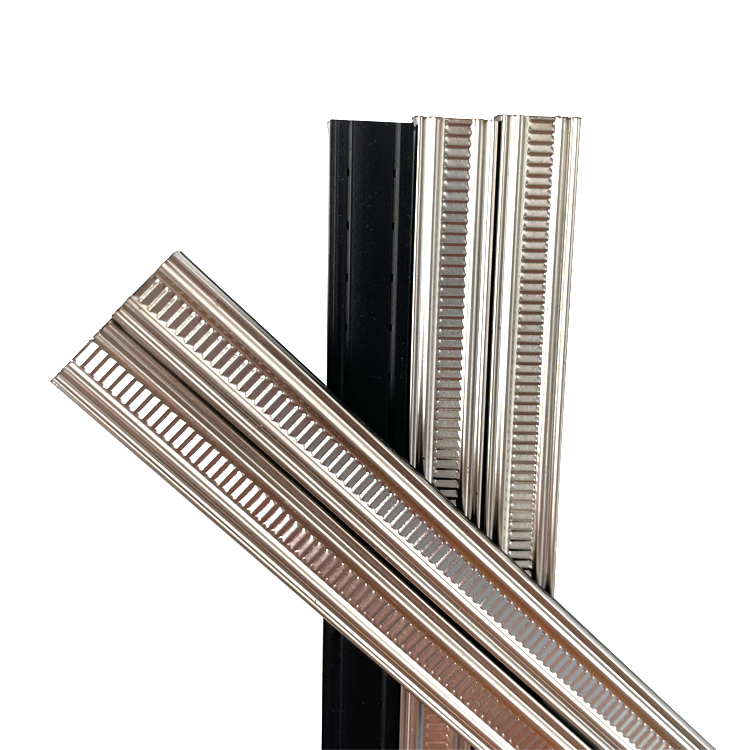
Warm edge spacer profiles are supplied in a 6–27A size range, with 5 m as the standard length and customized lengths available.
| Declared parameter | Soleron warm edge spacer |
|---|---|
| Material basis | Fiberglass, stainless steel, PP |
| Size range | 6–27A |
| Length | 5 m standard; customized lengths available |
| Declared performance features | Low thermal conductivity; thermal insulation at the glass edge; reduced condensation at the glass edge; airtightness supporting long-term IGU sealing performance |
| Processing characteristics | Flexible and suitable for bending; customized sizes available |
| Quality guarantee | 5 years |
Supply capacity behind the range is a relevant constraint consideration as well. Soleron operates 10 automatic aluminium spacer bar production lines, 8 semi-automatic production lines and 10 warm edge spacer production lines, and keeps more than 100 pieces of regular aluminium spacer bars and warm-edge spacers in stock to shorten delivery time on urgent orders. For a processor running a mixed aluminium and warm edge programme, that combination matters more than any single product claim: it is what allows a project to move from aluminium to a warm edge profile without a parallel sourcing exercise for the rest of the edge package.
How a warm edge profile changes edge-of-glass behaviour
The physical difference between a conventional aluminium spacer and a warm edge profile is thermal. Compiled comparison data in this research set places aluminium at roughly 160–200 W/(m·K) in thermal conductivity terms, against approximately 0.13–0.25 W/(m·K) for warm edge constructions. That gap is the reason the edge of an insulated unit behaves differently: the spacer is the most direct thermal bridge between the two panes, and reducing its conductivity raises the temperature of the glass edge rather than letting it track outdoor conditions.
A second function is often overlooked in purchasing discussions. The spacer is a desiccant channel. Commonly used desiccants for insulating glass units are molecular sieves, or blends of silica gel with molecular sieves, whose purpose is to adsorb residual water and solvent vapour inside the sealed space. Soleron supplies a 3A molecular sieve in three documented grades — 0.5–0.9 mm, 1.0–1.5 mm and 1.5–2.0 mm — in brown colour, vacuum-packed and cartoned at 25 kg net weight, with a guaranteed shelf life of 5 years. Desiccant grade and spacer width have to be selected together, because the grade determines how the cavity is filled and how quickly residual moisture is taken up.
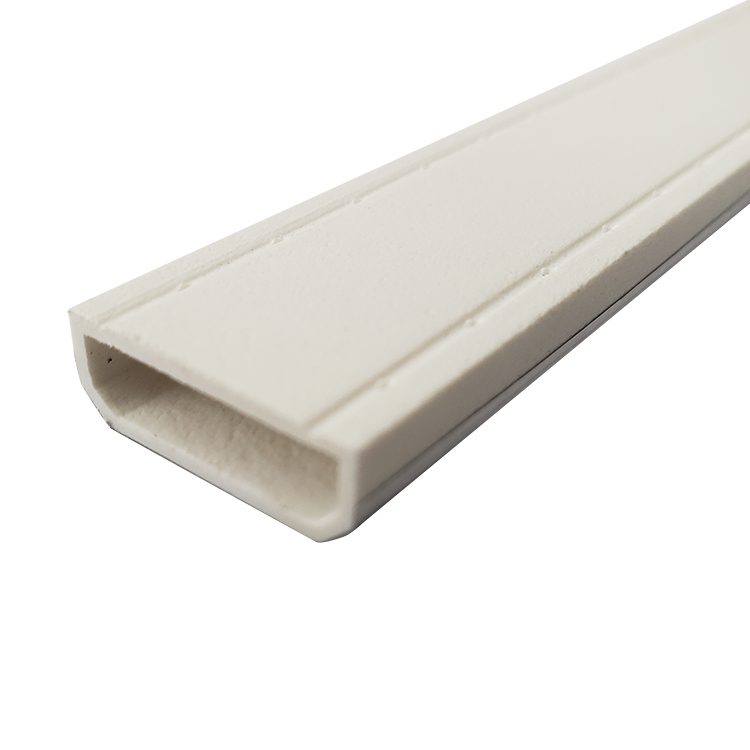
Fiberglass warm edge spacer constructions are supplied in the same 6–27A size range as the composite and PP variants.
The seal architecture around the spacer is the third variable. In dual-seal insulating glass, a primary seal limits moisture vapour transmission into the cavity while a secondary seal provides structural adhesion and durability; for structural silicone glazing, ASTM C1249-18 describes only dual-seal units with a polyisobutylene primary seal and a silicone secondary seal as having the required durability. Soleron's sealant range, model SOL-803 and SOL-717, covers butyl sealant, hot melt sealant and two-component silicone sealant, in black and white, with a declared 10-year quality guarantee and packaging options including carton box, plastic drum and iron bucket. Flexible warm edge constructions are more sensitive to this pairing than rigid profiles, because the sealing path and the spacing path are physically closer together.
Applications where warm edge spacers are specified
Insulating glass units built with spacer bars and warm edge profiles appear across residential, commercial, hotel, office building, curtain wall, window and door, industrial, public building, renovation and energy-efficient building applications. Production conditions are consistent across these settings: a clean, dry environment with controlled temperature and humidity, and matched equipment that typically includes a spacer bar bending machine, a molecular sieve filling machine, a butyl extruder and the insulating glass production line itself.
In practice, the choice between aluminium and warm edge profiles follows the design constraint rather than the building type. Where edge condensation and thermal bridging are the governing concerns — large glazed facades, cold-climate projects, high-performance envelopes — the warm edge profile is specified for its edge behaviour. Where the governing constraint is conventional processing on older equipment and maximum frame rigidity, aluminium spacer bars remain in the specification. Both positions are legitimate; the risk lies in specifying one and documenting the other.
Related components in the same supply scope matter for compatibility: aluminium spacer bars in 5.5–50 mm with wall thickness of 0.16–0.35 mm, made from 3003 and 1100 series aluminium coil and compatible with butyl tape in double glazing assemblies; corner connectors in 5.5–50 mm made from recyclable plastics; butyl tape, cork pads and trimming cotton accessories with a 10-year declared quality guarantee.
Warm edge spacer versus aluminium spacer bar: a constraint-based comparison
| Attribute | Aluminium spacer bar (Soleron) | Warm edge spacer (Soleron) |
|---|---|---|
| Material | 3003 and 1100 series aluminium coil | Fiberglass, stainless steel, PP (including composite plastic + stainless steel and PP variants) |
| Documented size range | 5.5–50 mm; wall thickness 0.16–0.35 mm | 6–27A; 5 m standard length |
| Structure | Hollow profile with high-frequency welded joints; dimensional accuracy controlled for downstream processing | Flexible and rigid warm edge constructions, including a butyl sealing spacer |
| Thermal conductivity at the edge (compiled comparison data) | Approximately 160–200 W/(m·K) | Approximately 0.13–0.25 W/(m·K) |
| Declared edge behaviour | Good mechanical strength, easy processing, stable dimensions, corrosion resistance for long-term IGU applications | Low thermal conductivity, edge thermal insulation, reduced edge condensation, airtightness for long-term sealing |
| Declared quality guarantee | 5 years | 5 years |
| Referenced third-party documentation in company records | CNAS test report WT20251854(E), issued by NATIONAL GLASS on 2025-11-21, applicable standard JC/T 2069-2011, EU market | Declared parameter set for the warm edge range; variant-specific third-party test documentation should be requested for the exact construction specified |
Where warm edge is not automatically the right answer. A lower-conductivity spacer does not by itself deliver a compliant unit. The moisture penetration performance that EN 1279-2 measures is a property of the finished, sealed assembly — spacer, desiccant, primary seal and secondary seal together — so a warm edge profile substituted into an unchanged sealant system may not reproduce the performance the specification assumed. Warm edge constructions are also less tolerant of processing conditions than rigid aluminium profiles: flexible spacers are supplied for bending and continuous runs, and they place different demands on the application equipment than a hollow aluminium profile processed on conventional bending machinery. Finally, buyers should note that the guarantees in this portfolio are not uniform. The spacer range and the aluminium spacer bars carry a 5-year quality guarantee, while the sealant range and the accessory range carry a declared 10-year guarantee. Aligning component guarantees with the warranty the processor issues on the finished unit is a commercial decision that belongs in the specification, not in the after-sales discussion.
Price is the fourth boundary. Market pricing for secondary components such as spacers and desiccants is highly fragmented, which is one reason this research set records no verified unit-price benchmark for aluminium versus warm edge profiles. Buyers who need a defensible cost comparison should request quotations against a defined width, construction and packaging specification rather than a generic per-metre figure.
What to write into the specification
A warm edge specification that can be quoted, produced and verified usually covers the following points. Taken together, they convert a product category into a purchase order.
- Spacer construction and width. Name the variant — fiberglass, composite, PP, flexible or butyl sealing spacer — and the width within the 6–27A range, together with the required length and whether customized lengths are needed.
- Desiccant grade. Specify the molecular sieve grade in millimetres (0.5–0.9, 1.0–1.5 or 1.5–2.0 mm) and the packaging format, given the 25 kg net vacuum-sealed carton and the 5-year declared shelf life.
- Sealant chemistry. State whether the unit uses butyl sealant, hot melt sealant or two-component silicone sealant, and confirm the model reference (SOL-803 or SOL-717) and colour.
- Connectors and accessories. Confirm the corner connector size within the 5.5–50 mm range and the accessory items required, including butyl tape, cork pads and trimming cotton.
- Documentation. Ask which test report or safety data sheet applies to each component. In this portfolio, the CNAS test report WT20251854(E) covers the aluminium spacer bar including model 5.5-50A, the CNAS SDS certification 2625011793 covers sealants SOL-803 and SOL-717 with a scope of silicone sealant for double-component hollow glass (Component A) under standard JC/T 2069-2011, and the Safety Data Sheet CANEC23012379901 issued by SGS-CSTC Standards Technical Services (Guangzhou) Co., Ltd. covers the corner connector.
- Commercial terms. Soleron operates on an OEM/ODM basis with customization of logo, size and packaging, a minimum order quantity of 5 cartons, lead times of 20–45 days, random inspection as the quality control method, and remote after-sales support.
Market trend: documentation becomes the buying gate
Three data points frame the direction of this category. The insulated glass market, the downstream application for edge materials, was valued at USD 92.7 billion in 2024 and is projected to reach USD 121.7 billion by 2030 (Grand View Research). Warm edge spacers specifically were valued at USD 1.1 billion in 2024 with a projected path to around USD 1.90 billion by 2035 (Meticulous Research). Separately, the 3A grade molecular sieve segment was valued at USD 1.80 billion in 2024 (Mordor Intelligence).
Read together, the pattern is not simply volume growth. Higher-performance units, including triple glazing, depend more heavily on desiccation to avoid dew-point failure at the cavity, which ties warm edge demand to desiccant demand rather than treating them as unrelated purchases. Standards-driven procurement reinforces the same effect: when qualification regimes test at unit level, the supplier who can produce both components and documentation becomes easier to qualify than the supplier who can only quote a price. For buyers, the practical translation is that supplier selection is increasingly a documentation exercise conducted alongside a technical one.
Future outlook
The direction of travel for insulating glass materials is toward integrated edge packaging: spacer, desiccant, primary seal, secondary seal and connectors qualified as one system and documented as one system. Manufacturers that already hold the full range have a structural advantage in that shift, because they can be audited once rather than five times. The open question for buyers is not whether warm edge profiles will be specified more often, but how much of the verification burden will land on component suppliers rather than on unit fabricators. As standards coverage expands across regions, and as buyers increasingly cross-check supplier claims against testing and certification requirements, the suppliers who publish clear parameter and test documentation are likely to be the ones shortlisted first.
FAQ
What is an insulating glass unit (IGU)?
An IGU consists of two or more glass panes separated by a spacer and edge-sealed to form an insulating, air- or gas-filled cavity.
What is the function of a spacer bar?
The spacer bar keeps the fixed distance between glass panes and forms the insulating cavity. It holds the desiccant and helps build the edge sealing structure of the insulated glass unit.
What does a warm edge spacer bar specify?
In the Soleron range, a warm edge spacer bar is made of fiberglass, stainless steel and PP, with a size range of 6–27A, a standard length of 5 m and customized lengths available. The declared features are low thermal conductivity, thermal insulation at the glass edge, reduced condensation at the glass edge and airtightness supporting long-term IGU sealing performance, with a 5-year quality guarantee. The range includes fiberglass, composite (plastic and stainless steel), PP, flexible warm edge and butyl sealing spacer constructions.
What are the advantages of aluminium spacer bars?
Aluminium spacer bars offer good mechanical strength, easy processing, stable dimensions and good compatibility with conventional insulating glass production lines. In the Soleron range, aluminium spacer bars are made from 3003 and 1100 series aluminium coil, use a hollow profile with high-frequency welded joints, and are supplied with a 5-year quality guarantee.
What are insulating glass accessories?
Insulating glass accessories are the auxiliary materials used in IGU production, including spacer bars, warm edge spacers, molecular sieve desiccants, PIB sealants, silicone sealants, polysulfide sealants, corner keys and related components.
Product documentation covering spacer bars, warm edge spacers, sealants, desiccants, connectors and accessories is available as a downloadable file: Soleron product catalog (PDF).