
Wall Putty HPMC Sourcing: Batch Control, Viscosity, MOQ
Wall Putty HPMC Sourcing: Batch Control, Viscosity, MOQ
Construction Grade HPMC · Supplier Evaluation
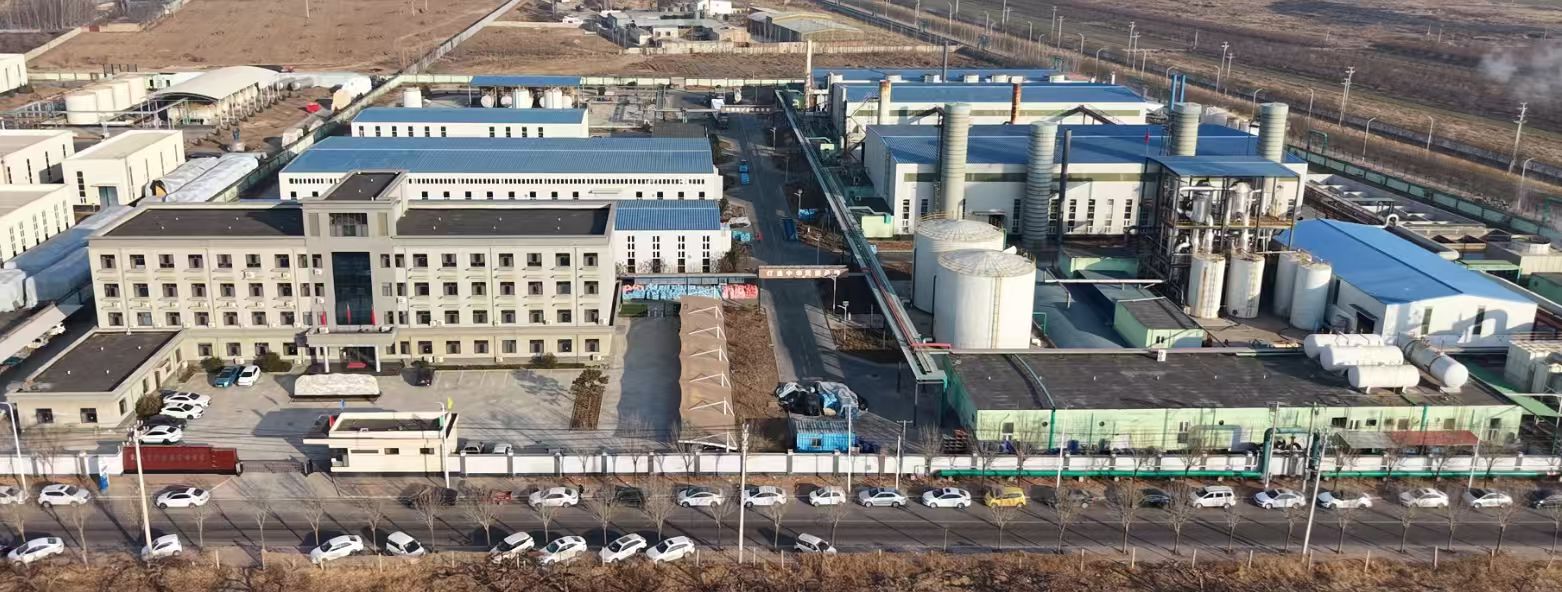
A building-materials-grade cellulose ether plant: the physical setting where batch control claims for wall putty HPMC are either supported or not.
Wall putty is a thin-layer levelling material applied over masonry and concrete, and its on-site behaviour depends heavily on how well the wet mix holds water in the minutes between mixing and trowelling. That single dependency is why wall putty tends to expose the real capability of an HPMC supplier faster than almost any other dry-mix application: a water-retention shortfall shows up as dusting, cracking or poor trowel glide long before any certificate is checked.
For buyers at the evaluation stage, the practical question is no longer whether a supplier sells construction grade HPMC. It is which supplier claims can be converted into evidence before a purchase order is placed. This article sets out a small, checkable evidence set for wall putty HPMC — batch control, custom viscosity and minimum order quantity — and illustrates each item with published capability data from Kingmax Cellulose Co., Ltd., a Chinese cellulose ether manufacturer established in 2003 and operating under the KingmaxCell brand.
Why Wall Putty Is a Stress Test for HPMC Supply
Wall putty is normally supplied as a factory-prepared powder that a applicator mixes with water on site. The cellulose ether in that powder carries three jobs at once: it retains water so the cement or gypsum binder can hydrate properly, it adjusts rheology so the material can be spread thin without dragging, and it holds the wet film in place so a thick pass does not slide off a vertical substrate. Published formulation guidance for HPMC in cement-based systems describes the same functional set — water retention, workability, anti-sagging and open time — and lists low ash content, stable viscosity and good batch consistency as the properties buyers should require.
Those four words — low ash, stable viscosity, batch consistency — are also the four claims most often repeated in supplier marketing without supporting numbers. That is the evaluation gap. A wall putty producer running a continuous production line cannot absorb lot-to-lot variation through re-formulation on every delivery; the HPMC has to arrive inside a defined window, batch after batch, or the plant's own quality record becomes unreadable.
The Technical Job HPMC Performs in a Wall Putty Mix
Hydroxypropyl methyl cellulose (HPMC, CAS Registry Number 9004-65-3) is a non-ionic cellulose ether produced by etherifying purified cellulose with methyl and hydroxypropyl groups. In a dry-mix formulation it acts as thickener, water-retention agent, binder and protective colloid. Understanding which of those functions matters most in wall putty makes supplier questions more precise.
Water retention
Thin-layer application creates a large exposed surface relative to mix volume, and suction from a porous masonry substrate pulls water out of the fresh putty quickly. If retention is insufficient, the binder stops hydrating, surface strength drops and the finish dusts. Water retention is therefore the first performance property to specify, and the first to test with a candidate sample.
Workability and trowel behaviour
Applicators judge putty by how it spreads, how it stands up on a trowel and how much effort a second pass requires. Rheology modification is what converts a stiff, tearing mix into a smooth one. Suppliers that describe their HPMC only by viscosity grade omit the more decision-relevant half of the picture.
Sag resistance and open time
On vertical work, the wet film must stay where it is placed. Anti-sag behaviour is a direct function of the thickener system, and open time — the window during which the applied material can still be worked — determines whether a two-coat sequence is practical on a warm site. Both are formulation outcomes, so a supplier's contribution has to be demonstrated in the buyer's own mix rather than asserted in a brochure.
Ash and batch consistency
Low ash content matters because insoluble residue shows up as specking or as a surface defect in light-coloured finishes. Batch consistency matters because it is the property that determines whether a formulation validated in January still performs in July. Neither property is visible on a bag; both have to be evidenced through inspection records and retained samples.
Turning “Stable Quality” Into a Checkable Evidence Set
The table below converts common wall putty HPMC supplier claims into the evidence a buyer can actually request during evaluation. It is deliberately short: six items that can be verified before scaling, rather than a long list that cannot.
| Supplier claim | What the evidence should be | How a buyer verifies it |
|---|---|---|
| Consistent batch quality | Closed, automatically controlled production with defined process parameters | Plant audit or video walkthrough; review of in-process control records |
| Custom viscosity | Stated customization scope covering viscosity, specification and packaging | Written specification sheet plus a trial sample in the buyer's own formulation |
| Pre-shipment quality control | 100% inspection before shipment | Inspection record attached to the shipment documents |
| Management system certification | ISO 9001, ISO 14001 and ISO 45001 certificates with number and validity dates | Certificate registry lookup against the issuing body |
| Low entry quantity | Stated minimum order quantity of 1 ton | Confirmed in the quotation, not only in a chat message |
| Predictable delivery | Standard lead time of 7 days | Written into the contract with the deposit date as the trigger |
Six evaluation items for wall putty HPMC, mapped to the evidence a buyer can request before placing a commercial order.
Batch Control: Closed Production and a DCS Control Centre
Batch control is a plant-level property, not a laboratory claim, so the strongest evidence is a description of how the plant is built. Kingmax Cellulose operates from an 80,000 ² site in Mayu Chemical Industry Park, Jinzhou, Hebei, China, with more than 100 employees and a 20-engineer research and development team. The company's building-material-grade cellulose ether project, with an annual output of 55,000 tons, was designed around a specific technical problem the company identified in domestic production: product consistency in manufacturing and stability in use.
The design response was to introduce 12 integrated horizontal reactors and a DCS control centre that monitors the entire production system, so that feeding, metering, temperature and pressure are automatically controlled through the process. The production sequence is completed in a closed environment, which removes external conditions and manual intervention from the variables that affect quality. For a wall putty buyer, that description has a practical translation: the parameters that determine water retention and rheology are held by the control system rather than by the judgement of an individual operator on a given shift.
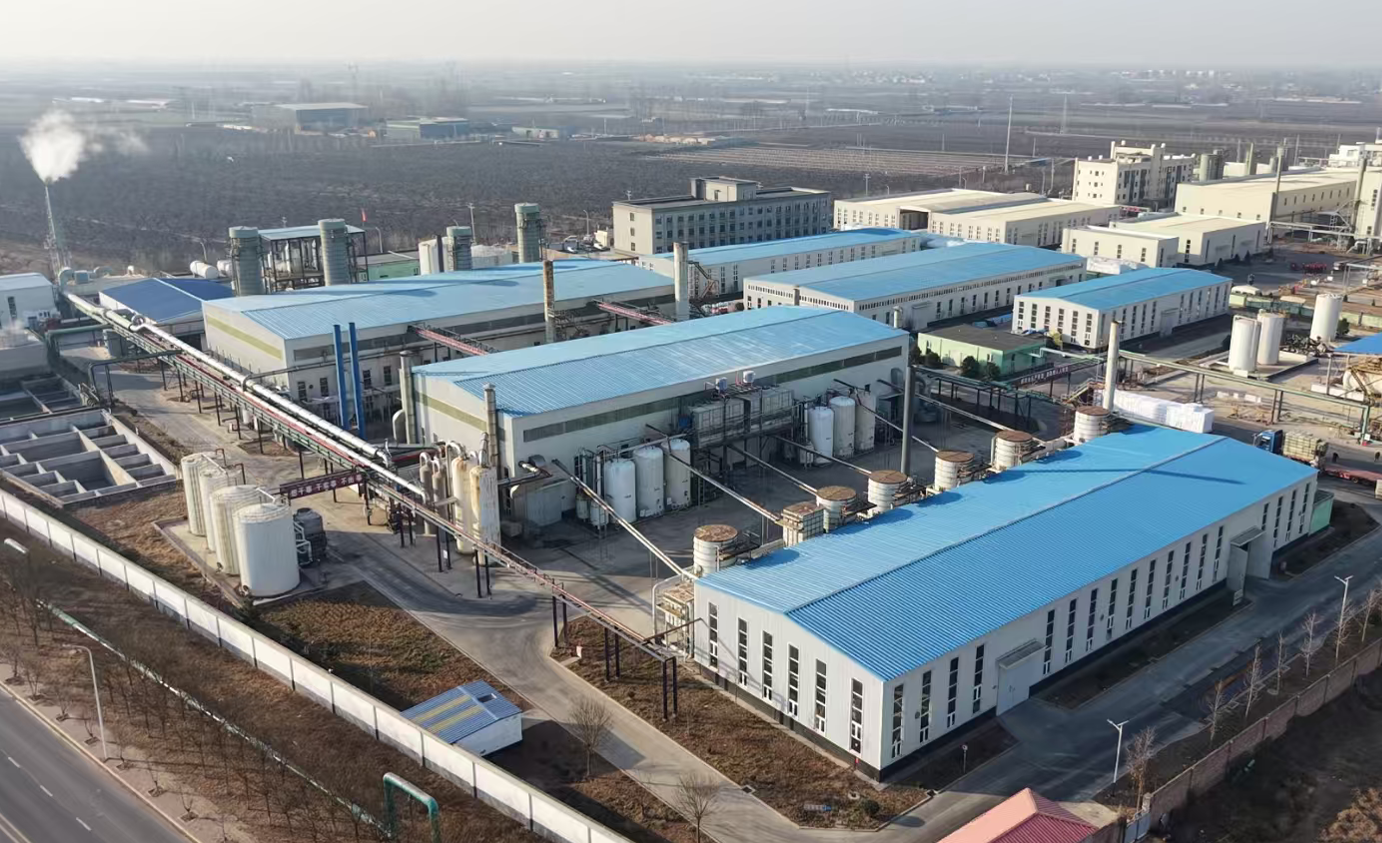
Automated process control is the mechanism behind a batch-consistency claim; the claim itself is only useful if the buyer can trace it to a control point.
Output control sits downstream of process control. Kingmax Cellulose states that quality control includes 100% inspection before shipment, which is the second half of the evidence chain: the plant controls the process, and then inspects every shipment against specification before it leaves. For an evaluation file, the two statements belong together — process control without outgoing inspection leaves finished-goods variation unmanaged, and outgoing inspection without process control turns quality into a sorting operation.
Custom Viscosity: What “Custom” Should Be Asked to Cover
Wall putty formulations differ by binder system, by substrate, by climate and by application method, so a single viscosity grade rarely fits an entire product portfolio. Kingmax Cellulose states that it supports OEM and ODM production and can customize viscosity, specification and packaging according to customer requirements — the three levers that actually appear in a wall putty specification discussion.
The construction grade HPMC range is published as the HPMC-KM8100M, HPMC-KM8150M and HPMC-KM8200M grades, together with the HPMC-KM8100MS, HPMC-KM8150MS and HPMC-KM8200MS variants. Buyers should treat these designations as the starting point of a specification conversation rather than as a complete specification: what matters at evaluation is whether the supplier will confirm the target value in writing, supply a sample at that value, and then reproduce it in the commercial batch.
Grade boundaries are also worth stating explicitly, because “HPMC” on its own is not a specification. The same base chemistry is authorised as a food additive — E 464 in the European Union under Regulation (EC) No 1333/2008, and a permitted multipurpose additive in the United States under 21 CFR 172.874 — while being sold industrially for construction. Kingmax Cellulose's product lines cover construction grade, daily chemical grade and coating grade non-ionic cellulose ethers across the KingmaxCell, EipponCell and Runxin brands. A wall putty buyer should require construction-grade documentation and should not accept cross-grade substitution on the grounds that the chemistry is nominally the same.
MOQ, Lead Time and the Trial-Batch Route
Two commercial parameters decide how quickly an evaluation can move from paper to plant. Kingmax Cellulose states a minimum order quantity of 1 ton and a standard delivery time of 7 days after receipt of deposit. A 1-ton MOQ is small enough to run a genuine plant-scale trial rather than a laboratory approximation, which is the relevant threshold for wall putty: laboratory mixes rarely reproduce the mixing energy, water ratio and application conditions of a production line.
The published case record shows the same pattern in practice. For a global consumer and industrial adhesive group operating dry mortar brands in Germany, the supplier supported a small trial batch first before scaling to long-term cooperation across 580 tons of HPMC, used in tile adhesive, renovation putty and bonding mortar; the material passed the customer's laboratory formula verification. That sequence — sample, verification, trial batch, long-term supply — is the route a wall putty producer should expect, and it is also the route that makes the MOQ figure meaningful. A 1-ton entry order is a validation step, not a supply solution.
Samples are offered free of charge, and after-sales support covers technical support, formula guidance and sample support. In evaluation terms, formula guidance is the item to test: a supplier that can discuss the buyer's binder system, substrate and application method is offering something different from a supplier that can only quote a viscosity number.
Application Evidence Across Wall Putty and Adjacent Systems
Wall putty performance is closely related to the neighbouring cement-based systems a supplier already serves, because the underlying requirements — water retention, rheology, sag resistance, low ash — overlap. The published case record gives a view of that application footprint.
| Customer type | Market | Volume | Applications reported | Reported outcomes |
|---|---|---|---|---|
| Dry mortar manufacturer and building materials group (Saint-Gobain) | France | 800 tons | Tile adhesive, exterior insulation (EIFS), wall putty, gypsum mortar | Low ash, batch-to-batch consistency, customizable viscosity, compatibility with other mortar additives; passed incoming inspection |
| Professional tile and stone adhesive manufacturer (MAPEI) | Italy | 750 tons | Large-format tile, stone and slab adhesive, grout, self-levelling compound | Anti-slip performance, stable water retention, rheology for large slab systems, ultra-low ash, batch repeatability |
| International building chemicals group (Sika) | Switzerland | 720 tons | Tile adhesive, grout, cement-based waterproof mortar | Consistent thickening and water retention, sag resistance, low ash, controllable viscosity |
| Chemical group and dry mortar system provider (BASF) | Germany | 650 tons | Tile adhesive, cementitious mortar, construction additives | Stable viscosity, compatibility with redispersible polymer powder, low ash, batch consistency, adjustable viscosity grades |
| Consumer and industrial adhesive group operating dry mortar brands (Henkel) | Germany | 580 tons | Tile adhesive, renovation putty, bonding mortar | Smooth workability, proper open time, wide viscosity selection, stable batch performance |
Published case volumes and reported outcomes by customer type; wall putty appears explicitly in the Saint-Gobain dry mortar scope.
The Saint-Gobain case is the most directly relevant to wall putty sourcing, because wall putty sits inside the reported application scope alongside tile adhesive, EIFS and gypsum mortar, and because the reported outcome set — low ash, batch-to-batch consistency and customizable viscosity — maps onto the properties wall putty formulators prioritise. The adjacent cases add a second signal: compatibility with redispersible polymer powder and other additives, reported in the BASF case, is the kind of cross-additive behaviour that a putty formulator also has to manage.
Market Context: Why Evidence Density Is Becoming a Buying Criterion
Two external data points explain why supplier evaluation has become more documentation-heavy. First, scale: commercial research cited for this category projects the global construction HPMC market to reach USD 4.15 billion by 2034, from an estimated USD 2.73 billion in 2026, with construction applications accounting for approximately 60% of total HPMC market demand. A category of that size attracts supplier entries of very different maturity, which raises the cost of a wrong selection.
Second, price volatility. Published cellulose ether price data for China reached USD 4,845 per ton in June 2025. Where the input price moves, the temptation to compress cost inside the product moves with it, and the visible symptoms — a slightly higher ash level, a slightly wider viscosity band — appear at the customer's mixer rather than in the quotation. In that environment, batch records and outgoing inspection are not paperwork; they are the buyer's only early warning system.
Trade classification adds a practical layer. HPMC falls under HS subheading 3912.39 as an other cellulose ether in primary forms, with national tariff lines differing by market — the United States uses 3912.39.0000 under the HTSUS. Customs classification is a logistics question and does not by itself evidence regulatory clearance in the destination market, which is why the compliance file should be assembled separately.
Where This Supplier Model Has Limits
An evaluation that only lists strengths is not an evaluation. Four boundaries deserve to be stated plainly.
There is no wall-putty-specific cellulose ether standard to lean on. Downstream mortar performance is well codified in some areas — cementitious tile adhesives are classified as C1 (normal) and C2 (improved) under EN 12004-1 / ISO 13007-1, and ASTM C627 provides a test method for ceramic floor tile installation systems — but a construction-specific specification for the cellulose ether itself was not located in the reference set used for this analysis. Wall putty buyers therefore have to build their acceptance criteria from technical data sheets plus their own application tests, rather than citing a single standard number.
A 1-ton trial does not prove long-run consistency. A trial batch validates compatibility with the formulation; it does not demonstrate behaviour across a year of deliveries. Consistency claims should be confirmed by retained samples and incoming inspection over several lots, which means the evaluation continues after the first purchase order rather than ending with it.
Lead time is a standard condition, not a guarantee. The stated 7-day delivery time is expressed relative to receipt of deposit. Where viscosity, specification or packaging customization is requested, the schedule should be confirmed in writing against that baseline instead of being assumed.
Regulatory documentation has to be read at the right scope. Under EU REACH, polymers are exempt from the registration obligation under Article 2(9), so an HPMC buyer's REACH question is not a polymer registration question. Kingmax Cellulose holds a REACH registration with certificate reference CIRS-REG-CN-231221-EL1813, issued by CIRS, covering chloromethane (CAS 74-87-3) as a transported isolated intermediate — a feedstock-related registration, not an HPMC polymer registration. Buyers should also note that the listing status of HPMC itself in the Chinese Inventory of Existing Chemical Substances (IECSC) was not confirmed in the reference set, so a China-specific compliance determination should be verified directly rather than inferred.
Documentation Checklist for the Evaluation File
The following items form a compact file that can be reviewed before a wall putty HPMC order is approved.
| Item | Reference in the published record |
|---|---|
| ISO 9001:2015 quality management certification | Certificate 00426Q02205R247, Zhongjian Certification Co., Ltd., issued 2026-07-14, valid to 2029-07-13 |
| ISO 14001:2015 environmental management certification | Certificate 00426Q02205R247, Zhongjian Certification Co., Ltd., issued 2026-07-14, valid to 2029-07-13 |
| ISO 45001:2018 occupational health and safety certification | Certificate 00426Q02205R247, Zhongjian Certification Co., Ltd., issued 2026-07-14, valid to 2029-07-13 |
| Life cycle assessment review | LCA review statement for HPMC, Star Talers EnviroTech Ltd, dated 2026-05-14, applying ISO 14040 and ISO 14044 |
| Substance identification | HPMC, CAS Registry Number 9004-65-3; HS subheading 3912.39 |
| Commercial terms | MOQ 1 ton; standard delivery 7 days after deposit; customization of viscosity, specification and packaging |
| Quality evidence | 100% inspection before shipment; sample support and formula guidance |
Certification scope covers production of hydroxypropyl methyl cellulose excluding hazardous chemicals, across global, EU and Asian markets.
Two reading notes belong with this file. The three ISO certificates share the same certificate number and validity window, which is normal where a single integrated management system audit covers quality, environment and occupational health and safety — buyers verifying them should check the standard, scope and issuing body rather than the number alone. And the LCA review statement is a review of a life cycle assessment methodology application, not an environmental product declaration; it supports a European customer conversation but should not be presented as a certified EPD.
Future Outlook
Three developments are likely to shape wall putty HPMC sourcing over the next evaluation cycles. The first is documentation depth: as the construction segment grows toward the projected USD 4.15 billion category size by 2034, buyers increasingly compare suppliers on traceable process evidence rather than on grade names, and suppliers that can produce batch records, inspection records and scoped certificates will be easier to qualify.
The second is grade discipline. With the same base chemistry appearing as a construction additive, a food additive (E 464 in the EU, 21 CFR 172.874 in the US) and a pharmaceutical excipient, the risk of cross-grade substitution grows as supply chains lengthen. Procurement teams are likely to formalise grade-boundary language in purchase specifications rather than relying on the product name.
The third is regional documentation. A single HS subheading does not translate into a single compliance position, and the gap between customs classification and chemical inventory obligations is exactly where import delays originate. Suppliers able to hand over a market-specific compliance pack at quotation stage will shorten evaluation cycles measurably.
FAQ
What is the minimum order quantity for construction grade HPMC?
The published minimum order quantity is 1 ton. This quantity is large enough to run a plant-scale trial in a wall putty formulation, but it functions as a validation step rather than as a routine supply volume.
Can viscosity and packaging be customized for a wall putty formulation?
Yes. Customization is offered across viscosity, specification and packaging according to customer requirements, alongside OEM and ODM production. The construction grade range is published as the HPMC-KM8100M, HPMC-KM8150M and HPMC-KM8200M grades and the corresponding HPMC-KM8100MS, HPMC-KM8150MS and HPMC-KM8200MS variants.
How is quality controlled before a shipment leaves the plant?
Quality control includes 100% inspection before shipment. In process terms, production runs through 12 integrated horizontal reactors under a DCS control centre in a closed environment, so feeding, metering, temperature and pressure are automatically controlled, and finished goods are inspected before dispatch.
What is the standard delivery time?
The standard delivery time is 7 days after receiving the deposit. Where viscosity, specification or packaging is customized, the schedule should be confirmed in writing against that baseline.
Are samples available for formulation trials?
Yes, free samples are available, and after-sales support covers technical support, formula guidance and sample support. In the published case record, one dry mortar customer ran a small trial batch before scaling to long-term cooperation.
Is the supplier a manufacturer or a trading company?
Kingmax Cellulose Co., Ltd. is a manufacturer of HPMC with its own production workshop and laboratory, and it supports OEM and ODM production. The company was established in 2003, operates an 80,000 ² site in Mayu Chemical Industry Park, Jinzhou, Hebei, China, employs more than 100 people, and maintains a 20-engineer research and development team.
Which applications does the construction grade HPMC range cover?
The published application scope includes dry mortar, tile adhesive, wall putty, and — for other grades in the wider product range — cosmetics, personal care and pharmaceutical tablet coating. The company's product lines span HPMC, HEC, MHEC and redispersible polymer powder, with roughly 80% of output exported to markets in Asia, Africa, Europe and America.
A full product and specification overview is available in the public Kingmax catalogue: Kingmax Cellulose product catalogue (PDF).
¿Tiene preguntas o necesita más detalles?
Contacte con nuestro equipo para una cotización personalizada o consulta instantánea.
Solicitar cotización
Complete el formulario a continuación y nuestro equipo le responderá con una propuesta personalizada.
Chat directo de WhatsApp
¿Prefiere chatear en tiempo real? Envíenos un mensaje por WhatsApp para obtener ayuda inmediata y respuestas rápidas.
- Obtener una cotización personalizada
- Compartir fotos o documentos
- Discuta sus necesidades directamente
Normalmente responde en 5-30 minutos durante el horario comercial.