
Wall Panel FAQ: PVC, PET and WPC Specs, MOQ and EU Risk Answers
Wall panel orders are lost less often on appearance than on documentation. A 60×300 cm marble-look sheet that looks correct in a sample book can still stall at the customs broker's desk when the fire classification is missing, or fail at the installer's site because the substrate was never checked. The questions that actually decide an export order are narrow and specific: which thickness a model is produced in, what a code such as WB-PET refers to, how many pieces leave the factory in one carton, which acceptance step is written into the purchase order, and whether the foam core is XPE or IXPE. This reference answers those questions in the order buyers usually meet them — specification first, purchasing terms second, compliance risk third.
SXP Wall Panel is the wall panel range presented by Shanghai Yuanguan Rubber Plastic Co., Ltd., a decorative materials manufacturer founded in 2005 in Shanghai, China, whose product lines include self-adhesive wall stickers, 3D foam wall panels, PVC wallpaper, WPC decorative wall panels, self-adhesive PVC flooring and carpet tiles. The company reports a 90% export ratio across EU, USA, Asia and South America markets and operates under ISO 9001 quality management system certification.
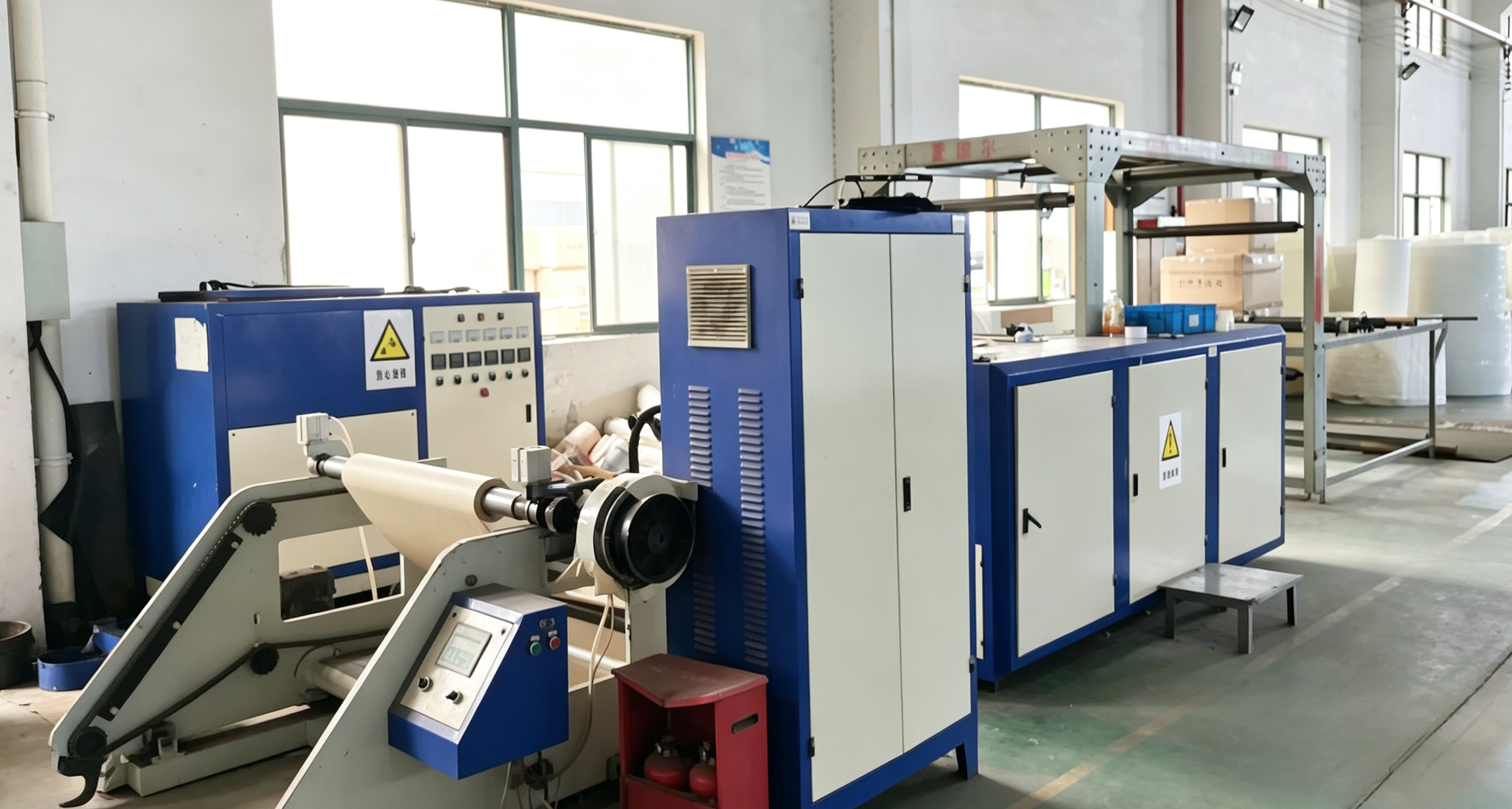 Panel and wall sticker production line — the point where documented thickness and format are set, not adjusted later.
Why specification questions now decide wall panel orders
Two shifts happened at the same time. Interior specification moved toward dry, adhesive-fixed finishes that can be installed over existing surfaces without demolishing them, and buyers in Europe and North America began asking for the paperwork before they ask for the sample. On a renovation project, the panel is no longer judged only as a finish; it is judged as a declared product that must match a declaration, a carton count and a customs classification.
The commercial weight behind that shift is visible in the category numbers. The global wall panels market was valued at USD 32.4 billion in 2025 and is projected to reach USD 43.7 billion by 2033 (Dataintelo, Wall Panels Market Research Report 2033). Metal panels held a 28.5% share in 2025, while Asia Pacific accounted for 42.3% of regional share (Dataintelo). For a buyer, the practical reading is straightforward: a large share of the world's panel supply originates in the region they are already sourcing from, so origin alone no longer differentiates a supplier. Documented specification does.
That is also the core procurement risk in this category. A quotation that lists only a material name and a decor reference leaves three things undefined — the format actually produced, the acceptance step that will settle a dispute, and the compliance file that will clear customs. The sections below treat each of those as a separate decision.
Which sizes and thicknesses are actually produced?
The answer is that the range is defined per model, and the same nominal product family can appear in formats from 30×30 cm tiles to 120×300 cm sheets, at thicknesses between 1.5 mm and 6 mm depending on material. Thickness is not a cosmetic choice. A 2 mm PET marble wall sticker follows the substrate; a 2.5 mm sheet adds rigidity and hides minor surface unevenness; a 2.8 mm foam slat delivers cushioning and sound absorption rather than surface hardness. Quoting a panel without both dimensions is quoting half a product.
| Model | Product type | Documented sizes | Documented thickness / weight |
|---|---|---|---|
| WB-PVC | PVC wall panel | 30×30, 50×50, 96×48 cm | 2.5 mm |
| WB-PVC | PVC wall sticker | 30×30, 30×60, 40×80, 60×60, 60×120, 120×300 cm | 2 mm |
| WB-PVC | Soft stone wall sticker | 30×60, 60×60, 40×80, 60×100, 40×300, 60×300, 120×300 cm | 2.5 mm |
| WB-PVC | PVC parquet wall sticker | 30×30, 30×60, 40×80, 60×60 cm, customized | 1.5 mm / 2 mm |
| WB-PVC | PVC floor tile | 40 / 60 / 120 × 300 cm | 1.5 mm |
| WB-PET | PET marble wall sticker | 30×30, 30×60, 60×60, 40×80, 60×120, 60×300, 120×300 cm | 2 mm / 2.5 mm |
| WB-WPC | WPC wall panel | 160×23×2900 mm, 16 pcs/box | 690 / 810 / 830 g/m |
| WB-KC | 3D self-adhesive foam slat wall sticker | 30×30, 60×60, 30×60, 40×300, 60×300, 120×300 cm, length customizable | 2.8 mm |
| WB-PG | Leather wall sticker | 60×60, 60×240 / 70×70, 70×280, 70×300 cm | 6 mm |
The 30×60 cm, 40×80 cm and 60×120 cm formats behave like standard renovation units: small enough to handle on a ladder, large enough to reduce seams in a room. The 60×300 cm and 120×300 cm formats are feature-wall formats, chosen when the design intent is a small number of visible joints across a corridor, a hotel headboard wall or a retail backdrop. Buyers comparing quotes across suppliers should normalise both variables before comparing price, because a 2 mm and a 2.5 mm sheet at the same nominal size are not the same shipment.
Reading the model codes: WB-PET, WB-WPC and WB-KC
Model codes exist so that a repeat order does not depend on a photograph. In the current range, WB-PET designates the PET marble wall sticker line, produced in 2 mm and 2.5 mm and in sizes up to 120×300 cm. WB-WPC designates the WPC wall panel in a slat format of 160×23×2900 mm, supplied 16 pieces per box with a documented weight of 690, 810 or 830 g/m. WB-KC designates the 3D self-adhesive foam slat wall sticker at 2.8 mm, produced in sizes up to 120×300 cm with length customizable on request.
WB-PVC is different in kind: it appears across several PVC formats — wall panel, wall sticker, soft stone sticker, parquet sticker and floor tile — each with its own size list and thickness. That is precisely why the code alone is not a specification. A purchase order citing only 'WB-PVC' is incomplete; the same code can describe a 2 mm wall sticker and a 1.5 mm floor tile, and those are different products with different installation rules and different compliance files. The workable convention is to write model, product type, size, thickness and carton quantity into every order line.
Packaging, carton counts and freight planning
Carton structure is where specification meets freight cost. For the WB-WPC wall panel the documented packaging is 16 pieces per box, with panel weight recorded at 690, 810 or 830 g/m depending on the variant. Those two numbers together decide how much of a container is product and how much is air, and they explain a common mismatch: a buyer compares unit price per panel across two suppliers, while the real difference sits in metres per carton and kilograms per metre.
Carton quantities are not identical across lines. The 16 pieces per box figure is documented for the WPC panel; for the sticker and sheet lines, carton quantity should be confirmed per model and per size rather than assumed, because a 120×300 cm sheet cannot be packed in the same count as a 30×30 cm tile. Two further points belong in the order confirmation: how the goods are palletised for the destination, and whether the packaging itself meets the destination market's packaging rules — a point that now sits inside EU compliance rather than outside it.
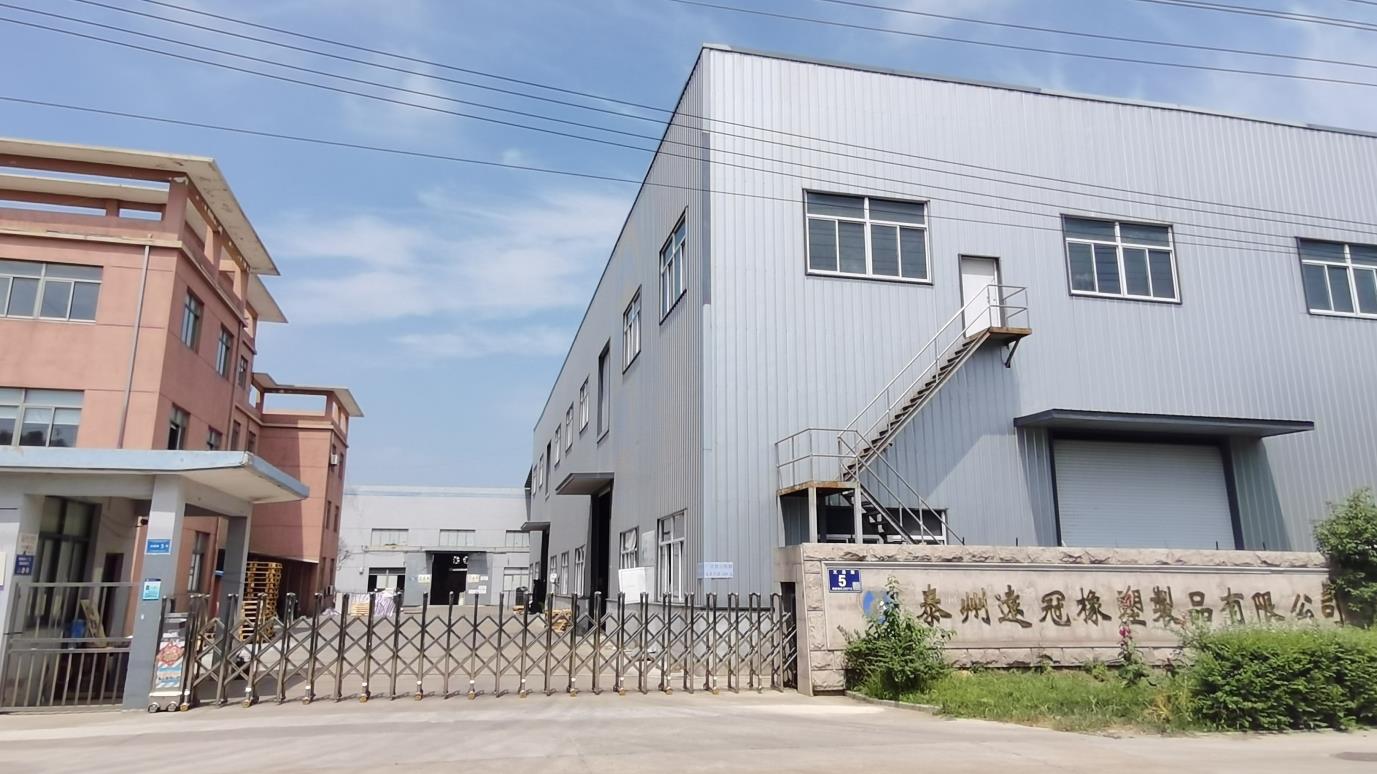 Carton count and pallet pattern determine freight cost as much as unit price does.
Purchasing terms, MOQ and acceptance criteria
The purchasing terms published for this range should be read as two records rather than one. The purchasing FAQ records an MOQ of 200 units, FOB delivery terms, telegraphic transfer (TT) payment and pre-shipment testing as the acceptance criterion. The capability sheet records a MOQ of 1,000 square meters, a 30-day lead time, 100% testing, a monthly capacity above 10 million square meters and a 100% test regime across batches. The two figures differ because one is expressed in units and the other in area, and because minimum order thresholds typically vary by model, size and whether the order is a stock format or a customized run. Buyers should confirm in the proforma invoice which threshold applies to the specific model before planning volume.
Acceptance is the second half of that question. Pre-shipment testing is the recorded criterion, and its value depends entirely on what is written into the checklist. A pre-shipment test that verifies only carton count protects the shipment; a test that records measured size, measured thickness, colour against the approved sample and adhesion behaviour protects the project. The practical approach is to attach the approved sample reference and the measured parameters to the purchase order, so that the inspection has a written benchmark and a dispute has a document.
EU compliance: which documents a wall panel shipment needs
Exporting wall stickers, flooring and wall panels into the EU requires attention to three regulatory layers: CE–CPR construction-product certification, REACH hazardous-substance regulation, and PPWR packaging rules. Missing or invalid certificates can result in customs detention, return shipment and substantial fines, which is why the compliance file should be requested before the order is placed rather than before the vessel sails.
Fire performance is the layer most often underspecified. European standard EN 13501-1 classifies reaction-to-fire performance, and B-s1,d0 is a commonly specified rating for commercial interior wall panel applications. A buyer writing 'fire rated' into a purchase order has written nothing verifiable; the order should cite the standard, the class and the test report that supports the specific product.
Substance compliance is the layer most often over-generalised. The SGS RoHS Test Report SHAEC1709394501 was issued by SGS-CSTC on 20 May 2017 under the RoHS Directive (EU) 2015/863, and its scope covers the 3D wall brick (PE material) product. That is a real, checkable document — and it is also a bounded one. A RoHS report issued for one material does not automatically cover every SKU in a wall panel catalogue, so buyers should ask for the report that names the product they are importing, and should not accept a certificate number without a scope line. On the customs side, classification matters as much as the certificate: the standard HS code applied to Wood Plastic Composite wall panels exported from China is 3925.90.0000, per a US Customs and Border Protection classification ruling. Destination-specific treatment should always be confirmed with the importer's broker.
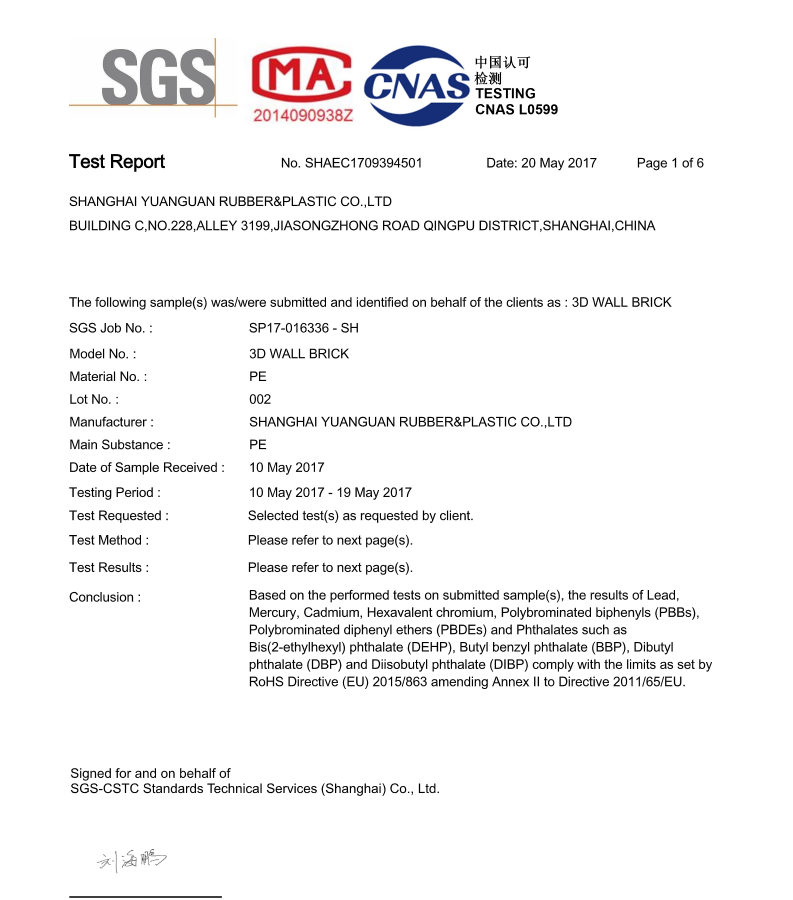 A compliance document is only useful when its scope line matches the product on the order.
What low-cost panels actually cut
Price gaps between wall stickers, flooring and wall panels mostly come from four places: raw material (virgin versus recycled), thickness, formulation, and the cost of quality control and certification. Low-cost items mostly adopt recycled material, which can produce dimensional deviation, fading, odour and incomplete or non-compliant certificates. The risk does not appear at the factory gate; it appears after export, as customs detention, after-sales claims and market returns.
For project orders, export shipments and any consignment that must clear customs, the defensible position is to prioritise virgin-material products with complete test reports. Low-cost material can be a rational choice for local, low-volume spot goods or a small trial order — but only after sample confirmation, and without extrapolating that sample into a bulk order. Price alone is not a purchasing decision in a category where the cost of a rejected container exceeds the saving on the panels inside it.
XPE or IXPE for export orders?
XPE is a chemically cross-linked foam with lower cost, relatively larger cells and slower rebound, and it is prone to permanent indentation under long-term heavy load; some batches carry formamide residue risk, sound deadening and foot-feel are moderate, and it fits short-term projects and tight-budget orders. IXPE is cross-linked by electron-beam irradiation, with fine uniform cells, strong rebound, resistance to compression and deformation, better sound insulation, lower formamide risk and longer service life — at a higher procurement cost.
Selection is governed by budget, intended service life and destination-market environmental requirements. For residential, commercial, Europe and North America export and long-lifespan projects, IXPE is the reasonable default; compliant XPE remains acceptable for temporary sites or strictly budgeted projects. For EU and North American destinations, verify test reports such as formamide and REACH before committing. A simple incoming inspection can screen a shipment — check the cross-section cells, press a sample hard for three to five seconds and observe whether it recovers without a residual dent, then compare against the supplier's material statement — but hand inspection is reference only and cannot support a claim. The acceptance criterion should be a third-party laboratory report, with the material specified explicitly in the proforma invoice.
OEM and ODM: what buyers should expect to be able to change
Wall panel sourcing frequently starts as a stock purchase and becomes a private-label programme in the second year. For that transition to be plannable, the customization surface has to be defined in advance. Shanghai Yuanguan Rubber Plastic Co., Ltd. provides OEM and ODM production services, with customization covering size, color, pattern and design, embossing texture, material structure, thickness, packaging, logo and private label, custom labels, and new product development; OEM covers manufacture to a client's own designs and specifications, while ODM covers developing new products to a client's specification. The company reports 48 patented technologies, 12 independent brands and 25 years of production experience.
The procurement question is not whether customization exists but which variables are fixed and which are free. Size and thickness changes affect tooling and carton structure; pattern and embossing changes affect minimum run length; packaging and private label changes affect lead time rather than production. For a 30-day quoted lead time, the variables that move first are the ones tied to artwork approval, not the ones tied to extrusion.
Where these panels fit — and where they do not
The documented application envelope is indoor use at normal room temperature, including typical humid environments such as bathrooms and dry areas of kitchens, with avoidance of long-term strong sunlight. Suitable substrates include cement floors, tiled surfaces, latex-painted walls, plasterboard and plywood — smooth, solid bases. Powdery, sandy or loose surfaces are explicitly excluded. Installation is dry and self-adhesive: peel the backing film, apply to a smooth surface, cut locally with a utility knife, and roll or press with a scraper; no cement or glue is required, and some styles can be removed without leaving residue. Project types in scope include old-house renovation, apartment full renovation, hotel room makeovers, homestay renovation, chain-store refurbishment, office fit-outs, temporary exhibition booths, rental apartment renovation and modular interior work.
Compared with traditional finishes, the trade-off is concrete rather than rhetorical. Against ceramic tiling, a self-adhesive panel is faster and cleaner to install and adds a cushioning and sound-dampening layer, but it is not a structural substitute: tile handles direct water exposure and heavy impact better, and a panel system should not be specified where those conditions dominate. Against paint or conventional wallpaper, a panel covers cracks and stains and shortens the finishing cycle, but it sits on top of the substrate rather than sealing it.
The limiting factor is almost always the wall, not the panel. Adhesive systems cannot correct a failing substrate, and a 2 mm sheet will telegraph the waviness underneath it. Foam-based products add a second constraint: they are sensitive to high temperature, heavy pressure and UV light, so storage discipline is part of product performance — a cool, ventilated warehouse below 40°C, goods on pallets rather than bare floor, limited stacking height, no heavy hard panels stacked on foam goods, and FIFO dispatch. Curling, deformation and mildew caused by sun exposure, over-stacking or ground moisture are classed as improper-storage damage rather than an inherent product defect, which is a distinction worth writing into the contract before it is needed.
Market trend analysis: dry installation and documented compliance
Two trends are pulling in the same direction. The first is material mix. Wood-based wall panels held nearly 31% of global installations in 2024, and wood wall panel systems are projected to grow at a 6.2% CAGR through 2035 (WiseGuyReports). That growth is consistent with renovation-driven demand, where installation speed and the ability to work over an existing finish matter more than new-build volume.
The second is documentary. As compliance expectations tighten around construction products, packaging and hazardous substances in the EU, the specification file becomes a competitive asset rather than an afterthought. Suppliers who can name the standard, the class, the report number and the scope line in a quotation shorten their buyer's approval cycle; suppliers who cannot push that work downstream to the importer. Neither trend requires a forecast to act on — both are visible in the questions buyers are already asking.
Future outlook
Three changes are reasonable to expect over the next specification cycles. First, per-SKU declarations will become the norm in EU-facing quotations, because a single report scoped to one material no longer satisfies an importer's own compliance review. Second, packaging compliance will move earlier in the negotiation, since PPWR obligations attach to the shipment rather than to the panel. Third, foam selection will keep shifting toward electron-beam cross-linked material on Europe and North America orders, where service life and residue risk are weighed against unit cost. None of these change what a panel is; they change what a buyer must be able to prove about it.
FAQ: technical and procurement questions
Are the listed sizes stock formats or made to order?
Both exist. WB-PET, WB-PVC, WB-WPC and WB-KC each carry a documented size list, and the WB-KC foam slat additionally offers customizable length. Beyond those formats, size, thickness, pattern, embossing texture, material structure and packaging are available as customization options under OEM and ODM production, subject to the minimum order threshold confirmed for that model.
What is the practical difference between 2 mm and 2.5 mm PET marble wall sticker?
WB-PET is produced in both 2 mm and 2.5 mm. The thinner sheet conforms more closely to the substrate and suits flat walls and curved transitions; the thicker sheet carries more rigidity and tolerates minor surface unevenness. Because both thicknesses exist under the same model code, thickness must be written into the order line rather than assumed from the code.
How many panels are in a box?
The WB-WPC wall panel is documented at 16 pieces per box, with panel weight of 690, 810 or 830 g/m by variant. Carton quantity for the sticker, sheet and tile lines differs by model and by size, so it should be confirmed per order line instead of carried over from the WPC figure.
Which purchasing terms apply, and what is the acceptance criterion?
The recorded purchasing terms are FOB delivery, telegraphic transfer (TT) payment and pre-shipment testing as the acceptance criterion, with an MOQ of 200 units in the purchasing FAQ and 1,000 square meters in the capability sheet. Because the two thresholds are expressed in different units and vary by model, the applicable figure should be confirmed in the proforma invoice.
Does one RoHS certificate cover every wall panel model?
No. The SGS RoHS Test Report SHAEC1709394501, issued by SGS-CSTC on 20 May 2017 under RoHS Directive (EU) 2015/863, is scoped to the 3D wall brick (PE material) product. A buyer importing a different model should request the report that names that product, and should check the scope line rather than the certificate number alone.
What happens if EU compliance documents are incomplete?
Shipments to the EU are expected to comply with CE–CPR construction-product certification, REACH hazardous-substance regulation and PPWR packaging rules. Missing valid certificates can lead to customs detention, return shipment and substantial fines. Full valid certificates should be requested before the order is placed, and the same discipline is advisable even for transit shipments to non-EU regions.
Is lower-cost recycled material acceptable for an export order?
It carries identifiable risk. Recycled-material panels can show dimensional deviation, fading, odour and incomplete certificates, which surface after export as detention, claims or returns. Virgin-material products with complete test reports are the appropriate basis for project and export volumes; low-cost material is better confined to local spot goods or small trial orders after sample confirmation.
Should an export order specify XPE or IXPE foam?
IXPE, cross-linked by electron-beam irradiation, offers fine uniform cells, strong rebound, resistance to permanent indentation, better sound insulation and lower formamide risk, at a higher cost; chemically cross-linked XPE is cheaper but rebounds more slowly and can take a permanent dent under long-term load. For Europe and North America shipments and long-lifespan projects, IXPE is the more defensible specification, with formamide and REACH reports verified before ordering.
How should panels be stored before installation?
Keep the warehouse cool and ventilated, below 40°C, away from direct sunlight and heating pipes; place cartons on pallets rather than bare floor; stack full cartons flat with a height limit and never stack heavy hard panels on foam goods; cover linen soft-pack items against dust and protect PU-stone items from corner impact; dispatch on a FIFO basis. Storage-related curling, deformation and mildew are treated as improper-storage damage, not an inherent product defect.
A consolidated view of formats, packaging and product lines is available in the Shanghai Yuanguan product brochure (PDF).
¿Tiene preguntas o necesita más detalles?
Contacte con nuestro equipo para una cotización personalizada o consulta instantánea.
Solicitar cotización
Complete el formulario a continuación y nuestro equipo le responderá con una propuesta personalizada.
Chat directo de WhatsApp
¿Prefiere chatear en tiempo real? Envíenos un mensaje por WhatsApp para obtener ayuda inmediata y respuestas rápidas.
- Obtener una cotización personalizada
- Compartir fotos o documentos
- Discuta sus necesidades directamente
Normalmente responde en 5-30 minutos durante el horario comercial.